Articles

Last updated: June 27, 2026 Global nitrile glove production now exceeds 450 billion units annually, yet defect rates in traditional manufacturing still hover between 5-8%, costing manufacturers millions in waste and recalls. AI and Automation in Nitrile Glove Manufacturing: Boosting Quality, Reducing Defects, and Scaling Production represents the most significant shift in glove production since […]
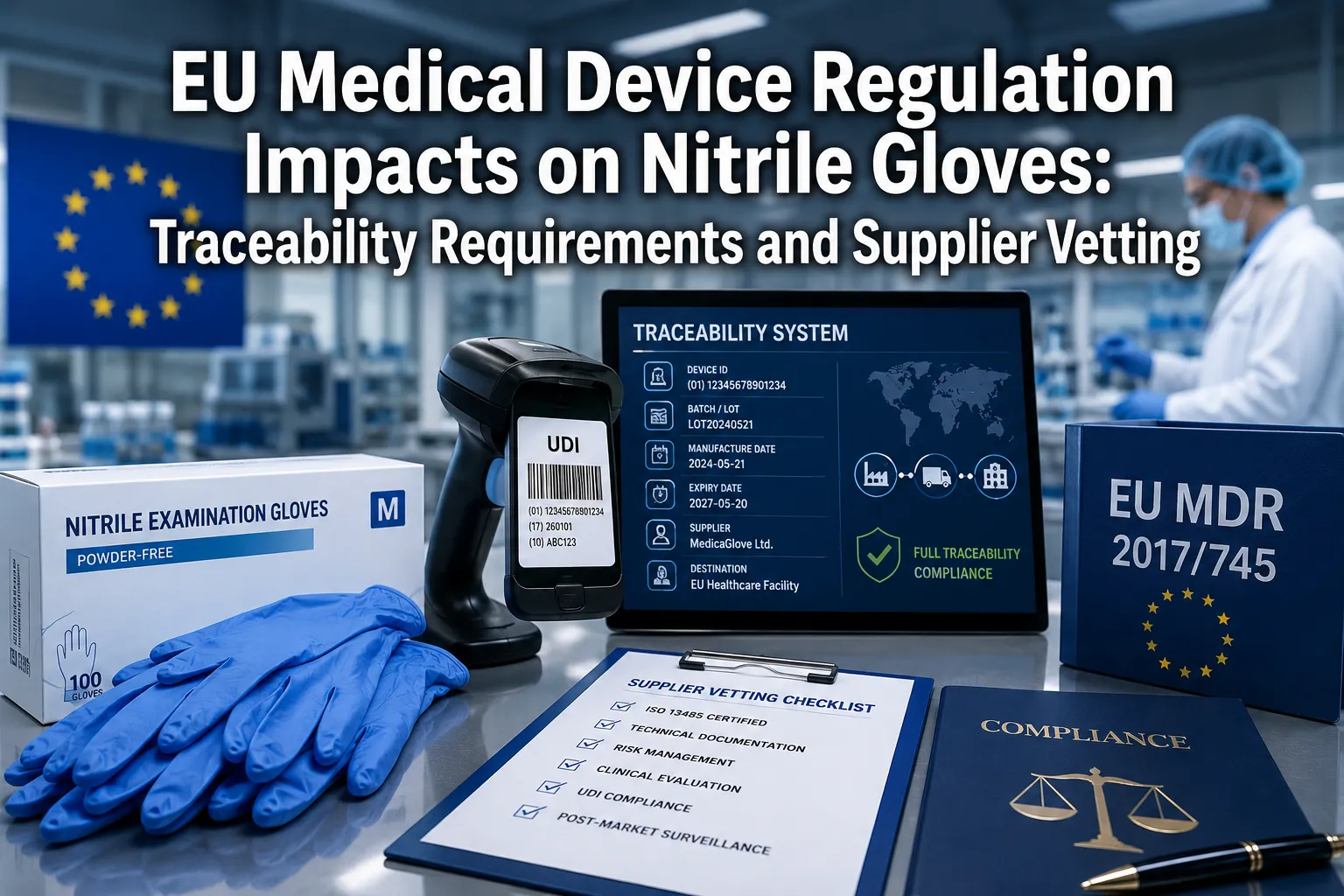
Last updated: June 27, 2026 The European Union Medical Device Regulation (EU MDR 2017/745) fundamentally changed how nitrile gloves are classified, tracked, and sold across European markets. Under EU MDR, medical-grade nitrile gloves require Unique Device Identification (UDI) codes, comprehensive technical documentation, and rigorous supplier vetting processes that distributors and manufacturers must implement to maintain […]

Last updated: June 27, 2026 Quick Answer Antimicrobial coatings and textured surfaces in nitrile gloves represent two distinct innovations with varying levels of proven efficacy. While textured surfaces demonstrably improve grip in wet conditions through mechanical design, antimicrobial coatings show mixed results in clinical studies, with effectiveness depending heavily on the specific agent used, application […]
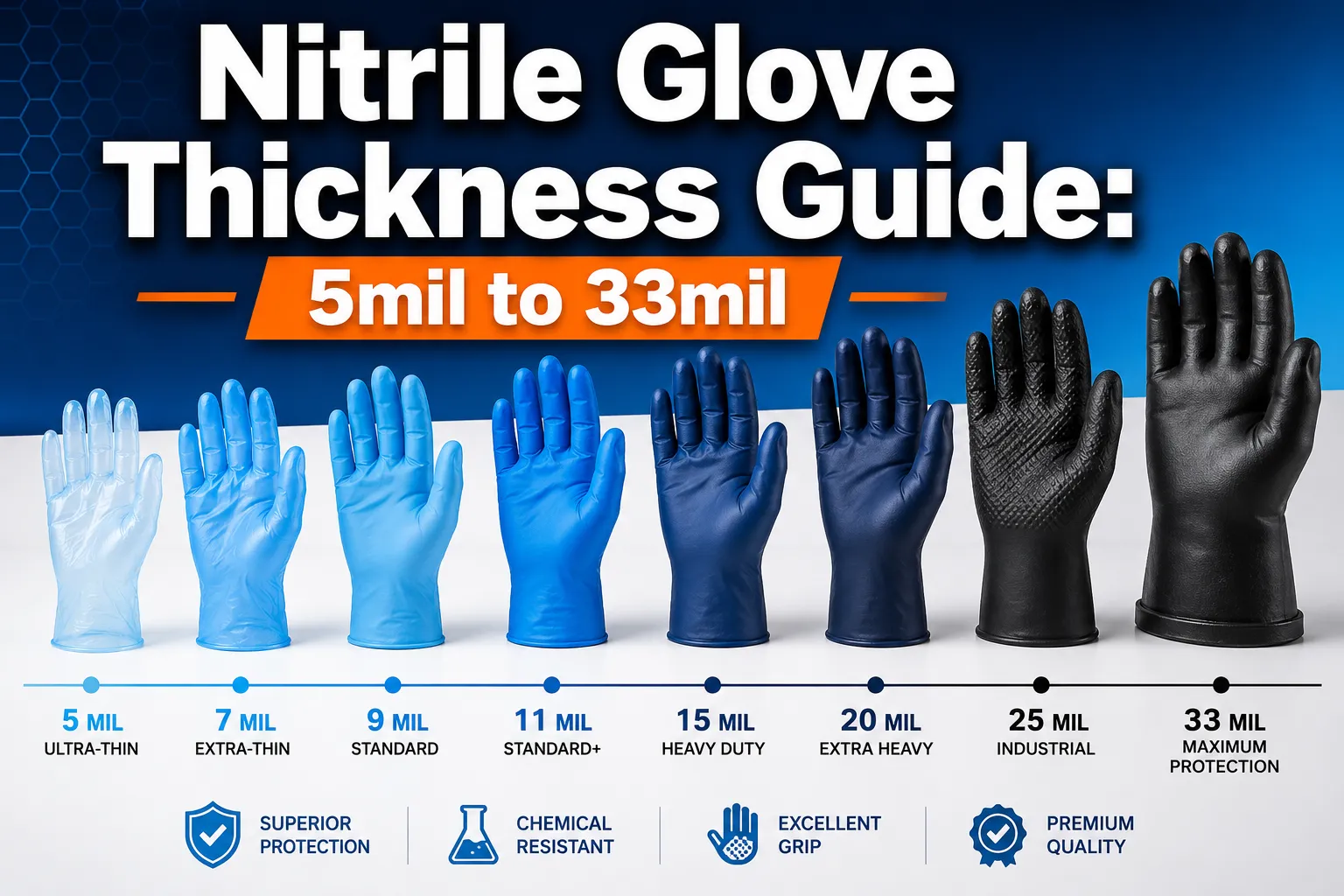
Last updated: June 27, 2026 Quick Answer Nitrile glove thickness ranges from 5mil (0.005 inches) to 33mil (0.033 inches), with each specification serving distinct applications. Thin gloves (5-8mil) maximize tactile sensitivity for medical and food handling tasks, medium gloves (10-15mil) balance protection and dexterity for automotive and janitorial work, while thick gloves (20-33mil) provide superior […]

Last updated: June 26, 2026 Quick Answer Nitrile Gloves for Semiconductor and Precision Tech with ESD-safe features incorporate conductive or static-dissipative materials (typically carbon or metal fibers) that prevent electrostatic discharge, which can destroy sensitive electronic components. These specialized gloves maintain surface resistivity between 10^6 and 10^11 ohms per square, are lint-free to meet cleanroom […]

Last updated: June 26, 2026 Quick Answer The rise of nitrile in food service is driven by three critical factors: elimination of latex allergy risks, superior puncture resistance compared to vinyl alternatives, and compliance with evolving FDA food contact regulations. Nitrile gloves now dominate commercial kitchens because they protect both workers and consumers while meeting […]

Last updated: June 26, 2026 Quick Answer Nitrile glove markets in Africa and Latin America are experiencing rapid expansion driven by healthcare infrastructure growth, industrial development, and lessons learned from pandemic-era supply shortages. Current investment trends show a shift toward local manufacturing in countries like Nigeria, Kenya, Brazil, and Mexico, with capital requirements ranging from […]

Last updated: June 26, 2026 Quick Answer Standard nitrile gloves are not suitable for direct welding contact but can serve specific roles in metal fabrication shops. Most nitrile gloves withstand temperatures only up to 200-250°F before degrading, while welding sparks reach 2,500°F or higher. However, specialized heat-resistant nitrile gloves rated for 400°F+ work well for […]

Last updated: June 26, 2026 Quick Answer The post-pandemic hygiene boom has driven nitrile glove adoption far beyond healthcare, with automotive and petrochemical sectors leading non-medical growth in 2026. These industries now rely on nitrile gloves for superior oil and chemical resistance, latex-free protection, and enhanced worker safety standards that became normalized during COVID-19. Market […]