Nearly 90% of healthcare professionals now favor nitrile gloves over latex alternatives in 2026, driven by superior protection and allergy concerns. This shift has transformed the home healthcare landscape, with families increasingly seeking medical-grade protection for caregiving, first aid, and infection control. Understanding the difference between medical-grade and industrial nitrile gloves—and how to properly select and store them—has become essential knowledge for modern households.
This comprehensive guide to Medical-Grade Nitrile Gloves for Home Use: Safety Standards, Storage Tips, and Post-Pandemic Buying Guide will help you navigate FDA regulations, extend shelf life, and make informed purchasing decisions for your family’s safety.
Key Takeaways
- ✅ Medical-grade nitrile gloves must meet FDA Class I device standards with ASTM D6319 compliance for 99% barrier protection
- 📦 Proper storage extends shelf life by 2-3 years when kept at 68-77°F away from sunlight and humidity
- 🚫 All medical-grade gloves are powder-free since the FDA’s 2016 ban on powdered gloves
- 💪 Nitrile offers 3-4 times the puncture resistance of latex with 90%+ chemical protection
- 🏠 Non-sterile medical-grade gloves are legally sufficient for home healthcare, caregiving, and first aid
Understanding Medical-Grade vs. Industrial Nitrile Gloves
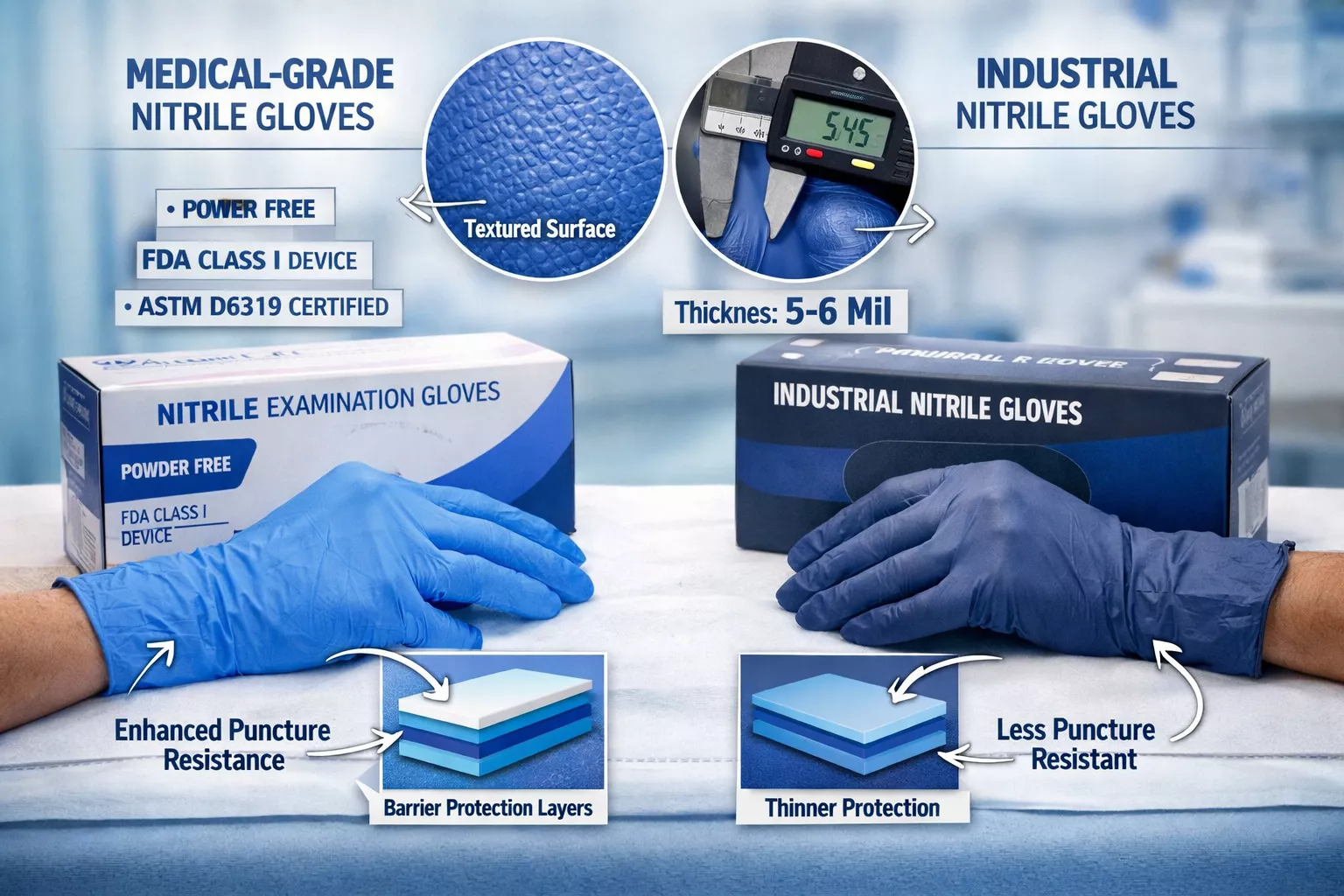
The distinction between medical-grade and industrial nitrile gloves goes far beyond marketing labels. Medical-grade nitrile gloves are FDA-regulated as Class I reserved devices, requiring rigorous 510(k) premarket notification to demonstrate compliance with leak resistance, physical properties, and biocompatibility standards. This regulatory oversight ensures the gloves meet minimum safety thresholds critical for infection control.
Industrial nitrile gloves, while often durable and chemically resistant, do not undergo the same FDA scrutiny. They may lack the 99% barrier protection mandated by ASTM D6319 standards for medical applications. For home healthcare tasks—wound care, medication administration, or caring for immunocompromised family members—this difference matters significantly.
Key Regulatory Standards for Home Use
Medical-grade nitrile gloves must satisfy several critical benchmarks:
| Standard | Requirement | Home Use Benefit |
|---|---|---|
| ASTM D6319 | 99% minimum barrier protection | Prevents contamination during caregiving |
| FDA 510(k) | Premarket notification approval | Verified safety and quality |
| Powder-Free | Zero powder content (since 2016) | Eliminates respiratory and skin irritation |
| Puncture Resistance | Average 3.5 Newtons | Reduces risk of tears during use |
| Chemical Resistance | 90%+ tested chemicals | Safe for handling disinfectants and cleaners |
For households managing chronic conditions or providing elder care, choosing the right nitrile gloves based on these standards ensures proper protection without compromising safety.
Safety Standards in Medical-Grade Nitrile Gloves for Home Use
Understanding the specific safety certifications helps consumers distinguish quality products from substandard alternatives flooding the post-pandemic market. In 2026, new regulations have raised quality bars even higher for medical-grade gloves intended for home use.
FDA Classification and Compliance
The FDA classifies medical gloves as Class I reserved devices, meaning they require specific regulatory pathways before reaching consumers. Manufacturers must demonstrate:
- Leak resistance testing to ensure no microscopic holes compromise barrier integrity
- Physical property standards including tensile strength and elongation
- Biocompatibility testing to prevent adverse skin reactions during extended wear
- Proper labeling of all materials, especially for latex-allergic users
Since the FDA’s December 19, 2016 final rule, all medical-grade nitrile gloves must be powder-free. Powdered gloves posed significant health risks, including respiratory complications and surgical site infections. For home users, this ban ensures safer long-term storage and use without airborne particle concerns.
ASTM Standards and Performance Metrics
Beyond FDA requirements, ASTM D6319 compliance guarantees medical-grade nitrile gloves provide minimum 99% barrier protection against bloodborne pathogens and infectious materials. Laboratory analysis confirms nitrile gloves resist over 90% of tested chemicals, significantly outperforming vinyl alternatives.
The puncture resistance advantage is substantial: nitrile gloves offer 3-4 times the durability of latex gloves, with average resistance of 3.5 Newtons. For home applications involving sharps disposal, medication preparation, or cleaning contaminated surfaces, this enhanced protection reduces contamination risks considerably.
Thickness and Protection Levels
Glove thickness directly impacts protection and dexterity. Medical-grade options for home use typically range from 4-6 mil:
- 4 mil gloves: Standard examination grade, suitable for basic first aid and light cleaning
- 5 mil gloves: Enhanced protection for wound care and medication handling (8/10 dexterity rating)
- 6 mil gloves: Superior puncture and chemical resistance for intensive caregiving tasks (10/10 dexterity for precision work)
Over 40% of professionals prefer thicker nitrile gloves for their superior durability and chemical protection, a trend continuing into home healthcare applications.
Storage Tips to Extend Shelf Life of Medical-Grade Nitrile Gloves
Proper storage dramatically impacts glove performance and longevity. Medical-grade nitrile gloves can maintain their protective properties for 3-5 years when stored correctly, but improper conditions can degrade them within months.
Optimal Storage Conditions
Temperature and humidity control are critical for preserving nitrile integrity:
Temperature: Store gloves at 68-77°F (20-25°C). Excessive heat accelerates polymer degradation, while freezing temperatures can make nitrile brittle. Avoid storage near radiators, heating vents, or in uninsulated garages.
Humidity: Maintain relative humidity below 60%. High moisture levels promote mold growth on packaging and can compromise glove integrity. Use sealed containers with desiccant packets in humid climates.
Light Exposure: Keep gloves away from direct sunlight and UV sources. Ultraviolet radiation breaks down nitrile polymers, reducing elasticity and barrier protection. Store in opaque containers or dark cabinets.
Rotation and Inventory Management
Implement a first-in, first-out (FIFO) system to ensure older stock gets used before expiration:
- Label boxes with purchase dates using permanent marker
- Place newer boxes behind older ones in storage
- Check expiration dates quarterly and prioritize use accordingly
- Inspect gloves before use for discoloration, brittleness, or tackiness
Signs of Degradation
Discard gloves showing these warning signs:
- 🔴 Discoloration or yellowing of material
- 🔴 Sticky or tacky texture indicating polymer breakdown
- 🔴 Brittleness or cracking when stretched
- 🔴 Strong chemical odor beyond normal nitrile smell
- 🔴 Visible holes or tears in packaging
For households using gloves for food preparation alongside medical tasks, maintaining separate storage prevents cross-contamination and ensures food-safe gloves remain uncompromised.
Post-Pandemic Buying Guide for Medical-Grade Nitrile Gloves
The pandemic permanently altered the nitrile glove market, with quality variations and pricing fluctuations still affecting consumers in 2026. Smart purchasing requires understanding current market dynamics and identifying genuine medical-grade products.
Identifying Authentic Medical-Grade Products
Verify these elements before purchasing:
✔️ FDA 510(k) clearance number on packaging or manufacturer website
✔️ ASTM D6319 compliance statement clearly marked
✔️ Powder-free designation (required for all medical-grade gloves)
✔️ Lot numbers and expiration dates for traceability
✔️ Manufacturer contact information and country of origin
Beware of vague terms like “medical-style” or “exam-quality” without specific certifications. These often indicate industrial-grade gloves marketed deceptively.
Recommended Specifications for Home Healthcare
Based on 2026 reviews and professional recommendations, prioritize these features:
For General Caregiving and First Aid:
- 5 mil thickness with textured grip
- Ambidextrous design for convenience
- Powder-free with accelerator-free formulation (reduces skin sensitivity)
- Box of 100-200 gloves for cost efficiency
For Intensive Medical Care at Home:
- 6 mil thickness for maximum protection
- Micro-textured surface for precision tasks
- Extended cuff length (10-12 inches) for forearm protection
- Chemotherapy-rated if handling medications
Cost Considerations and Bulk Buying
Post-pandemic pricing has stabilized but remains higher than pre-2020 levels. Expect to pay:
- $15-25 per 100-count box for quality 4-5 mil medical-grade gloves
- $25-40 per 100-count box for premium 6 mil options
- Bulk discounts of 15-30% when purchasing 10+ boxes
Consider joining healthcare buying cooperatives or subscription services offering medical-grade supplies at wholesale prices. However, avoid stockpiling beyond 1-2 years of anticipated use, as even properly stored gloves eventually degrade.
Innovations in 2026 Medical-Grade Nitrile
Recent advancements improve comfort and safety for home users:
- Accelerator-free formulations reduce Type IV allergic reactions by 60%
- Enhanced tactile sensitivity rivals latex for fine motor tasks
- Improved grip textures maintain performance when wet
- Biodegradable options reduce environmental impact (though still meeting medical standards)
For users concerned about potential allergic reactions, accelerator-free nitrile represents a significant advancement over traditional formulations.
Special Considerations for Home Healthcare Applications
Different home healthcare scenarios require tailored glove selection beyond basic medical-grade standards.
Extended Wear Duration
While medical-grade nitrile gloves can be worn safely for up to 8 hours, home caregivers should change gloves:
- After each patient contact or task
- When moving from contaminated to clean areas
- If gloves become torn or punctured
- After 2-3 hours of continuous wear to prevent moisture buildup
Multi-Purpose Use Considerations
Many households use medical-grade nitrile gloves for both healthcare and non-medical tasks. While nitrile gloves are food-safe and suitable for cooking applications, maintain separate supplies to prevent cross-contamination between medical waste handling and food preparation.
Non-Sterile vs. Sterile Gloves
Non-sterile medical-grade nitrile gloves are legally sufficient for home healthcare, emergency medical services, and food handling in 2026. Sterile gloves are only required by law for surgical procedures in clinical settings. For home wound care, medication administration, and general caregiving, non-sterile medical-grade gloves provide adequate protection at significantly lower cost.
Conclusion
Selecting appropriate Medical-Grade Nitrile Gloves for Home Use: Safety Standards, Storage Tips, and Post-Pandemic Buying Guide requires understanding FDA regulations, ASTM standards, and proper storage practices. Medical-grade nitrile gloves offer superior protection with 99% barrier effectiveness, 3-4 times the puncture resistance of latex, and resistance to over 90% of common chemicals—making them ideal for home healthcare applications.
Actionable Next Steps
- Verify FDA 510(k) clearance and ASTM D6319 compliance before purchasing
- Select 5-6 mil thickness based on your specific caregiving needs
- Establish proper storage at 68-77°F in dark, low-humidity locations
- Implement FIFO rotation to maximize shelf life and prevent waste
- Inspect gloves regularly for signs of degradation
- Purchase from reputable suppliers offering lot traceability
By following these guidelines, households can maintain medical-grade protection standards while optimizing cost-efficiency and safety. The post-pandemic landscape has made quality nitrile gloves more accessible than ever—ensuring your family has professional-grade protection for caregiving, first aid, and infection control needs in 2026 and beyond.