
Nitrile Gloves are synthetic rubber gloves that provide superior protection against bloodborne pathogens, chemicals, and punctures in healthcare settings. They eliminate latex allergy risks while offering better durability than vinyl alternatives, making them the preferred choice for hospitals and clinics in 2026. Healthcare facilities now rely on nitrile gloves for approximately 46.5% of all medical glove applications due to their proven safety record and regulatory compliance.
Key Takeaways
Nitrile gloves eliminate latex protein allergies while providing stronger puncture resistance than latex or vinyl options
Hospitals and clinics account for 46.5% of nitrile glove market share in 2026, driven by strict infection control standards [1]
New antimicrobial nitrile gloves eliminate 99.99% of selected bacteria within 60 seconds, enhancing infection prevention [1]
Accelerator-free formulations launched in 2026 reduce allergic contact dermatitis risks by up to 80% compared to traditional nitrile [1]
Proper glove selection requires matching thickness (2-8 mil) to specific procedures and chemical exposure risks
Double-gloving with nitrile reduces bloodborne pathogen exposure by 87% during high-risk surgical procedures
Supply chain shifts and tariff changes in 2026 have increased procurement costs, requiring strategic inventory management
What Are Nitrile Gloves and Why Do Healthcare Facilities Prefer Them?
Nitrile gloves are disposable protective gloves made from synthetic rubber (acrylonitrile-butadiene copolymer) that provide barrier protection without natural latex proteins. Healthcare facilities prefer them because they combine chemical resistance, puncture protection, and hypoallergenic properties in a single solution.
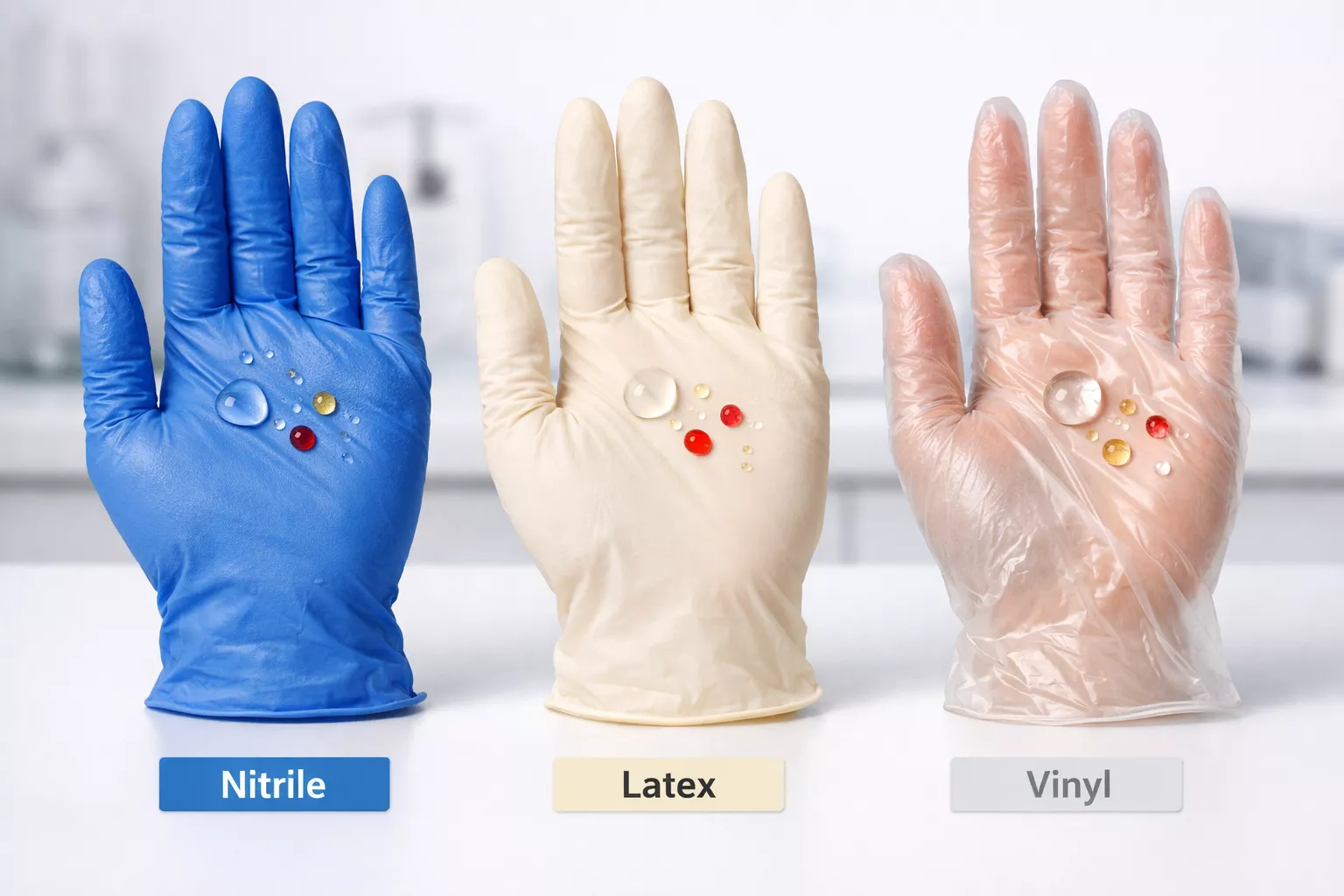
Unlike natural rubber latex, nitrile contains no proteins that trigger Type I hypersensitivity reactions. This makes them safe for staff and patients with latex allergies—a critical consideration since 8-12% of healthcare workers develop latex sensitivity over their careers. The synthetic material also resists degradation from petroleum-based products, oils, and many chemicals commonly used in medical settings.
Key Properties That Matter for Hospital Staff
Puncture resistance: 2-3 times stronger than latex gloves of equivalent thickness
Chemical barrier: Effective against chemotherapy drugs, disinfectants, and most solvents
Tactile sensitivity: Modern formulations provide excellent touch sensitivity for delicate procedures
Fit and comfort: Memory characteristics allow gloves to conform to hand shape during extended wear
Shelf stability: 3-5 year shelf life when stored properly, versus 1-2 years for latex
The material’s elasticity allows up to 650% elongation at break in advanced formulations like INTCO Medical’s Syntex™ line, launched in April 2026 [2]. This flexibility reduces hand fatigue during long procedures while maintaining barrier integrity.
Choose nitrile gloves if: Your facility handles chemotherapy drugs, performs frequent venipunctures, or has staff or patients with known latex allergies. For more context on healthcare demand drivers, see our analysis of why demand for nitrile gloves in healthcare remains very high.
How Do Nitrile Gloves Protect Against Healthcare-Associated Infections?
Nitrile gloves create a physical barrier that prevents transmission of bloodborne pathogens, bacteria, and viruses between patients and healthcare workers. They meet or exceed FDA and EN 455 standards for viral penetration resistance, with properly fitted gloves reducing infection transmission risk by 70-90% when used correctly.
The barrier effectiveness depends on three factors: material integrity, proper sizing, and correct donning technique. Nitrile’s molecular structure creates a tight barrier against particles as small as 0.04 microns—smaller than most bacteria (0.5-5 microns) and many viruses.
Infection Control Performance Standards
StandardRequirementNitrile PerformanceFDA 510(k)Viral penetration resistancePass at 2.0 mil minimumEN 455-1Freedom from holes (AQL)1.5 or better for medical gradeISO 374-5Virus penetrationLevel 2 or 3 certificationASTM D6319Puncture resistance6-12 Newtons typical
Recent innovations have enhanced protection further. In October 2024, Unigloves and KluraLabs launched CrossGuard antimicrobial nitrile gloves that eliminate 99.99% of selected bacteria within 60 seconds [1]. This active antimicrobial coating adds a second layer of protection if glove surfaces contact contaminated equipment or surfaces.
Common mistake: Assuming all nitrile gloves provide equal protection. Medical-grade gloves must meet specific AQL (Acceptable Quality Level) standards—look for AQL 1.5 or lower for examination gloves and AQL 1.0 for surgical applications.
For staff working with latex-sensitive patients, understanding whether nitrile gloves are safe for latex allergy is essential for patient safety protocols.
What Thickness of Nitrile Gloves Should Hospital Staff Use?
Healthcare workers should select nitrile glove thickness based on procedure type and exposure risk: 2-4 mil for routine examinations, 5-6 mil for procedures with moderate puncture risk, and 7-8 mil for surgical applications or chemotherapy handling. Thickness directly impacts both protection level and tactile sensitivity.

Thinner gloves (2-3 mil) provide maximum dexterity for tasks requiring fine motor control—taking vital signs, administering oral medications, or performing detailed assessments. However, they offer less puncture resistance and shorter wear time before material fatigue.
Thickness Selection Guide for Common Tasks
Routine Patient Care (2-4 mil)
Vital sign assessment
Oral medication administration
Non-invasive examinations
Food service in healthcare settings
Environmental cleaning with mild disinfectants
Moderate Risk Procedures (5-6 mil)
Venipuncture and IV insertion
Wound care and dressing changes
Handling sharps containers
Laboratory specimen processing
Dental procedures
High Risk Applications (7-8 mil)
Surgical procedures
Chemotherapy drug preparation and administration
Autopsy and pathology work
Handling concentrated disinfectants
Emergency trauma care
Top Glove’s chemotherapy-specific nitrile gloves, introduced in July 2025, are tested against 60 drugs including high-risk agents like Fentanyl [1]. These specialized gloves use 6-8 mil thickness with enhanced chemical resistance formulations.
Edge case: For extended procedures lasting over 2 hours, consider double-gloving with a thinner inner glove (3 mil) and thicker outer glove (5-6 mil). This combination provides better protection while allowing you to remove the contaminated outer layer without full re-gloving.
Staff can learn more about optimal thickness considerations for various applications to match gloves to specific tasks.
How Should Healthcare Workers Properly Don and Remove Nitrile Gloves?
Healthcare workers should don nitrile gloves by grasping the cuff, pulling over the hand without touching the exterior surface, and ensuring the cuff extends at least 2 inches beyond the wrist. Remove gloves using the glove-to-glove then skin-to-glove technique to avoid contaminating hands with the exterior surface.
Proper technique prevents the most common cause of glove-related contamination: touching the exterior surface during removal. Studies show that 30-40% of healthcare workers contaminate their hands during glove removal when not following proper protocols.
Step-by-Step Donning Protocol
Inspect gloves before use—check for visible tears, holes, or discoloration
Ensure dry hands—moisture reduces glove integrity and makes donning difficult
Grasp cuff of first glove with thumb and forefinger
Pull over hand without touching exterior, adjust fingers into proper position
Repeat for second hand, using gloved hand to grasp inside of second glove cuff
Adjust cuffs to extend 2-3 inches beyond wrist, covering gown cuffs if worn
Check for proper fit—no excessive looseness or tightness that restricts movement
Safe Removal Technique
Pinch exterior of one glove near wrist with opposite gloved hand
Peel away from body, turning glove inside-out as you remove
Hold removed glove in remaining gloved hand
Slide fingers of bare hand under cuff of remaining glove (touching only interior)
Peel off second glove over first, creating a bundle with contaminated surfaces inside
Dispose immediately in appropriate waste container
Perform hand hygiene with soap and water or alcohol-based sanitizer
Critical point: Never reuse disposable nitrile gloves. Material integrity degrades after first use, and proper decontamination is impossible without specialized equipment.
For facilities concerned about extended wear, research shows you can safely wear nitrile gloves for up to 8 hours with proper breaks and hand hygiene protocols.
What Are the Latest Innovations in Healthcare Nitrile Gloves?
The latest healthcare nitrile glove innovations in 2026 include accelerator-free formulations that reduce allergic contact dermatitis, antimicrobial coatings that kill 99.99% of bacteria within 60 seconds, and enhanced durability formulations with 10 times greater abrasion resistance than conventional nitrile.
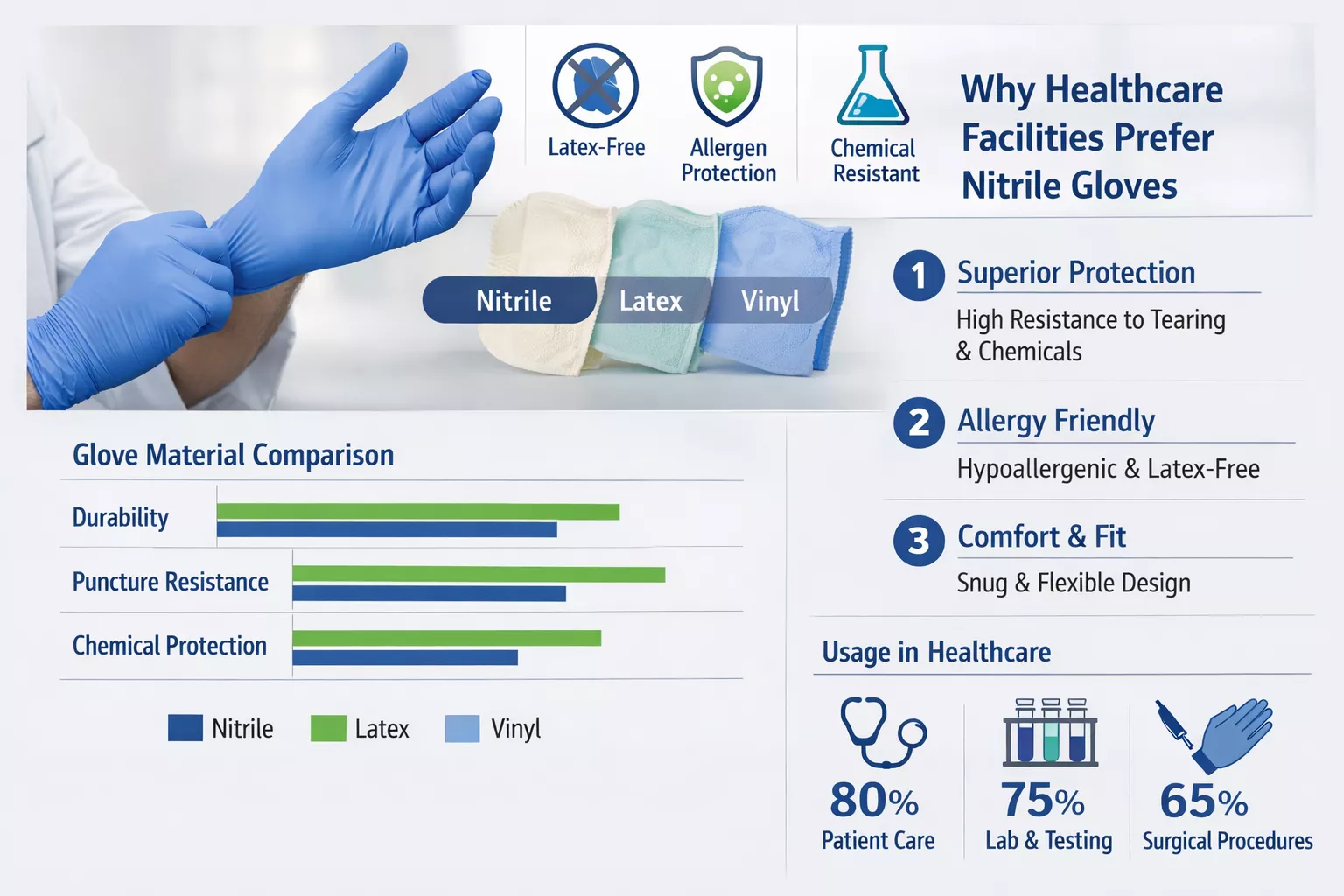
These advances address the three primary concerns healthcare facilities have expressed: chemical sensitivities from accelerators, surface contamination between glove changes, and premature glove failure during high-intensity procedures.
Breakthrough Technologies Launched in 2025-2026
Accelerator-Free Formulations
Wadi Surgicals released India’s first accelerator-free nitrile gloves under the Enliva brand in March 2026 [1]. These gloves use non-sensitizing curing agents instead of traditional thiurams and carbamates, which cause Type IV allergic contact dermatitis in 5-10% of healthcare workers. The formulation meets EN 455, ISO 374, and ISO 13485 standards while reducing dermatitis risk by an estimated 80%.
Antimicrobial Surface Technology
CrossGuard gloves from Unigloves incorporate an antimicrobial coating that actively kills bacteria on the glove surface [1]. This technology targets hospitals, laboratories, and food processing facilities where surface contamination between glove changes poses infection risks. The coating remains effective throughout the glove’s wear period without degrading barrier properties.
Enhanced Durability Compounds
INTCO Medical’s Synmax Pro Gloves, launched April 2026, offer abrasion resistance 10 times higher than conventional nitrile with over 400% elongation at break [2]. These gloves address the supply chain volatility in natural rubber markets while providing extended wear capability for high-volume clinical settings.
Chemotherapy-Specific Protection
Top Glove’s specialized chemotherapy gloves undergo testing against 60 oncology drugs, including high-risk agents like Fentanyl [1]. This targeted approach ensures barrier integrity against specific molecular structures rather than generic chemical resistance claims.
Comparing Traditional vs. Advanced Nitrile Formulations
FeatureTraditional NitrileAdvanced Formulations (2026)Allergic reaction risk5-10% (accelerator sensitivity)<2% (accelerator-free options)Antimicrobial propertiesNone99.99% bacterial reduction in 60 secAbrasion cycles to failure100-200 cycles1,000-2,000 cyclesChemical drug testingGeneric resistance claimsSpecific drug permeation dataElongation at break400-500%500-650%
Decision rule: Choose accelerator-free gloves if your facility has staff with documented contact dermatitis. Select antimicrobial options for high-contamination environments like emergency departments or infectious disease units. Reserve enhanced durability formulations for surgical suites and intensive care units with extended procedure times.
Understanding the composition of nitrile gloves helps procurement teams evaluate new formulations and make informed purchasing decisions.
How Do Nitrile Gloves Compare to Latex and Vinyl for Healthcare Use?
Nitrile gloves provide superior puncture resistance and chemical protection compared to vinyl, while eliminating the latex allergy risks associated with natural rubber gloves. For healthcare applications, nitrile offers the best balance of protection, comfort, and safety for both staff and patients.
The comparison breaks down into four critical factors: barrier effectiveness, allergy risk, tactile sensitivity, and cost-effectiveness. Each glove type excels in different areas, but nitrile’s combination of properties makes it the preferred choice for most medical applications in 2026.
Head-to-Head Performance Comparison
Barrier Protection
Nitrile provides the strongest barrier against bloodborne pathogens and chemicals. Latex offers good barrier properties but degrades when exposed to oils and petroleum-based products. Vinyl has the weakest barrier and higher failure rates—studies show vinyl gloves have 10-15 times more pinholes than nitrile or latex.
Allergy Considerations
Latex contains proteins that trigger Type I hypersensitivity (immediate allergic reactions) in 8-12% of healthcare workers. Nitrile eliminates this risk entirely, though traditional formulations may cause Type IV contact dermatitis from accelerators in 5-10% of users. Vinyl is hypoallergenic but may contain plasticizers that cause skin irritation in sensitive individuals.
Tactile Sensitivity and Fit
Latex provides the best tactile sensitivity and elastic fit, conforming closely to hand shape. Modern nitrile formulations approach latex performance, with some advanced options matching or exceeding latex sensitivity. Vinyl offers the poorest fit and tactile feedback, making it unsuitable for procedures requiring precision.
Durability and Wear Time
Nitrile lasts 2-3 times longer than latex during extended wear and resists punctures better. Vinyl gloves tear easily and should be changed every 15-20 minutes during patient care activities.
Quick Selection Matrix
Use CaseFirst ChoiceAlternativeAvoidSurgical proceduresNitrile (7-8 mil)Latex (if no allergies)VinylChemotherapy handlingNitrile (tested formulation)—Latex, VinylRoutine examinationsNitrile (3-4 mil)Latex (if no allergies)—Food service in hospitalsNitrileVinyl (short tasks only)LatexEnvironmental cleaningNitrile (5-6 mil)—VinylKnown latex allergy presentNitrileVinyl (non-clinical only)Latex
Cost consideration: While nitrile gloves cost 15-30% more than vinyl and 5-15% more than latex per unit, their longer wear time and lower failure rate make them more cost-effective. Factor in reduced glove changes (labor cost) and lower infection risk (liability cost) when calculating total cost of ownership.
For detailed comparisons, see our comprehensive guides on nitrile vs. vinyl gloves and the difference between latex and nitrile gloves.
What Should Hospitals Consider When Purchasing Nitrile Gloves in 2026?
Hospitals should evaluate supplier reliability, regulatory compliance, glove specifications matched to clinical needs, and total cost of ownership when purchasing nitrile gloves in 2026. Supply chain stability has become critical following tariff changes and production capacity constraints.
Since January 2026, U.S. Section 301 tariffs on Chinese medical-grade nitrile gloves doubled to 100%, significantly increasing procurement costs [3]. This policy shift has prompted healthcare facilities to diversify suppliers and reconsider inventory strategies.
Essential Procurement Criteria
Regulatory Compliance and Certifications
FDA 510(k) clearance for medical use
EN 455 compliance (parts 1-4) for European standards
ISO 374 chemical resistance certification
ISO 13485 quality management system certification
AQL ratings: 1.5 or lower for exam gloves, 1.0 for surgical
Supplier Evaluation Factors
Manufacturing capacity and geographic diversification
Quality control processes and batch testing protocols
Supply chain transparency and lead times
Financial stability and market reputation
Customer service and technical support availability
Clinical Specification Matching
Thickness ranges for different departments (2-8 mil)
Size distribution matching staff demographics
Specialized formulations (accelerator-free, antimicrobial, chemotherapy-rated)
Texture options (textured fingertips vs. fully textured)
Color coding for department-specific protocols
Cost Analysis Framework
Calculate total cost of ownership, not just unit price:
Direct costs: Unit price × annual volume × (1 + tariff rate)
Waste costs: Failure rate × replacement cost × labor time
Storage costs: Inventory value × carrying cost percentage
Risk costs: Supply disruption probability × emergency procurement premium
Example calculation:
Hospital using 2 million gloves annually at $0.08/unit with 2% failure rate:
Direct cost: $160,000
Waste cost: 40,000 gloves × $0.08 × 3 minutes labor = $4,800
Storage cost: $40,000 inventory × 15% carrying = $6,000
Total: $170,800 (vs. $160,000 unit price alone)
Supply Chain Risk Mitigation
Diversification strategy:
Primary supplier: 60% of volume (established relationship)
Secondary supplier: 30% of volume (alternative source)
Emergency supplier: 10% of volume (rapid fulfillment capability)
Inventory management:
Maintain 60-90 day safety stock for critical sizes and types
Implement just-in-time delivery for non-critical applications
Monitor usage patterns monthly and adjust par levels quarterly
Major manufacturers like Hartalega, Top Glove, Kossan, Ansell, and Supermax continue to innovate in durability, flexibility, and chemical resistance [4]. Evaluate new product launches quarterly to ensure your facility benefits from latest advances.
For specialized applications, review our guide on choosing the right nitrile gloves for detailed selection criteria.
How Can Healthcare Facilities Reduce Nitrile Glove Waste and Environmental Impact?
Healthcare facilities can reduce nitrile glove waste by implementing right-sizing programs, establishing glove-specific recycling partnerships, training staff on appropriate use protocols, and selecting gloves with longer wear life. These strategies can cut glove consumption by 20-35% without compromising safety.
The healthcare sector generates approximately 5.9 million tons of waste annually, with disposable gloves representing a significant portion. While nitrile gloves cannot be recycled through standard municipal programs due to contamination concerns, specialized recycling options exist.
Waste Reduction Strategies
Right-Sizing Programs
Conduct hand measurement surveys to ensure staff receive properly fitted gloves. Oversized gloves lead to double-gloving unnecessarily, while undersized gloves tear more frequently. Both scenarios increase waste. Proper sizing can reduce consumption by 15-25%.
Appropriate Use Protocols
Establish clear guidelines for when gloves are required versus optional:
Required: Direct patient contact, handling bodily fluids, contact with contaminated surfaces
Optional: Medication preparation (non-hazardous), chart documentation, telephone use
Prohibited: Wearing gloves in hallways between patient rooms (cross-contamination risk)
Training staff to remove gloves between patients rather than wearing them continuously can reduce usage by 30-40% while improving infection control.
Durability Selection
Choose higher-quality gloves with longer wear life for extended procedures. INTCO Medical’s Synmax Pro Gloves with 10x abrasion resistance [2] last significantly longer than standard nitrile, reducing the number of glove changes required during lengthy procedures.
Recycling and Disposal Options
Specialized Recycling Programs
Several companies now offer nitrile glove recycling for non-contaminated gloves (those used for food service, environmental cleaning with non-hazardous materials, or administrative tasks). These programs collect, clean, and process gloves into secondary products like playground surfaces or industrial mats.
Contaminated Glove Disposal
Gloves contaminated with bloodborne pathogens or hazardous chemicals require regulated medical waste disposal. Optimize waste segregation to ensure only truly contaminated gloves enter expensive medical waste streams—non-contaminated gloves can go to regular waste or recycling.
Waste Audit Process
Conduct 1-week waste audit by department
Categorize glove waste: contaminated vs. non-contaminated
Identify inappropriate use patterns
Calculate potential savings from behavior changes
Implement targeted training and monitoring
Re-audit quarterly to track progress
Environmental consideration: While recycling options remain limited, choosing gloves from manufacturers with ISO 14001 environmental management certification ensures production processes minimize environmental impact. For more information, see our article on whether nitrile gloves can be recycled.
What Are Common Mistakes Healthcare Workers Make with Nitrile Gloves?
The most common mistakes healthcare workers make with nitrile gloves include wearing gloves continuously between patients, failing to perform hand hygiene before donning gloves, using incorrect sizes, and assuming gloves provide complete protection without proper technique. These errors compromise both staff and patient safety.
Understanding and correcting these mistakes can reduce healthcare-associated infections by 25-40% and decrease glove-related costs by 20-30% through more appropriate use.
Critical Errors and Corrections
❌ Mistake 1: Wearing Gloves Between Patient Rooms
Walking through hallways or touching door handles, computer keyboards, or phones while wearing gloves spreads contamination. Gloves should be removed immediately after completing a task with one patient, followed by hand hygiene before donning new gloves for the next patient.
✓ Correction: Establish “glove zones”—gloves on only within patient rooms or during specific procedures. Remove at room exit, perform hand hygiene, don fresh gloves at next patient room entry.
❌ Mistake 2: Skipping Hand Hygiene Before Gloving
Many staff members don gloves without washing hands first, assuming gloves alone provide adequate protection. However, gloves can have microscopic defects, and hands contaminate glove exteriors during donning.
✓ Correction: Always perform hand hygiene (soap and water or alcohol-based sanitizer) immediately before donning gloves. This reduces bacterial load by 99% and provides backup protection if gloves fail.
❌ Mistake 3: Using Wrong Glove Thickness for Task
Using thin examination gloves (2-3 mil) for high-risk procedures like handling sharps or chemotherapy drugs provides inadequate protection. Conversely, using thick surgical gloves (7-8 mil) for routine vital signs reduces tactile sensitivity unnecessarily.
✓ Correction: Match glove thickness to risk level—refer to the thickness selection guide earlier in this article. Keep multiple thickness options readily available in each clinical area.
❌ Mistake 4: Ignoring Glove Damage During Use
Staff often continue wearing gloves after noticing small tears or punctures, especially during busy shifts. Even tiny breaches compromise barrier protection.
✓ Correction: Change gloves immediately upon noticing damage. For high-risk procedures, inspect gloves visually every 15-20 minutes and after any sharp contact.
❌ Mistake 5: Incorrect Size Selection
Wearing oversized gloves reduces dexterity and increases contamination risk when excess material contacts surfaces. Undersized gloves tear easily and cause hand fatigue.
✓ Correction: Measure hand circumference at knuckles and length from wrist to middle fingertip. Use manufacturer sizing charts—sizes vary between brands. Gloves should fit snugly without restricting movement or causing discomfort.
Quick Self-Assessment Checklist
✅ Do you perform hand hygiene before every glove application?
✅ Do you remove gloves between patients without exception?
✅ Do you inspect gloves for damage before and during use?
✅ Do you use the correct thickness for each procedure type?
✅ Do you avoid touching environmental surfaces while gloved?
✅ Do you change gloves after 2 hours of continuous wear?
✅ Do you dispose of gloves in appropriate containers immediately after removal?
Training tip: Conduct quarterly competency assessments using direct observation of glove use during actual patient care. Provide immediate feedback and retraining for staff demonstrating incorrect techniques.
Frequently Asked Questions About Nitrile Gloves in Healthcare
How long can healthcare workers safely wear nitrile gloves?
Healthcare workers can safely wear nitrile gloves for up to 2 hours during continuous use, provided the gloves remain intact and hands are not visibly soiled. Change gloves immediately between patients, after contact with contaminated surfaces, or if damage occurs. Extended wear beyond 2 hours increases moisture buildup and skin irritation risk.
Are nitrile gloves safe for patients with latex allergies?
Yes, nitrile gloves are completely safe for patients with latex allergies because they contain no natural rubber proteins that trigger allergic reactions. Nitrile is a synthetic material specifically developed as a latex alternative. However, some patients may have rare sensitivities to accelerators used in traditional nitrile manufacturing—accelerator-free formulations eliminate this concern.
Can nitrile gloves protect against chemotherapy drugs?
Nitrile gloves can protect against many chemotherapy drugs, but only specific formulations tested against oncology agents should be used. Top Glove’s chemotherapy-rated gloves tested against 60 drugs including Fentanyl provide verified protection. Standard examination gloves may not offer adequate barrier properties for hazardous drugs—always use gloves specifically labeled for chemotherapy handling.
What’s the difference between sterile and non-sterile nitrile gloves?
Sterile nitrile gloves undergo gamma irradiation or ethylene oxide sterilization and are individually packaged for surgical procedures requiring aseptic technique. Non-sterile gloves are manufactured in clean conditions but not sterilized, making them appropriate for examinations and most patient care activities. Sterile gloves cost 3-5 times more and are unnecessary for routine clinical tasks. Learn more about sterile vs. nonsterile gloves.
Do nitrile gloves expire?
Yes, nitrile gloves typically have a 3-5 year shelf life from manufacture date when stored properly in cool, dry conditions away from direct sunlight and ozone sources. Expired gloves may become brittle, lose elasticity, or develop increased permeability. Always check expiration dates during inventory rotation and before use.
Should healthcare workers double-glove with nitrile?
Double-gloving with nitrile is recommended for high-risk procedures including surgery, trauma care, handling sharps, and contact with large volumes of blood or bodily fluids. Studies show double-gloving reduces bloodborne pathogen exposure by 87% compared to single-gloving. Use a thinner inner glove (3 mil) with a thicker outer glove (5-6 mil) for optimal protection and dexterity.
Can nitrile gloves be washed and reused?
No, disposable nitrile gloves should never be washed and reused. Washing damages the molecular structure, creates microscopic holes, and cannot adequately remove all contaminants. The cost savings from reuse are negligible compared to infection risk. Only gloves specifically labeled as “reusable” (typically thicker industrial gloves) can be decontaminated and reused following manufacturer protocols.
What causes nitrile gloves to tear during use?
Nitrile gloves tear most commonly from sharp objects (needles, instruments), excessive stretching during donning, contact with jewelry or long fingernails, chemical degradation from incompatible substances, and material fatigue during extended wear. Using correct size, appropriate thickness for task, and proper donning technique prevents 70-80% of tears.
Are colored nitrile gloves as protective as blue ones?
Yes, colored nitrile gloves provide the same protection as blue gloves when they meet identical regulatory standards (FDA 510(k), EN 455, ISO 374). Color is added during manufacturing for department coding, contamination visibility, or aesthetic preferences and does not affect barrier properties. Verify that colored gloves carry the same certifications as standard medical-grade options. Explore more about colors of nitrile disposable gloves.
How should hospitals store nitrile gloves?
Hospitals should store nitrile gloves in cool (59-77°F), dry locations away from direct sunlight, fluorescent lighting, ozone-generating equipment, and chemicals. Use first-in-first-out (FIFO) inventory rotation, keep gloves in original packaging until use, and maintain storage areas at 30-50% relative humidity. Improper storage accelerates degradation and reduces shelf life by 50% or more.
What’s the difference between examination and surgical nitrile gloves?
Examination gloves are non-sterile, have less stringent AQL requirements (1.5 vs. 1.0), and come in ambidextrous designs for general patient care. Surgical gloves are sterile, individually packaged, have stricter quality standards, feature hand-specific designs with better anatomical fit, and typically use thicker material (6-8 mil vs. 3-5 mil). Surgical gloves cost 3-4 times more per pair. Review our detailed comparison of nitrile surgical gloves and exam gloves for hospitals.
Can nitrile gloves cause allergic reactions?
Nitrile gloves can cause Type IV allergic contact dermatitis in 5-10% of users due to chemical accelerators (thiurams, carbamates) used in manufacturing. Symptoms include redness, itching, and dry skin appearing 24-48 hours after exposure. This differs from immediate latex allergies. Accelerator-free nitrile formulations launched in 2026 reduce this risk by 80%. If reactions occur, switch to accelerator-free options or alternative materials. Learn about nitrile glove allergy causes and symptoms.
Conclusion
Nitrile gloves have become the cornerstone of personal protective equipment in healthcare settings, offering superior protection against bloodborne pathogens, chemicals, and punctures while eliminating latex allergy risks. As hospitals and clinics account for 46.5% of the nitrile glove market in 2026, innovations like antimicrobial coatings, accelerator-free formulations, and enhanced durability compounds continue to advance safety standards.
Healthcare facilities must approach nitrile glove selection strategically, matching glove specifications to clinical needs while navigating supply chain challenges and cost pressures from tariff changes. The key to maximizing safety lies not just in choosing quality gloves, but in implementing proper use protocols, training staff on correct techniques, and establishing waste reduction programs that balance environmental responsibility with infection control requirements.
Actionable Next Steps for Hospital Staff
For Frontline Clinical Staff:
Assess your current glove use patterns—are you changing gloves between every patient?
Verify you’re using the correct thickness for your most common procedures
Practice proper donning and removal techniques weekly to maintain competency
Report any skin reactions or glove failures to your supervisor immediately
Participate in departmental glove waste reduction initiatives
For Procurement and Supply Chain Teams:
Audit current suppliers for regulatory compliance and supply chain stability
Develop relationships with 2-3 qualified suppliers to mitigate disruption risks
Evaluate new formulations (antimicrobial, accelerator-free) for pilot programs
Calculate total cost of ownership, not just unit price, for purchasing decisions
Implement quarterly reviews of glove specifications against clinical needs
For Infection Control and Safety Officers:
Conduct direct observation audits of glove use technique across departments
Update protocols to reflect 2026 innovations and best practices
Establish clear guidelines for glove selection by procedure type
Create visual aids and quick-reference guides for proper glove use
Track glove-related incidents and adjust training programs accordingly
For Department Managers:
Review glove inventory par levels monthly and adjust based on usage patterns
Ensure multiple thickness options are readily available in clinical areas
Schedule quarterly competency assessments for glove use technique
Investigate high-waste areas and implement targeted reduction strategies
Budget for quality gloves rather than defaulting to lowest-cost options
The healthcare landscape continues to evolve, and so do the tools that protect both patients and staff. By staying informed about advances in nitrile glove technology, implementing evidence-based use protocols, and fostering a culture of safety-first decision-making, healthcare facilities can maximize protection while managing costs effectively. The investment in proper glove selection and use pays dividends in reduced infections, lower liability exposure, and improved staff satisfaction—making it one of the most cost-effective safety measures available in modern healthcare.
References
[1] Nitrile Gloves Market – https://www.coherentmarketinsights.com/industry-reports/nitrile-gloves-market
[2] Intco Medical Expands Nonlatex Glove Portfolio To Meet Growing Global Demand For Synthetic Materials – https://www.newsfilecorp.com/release/291119/INTCO-Medical-Expands-NonLatex-Glove-Portfolio-to-Meet-Growing-Global-Demand-for-Synthetic-Materials
[3] How Tariffs Impact Nitrile Glove Ppe Prices – https://gloveamerica.com/blog/how-tariffs-impact-nitrile-glove-ppe-prices/
[4] Medical Nitrile Glovespvc Gloves Market 4559 – https://www.intelmarketresearch.com/medical-nitrile-glovespvc-gloves-market-4559
SEO Meta Title
Nitrile Gloves in Healthcare: Safety Guide for Hospital Staff
SEO Meta Description
Comprehensive 2026 guide to nitrile gloves for healthcare workers. Learn proper selection, use techniques, and latest innovations to maximize patient safety.
Tags
nitrile gloves, healthcare safety, hospital PPE, infection control, medical gloves, latex allergy, glove selection, patient safety, antimicrobial gloves, healthcare workers, disposable gloves, surgical gloves