Workers in foundries, refrigeration facilities, and outdoor maintenance operations face a common challenge: standard protective gloves fail when temperatures plummet below freezing or soar above boiling point. In 2026, breakthrough formulations in temperature-resistant nitrile gloves are transforming workplace safety across industries where extreme thermal conditions once meant choosing between protection and performance. These advancements for extreme heat and cold environments represent a significant leap forward in occupational safety technology.
The evolution of nitrile glove composition has accelerated dramatically, with manufacturers developing specialized coatings and insulation systems that maintain flexibility and tactile sensitivity even at temperature extremes that would render traditional gloves brittle or melted. 🔥❄️
Key Takeaways
- Modern nitrile gloves can withstand temperatures from -50°F to 300°F, far exceeding standard disposable glove capabilities
- Specialized coatings like anti-freeze nitrile and aramid-reinforced formulations enable safe handling in welding, refrigeration, and extreme weather conditions
- Advanced insulation technologies maintain dexterity and grip while protecting against thermal injury and chemical exposure
- Industry-specific designs address unique challenges in automotive, food processing, manufacturing, and outdoor maintenance sectors
- FDA-compliant options allow safe food contact even in extreme temperature applications
Understanding Temperature-Resistant Nitrile Gloves Technology
Heat Resistance Capabilities
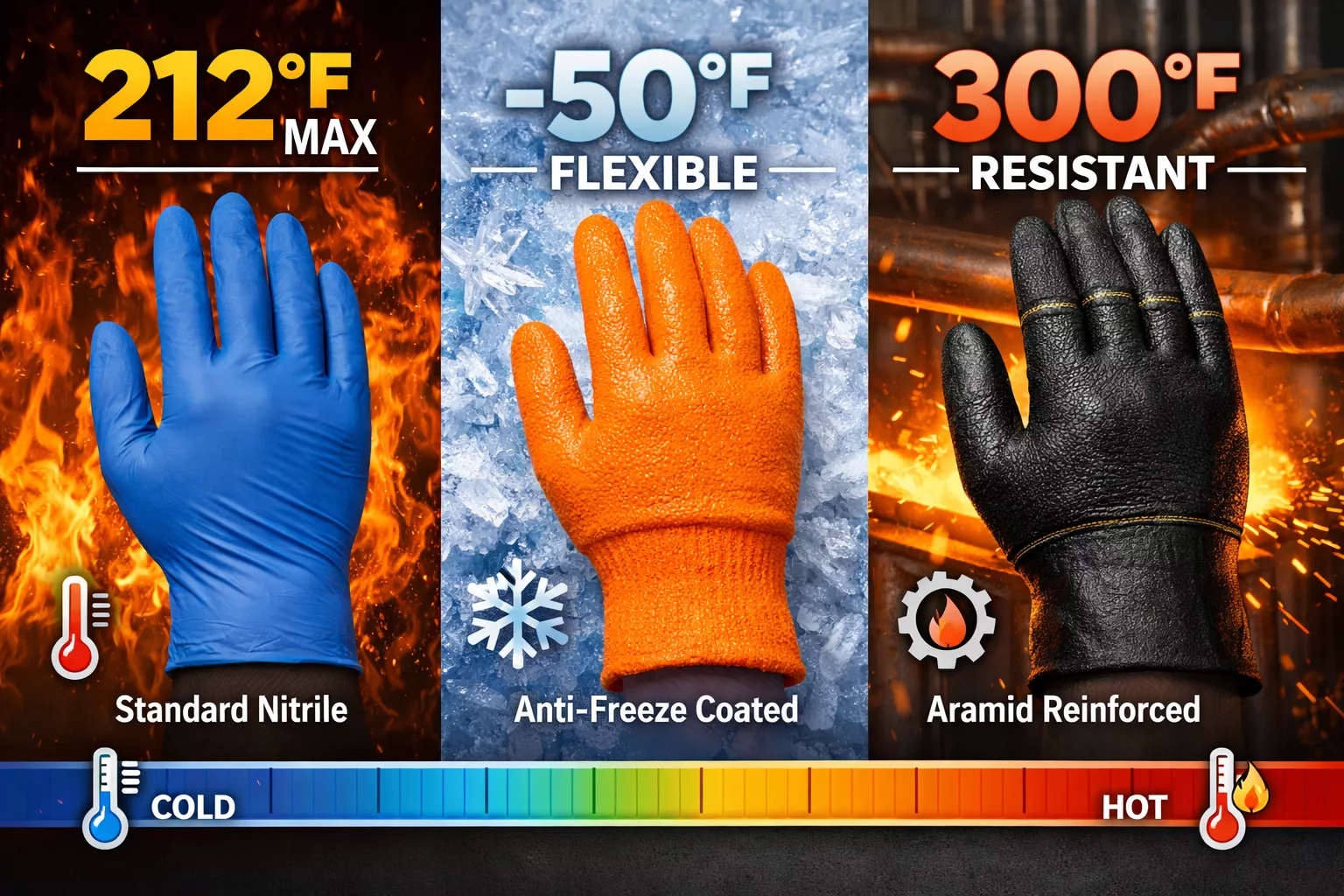
Standard nitrile gloves offer baseline heat resistance up to 212°F (100°C), making them suitable for handling warm objects in automotive shops and food service operations. However, this temperature threshold represents just the starting point for specialized applications.
Advanced aramid fiber-reinforced nitrile gloves push thermal protection boundaries to 300°F (150°C). These gloves feature seamless double-layer construction with EverGrip™ nitrile coating that resists melting while maintaining superior grip on hot surfaces. The aramid fibers—the same material used in bulletproof vests—provide exceptional cut resistance alongside thermal protection.
Key heat-resistant features include:
- Sandy nitrile coating for enhanced grip on hot, oily surfaces
- Breathable construction to reduce hand fatigue during extended wear
- Flexible design that maintains dexterity even when handling heated materials
- Chemical resistance for environments combining heat and hazardous substances
Industries benefiting from heat-resistant formulations include ceramic handling, steel manufacturing, vulcanization processes, and automotive repair where hot engine components require direct contact.
Cold Weather Performance Innovations
Temperature-resistant nitrile gloves designed for extreme cold environments incorporate revolutionary anti-freeze nitrile coatings that remain flexible down to -50°F. This represents a game-changing advancement for refrigeration technicians, outdoor maintenance crews, and cold storage workers who previously struggled with rigid, uncomfortable gloves.
The FrogWear® 8450 model exemplifies cutting-edge cold-weather technology with several innovative features:
- Cold Keep® insulation with honeycomb mesh interior that traps body heat
- Waterproof construction preventing moisture infiltration and heat loss
- High-visibility orange coating for safety in low-light conditions
- 2-inch heavy velvet cuff with reflective overcasting
- Wing thumb design for improved dexterity
- FDA compliance for food contact applications
These gloves create a protective microclimate around hands, preventing frostbite while maintaining the tactile sensitivity required for precision work. The waterproof barrier proves essential in wet, snowy conditions where moisture accelerates heat loss and increases injury risk.
Applications of Temperature-Resistant Nitrile Gloves in Specialized Industries
Welding and Metal Fabrication
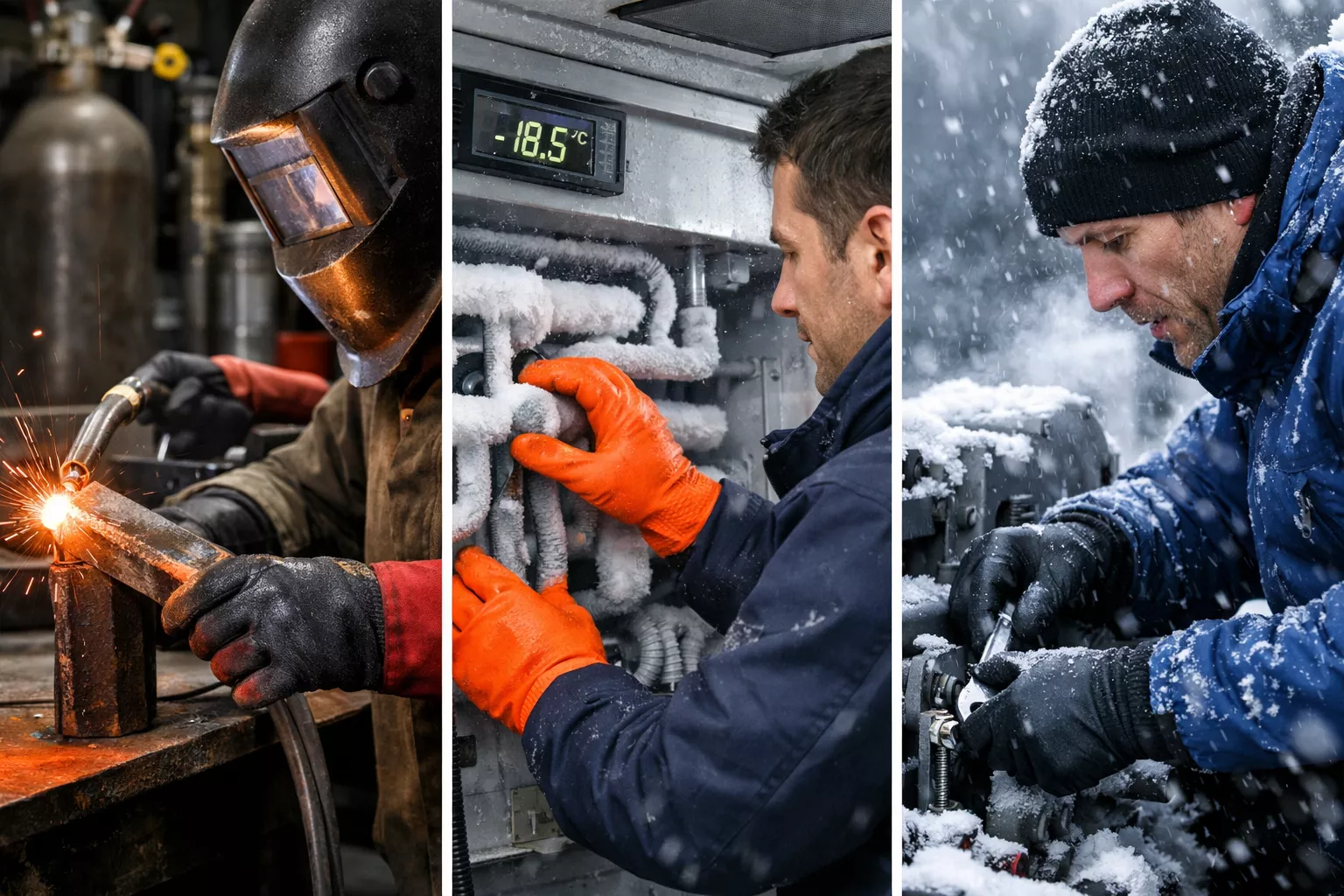
Welding operations demand gloves that withstand intense heat while providing chemical resistance against oils, solvents, and metal particulates. Aramid-reinforced nitrile gloves rated to 300°F enable welders to handle hot metal components immediately after welding, reducing workflow interruptions and improving productivity.
The sandy nitrile coating provides crucial grip on smooth metal surfaces, while the chemical resistance properties protect against cutting fluids and metalworking compounds. Unlike traditional leather welding gloves, modern nitrile formulations offer superior dexterity for precision work.
Refrigeration and Cold Storage
Commercial refrigeration technicians face unique challenges working in environments where temperatures regularly drop below -20°F. Standard gloves become stiff and uncomfortable, compromising both safety and work quality.
Anti-freeze nitrile gloves maintain flexibility at extreme cold temperatures while providing:
- Waterproof protection against condensation and ice formation
- Chemical resistance for handling refrigerants and cleaning compounds
- Insulated warmth without sacrificing finger mobility
- FDA compliance for food industry applications
The food safety certification of specialized cold-weather nitrile gloves makes them ideal for meat processing facilities, frozen food warehouses, and commercial kitchen walk-in freezers.
Outdoor Maintenance and Construction
Winter maintenance crews, utility workers, and construction professionals working in cold climates benefit from temperature-resistant nitrile gloves that combine thermal protection with practical functionality. The high-visibility orange coating enhances safety on job sites with vehicle traffic, while the waterproof construction keeps hands dry during snow removal and outdoor repairs.
These gloves excel in applications requiring:
- Extended outdoor exposure in freezing temperatures
- Wet conditions involving snow, ice, or rain
- Chemical handling of de-icing compounds and maintenance fluids
- Visibility requirements for roadside or traffic-adjacent work
The reflective cuff overcasting provides additional safety during low-light conditions common in winter months.
Comparing Temperature-Resistant Nitrile Gloves to Alternative Materials
Advantages Over Latex and Vinyl
Nitrile gloves outperform latex and vinyl alternatives in temperature-extreme environments for several critical reasons:
| Feature | Temperature-Resistant Nitrile | Latex | Vinyl |
|---|---|---|---|
| Heat Resistance | Up to 300°F | Degrades above 180°F | Melts above 150°F |
| Cold Flexibility | Flexible to -50°F | Becomes brittle below 32°F | Stiff below 40°F |
| Chemical Resistance | Excellent | Moderate | Poor |
| Allergy Concerns | Minimal | High (latex proteins) | Low |
| Durability | Superior puncture resistance | Moderate | Poor tear resistance |
For workers with latex allergies, temperature-resistant nitrile provides essential protection without allergic reaction risks that could compromise safety in extreme environments.
Thickness and Protection Considerations
Glove thickness significantly impacts thermal protection performance. Temperature-resistant nitrile gloves typically range from 8 to 15 mils, with thicker options providing:
- Enhanced insulation against heat and cold transfer
- Improved puncture resistance for rough handling
- Extended durability in demanding applications
- Better chemical barrier protection
However, increased thickness must balance against dexterity requirements. Modern formulations achieve optimal protection while maintaining the tactile sensitivity needed for precision work.
Selecting the Right Temperature-Resistant Nitrile Gloves
Key Selection Criteria
When choosing temperature-resistant nitrile gloves for specific applications, consider these essential factors:
Temperature Range Requirements 🌡️
- Identify maximum and minimum temperatures encountered
- Account for duration of exposure to extreme temperatures
- Consider thermal cycling between hot and cold environments
Chemical Exposure
- Evaluate compatibility with oils, solvents, and cleaning agents
- Verify resistance to industry-specific chemicals
- Check permeation rates for hazardous substances
Regulatory Compliance
- Confirm FDA approval for food contact if applicable
- Verify OSHA compliance for occupational safety standards
- Check industry-specific certifications (ANSI, EN standards)
Ergonomic Features
- Assess cuff length for wrist protection
- Evaluate grip texture for specific handling requirements
- Consider sizing options for proper fit
Visibility and Safety
- High-visibility colors for traffic-adjacent work
- Reflective elements for low-light conditions
- Color coding for contamination control
Industry-Specific Recommendations
Welding and Metal Fabrication: Choose aramid-reinforced nitrile gloves rated to 300°F with sandy coating for grip on hot metal surfaces.
Refrigeration and Cold Storage: Select anti-freeze nitrile gloves with Cold Keep® insulation, waterproof construction, and FDA compliance for food environments.
Outdoor Winter Maintenance: Opt for high-visibility orange gloves with reflective cuffs, waterproof design, and flexibility to -50°F.
Automotive Repair: Use heat-resistant nitrile gloves up to 212°F with oil resistance for handling hot engine components and automotive fluids.
Future Developments in Temperature-Resistant Nitrile Technology
The materials science behind temperature-resistant nitrile gloves continues evolving in 2026, with researchers exploring several promising directions:
Nano-Enhanced Coatings: Incorporating nanoparticles to improve thermal insulation without adding bulk or reducing flexibility.
Smart Temperature Monitoring: Embedded sensors that alert wearers when glove temperature limits approach, preventing thermal injury.
Sustainable Formulations: Developing recyclable nitrile compounds that maintain extreme temperature performance while reducing environmental impact.
Extended Temperature Ranges: Research into formulations that push boundaries beyond current -50°F to 300°F limits for specialized aerospace and cryogenic applications.
Improved Dexterity: Thinner constructions that maintain thermal protection while enhancing tactile sensitivity for precision work.
Maintenance and Safety Best Practices
Proper Usage Guidelines
To maximize protection and glove longevity, follow these best practices:
✅ Inspect before each use for tears, punctures, or degradation
✅ Allow cooling periods when transitioning between extreme temperatures
✅ Replace immediately if chemical breakthrough or thermal damage occurs
✅ Store properly away from direct sunlight and extreme temperatures
✅ Follow manufacturer guidelines for maximum exposure duration
Limitations and Safety Warnings
Even advanced temperature-resistant nitrile gloves have limitations:
⚠️ Prolonged extreme heat exposure may compromise glove integrity
⚠️ Direct flame contact exceeds safe operating parameters
⚠️ Chemical compatibility must be verified for specific substances
⚠️ Thermal protection does not eliminate burn risk with extended contact
⚠️ Regular replacement necessary as protective properties degrade over time
Understanding these limitations ensures workers use appropriate supplementary protection when needed.
Conclusion
Temperature-resistant nitrile gloves represent a critical advancement in occupational safety for workers facing extreme heat and cold environments. The evolution from standard 212°F nitrile to specialized formulations withstanding -50°F to 300°F has transformed workplace protection across welding, refrigeration, outdoor maintenance, and manufacturing industries.
Modern innovations—including anti-freeze coatings, aramid fiber reinforcement, and Cold Keep® insulation—deliver unprecedented performance while maintaining the dexterity, chemical resistance, and comfort that make nitrile the preferred glove material. As materials science continues advancing, workers can expect even more capable solutions for extreme temperature applications.
Take action today by assessing your workplace temperature hazards and upgrading to appropriate temperature-resistant nitrile gloves. Consult with safety equipment specialists to identify the optimal formulation for your specific industry requirements, ensuring both compliance and comprehensive hand protection in 2026’s demanding work environments.
For additional guidance on selecting protective gloves for specialized applications, explore our resources on choosing the best glove thickness and understanding nitrile glove uses across various industries.
SEO Meta Title: Temperature-Resistant Nitrile Gloves: Heat & Cold Advances