Nitrile gloves can withstand up to three times more puncture force than latex alternatives, yet 30% of industrial workers still experience hand fatigue during extended shifts. This performance gap reveals a critical challenge: selecting gloves that balance exceptional durability with all-day comfort for demanding cleaning and maintenance tasks. Understanding Extended Wear Nitrile Gloves: Durability Tests and Applications in Industrial Cleaning and Maintenance requires examining breakthrough tensile strength metrics, chemical resistance standards, and real-world performance in harsh industrial environments.
The evolution of nitrile polymer technology has transformed disposable gloves from basic barriers into engineered protective equipment capable of withstanding hours of continuous exposure to oils, solvents, and abrasive surfaces. Modern extended wear formulations achieve elongation rates exceeding 400% while maintaining puncture resistance that meets or surpasses international safety standards.
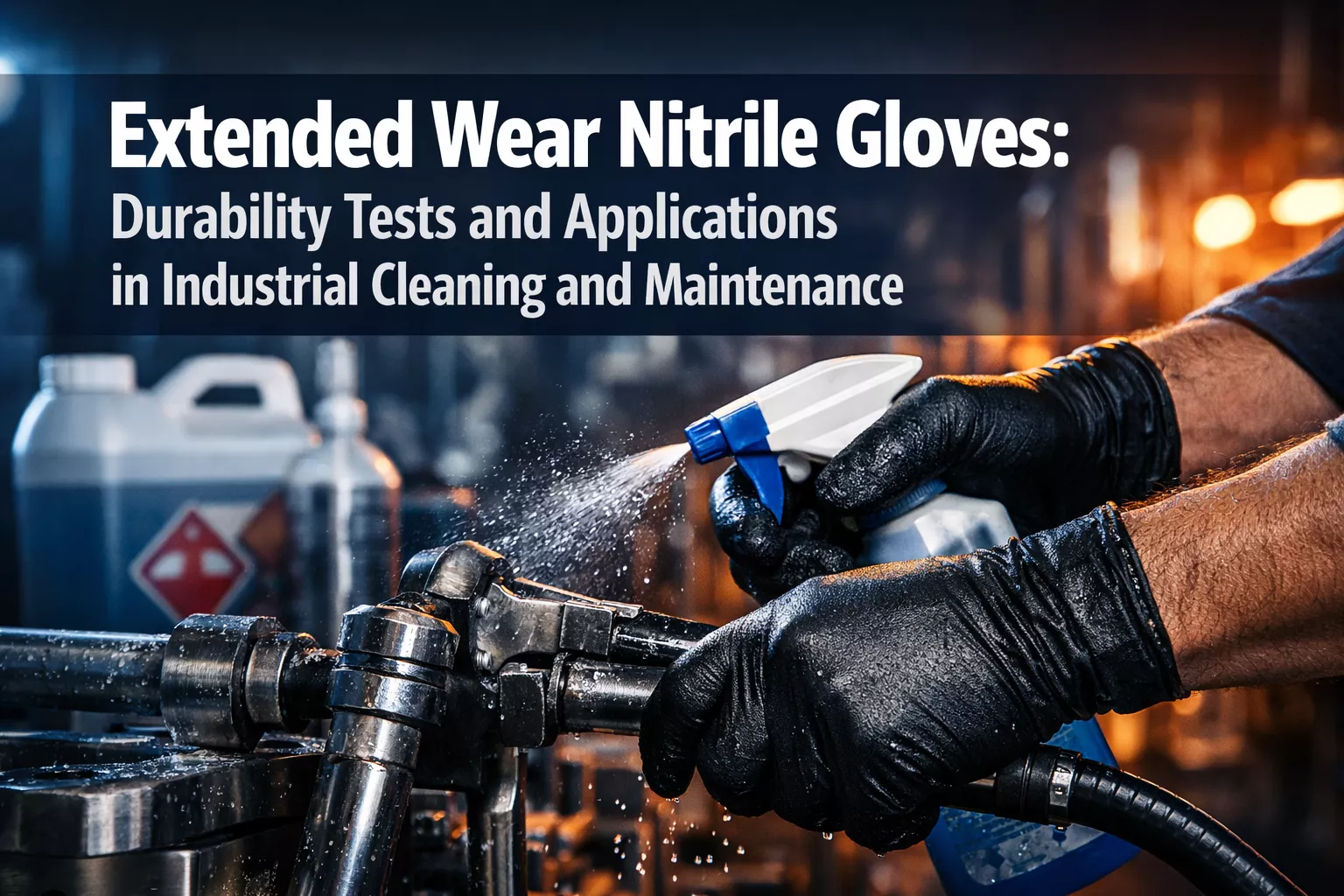
Key Takeaways
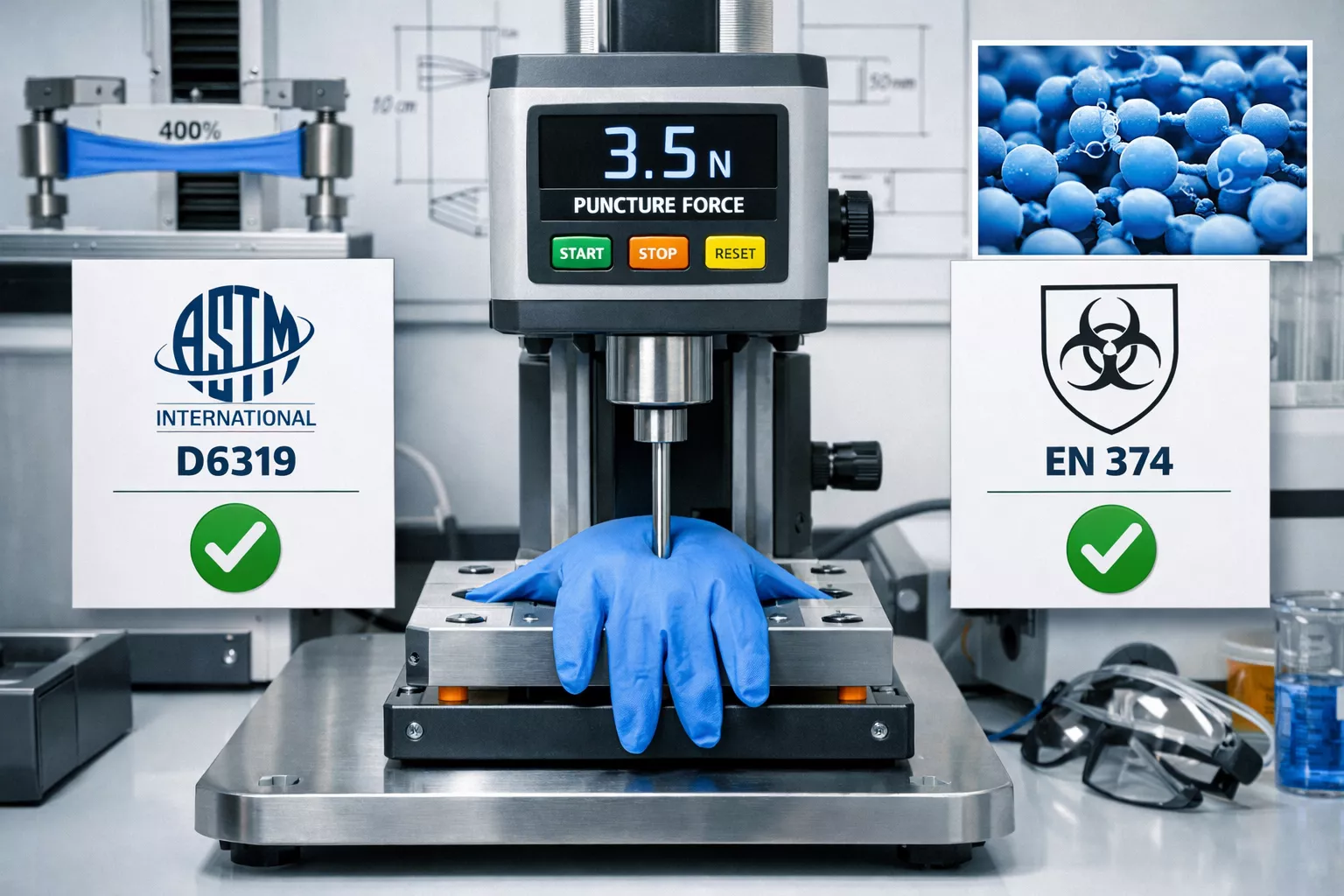
✅ Superior puncture resistance: Extended wear nitrile gloves deliver 3.5 Newtons average puncture strength—three times stronger than latex—making them ideal for high-stress industrial environments
✅ Critical thickness standards: 6-8 mil thickness provides optimal protection for industrial cleaning and maintenance, with reinforced fingertips and textured grips for wet or oily conditions
✅ Advanced elongation performance: Modern formulations achieve 400-650% elongation at break, reducing hand fatigue during extended wear while maintaining barrier integrity
✅ Comprehensive certification compliance: Meeting ASTM D6319, EN 374, and EN 388 standards ensures reliable chemical resistance and physical durability across diverse industrial applications
✅ Extended wear capabilities: Breakthrough polymer technology enables longer glove life and reduced change-out frequency, improving cost-efficiency in maintenance operations
Understanding Durability Tests for Extended Wear Nitrile Gloves
The reliability of Extended Wear Nitrile Gloves: Durability Tests and Applications in Industrial Cleaning and Maintenance depends on rigorous testing protocols that measure multiple performance dimensions. Three primary international standards govern nitrile glove durability assessment.
ASTM D6319: Physical Property Standards
ASTM D6319 establishes baseline requirements for nitrile examination gloves, measuring tensile strength, elongation at break, and modulus properties. Extended wear formulations must demonstrate minimum 400% elongation before failure—a critical metric that indicates the glove’s ability to stretch during repetitive hand movements without tearing. Advanced synthetic latex alternatives now achieve average elongation rates of 650%, significantly reducing the risk of mid-task failures during demanding maintenance work.
EN 374: Chemical Resistance Testing
The EN 374 standard evaluates nitrile gloves’ resistance to specific chemicals through permeation and degradation testing. For industrial cleaning applications, this certification confirms protection against common solvents, degreasers, and petroleum-based products. Understanding how oil exposure affects nitrile gloves becomes essential when selecting gloves for automotive maintenance or machinery cleaning tasks.
EN 388: Mechanical Performance Metrics
EN 388 testing measures four critical mechanical properties:
- Abrasion resistance: Cycles required to wear through the material
- Cut resistance: Force needed to cut the glove
- Tear resistance: Force required to propagate a tear
- Puncture resistance: Force needed to puncture with a standard probe
Premium extended wear nitrile gloves achieve 10 times higher abrasion resistance than conventional formulations, directly translating to longer service life in high-friction environments. Learn more about how nitrile gloves fare against abrasion in demanding industrial settings.
Real-World Puncture Strength Performance
Laboratory testing reveals that quality nitrile gloves average 3.5 Newtons puncture strength—substantially higher than the 1.2 Newtons typical of latex gloves. This three-fold improvement proves critical when handling sharp metal edges, rough surfaces, or jagged equipment during maintenance operations. Comparing nitrile to vinyl gloves in terms of durability demonstrates why nitrile remains the preferred choice for puncture-prone environments.
Industrial Cleaning and Maintenance Applications
Extended Wear Nitrile Gloves: Durability Tests and Applications in Industrial Cleaning and Maintenance environments demand specific performance characteristics that standard disposable gloves cannot provide. Understanding optimal thickness, grip features, and chemical compatibility ensures maximum protection and productivity.
Optimal Thickness for Industrial Tasks
Thickness selection directly impacts both protection level and tactile sensitivity. For extended wear in industrial cleaning and maintenance:
| Thickness Range | Best Applications | Key Benefits |
|---|---|---|
| 4-5 mil | Light cleaning, assembly work | Maximum dexterity, cost-effective |
| 6-8 mil | Heavy-duty cleaning, maintenance | Optimal protection-flexibility balance ⭐ |
| 8+ mil | Chemical handling, extreme conditions | Maximum barrier protection |
The 6-8 mil range represents the sweet spot for most industrial maintenance tasks, providing robust protection without sacrificing the hand mobility needed for tool operation and equipment handling. Discover the best thickness for nitrile gloves based on specific work requirements.
Essential Features for Extended Wear
Modern extended wear nitrile gloves incorporate several design enhancements:
🔧 Reinforced fingertips: Extra material thickness in high-wear zones extends glove life by 40-60%
🔧 Textured grip surfaces: Diamond or raised patterns maintain secure grip on wet, oily, or chemical-coated surfaces
🔧 Extended cuffs: 12-inch cuffs protect wrists and forearms during reach-intensive cleaning tasks
🔧 Ergonomic contouring: Anatomically shaped fingers reduce hand fatigue during multi-hour wear periods
Chemical Resistance in Cleaning Applications
Industrial cleaning exposes gloves to diverse chemical challenges. Nitrile’s synthetic rubber composition provides excellent resistance to:
- Petroleum products: Motor oils, hydraulic fluids, greases
- Solvents: Acetone, toluene, xylene (limited exposure)
- Cleaning agents: Alkaline degreasers, detergents, disinfectants
- Acids and bases: Dilute concentrations common in industrial cleaning
Should you wear nitrile gloves for oil changes and similar maintenance tasks? The answer depends on exposure duration and chemical concentration, but nitrile consistently outperforms latex and vinyl alternatives.
Real-World Performance in Maintenance Environments
Top-rated extended wear nitrile gloves for 2026 demonstrate exceptional performance across diverse industrial applications:
Janitorial Services: Workers report 4-6 hour continuous wear without degradation when using 6 mil gloves for floor cleaning, restroom sanitation, and surface disinfection. The combination of chemical resistance and tear strength prevents mid-shift glove failures that compromise both safety and productivity.
Manufacturing Maintenance: Technicians handling oily machinery parts, metal components, and cleaning solvents benefit from textured grip surfaces that maintain control even when gloves become contaminated. Working with metals requires specific glove considerations that extended wear nitrile formulations address effectively.
Automotive Service: Mechanics performing oil changes, brake service, and engine maintenance experience fewer glove changes per shift with heavy-duty nitrile options. The superior oil resistance prevents rapid degradation that occurs with latex alternatives. Best disposable gloves for mechanics consistently feature extended wear nitrile formulations.
Facility Maintenance: HVAC technicians, electricians, and general maintenance workers appreciate the balance of protection and dexterity that allows tool operation while maintaining barrier protection against lubricants, coolants, and cleaning chemicals.
Addressing Hand Fatigue Challenges
Despite superior durability metrics, approximately 30% of users report hand fatigue during extended wear periods. This challenge stems from several factors:
- Reduced breathability: Nitrile’s chemical resistance also limits air circulation
- Grip tension: Maintaining secure grip requires sustained muscle engagement
- Size mismatch: Improper sizing forces hands into unnatural positions
Solutions include scheduled glove breaks every 2-3 hours, selecting properly fitted gloves that don’t require excessive grip force, and choosing formulations with enhanced flexibility characteristics. Understanding thin versus thick nitrile gloves helps balance protection needs with comfort requirements.
Cost-Efficiency Through Extended Wear
The higher upfront cost of premium extended wear nitrile gloves—typically 20-40% more than standard disposables—delivers substantial long-term savings:
💰 Reduced change-out frequency: 2-3x longer wear time per glove 💰 Lower waste volume: Fewer discarded gloves reduce disposal costs 💰 Decreased contamination risk: Fewer glove changes minimize exposure during transitions 💰 Improved productivity: Less time spent changing gloves during shifts
Organizations implementing extended wear nitrile gloves for maintenance operations report 25-35% reduction in annual glove expenditures despite higher per-unit costs.
Selecting the Right Extended Wear Nitrile Gloves
Choosing optimal gloves for Extended Wear Nitrile Gloves: Durability Tests and Applications in Industrial Cleaning and Maintenance requires evaluating several critical factors beyond basic durability metrics.
Certification Verification
Always confirm gloves meet relevant standards:
✔️ ASTM D6319 for physical properties ✔️ EN 374 for chemical resistance ✔️ FDA compliance for food-contact applications (if applicable) ✔️ EN 455 for medical-grade quality (when required)
Size and Fit Considerations
Proper sizing dramatically impacts both protection and comfort. Gloves that are too tight restrict circulation and accelerate hand fatigue, while oversized gloves reduce tactile sensitivity and increase snag risk. Most manufacturers offer sizes from small through extra-large, with some providing 2XL and 3XL options for larger hands.
Color Coding for Safety
Many industrial facilities implement color-coded glove systems to prevent cross-contamination:
- Black: General maintenance, automotive work
- Orange: Chemical handling, high-visibility tasks
- Blue: Food preparation areas (where permitted)
- Purple: Cleaning and sanitation
Powder-Free Formulations
Modern extended wear nitrile gloves universally feature powder-free designs that eliminate:
- Contamination of cleaned surfaces
- Respiratory irritation from airborne particles
- Interference with adhesives and coatings
- Skin irritation from cornstarch residue
Understanding potential allergic reactions to nitrile gloves remains important, though nitrile allergies occur far less frequently than latex sensitivities.
Conclusion
Extended Wear Nitrile Gloves: Durability Tests and Applications in Industrial Cleaning and Maintenance represent a critical advancement in worker protection technology. With puncture resistance three times stronger than latex, elongation rates exceeding 400%, and comprehensive chemical resistance, modern nitrile formulations deliver the performance required for demanding industrial environments.
The key to maximizing value lies in matching glove specifications to specific applications: 6-8 mil thickness for general maintenance, reinforced fingertips for high-wear tasks, and textured grips for wet or oily conditions. Certification compliance with ASTM D6319, EN 374, and EN 388 standards ensures reliable protection that meets international safety requirements.
Take Action Today
- Assess your current glove performance: Track failure rates, change-out frequency, and worker feedback
- Calculate total cost of ownership: Compare premium extended wear options against standard disposables
- Request samples: Test multiple brands and thicknesses in your specific work environment
- Implement proper sizing: Measure hands and provide appropriate size ranges
- Monitor performance metrics: Track durability, comfort, and cost savings over 90-day trial periods
Organizations that invest in quality extended wear nitrile gloves consistently report improved worker safety, reduced glove-related expenses, and enhanced productivity across maintenance operations. The combination of superior durability testing, proven chemical resistance, and real-world performance makes extended wear nitrile the optimal choice for industrial cleaning and maintenance applications in 2026 and beyond.