Articles

Last updated: June 25, 2026 Quick Answer Synthetic rubber price hedging for nitrile glove buyers involves using financial instruments like futures contracts, fixed-price supplier agreements, and strategic inventory management to lock in raw material costs and protect against the 30-50% price swings common in butadiene and acrylonitrile markets. Buyers can stabilize their cost structure by […]

Last updated: June 25, 2026 Quick Answer The Asia-Pacific region now dominates global nitrile glove production, with Malaysia, Thailand, Vietnam, and China collectively manufacturing over 70% of the world’s supply in 2026. This production surge offers buyers competitive pricing and improved availability, but requires careful quality verification through certification checks, pre-shipment testing, and supplier audits. […]

Last updated: June 25, 2026 Global healthcare facilities now face a critical challenge: standard nitrile gloves fail to meet the diverse needs of specialized medical procedures, industrial applications, and infection control protocols. Kim Gloves 2025 Advancements: Customized Nitrile Solutions for Global Healthcare and PPE addresses this gap by offering tailored nitrile products designed for specific […]
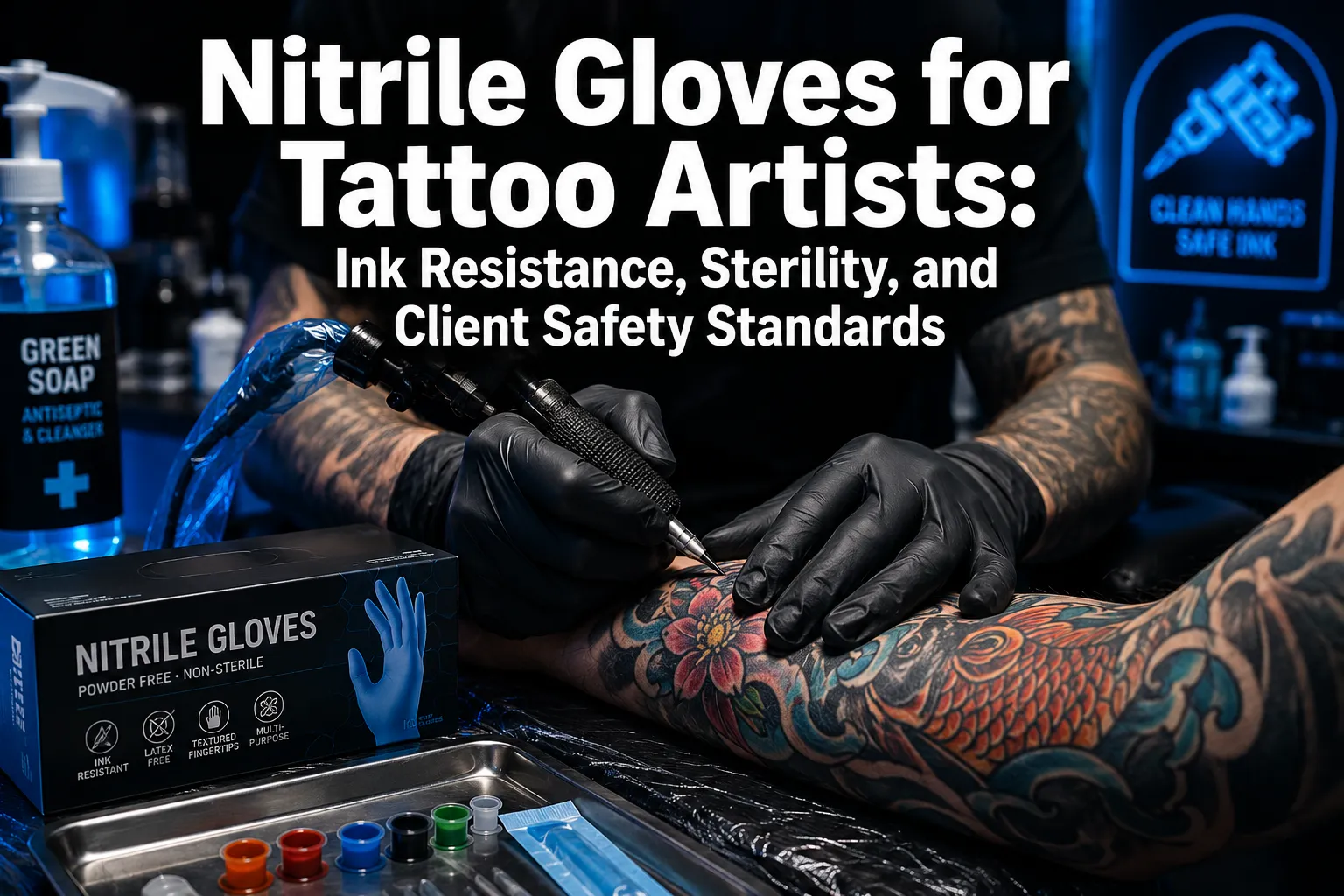
Last updated: June 25, 2026 Quick Answer Nitrile gloves provide tattoo artists with superior protection against bloodborne pathogens, ink staining, and chemical exposure while eliminating latex allergy risks for both artists and clients. Professional-grade nitrile gloves in 4-6 mil thickness meet health department requirements for barrier protection during tattooing, resist punctures better than latex or […]

Last updated: June 25, 2026 A mechanic’s black nitrile gloves can hide oil stains that would immediately flag contamination on blue gloves, while a surgeon’s purple gloves reveal even microscopic tears that could compromise sterility. The color of your nitrile gloves isn’t just aesthetic—it directly impacts contamination detection, workplace safety compliance, and operational efficiency across […]

Spot butadiene prices in May 2025 showed a staggering 44% gap between the US Gulf and China—USD 956 per ton versus USD 1,380 per ton. For manufacturers dependent on merchant feedstock, that volatility translates directly into unpredictable margins and supply disruptions. As raw-material swings intensify and global logistics remain fragile in 2026, leading nitrile producers […]

Veterinary professionals face a unique challenge: protecting themselves from zoonotic diseases, chemical disinfectants, and animal bites while maintaining the tactile sensitivity needed for delicate procedures. Studies show that punctured nitrile gloves can fail as infection barriers 100% of the time when penetrated by needles 0.4 mm or larger, yet nitrile remains the most widely recommended […]

Up to 13% of healthcare workers experience contact dermatitis from disposable gloves, with chemical accelerators identified as the primary culprit in most cases. For anyone who develops redness, itching, or cracking after wearing standard nitrile gloves, understanding how to choose nitrile gloves for sensitive skin through accelerator-free, low-chemical, and comfort-focused options can transform daily hand […]
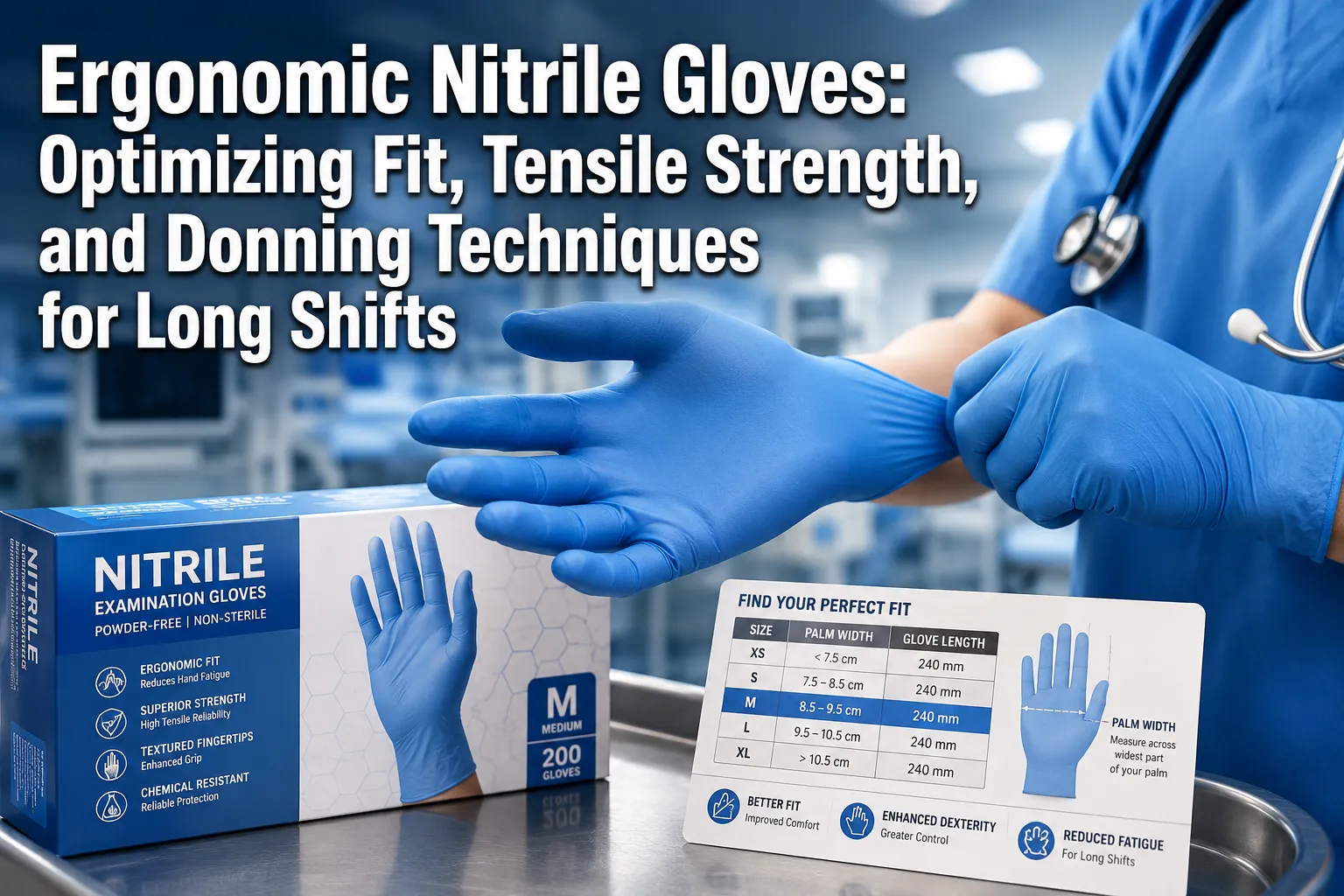
Healthcare workers and industrial professionals wearing gloves for 10 to 12 hours daily face a critical challenge: hand fatigue, reduced dexterity, and premature glove failure can compromise both safety and productivity. With the global nitrile gloves market projected to reach $57.1 billion by 2026, driven by a 23.3% compound annual growth rate, the demand for […]