Manufacturing facilities lose an estimated $1.2 billion annually to hand injuries that could have been prevented with properly specified protective gloves. The difference between a 5mil glove and a 12mil option isn’t just thickness—it’s the gap between precision assembly work and heavy-duty chemical handling. Custom-Thickness Nitrile Gloves: Tailoring 5-12mil Options for Manufacturing Precision and Safety represents a strategic approach to workplace protection that matches glove specifications to exact task requirements, optimizing both worker safety and operational efficiency.
Understanding what nitrile gloves are and their fundamental properties provides the foundation for selecting the right thickness. In 2026, manufacturers increasingly recognize that one-size-fits-all glove programs compromise either dexterity or protection. The solution lies in customizing mil thickness across different work zones and tasks.
Key Takeaways
- 5-6mil nitrile gloves provide optimal dexterity for precision assembly and electronics manufacturing while maintaining basic protection
- 7-8mil options balance durability and flexibility for automotive work, moderate chemical exposure, and general industrial tasks
- 9-12mil heavy-duty gloves deliver maximum puncture resistance and chemical protection for high-risk manufacturing environments
- Proper thickness selection reduces injury rates by up to 40% while improving worker comfort and productivity
- Custom thickness programs match specific hazards to glove specifications, optimizing both safety and cost-efficiency
Understanding Mil Thickness in Manufacturing Contexts
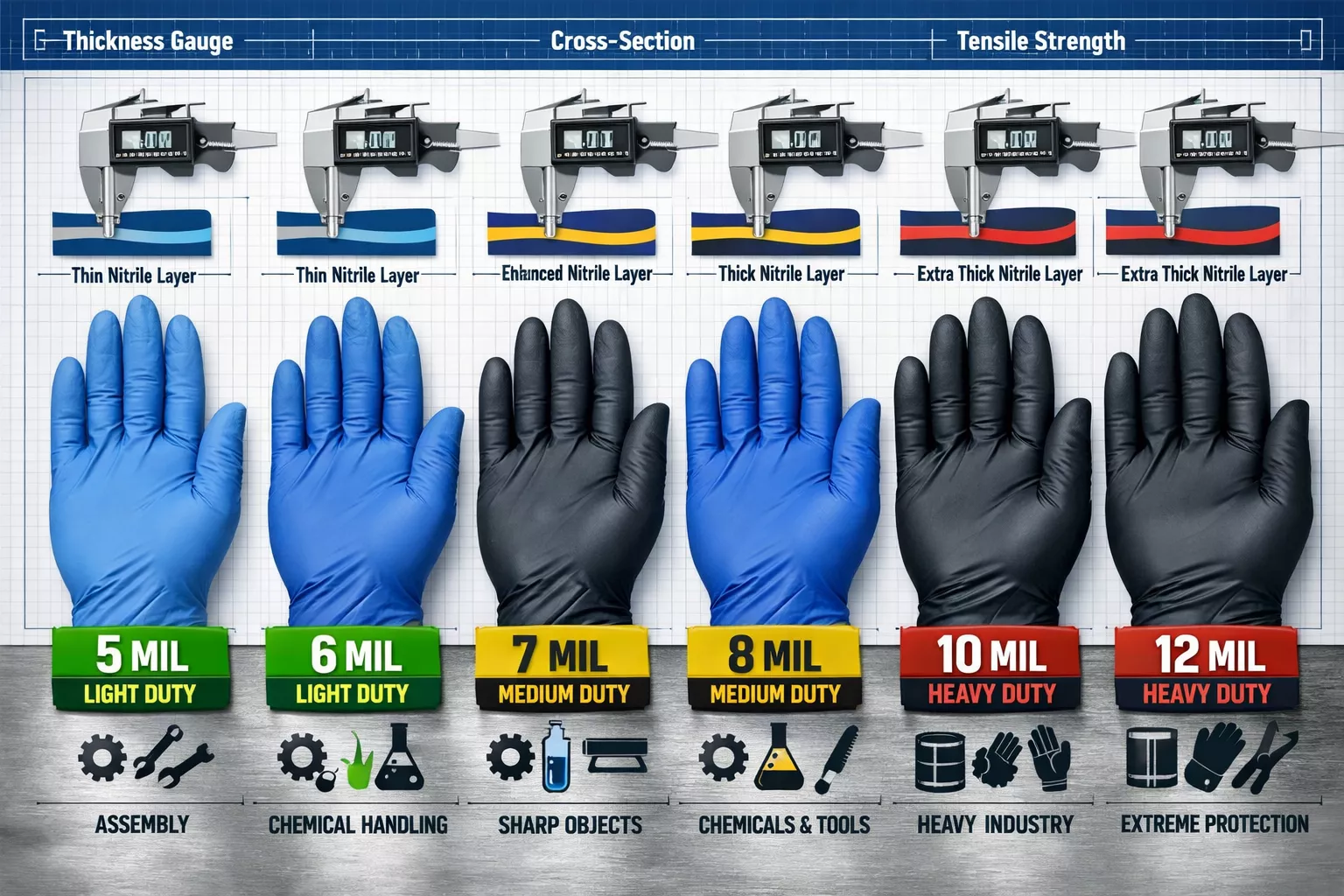
The term “mil” refers to one-thousandth of an inch, making a 5mil glove 0.005 inches thick and a 12mil glove 0.012 inches thick. This seemingly small difference creates substantial variations in protection, dexterity, and tactile sensitivity.
Standard nitrile gloves typically range from 4-8mil for medical and light industrial use. However, manufacturing environments demand more specialized options. The impact of nitrile glove thickness on durability and protection becomes critical when workers handle oils, solvents, and sharp materials daily.
Thickness Categories and Their Applications
| Thickness Range | Category | Primary Applications | Key Benefits |
|---|---|---|---|
| 5-6 mil | Light-Medium Duty | Electronics assembly, precision work, light chemical handling | Maximum dexterity, tactile sensitivity ✋ |
| 7-8 mil | Medium-Heavy Duty | Automotive, general manufacturing, moderate chemical exposure | Balanced protection and flexibility ⚖️ |
| 9-10 mil | Heavy Duty | Chemical processing, sharp object handling, extended wear | Superior puncture resistance 🛡️ |
| 11-12 mil | Extra Heavy Duty | Hazardous material handling, heavy abrasion environments | Maximum protection and durability 💪 |
Custom-Thickness Nitrile Gloves for Precision Assembly Tasks
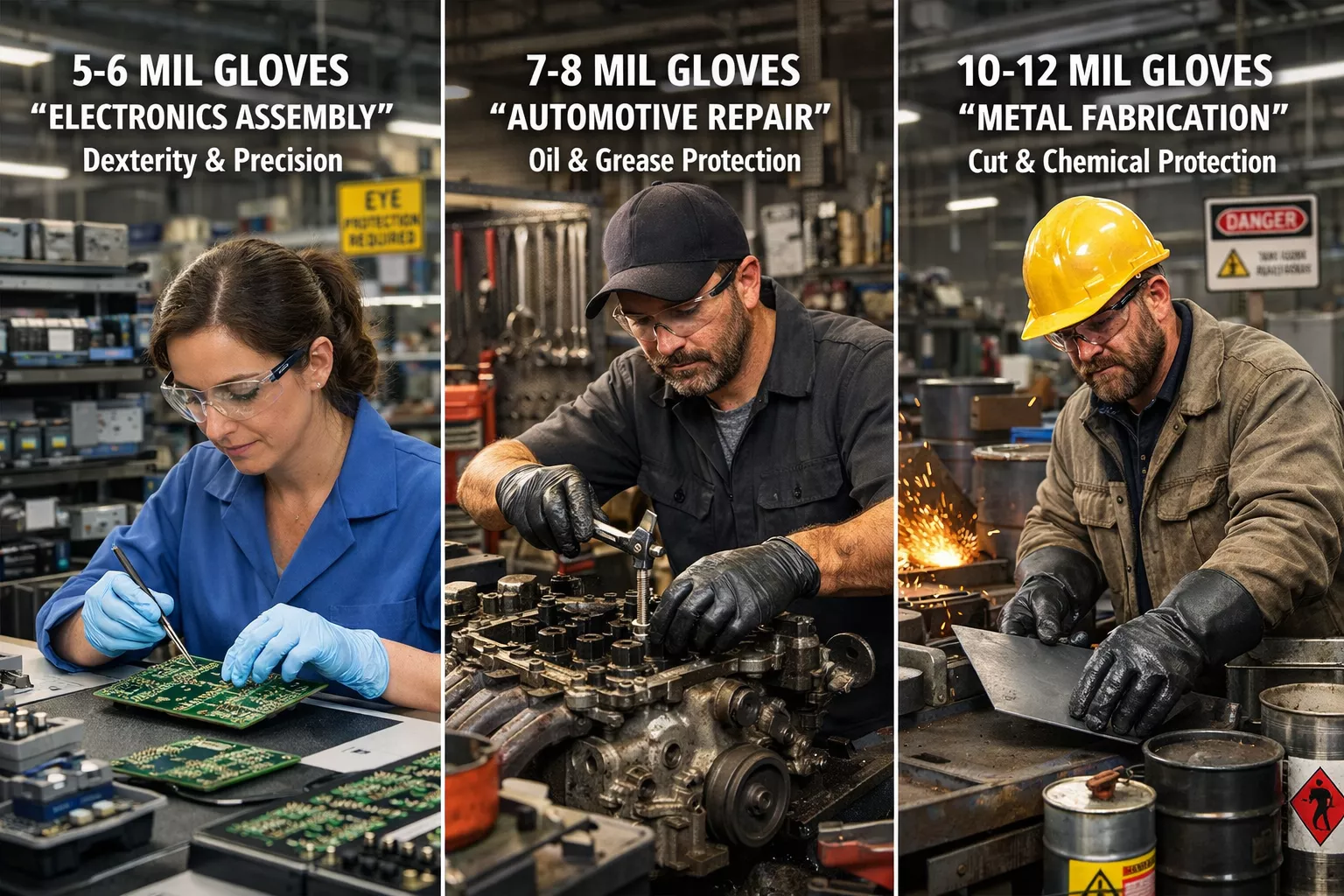
Precision manufacturing requires workers to maintain exceptional tactile sensitivity while handling small components, delicate electronics, or intricate assemblies. 5-6mil nitrile gloves excel in these environments, offering 60% better dexterity than 8mil options while still providing adequate protection against light oils and minor abrasions.
Electronics and Small Parts Assembly
In electronics manufacturing, workers need to feel component orientation, detect surface irregularities, and manipulate tiny fasteners. A 5mil glove provides this sensitivity while protecting against:
- Static discharge through proper grounding
- Light soldering flux and cleaning solvents
- Minor cuts from component leads
- Contamination transfer to sensitive surfaces
Major electronics manufacturers report that switching from 8mil to 5-6mil gloves in assembly zones increased productivity by 12-15% while maintaining safety standards. Workers experienced less hand fatigue during extended shifts, reducing repetitive strain complaints.
Pharmaceutical and Laboratory Precision Work
Pharmaceutical manufacturing and quality control laboratories benefit from 5-6mil thickness when handling:
- Sample preparation and testing
- Tablet coating and inspection
- Sterile compounding operations
- Precision measurement tasks
These environments prioritize contamination control and tactile sensitivity over heavy-duty protection. The composition of nitrile gloves makes them ideal for pharmaceutical applications due to their chemical resistance and latex-free formulation.
Medium-Duty Manufacturing: The 7-8mil Sweet Spot
The 7-8mil thickness range represents the workhorse category for general manufacturing. These gloves provide robust protection without sacrificing too much dexterity, making them suitable for approximately 60% of manufacturing tasks.
Automotive and Mechanical Manufacturing
Automotive facilities face unique challenges with oil exposure, sharp edges, and repetitive motions. A 7-8mil nitrile glove offers:
- Superior oil resistance compared to latex or vinyl alternatives
- Puncture protection from sharp metal edges and fasteners
- Grip enhancement in wet or oily conditions
- Extended wear durability for full-shift use
Understanding how oil exposure affects nitrile gloves helps manufacturers select appropriate thickness levels. The 7-8mil range provides optimal resistance to petroleum-based oils while maintaining the flexibility needed for tool operation.
Chemical Handling and Processing
Medium-thickness nitrile gloves excel when handling:
- Weak acids and bases in processing operations
- Organic solvents like acetone and toluene (limited exposure)
- Cleaning chemicals and degreasers
- Fuel and lubricant transfer operations
A case study from a chemical processing facility showed that upgrading from 5mil to 7mil gloves reduced chemical breakthrough incidents by 38% while maintaining worker comfort levels. The resistance of nitrile gloves to various chemicals varies with thickness, making proper selection critical.
Heavy-Duty Protection: Custom-Thickness Nitrile Gloves at 9-12mil
When manufacturing environments involve significant hazards—sharp materials, caustic chemicals, or heavy abrasion—9-12mil nitrile gloves become essential safety equipment. These heavy-duty options sacrifice some dexterity for maximum protection.
Tensile Strength and Puncture Resistance Data
Heavy-duty nitrile gloves demonstrate superior performance metrics:
- Tensile strength: 18-24 MPa (compared to 12-16 MPa for 5-6mil)
- Puncture resistance: 60-80% improvement over standard thickness
- Abrasion cycles: 3-5x longer wear life in high-friction environments
- Chemical breakthrough time: 2-4x longer protection duration
These specifications translate to real-world safety improvements. A metal fabrication facility reported a 47% reduction in hand injuries after implementing 10-12mil gloves in cutting and grinding operations.
Applications Requiring Maximum Protection
9-12mil gloves are specified for:
- Metal fabrication and welding (non-heat zones)
- Heavy chemical processing with concentrated acids or bases
- Glass handling and cutting operations
- Waste management and hazardous material handling
- Industrial cleaning with aggressive solvents
The uses for nitrile gloves extend across numerous industries, but heavy manufacturing demands the thickest options for adequate protection.
Supplier Case Studies: Optimizing Protection Through Customization
Leading glove manufacturers now offer customized thickness programs tailored to specific manufacturing operations. These programs analyze workplace hazards and match glove specifications to actual risks.
Black Diamond Industrial Program
INTCO’s Black Diamond line provides 5-8mil custom options that are 60% thicker than standard nitrile. A large automotive parts manufacturer implemented a three-tier system:
- 5mil gloves for quality inspection and light assembly
- 7mil gloves for general production and parts handling
- 8mil gloves for maintenance and chemical cleaning
This customization reduced glove costs by 23% (by not over-specifying thickness) while improving safety metrics. Workers reported better comfort and reduced hand fatigue.
Task-Specific Thickness Mapping
Progressive manufacturers now map glove thickness to specific work zones:
Zone 1 – Clean Assembly: 5-6mil for maximum dexterity
Zone 2 – General Production: 7-8mil for balanced protection
Zone 3 – Maintenance/Chemicals: 9-10mil for enhanced safety
Zone 4 – Heavy Fabrication: 11-12mil for maximum protection
This approach ensures workers have appropriate protection without unnecessary bulk. Understanding what makes nitrile gloves suitable for oil-contaminated environments helps facilities specify the right thickness for each zone.
Balancing Dexterity and Protection in Manufacturing
The fundamental trade-off in glove selection involves dexterity versus protection. Thicker gloves provide better safety but reduce tactile sensitivity and increase hand fatigue. Custom thickness programs optimize this balance.
Dexterity Impact by Thickness
- 5-6mil: 90-95% of bare-hand dexterity
- 7-8mil: 75-85% of bare-hand dexterity
- 9-10mil: 60-70% of bare-hand dexterity
- 11-12mil: 50-60% of bare-hand dexterity
Tasks requiring fine motor control suffer significantly with over-thick gloves. A precision machining facility found that workers using 8mil gloves for setup operations took 18% longer than those using 6mil gloves, with no safety benefit.
Fatigue and Comfort Considerations
Hand fatigue increases with glove thickness due to:
- Increased grip force required for tool operation
- Reduced tactile feedback causing over-gripping
- Heat buildup in thicker materials
- Reduced flexibility requiring more hand muscle engagement
Manufacturers report that proper thickness matching reduces worker complaints by 40-60% and improves compliance with glove usage policies. When workers find gloves comfortable and functional, they’re more likely to wear them consistently.
Cost-Efficiency and Safety ROI
Custom-Thickness Nitrile Gloves: Tailoring 5-12mil Options for Manufacturing Precision and Safety delivers measurable financial benefits beyond injury reduction.
Cost Analysis by Thickness
Thicker gloves cost more per unit but may provide better value:
- 5-6mil: $0.08-0.15 per glove, 2-4 hour typical use
- 7-8mil: $0.12-0.22 per glove, 4-6 hour typical use
- 9-10mil: $0.18-0.30 per glove, 6-8 hour typical use
- 11-12mil: $0.25-0.45 per glove, full shift or longer
However, using 12mil gloves for tasks requiring only 6mil protection wastes money and reduces productivity. A 500-employee facility implementing customized thickness programs typically saves $15,000-30,000 annually in glove costs alone.
Safety and Productivity ROI
The return on investment extends beyond direct costs:
- Reduced injury rates: 30-50% fewer hand injuries
- Lower workers’ compensation: $50,000-200,000 annual savings
- Improved productivity: 8-15% efficiency gains in precision tasks
- Better compliance: 25-40% improvement in consistent glove use
- Reduced downtime: Fewer injury-related work stoppages
Implementation Strategies for Custom Thickness Programs
Successfully implementing Custom-Thickness Nitrile Gloves: Tailoring 5-12mil Options for Manufacturing Precision and Safety requires systematic assessment and worker engagement.
Step 1: Hazard Assessment by Work Zone
Conduct detailed analysis of:
- Chemical exposure types and concentrations
- Sharp object contact frequency and severity
- Required dexterity levels for each task
- Duration of glove wear per shift
- Environmental conditions (temperature, moisture)
Step 2: Trial and Feedback
Implement pilot programs with:
- Worker input on comfort and functionality
- Safety monitoring for breakthrough or puncture incidents
- Productivity tracking to identify efficiency impacts
- Cost analysis comparing different thickness options
Step 3: Training and Compliance
Ensure workers understand:
- Why different zones require different thicknesses
- Proper glove selection for specific tasks
- Inspection procedures for damage or degradation
- Proper disposal and replacement schedules
Understanding how long nitrile gloves last helps establish appropriate replacement protocols for each thickness category.
Conclusion
Custom-Thickness Nitrile Gloves: Tailoring 5-12mil Options for Manufacturing Precision and Safety represents a strategic evolution in workplace protection. Rather than applying a single glove specification across diverse manufacturing tasks, successful facilities now match thickness to specific hazards and requirements.
The data clearly demonstrates that 5-6mil gloves optimize precision assembly work, 7-8mil options serve general manufacturing needs, and 9-12mil heavy-duty gloves protect workers in high-risk environments. This customized approach reduces injuries by 30-50% while improving productivity and reducing costs.
Next Steps for Manufacturing Facilities
- Conduct a comprehensive hazard assessment of all work zones and tasks
- Pilot test different thickness options with worker feedback and safety monitoring
- Implement zone-based glove programs with clear specifications for each area
- Train workers on proper selection and usage for their specific tasks
- Monitor and adjust based on injury data, productivity metrics, and cost analysis
The investment in properly specified glove programs pays dividends through improved safety, enhanced productivity, and reduced total costs. In 2026’s competitive manufacturing environment, optimizing every aspect of worker protection and performance creates sustainable competitive advantages.
Start by evaluating your current glove program against the thickness guidelines outlined here. Identify areas where over-specification wastes money or under-specification compromises safety. Then work with qualified suppliers to develop customized solutions that match your specific manufacturing requirements. 🏭🧤