Articles

Last updated: July 4, 2026 Between 8% and 17% of healthcare workers worldwide now show sensitivity to natural rubber latex proteins, a dramatic increase from less than 1% before 1980. This surge has fundamentally reshaped medical supply procurement, patient safety protocols, and the global disposable glove market. Understanding latex allergy epidemiology and nitrile’s role in […]
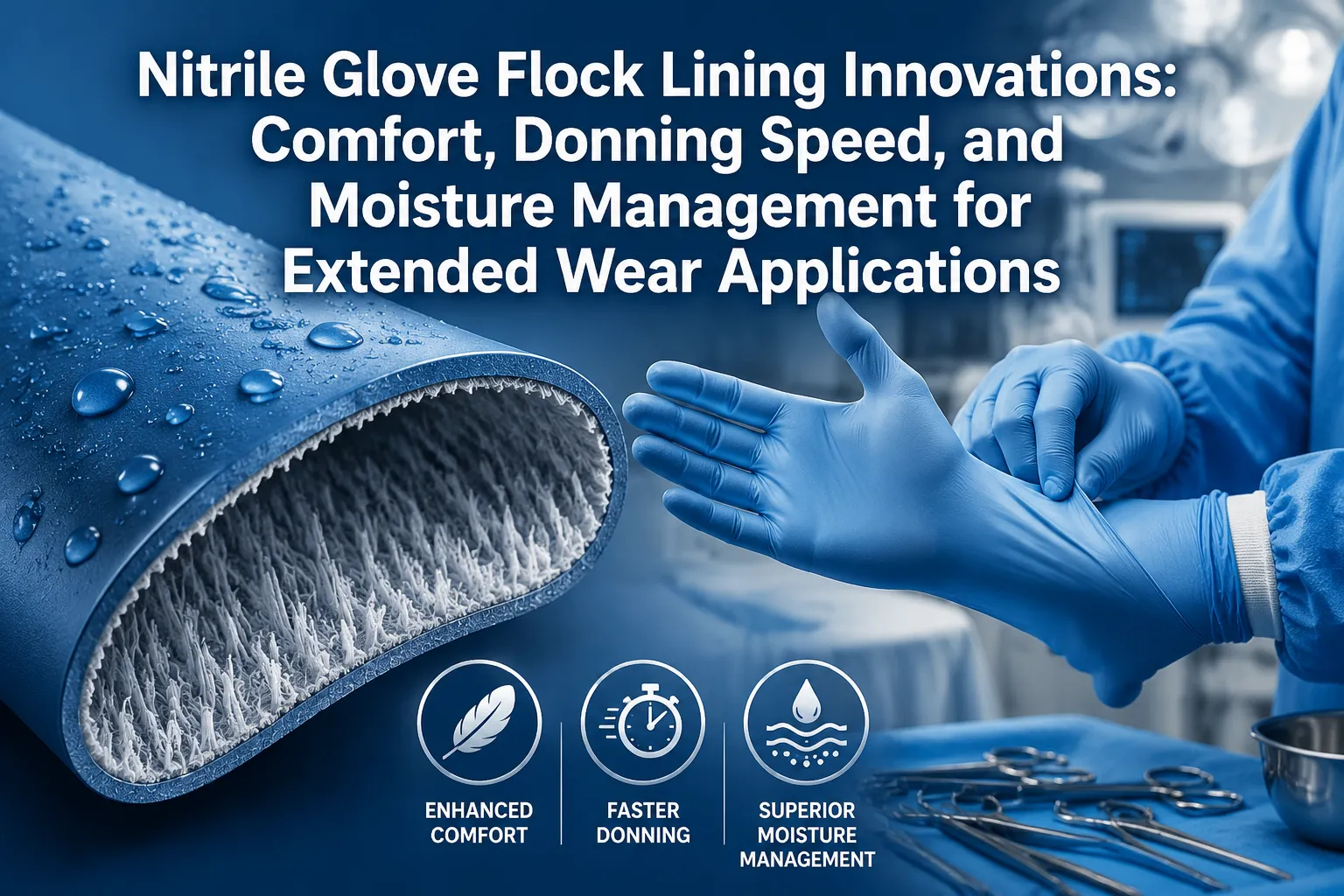
Last updated: July 4, 2026 Healthcare workers, food service professionals, and industrial technicians wearing nitrile gloves for 8-12 hour shifts face a common challenge: hand fatigue, moisture buildup, and difficulty donning gloves quickly during high-volume tasks. Flock lining technology addresses these issues by bonding short textile fibers to the interior of nitrile gloves, creating a […]

Last updated: July 3, 2026 Quick Answer Aerospace manufacturing demands nitrile gloves that meet strict ESD (electrostatic discharge) compliance standards, typically surface resistivity between 10^4 to 10^11 ohms, and particle shedding limits below 100 particles per glove for ISO Class 5 cleanrooms. These specialized gloves must carry certifications including ANSI/ESD S20.20, ISO 16750, and ASTM […]

Last updated: July 3, 2026 Quick Answer Nitrile gloves degrade into persistent microplastic particles that contaminate soil, water systems, and food chains for over a century. Healthcare facilities, laboratories, and food service operations discard an estimated 100 billion nitrile gloves annually worldwide, creating a growing environmental crisis that extends far beyond landfill capacity. Effective solutions […]
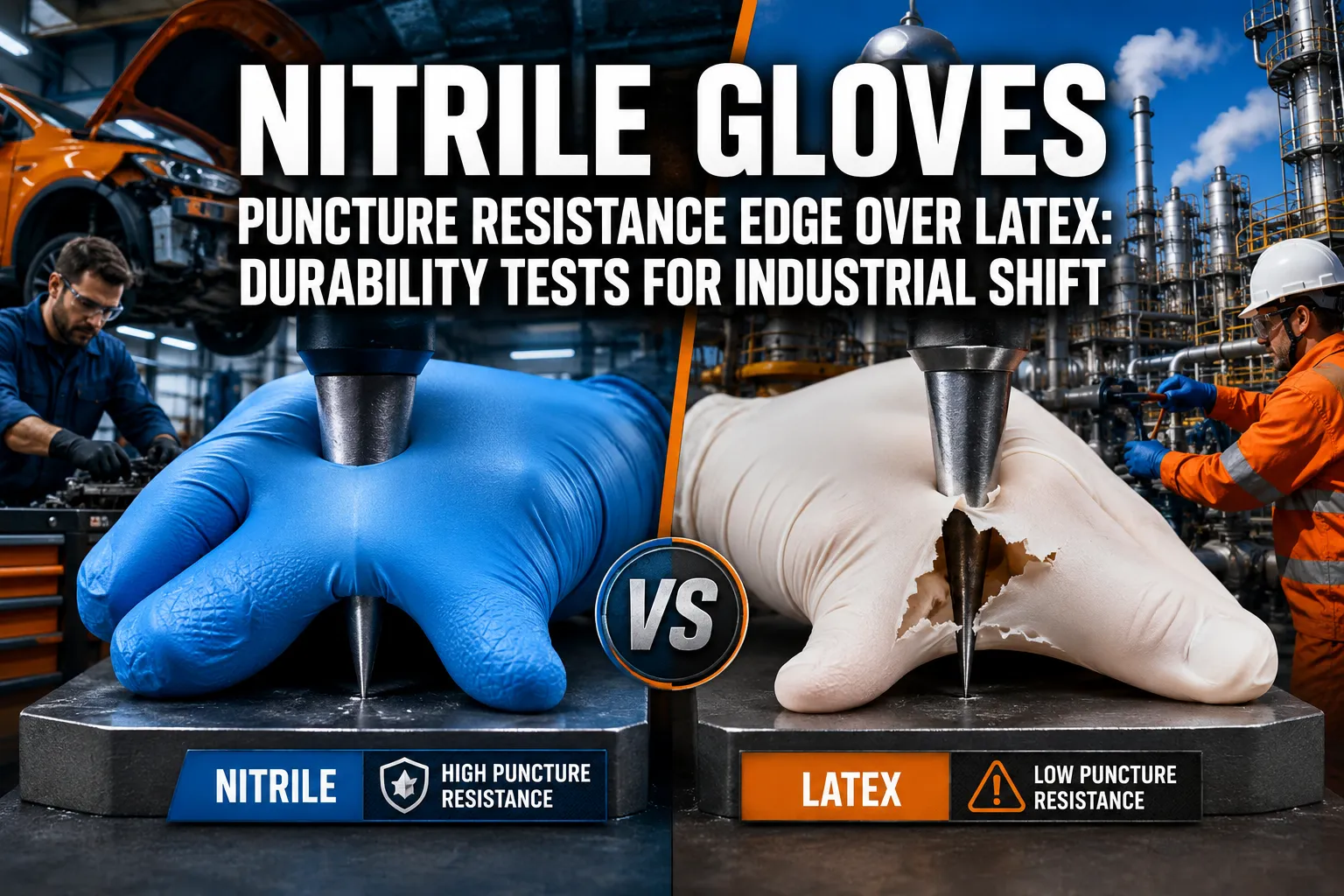
Last updated: July 3, 2026 Quick Answer Nitrile gloves demonstrate superior puncture resistance compared to latex gloves, with standardized testing showing nitrile withstands 2-3 times more force before failure. This durability advantage, combined with chemical resistance and longer wear times during industrial shifts, has driven widespread adoption across automotive, chemical processing, and food handling sectors […]

Last updated: July 3, 2026 Quick Answer The environmental impact of nitrile gloves extends far beyond their 100-200 year decomposition timeline in landfills. These synthetic rubber products break down into persistent microplastics that contaminate soil and water systems, while incineration releases nitrogen oxides and other pollutants. However, emerging circular economy programs now offer material recovery […]
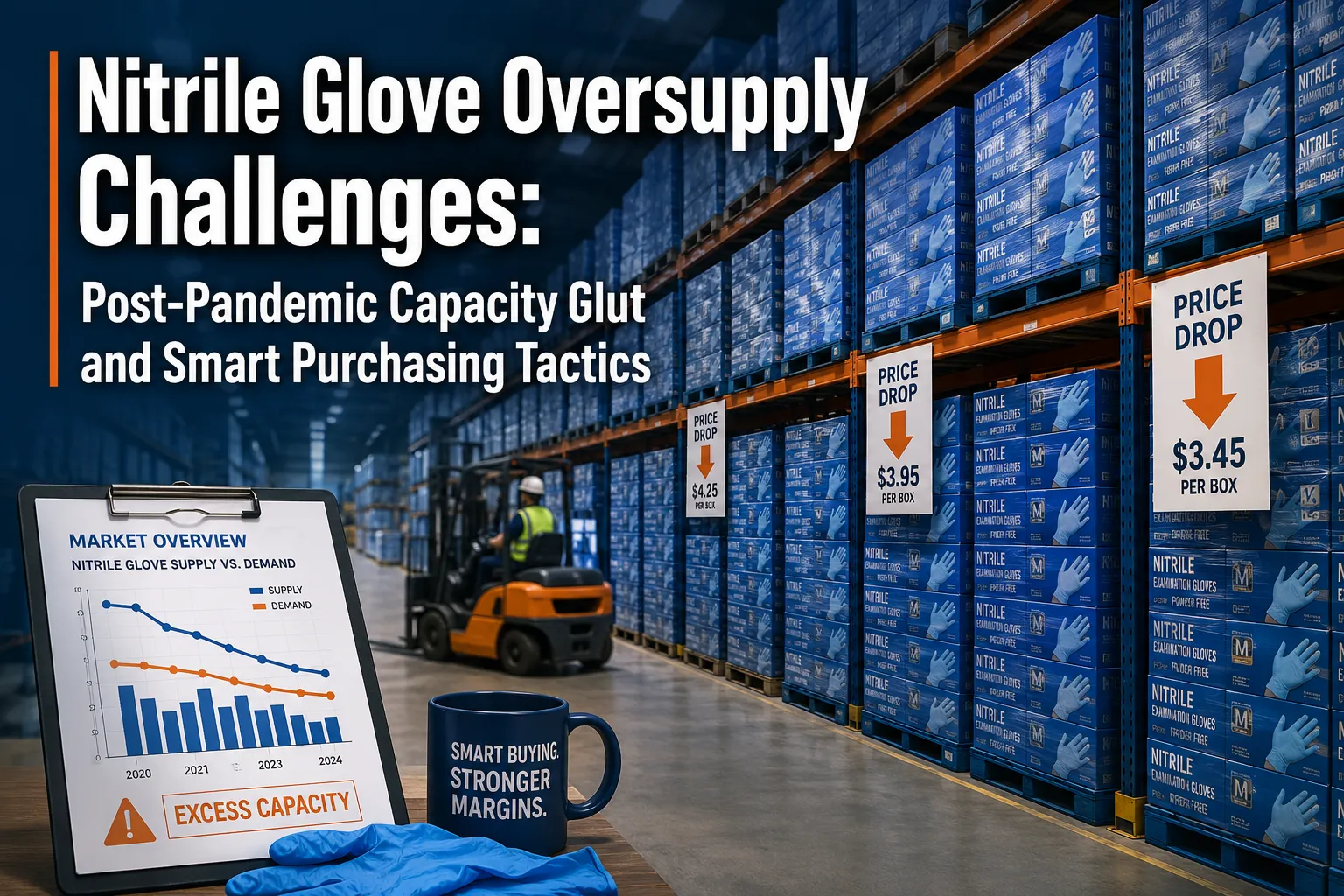
Last updated: July 3, 2026 Quick Answer The global nitrile glove market faces severe oversupply in 2026 after manufacturers expanded production capacity by over 300% during the COVID-19 pandemic, causing prices to plummet by 70-80% from peak levels. Buyers can now leverage this capacity glut through strategic bulk purchasing, aggressive contract negotiation, and quality verification […]

Last updated: July 2, 2026 Quick Answer Winter-ready nitrile gloves designed for cold chain logistics combine a chemical-resistant nitrile outer shell with internal insulation layers (typically acrylic, fleece, or foam) to maintain hand warmth and dexterity in freezer environments ranging from -10°F to -40°F. These gloves preserve the puncture resistance and food-safe properties of standard […]
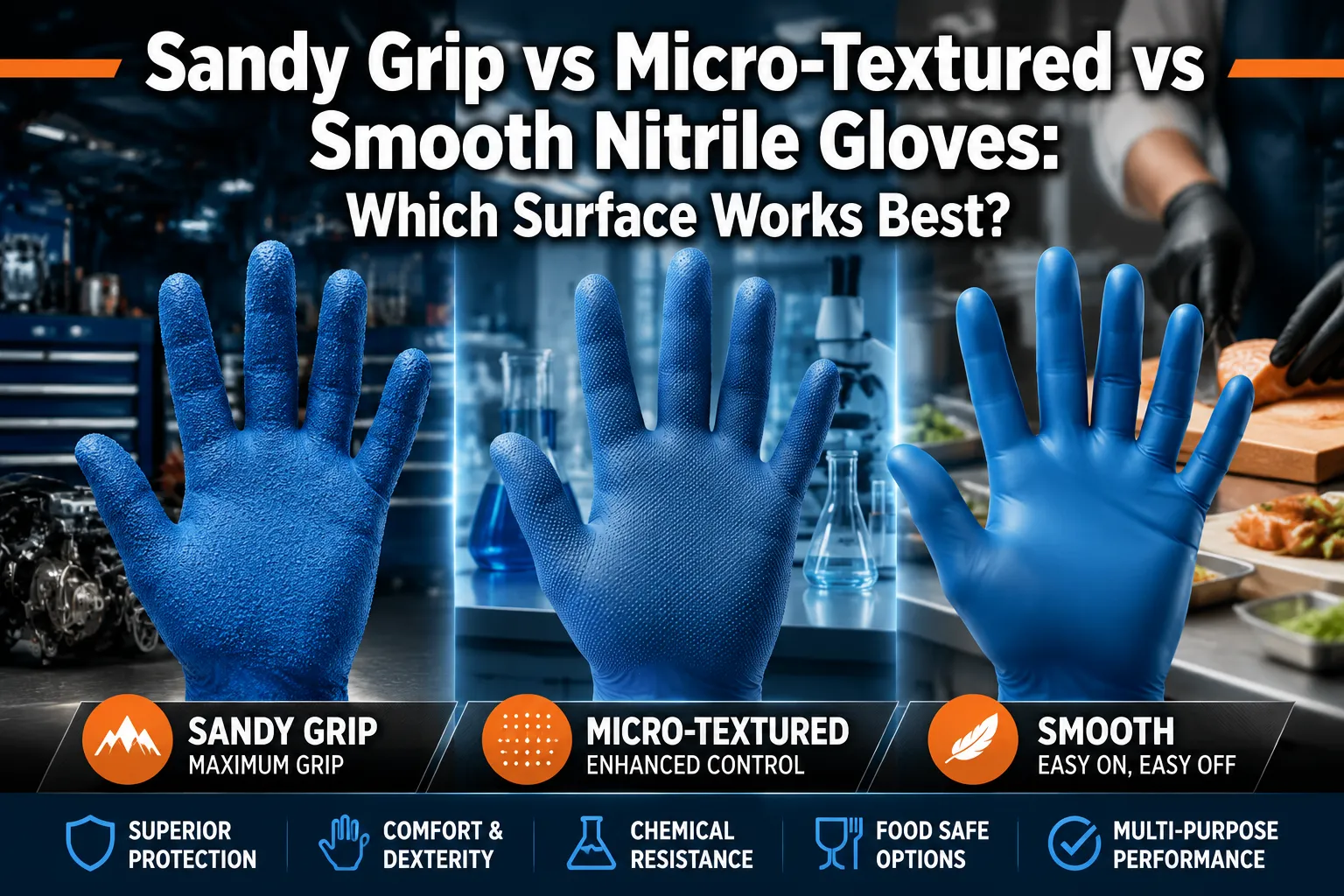
Last updated: July 2, 2026 Quick Answer Sandy grip, micro-textured, and smooth nitrile gloves each excel in different environments based on grip requirements and tactile sensitivity needs. Sandy grip gloves provide maximum traction in wet and oily conditions but sacrifice tactile sensitivity, micro-textured gloves balance grip and dexterity for general-purpose work, and smooth gloves offer […]