Nitrile Glove Articles
Dive into our readers' top picks spanning diverse topics, from enlightening how-to guides and insightful personal stories to in-depth analyses and creative inspirations.

Last updated: July 1, 2026 Nail technicians face daily exposure to harsh chemicals including acetone, acrylic monomers, and gel polish solvents that can cause contact dermatitis, chemical burns, and long-term skin sensitization. Nitrile gloves in beauty salons provide essential protection from chemicals, acrylics, and nail products while maintaining the dexterity needed for precise manicure work. […]

Last updated: July 1, 2026 Quick Answer Nitrile gloves typically last 3-5 years when stored properly, but degradation can occur much faster under poor conditions. Store gloves at temperatures between 59-77°F (15-25°C), away from direct sunlight, ozone sources, and high humidity. Keep them in original packaging in a cool, dry location to maintain their protective […]

Last updated: June 30, 2026 Quick Answer The nitrile glove market has shifted dramatically from the pandemic-era shortage to a significant oversupply, with global production capacity exceeding demand by approximately 30-40% in 2026. This buyer’s market enables procurement teams to negotiate substantially lower prices, secure better quality terms, and establish innovation partnerships with manufacturers competing […]

Last updated: June 30, 2026 Quick Answer Micro-textured nitrile gloves feature engineered surface patterns with raised textures measuring 50-200 micrometers that significantly improve grip performance in wet, oily, and precision tool applications. These gloves outperform smooth nitrile alternatives by increasing coefficient of friction by 40-60% in slippery conditions, making them essential for automotive assembly, electronics […]

Last updated: June 30, 2026 Quick Answer Allergen-Free High-Performance Nitrile Gloves: Formulations for Sensitive Healthcare and Food Workers are specialized disposable gloves manufactured without common chemical accelerators and irritants that cause contact dermatitis. These gloves use low-accelerator or accelerator-free formulations, removing thiurams, carbamates, and other sensitizing chemicals while maintaining the puncture resistance and barrier protection […]
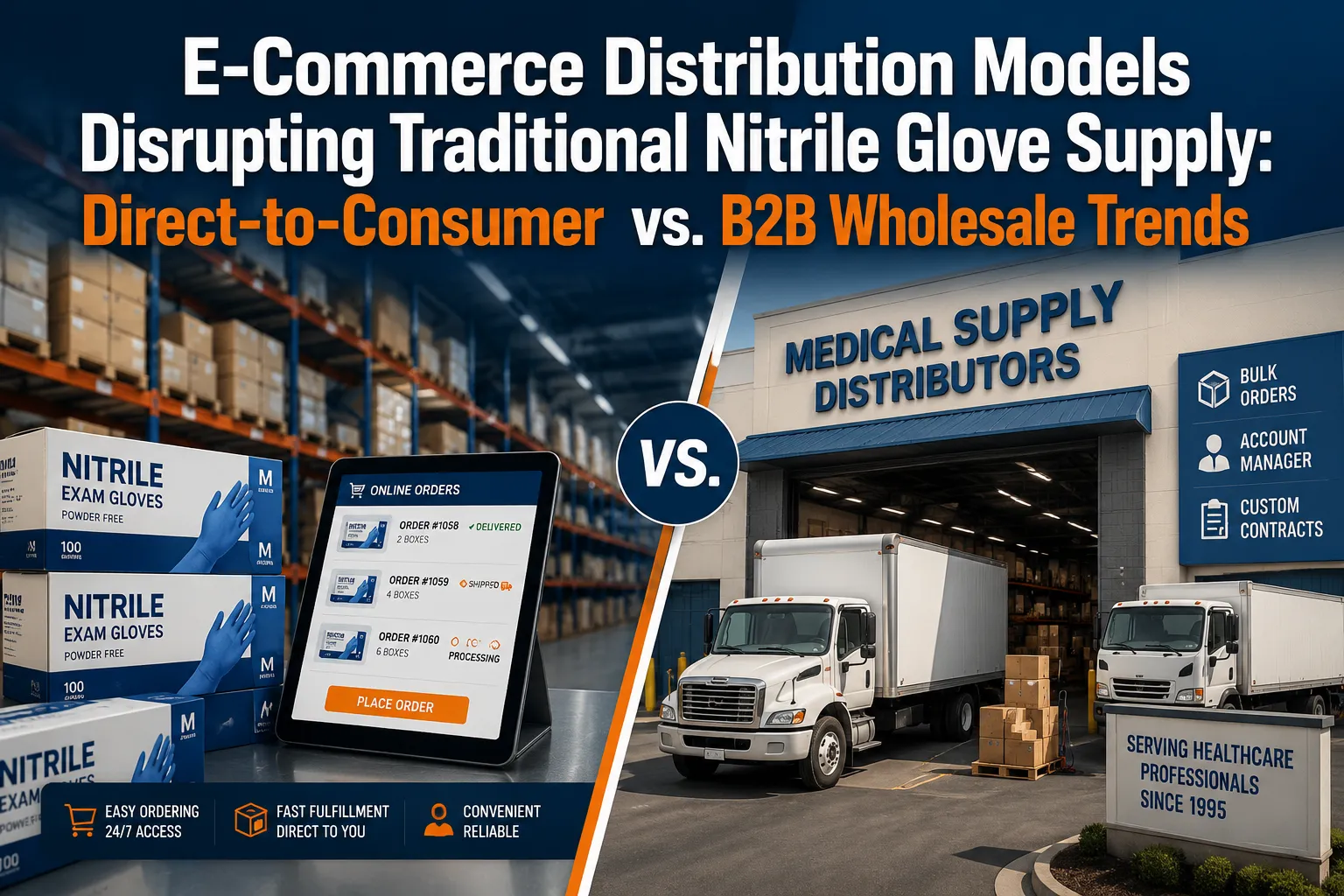
Last updated: June 30, 2026 Quick Answer E-commerce distribution models disrupting traditional nitrile glove supply in 2026 center on two competing approaches: direct-to-consumer (DTC) channels that eliminate middlemen and allow manufacturers to sell smaller quantities at higher margins, and B2B wholesale platforms that maintain bulk pricing but now operate through digital marketplaces like Amazon Business. […]
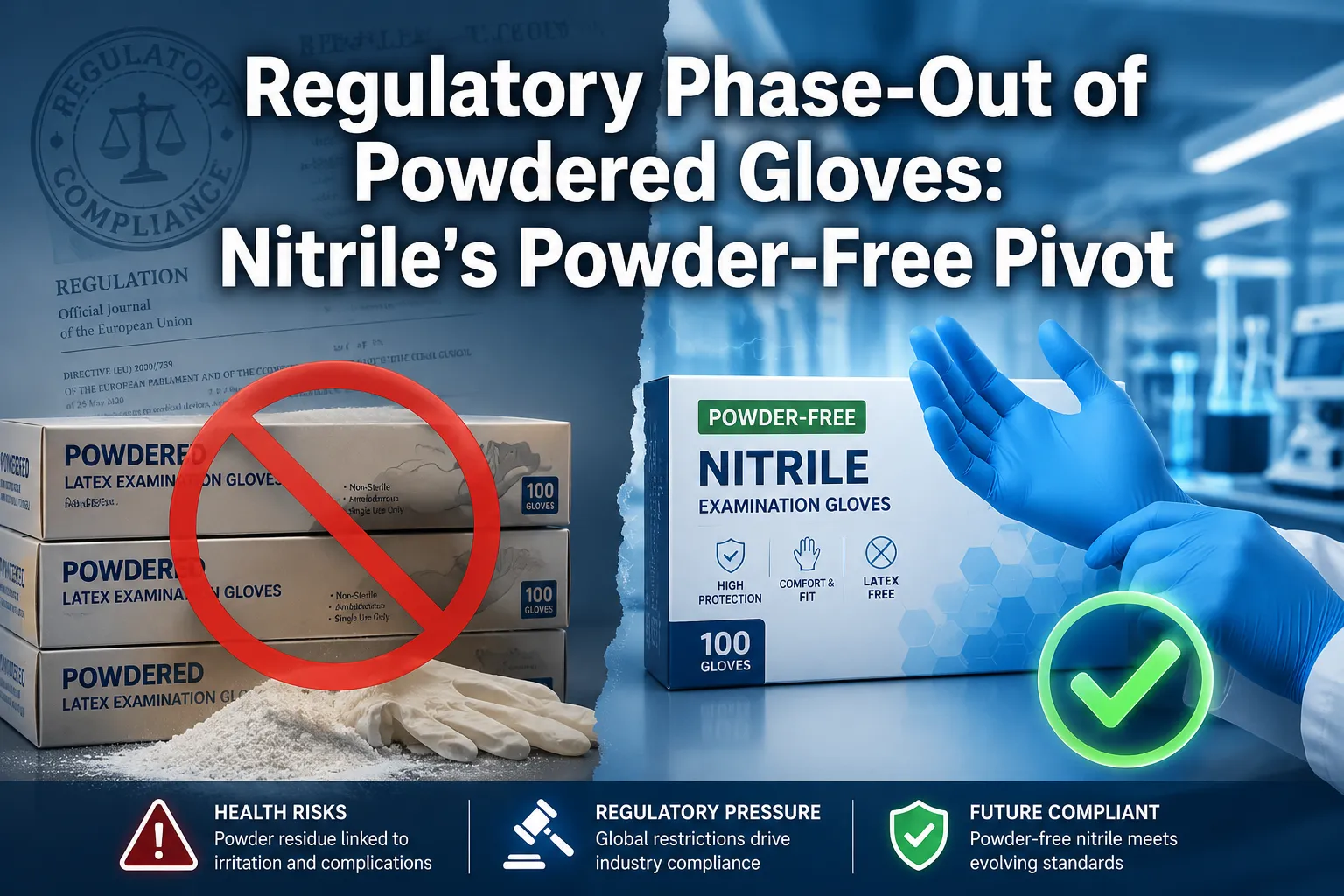
Last updated: June 30, 2026 The U.S. Food and Drug Administration banned powdered medical gloves in January 2017, marking a watershed moment in healthcare safety that forced manufacturers and facilities worldwide to pivot to powder-free alternatives. This regulatory phase-out of powdered gloves, driven by documented health risks from cornstarch powder, has positioned powder-free nitrile gloves […]

Last updated: June 29, 2026 Quick Answer The Global Nitrile Gloves Production Boom is driven by Asia Pacific manufacturers expanding capacity to meet projected demand that could exceed 800 billion units by 2035. Malaysia, Thailand, Vietnam, and China dominate production through established supply chains, lower labor costs, and proximity to raw material sources. Healthcare, food […]

Last updated: June 29, 2026 Quick Answer Nitrile polymer breakthroughs in 2026 center on advanced cross-linking techniques and carboxylated formulations that increase puncture resistance by 40-60% compared to standard nitrile while extending temperature tolerance from -40°C to +150°C. These improvements make next-generation nitrile gloves suitable for extreme industrial, chemical handling, and laboratory environments where traditional […]