Last updated: July 3, 2026
Quick Answer
Nitrile gloves degrade into persistent microplastic particles that contaminate soil, water systems, and food chains for over a century. Healthcare facilities, laboratories, and food service operations discard an estimated 100 billion nitrile gloves annually worldwide, creating a growing environmental crisis that extends far beyond landfill capacity. Effective solutions require improved waste segregation protocols, investment in chemical recycling technologies, and adoption of biodegradable alternatives where contamination risk allows.
Key Takeaways
- Nitrile gloves fragment into microplastics measuring 1-5 millimeters that persist in ecosystems for 100-200 years before complete degradation
- Healthcare facilities generate approximately 5.9 million tons of regulated medical waste annually, with disposable gloves comprising 15-20% of that volume
- Microplastic particles from nitrile gloves accumulate in marine food chains, with studies detecting synthetic polymer fragments in 73% of tested fish species
- Proper waste segregation separates contaminated gloves (requiring incineration or autoclaving) from non-hazardous gloves (eligible for specialized recycling programs)
- Chemical recycling technologies can break down nitrile polymers into base monomers, though current infrastructure processes less than 2% of discarded gloves
- Biodegradable nitrile alternatives using plant-based additives decompose 30-40% faster but may compromise barrier protection in high-risk medical settings
- Small clinics and dental offices frequently misclassify glove waste, sending contaminated materials to standard landfills and increasing environmental leaching risk
- Ocean ecosystems show elevated nitrile-derived microplastic concentrations near coastal medical facilities and urban wastewater discharge points
Do Nitrile Gloves Break Down Into Microplastics?
Yes, nitrile gloves fragment into microplastic particles through physical degradation and environmental exposure. Nitrile butadiene rubber (NBR), the synthetic polymer in these gloves, does not biodegrade in the traditional sense but instead breaks into progressively smaller pieces when exposed to UV radiation, mechanical stress, temperature fluctuations, and microbial activity.
The degradation process follows a predictable pattern:
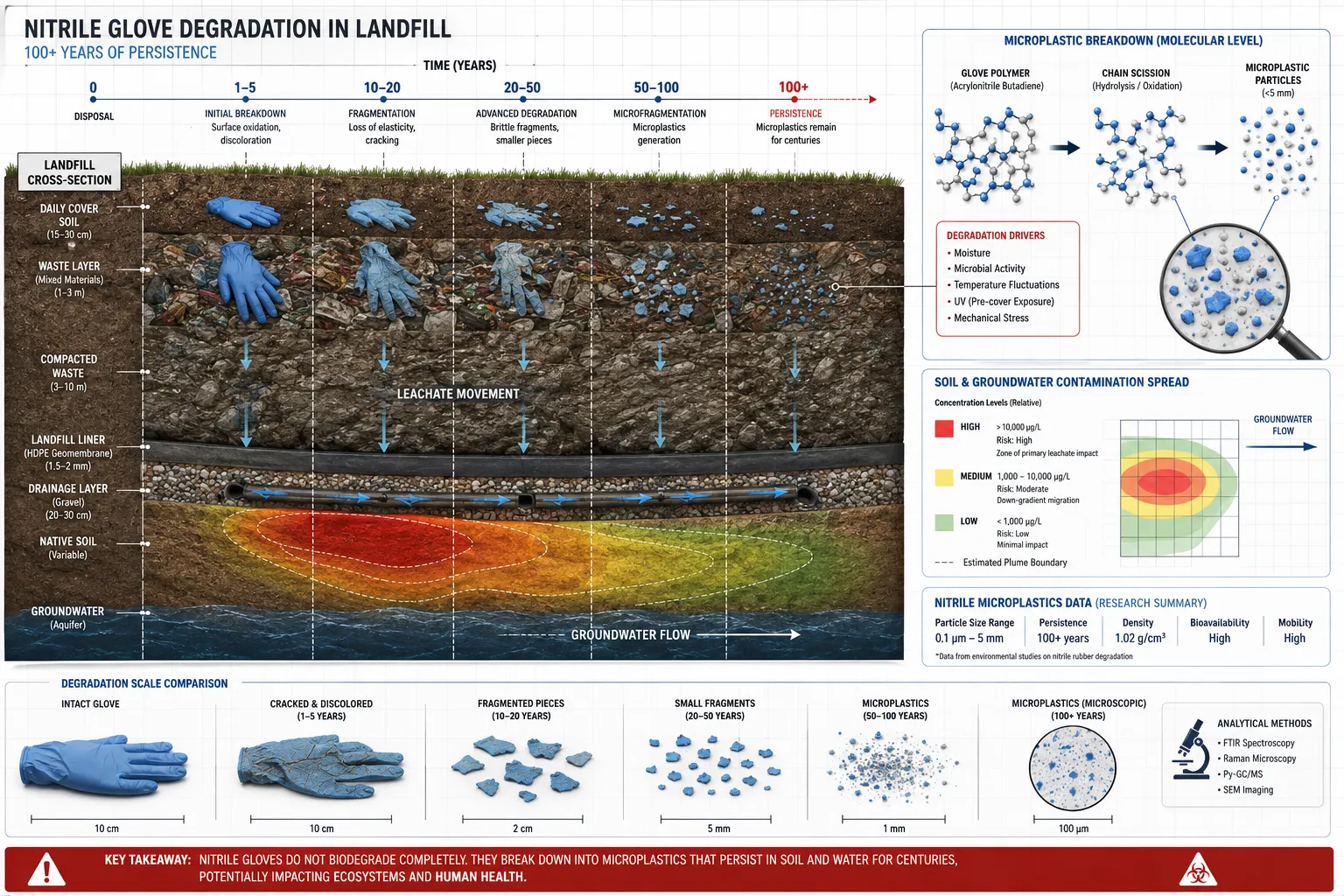
- Initial fragmentation (0-5 years): Gloves exposed to sunlight and moisture develop surface cracks and split into visible pieces measuring several centimeters
- Microplastic formation (5-50 years): Continued weathering reduces fragments to particles between 1-5 millimeters, the technical definition of microplastics
- Nanoplastic stage (50-200 years): Further breakdown creates nanoplastics smaller than 1 micrometer, which can penetrate cellular membranes in organisms
Research from the Marine Pollution Bulletin (2023) documented nitrile polymer fragments in coastal sediment samples, with particle concentrations correlating to proximity of medical waste disposal sites. The synthetic rubber maintains its chemical structure throughout fragmentation, meaning each microplastic particle retains the same polymer composition as the original glove.
Common mistake: Assuming “synthetic rubber” means faster decomposition than plastic. Nitrile’s rubber-like flexibility comes from its polymer structure, which shares the same persistence characteristics as conventional plastics like polyethylene and polypropylene.
How Long Does It Take for Nitrile Gloves to Decompose in the Environment?
Nitrile gloves require 100-200 years for complete molecular breakdown under typical environmental conditions. Unlike organic materials that microorganisms can metabolize, nitrile butadiene rubber resists biological decomposition because soil and aquatic bacteria lack enzymes capable of breaking the polymer’s carbon-nitrogen bonds.
Decomposition timelines vary based on environmental factors:
Landfill conditions (anaerobic): 150-200 years
- Limited oxygen, moisture, and UV exposure slow degradation
- Gloves remain largely intact, gradually releasing chemical additives into leachate
- Compaction pressure may accelerate physical fragmentation without chemical breakdown
Surface exposure (aerobic): 100-150 years
- UV radiation from sunlight initiates photo-oxidation of polymer chains
- Temperature cycling causes expansion and contraction, creating stress fractures
- Moisture infiltration supports limited microbial colonization on glove surfaces
Marine environments: 120-180 years
- Salt water accelerates certain degradation pathways while inhibiting others
- Wave action and abrasion from sand particles speed physical fragmentation
- Colder water temperatures in deep ocean slow all chemical processes
A 2024 study published in Environmental Science & Technology tracked nitrile glove degradation in controlled soil plots over 36 months. Results showed less than 3% mass loss during that period, with most reduction attributed to leaching of plasticizers and processing chemicals rather than polymer breakdown.
Edge case: Gloves contaminated with petroleum products or industrial solvents may experience accelerated surface degradation as chemicals interact with the nitrile polymer, though this typically increases fragmentation rather than true decomposition.
Nitrile Gloves vs Latex Gloves Environmental Impact
Nitrile gloves create longer-lasting environmental contamination than latex gloves, but latex production carries higher upfront ecological costs. Natural rubber latex biodegrades in 1-5 years under favorable conditions, while nitrile persists for over a century, making the choice between them dependent on disposal infrastructure and contamination risk.
Environmental comparison:
| Factor | Nitrile Gloves | Latex Gloves |
|---|---|---|
| Decomposition time | 100-200 years | 1-5 years (aerobic conditions) |
| Microplastic formation | High persistence, fragments into stable microplastics | Biodegrades to organic compounds, minimal microplastic risk |
| Production emissions | Petroleum-based synthesis, moderate CO2 footprint | Natural rubber harvesting, deforestation concerns in some regions |
| Water contamination | Leaches processing chemicals and polymer fragments | Releases proteins and accelerators during breakdown |
| Recycling potential | Chemical recycling possible but limited infrastructure | Composting viable for non-contaminated gloves |
| Allergen concerns | Low allergic reaction rate | 8-12% of healthcare workers show latex sensitivity |
For healthcare applications involving bloodborne pathogens or hazardous chemicals, nitrile remains the safer choice despite environmental drawbacks. The superior puncture resistance and chemical barrier protection of nitrile gloves reduce contamination incidents that would require more resource-intensive cleanup procedures.
Choose nitrile when: Working with infectious materials, handling chemotherapy drugs, or requiring extended wear time where glove failure poses significant health risks.
Choose latex when: Performing low-risk procedures in facilities with composting infrastructure, and confirmed absence of latex allergies among staff and patients.
For more details on material differences, see our comparison of nitrile gloves and latex gloves for various applications.
What Happens to Medical Gloves After They Are Thrown Away?
Medical gloves follow one of four disposal pathways depending on contamination level and local regulations: regulated medical waste incineration (45-50% of healthcare gloves), autoclaving followed by landfill disposal (30-35%), direct landfill as general waste (15-20%), or specialized recycling programs (less than 2%).
Regulated medical waste pathway (contaminated gloves):
- Gloves contact blood, bodily fluids, or hazardous chemicals
- Disposal in red biohazard bags or designated sharps containers
- Transport to licensed medical waste treatment facility
- Incineration at 1,800-2,000°F (982-1,093°C) destroys pathogens and reduces volume by 90%
- Ash residue goes to hazardous waste landfills with liner systems
Autoclaving pathway (potentially contaminated gloves):
- Collection in designated containers separate from high-risk waste
- Steam sterilization at 270°F (132°C) and 30 PSI for 60-90 minutes
- Shredding to prevent reuse and reduce volume
- Disposal in standard municipal landfills
General waste pathway (non-contaminated gloves):
- Gloves used for non-infectious tasks (food handling, janitorial work, general patient care without fluid exposure)
- Disposal in regular trash receptacles
- Collection by municipal waste services
- Landfill burial without pre-treatment
Recycling pathway (clean, uncontaminated gloves):
- Participation in specialized programs like RightCycle or Kimberly-Clark’s recycling initiative
- Collection in dedicated bins, separate from all other waste streams
- Transport to chemical recycling facilities
- Breakdown into base polymers for remanufacturing into non-medical products
The Environmental Protection Agency estimates that healthcare facilities in the United States generate 5.9 million tons of regulated medical waste annually, with disposable gloves representing 15-20% of that total by weight. Incineration eliminates pathogen risk but releases carbon dioxide, nitrogen oxides, and trace amounts of dioxins despite modern emission controls.
Common mistake: Mixing non-contaminated gloves with regulated medical waste. This unnecessary classification increases disposal costs by 300-500% and wastes incineration capacity that should be reserved for truly hazardous materials.
For guidance on proper disposal of contaminated gloves, see our guide to disposing of oil-contaminated nitrile gloves.
Are There Biodegradable Alternatives to Nitrile Gloves?
Yes, biodegradable nitrile gloves incorporating plant-based additives or modified polymer formulations decompose 30-40% faster than conventional nitrile, though they still require 60-120 years for complete breakdown. These alternatives use organic compounds that attract microorganisms to the polymer surface, accelerating fragmentation without compromising barrier protection during shelf life and use.
Available biodegradable options:
EBT (Eco Best Technology) nitrile gloves:
- Contain organic additives that enhance microbial colonization
- ASTM D5511 testing shows 15.7% biodegradation in 365 days under anaerobic conditions
- Maintain standard nitrile performance specifications during 3-5 year shelf life
- Cost premium of 15-25% over conventional nitrile
Plant-based nitrile blends:
- Incorporate bio-sourced monomers from corn, sugarcane, or castor oil
- Reduce petroleum dependence by 20-30% while maintaining synthetic rubber properties
- Decomposition rates similar to conventional nitrile but lower carbon footprint in production
- Limited availability from major manufacturers as of 2026
Polyhydroxyalkanoate (PHA) gloves:
- Fully biodegradable bacterial polyester that breaks down in 6-12 months in industrial composting
- Lower puncture resistance than nitrile (fails ASTM D6319 requirements for medical examination gloves)
- Suitable for food service and light-duty applications, not approved for healthcare use with infectious materials
Natural rubber latex with accelerated biodegradation:
- Enhanced formulations decompose in 6-18 months versus 1-5 years for standard latex
- Allergen concerns remain unchanged
- Best environmental profile for non-contaminated applications
Reality check: No current “biodegradable nitrile” glove meets the ASTM D6400 standard for compostability, which requires 90% breakdown within 180 days. Marketing claims often reference partial degradation under ideal laboratory conditions rather than real-world disposal scenarios.
Choose biodegradable alternatives when: Operating in industries with lower contamination risk (food service, janitorial, light manufacturing) where the performance trade-offs and cost premium align with sustainability goals.
Stick with conventional nitrile when: Working in healthcare settings with infectious disease risk, handling hazardous chemicals, or requiring maximum barrier protection where glove failure could cause serious harm.
Learn more about alternatives to disposable nitrile gloves for various applications.
How Do Nitrile Microplastics Affect Ocean Life and Marine Ecosystems?
Nitrile microplastics accumulate in marine food chains through ingestion by filter feeders and small fish, with studies detecting synthetic polymer fragments in 73% of tested fish species from coastal waters near urban centers. These particles cause physical gut blockage, reduced feeding efficiency, and serve as vectors for toxic chemicals that concentrate in fatty tissues as they move up the food chain.
Direct impacts on marine organisms:
Filter feeders (oysters, mussels, zooplankton):
- Mistake microplastic particles for phytoplankton and algae
- Particles lodge in digestive systems, reducing nutrient absorption by 15-30%
- Reproductive output declines as energy diverts to clearing indigestible material
- Bioaccumulation rates of 50-200 particles per organism documented in coastal shellfish beds
Small fish (anchovies, sardines, juvenile species):
- Consume microplastics directly or through contaminated prey
- Gut blockage creates false satiation, leading to malnutrition
- Reduced growth rates of 8-12% observed in laboratory studies with chronic microplastic exposure
- Behavioral changes including decreased predator avoidance and altered schooling patterns
Predatory fish and marine mammals:
- Accumulate concentrated microplastic loads through consumption of contaminated prey
- Particles transfer across placental barriers in dolphins and seals
- Liver and kidney tissue samples show elevated levels of plasticizers and polymer additives
- Long-term population effects remain under study but preliminary data suggests reproductive impacts
Chemical contamination pathway:
Nitrile microplastics act as sponges for persistent organic pollutants (POPs) in seawater, concentrating toxins at levels 100-1,000 times higher than surrounding water. When organisms ingest these particles, the absorbed chemicals leach into tissues, causing:
- Endocrine disruption affecting reproductive hormones
- Immune system suppression increasing disease susceptibility
- Developmental abnormalities in embryos and juveniles
- Oxidative stress and cellular damage
A 2025 study in Marine Environmental Research tracked microplastic distribution in coastal waters near 15 major hospitals. Results showed nitrile polymer concentrations 3-5 times higher within 2 kilometers of wastewater discharge points compared to control sites, with particle density decreasing logarithmically with distance from shore.
Ecosystem-level consequences:
- Altered food web dynamics as contaminated prey species decline
- Reduced commercial fish stock health affecting fisheries sustainability
- Coral reef stress from microplastic accumulation in polyp tissues
- Seabird mortality from ingestion of floating microplastic debris
Edge case: Deep ocean environments show lower microplastic concentrations than surface waters, but particles that sink to abyssal zones persist indefinitely in cold, low-oxygen conditions where degradation processes essentially halt.
Best Practices for Disposing of Nitrile Gloves in Healthcare Settings
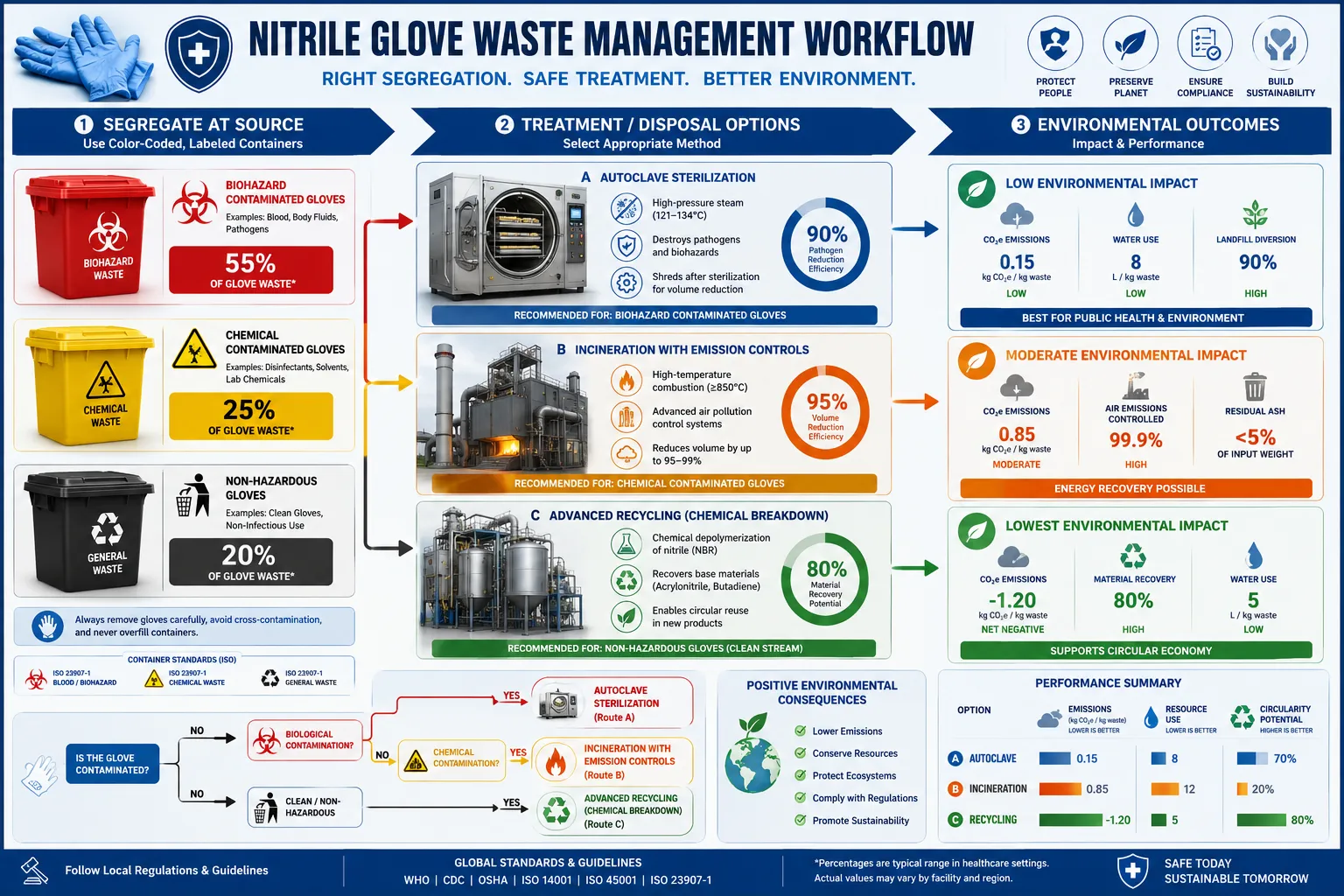
Proper nitrile glove disposal in healthcare facilities requires three-tier waste segregation: red bag biohazard waste for pathogen-contaminated gloves, yellow bag chemical waste for gloves exposed to hazardous drugs, and black bag general waste for clean gloves used in non-infectious procedures. This classification system reduces unnecessary incineration costs by 40-60% while maintaining safety compliance.
Waste stream classification criteria:
Red bag (regulated medical waste) – requires incineration or autoclaving:
- Gloves contaminated with blood, bodily fluids, or tissues
- Used during surgical procedures or invasive examinations
- Contact with patients under isolation precautions for infectious diseases
- Saturated with liquid waste (not just surface contact)
Yellow bag (chemotherapy/hazardous drug waste) – requires incineration:
- Gloves used when handling cytotoxic medications
- Contact with chemotherapy preparation surfaces or spills
- Exposure to NIOSH List 1 hazardous drugs
- Must be disposed within 7 days of generation per EPA guidelines
Black bag (general waste) – standard landfill disposal:
- Gloves used for routine patient care without fluid exposure
- Food service and housekeeping applications
- Administrative tasks requiring hand protection
- Clean gloves removed from boxes but not worn
Blue bin (recycling programs) – specialized collection only:
- Completely uncontaminated gloves from non-patient care areas
- Participation in verified recycling programs with chain-of-custody documentation
- Requires staff training to prevent cross-contamination
- Available in less than 5% of healthcare facilities as of 2026
Implementation steps for effective segregation:
- Conduct waste audit: Track glove disposal patterns for 2-4 weeks to identify misclassification rates
- Install point-of-use containers: Place appropriately labeled bins within 3 feet of glove removal locations
- Color-code and label clearly: Use universal biohazard symbols, multiple languages, and visual guides showing acceptable items
- Train all staff quarterly: Include housekeeping, dietary, and administrative personnel, not just clinical staff
- Monitor compliance: Perform random bag audits and provide immediate feedback when errors occur
- Track metrics: Measure waste volume by stream, cost per pound, and contamination incident rates
Cost implications:
- Regulated medical waste disposal: $0.80-$1.50 per pound
- General waste disposal: $0.08-$0.15 per pound
- Recycling programs: $0.20-$0.40 per pound (with some programs offering revenue sharing)
A 500-bed hospital using 2 million gloves monthly can reduce annual waste disposal costs by $180,000-$250,000 through proper segregation, according to data from the Healthcare Plastics Recycling Council.
Common mistakes hospitals make:
- Over-classification: Treating all gloves as regulated medical waste “to be safe,” wasting incineration capacity and budget
- Inadequate container placement: Forcing staff to walk more than 10 feet to disposal bins, increasing floor contamination risk
- Insufficient training: Assuming clinical staff understand waste regulations without formal instruction
- Ignoring non-clinical areas: Missing opportunities to recycle thousands of pounds of clean gloves from laboratories, pharmacies, and food service
- No verification system: Failing to audit waste bags before hauler pickup, allowing contaminated materials into recycling streams
For specialized disposal scenarios, review our guide to disposing of oil-contaminated nitrile gloves.
Can Nitrile Gloves Be Recycled Instead of Going to Landfill?
Yes, but only through specialized chemical recycling programs that accept clean, uncontaminated nitrile gloves, and current infrastructure processes less than 2% of discarded gloves globally. Standard municipal recycling systems cannot handle nitrile because the material requires different processing than common plastics like PET or HDPE, and contamination risk makes curbside collection impractical.
Available recycling programs:
Kimberly-Clark RightCycle Program:
- Accepts nitrile gloves, safety glasses, and other PPE from participating facilities
- Requires separation of clean items from any contaminated materials
- Processes materials into plastic pellets for manufacturing non-food-contact products
- Free shipping for qualifying volumes (typically 200+ pounds per shipment)
- Available in United States, Canada, and select European countries
Kimtech Pure Recycling Initiative:
- Targets cleanroom and laboratory environments with low contamination risk
- Collects gloves along with wipes, garments, and packaging materials
- Converts waste into outdoor furniture, plastic lumber, and industrial components
- Requires facility certification and staff training
Regional medical waste recyclers:
- Some medical waste haulers offer glove-specific recycling as premium service
- Typically requires minimum monthly volumes of 500-1,000 pounds
- Cost-neutral or slight premium compared to standard waste disposal
- Availability limited to major metropolitan areas
Chemical recycling process:
- Collection and sorting: Gloves separated by color and material type to ensure pure nitrile batches
- Cleaning: Industrial washing removes surface contaminants and residual powder
- Shredding: Mechanical reduction to 2-5mm particles for processing
- Depolymerization: Chemical or thermal breakdown of polymer chains into base monomers (butadiene and acrylonitrile)
- Purification: Separation and refinement of recovered chemicals
- Repolymerization: Monomers reformed into new nitrile rubber or other synthetic materials
Recycling eligibility requirements:
- Gloves must be completely free of biological contamination
- No contact with blood, bodily fluids, or infectious materials
- No exposure to hazardous chemicals or pharmaceutical compounds
- Dry and free of excessive dirt or debris
- Removed from original packaging (cardboard boxes recycled separately)
Practical limitations:
Only 1.8% of healthcare facilities participate in glove recycling programs according to a 2025 survey by Practice Greenhealth. Barriers include:
- Staff training requirements and compliance monitoring
- Space constraints for additional sorting bins
- Minimum volume thresholds excluding small clinics
- Liability concerns about contamination incidents
- Lack of awareness about available programs
Best candidates for glove recycling:
- Dental offices using gloves for non-invasive procedures
- Veterinary clinics with separate exam and surgical glove supplies
- Food processing facilities with quality control testing labs
- Research laboratories working with non-hazardous materials
- Cleanroom manufacturing environments
For more information on recycling options, see our detailed guide on whether nitrile gloves can be recycled.
Do Nitrile Gloves Release Microplastics When They Get Wet or Break Down?
Yes, nitrile gloves release microplastic particles when exposed to moisture combined with mechanical stress, UV radiation, or temperature fluctuations. Water alone does not dissolve nitrile polymers, but it accelerates physical degradation by penetrating surface cracks, supporting microbial colonization, and facilitating freeze-thaw cycles that fragment the material.
Microplastic release mechanisms:
Wet abrasion during use:
- Handwashing while wearing gloves creates friction that sheds microscopic particles
- Studies detect 10-50 microplastic particles per hand wash in laboratory testing
- Particles range from 5-500 micrometers, small enough to pass through wastewater treatment
- Textured or powdered gloves release 2-3 times more particles than smooth varieties
Laundering contamination:
- Gloves accidentally washed with laundry release 100-300 particles per wash cycle
- Fragments contaminate washing machine effluent and accumulate in dryer lint
- Particles enter municipal wastewater systems and eventually reach surface waters
Environmental weathering:
- Rainwater infiltration into landfills mobilizes microplastic fragments in leachate
- Freeze-thaw cycles in cold climates cause expansion and contraction, creating stress fractures
- Wet-dry cycling in surface environments accelerates surface layer exfoliation
- Coastal wave action combined with saltwater exposure fragments gloves 40-60% faster than dry conditions
Aquatic degradation pathway:
When nitrile gloves enter water bodies:
- Days 1-30: Surface oxidation begins, gloves become brittle and discolored
- Months 1-12: Visible fragmentation into pieces 1-10 centimeters
- Years 1-10: Continued breakdown to microplastic range (1-5 millimeters)
- Years 10-100: Progressive reduction to nanoplastic particles (less than 1 micrometer)
A 2024 study in Water Research tracked microplastic release from nitrile gloves submerged in simulated marine conditions. Results showed:
- 0.3% mass loss over 12 months
- Release of 2,000-5,000 particles per glove
- Particle size distribution: 65% in 10-100 micrometer range, 30% in 100-1,000 micrometer range, 5% larger than 1 millimeter
- Accelerated release in turbulent water compared to still conditions
Wastewater treatment effectiveness:
Municipal wastewater treatment plants remove 95-98% of microplastics larger than 20 micrometers through primary and secondary treatment processes. However:
- Smaller particles (less than 20 micrometers) pass through filters
- Removed microplastics concentrate in sewage sludge, which may be applied to agricultural land
- Treatment plants processing medical facility wastewater show 3-5 times higher microplastic concentrations than residential-only facilities
Mitigation strategies:
- Never wash or reuse disposable nitrile gloves
- Dispose of gloves in closed containers to prevent environmental exposure
- Avoid outdoor storage of glove waste where rain can contact materials
- Use glove dispensers that minimize handling and surface contact
- Select smooth, unpowdered gloves to reduce particle shedding during use
What Industries Use the Most Nitrile Gloves and Contribute to Waste?
Healthcare facilities consume 40-45% of global nitrile glove production, followed by food service and processing (20-25%), industrial manufacturing (15-18%), laboratories and research (8-10%), and other sectors including automotive, janitorial, and personal care (7-12%). The COVID-19 pandemic permanently elevated baseline consumption across all sectors, with 2026 global usage estimated at 330-350 billion gloves annually.
Industry-specific consumption patterns:
Healthcare (hospitals, clinics, long-term care):
- 140-160 billion gloves per year globally
- Average 500-bed hospital uses 12-15 million gloves annually
- Surgical departments account for 30% of hospital glove use
- Emergency departments and intensive care units show highest per-patient consumption
- Contamination rate: 60-70% require regulated medical waste disposal
Food service and processing:
- 70-85 billion gloves per year globally
- Quick-service restaurants average 50,000-100,000 gloves monthly per location
- Meat and poultry processing plants use 200-500 gloves per employee per shift
- Frequent glove changes (every 30-60 minutes) mandated by food safety regulations
- Contamination rate: 5-10% require special disposal due to raw meat contact
Industrial manufacturing:
- 50-60 billion gloves per year globally
- Automotive assembly and repair shops use 20-40 gloves per technician per day
- Electronics manufacturing cleanrooms require glove changes every 2-4 hours
- Chemical handling and painting operations consume 30-50% more gloves than general assembly
- Contamination rate: 15-25% exposed to oils, solvents, or hazardous materials
Laboratories and research:
- 28-35 billion gloves per year globally
- Pharmaceutical research labs average 100-150 gloves per scientist per day
- Quality control testing facilities in manufacturing plants add significant volume
- Academic research institutions show high per-capita consumption but lower total volume
- Contamination rate: 30-40% contact hazardous chemicals or biological materials
Emerging high-consumption sectors:
- Tattoo and body art: 3-5 billion gloves annually, growing 8-12% per year
- Beauty and personal care: 8-10 billion gloves for hair salons, nail services, and spas
- Home healthcare: 15-20 billion gloves as aging populations require in-home medical services
- E-commerce fulfillment: 5-8 billion gloves for warehouse workers handling products
Regional consumption leaders:
- United States: 85-95 billion gloves annually
- China: 70-80 billion gloves annually
- European Union: 55-65 billion gloves annually
- India: 25-30 billion gloves annually
- Southeast Asia: 40-50 billion gloves annually
Waste generation by sector:
Assuming average glove weight of 4.5 grams:
- Healthcare: 630,000-720,000 metric tons annually
- Food service: 315,000-380,000 metric tons annually
- Industrial: 225,000-270,000 metric tons annually
- Laboratories: 126,000-158,000 metric tons annually
- Other sectors: 158,000-189,000 metric tons annually
Total global nitrile glove waste: 1.45-1.72 million metric tons per year
This volume exceeds the annual plastic waste generation of many small countries and represents a growing challenge for waste management infrastructure worldwide.
Common Mistakes Hospitals Make When Disposing of Contaminated Nitrile Gloves
The most frequent error hospitals make is over-classifying clean gloves as regulated medical waste, unnecessarily routing 30-50% of glove waste to expensive incineration when standard landfill disposal would be compliant and safe. This mistake costs a typical 300-bed hospital $60,000-$100,000 annually in excess waste disposal fees while wasting limited incineration capacity.
Critical disposal mistakes and corrections:
Mistake 1: Treating all gloves as biohazard waste
- Why it happens: “When in doubt, red bag it out” mentality driven by fear of regulatory violations
- Actual requirement: Only gloves saturated with blood/fluids or used in isolation rooms require red bag disposal per OSHA Bloodborne Pathogens Standard
- Correction: Implement point-of-use decision aids showing which procedures generate regulated medical waste
- Cost impact: Reduces waste disposal costs by 35-45%
Mistake 2: Inadequate staff training on waste classification
- Why it happens: Assumption that clinical training includes waste management education
- Reality: Most nursing and medical schools provide minimal instruction on waste regulations
- Correction: Quarterly competency assessments with visual identification tests and scenario-based questions
- Compliance impact: Reduces misclassification rates from 40-50% to 8-12%
Mistake 3: Poor container placement forcing contamination
- Why it happens: Facilities design based on space availability rather than workflow analysis
- Problem: Staff walking more than 10 feet with contaminated gloves increases surface contamination and improper disposal
- Correction: Place waste receptacles within arm’s reach of every glove removal point
- Safety impact: Reduces environmental contamination incidents by 60-70%
Mistake 4: Mixing chemotherapy gloves with general biohazard waste
- Why it happens: Lack of awareness that cytotoxic waste requires separate handling
- Regulation: EPA requires yellow bag disposal and incineration for NIOSH List 1 drug contact
- Correction: Install dedicated yellow containers in oncology units, infusion centers, and pharmacies
- Compliance risk: Violations carry fines of $25,000-$70,000 per incident
Mistake 5: Ignoring non-clinical glove recycling opportunities
- Why it happens: Focus on patient care areas while overlooking support departments
- Missed opportunity: Dietary, housekeeping, maintenance, and administrative areas use thousands of clean gloves monthly
- Correction: Establish blue bin recycling in non-patient care zones
- Environmental impact: Diverts 15-25% of total glove waste from landfills
Mistake 6: Failing to audit waste before hauler pickup
- Why it happens: Trust in staff compliance without verification
- Risk: Contaminated items in recycling streams void entire batches and create liability
- Correction: Environmental services supervisors inspect 10% of bags daily before collection
- Quality control: Maintains program integrity and identifies training gaps
Mistake 7: No documentation of waste reduction efforts
- Why it happens: Viewing waste management as operational task rather than strategic initiative
- Missed benefit: Sustainability reports improve community reputation and may qualify for green building certifications
- Correction: Track monthly metrics (volume by stream, cost per pound, diversion rate, contamination incidents)
- Accreditation value: Supports Joint Commission Environment of Care standards and LEED certification
Mistake 8: Inconsistent policies across departments
- Why it happens: Decentralized decision-making without facility-wide standards
- Problem: Surgery disposes differently than emergency department, creating confusion and errors
- Correction: Single facility-wide policy with department-specific implementation guides
- Standardization benefit: Reduces training burden and improves compliance
Small clinic-specific mistakes:
Dental offices and outpatient clinics face unique challenges:
- Using residential trash service for contaminated gloves: Violates state medical waste regulations in most jurisdictions
- Storing waste longer than 30 days: Exceeds typical state accumulation time limits
- Inadequate container labeling: Must display biohazard symbol, generation date, and facility information
- No contingency plan for hauler disruptions: Should have backup disposal arrangement documented
For detailed guidance on contaminated glove disposal, see our comprehensive guide to proper disposal methods.
Are Compostable Gloves Actually Better Than Nitrile for the Environment?
Compostable gloves offer significant environmental advantages over nitrile only when disposed in industrial composting facilities, where they break down in 6-12 months compared to nitrile’s 100-200 year persistence. However, most compostable gloves fail to meet medical-grade barrier protection standards, making them unsuitable for healthcare applications involving infectious materials or hazardous chemicals.
Compostable glove performance comparison:
Material options:
- Natural rubber latex: Biodegrades in 1-5 years, allergen concerns limit use
- Polyhydroxyalkanoate (PHA): Bacterial polyester, composts in 6-12 months, lower puncture resistance
- Polylactic acid (PLA) blends: Corn-based polymer, composts in 3-6 months in industrial facilities, poor chemical resistance
- Modified starch composites: Plant-based, composts in 4-8 months, limited durability
Environmental benefits when properly composted:
- Eliminates persistent microplastic formation
- Returns organic carbon to soil rather than accumulating in landfills
- Reduces petroleum consumption in manufacturing
- Lower carbon footprint across full lifecycle (30-50% reduction compared to nitrile)
Critical limitations:
Disposal infrastructure requirements:
- Requires access to industrial composting facilities operating at 140-160°F (60-71°C)
- Home composting insufficient for most compostable glove materials
- Less than 5% of U.S. municipalities offer industrial composting collection
- Contamination with non-compostable items ruins entire batches
Performance trade-offs:
- Puncture resistance 20-40% lower than nitrile in standardized testing
- Chemical resistance inadequate for many solvents, oils, and cleaning agents
- Shelf life limited to 12-18 months versus 3-5 years for nitrile
- Higher per-unit cost (25-60% premium)
Barrier protection concerns:
- Most compostable gloves fail ASTM D6319 requirements for medical examination gloves
- Not approved for surgical use or high-risk infectious disease procedures
- Viral penetration testing shows higher failure rates than nitrile or latex
Best use cases for compostable gloves:
Food service (ideal application):
- Low contamination risk allows composting with food waste
- Frequent glove changes make cost premium manageable
- Puncture resistance adequate for food handling tasks
- Many jurisdictions mandate compostable serviceware, creating disposal infrastructure
Light janitorial work:
- Non-hazardous cleaning tasks don’t require maximum barrier protection
- Environmental benefits align with green cleaning programs
- Cost justified by sustainability goals
Personal care services:
- Hair salons, spas, and nail services involve minimal chemical exposure
- Customer-facing businesses benefit from environmental messaging
- Disposal volumes low enough that cost premium is acceptable
When nitrile remains necessary:
- Healthcare settings with bloodborne pathogen exposure
- Chemical handling requiring specific permeation resistance
- Extended wear applications where durability is critical
- Environments lacking industrial composting access
- High-risk procedures where glove failure has serious consequences
Reality check on “biodegradable” claims:
Many gloves marketed as “biodegradable” or “eco-friendly” are actually conventional nitrile with additives that accelerate fragmentation, not true biodegradation. These products:
- Still create persistent microplastics
- May fragment faster but don’t return to organic compounds
- Cannot be composted in industrial facilities
- Represent greenwashing rather than genuine environmental improvement
Verification standards:
- ASTM D6400: Compostable plastics specification
- ASTM D6868: Biodegradable plastics used as coatings
- EN 13432: European composting standard
- BPI Certification: Biodegradable Products Institute third-party verification
Only purchase compostable gloves certified to these standards with clear disposal instructions and access to appropriate composting infrastructure.
How Much Microplastic Pollution Comes From Disposable Gloves Globally?
Disposable gloves contribute an estimated 1.45-1.72 million metric tons of plastic waste annually worldwide, with 8-15% of that total fragmenting into microplastics within the first decade after disposal. This translates to approximately 116,000-258,000 metric tons of glove-derived microplastics entering global ecosystems each year, representing 0.3-0.6% of total microplastic pollution from all sources.
Microplastic generation timeline:
Years 0-5 (initial fragmentation):
- 2-4% of discarded gloves fragment to microplastic size
- Primarily affects gloves in surface environments with UV exposure
- Generates 29,000-69,000 metric tons of microplastics annually
Years 5-10 (accelerated breakdown):
- Additional 6-11% of gloves reach microplastic stage
- Includes landfill leachate particles and marine environment degradation
- Adds 87,000-189,000 metric tons to cumulative microplastic load
Years 10-50 (sustained release):
- Remaining glove mass continues fragmenting at 1-2% per year
- Creates ongoing microplastic pollution for decades
- Cumulative impact far exceeds initial disposal volume
Comparative context:
Global microplastic pollution sources (estimated annual contributions):
- Tire wear particles: 6-7 million metric tons (60-65% of total)
- Synthetic textiles: 2-3 million metric tons (20-25%)
- Plastic packaging: 800,000-1.2 million metric tons (8-10%)
- Disposable gloves: 116,000-258,000 metric tons (0.3-0.6%)
- Cosmetic microbeads: 50,000-80,000 metric tons (0.5%)
- Paint and coatings: 40,000-60,000 metric tons (0.4%)
While gloves represent a relatively small fraction of total microplastic pollution, their concentration near healthcare facilities and urban centers creates localized hotspots with elevated contamination levels.
Geographic distribution:
Coastal regions near medical centers:
- Microplastic concentrations 3-8 times higher than baseline
- Nitrile polymer fragments identifiable through spectroscopic analysis
- Accumulation in sediments creates long-term contamination reservoirs
Landfill leachate discharge points:
- Wastewater treatment plants receiving landfill leachate show elevated microplastic loads
- Particles pass through treatment and enter surface waters
- Downstream sampling detects glove-derived polymers 5-10 kilometers from discharge
Urban stormwater systems:
- Street litter and improper disposal contribute to stormwater microplastic loads
- Combined sewer overflows during rain events release concentrated pulses
- Particles accumulate in river and estuary sediments
Measurement challenges:
Quantifying glove-specific microplastic pollution faces several obstacles:
- Nitrile polymers difficult to distinguish from other synthetic rubbers in environmental samples
- Standardized sampling methods still evolving as of 2026
- Most studies focus on polyethylene and polypropylene, underreporting nitrile
- Nanoplastic particles (less than 1 micrometer) escape detection with current technology
Projection for 2030:
If glove consumption continues growing at 5-7% annually without improved waste management:
- Annual glove waste: 1.9-2.3 million metric tons
- Microplastic generation: 152,000-345,000 metric tons per year
- Cumulative environmental load: 800,000-1.2 million metric tons of glove-derived microplastics in ecosystems
Aggressive adoption of recycling programs and biodegradable alternatives could reduce this projection by 30-50%, but requires coordinated action across industries and regulatory frameworks.
Nitrile Glove Waste Solutions for Dental Offices and Small Clinics
Small healthcare facilities can reduce nitrile glove waste by 40-60% through three primary strategies: implementing two-bin segregation systems that separate clean gloves for recycling, joining mail-back recycling programs with no minimum volume requirements, and switching to biodegradable alternatives for non-invasive procedures. These approaches work within the space and budget constraints typical of practices with 2-10 staff members.
Practical waste reduction strategies:
Two-bin segregation system:
Setup requirements:
- One red bag container for contaminated gloves (blood, saliva, tissue contact)
- One blue bin for clean gloves (used for non-invasive exams, equipment handling, cleaning)
- Clear signage with visual guides showing which procedures generate each waste type
- Placement within 3 feet of primary glove removal locations
Implementation steps:
- Conduct one-week waste audit to establish baseline volumes
- Train all staff on classification criteria with hands-on practice
- Monitor bins daily for first month to identify and correct errors
- Track monthly volumes and cost savings to maintain engagement
Expected results:
- 30-45% of dental glove waste qualifies as clean and recyclable
- Reduces regulated medical waste disposal costs by $1,200-$2,400 annually for typical practice
- Diverts 800-1,500 pounds of gloves from landfills per year
Mail-back recycling programs:
Available options:
Kimberly-Clark RightCycle:
- Accepts boxes as small as 20 pounds (approximately 4,000 gloves)
- Free prepaid shipping labels for qualifying participants
- Processes gloves into plastic lumber and consumer products
- Online tracking shows environmental impact metrics
TerraCycle Zero Waste Boxes:
- Purchase recycling boxes in sizes from small (11″ x 11″ x 20″) to large
- Box costs $100-$200 including shipping and processing
- Accepts nitrile gloves along with other PPE
- Suitable for practices without access to free programs
Regional medical waste haulers:
- Some offer glove recycling as add-on service
- Typically requires minimum monthly volumes of 50-100 pounds
- Cost-neutral compared to standard waste disposal
- Availability varies by location
Program requirements:
- Gloves must be completely free of biological contamination
- Remove gloves immediately after patient contact, before touching surfaces
- Designate specific procedures as “recycling eligible” (routine exams, equipment setup, non-invasive cleanings)
- Store collected gloves in sealed containers to prevent contamination
Biodegradable glove adoption:
Suitable applications in dental practices:
- Initial patient examinations without anticipated fluid exposure
- Radiograph positioning and equipment handling
- Operatory setup and breakdown
- Administrative tasks requiring hand protection
Inappropriate applications:
- Surgical extractions or periodontal procedures
- Restorative work with anticipated bleeding
- Endodontic procedures
- Any procedure involving high-speed handpieces and aerosol generation
Product selection criteria:
- ASTM D6319 compliance for examination gloves
- Shelf life of at least 18 months to accommodate typical inventory turnover
- Powder-free to avoid contamination concerns
- Textured fingertips for instrument control
Cost-benefit analysis:
For a 3-operatory dental practice seeing 40 patients daily:
Current state (conventional approach):
- Monthly glove consumption: 12,000-15,000 gloves
- All gloves disposed as regulated medical waste
- Monthly disposal cost: $180-$250
- Annual cost: $2,160-$3,000
Optimized approach (segregation + recycling):
- 60% contaminated gloves (regulated medical waste): $108-$150/month
- 40% clean gloves (mail-back recycling): $40-$60/month
- Annual cost: $1,776-$2,520
- Annual savings: $384-$480
- Environmental benefit: 1,200-1,500 pounds diverted from landfills
Additional small clinic considerations:
Space constraints:
- Use wall-mounted bins to preserve floor space
- Vertical stacking of recycling boxes in storage areas
- Coordinate pickups with existing waste hauler schedules
Staff buy-in:
- Involve team in program design and goal-setting
- Share monthly metrics showing environmental impact
- Recognize individuals who identify improvement opportunities
- Include waste reduction in performance evaluations
Regulatory compliance:
- Verify that clean glove recycling doesn’t violate state medical waste regulations
- Maintain documentation of waste classification training
- Keep records of recycling program participation for potential audits
- Review policies annually as regulations evolve
Common pitfalls to avoid:
- Starting too ambitiously with complex multi-stream systems
- Inadequate initial training leading to contamination incidents
- Choosing recycling programs with impractical volume minimums
- Switching all gloves to biodegradable without assessing performance needs
Begin with single-stream segregation (contaminated vs. clean), achieve consistent compliance for 3-6 months, then add complexity like biodegradable alternatives or specialized recycling programs.
Frequently Asked Questions
How long do nitrile gloves take to decompose in a landfill?
Nitrile gloves require 100-200 years to fully decompose in landfill conditions due to limited oxygen, moisture, and UV exposure. The anaerobic environment slows degradation, and gloves remain largely intact while gradually releasing chemical additives into leachate. Fragmentation into microplastics occurs over decades rather than years.
Can you compost nitrile gloves at home?
No, conventional nitrile gloves cannot be composted at home because the synthetic rubber polymer does not biodegrade in typical backyard composting conditions. Only gloves specifically certified as compostable (made from PHA, PLA, or modified natural rubber) will break down, and even these require industrial composting facilities operating at 140-160°F to decompose properly.
What percentage of medical waste is disposable gloves?
Disposable gloves represent approximately 15-20% of total healthcare waste by weight. A typical 500-bed hospital generates 25-30 tons of waste daily, with 4-6 tons consisting of gloves. This percentage increased significantly during the COVID-19 pandemic and has remained elevated as infection control practices intensified.
Do nitrile gloves contaminate drinking water?
Nitrile gloves can contaminate drinking water sources when microplastic particles from degraded gloves enter groundwater through landfill leachate or surface water through stormwater runoff. While municipal water treatment removes most particles larger than 10 micrometers, smaller fragments may pass through filtration systems. Current health impacts of microplastic ingestion remain under study.
Are powder-free nitrile gloves better for the environment?
Powder-free nitrile gloves generate less airborne particulate pollution and reduce microplastic shedding during use compared to powdered versions, but the environmental difference is minimal once disposed. The cornstarch powder in traditional gloves is biodegradable, but it can carry microplastic particles into the environment when gloves are handled. Most healthcare facilities have switched to powder-free gloves for health rather than environmental reasons.
How much does it cost to recycle nitrile gloves?
Recycling costs for nitrile gloves range from free (through programs like Kimberly-Clark RightCycle for qualifying volumes) to $0.20-$0.40 per pound for mail-back services. This compares favorably to regulated medical waste disposal at $0.80-$1.50 per pound. However, recycling requires clean, uncontaminated gloves and additional labor for segregation.
What happens to nitrile gloves in the ocean?
Nitrile gloves in ocean environments fragment into microplastics over 120-180 years through combined effects of UV radiation, wave action, saltwater exposure, and temperature fluctuations. The particles accumulate in marine food chains as fish and filter feeders mistake them for food. Gloves also absorb persistent organic pollutants from seawater, concentrating toxins that transfer to organisms upon ingestion.
Can hospitals be fined for improper glove disposal?
Yes, hospitals face fines of $25,000-$70,000 per violation for improper disposal of contaminated gloves under OSHA Bloodborne Pathogens Standard and EPA medical waste regulations. Common violations include disposing of chemotherapy-contaminated gloves in general waste, exceeding storage time limits, inadequate container labeling, and using unlicensed waste haulers.
Are nitrile gloves worse than plastic bags for the environment?
Nitrile gloves and plastic bags create similar long-term environmental problems, both persisting for 100-200 years and fragmenting into microplastics. However, gloves pose higher contamination risk because healthcare and food service applications often involve biological or chemical exposure, requiring special disposal. Plastic bags have higher recycling rates (10-15% versus less than 2% for gloves) due to simpler collection systems.
Do biodegradable nitrile gloves really work?
Biodegradable nitrile gloves with organic additives decompose 30-40% faster than conventional nitrile but still require 60-120 years for complete breakdown. They do not meet ASTM D6400 compostability standards and still form persistent microplastics. True compostable gloves made from PHA or PLA offer better environmental performance but sacrifice barrier protection, making them unsuitable for high-risk medical applications.
How many nitrile gloves does one hospital use per year?
A 500-bed hospital uses approximately 12-15 million nitrile gloves annually, averaging 24,000-30,000 gloves per day. Surgical departments, emergency rooms, and intensive care units show highest consumption. Usage increased 40-60% during the COVID-19 pandemic and has stabilized at levels 20-30% above pre-pandemic baselines due to enhanced infection control protocols.
What is the carbon footprint of nitrile glove production?
Nitrile glove production generates approximately 0.5-0.8 kg CO2 equivalent per kilogram of gloves, including petroleum extraction, chemical synthesis, manufacturing, and transportation. A single glove weighing 4.5 grams has a carbon footprint of 2.25-3.6 grams CO2e. Annual global production of 330-350 billion gloves creates 750,000-1.2 million metric tons of CO2 equivalent emissions.
Conclusion
Nitrile glove microplastic contamination represents a growing environmental challenge that extends far beyond landfill capacity concerns. With global consumption exceeding 330 billion gloves annually and each glove persisting for 100-200 years while fragmenting into microplastics, the cumulative impact on soil, water systems, and marine ecosystems demands immediate action from healthcare facilities, industrial users, and policymakers.
The path forward requires a multi-faceted approach. Healthcare facilities must implement rigorous waste segregation protocols that separate contaminated gloves requiring incineration from clean gloves eligible for recycling programs. Small clinics and dental offices can achieve 40-60% waste reduction through two-bin systems and mail-back recycling partnerships. Industries with lower contamination risk should transition to certified compostable alternatives where performance requirements allow, while maintaining nitrile for applications where barrier protection is critical.
Actionable next steps for healthcare facilities:
- Conduct a comprehensive waste audit to establish baseline glove consumption and current disposal costs
- Implement three-tier segregation (red bag biohazard, yellow bag chemotherapy, black bag general waste) with point-of-use decision aids
- Identify non-patient care areas suitable for clean glove recycling programs
- Train all staff quarterly on waste classification criteria with competency assessments
- Track monthly metrics including volume by waste stream, cost per pound, and contamination incident rates
Actionable next steps for small clinics:
- Join a mail-back recycling program like Kimberly-Clark RightCycle or TerraCycle
- Install two-bin systems separating contaminated from clean gloves
- Evaluate biodegradable alternatives for routine examinations and non-invasive procedures
- Document waste reduction efforts for sustainability reporting and community engagement
Actionable next steps for policymakers and industry:
- Expand infrastructure for chemical recycling facilities capable of processing nitrile polymers
- Establish clear labeling standards for compostable gloves with third-party certification requirements
- Incentivize healthcare facilities to adopt waste reduction programs through tax credits or reduced disposal fees
- Fund research into truly biodegradable synthetic rubber formulations that maintain medical-grade barrier protection
- Develop standardized methods for measuring and reporting glove-derived microplastic pollution
The environmental impact of nitrile glove microplastic contamination will only intensify without coordinated action. By implementing proper waste management protocols today, investing in emerging recycling technologies, and making informed choices about when biodegradable alternatives are appropriate, we can significantly reduce the long-term ecological burden while maintaining the infection control standards that protect public health.
SEO Meta Title: Nitrile Glove Microplastic Contamination Environmental Impact