Nitrile Glove Articles
Dive into our readers' top picks spanning diverse topics, from enlightening how-to guides and insightful personal stories to in-depth analyses and creative inspirations.
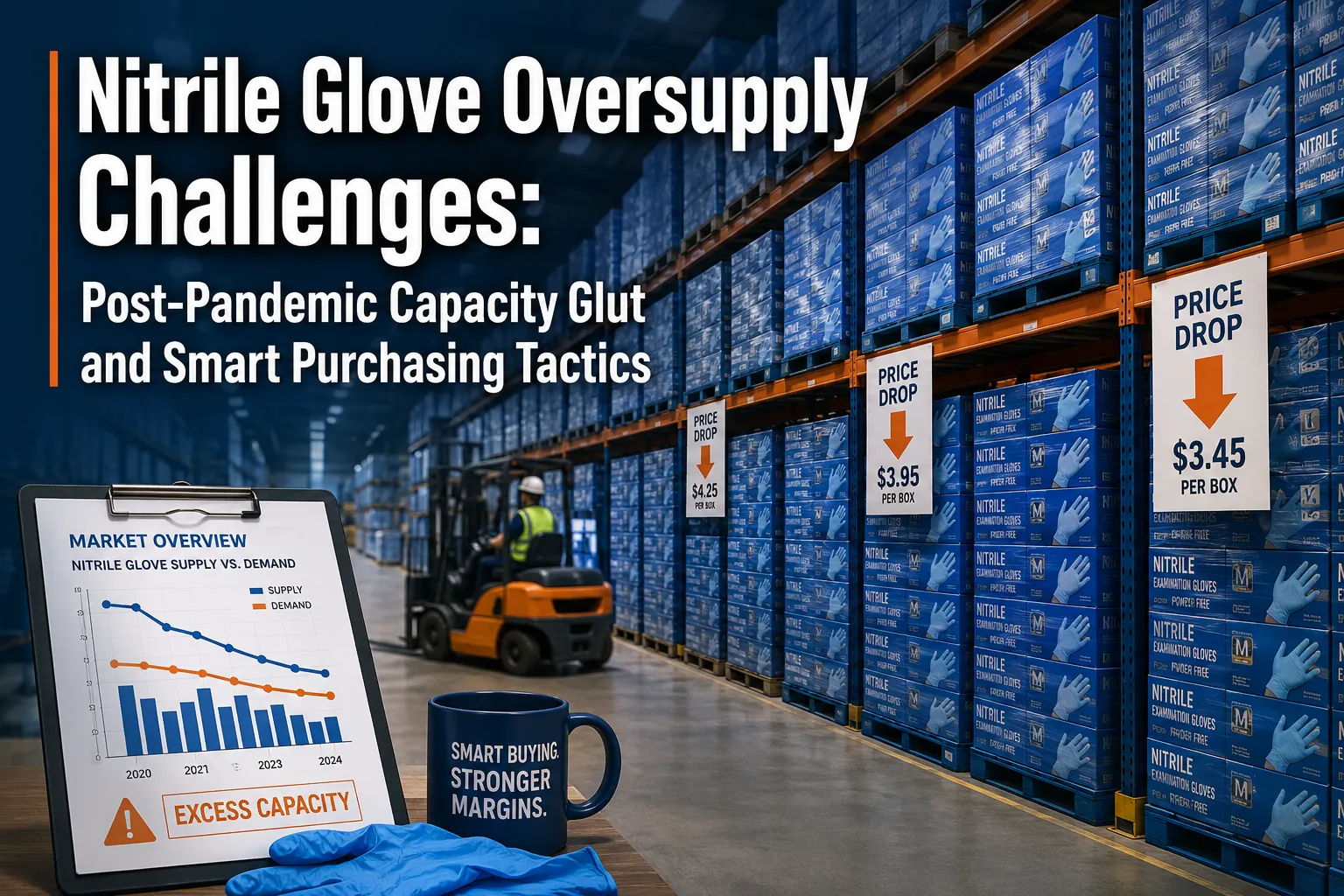
Last updated: July 3, 2026 Quick Answer The global nitrile glove market faces severe oversupply in 2026 after manufacturers expanded production capacity by over 300% during the COVID-19 pandemic, causing prices to plummet by 70-80% from peak levels. Buyers can now leverage this capacity glut through strategic bulk purchasing, aggressive contract negotiation, and quality verification […]

Last updated: July 2, 2026 Quick Answer Winter-ready nitrile gloves designed for cold chain logistics combine a chemical-resistant nitrile outer shell with internal insulation layers (typically acrylic, fleece, or foam) to maintain hand warmth and dexterity in freezer environments ranging from -10°F to -40°F. These gloves preserve the puncture resistance and food-safe properties of standard […]

Last updated: July 2, 2026 Quick Answer Sandy grip, micro-textured, and smooth nitrile gloves each excel in different environments based on grip requirements and tactile sensitivity needs. Sandy grip gloves provide maximum traction in wet and oily conditions but sacrifice tactile sensitivity, micro-textured gloves balance grip and dexterity for general-purpose work, and smooth gloves offer […]
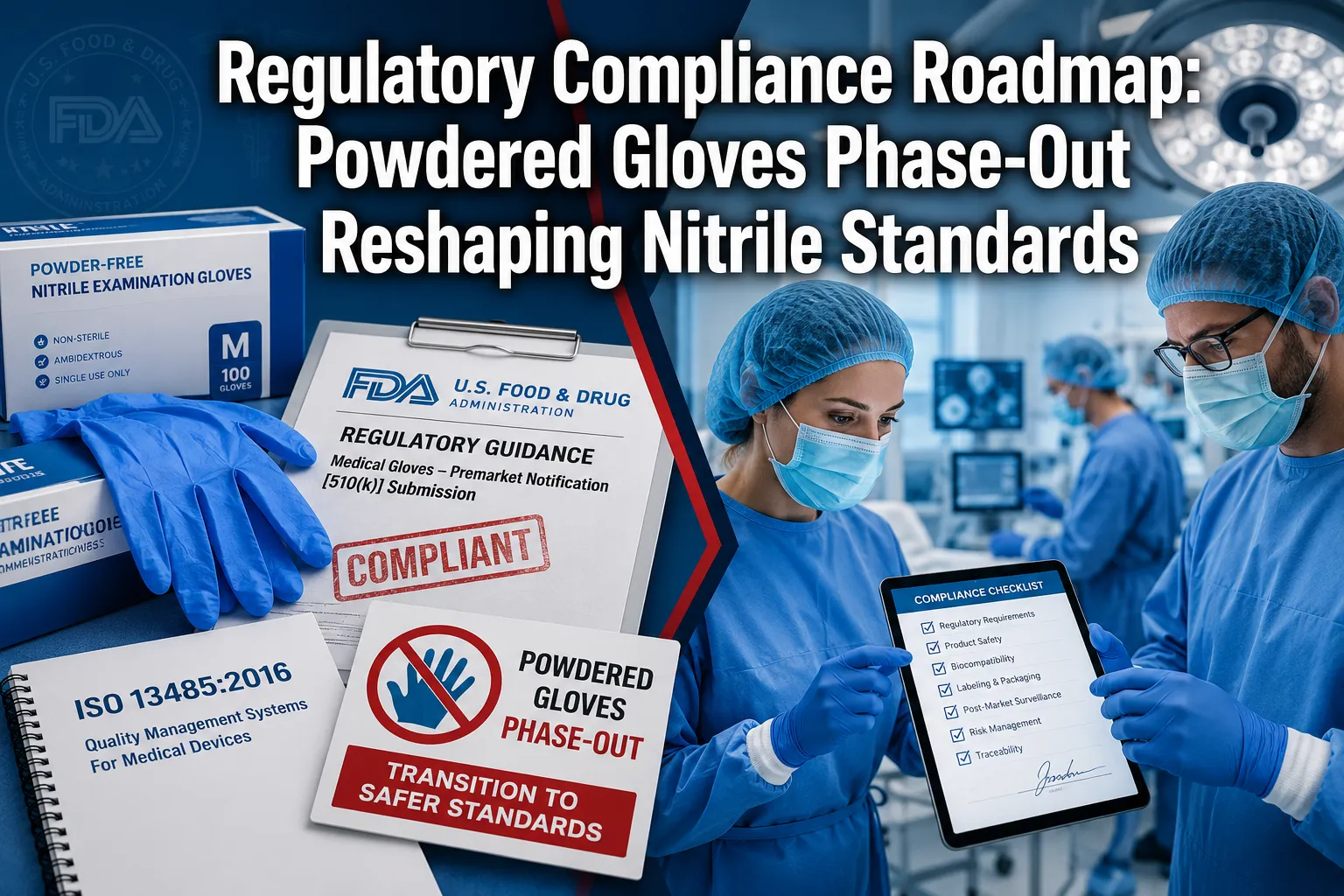
Last updated: July 2, 2026 Quick Answer The FDA banned powdered medical gloves in January 2017 due to serious health risks including respiratory complications and surgical complications from powder residue. This regulatory shift has fundamentally changed procurement standards, requiring healthcare facilities, dental offices, and medical suppliers to transition exclusively to powder-free nitrile gloves. Organizations must […]

Last updated: July 2, 2026 Quick Answer Nitrile Gloves in Emergency Response and Disaster Relief: Surge Demand Planning and Stockpiling Best Practices involves calculating demand based on population served, maintaining 30-90 day supplies with proper size distribution, storing gloves in climate-controlled conditions (60-75°F, 40-60% humidity), implementing FIFO rotation systems, and establishing relationships with multiple suppliers. […]

Last updated: July 2, 2026 Quick Answer Nitrile Glove Innovations 2025-2026: Thinner, Stronger, and Smarter Protection represent a significant leap in hand protection technology, combining advanced polymer formulations that achieve 30-40% thickness reduction while maintaining or exceeding previous strength standards. These next-generation gloves incorporate micro-texturing for enhanced grip, embedded sensor technology for real-time monitoring, and […]
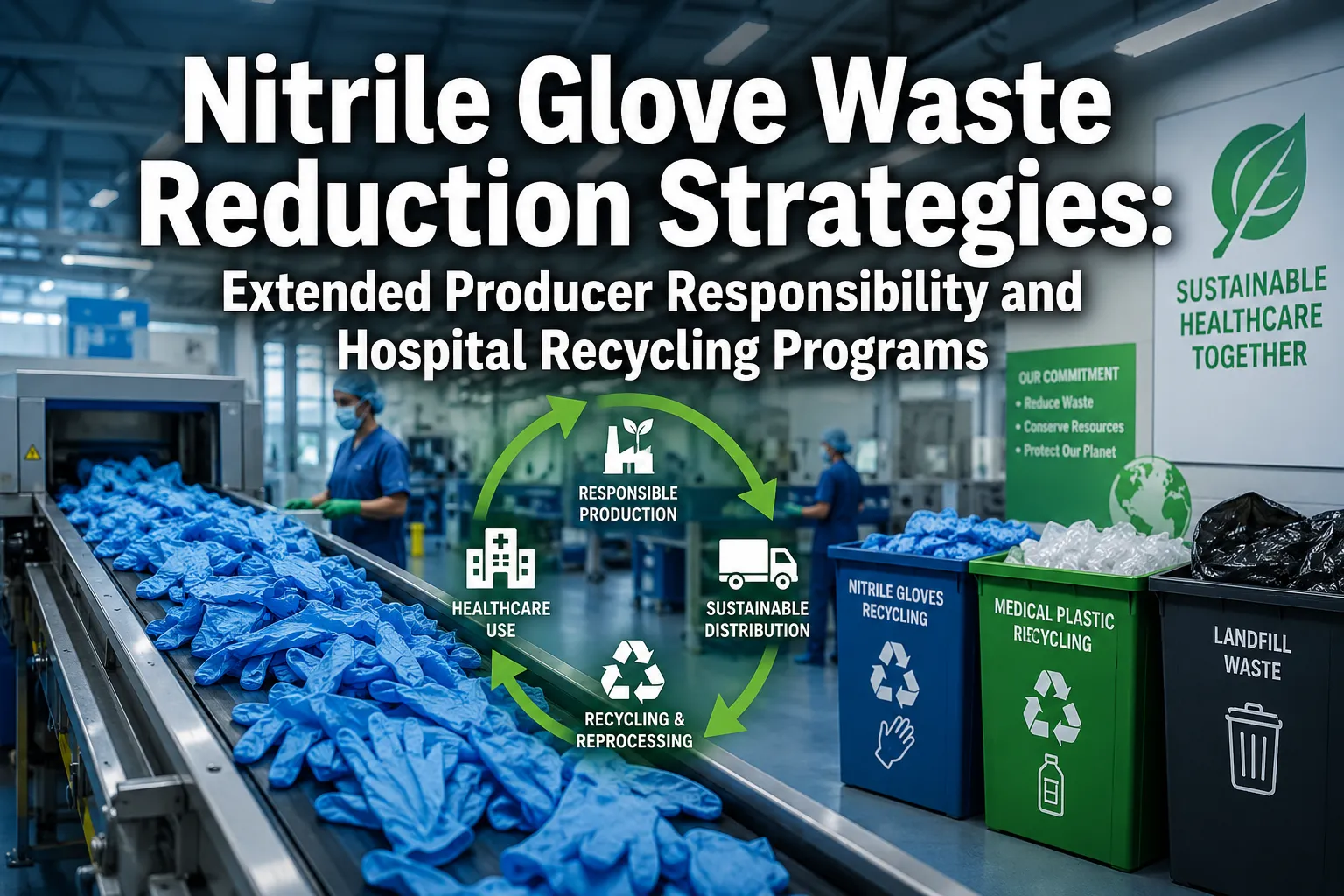
Last updated: July 1, 2026 Quick Answer Healthcare facilities worldwide discard an estimated 7.5 million tons of single-use gloves annually, with nitrile gloves comprising the majority. Nitrile Glove Waste Reduction Strategies: Extended Producer Responsibility and Hospital Recycling Programs address this crisis through two complementary approaches: EPR frameworks that shift waste management costs and responsibilities to […]

Last updated: July 1, 2026 Between 2020 and 2026, the Asia Pacific region added over 400 billion units of annual nitrile glove production capacity, with Malaysia, Thailand, Vietnam, and China leading the expansion. This rapid growth has created unprecedented opportunities for buyers seeking competitive pricing and diverse supply chains, but it has also introduced significant […]

Last updated: July 1, 2026 Quick Answer Nitrile gloves offer moderate protection in metal and machinery environments, excelling at oil and chemical resistance but requiring careful selection for spark exposure and heat contact. Standard nitrile gloves melt at approximately 200°F and are not inherently spark-resistant or flame-retardant, making them unsuitable for direct welding or grinding […]