Last updated: July 3, 2026
Quick Answer
The environmental impact of nitrile gloves extends far beyond their 100-200 year decomposition timeline in landfills. These synthetic rubber products break down into persistent microplastics that contaminate soil and water systems, while incineration releases nitrogen oxides and other pollutants. However, emerging circular economy programs now offer material recovery options, with specialized recycling facilities processing used gloves into reclaimed synthetic rubber for industrial applications, though these programs currently reach less than 5% of the global glove waste stream.
Key Takeaways
- Nitrile gloves are made from synthetic rubber (acrylonitrile-butadiene copolymer) that persists in the environment for 100-200 years and fragments into microplastics during degradation
- A single nitrile glove can generate thousands of microplastic particles as it breaks down, contaminating soil and aquatic ecosystems
- Incineration of nitrile gloves produces nitrogen oxides, carbon dioxide, and potentially toxic compounds if burned below 850°C
- Specialized recycling programs can recover up to 85% of nitrile material from used gloves, but infrastructure remains limited globally
- Healthcare facilities using recycling programs typically pay $0.50-$2.00 per pound of glove waste, compared to $0.10-$0.30 for landfill disposal
- Biodegradable nitrile alternatives show 60-70% degradation within 1-2 years under industrial composting conditions, but performance varies widely
- Industries with lower contamination risk (food service, light manufacturing, beauty services) have the most viable paths to switch to eco-friendly alternatives
- Common disposal mistakes include mixing contaminated medical gloves with recyclable streams and failing to separate glove types before collection
What Are Nitrile Gloves Made Of and Why Are They Bad for the Environment
Nitrile gloves consist of acrylonitrile-butadiene copolymer, a synthetic rubber created through petroleum-based chemical processes. This material provides excellent puncture resistance and chemical protection, making nitrile gloves popular across healthcare, food service, and industrial settings.
The environmental problems stem from nitrile’s synthetic polymer structure. Unlike natural latex, which comes from rubber trees and can biodegrade under certain conditions, nitrile is a fully synthetic material that microorganisms cannot easily break down. The manufacturing process itself requires significant energy input and generates chemical byproducts.
Key environmental concerns include:
- Petroleum dependency for raw material extraction
- Energy-intensive polymerization processes
- Non-biodegradable polymer chains that persist for decades
- No natural decomposition pathway in typical environmental conditions
- Accumulation in landfills and natural ecosystems
The global disposable glove market consumed approximately 330 billion units in 2022, with nitrile representing roughly 60% of that volume. This translates to millions of tons of synthetic polymer waste entering disposal systems annually. Choose nitrile gloves when chemical resistance and durability are essential, but consider the end-of-life impact when selecting glove thickness and quantity for your application.
Do Nitrile Gloves Break Down Into Microplastics
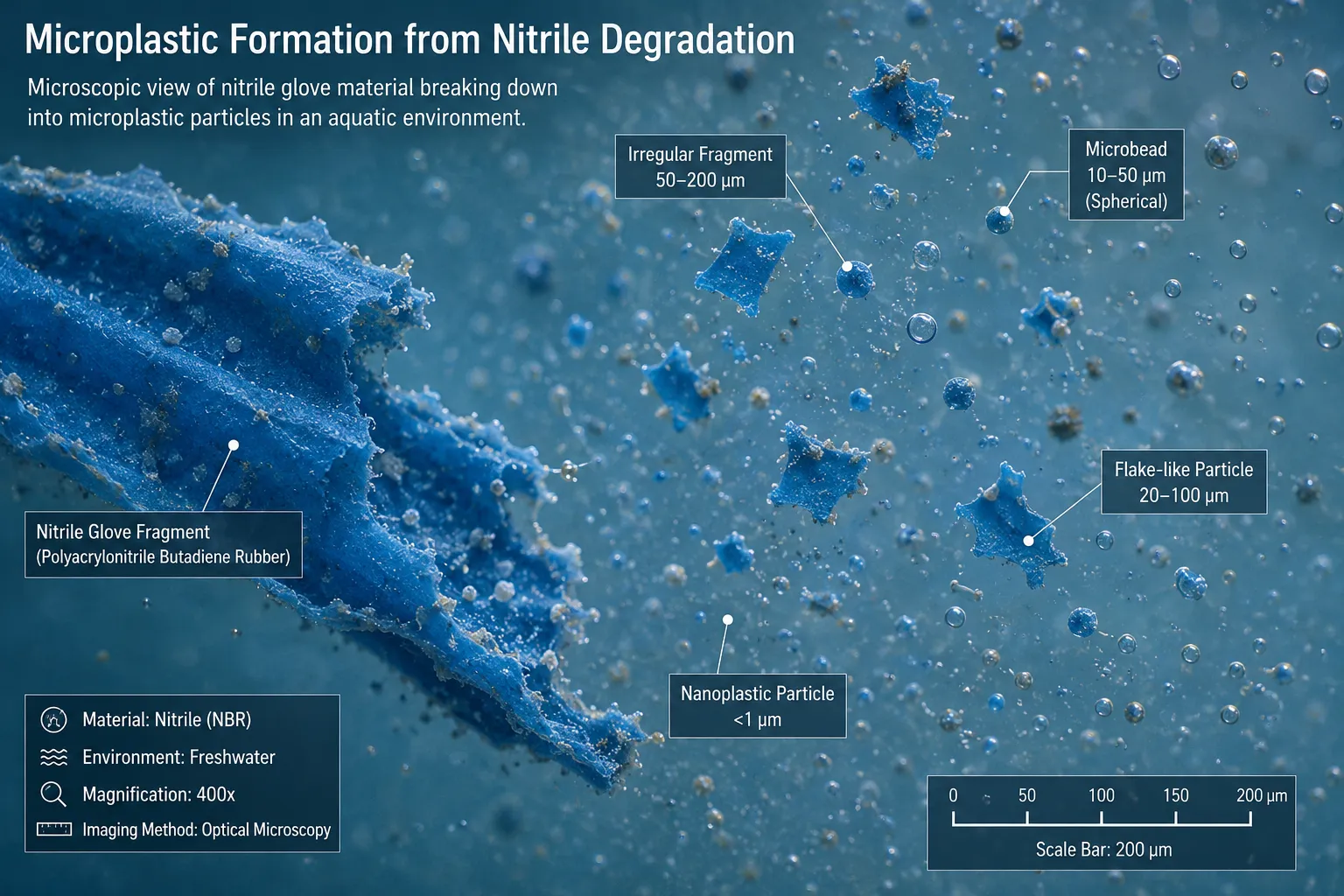
Yes, nitrile gloves fragment into microplastics as they degrade through physical and chemical weathering processes. When exposed to UV radiation, mechanical stress, and temperature fluctuations, the polymer chains break into progressively smaller particles, eventually reaching the microplastic size range (less than 5mm).
Research on synthetic rubber degradation shows that nitrile materials undergo photo-oxidation when exposed to sunlight, causing the polymer matrix to become brittle and fragment. In marine and freshwater environments, this process accelerates due to wave action and abrasion against sediment.
The microplastic formation process follows these stages:
- Surface cracking from UV exposure and oxidation
- Fragmentation into visible pieces (macro-plastics)
- Continued breakdown into microplastics (1mm-5mm)
- Further degradation into nano-plastics (less than 1 micrometer)
A single discarded nitrile glove can generate thousands of microplastic particles over its degradation timeline. These particles retain the chemical properties of the parent material, including potential additives like accelerators, stabilizers, and colorants used in manufacturing.
The microplastics from nitrile gloves pose several ecological risks. They accumulate in soil, reducing water infiltration and affecting plant growth. In aquatic systems, organisms from zooplankton to fish ingest these particles, leading to bioaccumulation through food chains. Unlike some biodegradable polymers, nitrile microplastics show minimal mineralization even after years of environmental exposure.
How Long Does It Take for Nitrile Gloves to Decompose in Landfills
Nitrile gloves require 100-200 years to fully decompose in typical landfill conditions, though some estimates extend to 300 years depending on environmental factors. This extended timeline reflects the stability of synthetic rubber polymers and the oxygen-limited conditions inside modern landfills.
Landfills create anaerobic (oxygen-free) environments that significantly slow decomposition processes. While organic materials like food waste and paper can break down within months to years, synthetic polymers like nitrile lack the chemical bonds that microorganisms can easily metabolize.
Factors affecting decomposition rate:
- Oxygen availability: Aerobic conditions accelerate breakdown, but landfills are predominantly anaerobic
- Temperature: Higher temperatures (above 40°C) slightly increase degradation rates
- Moisture content: Some hydrolysis occurs with water presence, but effect is minimal for nitrile
- Microbial activity: Limited bacterial species can process synthetic rubber
- Glove thickness: Thicker gloves take proportionally longer to break down
Even after decades in landfills, nitrile gloves retain much of their structural integrity. Excavation studies of old landfills have recovered recognizable synthetic materials from 30-40 years prior. The gloves don’t truly “decompose” in the biological sense but rather undergo slow physical fragmentation and chemical degradation.
This persistence creates long-term storage challenges. As landfills reach capacity and close, the nitrile waste remains, potentially leaching chemical additives into surrounding soil and groundwater over time. The durability that makes nitrile gloves effective during use becomes an environmental liability after disposal.
Nitrile Gloves vs Latex Gloves Environmental Impact Comparison
Latex gloves have a lower overall environmental impact than nitrile gloves, primarily because natural rubber latex is a renewable resource that biodegrades more readily. However, latex production carries its own environmental concerns related to plantation agriculture and processing chemicals.
Environmental comparison:
| Factor | Nitrile Gloves | Latex Gloves |
|---|---|---|
| Raw material source | Petroleum-based synthetic | Natural rubber tree sap (renewable) |
| Manufacturing energy | High (polymerization) | Moderate (processing, vulcanization) |
| Biodegradation time | 100-200+ years | 5-10 years (varies by conditions) |
| Microplastic formation | Significant | Lower, but still occurs |
| Land use impact | Minimal (petroleum extraction) | Moderate (rubber plantations) |
| Chemical additives | Accelerators, stabilizers | Sulfur, accelerators, ammonia |
| Recycling potential | Emerging programs | Very limited |
Natural latex biodegrades through microbial action because the polymer structure (polyisoprene) resembles compounds found in nature. Soil bacteria and fungi possess enzymes capable of breaking down these chains. In composting conditions, latex gloves can decompose within 1-2 years, though landfill conditions slow this process to 5-10 years.
However, latex production requires large rubber tree plantations, often in biodiverse tropical regions. Monoculture rubber farming can displace native forests and reduce biodiversity. The processing also uses chemicals like ammonia for preservation and sulfur compounds for vulcanization.
Choose latex gloves when allergy concerns are minimal and biodegradability is a priority. Nitrile remains the better choice for users with latex allergies and applications requiring superior chemical resistance, but the environmental trade-off is significant. For food service applications where chemical exposure is limited, latex or alternative materials may offer better sustainability profiles.
Are Biodegradable Nitrile Gloves Actually Better for the Environment
Biodegradable nitrile gloves show 60-70% material degradation within 1-2 years under industrial composting conditions, representing a substantial improvement over conventional nitrile, but their real-world environmental benefit depends heavily on proper disposal infrastructure. These gloves incorporate additives that make the polymer chains more accessible to microbial breakdown.
The technology behind biodegradable nitrile typically uses one of two approaches. Some manufacturers add organic additives that microbes consume first, creating pores and increasing surface area for further degradation. Others modify the polymer structure itself to include bonds that enzymes can more easily cleave.
Important limitations to consider:
- Biodegradation requires specific conditions (temperature, moisture, microbial presence) found in industrial composting facilities
- Performance in landfills remains poor due to anaerobic conditions
- Marine and soil environments show slower degradation than advertised
- Some products only achieve partial degradation, leaving microplastic residue
- Cost premium of 20-40% over conventional nitrile
- Certification standards vary, making claims difficult to verify
Third-party testing reveals significant variation in biodegradable glove performance. Products certified to ASTM D6400 or EN 13432 standards must show 90% degradation within 180 days under industrial composting conditions. However, many “biodegradable” gloves on the market lack such certification and may only achieve 30-50% degradation.
The practical challenge is disposal infrastructure. Industrial composting facilities that can process these gloves remain scarce in most regions. If biodegradable nitrile gloves end up in landfills alongside conventional waste, they offer minimal environmental advantage. In marine environments, degradation occurs but still takes years rather than months.
Choose biodegradable nitrile gloves if your facility has access to industrial composting or if you’re in a region with developing organic waste infrastructure. For contaminated medical waste that requires incineration, biodegradable formulations offer no advantage. The environmental benefit is real but conditional on proper end-of-life handling.
What Happens When Nitrile Gloves Are Incinerated
Incineration of nitrile gloves at proper temperatures (above 850°C) breaks down the polymer into carbon dioxide, water vapor, and nitrogen oxides, but incomplete combustion below this threshold can release toxic compounds including hydrogen cyanide and volatile organic compounds. Modern medical waste incinerators with proper emission controls minimize but don’t eliminate these pollutants.
The combustion chemistry of nitrile (acrylonitrile-butadiene copolymer) is complex. The acrylonitrile component contains nitrogen bonded to carbon, which can form nitrogen oxides (NOx) during high-temperature burning. These compounds contribute to air pollution and acid rain. The butadiene portion burns more cleanly but still generates significant CO2.
Incineration outcomes by temperature:
- Below 600°C: Incomplete combustion, releases hydrogen cyanide, carbon monoxide, unburned hydrocarbons
- 600-850°C: Partial breakdown, reduced toxic emissions but still significant pollutants
- Above 850°C: Complete combustion, primarily CO2, water, and NOx
- Above 1000°C with scrubbers: Optimal conditions with emission control systems capturing most pollutants
Medical waste incinerators typically operate at 850-1200°C with multi-stage combustion and flue gas treatment. These systems capture particulates, neutralize acid gases, and reduce NOx emissions through selective catalytic reduction. However, even well-controlled incineration converts the carbon in nitrile gloves to CO2, contributing to greenhouse gas emissions.
Energy recovery represents one advantage of incineration. Nitrile gloves have a calorific value similar to coal (approximately 30-35 MJ/kg), meaning they can generate steam or electricity during combustion. Waste-to-energy facilities can offset some fossil fuel use, though the net climate benefit depends on the alternative disposal method and energy source being replaced.
The environmental trade-off is between persistent landfill waste and immediate air emissions. Incineration eliminates the long-term accumulation problem and pathogen risk but transfers the environmental impact to air quality and climate. For contaminated medical gloves where recycling isn’t feasible, modern incineration with energy recovery and emission controls represents the lesser environmental harm compared to landfilling.
Can Nitrile Gloves Be Recycled and Where to Recycle Them
Nitrile gloves can be recycled through specialized programs that process used gloves into reclaimed synthetic rubber for industrial applications, but these programs remain geographically limited and typically exclude contaminated medical waste. Companies like TerraCycle, Kimberly-Clark’s RightCycle program, and regional medical waste processors offer collection services in select markets.
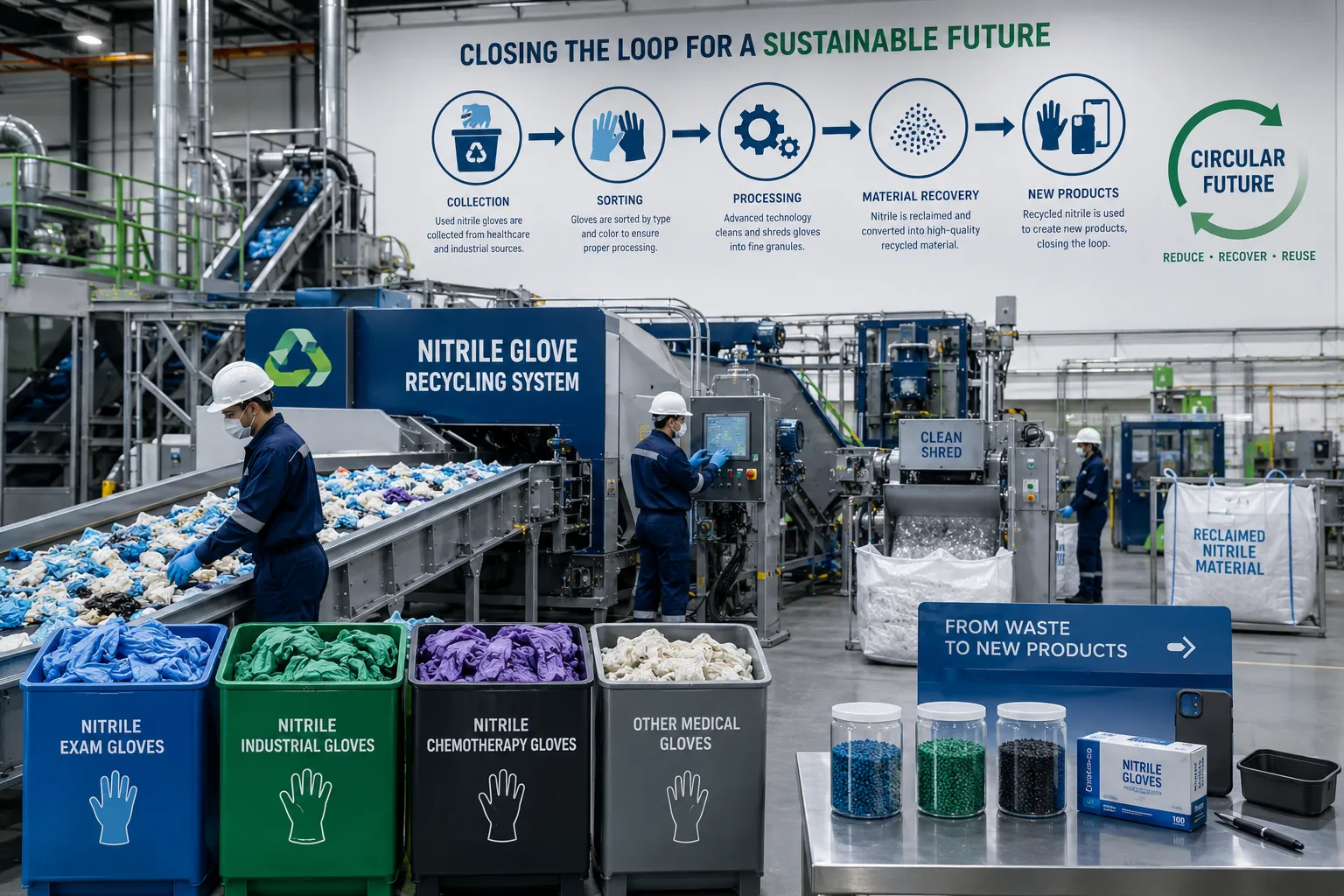
The recycling process involves several steps. Used gloves are collected in designated containers, transported to processing facilities, sorted to remove contaminants, shredded into small pieces, cleaned, and then processed through devulcanization or grinding to create recycled rubber material. This reclaimed material can be used in products like playground surfaces, athletic tracks, automotive parts, and industrial mats.
Current recycling program types:
- Zero-waste box programs: Ship-back services for businesses (TerraCycle model)
- Healthcare-specific programs: RightCycle for non-hazardous medical facilities
- Industrial collection: Regional waste processors serving manufacturing facilities
- Pilot municipal programs: Limited city-level collection in select areas
Eligibility restrictions significantly limit participation. Most programs exclude gloves contaminated with chemotherapy agents, infectious materials, or hazardous chemicals. This eliminates much of the healthcare waste stream. Food service, beauty and personal care, light manufacturing, and automotive applications typically qualify if gloves are collected separately from other waste.
To find recycling options:
- Check if your facility qualifies (non-hazardous, non-infectious waste only)
- Search for TerraCycle Zero Waste Boxes or RightCycle drop-off locations
- Contact regional medical or industrial waste haulers about glove recycling services
- Inquire with glove suppliers about take-back programs
- Join industry associations that coordinate group recycling initiatives
The infrastructure gap remains substantial. Estimates suggest less than 5% of disposable nitrile gloves globally enter recycling streams. Contamination concerns, collection logistics, and processing costs create barriers. However, the technology works, and facilities with sufficient volume (typically 50+ pounds of gloves monthly) can often justify participation.
Circular Economy Solutions for Medical Glove Waste
Circular economy approaches for medical glove waste focus on material recovery, reprocessing, and remanufacturing to keep synthetic rubber in productive use rather than disposal. These systems require segregation at the source, specialized logistics, and processing facilities capable of handling post-consumer nitrile products.
The most developed circular model involves collection partnerships between healthcare facilities and recycling processors. Facilities place dedicated bins for non-contaminated gloves (used in non-patient care areas like administration, food service, or housekeeping). These gloves are collected separately from regulated medical waste, transported to processing centers, and converted into recycled rubber products.
Key circular economy strategies:
- Source separation: Dedicated collection streams for non-hazardous glove waste
- Material recovery: Devulcanization and grinding to reclaim synthetic rubber
- Downcycling: Converting used gloves into lower-grade products (mats, surfaces)
- Chemical recycling: Emerging technologies to break polymers into chemical feedstocks
- Remanufacturing: Processing reclaimed material into new industrial products
- Extended producer responsibility: Manufacturer take-back and recycling programs
Chemical recycling represents an emerging frontier. Advanced pyrolysis and solvolysis processes can break nitrile polymers back into chemical building blocks, potentially enabling true closed-loop recycling where old gloves become new gloves. However, these technologies remain in pilot stages and face economic viability challenges.
Some manufacturers now design gloves with circularity in mind. Single-polymer formulations without mixed materials or complex additives simplify recycling. Color-free gloves eliminate pigment contamination concerns. Standardized packaging facilitates collection logistics.
The business model challenge is significant. Recycling programs require upfront investment in collection infrastructure, transportation networks, and processing equipment. The reclaimed material competes economically with virgin synthetic rubber, which benefits from economies of scale in petrochemical production. Government incentives, corporate sustainability commitments, and waste disposal cost increases make circular models more viable.
Healthcare systems in Europe and North America have launched pilot programs demonstrating feasibility. The UK’s National Health Service tested glove recycling in multiple hospital trusts, diverting several tons monthly from incineration. Kaiser Permanente in the United States includes nitrile gloves in its comprehensive medical supply recycling initiative.
How Much Do Nitrile Glove Recycling Programs Cost for Businesses
Nitrile glove recycling programs typically cost businesses $0.50-$2.00 per pound of glove waste, compared to $0.10-$0.30 per pound for standard landfill disposal, though the premium narrows when accounting for waste hauling efficiencies and sustainability reporting benefits. Initial setup costs range from $200-$1,000 depending on container requirements and program type.
The cost structure includes several components. Collection containers or boxes range from $50-$200 each depending on size. Shipping or pickup fees vary by volume and frequency, with per-box shipping costs of $100-$300 for mail-back programs. Processing fees cover the actual recycling operations and typically represent the largest cost component.
Cost comparison by program type:
- Zero-waste box (small volume): $150-$300 per box including shipping and processing (typically 40-50 pounds capacity)
- Scheduled pickup (medium volume): $0.75-$1.50 per pound with monthly collection
- Integrated waste service (high volume): $0.50-$1.00 per pound with weekly collection and consolidated hauling
- Manufacturer take-back: Variable, sometimes subsidized or free for large customers
Volume significantly affects per-pound costs. Facilities generating 200+ pounds monthly often negotiate rates below $1.00 per pound. Small offices using a single zero-waste box quarterly may pay $3.00+ per pound when all costs are calculated.
However, the cost comparison should include avoided expenses. Some facilities reduce overall waste hauling frequency by diverting gloves from general trash, offsetting recycling costs. Sustainability certifications and ESG reporting benefits provide indirect value. Some insurance providers and accreditation bodies now recognize waste reduction efforts in their assessments.
Financial considerations for implementation:
- Calculate current glove waste volume (weigh trash for 2-4 weeks)
- Compare total cost of recycling vs. current disposal including hauling
- Factor in staff time for segregation and program management (typically 1-3 hours monthly)
- Assess sustainability reporting and marketing value
- Check for utility or government rebates for waste diversion programs
- Consider starting with pilot program in high-volume, low-contamination areas
For many healthcare facilities, the cost premium represents 0.1-0.3% of total glove procurement costs. A hospital spending $50,000 annually on nitrile gloves might pay an additional $200-$500 for recycling programs covering non-contaminated waste streams. This modest increase often aligns with institutional sustainability goals.
The economic case improves as recycling infrastructure develops. Increased processing capacity and competition among service providers should reduce costs over time. Some regions with landfill restrictions or high tipping fees already see near-parity between recycling and disposal costs.
What Industries Should Switch Away From Nitrile Gloves for Sustainability
Industries with low chemical exposure risk and minimal contamination concerns should prioritize switching to more sustainable alternatives, including food service operations, beauty and personal care services, light assembly manufacturing, and retail environments. These sectors can adopt biodegradable materials, reusable gloves, or reduced-glove protocols without compromising safety.
The decision to switch depends on three factors: the level of protection required, contamination risk, and availability of suitable alternatives. Healthcare settings handling infectious materials or hazardous drugs have limited options due to safety regulations. However, many industries adopted nitrile gloves by default without evaluating whether the material’s properties match their actual needs.
Industries with viable alternatives:
- Food service and preparation: Can use biodegradable materials, plant-based gloves, or polyethylene for low-risk tasks
- Beauty salons and spas: Suitable for biodegradable nitrile or natural rubber latex (where allergy risk is managed)
- Retail and customer service: Often can eliminate gloves entirely or use minimal protection
- Light manufacturing and assembly: May switch to reusable gloves for non-contaminating work
- Janitorial and housekeeping: Can use thicker reusable gloves for most tasks
- Educational institutions: Suitable for biodegradable options in labs and food service
Food service represents a particularly promising sector. Many food handling tasks require only basic barrier protection against cross-contamination, not chemical resistance. Plant-based polyethylene gloves or biodegradable materials can provide adequate protection while offering better end-of-life outcomes. Some establishments have successfully implemented glove-reduction protocols, using proper handwashing instead of gloves for many tasks.
Beauty and personal care services use substantial glove volumes for hair coloring, nail services, and esthetics treatments. While some chemical exposure occurs, many tasks could use biodegradable nitrile alternatives or natural rubber latex with proper allergy screening.
Evaluation criteria for switching:
- Assess actual chemical exposure levels in your operations
- Review safety regulations and compliance requirements
- Test alternative materials for adequate protection and durability
- Calculate total cost including disposal and sustainability benefits
- Train staff on proper use of alternative materials
- Monitor performance and adjust as needed
Industries should avoid switching when it compromises safety. Healthcare workers handling chemotherapy drugs, laboratory technicians working with hazardous chemicals, and industrial workers exposed to petroleum products need the chemical resistance that nitrile provides. In these cases, focus on recycling programs and proper disposal rather than material substitution.
The sustainability improvement from switching can be substantial. A restaurant using 10,000 nitrile gloves monthly (approximately 200 pounds) that switches to biodegradable alternatives and implements composting prevents roughly 2,400 pounds of persistent synthetic waste annually.
Common Mistakes When Disposing of Used Nitrile Gloves
The most common disposal mistake is mixing contaminated medical gloves with recyclable or general waste streams, which can contaminate entire batches and create health hazards. Other frequent errors include failing to separate glove types, disposing of non-hazardous gloves as regulated medical waste (increasing costs unnecessarily), and placing gloves in recycling bins meant for paper or plastic containers.
Proper disposal requires understanding contamination levels and local regulations. Not all used gloves require treatment as medical waste. Gloves used in patient care areas with potential infectious exposure need regulated medical waste disposal, but gloves used in administrative offices, food service, or maintenance areas typically qualify as general waste or recycling candidates.
Common disposal errors:
- Contamination mixing: Placing infectious or chemically contaminated gloves in recycling bins
- Over-classification: Treating all healthcare facility gloves as regulated medical waste when many are general waste
- Under-classification: Disposing of contaminated gloves in regular trash, creating health risks
- Type mixing: Combining nitrile, latex, and vinyl gloves in recycling streams that accept only one type
- Improper bagging: Failing to seal collection bags, allowing contamination spread
- Location errors: Placing disposal containers in areas where contamination risk is high
- Lack of training: Staff unaware of which gloves go in which waste stream
The financial impact of these mistakes can be significant. Regulated medical waste disposal costs $0.50-$2.00 per pound compared to $0.10-$0.30 for general waste. Facilities that over-classify non-contaminated gloves as medical waste pay 5-10 times more than necessary. Conversely, contaminating recycling streams can result in rejected shipments and lost program access.
Best practices for proper disposal:
- Establish clear zones: patient care areas (medical waste), non-patient areas (general waste or recycling)
- Use color-coded containers: red for regulated medical waste, blue for recycling, black for general waste
- Post visual guides showing which gloves go where
- Train all staff on disposal protocols during onboarding and annually
- Audit waste streams quarterly to identify contamination issues
- Work with waste haulers to understand their requirements and restrictions
Some facilities implement a “when in doubt” policy directing questionable gloves to medical waste to avoid contamination risks. While this increases disposal costs, it prevents the more serious problem of infectious material entering general waste streams.
The regulatory landscape varies by jurisdiction. Some states and countries have specific requirements for glove disposal in healthcare, food service, and industrial settings. Facilities should consult local environmental and health departments to ensure compliance.
Do Nitrile Gloves Release Toxins When Burned
Nitrile gloves release nitrogen oxides, carbon monoxide, and potentially hydrogen cyanide when burned at low temperatures (below 600°C), but properly controlled incineration above 850°C with emission scrubbing systems minimizes toxic compound formation while still producing greenhouse gases. Backyard burning or open-air combustion creates the highest toxin levels and should never be used for glove disposal.
The toxicity of nitrile combustion products depends heavily on temperature and oxygen availability. The nitrogen-carbon bonds in acrylonitrile can form hydrogen cyanide (HCN) during incomplete combustion. This highly toxic gas forms when nitrile burns in oxygen-limited conditions or at temperatures below 600°C. Complete combustion at higher temperatures converts the nitrogen primarily to nitrogen oxides (NOx) rather than cyanide.
Combustion products by burning conditions:
- Open burning (300-500°C): High levels of HCN, CO, unburned hydrocarbons, particulates, toxic smoke
- Low-temperature incineration (600-800°C): Moderate HCN, high NOx, CO, volatile organic compounds
- Proper incineration (850-1200°C): Minimal HCN, moderate NOx, primarily CO2 and water vapor
- Incineration with scrubbers: Reduced NOx through catalytic treatment, captured particulates
Medical waste incinerators use two-stage combustion. The primary chamber burns waste at 850-1000°C, breaking down most organic compounds. Secondary combustion at 1000-1200°C ensures complete destruction of any remaining toxic compounds. Flue gas treatment systems then remove particulates, neutralize acid gases, and reduce NOx emissions before release.
Even with proper controls, nitrile incineration produces environmental impacts. The carbon content converts to CO2, contributing to greenhouse gas emissions. Nitrogen oxides contribute to smog formation and acid rain, though modern selective catalytic reduction systems can remove 70-90% of NOx.
The health risk from improper burning is substantial. Hydrogen cyanide interferes with cellular oxygen use and can be fatal at concentrations above 100 parts per million. Carbon monoxide causes oxygen deprivation. Incomplete combustion also produces polycyclic aromatic hydrocarbons (PAHs), some of which are carcinogenic.
Safety guidelines:
- Never burn nitrile gloves in open fires, burn barrels, or fireplaces
- Don’t use gloves as fire starters or dispose of them in wood stoves
- Ensure medical waste goes to licensed incinerators with proper permits
- If incineration is necessary, verify the facility operates above 850°C with emission controls
- Consider alternatives like recycling or landfilling for non-contaminated gloves
Some developing regions lack access to proper incineration facilities, leading to open burning of medical waste including gloves. This practice creates serious air quality and health problems for nearby communities. International health organizations recommend autoclave sterilization followed by landfilling as a safer alternative when proper incineration isn’t available.
How Bad Is the Microplastic Pollution From Disposable Gloves
Microplastic pollution from disposable gloves represents a growing but currently unquantified portion of global synthetic microplastic contamination, with preliminary research suggesting that glove-derived particles are detectable in urban waterways, coastal sediments, and wastewater treatment plant effluent. The scale of impact depends on disposal practices, environmental conditions, and the rate at which discarded gloves fragment.
Quantifying glove-specific microplastic pollution remains challenging because most environmental monitoring doesn’t distinguish between microplastics from different sources. However, the volume of glove waste provides context for potential impact. With global consumption exceeding 300 billion disposable gloves annually (roughly 60% nitrile), and millions of tons entering waste streams, even a small percentage of environmental leakage creates substantial microplastic generation.
Pathways for glove microplastics to enter ecosystems:
- Litter fragmentation: Gloves discarded as litter break down through UV exposure and mechanical stress
- Landfill leachate: Microplastics wash from landfills into groundwater and surface water
- Wastewater contamination: Gloves improperly flushed or washed fragment in treatment systems
- Marine debris: Coastal and maritime glove waste degrades in ocean environments
- Soil contamination: Gloves in compost or agricultural settings fragment into soil
Research on synthetic rubber microplastics shows they persist in sediments and accumulate in filter-feeding organisms. Unlike some biodegradable polymers that mineralize into CO2 and water, nitrile microplastics retain their polymer structure for years. The particles can adsorb other pollutants like heavy metals and persistent organic compounds, potentially increasing their toxicity.
The ecological effects include physical impacts (ingestion by organisms, gut blockage) and chemical impacts (leaching of additives, transport of adsorbed pollutants). Studies on aquatic invertebrates show that microplastic ingestion can reduce feeding efficiency, growth rates, and reproductive success. The long-term population-level effects remain under investigation.
Factors that worsen glove microplastic pollution:
- High UV exposure environments (tropical and subtropical regions)
- Coastal areas with significant maritime glove use and disposal
- Urban waterways receiving stormwater runoff containing litter
- Regions with inadequate waste management infrastructure
- Areas with high glove consumption (healthcare centers, food service districts)
The problem accelerated during the COVID-19 pandemic. Mask and glove litter increased dramatically in 2020-2021, with environmental surveys documenting gloves among the most common pandemic-related debris items. Many of these gloves entered marine environments, where they’ll fragment over coming decades.
Mitigation requires multiple approaches. Improved waste management prevents environmental leakage. Recycling programs capture gloves before they can become litter. Biodegradable alternatives reduce persistence. Public education about proper disposal reduces littering. Some municipalities have implemented specific campaigns targeting glove and mask litter in response to pandemic-related increases.
The relative severity compared to other microplastic sources remains unclear. Tire wear particles, synthetic textiles, and plastic packaging likely contribute larger volumes currently. However, the rapid growth in glove consumption and the material’s persistence make it an emerging concern worth addressing proactively.
Alternatives to Nitrile Gloves That Are More Eco-Friendly
The most eco-friendly alternatives to conventional nitrile gloves include biodegradable nitrile formulations, natural rubber latex (for non-allergic users), plant-based polyethylene gloves for low-risk applications, and reusable gloves made from natural or recycled materials for appropriate settings. The best choice depends on protection requirements, contamination risk, user allergies, and available disposal infrastructure.
Sustainable glove alternatives by application:
For food service and light-duty tasks:
- Plant-based polyethylene gloves (made from sugarcane or corn starch)
- Biodegradable nitrile with composting access
- Natural rubber latex (if allergy screening is implemented)
- Reduced-glove protocols with proper handwashing
For beauty and personal care:
- Biodegradable nitrile alternatives
- Natural rubber latex for non-chemical tasks
- Vinyl gloves for very short-duration tasks (though vinyl has its own environmental issues)
For industrial and janitorial work:
- Reusable nitrile or natural rubber gloves (thicker, washable designs)
- Cotton gloves with natural rubber coating
- Recycled synthetic rubber gloves
For healthcare (limited options due to safety requirements):
- Biodegradable nitrile for non-patient care areas
- Participation in glove recycling programs for non-contaminated waste
- Optimized glove use protocols to reduce unnecessary consumption
Natural rubber latex offers significant environmental advantages when allergies aren’t a concern. The material comes from renewable rubber tree plantations, biodegrades within 5-10 years, and requires less energy-intensive processing than synthetic alternatives. However, latex allergies affect 1-6% of the general population and up to 12% of healthcare workers, limiting its applicability.
Plant-based polyethylene gloves represent an emerging option. These gloves use bio-polyethylene derived from sugarcane ethanol rather than petroleum. While still plastic, the renewable feedstock reduces fossil fuel dependency. Some formulations incorporate biodegradable additives, though performance varies.
Evaluation criteria for alternatives:
- Protection level: Does the alternative provide adequate barrier protection for your specific tasks?
- Durability: Will the gloves last through typical use without tearing? Glove thickness affects both protection and longevity.
- Chemical resistance: Do your tasks involve chemicals that require nitrile’s resistance properties?
- Allergy considerations: Can you screen users for latex allergies if considering natural rubber?
- Disposal infrastructure: Do you have access to composting or recycling for the alternative material?
- Cost: What is the total cost including procurement, disposal, and potential productivity impacts?
- Regulatory compliance: Do safety regulations permit the alternative in your industry?
Reusable gloves deserve consideration for appropriate applications. Heavy-duty rubber gloves for janitorial work, dishwashing, or industrial cleaning can replace hundreds of disposable pairs. While they require washing (using water and energy), the lifecycle analysis often favors reusables for tasks where contamination risk is low and gloves can be sanitized between uses.
The “no glove” option also merits evaluation. Some food service operations have reduced glove use by implementing rigorous handwashing protocols, using utensils instead of hands, and training staff on proper hygiene. This approach eliminates glove waste entirely while potentially improving food safety (since gloves can create a false sense of security leading to less frequent handwashing).
Frequently Asked Questions
Can you compost nitrile gloves at home?
No, conventional nitrile gloves should not be composted at home because they won’t biodegrade in backyard compost conditions. Only gloves specifically certified as biodegradable and compostable (meeting ASTM D6400 or EN 13432 standards) will break down, and even these require industrial composting facilities with controlled temperature and microbial conditions that home compost piles don’t achieve.
Are blue nitrile gloves worse for the environment than other colors?
No, glove color doesn’t significantly affect environmental impact. The pigments used for coloring represent a tiny fraction of the glove material and don’t substantially change biodegradation rates or recycling potential. However, some recycling programs prefer unpigmented gloves because they’re easier to process into consistent recycled material.
How can I tell if nitrile gloves are actually biodegradable?
Look for third-party certifications like ASTM D6400, EN 13432, or specific biodegradability test results on the product packaging or manufacturer’s website. Avoid gloves that only claim “eco-friendly” or “biodegradable” without certification, as these terms are often used without meaningful standards. Request documentation showing the degradation timeline and conditions required.
Do nitrile gloves contaminate recycling if accidentally mixed with plastic bottles?
Yes, nitrile gloves contaminate standard plastic recycling streams because they’re made from synthetic rubber, not the PET or HDPE plastics that bottle recycling processes handle. If gloves enter bottle recycling, they’re typically sorted out as contaminants or, if missed, can compromise the quality of recycled plastic. Never place nitrile gloves in curbside recycling bins unless your municipality specifically accepts them.
What percentage of nitrile gloves actually get recycled globally?
Less than 5% of nitrile gloves globally enter recycling programs, with most estimates suggesting 2-3%. The vast majority end up in landfills or incinerators. Recycling infrastructure remains limited, contamination concerns exclude much healthcare waste, and collection logistics create barriers. However, participation in available programs is growing as awareness increases.
Are powder-free nitrile gloves better for the environment than powdered ones?
Powder-free gloves have a slight environmental advantage because they don’t release cornstarch powder into the environment, which can affect aquatic ecosystems when gloves are littered. However, the difference is minimal compared to the larger issue of the glove material itself. Most modern nitrile gloves are powder-free regardless, as powder has been phased out due to health concerns.
Can nitrile gloves be burned safely in a backyard fire pit?
No, never burn nitrile gloves in backyard fire pits, burn barrels, or any uncontrolled combustion setting. Low-temperature burning produces toxic compounds including hydrogen cyanide, carbon monoxide, and other harmful gases. Only licensed medical waste incinerators operating above 850°C with proper emission controls should burn nitrile gloves.
Do thicker nitrile gloves create more environmental waste?
Yes, thicker gloves contain more material per unit, creating proportionally more waste. A 6-mil glove contains roughly twice the synthetic rubber of a 3-mil glove. However, thicker gloves often last longer and resist tearing better, potentially reducing the total number of gloves needed. Choose glove thickness based on protection requirements rather than environmental concerns alone, then focus on proper disposal.
Are there any truly zero-waste options for disposable glove use?
No truly zero-waste option exists for disposable gloves currently. Even biodegradable gloves require industrial composting infrastructure and leave some residue. The closest approach to zero-waste is using reusable gloves for appropriate applications, participating in recycling programs for disposable gloves when available, and minimizing glove use through alternative hygiene protocols where safety permits.
How long do biodegradable nitrile gloves take to break down in the ocean?
Biodegradable nitrile gloves still take several years to break down in marine environments, much longer than the 1-2 years claimed for industrial composting conditions. Ocean conditions lack the optimal temperature, microbial populations, and oxygen levels that industrial composting provides. While biodegradable gloves eventually degrade faster than conventional nitrile, they still contribute to marine debris for extended periods if littered.
Can hospitals switch entirely to biodegradable or recyclable gloves?
Hospitals cannot switch entirely due to contamination concerns and safety regulations. Gloves used in patient care, surgery, chemotherapy administration, and infectious disease treatment must be disposed of as regulated medical waste, which typically means incineration. However, hospitals can switch to biodegradable or recyclable options for non-patient care areas like administration, food service, and housekeeping, potentially covering 20-40% of total glove use.
What happens to nitrile glove microplastics in drinking water?
Nitrile microplastics that enter water systems can pass through some water treatment processes and potentially reach drinking water, though most municipal treatment plants remove the majority of microplastics through filtration and settling. Advanced treatment with membrane filtration or activated carbon removes more. Health effects of consuming microplastics remain under research, but minimizing exposure is prudent.
Conclusion
The environmental impact of nitrile gloves extends far beyond their immediate utility, creating persistent pollution challenges through microplastic formation, greenhouse gas emissions from incineration, and centuries-long landfill accumulation. While nitrile gloves provide essential protection across healthcare, food service, and industrial applications, their synthetic polymer composition makes them one of the more problematic disposable products from an environmental perspective.
The path forward requires a multi-faceted approach. Industries with lower protection requirements should evaluate biodegradable alternatives, natural rubber latex, or reusable options. Facilities generating non-contaminated glove waste should participate in emerging recycling programs despite the cost premium. Healthcare settings must balance infection control requirements with waste reduction strategies, segregating non-hazardous gloves for recycling while properly managing contaminated waste.
Actionable steps for reducing nitrile glove environmental impact:
- Assess your actual needs: Evaluate whether all glove use in your facility requires nitrile’s chemical resistance or if some applications could use more sustainable alternatives
- Implement source separation: Establish dedicated collection streams for non-contaminated gloves that qualify for recycling programs
- Research local options: Contact TerraCycle, RightCycle, or regional waste processors to identify available recycling services in your area
- Consider biodegradable alternatives: Test certified biodegradable nitrile gloves for non-critical applications where composting infrastructure exists
- Optimize usage protocols: Train staff on appropriate glove use to prevent unnecessary consumption while maintaining safety standards
- Track and report: Monitor glove consumption and waste diversion rates to identify improvement opportunities and demonstrate sustainability progress
- Advocate for infrastructure: Support policy initiatives and industry programs that expand recycling access and develop circular economy solutions
The circular economy solutions emerging in 2026 offer genuine promise but require broader adoption to achieve meaningful impact. As recycling infrastructure expands and biodegradable formulations improve, the environmental burden of disposable gloves can decrease substantially. However, the most sustainable glove is the one not used unnecessarily. Facilities should regularly evaluate whether tasks truly require disposable gloves or if alternative hygiene protocols could achieve the same safety outcomes with less waste.
For contaminated medical waste where recycling isn’t feasible, modern incineration with energy recovery and emission controls represents the current best practice, though it still contributes to greenhouse gas emissions. Long-term solutions may include advanced chemical recycling technologies that can process contaminated materials, but these remain in development.
The microplastics concern deserves particular attention. As awareness grows about synthetic polymer pollution in ecosystems, the contribution from disposable gloves will face increasing scrutiny. Preventing gloves from entering the environment through improved waste management and litter reduction represents an immediate priority alongside developing materials that degrade more completely.
Organizations committed to sustainability should view glove waste as an addressable challenge rather than an unavoidable consequence of operations. The combination of material innovation, infrastructure development, and operational changes can significantly reduce the environmental footprint of this essential protective equipment.
SEO Meta Title: Nitrile Glove Environmental Impact: Microplastics & Solutions