Articles

The global powder-free nitrile gloves market is experiencing remarkable momentum, with Grand View Research projecting a compound annual growth rate (CAGR) approaching 10.2% through 2033. This surge reflects a fundamental shift in healthcare, food processing, and industrial safety protocols, driven by stringent infection control requirements and evolving regulatory frameworks. As powder-free formulations now command over […]

Research and development teams across the glove manufacturing industry have achieved what once seemed contradictory: nitrile gloves that are simultaneously thinner and stronger than their predecessors. In 2026, powder-free nitrile gloves account for 56.6% of the global market, driven largely by innovations in thin-wall formulations that deliver 3 to 5 times better puncture resistance than […]
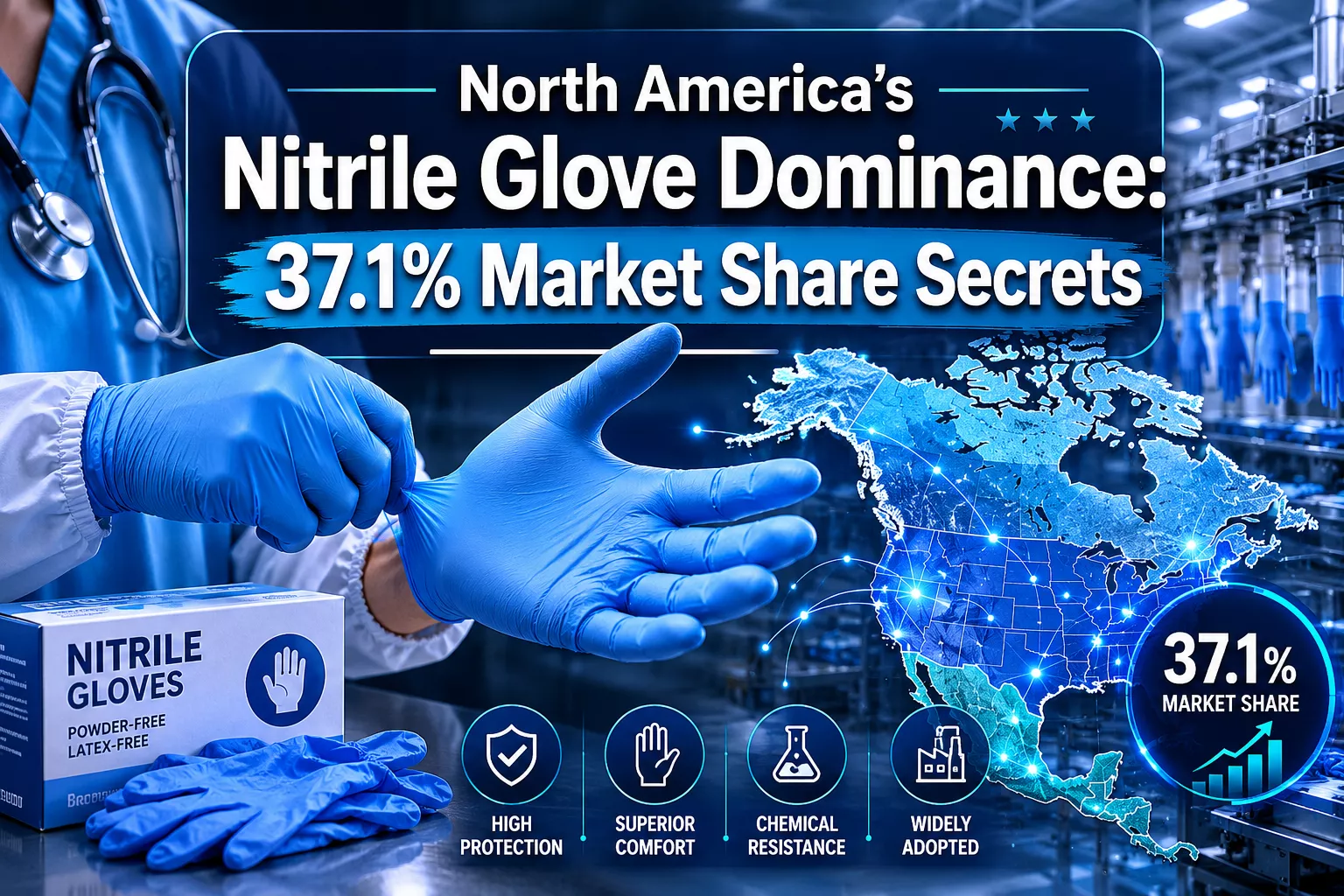
North America captured 37.1% of global nitrile glove revenue in 2025, establishing itself as the world’s largest regional market. This commanding position reflects decades of regulatory evolution, heightened hygiene awareness, and strategic infrastructure investments that transformed disposable gloves from a niche medical supply into an essential commodity across healthcare, food service, and industrial sectors. Understanding […]
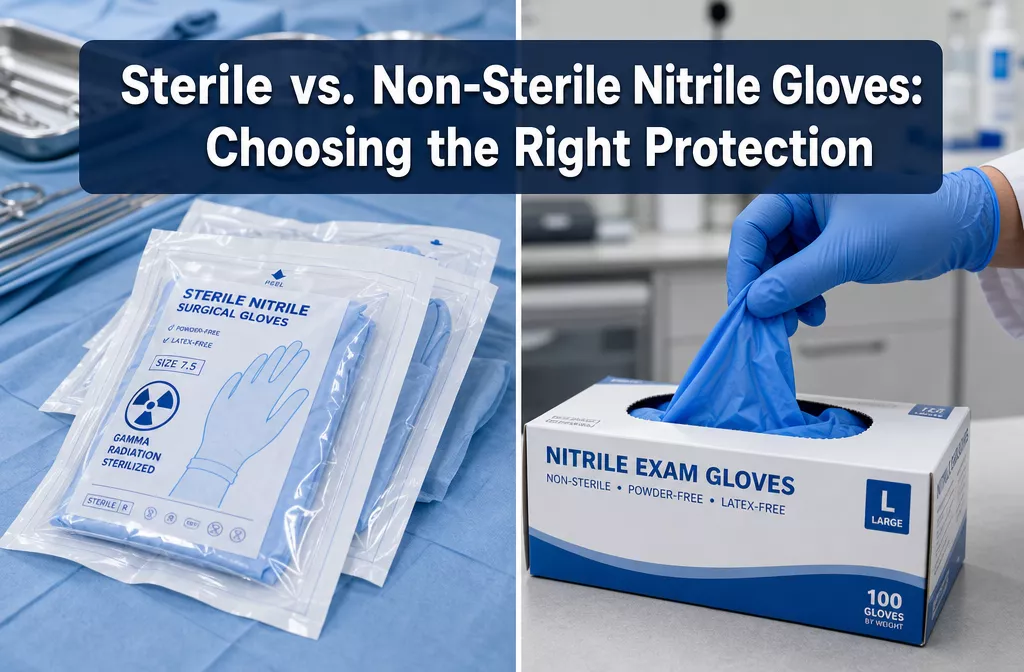
Healthcare facilities waste thousands of dollars annually by using sterile gloves where non-sterile would suffice—or worse, risk patient safety by choosing non-sterile gloves for procedures that demand sterility. The distinction between sterile and non-sterile nitrile gloves isn’t just about labeling; it’s about validated sterilization processes, regulatory compliance, and matching the right barrier protection to each […]
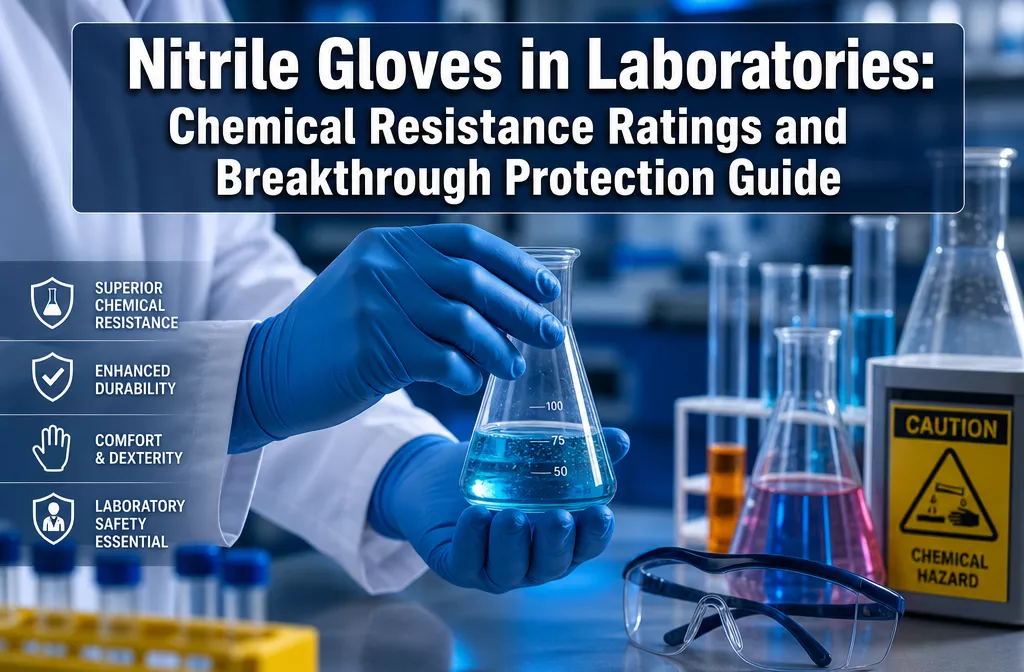
Laboratory accidents involving chemical exposure through inadequate glove protection send hundreds of researchers to emergency rooms each year—yet most labs still rely on thin disposable nitrile gloves without understanding their actual breakthrough times. The reality is stark: a glove that looks perfectly intact can be actively permeating dangerous chemicals onto your skin. Understanding the Nitrile […]

Butadiene prices surged 88% between early November 2025 and March 2026, reaching 12,900 yuan per ton—a cost shock that sent ripples through every nitrile glove manufacturer’s balance sheet. For procurement teams managing disposable glove supply chains in 2026, raw material volatility in nitrile gloves has transformed from a periodic nuisance into a strategic imperative demanding […]
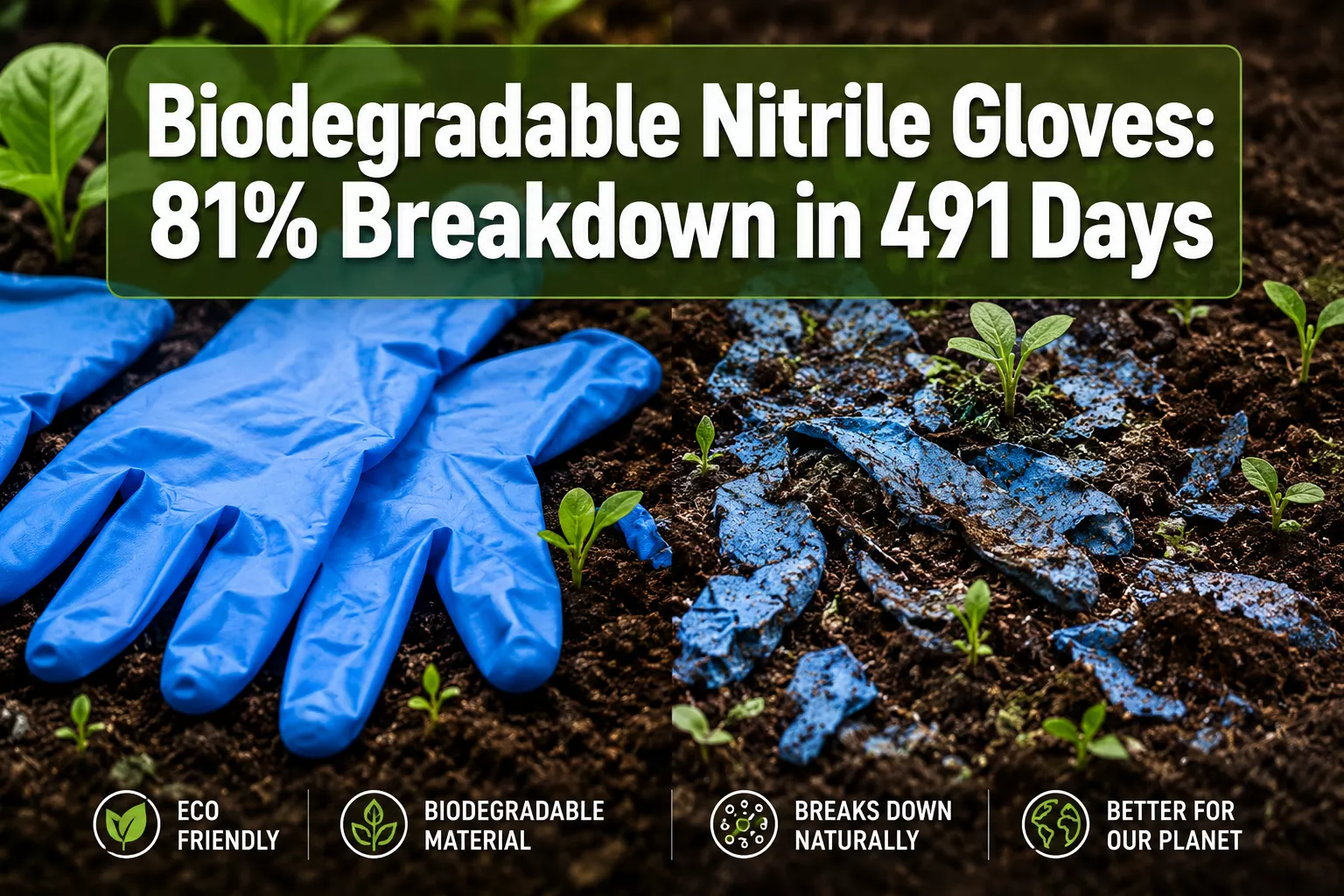
Disposable gloves generate millions of tons of waste annually, but one company’s November 2024 launch is changing the conversation. Sybron introduced biodegradable nitrile gloves that achieve 81% breakdown in just 491 days under landfill conditions—without charging a premium over standard nitrile prices. This represents a significant shift in how the personal protective equipment (PPE) industry […]
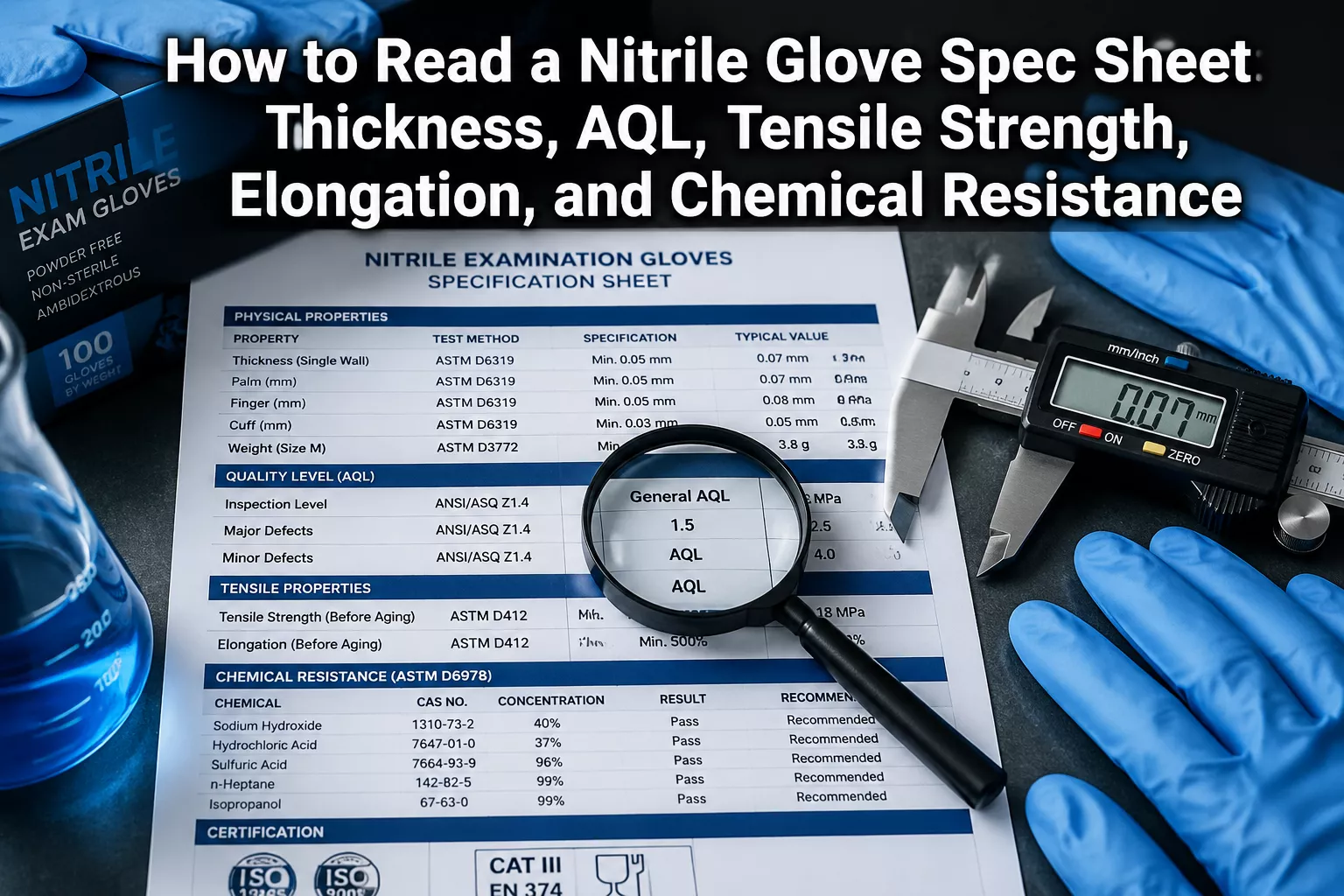
Most buyers waste money on nitrile gloves by chasing the wrong numbers. A procurement manager recently paid 40% more for “8-mil heavy-duty” gloves, only to discover the fingertips were thinner than a competitor’s 6-mil option—and the AQL was worse. Understanding how to read a nitrile glove spec sheet: thickness, AQL, tensile strength, elongation, and chemical […]
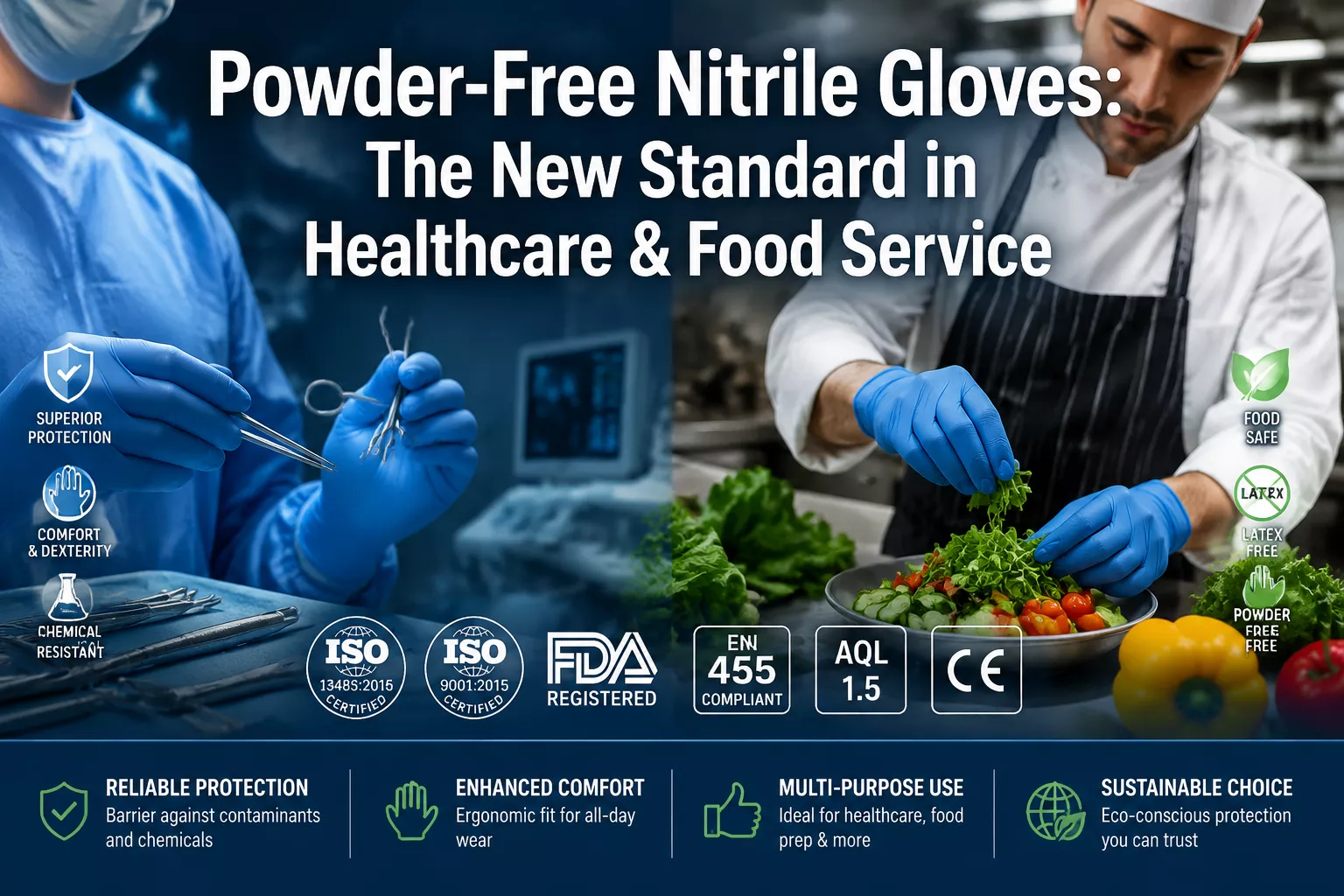
The powder-free nitrile glove segment is projected to command 56.6% of the global market share in 2026, a dominance that reflects a fundamental shift in how healthcare facilities and food service operations approach hand protection. This transition from powdered latex to powder-free nitrile didn’t happen by accident—it was driven by regulatory pressure, contamination concerns, and […]