The powder-free nitrile glove segment is projected to command 56.6% of the global market share in 2026, a dominance that reflects a fundamental shift in how healthcare facilities and food service operations approach hand protection. This transition from powdered latex to powder-free nitrile didn’t happen by accident—it was driven by regulatory pressure, contamination concerns, and the growing recognition that powder-free nitrile gloves offer superior safety and performance in environments where hygiene cannot be compromised.
Understanding powder-free nitrile gloves: why they became the default and what it means for procurement in healthcare and food service is essential for purchasing managers navigating today’s complex supply landscape. The decision to standardize on powder-free formats carries implications far beyond simple product selection, affecting compliance, worker safety, contamination control, and total cost of ownership.
Key Takeaways
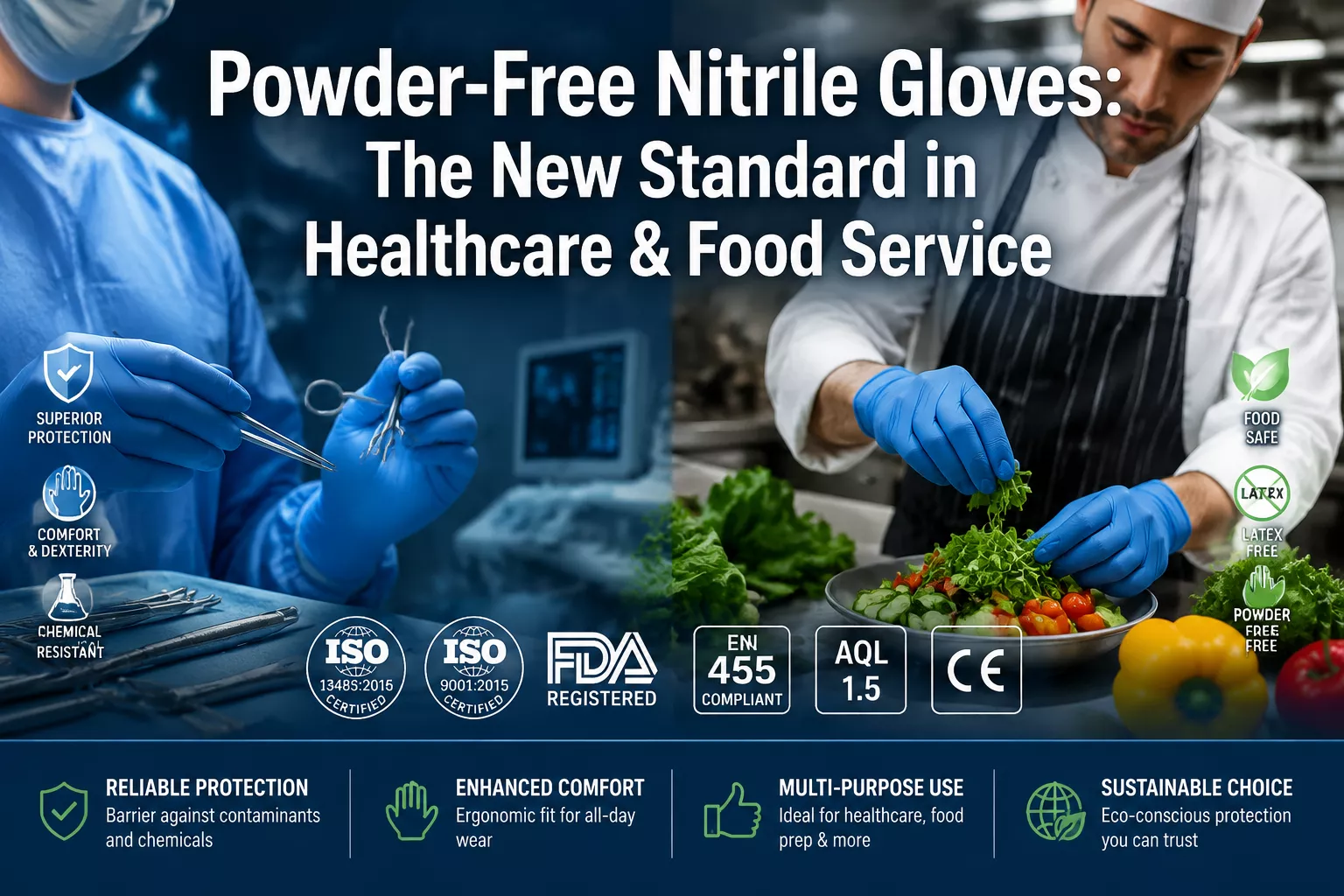
✅ Powder-free nitrile gloves dominate because they eliminate contamination risks associated with cornstarch powder, which can interfere with sterile procedures and food safety protocols.
✅ Regulatory frameworks in healthcare actively favor powder-free formats, making them the de facto standard for exam and procedure gloves in medical settings.
✅ Nitrile offers 3-5 times greater puncture resistance than latex, combined with latex-free protection that eliminates Type I allergy concerns for both workers and patients.
✅ Procurement teams must now balance traditional cost metrics with compliance requirements, sustainability goals, and supply chain resilience in an environment shaped by tariffs and geopolitical factors.
✅ The market is evolving toward specialized performance tiers, including chemotherapy-grade and biodegradable options that challenge traditional procurement specifications.
Why Powder-Free Became the Industry Standard
The Contamination Problem That Changed Everything
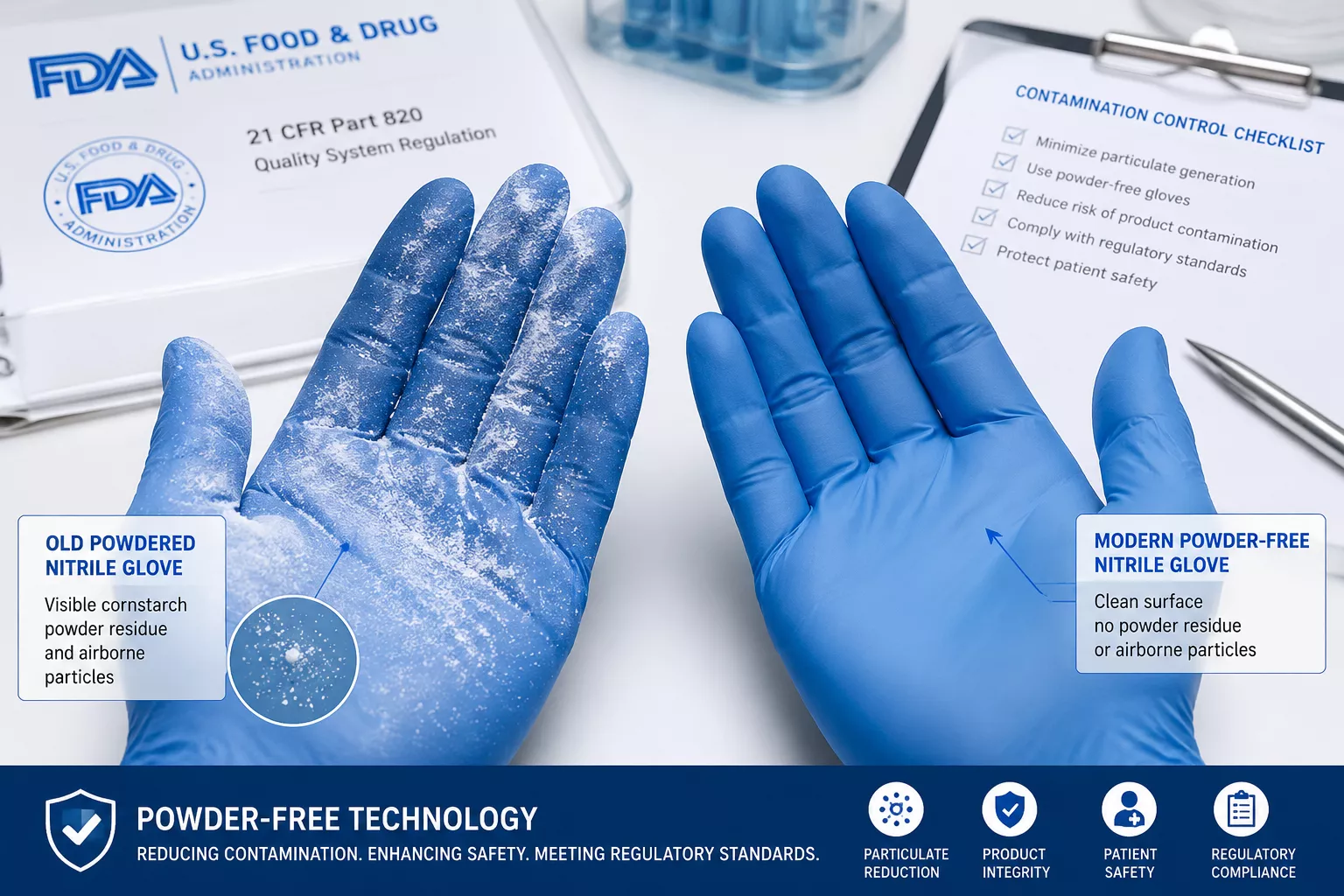
Powdered gloves were once ubiquitous in healthcare because the cornstarch coating made them easier to don, especially during rapid glove changes. However, that convenience came with serious drawbacks. Powder particles become airborne during glove removal, creating inhalation risks for workers and contaminating sterile fields, surgical sites, and sensitive equipment.
In food service environments, the problem was equally acute. Powder residue could transfer directly to food products, creating both quality concerns and potential allergen issues. As food safety regulations tightened and consumer expectations rose, the industry recognized that powder contamination was an unacceptable risk.
Regulatory Pressure and Health Concerns
Health authorities worldwide began documenting adverse effects linked to powdered gloves, including:
- Respiratory irritation from airborne powder particles 🫁
- Wound healing complications when powder entered surgical sites
- Latex protein sensitization (powder acts as a carrier for latex proteins)
- Equipment malfunction due to powder residue on sensitive instruments
These findings led to regulatory action. The FDA issued guidance strongly discouraging powdered gloves in healthcare settings, and many countries followed with similar recommendations or outright bans. For procurement teams, this meant powder-free specifications became mandatory rather than optional.
Why Nitrile Won Over Other Materials
While the shift away from powder was clear, the choice of nitrile over latex or vinyl was driven by performance data. Nitrile gloves demonstrate:
- 3-5× greater puncture resistance compared to latex
- Superior chemical resistance to disinfectants, oils, and many solvents
- Zero latex protein content, eliminating Type I allergic reactions
- Better tactile sensitivity than vinyl, crucial for precision tasks
The difference between latex and nitrile gloves extends beyond allergy concerns—nitrile’s durability means fewer mid-task failures and better protection during extended wear. For healthcare workers performing exams or procedures, and food handlers working with sharp tools or acidic ingredients, that reliability translates directly to safety.
The Comfort Factor
Early nitrile gloves had a reputation for being stiff and uncomfortable, but manufacturing advances have closed that gap. Modern powder-free nitrile gloves offer:
- Improved elasticity that conforms to hand shape
- Textured fingertips for better grip in wet conditions
- Reduced hand fatigue during extended wear periods
- Lower dermatitis rates compared to powdered alternatives
This combination of safety and comfort made powder-free nitrile the logical default choice. When procurement teams evaluated total cost—including reduced allergic reactions, fewer contamination incidents, and better worker acceptance—the business case became overwhelming.
What Powder-Free Nitrile Means for Healthcare and Food Service Procurement in 2026
The New Procurement Calculus
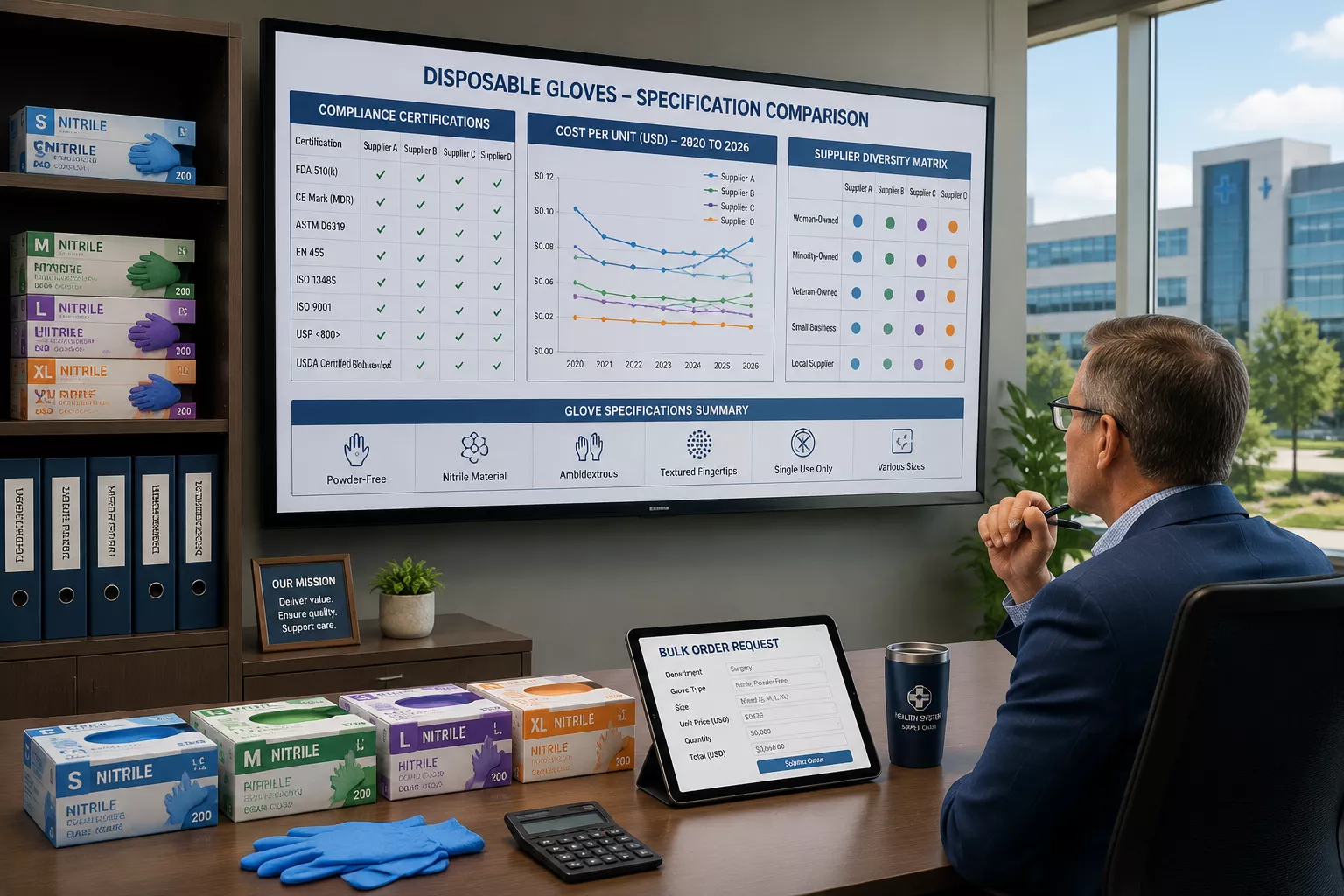
In 2026, procurement decisions for powder-free nitrile gloves extend far beyond unit price. Buyers must now evaluate:
Compliance and Certification 📋
- FDA 510(k) clearance for medical use
- ASTM standards for barrier protection (D6319 for nitrile exam gloves)
- Food contact approvals (FDA 21 CFR 177.2600)
- ISO 13485 quality management certification
- Specific performance claims (chemotherapy drug resistance, viral barrier)
Supply Chain Resilience 🌐
- Geographic diversification of manufacturing sources
- Lead time variability (currently ranging from 5 days to several weeks)
- Tariff exposure (cumulative rates exceeding 100% on some Chinese-origin gloves)
- Raw material sourcing for nitrile-butadiene rubber (NBR)
Total Cost of Ownership 💰
- Direct purchase price per glove
- Failure rates and mid-task replacements
- Worker productivity and comfort
- Contamination incident costs
- Regulatory compliance risk
The high demand for nitrile gloves in healthcare continues to grow, driven by aging populations and increased healthcare utilization. This structural demand means procurement teams cannot simply wait for prices to fall—they must actively manage specifications and supplier relationships.
Thickness and Performance Trade-offs
One critical specification decision is glove thickness, typically measured in mils (thousandths of an inch). Understanding what is the best thickness for nitrile gloves depends on application:
| Application | Recommended Thickness | Key Considerations |
|---|---|---|
| Medical exam | 3-5 mil | Tactile sensitivity, cost efficiency |
| Surgical procedures | 5-7 mil | Puncture resistance, sterility |
| Food prep (light) | 3-4 mil | Dexterity, frequent changes |
| Food prep (heavy) | 5-6 mil | Cut resistance, durability |
| Chemical handling | 6-8+ mil | Chemical breakthrough time |
Thicker gloves offer better protection but reduce tactile feedback and increase costs. For bulk procurement, specifying the right thickness for each use case prevents both over-specification (wasted budget) and under-specification (safety gaps).
Emerging Sustainability Requirements
Environmental considerations are moving from “nice to have” to “must address” in procurement RFPs. Biodegradable nitrile technology has advanced significantly, with some formulations achieving 82% biodegradation in 386 days under landfill conditions—compared to essentially zero degradation for conventional nitrile over the same period.
For facilities with sustainability mandates, this creates a procurement dilemma: biodegradable options typically cost 15-30% more than standard powder-free nitrile. Buyers must weigh:
- Corporate sustainability commitments and reporting requirements
- Waste disposal costs and environmental impact fees
- Performance equivalence to standard nitrile
- Availability and supply chain maturity
Some organizations are adopting a tiered approach, using biodegradable gloves for high-volume, low-contamination applications (food prep, general patient care) while reserving standard nitrile for critical procedures where performance history is paramount.
The Tariff and Trade Policy Factor
Tariff structures have become a major procurement variable in 2026. With effective cumulative tariff rates exceeding 100% on certain glove imports, buyers face pressure to:
- Diversify sourcing beyond traditional manufacturing hubs
- Negotiate longer-term contracts to lock in pricing before tariff escalations
- Evaluate domestic or near-shore manufacturing options
- Build strategic inventory to buffer against supply disruptions
This environment rewards procurement teams that maintain multiple qualified suppliers and actively monitor trade policy developments. The days of treating gloves as a simple commodity purchase are over.
Specialty Performance Claims
The market is fragmenting into performance tiers that go beyond basic powder-free nitrile. Recent innovations include:
Chemotherapy-Grade Gloves 💊 Tested against 60+ chemotherapy drugs including fentanyl, offering enhanced protection for oncology and pharmacy staff.
Enhanced Wear Resistance 🛡️ Some manufacturers claim 10× the abrasion resistance of standard nitrile, targeting applications with high mechanical stress.
Antimicrobial Coatings 🦠 Surface treatments that inhibit bacterial growth on glove exteriors, reducing cross-contamination risk.
Ultra-Thin Formulations ✋ Sub-3-mil gloves that maintain barrier protection while maximizing tactile sensitivity for precision work.
For procurement, these specialty options create both opportunity and complexity. Buyers must evaluate whether performance claims are backed by credible testing, whether the premium pricing is justified by measurable outcomes, and whether specialty gloves can be integrated into existing inventory and distribution systems.
Practical Procurement Strategies
Strategy 1: Standardize Where Possible 📊 Reduce SKU proliferation by identifying a core powder-free nitrile specification that meets 80% of needs. This improves volume leverage and simplifies inventory management.
Strategy 2: Qualify Multiple Suppliers 🤝 Maintain at least two qualified sources for each critical specification. Test samples rigorously—don’t rely solely on data sheets.
Strategy 3: Monitor Quality Metrics 📈 Track failure rates, user complaints, and contamination incidents by SKU and supplier. Use data to drive supplier performance discussions.
Strategy 4: Build Strategic Inventory 📦 For critical applications, maintain 60-90 days of safety stock to buffer against supply disruptions. Balance carrying costs against supply risk.
Strategy 5: Engage End Users 👥 Include clinical staff and food service workers in specification decisions. User acceptance directly impacts compliance and safety outcomes.
For specialized applications like powder-free nitrile gloves for chemistry labs, involve technical experts to ensure chemical compatibility and breakthrough time requirements are met.
Cost Management Without Compromising Safety
Some buyers are exploring alternative materials that promise “nitrile-like performance” at vinyl-like pricing. These hybrid formulations claim significantly improved wear resistance compared to standard nitrile, potentially offering cost savings without sacrificing protection.
However, procurement teams should approach such claims with healthy skepticism:
- Demand independent testing data, not just manufacturer claims
- Run pilot programs before committing to large-volume purchases
- Verify regulatory approvals match your specific use cases
- Assess user acceptance through structured feedback
The goal is to optimize cost without introducing hidden risks. A glove that costs 20% less but fails 30% more often is not a bargain.
Conclusion
Powder-free nitrile gloves: why they became the default and what it means for procurement in healthcare and food service is a story of regulatory evolution, performance superiority, and changing risk priorities. The dominance of powder-free formats reflects a fundamental recognition that contamination control and worker safety cannot be compromised for the sake of convenience.
For procurement professionals in 2026, this means adopting a more sophisticated approach to glove purchasing—one that balances compliance requirements, supply chain resilience, sustainability goals, and total cost of ownership. The days of treating gloves as a simple commodity are over.
Next Steps for Procurement Teams
✅ Audit your current specifications to ensure they reflect powder-free standards and appropriate thickness for each application
✅ Qualify at least two suppliers for each critical glove category to reduce supply chain risk
✅ Establish quality metrics to track failure rates, user satisfaction, and contamination incidents by SKU
✅ Evaluate sustainability options for high-volume applications where biodegradable nitrile can meet performance requirements
✅ Monitor trade policy and tariff developments that may impact pricing and availability
✅ Engage end users in specification decisions to ensure safety requirements and user acceptance align
The shift to powder-free nitrile as the industry standard represents a maturation of hand protection practices. By understanding the drivers behind this transition and adapting procurement strategies accordingly, healthcare and food service organizations can ensure they have the right protection in place—at the right cost, from reliable sources, with minimal environmental impact.
For more guidance on selecting the right glove specifications, explore our resources on choosing the best thickness for nitrile gloves and understanding sterile versus non-sterile options for different clinical applications.
SEO Meta Title: Powder-Free Nitrile Gloves: Procurement Guide 2026