Tag: workplace safety
Dive into our readers' top picks spanning diverse topics, from enlightening how-to guides and insightful personal stories to in-depth analyses and creative inspirations.

Last updated: July 4, 2026 Quick Answer Nitrile glove demand has expanded dramatically beyond healthcare into automotive, construction, and industrial sectors due to post-pandemic hygiene awareness, stricter workplace safety regulations, and superior chemical resistance compared to latex alternatives. These industries now account for a significant portion of global nitrile glove consumption, driven by protection needs […]
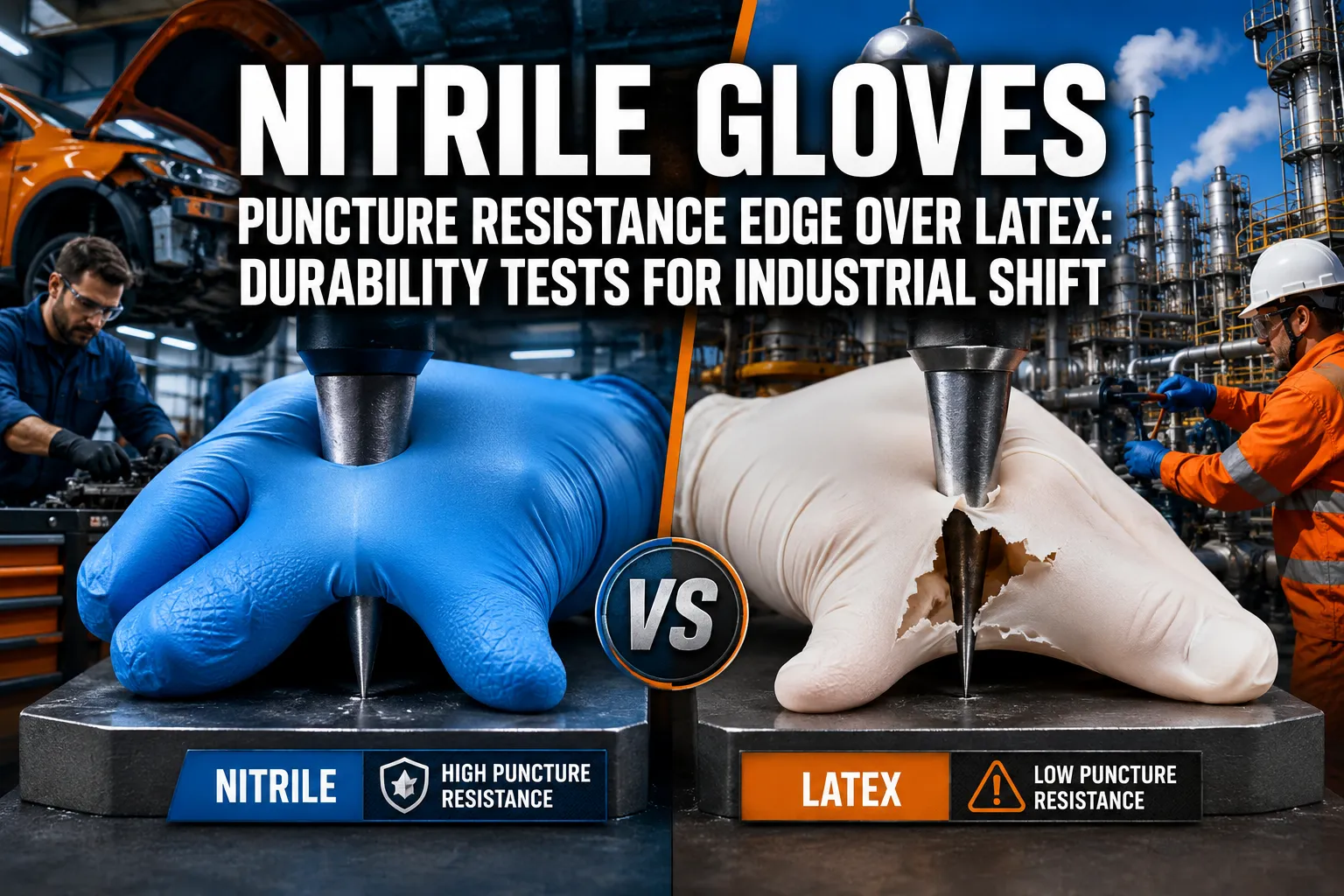
Last updated: July 3, 2026 Quick Answer Nitrile gloves demonstrate superior puncture resistance compared to latex gloves, with standardized testing showing nitrile withstands 2-3 times more force before failure. This durability advantage, combined with chemical resistance and longer wear times during industrial shifts, has driven widespread adoption across automotive, chemical processing, and food handling sectors […]

Last updated: June 29, 2026 Quick Answer Nitrile polymer breakthroughs in 2026 center on advanced cross-linking techniques and carboxylated formulations that increase puncture resistance by 40-60% compared to standard nitrile while extending temperature tolerance from -40°C to +150°C. These improvements make next-generation nitrile gloves suitable for extreme industrial, chemical handling, and laboratory environments where traditional […]
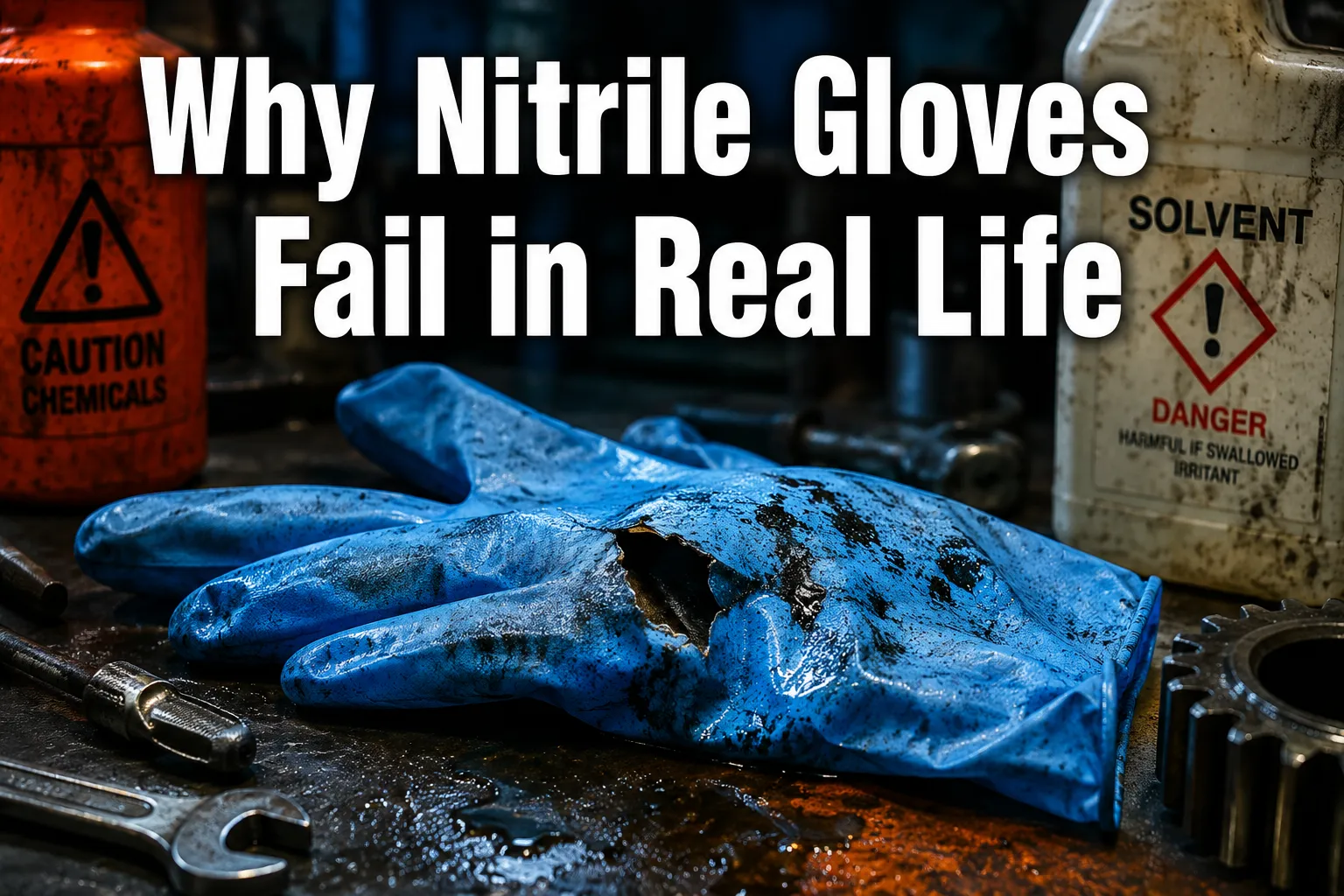
Last updated: June 28, 2026 Quick Answer Nitrile gloves fail in real-world applications primarily due to mechanical stress from improper sizing, chemical exposure that degrades the polymer structure, and environmental factors like heat and aging that compromise material integrity. Most failures occur not because nitrile is inadequate, but because users select the wrong thickness, store […]
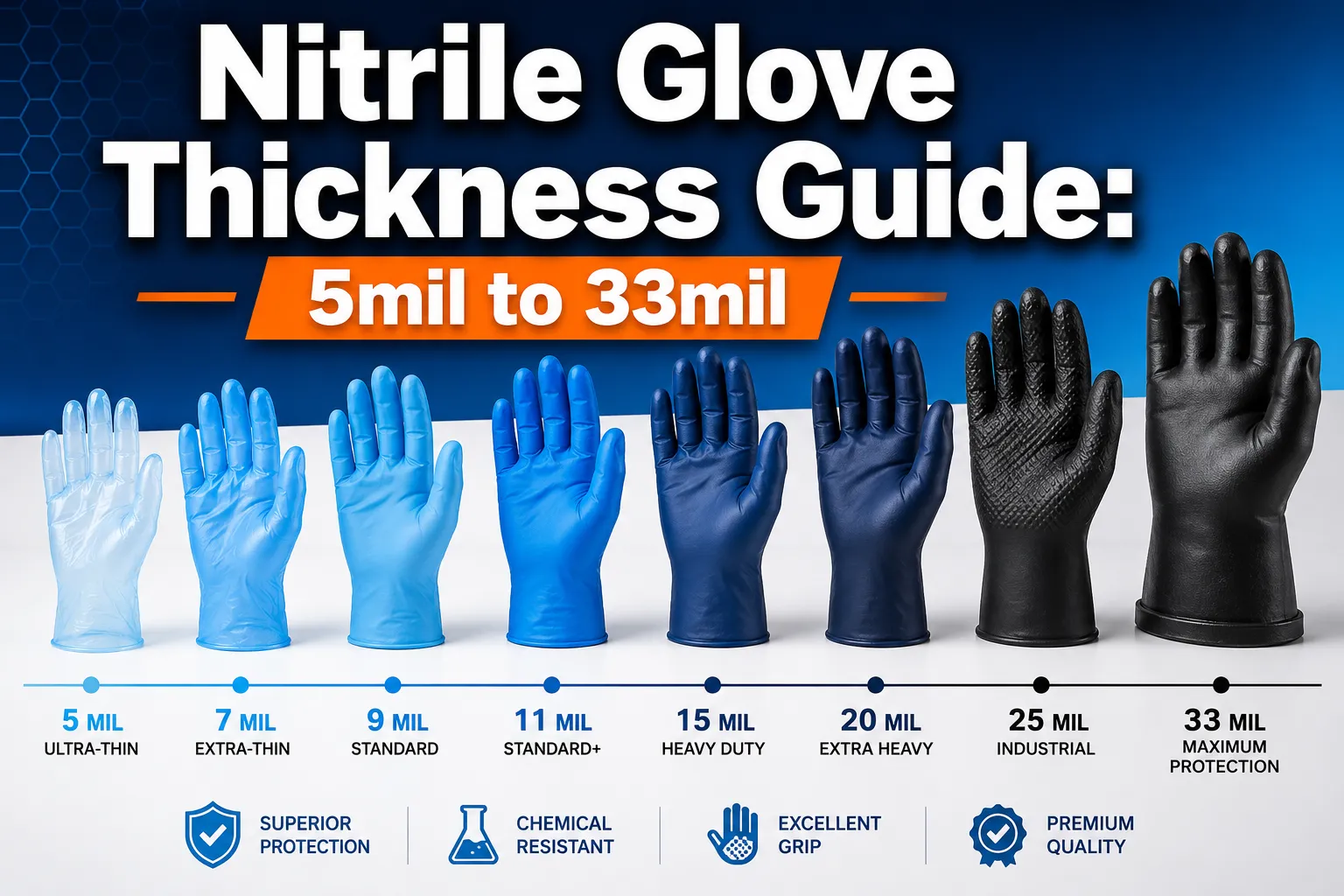
Last updated: June 27, 2026 Quick Answer Nitrile glove thickness ranges from 5mil (0.005 inches) to 33mil (0.033 inches), with each specification serving distinct applications. Thin gloves (5-8mil) maximize tactile sensitivity for medical and food handling tasks, medium gloves (10-15mil) balance protection and dexterity for automotive and janitorial work, while thick gloves (20-33mil) provide superior […]

{“cover”:”Professional landscape format (1536×1024) hero image featuring bold text overlay ‘Supply Chain Traceability in Nitrile Gloves: Meeting Post-2024 OSHA Documentation Requirements’ in extra large 70pt white sans-serif font with dark shadow effect, centered in upper third. Background shows modern warehouse setting with stacked boxes of nitrile gloves, digital barcode scanners, tablet displaying supply chain tracking […]

The global powder-free nitrile gloves market is experiencing remarkable momentum, with Grand View Research projecting a compound annual growth rate (CAGR) approaching 10.2% through 2033. This surge reflects a fundamental shift in healthcare, food processing, and industrial safety protocols, driven by stringent infection control requirements and evolving regulatory frameworks. As powder-free formulations now command over […]

U.S. tariffs on medical-grade gloves from China hit 100% in January 2026, forcing thousands of businesses to reconsider whether they’re overpaying for protection they don’t actually need. The question isn’t whether nitrile gloves work—it’s whether you’re buying the right grade for your specific task. Understanding Exam-Grade vs Industrial-Grade Nitrile Gloves: Key Differences That Matter for […]
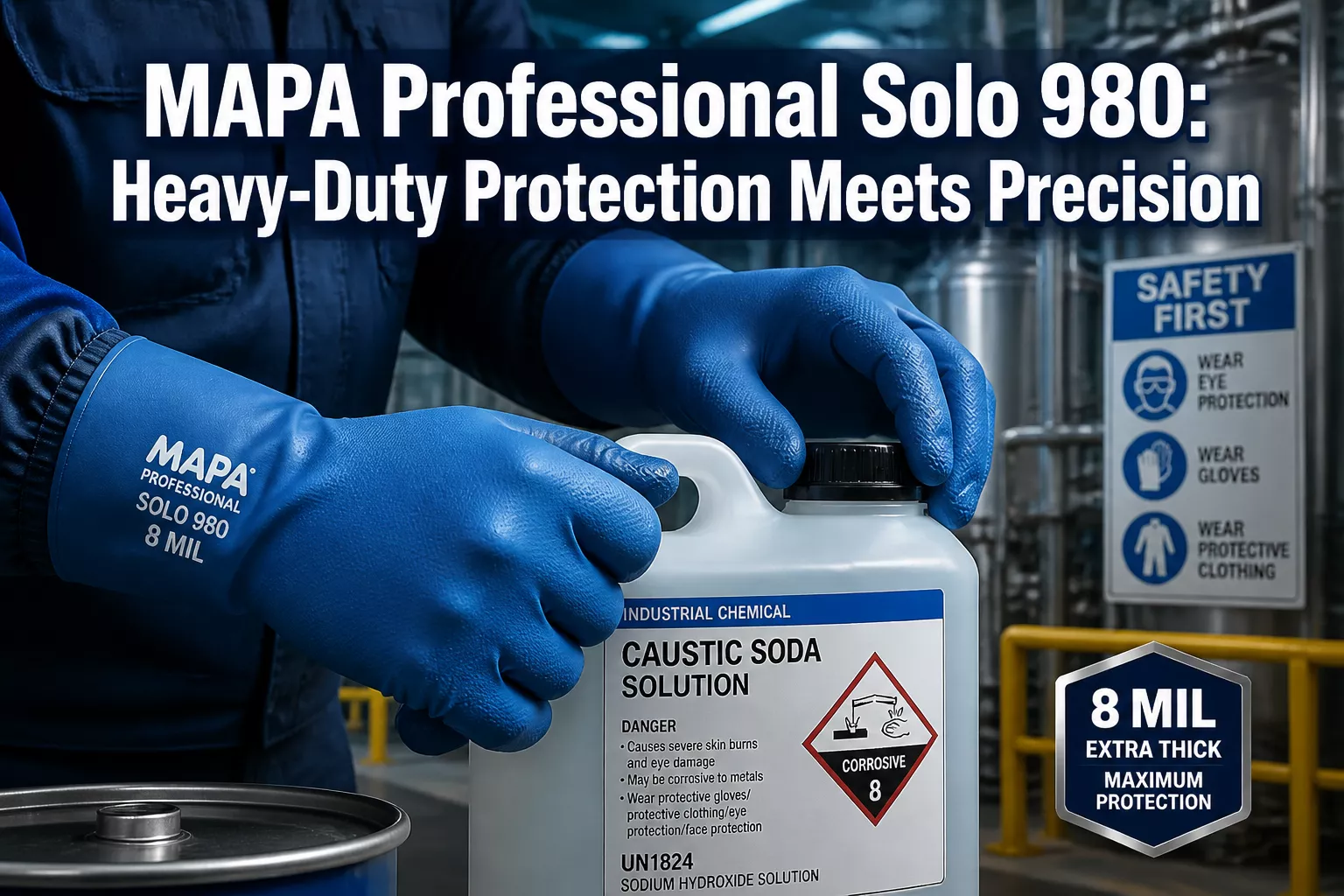
When MAPA Professional unveiled the Solo 980 in December 2024, they addressed a critical gap in the disposable glove market: workers needed 8 mil protection without sacrificing tactile sensitivity. This thick nitrile glove delivers mechanical strength for heavy-duty tasks while maintaining the finger dexterity required for precision work—a combination that’s transforming how industries approach hand […]