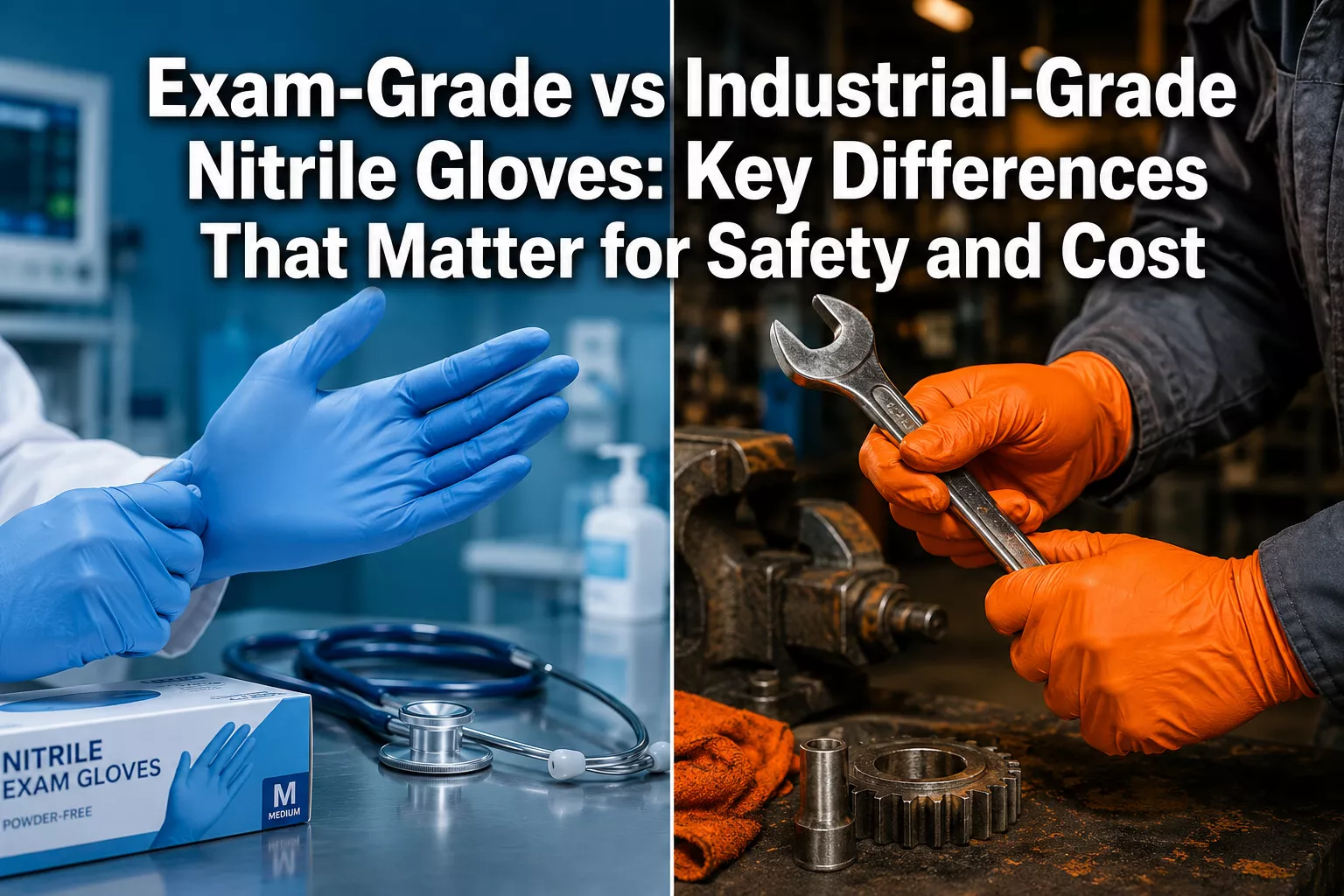
U.S. tariffs on medical-grade gloves from China hit 100% in January 2026, forcing thousands of businesses to reconsider whether they’re overpaying for protection they don’t actually need. The question isn’t whether nitrile gloves work—it’s whether you’re buying the right grade for your specific task. Understanding Exam-Grade vs Industrial-Grade Nitrile Gloves: Key Differences That Matter for Safety and Cost can save your organization thousands of dollars annually while maintaining proper safety standards.
Both exam-grade and industrial-grade nitrile gloves often come from similar manufacturing equipment and nitrile formulations. The critical distinction lies not in the material itself, but in quality-control standards, regulatory compliance, and intended use. Choosing the wrong grade means either wasting money on unnecessary medical certification or risking inadequate protection where it matters most.
Key Takeaways
✅ Exam-grade gloves meet stricter FDA medical-device standards with AQL 2.5 or lower defect rates, while industrial gloves typically use AQL 4.0
✅ Industrial-grade gloves cost significantly less and work well for non-medical tasks like food service, automotive work, and general manufacturing
✅ Never use industrial gloves around body fluids or hazardous drugs—the lower quality-control standard creates unacceptable risk
✅ 2026 tariff increases make grade selection more important than ever for cost management without compromising safety
✅ Exam-grade remains the safer default when contamination risk is uncertain or involves bloodborne pathogens
Understanding the Core Difference: Certification vs Material
Many buyers assume exam-grade and industrial-grade nitrile gloves use different materials or manufacturing processes. This is false. The fundamental difference is regulatory classification and quality-control testing, not the nitrile compound itself.
What Makes a Glove “Exam-Grade”?
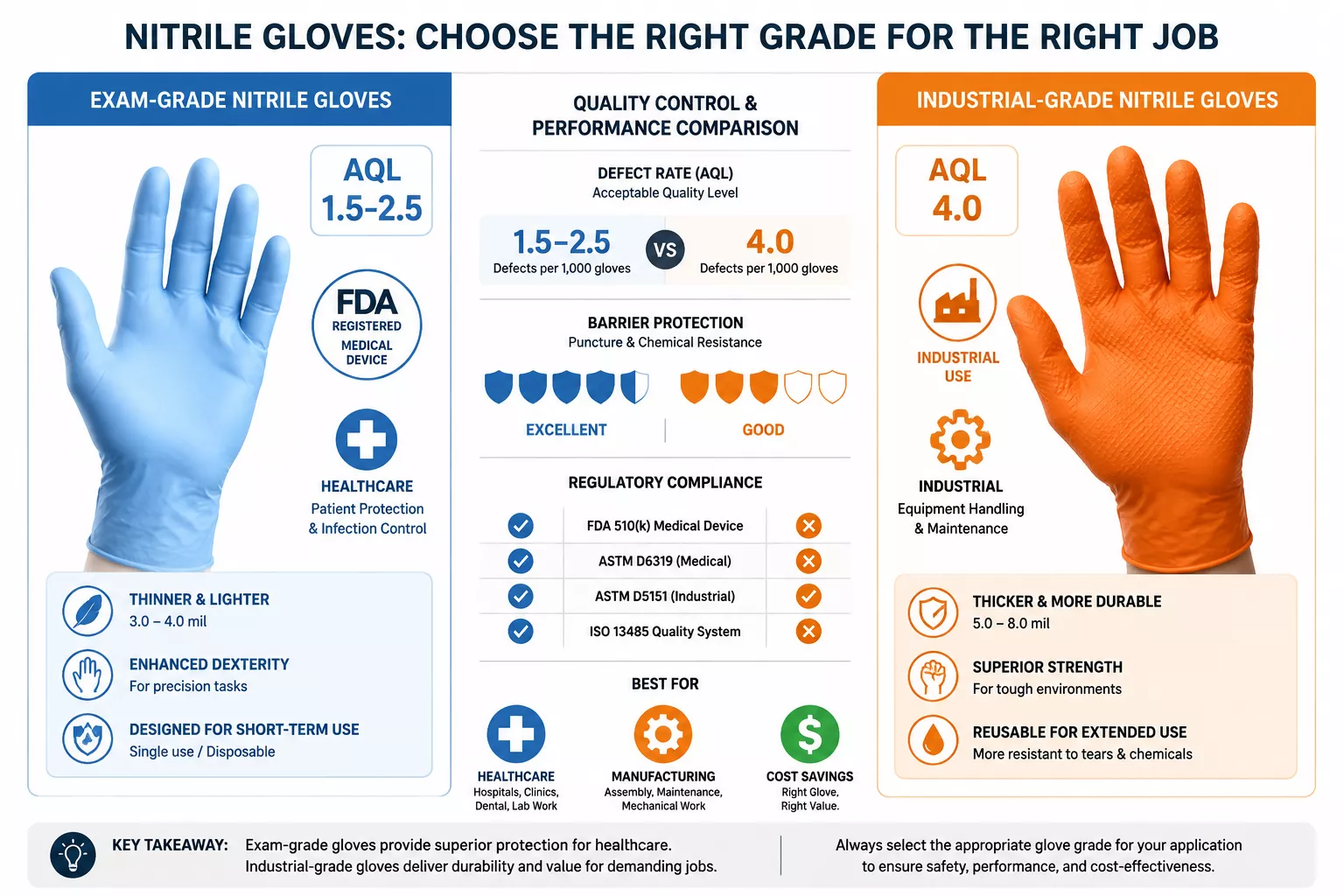
Exam-grade (medical-grade) nitrile gloves are Class I medical devices regulated by the FDA. They must meet specific manufacturing controls and testing protocols before they can be marketed for medical use. The key measurable standard is Acceptable Quality Level (AQL)—a statistical measure of defect rates per batch.
Exam-grade gloves typically maintain:
- AQL 2.5 or lower (some manufacturers achieve AQL 1.5)
- FDA medical-device compliance
- Stricter pinhole and defect testing
- Quality systems documentation
- Barrier protection validation against bloodborne pathogens
What Defines Industrial-Grade Gloves?
Industrial-grade nitrile gloves are manufactured for non-medical applications and aren’t subject to FDA medical-device oversight. They’re designed for tasks where barrier protection matters but medical-grade certification isn’t required.
Industrial-grade gloves typically feature:
- AQL 4.0 or lower defect rates
- No FDA medical-device registration required
- Lower manufacturing compliance burden
- Cost-effective production for high-volume use
- Functional protection for routine tasks
The practical impact? Exam-grade gloves allow fewer pinholes and defects per thousand gloves, which matters critically when exposure to body fluids, hazardous drugs, or biohazards is possible. For industrial settings where disposable gloves are used without those risks, the tighter standard may be unnecessary.
Exam-Grade vs Industrial-Grade Nitrile Gloves: Key Differences That Matter in Real-World Applications
When Exam-Grade Is Non-Negotiable 🏥
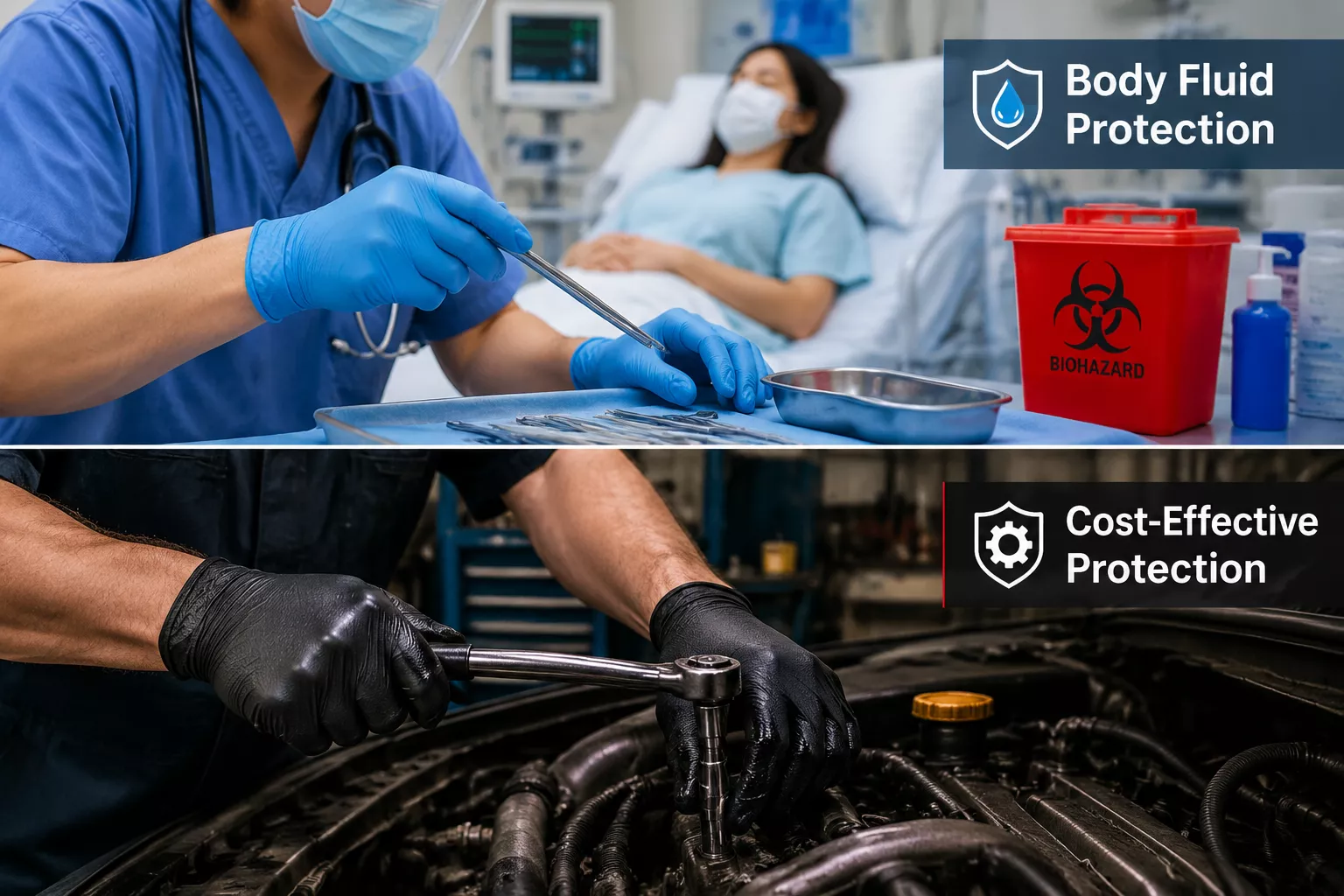
Healthcare and patient care environments require exam-grade gloves because of exposure to blood, bodily fluids, and infectious materials. The stricter AQL standard reduces the risk of barrier failure during critical procedures.
Use exam-grade gloves for:
- Medical examinations and patient care
- Dental procedures
- Laboratory work with biohazards
- Emergency response and first aid
- Pharmaceutical compounding
- Tattoo and body piercing services
- Any task involving body fluids or hazardous drugs
Exam-grade nitrile also offers advantages for workers with latex allergies, providing strong puncture resistance and chemical protection without latex proteins. The tighter quality control means fewer unexpected failures during high-stakes tasks.
When Industrial-Grade Makes Financial Sense 🔧
For non-medical workplaces, industrial-grade gloves deliver similar functional protection at a lower cost. The slightly higher defect rate (AQL 4.0 vs. AQL 2.5) is acceptable when the consequence of a pinhole is contamination of a part or surface—not exposure to bloodborne pathogens.
Industrial-grade gloves work well for:
- Food preparation and service
- Janitorial and cleaning work
- Automotive maintenance and repair
- General manufacturing and assembly
- Painting and finishing work
- Electronics handling
- Warehouse and logistics operations
Many businesses waste money using exam-grade gloves for tasks like food handling or automotive work where industrial-grade protection is sufficient. With 2026 tariff pressures driving medical-glove costs higher, this distinction matters more than ever for budget management.
Safety Considerations: Where the Grade Difference Matters Most
Barrier Protection and Defect Rates
The AQL difference translates to real-world failure rates. An AQL 2.5 batch allows approximately 2.5 defective gloves per 1,000, while AQL 4.0 permits up to 4 defects per 1,000. That 1.5-glove difference seems small—until you’re handling infectious materials.
Critical safety rule: Never use “industrial use only” labeled gloves in settings involving body fluids or dangerous drugs. The lower quality-control standard is inappropriate for that exposure risk.
Thickness and Durability
Glove thickness varies within both grades. Exam-grade gloves typically range from 3-6 mils, while industrial gloves often run 4-8 mils for heavier-duty tasks. Thickness doesn’t determine grade—certification and AQL do.
Thicker gloves offer better puncture resistance but reduce tactile sensitivity. Choose thickness based on your specific task requirements, not grade alone.
Chemical Resistance
Both exam-grade and industrial-grade nitrile gloves provide good resistance to petroleum-based oils, solvents, and many chemicals. However, exposure duration affects performance regardless of grade.
For specialized chemical work, verify the specific glove’s chemical compatibility chart rather than relying on grade classification alone.
Cost Analysis: Making the Smart Choice in 2026
The Tariff Impact
The 100% tariff on Chinese medical-grade gloves implemented in January 2026 has dramatically increased the cost gap between exam-grade and industrial-grade options. Businesses that previously used exam-grade gloves for all applications now face budget pressure to reassess their needs.
Cost comparison (approximate 2026 pricing):
- Exam-grade nitrile: $15-30 per 100-glove box (post-tariff)
- Industrial-grade nitrile: $8-15 per 100-glove box
For a facility using 1,000 boxes annually, switching appropriate applications from exam to industrial grade can save $7,000-$15,000 without compromising safety.
When to Invest in Exam-Grade
Despite higher costs, exam-grade gloves remain the correct choice when:
- Regulatory compliance requires medical-device certification
- Exposure to bloodborne pathogens is possible
- Barrier failure could result in serious health consequences
- Contamination risk is uncertain or variable
- Insurance or liability considerations favor medical-grade protection
The cost premium for exam-grade gloves is justified when the alternative is unacceptable risk.
When Industrial-Grade Delivers Value
For routine tasks without biohazard exposure, industrial-grade gloves offer comparable functional protection at lower cost. The key is honest risk assessment: if a pinhole means wiping down a surface rather than potential infection, industrial grade is appropriate.
Consider alternatives to disposable gloves for tasks where reusable options might provide even better value.
How to Choose the Right Grade for Your Application
Risk Assessment Framework
Ask these questions:
- Will the glove contact body fluids, blood, or biohazards? → Exam-grade required
- Are you handling hazardous drugs or infectious materials? → Exam-grade required
- Does your industry regulation require medical-device certification? → Exam-grade required
- Is the primary risk contamination of objects rather than infection? → Industrial-grade acceptable
- Are you working with food, chemicals, or mechanical hazards only? → Industrial-grade acceptable
Reading Labels and Specifications
Exam-grade gloves will display:
- “Medical examination gloves” or “exam-grade”
- FDA registration or CE medical marking
- AQL 2.5 or lower specification
- Intended use statement including medical applications
Industrial-grade gloves will show:
- “Industrial use only” or “non-medical”
- AQL 4.0 or similar specification
- No FDA medical-device claims
- Intended use for non-medical applications
Never assume grade based on color, thickness, or brand alone. Read the label and specification sheet.
Hybrid Approach for Mixed Environments
Many facilities benefit from stocking both grades for different tasks:
- Exam-grade for first aid stations, spill response, and any potential biohazard contact
- Industrial-grade for routine cleaning, food prep, maintenance, and general protection
This targeted approach maximizes safety while controlling costs.
Common Misconceptions About Glove Grades
Myth: Thicker Always Means Better Protection
Reality: Thickness affects puncture resistance, but grade determines quality control and defect rates. A thin exam-grade glove may offer better barrier protection than a thick industrial glove for biohazard applications.
Myth: Industrial Gloves Are Lower Quality Material
Reality: Both grades often use similar nitrile formulations and manufacturing equipment. The difference is testing standards and regulatory compliance, not material quality.
Myth: Exam-Grade Is Always the Safer Choice
Reality: Exam-grade is safer for medical applications. For non-medical tasks, industrial-grade provides appropriate protection at lower cost. Overbuying exam-grade wastes resources without improving safety.
Myth: All Nitrile Gloves Protect Against All Chemicals
Reality: Nitrile chemical resistance varies by formulation and exposure duration. Always check compatibility charts for specific chemicals regardless of grade.
Conclusion: Making the Right Choice for Safety and Budget
Understanding Exam-Grade vs Industrial-Grade Nitrile Gloves: Key Differences That Matter for Safety and Cost empowers smarter purchasing decisions that protect both workers and budgets. The core principle is simple: match the glove grade to the actual risk.
Exam-grade gloves are essential when body fluids, bloodborne pathogens, or hazardous drugs are involved. The stricter AQL standard and FDA medical-device compliance provide critical barrier protection where failure could mean infection or serious health consequences.
Industrial-grade gloves deliver excellent value for non-medical applications like food service, automotive work, manufacturing, and general cleaning. With 2026 tariff pressures driving medical-glove costs higher, using industrial-grade where appropriate can save thousands of dollars annually without compromising safety.
Action Steps
- Audit your current glove usage across all departments and tasks
- Identify applications where body fluids or biohazards are possible—these require exam-grade
- Switch appropriate tasks to industrial-grade gloves to reduce costs
- Verify AQL specifications on all glove purchases rather than relying on marketing terms
- Train staff on proper glove selection based on task-specific risks
- Review glove longevity and storage to maximize value from both grades
The right glove grade isn’t about buying the most expensive option—it’s about matching protection level to actual risk while managing costs effectively. In 2026’s challenging pricing environment, that distinction matters more than ever.