Tag: chemical resistance
Dive into our readers' top picks spanning diverse topics, from enlightening how-to guides and insightful personal stories to in-depth analyses and creative inspirations.

Last updated: July 4, 2026 Quick Answer Nitrile glove demand has expanded dramatically beyond healthcare into automotive, construction, and industrial sectors due to post-pandemic hygiene awareness, stricter workplace safety regulations, and superior chemical resistance compared to latex alternatives. These industries now account for a significant portion of global nitrile glove consumption, driven by protection needs […]
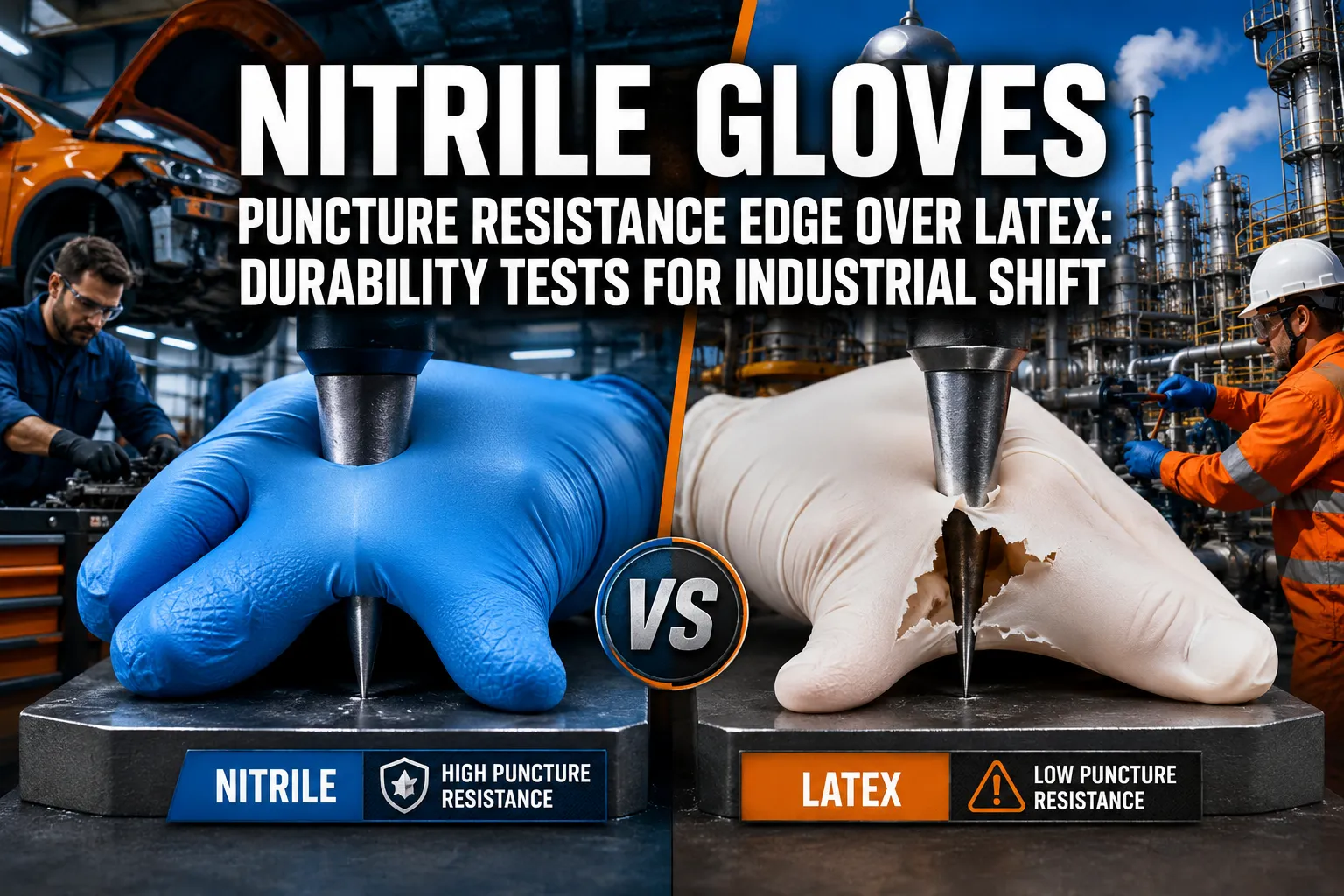
Last updated: July 3, 2026 Quick Answer Nitrile gloves demonstrate superior puncture resistance compared to latex gloves, with standardized testing showing nitrile withstands 2-3 times more force before failure. This durability advantage, combined with chemical resistance and longer wear times during industrial shifts, has driven widespread adoption across automotive, chemical processing, and food handling sectors […]
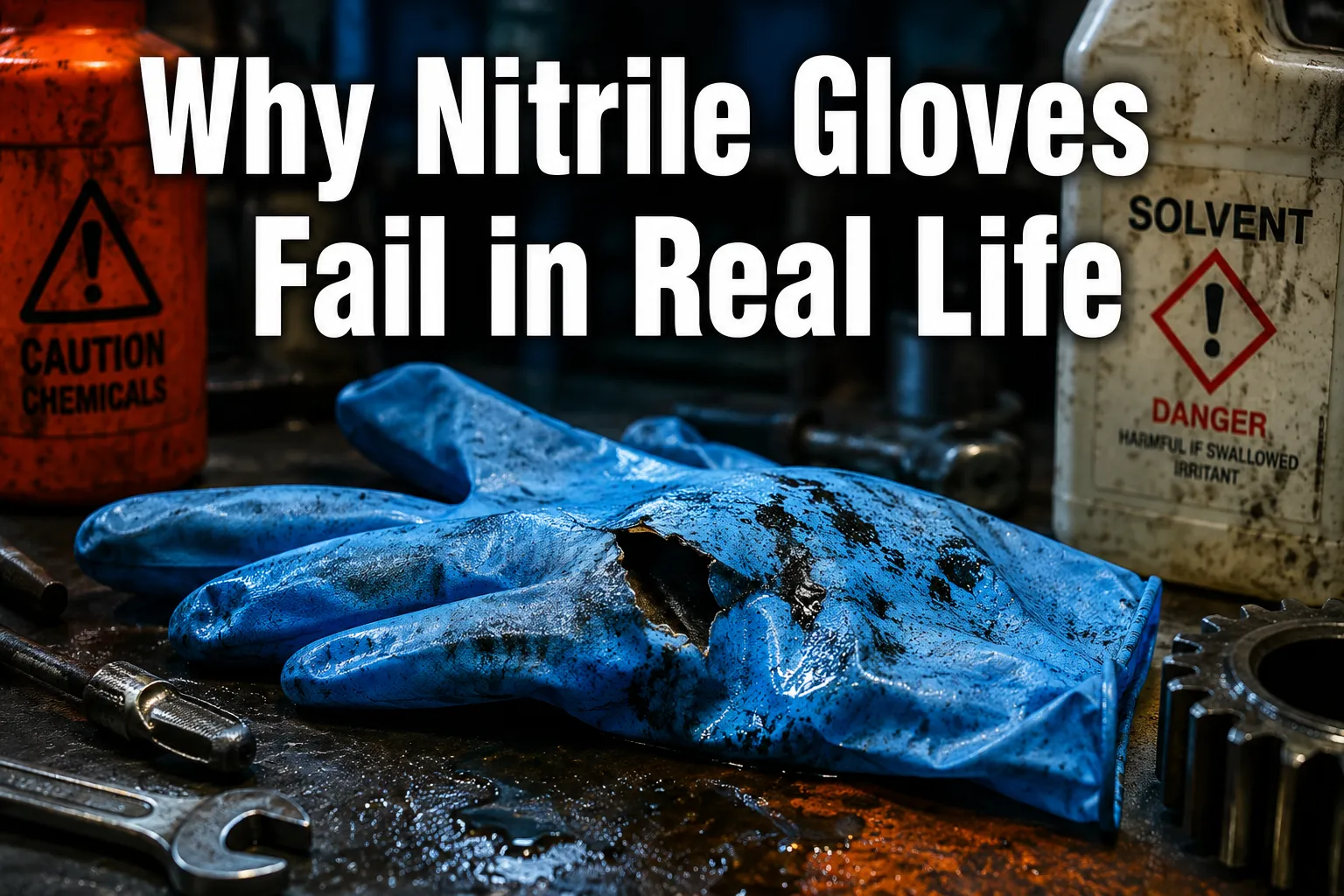
Last updated: June 28, 2026 Quick Answer Nitrile gloves fail in real-world applications primarily due to mechanical stress from improper sizing, chemical exposure that degrades the polymer structure, and environmental factors like heat and aging that compromise material integrity. Most failures occur not because nitrile is inadequate, but because users select the wrong thickness, store […]
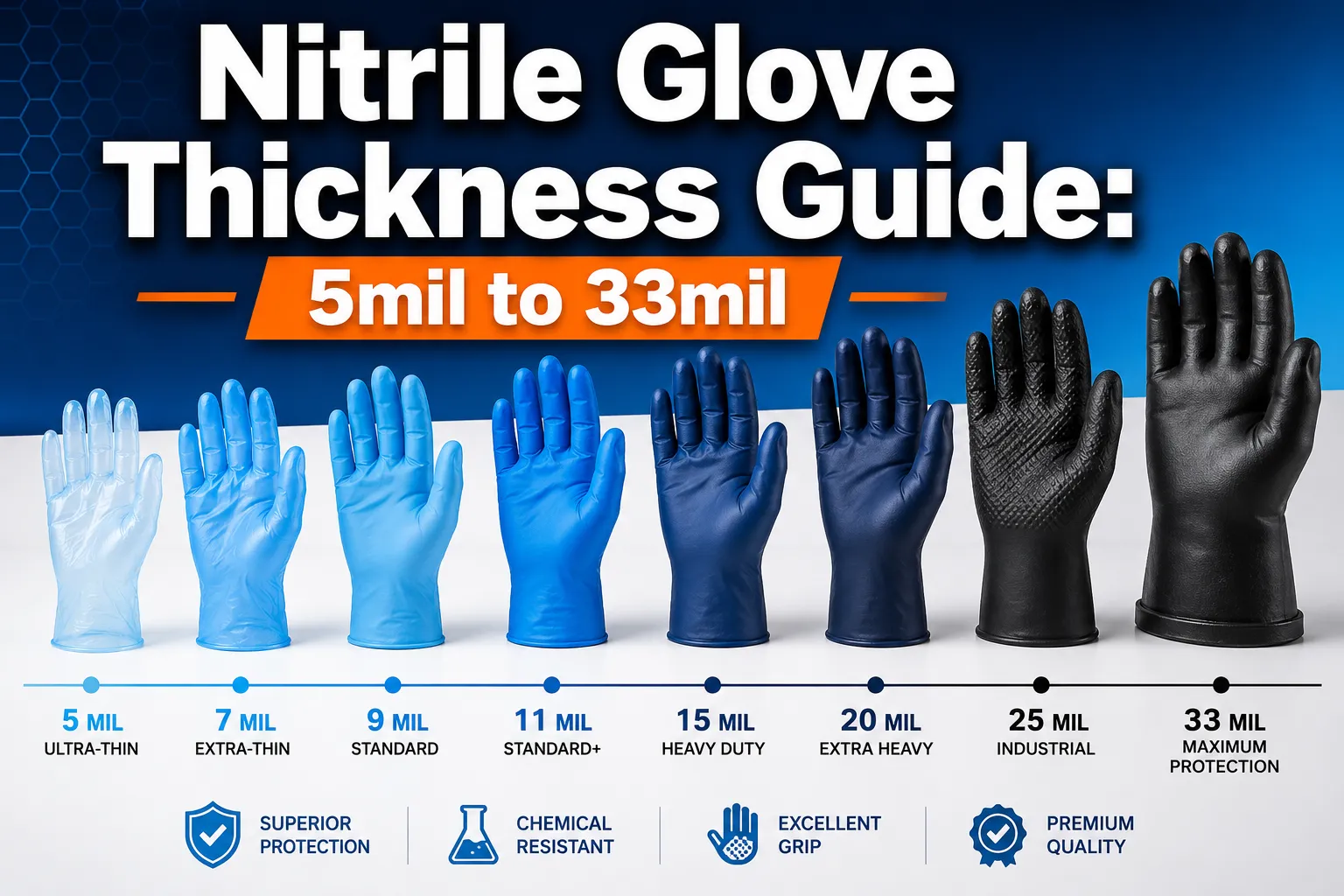
Last updated: June 27, 2026 Quick Answer Nitrile glove thickness ranges from 5mil (0.005 inches) to 33mil (0.033 inches), with each specification serving distinct applications. Thin gloves (5-8mil) maximize tactile sensitivity for medical and food handling tasks, medium gloves (10-15mil) balance protection and dexterity for automotive and janitorial work, while thick gloves (20-33mil) provide superior […]
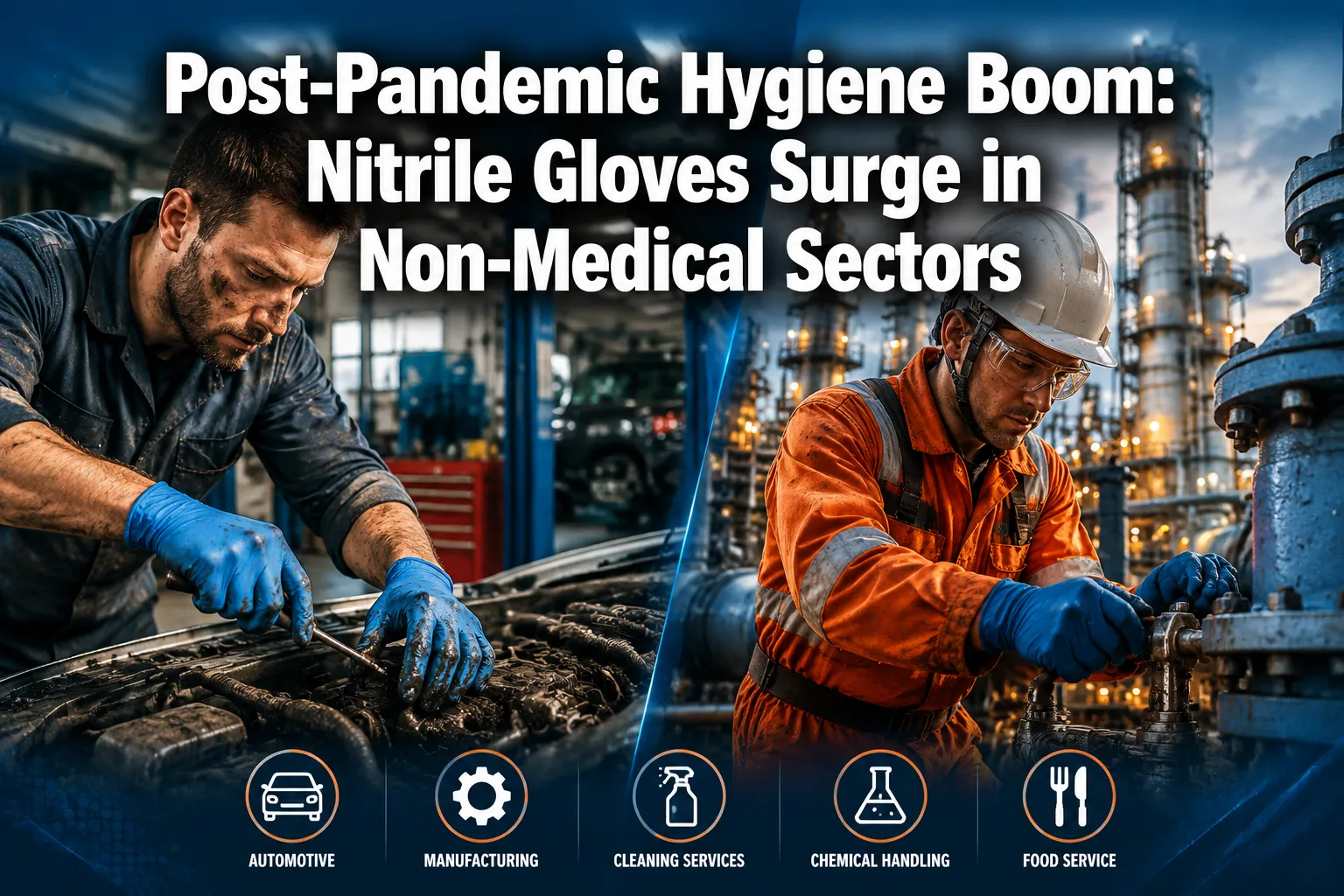
Last updated: June 26, 2026 Quick Answer The post-pandemic hygiene boom has driven nitrile glove adoption far beyond healthcare, with automotive and petrochemical sectors leading non-medical growth in 2026. These industries now rely on nitrile gloves for superior oil and chemical resistance, latex-free protection, and enhanced worker safety standards that became normalized during COVID-19. Market […]

Research and development teams across the glove manufacturing industry have achieved what once seemed contradictory: nitrile gloves that are simultaneously thinner and stronger than their predecessors. In 2026, powder-free nitrile gloves account for 56.6% of the global market, driven largely by innovations in thin-wall formulations that deliver 3 to 5 times better puncture resistance than […]
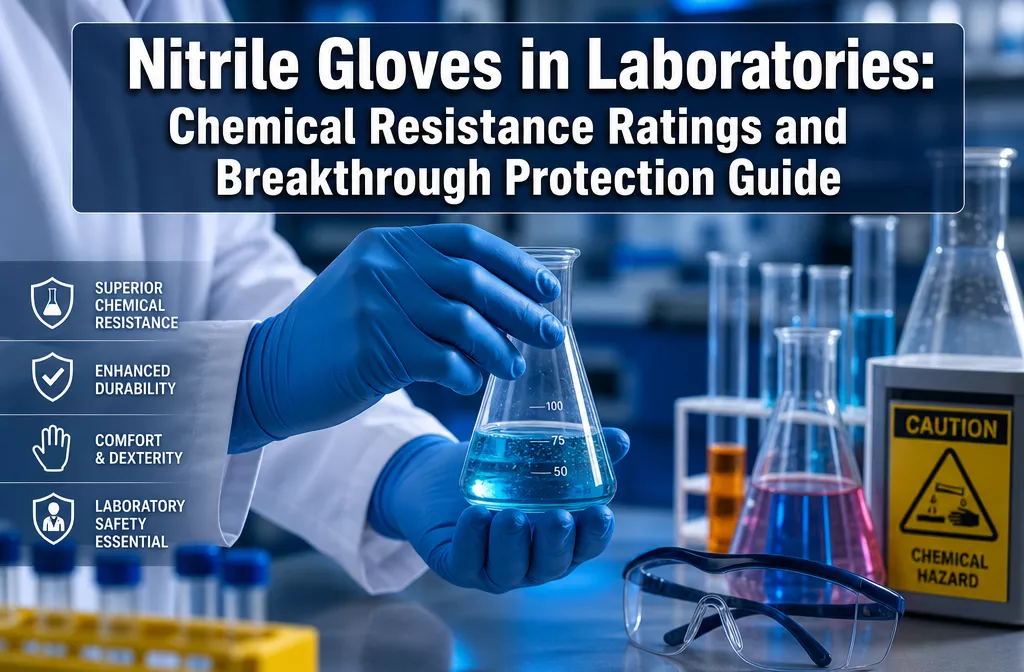
Laboratory accidents involving chemical exposure through inadequate glove protection send hundreds of researchers to emergency rooms each year—yet most labs still rely on thin disposable nitrile gloves without understanding their actual breakthrough times. The reality is stark: a glove that looks perfectly intact can be actively permeating dangerous chemicals onto your skin. Understanding the Nitrile […]
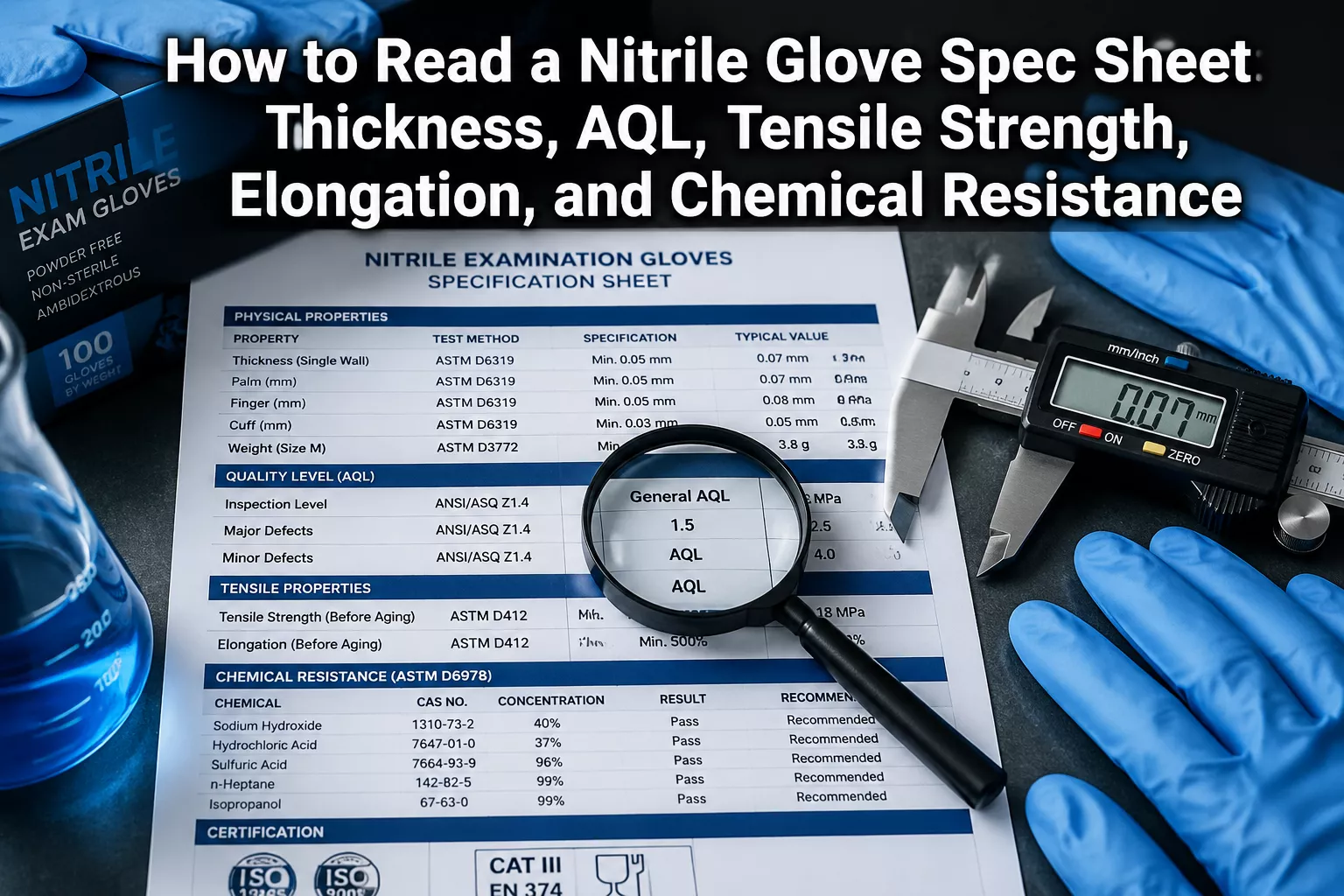
Most buyers waste money on nitrile gloves by chasing the wrong numbers. A procurement manager recently paid 40% more for “8-mil heavy-duty” gloves, only to discover the fingertips were thinner than a competitor’s 6-mil option—and the AQL was worse. Understanding how to read a nitrile glove spec sheet: thickness, AQL, tensile strength, elongation, and chemical […]

Janitorial teams face a hidden cost drain: glove failures during chemical cleaning tasks can triple protective equipment expenses while compromising hygiene standards. In 2026, with U.S. tariffs on Chinese nitrile gloves doubling to 100%, selecting the right hand protection has become both a safety imperative and a budget challenge. Nitrile Gloves in Janitorial Services: Best […]