Last updated: June 28, 2026
Between 8% and 17% of healthcare workers develop allergic contact dermatitis from disposable gloves, yet most assume switching from latex to nitrile solves the problem. It doesn’t. Traditional nitrile gloves contain chemical accelerators that trigger reactions in sensitive users, and some formulations even carry residual proteins that cross-react with latex allergies. Hypoallergenic nitrile glove formulations: accelerator-free and latex-cross-reactivity solutions for sensitive users address these hidden allergen sources through reformulated polymer chemistry, alternative curing agents, and protein-free manufacturing processes that meet the needs of healthcare workers, laboratory technicians, and others who require extended glove use without skin complications.
Key Takeaways
- Accelerator-free nitrile gloves eliminate thiuram and carbamate compounds that cause 80-90% of glove-related allergic contact dermatitis cases
- Traditional nitrile gloves are latex-free but can still trigger reactions in latex-sensitive individuals through cross-reactive proteins or shared manufacturing equipment
- Chemical accelerators speed vulcanization during manufacturing but leave residual compounds that penetrate skin and cause delayed hypersensitivity reactions
- Hypoallergenic formulations cost 15-40% more than standard nitrile gloves but reduce workplace injury claims and lost productivity from dermatitis
- Accelerator-free gloves maintain equivalent barrier protection, tensile strength, and puncture resistance when manufactured with alternative curing systems
- Healthcare workers with persistent rashes should undergo patch testing to distinguish between latex protein allergy, accelerator sensitivity, and irritant contact dermatitis
- Best practice involves selecting gloves based on specific allergen profile rather than assuming all nitrile products are equally safe for sensitive skin
- Regulatory pressure from OSHA and FDA has driven development of low-allergen glove options since 2020, expanding availability across medical and industrial markets
What Makes Nitrile Gloves Hypoallergenic
Hypoallergenic nitrile gloves achieve their reduced allergen profile by eliminating or minimizing chemical accelerators used in vulcanization and ensuring zero latex protein contamination during manufacturing. Standard nitrile gloves contain thiuram compounds, carbamates, and mercaptobenzothiazoles that accelerate the cross-linking of polymer chains but leave residual chemicals that can sensitize skin over time.
True hypoallergenic formulations use one or more of these approaches:
- Accelerator-free curing systems that rely on sulfur-free vulcanization or extended heat curing without traditional chemical accelerators
- Ultra-low accelerator formulations that reduce residual chemical content to below 1 microgram per gram of glove material
- Alternative accelerator chemistry using dithiocarbamates or other compounds with lower sensitization potential
- Protein-free manufacturing in dedicated facilities that never process latex to prevent cross-contamination
The polymer base (acrylonitrile-butadiene rubber) itself rarely causes allergic reactions. The problem lies in the additives and processing chemicals. Manufacturers achieve hypoallergenic status through material selection, process control, and third-party testing that verifies low extractable protein and accelerator levels.
For users with confirmed allergic reactions to nitrile gloves, these reformulated products provide a practical alternative that maintains barrier protection without triggering dermatitis.
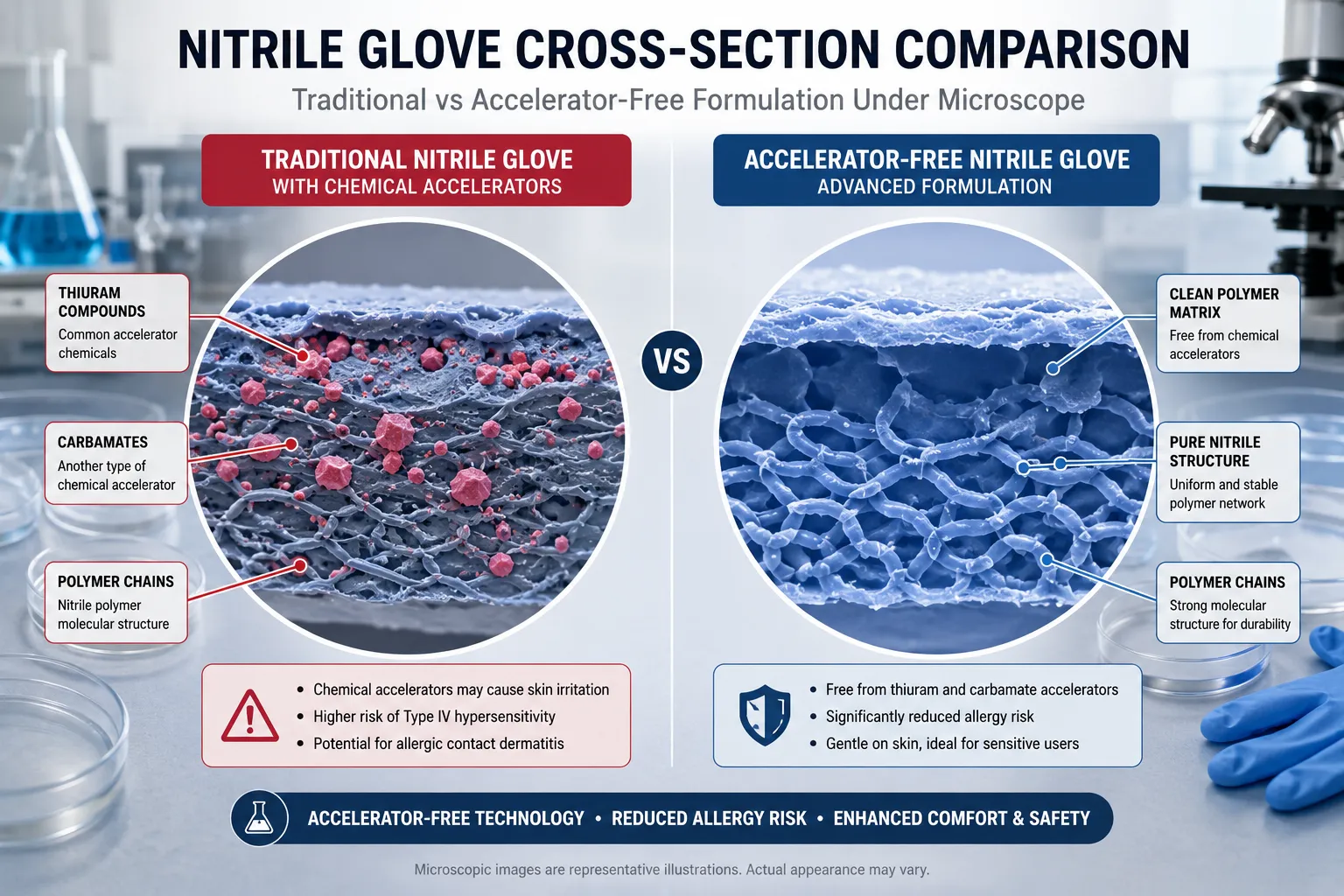
Difference Between Accelerator-Free Nitrile Gloves and Regular Nitrile Gloves
Accelerator-free nitrile gloves differ from regular nitrile gloves primarily in their vulcanization chemistry and residual chemical content, not in their base polymer or barrier properties. Both types use acrylonitrile-butadiene rubber as the foundation material, but the curing process determines allergen potential.
Regular nitrile gloves contain:
- Thiuram accelerators (tetramethylthiuram disulfide, tetramethylthiuram monosulfide)
- Carbamate accelerators (zinc diethyldithiocarbamate, zinc dibutyldithiocarbamate)
- Mercaptobenzothiazole compounds
- Residual accelerator levels typically 5-50 micrograms per gram
Accelerator-free nitrile gloves feature:
- Sulfur-based vulcanization without chemical accelerators, or
- Peroxide curing systems, or
- Extended thermal curing at controlled temperatures
- Residual accelerator levels below 1 microgram per gram (often undetectable)
Performance characteristics remain comparable. Independent testing shows accelerator-free formulations meet or exceed ASTM D6319 standards for tensile strength (minimum 14 MPa) and elongation (minimum 500%). Barrier protection against bloodborne pathogens, chemicals, and puncture follows the same FDA and ASTM requirements regardless of accelerator content.
The manufacturing difference adds cost. Accelerator-free curing requires longer processing times (up to 3-4 times standard production cycles) and more precise temperature control, which explains the 15-40% price premium. However, for facilities with high rates of glove-related dermatitis, the investment reduces workers’ compensation claims and staff turnover.
Choose accelerator-free gloves if you have confirmed sensitivity to thiuram or carbamate compounds through patch testing, or if you experience persistent hand dermatitis despite switching from latex to standard nitrile.
Can You Be Allergic to Nitrile Gloves If You Have a Latex Allergy
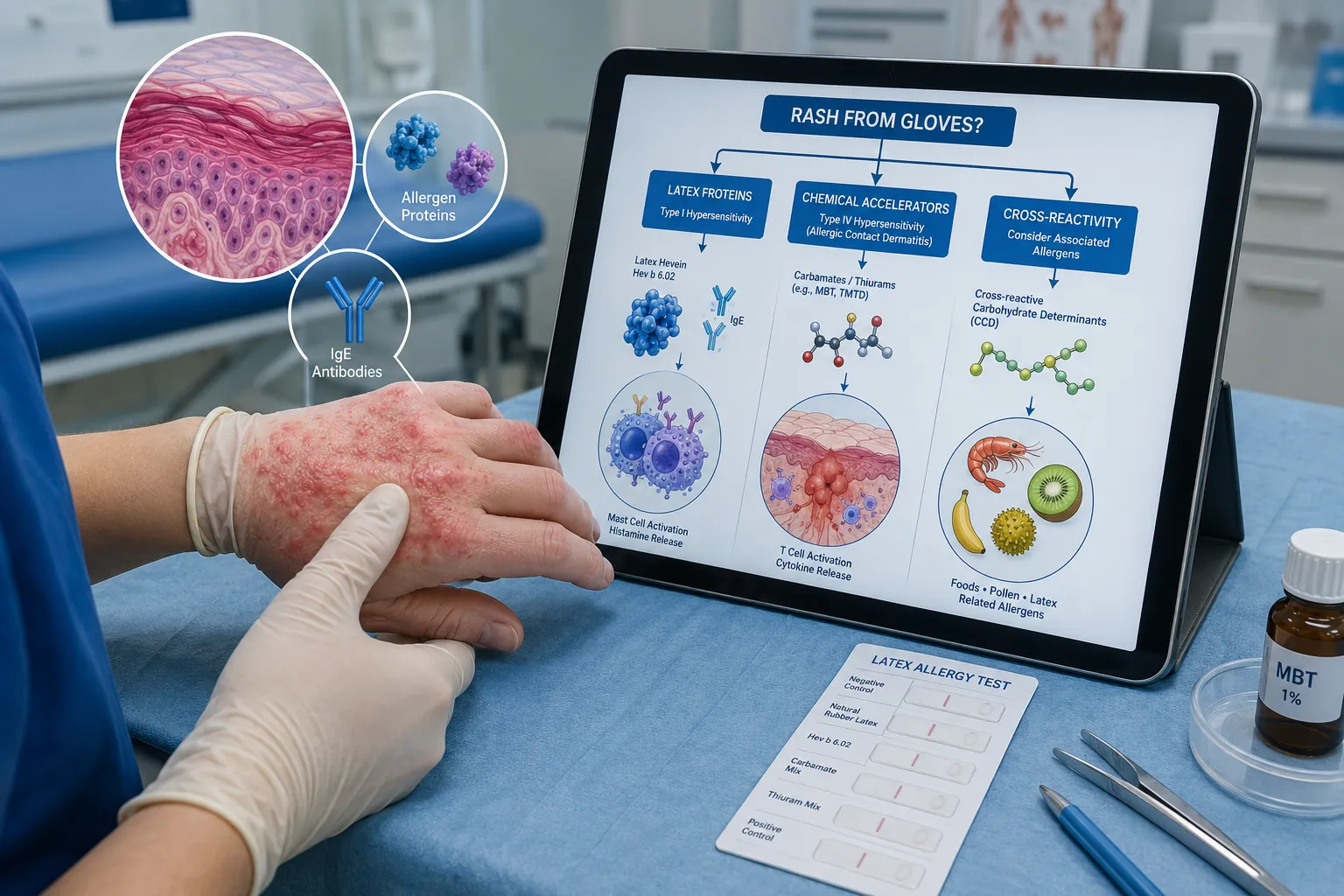
Yes, people with latex allergies can experience reactions to nitrile gloves, though the mechanism differs from true latex protein allergy. Nitrile rubber contains no natural rubber latex proteins, but three pathways can still cause problems for latex-sensitive individuals.
Cross-contamination during manufacturing occurs when facilities produce both latex and nitrile gloves on shared equipment. Residual latex proteins transfer to nitrile products despite cleaning protocols. This affects a small percentage of nitrile gloves on the market, primarily from manufacturers who haven’t segregated production lines.
Cross-reactive proteins appear in some nitrile formulations through additives derived from plant sources that share protein structures with Hevea brasiliensis (rubber tree) allergens. These proteins trigger IgE-mediated responses in individuals sensitized to latex, even though the glove contains no actual latex.
Chemical accelerator sensitivity develops independently but often co-occurs with latex allergy because both conditions result from repeated glove exposure. A person may have both Type I hypersensitivity to latex proteins and Type IV hypersensitivity to chemical accelerators, making it difficult to isolate which allergen causes symptoms.
To distinguish between these scenarios:
- Timing of reaction – Latex protein allergy causes immediate symptoms (within minutes to hours), while accelerator sensitivity produces delayed reactions (24-72 hours after exposure)
- Symptom pattern – Latex allergy triggers hives, itching, respiratory symptoms, or anaphylaxis; accelerator sensitivity causes eczema, dry cracked skin, and localized dermatitis
- Patch testing – Dermatologists can test for specific accelerator compounds versus latex proteins to identify the actual allergen
For latex-allergic individuals, select nitrile gloves certified as latex-free and manufactured in dedicated latex-free facilities. Look for products that explicitly state “no natural rubber latex” and “manufactured in latex-free environment” on packaging. Understanding the composition of nitrile gloves helps identify potential allergen sources beyond the base polymer.
What Are Chemical Accelerators in Gloves and Why Do They Cause Reactions
Chemical accelerators are organic compounds added to rubber formulations to speed the vulcanization process that transforms liquid polymer into solid, elastic glove material. Without accelerators, curing would require impractically long heating times and produce inconsistent material properties. The most common accelerators in disposable gloves include thiurams, carbamates, thiazoles, and thioureas.
How accelerators work: During manufacturing, accelerators catalyze cross-linking between polymer chains when heated. This creates the three-dimensional network that gives gloves their strength, elasticity, and barrier properties. The process typically completes in 15-30 minutes at 100-120°C with accelerators, versus several hours without them.
Why they cause reactions: Accelerators don’t fully react during vulcanization. Residual unreacted compounds and reaction byproducts remain in the finished glove. When gloves contact skin, especially under occlusive conditions (sweaty hands, extended wear), these chemicals leach out and penetrate the stratum corneum.
The immune system recognizes accelerator molecules as foreign antigens. After repeated exposure, T-cells become sensitized and mount an inflammatory response upon subsequent contact. This Type IV delayed hypersensitivity reaction manifests as allergic contact dermatitis, typically appearing 24-72 hours after glove use.
Most problematic accelerators:
- Thiurams (especially tetramethylthiuram disulfide) – cause 40-50% of glove-related allergic contact dermatitis
- Carbamates (zinc diethyldithiocarbamate, zinc dibutyldithiocarbamate) – account for 30-40% of cases
- Mercaptobenzothiazole – responsible for 10-15% of reactions
- Thioureas – less common but highly sensitizing when present
Sensitivity develops through cumulative exposure. Healthcare workers who use gloves 4-8 hours daily face higher risk than occasional users. Once sensitized, individuals react to progressively lower concentrations, making continued use of accelerator-containing gloves impossible without severe dermatitis.
Accelerator-free formulations eliminate this sensitization pathway entirely by using alternative curing chemistry that leaves no allergenic residues.
Why Do Nitrile Gloves Still Cause Rashes If They’re Latex-Free
Nitrile gloves cause rashes despite being latex-free because skin reactions have multiple causes beyond latex protein allergy. Three distinct mechanisms produce similar symptoms, and users often misattribute all glove-related dermatitis to latex sensitivity.
Allergic contact dermatitis from chemical accelerators represents the most common cause of nitrile glove rashes. As discussed earlier, thiuram and carbamate compounds trigger delayed hypersensitivity reactions in sensitized individuals. This accounts for approximately 80-90% of nitrile glove dermatitis cases in healthcare settings.
Irritant contact dermatitis results from physical and chemical damage to skin barrier function rather than immune system activation. Factors include:
- Occlusion and moisture buildup inside gloves
- Friction from donning and removing gloves repeatedly
- Residual manufacturing chemicals (surfactants, processing aids)
- Hand sanitizer or soap trapped against skin under gloves
- Powder or cornstarch in powdered glove formulations
Irritant dermatitis appears as dry, cracked, red skin without the vesicles and oozing typical of allergic reactions. It affects anyone with sufficient exposure, not just sensitized individuals.
Cross-contamination and additive reactions occur when nitrile gloves contain unexpected allergens:
- Latex proteins from shared manufacturing equipment
- Colophony (rosin) used in some adhesives
- Formaldehyde-releasing preservatives
- Antioxidants like butylated hydroxyanisole
To determine which mechanism causes your rash:
- Location pattern – Reactions limited to glove contact areas suggest allergy or irritation; reactions extending beyond suggest systemic sensitivity
- Timing – Immediate reactions (minutes to hours) indicate Type I allergy; delayed reactions (1-3 days) suggest Type IV allergy; gradual worsening over weeks suggests irritation
- Response to glove change – Switching to accelerator-free gloves resolves allergic contact dermatitis but may not help irritant dermatitis
For persistent issues, consult a dermatologist for patch testing. This identifies specific chemical sensitivities and guides appropriate glove selection. Many users find that potential allergic reactions to nitrile gloves stem from accelerators rather than the nitrile polymer itself.
Are All Nitrile Gloves Safe for People with Latex Allergies
No, not all nitrile gloves are equally safe for people with latex allergies, despite nitrile rubber containing no natural rubber latex in its base formulation. Safety depends on manufacturing practices, facility segregation, and additive selection that varies significantly between brands and production facilities.
Latex-safe nitrile gloves must meet these criteria:
- Manufactured in facilities that never process natural rubber latex
- Use additives and processing aids free from latex-derived compounds
- Undergo testing to verify protein content below 50 micrograms per gram (FDA threshold)
- Carry explicit “latex-free” labeling with manufacturing environment disclosure
Potentially problematic nitrile gloves include:
- Products from dual-use facilities that make both latex and nitrile gloves
- Gloves manufactured on equipment previously used for latex production
- Formulations using plant-derived additives with cross-reactive proteins
- Products without explicit latex-free certification
For individuals with severe latex allergy (history of anaphylaxis or respiratory symptoms), the stakes are high. Even trace latex protein contamination can trigger life-threatening reactions. These users should select gloves with:
- Third-party certification from organizations like the American Latex Allergy Association
- Protein testing results documented on specification sheets
- Dedicated manufacturing explicitly stated by the manufacturer
- Medical-grade classification which requires more stringent allergen control
For mild latex sensitivity (localized skin reactions only), standard nitrile gloves from reputable manufacturers typically provide adequate safety. The risk of cross-contamination causing severe reactions remains low, though accelerator sensitivity may still develop independently.
Common mistake: Assuming “nitrile” automatically means “safe for latex allergy.” Always verify manufacturing practices and protein testing results, especially for high-risk individuals. When selecting gloves for food service or other applications, consider that 14 things to think about when buying gloves for food include allergen considerations beyond just material type.
Best Hypoallergenic Nitrile Gloves for Healthcare Workers with Sensitive Skin
The best hypoallergenic nitrile gloves for healthcare workers with sensitive skin combine accelerator-free formulation, low residual chemical content, and appropriate barrier protection for medical applications. Selection should match specific allergen sensitivities identified through patch testing when possible.
Top-tier accelerator-free options for confirmed accelerator sensitivity:
- Sulfur-cured, accelerator-free formulations – Eliminate thiuram and carbamate compounds entirely while maintaining ASTM D6319 compliance for medical examination gloves
- Ultra-low accelerator gloves – Contain less than 1 microgram per gram residual accelerators, sufficient for most sensitive users
- Polymer-coated interior gloves – Feature a thin polymer layer that blocks accelerator migration to skin
Key specifications to verify:
- Accelerator content: Request specification sheets showing extractable accelerator levels below 1 mcg/g
- Protein content: Verify testing shows less than 50 mcg/g (ideally undetectable)
- Manufacturing environment: Confirm latex-free facility for latex-sensitive workers
- Barrier performance: Ensure AQL 1.5 or better for medical-grade protection
- Thickness: 4-6 mil provides durability for extended wear without excessive stiffness
Additional features for sensitive skin:
- Powder-free formulation – Eliminates cornstarch that can irritate damaged skin and carry allergens
- Textured grip – Reduces need for excessive gripping force that increases friction
- Extended cuff length – Provides wrist coverage and easier donning without skin contact
- Chlorination or polymer coating – Reduces surface friction and makes donning easier without powder
By specific sensitivity:
- Thiuram sensitivity: Select gloves explicitly labeled “thiuram-free” or “accelerator-free”
- Carbamate sensitivity: Verify formulation uses alternative accelerators or none at all
- Latex allergy: Choose products from dedicated latex-free facilities with protein testing
- Multiple sensitivities: Opt for completely accelerator-free formulations from latex-free environments
Cost considerations: Expect to pay $12-25 per 100-count box for accelerator-free medical-grade nitrile gloves versus $8-15 for standard nitrile. For healthcare facilities, this investment reduces workers’ compensation claims, sick leave, and staff replacement costs that far exceed the glove price differential.
Procurement strategy: Request samples from multiple manufacturers for trial use. Have affected workers test gloves for 2-3 weeks to verify tolerance before committing to large orders. Maintain documentation of glove specifications and worker responses to support workers’ compensation claims if needed.
For healthcare workers who require gloves for extended periods, understanding how long you can safely wear nitrile gloves helps prevent both contamination risks and skin damage from excessive wear time.
How Much Do Accelerator-Free Nitrile Gloves Cost Compared to Standard
Accelerator-free nitrile gloves typically cost 15-40% more than standard nitrile gloves, with prices varying based on manufacturing process, order volume, and market conditions. As of 2026, expect to pay $12-25 per 100-count box for accelerator-free medical-grade gloves versus $8-15 for comparable standard nitrile gloves.
Price breakdown by category:
| Glove Type | Price per 100-count box | Price per glove |
|---|---|---|
| Standard nitrile (medical grade) | $8-15 | $0.08-0.15 |
| Low-accelerator nitrile | $10-18 | $0.10-0.18 |
| Accelerator-free nitrile | $12-25 | $0.12-0.25 |
| Premium accelerator-free | $20-35 | $0.20-0.35 |
Factors driving the premium:
- Extended curing time – Accelerator-free vulcanization requires 3-4 times longer processing, reducing throughput
- Specialized equipment – Alternative curing systems require capital investment in modified production lines
- Quality control – Additional testing to verify low extractable chemical content adds cost
- Lower production volume – Smaller market share means less economy of scale
- Raw material costs – Alternative curing agents may cost more than traditional accelerators
Cost-benefit analysis for healthcare facilities:
A 200-bed hospital using 500,000 gloves annually would spend:
- Standard nitrile: $50,000-75,000
- Accelerator-free nitrile: $60,000-125,000
- Additional cost: $10,000-50,000
However, glove-related occupational dermatitis costs include:
- Workers’ compensation claims: $5,000-15,000 per affected worker
- Lost productivity: 10-30 days per year for moderate cases
- Replacement hiring: $3,000-8,000 per worker who leaves due to dermatitis
- OSHA recordable incidents: Administrative burden and potential citations
Facilities with 5-10 affected workers annually often achieve positive ROI within 1-2 years by switching to accelerator-free gloves for sensitive staff or facility-wide adoption.
Volume pricing: Bulk orders (10+ cases) typically reduce per-box costs by 15-25%. Group purchasing organizations and direct manufacturer relationships provide additional savings.
Insurance and regulatory considerations: Some workers’ compensation insurers offer premium reductions for facilities that proactively address occupational dermatitis through hypoallergenic glove programs. OSHA compliance costs decrease when preventive measures reduce recordable skin disease incidents.
For budget-conscious facilities, targeted deployment makes sense: provide accelerator-free gloves to workers with confirmed sensitivities or high-risk roles (surgical staff, laboratory technicians) while using standard nitrile for general applications.
Who Should Use Accelerator-Free Nitrile Gloves
Healthcare workers, laboratory technicians, and other professionals with confirmed chemical accelerator sensitivity should use accelerator-free nitrile gloves, along with individuals at high risk for developing sensitivity due to extended daily glove use. Specific populations benefit most from these specialized formulations.
Confirmed candidates:
- Workers with positive patch test results for thiuram, carbamate, or thiazole compounds
- Individuals with persistent hand dermatitis that resolved after switching to accelerator-free gloves
- People with history of severe allergic contact dermatitis from any rubber products
- Workers who developed sensitivity after years of standard glove use
High-risk populations:
- Healthcare workers using gloves 4+ hours daily (nurses, surgical staff, dentists, dental hygienists)
- Laboratory technicians with continuous glove exposure
- Food service workers in high-volume operations requiring constant glove use
- Cleanroom and pharmaceutical manufacturing personnel
- Tattoo artists and body modification professionals
- Veterinary staff performing frequent examinations and procedures
Preventive use considerations:
- Workers with family history of contact dermatitis or atopic conditions
- Individuals with existing hand eczema or compromised skin barrier
- Staff in facilities with high rates of glove-related dermatitis (>5% of workers affected)
- Pregnant healthcare workers concerned about chemical exposure
When accelerator-free gloves are unnecessary:
- Occasional glove users (less than 1 hour daily)
- Workers without history of skin reactions to gloves
- Applications requiring only brief contact (food handling, light cleaning)
- Budget-constrained settings with no documented dermatitis cases
Decision framework:
Choose accelerator-free gloves if you answer “yes” to any of these:
- Have you experienced persistent hand rash, dryness, or cracking that worsens with glove use?
- Has patch testing identified sensitivity to rubber accelerators?
- Do you use disposable gloves more than 4 hours per day?
- Have you developed reactions to gloves after years of problem-free use?
- Does your workplace have multiple staff with glove-related dermatitis?
Implementation strategy for facilities:
- Start with affected workers and high-risk roles
- Expand to department-wide use if multiple staff develop sensitivity
- Consider facility-wide adoption if dermatitis rates exceed 5% or workers’ compensation costs justify the investment
For workers in specialized fields like handling firearms and sensitive equipment, accelerator-free options provide both skin protection and the tactile sensitivity needed for precision work.
Common Mistakes When Switching from Latex to Nitrile Gloves
The most common mistake when switching from latex to nitrile gloves is assuming all nitrile products are equally hypoallergenic and failing to identify the actual allergen causing reactions. This leads to continued dermatitis despite the material change, frustrating workers and wasting resources.
Critical errors to avoid:
Mistake 1: Not identifying the specific allergen Many facilities switch to standard nitrile gloves when workers develop reactions, assuming latex protein allergy. If the actual problem is accelerator sensitivity (which affects both latex and nitrile gloves), the switch provides no benefit. Solution: Arrange patch testing through occupational health or dermatology to identify specific sensitivities before selecting replacement gloves.
Mistake 2: Selecting nitrile gloves from dual-use facilities Purchasing nitrile gloves manufactured in facilities that also produce latex gloves risks cross-contamination for truly latex-allergic workers. Solution: Verify manufacturing environment and request protein testing results, especially for workers with severe latex allergy.
Mistake 3: Ignoring accelerator content in nitrile gloves Standard nitrile gloves contain the same thiuram and carbamate accelerators as latex gloves. Workers sensitive to these chemicals experience identical reactions regardless of base polymer. Solution: Select accelerator-free or ultra-low accelerator nitrile formulations for affected workers.
Mistake 4: Inadequate trial period Allergic contact dermatitis from accelerators develops 24-72 hours after exposure. Evaluating new gloves after a single shift provides insufficient data. Solution: Trial new gloves for 2-3 weeks with affected workers before facility-wide adoption.
Mistake 5: Overlooking irritant contact dermatitis Not all glove-related dermatitis stems from allergy. Occlusion, friction, and moisture cause irritant dermatitis that persists regardless of glove material. Solution: Implement comprehensive hand care protocols including moisturizers, glove rotation, and reduced wear time when possible.
Mistake 6: Failing to address hand hygiene products Alcohol-based sanitizers, antimicrobial soaps, and disinfectants trapped under gloves cause or worsen dermatitis independent of glove material. Solution: Allow hands to dry completely after washing before donning gloves; use moisturizers during breaks.
Mistake 7: Using powdered gloves Powder (cornstarch) absorbs moisture, carries allergens deeper into skin, and causes respiratory issues when airborne. Solution: Select powder-free gloves exclusively; most modern facilities have banned powdered gloves entirely.
Mistake 8: Inadequate sizing Gloves that are too tight increase friction and occlusion; gloves that are too loose require excessive gripping force. Both worsen dermatitis. Solution: Provide multiple sizes and ensure workers select proper fit.
Mistake 9: Single-glove strategy Assuming one glove type works for all workers ignores individual sensitivities and varying allergen profiles. Solution: Maintain multiple glove options (standard nitrile, accelerator-free nitrile, vinyl, polyethylene) to accommodate different needs.
Mistake 10: No follow-up monitoring Failing to track dermatitis rates after switching gloves prevents identification of ongoing problems. Solution: Implement reporting system for skin reactions and review quarterly to assess effectiveness.
Best practice approach:
- Document current dermatitis rates and affected workers
- Arrange patch testing for symptomatic workers
- Select gloves based on identified sensitivities
- Conduct 2-3 week trial with affected workers
- Implement comprehensive hand care program
- Monitor outcomes and adjust as needed
Understanding the role of sulfur in nitrile gloves helps explain why some formulations cause reactions while others don’t, even within the nitrile category.
Do Hypoallergenic Nitrile Gloves Work as Well as Regular Ones
Yes, hypoallergenic nitrile gloves perform equivalently to regular nitrile gloves in barrier protection, tensile strength, and puncture resistance when manufactured to the same quality standards. The difference lies in chemical formulation, not functional capability.
Performance metrics comparison:
Independent testing shows accelerator-free nitrile gloves meet or exceed ASTM D6319 requirements for medical examination gloves:
- Tensile strength: 14-24 MPa (standard: 14 MPa minimum)
- Elongation: 500-700% (standard: 500% minimum)
- Puncture resistance: Comparable to standard nitrile at equivalent thickness
- Viral barrier: Equivalent protection against bloodborne pathogens
- Chemical resistance: Identical resistance to common healthcare chemicals
Areas of equivalent performance:
- Barrier protection against bacteria, viruses, and bloodborne pathogens
- Resistance to chemotherapy drugs, disinfectants, and common solvents
- Tactile sensitivity for fine motor tasks
- Grip texture and handling characteristics
- Shelf life and storage stability (3-5 years when properly stored)
Potential differences:
- Donning ease: Some accelerator-free formulations may feel slightly different during donning due to alternative surface treatments, though polymer coating typically eliminates this issue
- Elasticity feel: Alternative curing chemistry can produce subtle differences in how gloves stretch and conform, though this rarely affects functionality
- Color consistency: Accelerator-free formulations may show slight batch-to-batch color variation, though this doesn’t affect performance
Clinical validation: Multiple studies in healthcare settings have compared accelerator-free and standard nitrile gloves for surgical and examination use. Results consistently show no significant difference in:
- Barrier failure rates during procedures
- User satisfaction with tactile sensitivity
- Grip performance in wet or dry conditions
- Durability during extended wear
Regulatory equivalence: Accelerator-free nitrile gloves undergo the same FDA 510(k) clearance process as standard nitrile gloves. They must demonstrate equivalent safety and effectiveness to predicate devices, ensuring performance parity.
Limitations to consider:
- Not all accelerator-free gloves are created equal; quality varies by manufacturer
- Some ultra-low-cost accelerator-free options may compromise on thickness or quality control
- Proper storage remains critical; accelerator-free formulations show similar degradation patterns when exposed to heat, ozone, or UV light
Selection criteria for equivalent performance:
- Verify ASTM D6319 compliance for medical applications
- Check AQL (Acceptable Quality Level) rating – 1.5 or better for medical use
- Confirm thickness matches application needs (4-6 mil for examination, 6-8 mil for surgical)
- Review manufacturer specifications for tensile strength and elongation
- Request samples for user evaluation before bulk purchase
For most applications, users cannot distinguish between high-quality accelerator-free and standard nitrile gloves in blind testing. The performance difference is negligible; the allergen profile difference is substantial.
Can Nitrile Gloves Cause Cross-Reactivity with Latex Proteins
Nitrile gloves themselves do not cause cross-reactivity with latex proteins because nitrile rubber (acrylonitrile-butadiene polymer) shares no structural similarity with natural rubber latex proteins. However, nitrile gloves can contain latex proteins through manufacturing contamination or carry proteins that cross-react with latex allergens through shared epitopes.
True cross-reactivity occurs when proteins in different substances share similar molecular structures that the immune system recognizes as identical. Common examples include latex-fruit syndrome, where people allergic to latex also react to banana, avocado, or kiwi due to shared protein epitopes.
Nitrile gloves and cross-reactivity scenarios:
Scenario 1: Manufacturing contamination (not true cross-reactivity) Nitrile gloves produced in facilities that also manufacture latex gloves can pick up residual latex proteins from shared equipment, molds, or processing lines. This represents direct latex exposure, not cross-reactivity. Affected individuals react to actual latex proteins, not to cross-reactive proteins in nitrile.
Scenario 2: Plant-derived additives (potential cross-reactivity) Some nitrile glove formulations use additives derived from plants in the Euphorbiaceae family or other botanical sources. These may contain proteins with epitopes similar to Hevea brasiliensis (rubber tree) proteins, potentially triggering reactions in latex-sensitized individuals. This represents true cross-reactivity, though it affects a small percentage of products.
Scenario 3: Shared allergen exposure (not cross-reactivity) Workers who develop both latex protein allergy and chemical accelerator sensitivity have two independent conditions, not cross-reactivity. The accelerators in nitrile gloves trigger Type IV hypersensitivity regardless of latex allergy status.
Clinical distinction:
- Latex protein allergy: IgE-mediated Type I hypersensitivity with immediate symptoms (minutes to hours)
- Accelerator allergy: T-cell-mediated Type IV hypersensitivity with delayed symptoms (24-72 hours)
- True cross-reactivity: Immediate IgE-mediated reaction to structurally similar proteins in different substances
Risk assessment for latex-allergic individuals:
- Low risk: Nitrile gloves from dedicated latex-free facilities with documented protein testing
- Moderate risk: Nitrile gloves from dual-use facilities without protein testing
- Higher risk: Nitrile gloves with plant-derived additives in individuals with latex-fruit syndrome
Testing and diagnosis: If you have confirmed latex allergy and experience reactions to nitrile gloves:
- Verify timing of reaction (immediate suggests protein exposure; delayed suggests accelerator sensitivity)
- Request protein testing results from glove manufacturer
- Undergo patch testing for chemical accelerators
- Consider skin prick testing with glove extracts to identify protein allergens
Prevention strategy:
- Select nitrile gloves explicitly manufactured in latex-free facilities
- Review specification sheets for protein content (should be <50 mcg/g, ideally undetectable)
- Avoid gloves with botanical additives if you have latex-fruit syndrome
- Consider accelerator-free formulations to eliminate that independent risk factor
The distinction matters for proper glove selection. True latex allergy requires latex-free manufacturing; accelerator sensitivity requires accelerator-free formulation. Many affected workers need both features.
How to Tell If Your Glove Reaction Is from Accelerators or Latex
Distinguishing between accelerator sensitivity and latex allergy requires attention to reaction timing, symptom pattern, and diagnostic testing, as these two conditions produce different immune responses despite similar-appearing skin symptoms.
Key differentiating factors:
Timing of reaction:
- Latex protein allergy (Type I): Symptoms appear within minutes to 2 hours of glove contact – itching, hives, redness develop rapidly during or immediately after glove use
- Accelerator sensitivity (Type IV): Symptoms appear 24-72 hours after exposure – dermatitis develops the day after glove use, not during
Symptom characteristics:
- Latex allergy: Urticaria (hives), immediate itching, swelling, potential respiratory symptoms (wheezing, rhinitis), risk of anaphylaxis in severe cases
- Accelerator sensitivity: Eczematous dermatitis, dry cracked skin, vesicles, oozing in severe cases, intense itching that worsens over days
Distribution pattern:
- Latex allergy: Reaction limited to glove contact area, may spread to face if gloves touch face, can cause systemic symptoms
- Accelerator sensitivity: Reaction primarily on hands, especially between fingers and wrists where glove contact is closest, rarely systemic
Progression over time:
- Latex allergy: Reactions occur from first exposure in previously sensitized individuals or after repeated exposures that build sensitivity; reactions worsen with continued exposure
- Accelerator sensitivity: Typically develops after months to years of problem-free glove use; represents acquired sensitivity from cumulative exposure
Response to glove change:
- Latex allergy: Switching to nitrile gloves from latex-free facilities resolves symptoms (unless accelerator sensitivity also present)
- Accelerator sensitivity: Switching from latex to standard nitrile provides no improvement; only accelerator-free gloves resolve symptoms
Diagnostic testing:
For latex allergy:
- Skin prick testing: Immediate wheal and flare response to latex extract confirms IgE-mediated allergy
- Serum IgE testing: Blood test detects latex-specific IgE antibodies
- Glove use test: Supervised wearing of latex glove produces immediate symptoms in allergic individuals
For accelerator sensitivity:
- Patch testing: Application of accelerator compounds (thiuram, carbamate, mercaptobenzothiazole) to skin for 48 hours, read at 48 and 96 hours; positive test shows eczematous reaction
- Glove patch test: Piece of suspect glove applied to skin for 48 hours can identify specific product causing reaction
Self-assessment questions:
Answer these to narrow down the likely cause:
- Do symptoms appear during glove use or 1-2 days later? (During = latex; later = accelerator)
- Do you get hives and immediate itching or dry, cracked skin? (Hives = latex; dry skin = accelerator)
- Did reactions start recently or after years of glove use? (Recent = latex; after years = accelerator)
- Do symptoms improve on days off work? (Both may improve, but accelerator reactions take longer to clear)
- Have you had reactions to other rubber products (rubber bands, balloons, condoms)? (Yes suggests latex allergy)
Complex cases: Some individuals develop both conditions simultaneously, making diagnosis challenging. This occurs because:
- Healthcare workers have high exposure to both latex proteins and accelerators
- Damaged skin from one condition increases susceptibility to the other
- Chronic inflammation from one allergen may lower threshold for reacting to others
Next steps:
- Document reaction timing, symptoms, and glove types used
- Consult occupational health or dermatology for formal testing
- Request patch testing for accelerators and skin prick or IgE testing for latex
- Based on results, select appropriate gloves (latex-free for latex allergy, accelerator-free for accelerator sensitivity, both features if both conditions present)
Proper diagnosis prevents the common mistake of switching glove types without addressing the actual allergen, which leaves workers suffering despite the change.
Alternatives to Nitrile Gloves for Severe Allergies
For individuals with severe allergies to both latex and nitrile glove components, several alternative materials provide barrier protection without common allergens, though each comes with specific advantages and limitations.
Vinyl (PVC) gloves:
- Composition: Polyvinyl chloride polymer with plasticizers
- Allergen profile: No latex proteins or rubber accelerators; rare sensitivity to plasticizers
- Advantages: Lowest allergen potential, economical, widely available
- Limitations: Inferior barrier protection compared to nitrile, higher permeation rates for chemicals and some viruses, less elastic fit
- Best for: Low-risk tasks, food handling, light cleaning, individuals with multiple rubber sensitivities
- Not suitable for: Medical procedures with bloodborne pathogen exposure, chemical handling
Polyethylene gloves:
- Composition: Simple polyethylene polymer, minimal additives
- Allergen profile: Essentially allergen-free, no accelerators or proteins
- Advantages: Extremely low allergen potential, food-safe, economical for single-use
- Limitations: Very thin, poor fit, no elasticity, tears easily, minimal barrier protection
- Best for: Brief food handling tasks, minimal contact applications
- Not suitable for: Any task requiring durability or barrier protection
Synthetic elastomer gloves (polyisoprene):
- Composition: Synthetic version of natural rubber without latex proteins
- Allergen profile: Latex-free but may contain accelerators unless specifically formulated accelerator-free
- Advantages: Excellent elasticity and fit similar to latex, good barrier protection
- Limitations: More expensive than nitrile, may still contain accelerators that cause reactions
- Best for: Surgical applications, individuals with latex protein allergy but no accelerator sensitivity
- Not suitable for: Individuals with accelerator sensitivity unless accelerator-free formulation used
Neoprene gloves:
- Composition: Polychloroprene synthetic rubber
- Allergen profile: No latex proteins; may contain accelerators in some formulations
- Advantages: Excellent chemical resistance, good barrier protection, available in accelerator-free versions
- Limitations: More expensive, less common in disposable format, may feel stiffer than nitrile
- Best for: Chemical handling, laboratory work, individuals needing both latex-free and accelerator-free options
- Not suitable for: Budget-conscious applications, tasks requiring maximum tactile sensitivity
Styrene-based copolymer gloves:
- Composition: Styrene-ethylene-butylene-styrene (SEBS) or similar copolymers
- Allergen profile: No latex proteins or rubber accelerators
- Advantages: Good elasticity, comfortable fit, allergen-free formulation
- Limitations: Less common, may be more expensive, limited availability
- Best for: Individuals with multiple sensitivities who need better performance than vinyl
- Not suitable for: High-chemical-exposure applications
Laminate gloves (multi-layer):
- Composition: Multiple thin layers of different polymers
- Allergen profile: Varies by formulation; can be designed allergen-free
- Advantages: Combines benefits of different materials, can optimize barrier and allergen properties
- Limitations: More expensive, less common, may feel different than single-material gloves
- Best for: Specialized applications requiring specific barrier properties
- Not suitable for: General-purpose use due to cost
Selection strategy for severe allergies:
- Identify all sensitivities: Undergo comprehensive patch testing for accelerators, latex, and other rubber chemicals
- Match material to sensitivity:
- Latex allergy only: Accelerator-free nitrile, vinyl, or polyethylene
- Accelerator sensitivity only: Accelerator-free nitrile or vinyl
- Both latex and accelerator sensitivity: Vinyl, polyethylene, or accelerator-free neoprene
- Consider task requirements:
- High barrier protection needed: Accelerator-free nitrile or neoprene
- Moderate protection: Vinyl
- Minimal protection: Polyethylene
- Trial multiple options: Test alternatives for 2-3 weeks each to verify tolerance and functionality
Practical considerations:
- Vinyl gloves work well for food preparation tasks when nitrile causes reactions
- For specialized applications like salon services, material selection depends on chemical exposure and sensitivity profile
- Some users find success with double-gloving: thin cotton liner glove under vinyl or other alternative to reduce direct contact
Cost comparison:
- Vinyl: $6-12 per 100-count box
- Polyethylene: $4-8 per 100-count box
- Accelerator-free nitrile: $12-25 per 100-count box
- Neoprene: $15-35 per 100-count box (when available in disposable format)
- Synthetic elastomer: $18-40 per 100-count box
For individuals with severe, multiple sensitivities, working with occupational health specialists to identify safe alternatives prevents career-limiting reactions while maintaining necessary barrier protection.
Frequently Asked Questions
What does accelerator-free mean in nitrile gloves? Accelerator-free means the gloves are manufactured without thiuram, carbamate, or other chemical accelerators that speed vulcanization. These gloves use alternative curing methods like extended heat treatment or peroxide systems, eliminating the residual chemicals that cause most glove-related allergic contact dermatitis.
Can I develop an allergy to nitrile gloves even if I’ve used them for years? Yes, accelerator sensitivity develops through cumulative exposure over months or years. Healthcare workers often use gloves problem-free for 5-10 years before developing allergic contact dermatitis as their immune system becomes sensitized to accelerator compounds through repeated exposure.
How long does it take for glove dermatitis to clear after switching to hypoallergenic gloves? Allergic contact dermatitis typically improves within 2-4 weeks after eliminating allergen exposure, though severe cases may take 6-8 weeks to fully resolve. Continued exposure to other irritants (hand sanitizer, frequent washing) can delay healing even after switching to appropriate gloves.
Do accelerator-free nitrile gloves protect against COVID-19 and other viruses? Yes, accelerator-free nitrile gloves provide equivalent viral barrier protection to standard nitrile gloves when manufactured to the same quality standards. The curing method doesn’t affect the polymer’s ability to block viral particles; both types meet FDA requirements for viral barrier protection.
Can I use regular hand lotion with hypoallergenic nitrile gloves? Yes, but choose fragrance-free, hypoallergenic lotions and allow them to absorb completely before donning gloves. Petroleum-based products can degrade nitrile over time, so water-based lotions work best. Apply lotion during breaks rather than immediately before gloving to prevent occlusion-related irritation.
Are powder-free gloves the same as hypoallergenic gloves? No, powder-free simply means the gloves don’t contain cornstarch donning powder. Powder-free gloves can still contain latex proteins or chemical accelerators that cause allergic reactions. Hypoallergenic gloves must be both powder-free and free from common allergens like accelerators and latex proteins.
Will my insurance cover the extra cost of accelerator-free gloves if I have a documented allergy? Workers’ compensation typically covers necessary accommodations including hypoallergenic gloves for workers with documented occupational dermatitis. Health insurance generally doesn’t cover gloves directly, but occupational health services may be covered. Consult your employer’s workers’ compensation carrier for specific coverage.
How can I tell if gloves are truly accelerator-free or just low-accelerator? Check the manufacturer’s specification sheet for extractable accelerator content. True accelerator-free gloves show undetectable levels or less than 1 microgram per gram. Low-accelerator gloves contain reduced but measurable levels (1-5 mcg/g). Product labeling should explicitly state “accelerator-free” rather than “low accelerator” for truly accelerator-free formulations.
Can children with latex allergies safely use nitrile gloves? Children with latex allergies can safely use nitrile gloves from dedicated latex-free facilities. Verify the manufacturer confirms latex-free production environment and protein testing results below 50 mcg/g. For children with severe latex allergy history, consult their allergist before introducing any new glove material.
Do accelerator-free nitrile gloves have a shorter shelf life? No, accelerator-free nitrile gloves have comparable shelf life to standard nitrile gloves (3-5 years when stored properly). Both types degrade similarly when exposed to heat, ozone, UV light, or humidity. Follow manufacturer storage recommendations regardless of accelerator content.
Can I be allergic to the blue dye in nitrile gloves? Dye allergies from nitrile gloves are extremely rare but possible. If you suspect dye sensitivity, try unpigmented (clear or white) nitrile gloves. Most glove-related reactions stem from accelerators or latex proteins rather than colorants, so undergo patch testing to identify the actual allergen before assuming dye sensitivity.
Are there eco-friendly hypoallergenic nitrile gloves? Some manufacturers offer biodegradable nitrile gloves with accelerator-free formulations, though these remain more expensive and less widely available than standard options. The biodegradable additives don’t affect allergen profile. For disposal considerations, see guidance on proper disposal of contaminated nitrile gloves.
Conclusion
Hypoallergenic nitrile glove formulations represent a critical advancement for healthcare workers and other professionals who develop sensitivity to traditional glove materials. By eliminating chemical accelerators and ensuring latex-free manufacturing, these specialized products address the root causes of most glove-related dermatitis while maintaining the barrier protection and durability required for medical and industrial applications.
The key to successful glove selection lies in accurate diagnosis. Workers experiencing persistent hand dermatitis should undergo patch testing to identify specific sensitivities rather than assuming all nitrile gloves are equally safe. Accelerator-free formulations solve accelerator sensitivity; latex-free manufacturing environments address latex allergy; comprehensive hand care protocols reduce irritant contact dermatitis. Many affected workers need multiple interventions simultaneously.
For healthcare facilities, the 15-40% cost premium for accelerator-free gloves delivers measurable return on investment through reduced workers’ compensation claims, decreased sick leave, and improved staff retention. Targeted deployment to affected workers or high-risk roles provides cost-effective protection while facility-wide adoption makes sense for organizations with elevated dermatitis rates.
Actionable next steps:
- For symptomatic workers: Schedule patch testing through occupational health or dermatology to identify specific allergens before changing glove types
- For facilities: Audit current glove-related dermatitis rates and workers’ compensation costs to establish baseline for measuring improvement
- For procurement: Request specification sheets showing accelerator content, protein levels, and manufacturing environment from current and alternative suppliers
- For implementation: Conduct 2-3 week trials of accelerator-free gloves with affected workers before committing to large orders
- For prevention: Implement comprehensive hand care protocols including moisturizers, proper sizing, and reduced wear time when possible
The science is clear: most glove-related allergic reactions stem from chemical accelerators, not the base polymer material. Accelerator-free nitrile glove formulations eliminate this primary allergen source while delivering equivalent performance to standard gloves. For the estimated 8-17% of healthcare workers who develop glove-related dermatitis, these specialized formulations offer a practical solution that allows continued professional practice without career-limiting skin disease.
SEO Meta Title: Hypoallergenic Nitrile Gloves: Accelerator-Free Solutions