Last updated: July 4, 2026
Quick Answer
Nitrile gloves have become the standard in dental practices because they offer superior puncture resistance, excellent barrier protection against saliva and blood, and eliminate latex allergy risks while maintaining the tactile sensitivity required for precise procedures. Dental professionals typically use 4-6 mil powder-free nitrile gloves that fit snugly without restricting movement, and these gloves are designed for single use only, sterilization and reuse compromise their barrier integrity and violate infection control protocols. Proper glove selection, fit verification, and adherence to changing protocols between patients are essential components of safe dental practice in 2026.
Key Takeaways
- Nitrile gloves provide superior puncture resistance compared to latex and vinyl, making them ideal for dental procedures involving sharp instruments.
- Dental-grade nitrile gloves create an effective barrier against saliva, blood, and bloodborne pathogens when properly fitted and intact.
- Gloves should fit snugly at the wrist and fingertips without restricting circulation or causing hand fatigue during extended procedures.
- Nitrile gloves are single-use disposable items and cannot be sterilized or reused in dental settings without violating infection control standards.
- Powder-free nitrile gloves reduce the risk of respiratory irritation and contamination in the clinical environment.
- Dentists should change gloves between patients, after touching contaminated surfaces, and whenever gloves become torn or punctured.
- Most dental procedures require 4-6 mil thickness gloves to balance protection with tactile sensitivity.
- Nitrile gloves meet OSHA bloodborne pathogen standards when used as part of comprehensive infection control protocols.
- Allergic reactions to nitrile are rare but possible, typically presenting as contact dermatitis rather than immediate hypersensitivity.
- Proper donning and removal techniques prevent cross-contamination and maintain the sterile field during procedures.
Why Do Dentists Use Nitrile Gloves Instead of Latex
Dentists have increasingly shifted to nitrile gloves because they eliminate the risk of latex allergies while providing equal or superior barrier protection and puncture resistance. Latex allergies affect approximately 8-12% of healthcare workers and 1-6% of the general population, making latex-free alternatives essential for patient and staff safety.
Nitrile gloves offer several advantages specific to dental work:
Superior puncture resistance: Nitrile material resists tears and punctures from dental instruments like explorers, scalers, and burs better than latex. This matters during procedures where sharp instruments are constantly in contact with gloved hands.
Chemical resistance: Nitrile withstands exposure to common dental materials including eugenol, glutaraldehyde, and certain bonding agents that can degrade latex gloves.
Consistent quality: Modern nitrile manufacturing produces gloves with uniform thickness and fewer defects compared to natural rubber latex, which can vary based on the rubber tree source.
Longer shelf life: Nitrile gloves maintain their integrity for 3-5 years when stored properly, while latex gloves degrade more quickly due to protein breakdown.
The transition away from latex also addresses regulatory and liability concerns. Many dental practices have adopted latex-free protocols to protect patients with known sensitivities and reduce the risk of sensitization through repeated exposure. For more context on the fundamental differences between these materials, see our guide on the difference between latex and nitrile gloves.
How Tight Should Nitrile Gloves Fit for Dental Procedures
Nitrile gloves for dental work should fit snugly enough to provide tactile sensitivity and prevent slippage but not so tight that they restrict blood flow or cause hand fatigue during extended procedures. The glove should conform to the hand’s contours without excess material bunching at the fingertips or palm.
Proper fit indicators:
- The glove cuff extends 2-3 inches past the wrist to overlap with gown sleeves
- Fingertips reach the end of the glove without stretching or leaving empty space
- The palm and back of hand show minimal wrinkling when fingers are extended
- You can perform fine motor tasks like tying sutures or manipulating small instruments
- No tingling, numbness, or color changes in fingers after 15-20 minutes of wear
Common fit problems:
Gloves that are too loose create several issues. Excess material at fingertips reduces tactile feedback, making it harder to detect subtle changes in tooth structure or tissue texture. Loose gloves also increase the risk of snagging on instruments or tearing during glove removal.
Gloves that are too tight cause hand fatigue, reduce dexterity, and may tear during donning. Tight gloves also restrict blood flow, leading to cold fingers and reduced sensation over time.
Sizing strategy:
Most dental professionals need to try multiple brands to find the best fit because sizing varies between manufacturers. A size medium in one brand may fit like a small in another. Order sample packs from several suppliers and test them during actual procedures, not just by putting them on.
Consider that hands may swell slightly during long procedure days, so gloves that feel perfect in the morning might feel tight by afternoon. Some practitioners keep two sizes available and switch based on the procedure length and complexity.
For detailed guidance on selecting the right thickness for your specific procedures, consult our article on the best thickness for nitrile gloves.
Are Nitrile Gloves Resistant to Saliva and Blood
Nitrile gloves provide excellent resistance to saliva, blood, and other bodily fluids when they are intact and properly fitted. The synthetic polymer structure of nitrile creates a continuous barrier that prevents liquid penetration and microbial transmission during dental procedures.
Barrier effectiveness:
Nitrile gloves meet or exceed ASTM D6319 standards for medical examination gloves, which require an acceptable quality level (AQL) of 1.5 or lower for pinhole defects. This means that in a statistical sample, no more than 1.5% of gloves will have defects that compromise barrier protection.
The material itself is impermeable to bloodborne pathogens including HIV, hepatitis B, and hepatitis C when the glove remains intact. Studies of viral penetration show that nitrile provides equivalent or superior protection compared to latex for preventing pathogen transmission.
Real-world considerations:
Saliva and blood resistance depends on maintaining glove integrity throughout the procedure. Factors that can compromise the barrier include:
- Punctures from sharp instruments or broken tooth fragments
- Chemical degradation from prolonged exposure to certain dental materials
- Physical stress from stretching during extended wear
- Microscopic defects present at manufacturing
Dental professionals should inspect gloves before donning and remain alert to any sensation of moisture or wetness during procedures, which may indicate a breach. The combination of proper glove selection, careful handling, and timely changes ensures effective fluid resistance.
Duration limits:
Even intact nitrile gloves have practical wear limits. Most infection control guidelines recommend changing gloves after 60-90 minutes of continuous wear, even if no visible damage has occurred, because microscopic stress fractures can develop over time.
Can You Sterilize and Reuse Nitrile Gloves in a Dental Office
Nitrile gloves cannot be sterilized and reused in dental settings. These gloves are manufactured and regulated as single-use disposable medical devices, and any attempt to sterilize and reuse them violates infection control standards, compromises patient safety, and exposes the practice to significant liability.
Why sterilization fails:
Autoclave sterilization uses high heat (121-134°C) and pressure that causes nitrile material to degrade, warp, and lose its barrier properties. The polymer chains break down, creating microscopic channels that allow pathogen transmission.
Chemical sterilization methods like glutaraldehyde or hydrogen peroxide also damage nitrile gloves. These agents can weaken the material, cause brittleness, and leave chemical residues that may cause skin irritation or allergic reactions.
Regulatory and safety issues:
The FDA classifies examination gloves as Class I medical devices intended for single use. Reprocessing them would require the dental practice to register as a medical device reprocessor and follow extensive validation, quality control, and documentation requirements.
OSHA’s Bloodborne Pathogens Standard requires employers to provide appropriate personal protective equipment and replace it when contaminated. Reusing gloves directly violates this requirement.
The Centers for Disease Control and Prevention (CDC) explicitly states in its infection control guidelines for dental settings that gloves must be discarded after each patient contact and cannot be washed or disinfected for reuse.
Cost considerations:
While the expense of disposable gloves may seem significant, the cost of a single infection control breach far exceeds any savings from reuse. A single case of cross-contamination can result in patient notification costs, testing expenses, legal fees, regulatory fines, and irreparable damage to practice reputation.
Practices concerned about glove costs should focus on proper inventory management, bulk purchasing, and training staff on appropriate glove use rather than attempting to extend glove life beyond their intended single use.
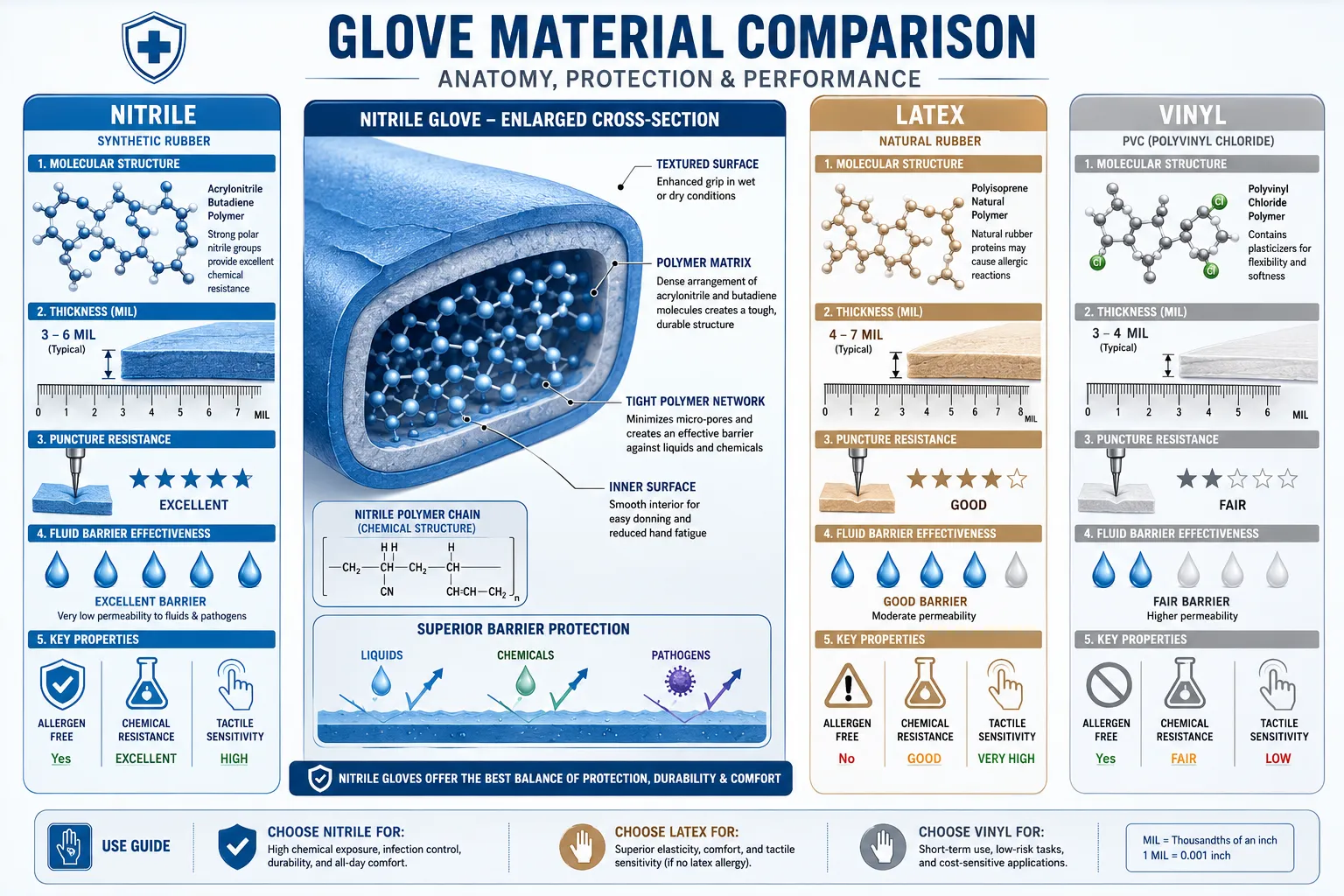
Nitrile vs Vinyl Gloves for Dentistry: Which Is Better
Nitrile gloves are significantly better than vinyl gloves for dental procedures because they offer superior puncture resistance, better barrier protection, and more reliable performance during clinical tasks. Vinyl gloves have limited applications in dentistry and should only be used for non-invasive procedures with minimal infection risk.
Performance comparison:
| Feature | Nitrile Gloves | Vinyl Gloves |
|---|---|---|
| Puncture resistance | Excellent – withstands sharp instruments | Poor – tears easily with sharp objects |
| Barrier protection | High – effective against bloodborne pathogens | Moderate – higher permeation rates |
| Tactile sensitivity | Good – maintains dexterity | Fair – less form-fitting |
| Durability | High – resists stretching and tearing | Low – prone to splitting |
| Chemical resistance | Excellent – resists most dental materials | Limited – degrades with some chemicals |
| Cost per glove | Higher – typically 2-3x vinyl cost | Lower – budget option |
| Appropriate uses | All dental procedures | Non-invasive exams, housekeeping only |
When vinyl might be acceptable:
Vinyl gloves have a narrow role in dental settings for tasks that don’t involve patient contact or exposure to bodily fluids:
- Administrative tasks at the front desk
- Cleaning and housekeeping duties in non-clinical areas
- Handling supplies and inventory in storage areas
- Food preparation in staff break rooms
For any procedure involving patient contact, instrument handling, or potential exposure to saliva or blood, nitrile gloves are the appropriate choice.
The fit factor:
Vinyl gloves don’t conform to the hand as well as nitrile because the PVC material is less elastic. This loose fit reduces tactile sensitivity and increases the risk of the glove catching on instruments or slipping during procedures. Dental work requires the precision that only well-fitting nitrile gloves can provide.
For a comprehensive analysis of these materials, review our detailed comparison of nitrile gloves vs vinyl gloves.
What Thickness Nitrile Gloves Do Dentists Need
Most dental procedures require nitrile gloves in the 4-6 mil thickness range, which provides the optimal balance between barrier protection and tactile sensitivity. The specific thickness depends on the procedure type, duration, and the practitioner’s preference for feel versus protection.
Thickness guidelines by procedure:
2-3 mil (thin): Rarely used in dentistry except for brief examinations where maximum tactile sensitivity is needed. These gloves offer minimal protection and tear easily with instruments.
4-5 mil (standard): The most common choice for general dental procedures including examinations, cleanings, fillings, and crown preparations. This thickness provides adequate protection while maintaining good finger sensitivity for detecting calculus, caries, and tissue changes.
6-7 mil (heavy-duty): Preferred for surgical procedures, extractions, implant placements, and any work involving significant force or prolonged instrument use. The extra thickness reduces hand fatigue and provides better protection against punctures from bone fragments and surgical instruments.
8+ mil (extra heavy-duty): Generally too thick for dental work because they significantly reduce tactile feedback. These are more appropriate for industrial or chemical handling applications.
Practical considerations:
Thicker gloves provide more protection but reduce your ability to feel subtle differences in tooth structure, tissue texture, and instrument pressure. This trade-off matters most during procedures requiring fine discrimination, such as:
- Detecting subgingival calculus during scaling
- Assessing tooth preparation margins
- Palpating tissue for abnormalities
- Performing endodontic procedures
Many experienced practitioners develop preferences based on their individual sensitivity. Some dentists with highly developed tactile skills can work effectively with 6 mil gloves, while others find that anything over 5 mil reduces their precision.
Testing approach:
Order sample packs of different thicknesses from your preferred brand and test them during various procedures over several days. Pay attention to hand fatigue, tactile feedback, and any instances of glove failure. The right thickness should feel like a natural extension of your hands rather than a barrier between you and your work.
How to Properly Sterilize Dental Nitrile Gloves
Dental nitrile gloves should not be sterilized because they are designed and regulated as single-use disposable items. The question itself reflects a misunderstanding of infection control principles in dental practice. Instead of sterilization, dental offices must focus on proper glove selection, appropriate use protocols, and correct disposal procedures.
The single-use principle:
Nitrile examination gloves are manufactured under quality standards that assume single use. The FDA, CDC, and OSHA all require that gloves be discarded after each patient contact. There is no approved method for sterilizing and reusing disposable nitrile gloves in healthcare settings.
What dental practices should sterilize:
The confusion may arise because dental practices do sterilize many items. Here’s what belongs in the autoclave:
- Reusable dental instruments (scalers, mirrors, explorers)
- Handpieces and attachments designed for reprocessing
- Surgical instruments
- Reusable impression trays
- Certain orthodontic appliances
Gloves are explicitly excluded from this list because they cannot withstand sterilization processes without material degradation.
Proper glove protocols instead:
Rather than attempting to sterilize gloves, dental practices should implement these infection control measures:
- Use appropriate gloves: Select the right type and thickness for each procedure
- Change between patients: Never wear the same gloves for multiple patients
- Change when contaminated: Replace gloves immediately if they contact non-sterile surfaces
- Inspect before use: Check for visible defects or damage before donning
- Remove properly: Use correct technique to avoid contaminating hands during removal
- Dispose correctly: Place used gloves in appropriate waste containers
Hand hygiene integration:
Effective infection control combines proper glove use with thorough hand hygiene. Wash hands before donning gloves and immediately after removing them. Gloves are a supplement to hand hygiene, not a replacement for it.
Do Nitrile Gloves Provide Enough Tactile Sensitivity for Dental Work
Modern nitrile gloves provide sufficient tactile sensitivity for virtually all dental procedures when properly fitted and of appropriate thickness. Advances in nitrile manufacturing since 2020 have produced gloves that rival or exceed latex in terms of feel and dexterity while maintaining superior puncture resistance.
Factors affecting tactile sensitivity:
Material formulation: Premium dental-grade nitrile uses advanced polymer blends that create thinner, more elastic gloves without sacrificing strength. These formulations allow the glove to conform closely to finger contours, improving sensation.
Thickness: As discussed earlier, 4-5 mil gloves offer the best balance for most procedures. Thinner gloves provide more sensation but less protection, while thicker gloves do the opposite.
Fit quality: A well-fitted glove that eliminates excess material at the fingertips dramatically improves tactile feedback. Loose gloves create a barrier between your fingers and the work surface that reduces sensitivity.
Texture: Many dental nitrile gloves feature textured fingertips that improve grip on wet instruments and tooth surfaces. This texturing can actually enhance tactile feedback compared to smooth gloves.
Real-world performance:
Dental professionals who have transitioned from latex to nitrile typically report an adjustment period of 1-2 weeks before the tactile sensitivity feels natural. After this adaptation, most practitioners find no meaningful difference in their ability to:
- Detect calculus deposits during scaling
- Feel margin lines during crown preparations
- Assess tissue texture during oral cancer screenings
- Manipulate small instruments and materials
- Perform fine suturing and surgical procedures
When sensitivity matters most:
Certain procedures demand maximum tactile feedback:
- Endodontic file manipulation
- Periodontal probing and assessment
- Caries detection by tactile examination
- Surgical flap manipulation
For these procedures, select the thinnest nitrile glove that still provides adequate protection for the task. Some practitioners keep multiple glove thicknesses available and choose based on the specific procedure requirements.
Common Mistakes When Wearing Nitrile Gloves in Dentistry
Dental professionals commonly make several errors with nitrile glove use that compromise infection control, reduce efficiency, or cause unnecessary hand fatigue. Recognizing and correcting these mistakes improves both safety and clinical performance.
Mistake 1: Wearing the wrong size
Many practitioners wear gloves that are too large because they prioritize comfort over fit. Loose gloves reduce tactile sensitivity, increase the risk of tearing during removal, and can catch on instruments. Conversely, gloves that are too tight cause hand fatigue and may tear during donning.
Solution: Test multiple sizes and brands to find gloves that fit snugly without restricting movement. Your glove size may differ between brands.
Mistake 2: Touching contaminated surfaces
Touching charts, computer keyboards, drawer handles, or other surfaces while wearing contaminated gloves spreads pathogens throughout the operatory. This is one of the most common infection control breaches in dental practices.
Solution: Establish clear zones in the operatory. Designate specific surfaces as clean or contaminated. Use barriers on frequently touched surfaces or remove gloves before touching clean areas.
Mistake 3: Not changing gloves frequently enough
Some practitioners wear the same gloves throughout a procedure, even after touching contaminated surfaces or leaving the operatory. This practice defeats the purpose of barrier protection.
Solution: Change gloves whenever you leave the patient’s immediate area, touch contaminated surfaces, or need to handle clean instruments or materials. A typical restorative procedure may require 2-3 glove changes.
Mistake 4: Improper removal technique
Removing gloves incorrectly can contaminate your hands with the pathogens the gloves were protecting you from. Common errors include pulling gloves off by the fingers or allowing the exterior surface to contact skin.
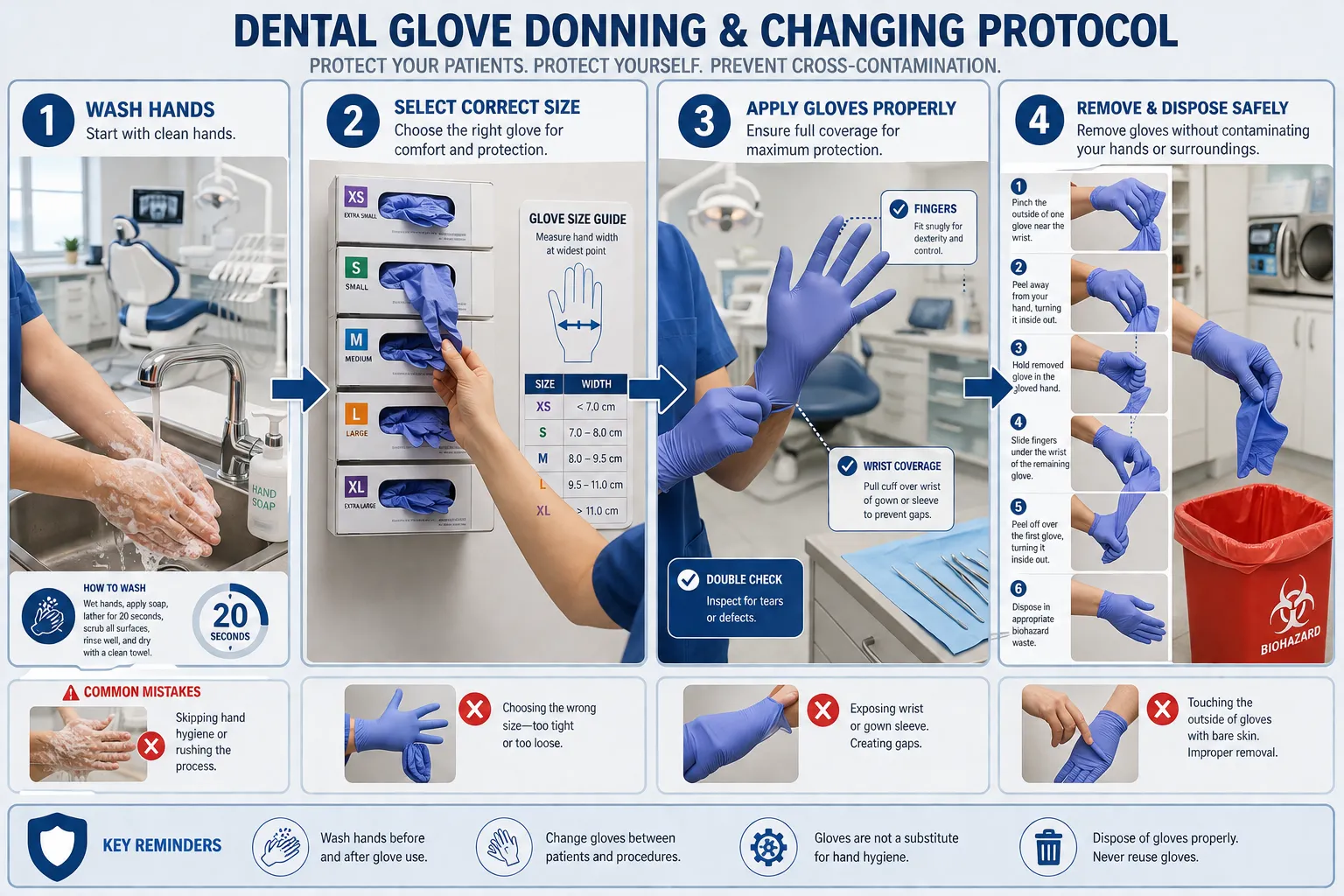
Solution: Use the proper glove removal technique: pinch the exterior of one glove near the wrist, pull it away from your hand and turn it inside out, hold the removed glove in your gloved hand, slide fingers under the wrist of the remaining glove, and peel it off while turning it inside out over the first glove.
Mistake 5: Skipping hand hygiene
Gloves create a warm, moist environment that promotes bacterial growth. Some practitioners skip handwashing before or after glove use, assuming the gloves provide complete protection.
Solution: Always wash hands before donning gloves and immediately after removing them. Gloves can have microscopic defects, and hands can become contaminated during removal.
Mistake 6: Reusing gloves
Occasionally, practitioners remove gloves to perform a task and then attempt to put the same gloves back on. This is impossible to do without contaminating the interior of the glove.
Solution: Once gloves are removed, discard them. If you need to perform a task that requires removing gloves, plan to don fresh gloves afterward.
Mistake 7: Using damaged gloves
Continuing to work with gloves that have visible tears, punctures, or degradation exposes both practitioner and patient to infection risk.
Solution: Inspect gloves before donning. If you notice damage during a procedure, stop and change gloves immediately. Keep extra gloves readily accessible in each operatory.
Are Powder-Free Nitrile Gloves Better for Dental Patients
Powder-free nitrile gloves are significantly better for dental patients and should be the standard in all dental practices. Powdered gloves, which use cornstarch to ease donning, create multiple problems in the dental environment that outweigh any convenience benefits.
Patient safety concerns:
Allergic reactions: Glove powder can absorb latex proteins (if any latex items are present in the practice) and become airborne, triggering allergic reactions in sensitized patients. Even in latex-free practices, cornstarch powder itself can cause respiratory irritation in patients with asthma or other respiratory conditions.
Wound contamination: During surgical procedures, powder from gloves can contaminate surgical sites, potentially causing granulomas, delayed healing, or increased inflammation. Studies have documented powder particles in extraction sites and surgical wounds when powdered gloves were used.
Tissue irritation: Powder residue in the mouth can cause mucosal irritation and an unpleasant taste for patients. This is particularly problematic during procedures involving soft tissue manipulation.
Aerosol concerns: Dental procedures generate aerosols that can carry glove powder throughout the operatory and into patients’ airways. This became a heightened concern during the COVID-19 pandemic and remains relevant for infection control.
Practical advantages:
Powder-free gloves offer several operational benefits:
- Cleaner work environment with less dust on surfaces and equipment
- Reduced risk of powder interfering with dental materials like bonding agents
- Better instrument grip because powder doesn’t create a slippery surface
- Easier to don with proper technique, despite the absence of powder
- Lower risk of respiratory complaints from staff
Industry standards:
Many healthcare facilities, including hospitals and surgical centers, have banned powdered gloves entirely. The FDA issued guidance in 2016 recommending against powdered surgical gloves, and many manufacturers have discontinued powdered examination gloves as well.
Cost consideration:
Powder-free nitrile gloves typically cost only slightly more than powdered versions (often less than 10% difference), making the safety and cleanliness benefits well worth the minimal additional expense.
For practices still using powdered gloves, transitioning to powder-free options should be a priority. The adjustment period is minimal, and staff typically adapt within days.
How Often Should Dentists Change Nitrile Gloves During Procedures
Dentists must change nitrile gloves between every patient, whenever gloves become torn or contaminated, and any time they leave the immediate treatment area during a procedure. The frequency of glove changes during a single patient appointment depends on the procedure complexity and the need to maintain aseptic technique.
Mandatory glove changes:
Between patients: This is non-negotiable. Never wear the same gloves for multiple patients, even if the second patient is a family member of the first or the procedures are similar.
After contamination: Change gloves immediately if they contact any non-sterile surface outside the treatment field, including:
- Computer keyboards or mice
- Drawer handles or cabinet doors
- Telephone or intercom
- Patient charts or paperwork
- Your face, hair, or clothing
When damaged: Replace gloves as soon as you notice any tear, puncture, or visible damage, no matter how small.
After extended wear: Even without visible damage, gloves should be changed after 60-90 minutes of continuous wear because microscopic stress fractures can develop.
Procedure-specific changes:
Simple examination: Typically requires one pair of gloves for the entire appointment unless contamination occurs.
Prophylaxis (cleaning): May require 1-2 glove changes if the hygienist needs to leave the operatory to retrieve supplies or document findings.
Restorative procedures: Often require 2-4 glove changes:
- Initial examination and preparation
- After handling impression materials or temporary materials
- When moving between dirty and clean phases of the procedure
- Final examination and occlusal adjustment
Surgical procedures: May require 5-10 glove changes:
- Initial setup and draping
- After administering anesthesia
- During the surgical procedure (if contamination occurs)
- When handling sutures or other materials
- Final inspection and post-operative instructions
Double-gloving considerations:
Some dental procedures benefit from double-gloving, where two pairs of gloves are worn simultaneously. This is particularly useful during:
- Oral surgery procedures
- Implant placements
- Procedures with high risk of sharp instrument contact
With double-gloving, the outer glove can be changed as needed while maintaining the inner glove as a continuous barrier. However, both pairs must be changed between patients.
Practical workflow:
Efficient glove changing requires planning. Keep glove boxes readily accessible in each operatory. Train assistants to recognize when glove changes are needed and to facilitate quick changes without disrupting procedure flow.
Can Nitrile Gloves Cause Allergic Reactions in Dental Patients
Nitrile gloves can cause allergic reactions in dental patients, but these reactions are rare and typically much less severe than latex allergies. The reactions that do occur are usually Type IV delayed hypersensitivity (contact dermatitis) rather than the immediate Type I reactions associated with latex.
Types of reactions:
Type IV hypersensitivity (contact dermatitis): This is the most common reaction to nitrile gloves. It develops 24-48 hours after exposure and presents as:
- Redness and itching at contact sites
- Dry, cracked skin
- Mild swelling
- Localized rash
These reactions are typically caused by chemical accelerators used in nitrile manufacturing (such as thiurams, carbamates, or mercaptobenzothiazoles) rather than the nitrile polymer itself.
Type I hypersensitivity (immediate allergic reaction): True allergic reactions to nitrile polymer are extremely rare. When they occur, symptoms may include:
- Hives or welts at contact sites
- Itching or burning sensation
- Swelling of lips or oral tissues
- Respiratory symptoms (very rare)
Distinguishing from irritation:
Many reactions attributed to nitrile gloves are actually irritant contact dermatitis rather than true allergies. Irritation can result from:
- Residual chemicals on glove surfaces
- Friction from poorly fitting gloves
- Moisture trapped against skin
- Pre-existing skin conditions exacerbated by glove contact
Risk factors:
Patients more likely to experience reactions to nitrile gloves include those with:
- History of contact dermatitis from other sources
- Multiple chemical sensitivities
- Occupational exposure to rubber chemicals
- Eczema or other chronic skin conditions
Management strategies:
If a patient reports a previous reaction to nitrile gloves:
- Verify the reaction type: Ask about timing (immediate vs. delayed), symptoms, and severity
- Consider alternatives: Vinyl gloves may be appropriate for low-risk procedures
- Test if necessary: For unclear cases, consider patch testing by an allergist
- Document thoroughly: Record the reaction in the patient’s chart and alert all staff
Prevention:
To minimize reaction risk:
- Use high-quality, low-allergen nitrile gloves
- Ensure gloves are powder-free to reduce chemical transfer
- Rinse gloves with water before intraoral contact if the patient has known sensitivities
- Minimize contact time when possible
For comprehensive information about nitrile allergies, see our detailed guide on allergic reactions to nitrile gloves.
What Are the Best Nitrile Glove Brands for Dental Practices
The best nitrile glove brands for dental practices in 2026 combine reliable barrier protection, consistent sizing, good tactile sensitivity, and reasonable cost. While specific brand recommendations can vary based on individual hand anatomy and preferences, several manufacturers have established strong reputations in the dental market.
Evaluation criteria:
When assessing nitrile glove brands for dental use, consider:
Quality consistency: Gloves should have uniform thickness, minimal defects, and consistent sizing across lots.
Tactile sensitivity: The material should be thin enough to maintain finger sensitivity while providing adequate protection.
Puncture resistance: Gloves must withstand contact with sharp dental instruments without tearing.
Fit and comfort: Gloves should conform to various hand shapes without causing fatigue during extended wear.
Texture: Fingertip texturing improves grip on wet instruments and tooth surfaces.
Cuff length: Adequate cuff length (at least 9.5 inches) ensures overlap with gown sleeves.
Certification: Gloves should meet ASTM D6319 standards for medical examination gloves and FDA registration requirements.
Top-tier characteristics:
Premium dental nitrile gloves typically feature:
- 4-6 mil thickness for optimal protection and sensitivity
- Powder-free formulation
- Textured fingertips for enhanced grip
- Low protein content to minimize sensitization risk
- Accelerator-free or low-accelerator formulations to reduce dermatitis risk
- Ambidextrous design for convenience
- Multiple size options (XS through XXL)
Testing approach:
Rather than relying solely on brand reputation, dental practices should:
- Order sample packs from 3-4 different manufacturers
- Have multiple practitioners test each brand during actual procedures
- Evaluate comfort, fit, tactile sensitivity, and durability
- Compare pricing for bulk orders
- Check availability and supply chain reliability
- Read reviews from other dental professionals
Budget considerations:
Glove costs vary significantly, from budget options at $8-12 per 100-count box to premium brands at $15-25 per box. The price difference often reflects:
- Manufacturing quality control standards
- Material formulation and consistency
- Defect rates
- Brand reputation and marketing costs
For most dental practices, mid-range gloves ($12-18 per box) offer the best value, providing reliable protection without unnecessary premium pricing.
Supply chain planning:
The COVID-19 pandemic highlighted the importance of supply chain resilience. Dental practices should:
- Maintain relationships with multiple suppliers
- Keep 2-3 months of glove inventory on hand
- Monitor supply chain issues that might affect availability
- Consider domestic manufacturers for more reliable supply
Do Nitrile Gloves Meet OSHA Requirements for Dental Offices
Nitrile gloves meet OSHA requirements for dental offices when they are used appropriately as part of a comprehensive bloodborne pathogen exposure control plan. OSHA’s Bloodborne Pathogens Standard (29 CFR 1910.1030) requires employers to provide suitable personal protective equipment, including gloves, but does not mandate specific glove materials.
OSHA glove requirements:
The Bloodborne Pathogens Standard requires that:
Gloves must be worn: Employers must ensure that employees use appropriate gloves when hand contact with blood or other potentially infectious materials is anticipated.
Gloves must be accessible: Gloves must be readily accessible and provided at no cost to employees.
Gloves must be appropriate: The gloves must be suitable for the task and fit properly. Hypoallergenic alternatives must be available for employees with latex sensitivities.
Gloves must be replaced: Employers must replace gloves as soon as practical when contaminated, torn, or punctured, or when their ability to function as a barrier is compromised.
Single use: Disposable gloves cannot be washed or decontaminated for reuse.
Nitrile compliance:
Nitrile examination gloves satisfy OSHA requirements when:
- They meet ASTM D6319 standards for medical examination gloves
- They are FDA-registered medical devices
- They provide an effective barrier against bloodborne pathogens
- They are available in sizes that fit all employees
- They are replaced according to infection control protocols
Documentation requirements:
To demonstrate OSHA compliance, dental practices must:
- Maintain an exposure control plan: Document how gloves fit into the overall infection control strategy
- Provide training: Ensure all employees understand proper glove selection, use, and disposal
- Keep records: Document glove purchases, training sessions, and any exposure incidents
- Offer alternatives: Provide non-latex options for employees with sensitivities
- Conduct annual reviews: Update the exposure control plan annually and whenever procedures change
Inspection considerations:
During OSHA inspections, compliance officers will verify:
- Gloves are available in all areas where exposure may occur
- Gloves are appropriate for the tasks performed
- Employees know when and how to use gloves
- Glove change protocols are followed
- Alternatives are available for latex-sensitive employees
Beyond minimum compliance:
While nitrile gloves meet OSHA’s minimum requirements, best practices in dental infection control often exceed these standards. Progressive dental practices implement protocols that include:
- Double-gloving for high-risk procedures
- Frequent glove changes during complex procedures
- Regular glove quality audits
- Staff feedback systems for glove performance
For more information on protective properties, see our guide on what nitrile gloves protect against.
Frequently Asked Questions
Can you wash nitrile gloves and reuse them in dentistry?
No, nitrile gloves cannot be washed and reused in dental settings. Washing compromises the glove’s barrier integrity, and reuse violates FDA regulations, OSHA standards, and CDC infection control guidelines. Gloves are single-use disposable items that must be discarded after each patient contact.
How long can you wear the same pair of nitrile gloves during a dental procedure?
You can wear the same pair of nitrile gloves throughout a single patient’s procedure as long as they remain intact and you don’t contaminate them by touching non-sterile surfaces. However, gloves should be changed after 60-90 minutes of continuous wear even if no visible damage occurs, and immediately if torn or contaminated.
Do nitrile gloves protect against all dental chemicals?
Nitrile gloves provide good resistance to many dental chemicals including eugenol, glutaraldehyde, and most bonding agents, but they are not universally chemical-resistant. Prolonged exposure to certain solvents and concentrated acids can degrade nitrile. Check chemical compatibility charts for specific substances and consider double-gloving or specialized gloves for extended chemical exposure.
What’s the difference between examination and surgical nitrile gloves?
Examination gloves are non-sterile, ambidextrous gloves used for routine dental procedures. Surgical gloves are sterile, anatomically designed (separate left and right), have stricter quality standards (lower AQL), and are required for surgical procedures. Most routine dental work uses examination gloves, while oral surgery requires surgical gloves.
Can nitrile gloves be used for dental radiography?
Yes, nitrile gloves should be worn when positioning sensors or film holders in patients’ mouths during radiography. However, gloves must be changed or covered with overgloves before touching the X-ray equipment controls to prevent cross-contamination. Many practices use barrier covers on sensors and equipment to minimize contamination risk.
Are black nitrile gloves as safe as blue ones for dental use?
Black nitrile gloves provide the same barrier protection as blue gloves if they meet the same ASTM standards and FDA registration requirements. The color difference is purely aesthetic. However, blue gloves may make it easier to spot blood or other contaminants, and some patients find black gloves less clinical-looking, which can be either positive or negative depending on practice philosophy.
Do nitrile gloves expire?
Yes, nitrile gloves typically have a shelf life of 3-5 years when stored properly in a cool, dry environment away from direct sunlight and ozone sources. Expired gloves may become brittle, lose elasticity, or develop increased defect rates. Check manufacturer expiration dates and rotate stock using first-in, first-out inventory management.
Can you use hand sanitizer while wearing nitrile gloves?
Hand sanitizer should not be used on nitrile gloves as a substitute for changing them. Alcohol-based sanitizers can degrade nitrile material over time, and sanitizing gloves does not eliminate pathogens trapped in microscopic defects or on textured surfaces. Always remove contaminated gloves, wash hands, and don fresh gloves rather than attempting to sanitize gloves.
What size nitrile gloves do most dentists wear?
Most male dentists wear size large or medium gloves, while most female dentists wear medium or small. However, sizing varies significantly between manufacturers, and proper fit is more important than the size label. Approximately 30-40% of dental professionals need to try multiple brands to find the best fit for their hand anatomy.
Are textured nitrile gloves better than smooth ones for dentistry?
Textured nitrile gloves are generally better for dental procedures because the texture improves grip on wet instruments and tooth surfaces. Most dental-grade nitrile gloves feature textured fingertips while keeping palms smooth for comfort. Fully textured gloves can feel rough against patients’ oral tissues, so fingertip-only texturing provides the best balance.
Can nitrile gloves prevent needlestick injuries?
Nitrile gloves provide no meaningful protection against needlestick injuries. Gloves are designed to protect against surface contamination and fluid exposure, not puncture from sharp objects. Needlestick prevention requires proper technique, safety-engineered devices, and careful handling of sharps. Never rely on gloves alone to prevent needlestick injuries.
Do dental patients need to remove jewelry before glove contact?
Patients do not need to remove jewelry from areas that will contact gloves during dental procedures. However, practitioners should remove rings, watches, and bracelets before donning gloves because jewelry can tear gloves, harbor pathogens, and prevent proper hand hygiene. Some practices require staff to remove all hand and wrist jewelry as part of infection control protocols.
Conclusion
Nitrile gloves have become the gold standard in dental practice for good reason. They eliminate latex allergy concerns while providing superior puncture resistance, excellent barrier protection against saliva and blood, and sufficient tactile sensitivity for precise clinical work. The key to maximizing their effectiveness lies in proper selection, correct usage, and strict adherence to single-use protocols.
Dental professionals should prioritize powder-free nitrile gloves in the 4-6 mil thickness range, ensuring proper fit that balances comfort with dexterity. Remember that gloves are single-use disposable items that cannot be sterilized or reused under any circumstances. Change gloves between every patient, whenever contamination occurs, and any time you leave the immediate treatment area during procedures.
Actionable next steps:
Evaluate your current gloves: Assess whether your practice is using appropriate nitrile gloves for dental procedures. If you’re still using latex or vinyl, plan a transition to nitrile.
Test multiple brands: Order sample packs from 3-4 manufacturers and have your team test them during actual procedures to find the best fit and performance for your practice.
Review protocols: Ensure all staff understand when to change gloves and proper donning and removal techniques. Consider conducting a training refresher if needed.
Audit your inventory: Check that you have adequate glove supplies (2-3 months), verify expiration dates, and establish relationships with multiple suppliers for supply chain resilience.
Document compliance: Review your exposure control plan to ensure it addresses glove selection, use, and disposal in accordance with OSHA requirements and CDC guidelines.
Optimize sizing: Make sure you have the full range of sizes available so every team member can find gloves that fit properly without compromising dexterity or comfort.
By implementing these best practices for nitrile gloves in dentistry, you’ll enhance infection control, improve clinical performance, and provide safer care for both patients and staff. The small investment in quality gloves and proper protocols pays dividends in reduced infection risk, better procedural outcomes, and peace of mind that you’re meeting the highest standards of dental practice in 2026.
SEO Meta Title: Nitrile Gloves in Dentistry: Fit, Resistance & Sterilization