Sybron’s biodegradable nitrile gloves achieved 81% degradation in just 491 days—a remarkable claim that raises critical questions about what “biodegradable” truly means in the disposable glove industry. As healthcare facilities, laboratories, and food service operations face mounting pressure to reduce environmental impact, manufacturers are racing to market eco-friendly alternatives. But do these premium-priced products deliver on their environmental promises, or are buyers paying extra for marketing hype backed by questionable science?
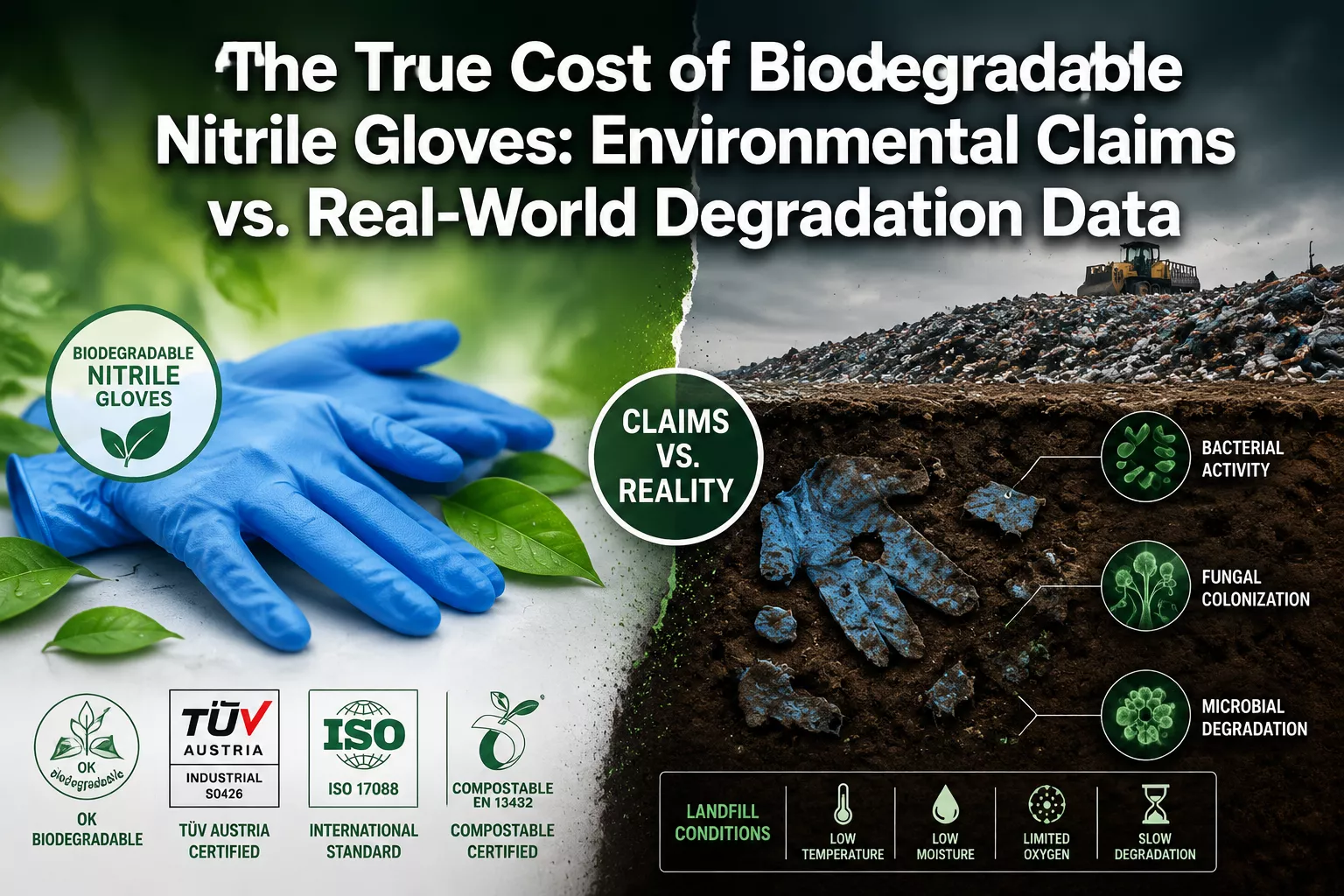
The True Cost of Biodegradable Nitrile Gloves: Environmental Claims vs. Real-World Degradation Data reveals a complex landscape where certification standards, actual decomposition timelines, and real-world landfill conditions often tell different stories than glossy marketing materials suggest.
Key Takeaways
- Biodegradable nitrile gloves claim 1-5 year breakdown versus 100+ years for conventional gloves, but results depend heavily on active landfill conditions
- ASTM D5511 and D5526 certifications provide laboratory validation, yet independent testing shows some products exhibit zero biodegradation activity
- Premium pricing ranges 15-40% higher than standard nitrile, with environmental benefits varying significantly by disposal method
- Performance characteristics remain identical to conventional gloves during use, with additives only activating post-disposal
- Real-world degradation data often contradicts manufacturer claims, highlighting the gap between controlled testing and actual landfill environments
Understanding Biodegradable Nitrile Technology
Biodegradable nitrile gloves incorporate proprietary additives—such as Eco Best Technology® (EBT) and EcoTek®—designed to accelerate microbial degradation once disposed in biologically active landfills. These additives remain dormant during the glove’s functional life, maintaining the same durability, thickness, and protective qualities users expect from standard nitrile gloves.
The technology works by attracting microorganisms that break down the synthetic polymer chains into organic matter, methane, and carbon dioxide. Traditional nitrile gloves, made from petroleum-based acrylonitrile and butadiene, can persist in landfills for over 100 years without significant decomposition. 🌱
How the Additives Function
The eco-additives create a molecular structure that microbes can recognize and digest. In active landfill environments with sufficient moisture, oxygen (or anaerobic bacteria), and temperature conditions, these enhanced gloves theoretically decompose much faster than their conventional counterparts.
Key performance factors:
- Maintain ASTM D6978 and EN 374 protection standards
- Identical shelf life (typically 3-5 years)
- No compromise in puncture resistance or chemical protection
- Same tactile sensitivity for food handling and medical procedures
The True Cost of Biodegradable Nitrile Gloves: Certification Standards Explained
Understanding The True Cost of Biodegradable Nitrile Gloves: Environmental Claims vs. Real-World Degradation Data requires examining the testing protocols manufacturers use to validate their environmental claims.
ASTM Testing Standards
Two primary standards govern biodegradation claims:
| Standard | Method | Timeline | Accuracy |
|---|---|---|---|
| ASTM D5511 | Anaerobic biodegradation in accelerated landfill conditions | Faster results | Less precise |
| ASTM D5526 | High-solids anaerobic digestion | Longer testing period | More accurate |
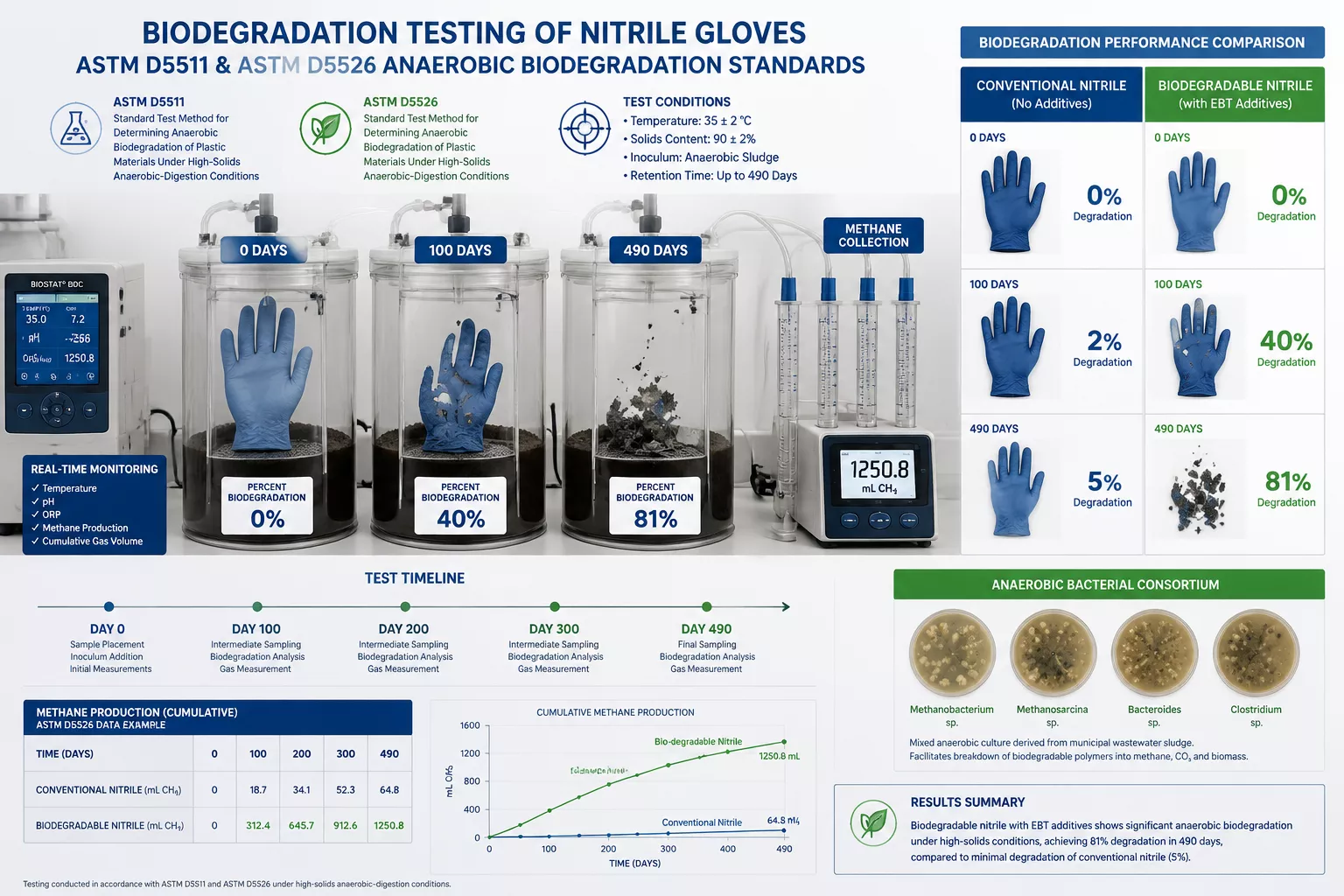
Both standards measure the conversion of organic carbon to biogas (methane and CO₂) under controlled laboratory conditions that simulate active landfills. However, these accelerated tests may not reflect real-world disposal environments where conditions vary dramatically.
Verified Performance Data
Unigloves BioTouch nitrile gloves demonstrated 81% biodegradation within 490 days when tested according to ASTM D5511, earning certification to both ASTM and EN374 medical standards with AQL 1.5 quality levels. This represents one of the most thoroughly documented cases in the industry.
Other manufacturers claim 1-5 year complete breakdown timelines, producing organic soil and biogas without toxic residues. Yet independent testing reveals significant discrepancies. 🔬
Real-World Degradation: The Gap Between Claims and Reality
The True Cost of Biodegradable Nitrile Gloves: Environmental Claims vs. Real-World Degradation Data becomes most apparent when examining independent verification studies.
Independent Testing Results
A 2023 scientific analysis revealed troubling findings: certain “biodegradable” nitrile gloves showed zero detectable biodegradation activity throughout extended testing periods. In contrast, cellulose control samples began breaking down from day one, highlighting the fundamental challenge of degrading fossil fuel-based synthetic materials.
This skepticism persists across the industry. While brands promote rapid breakdown via proprietary additives, petroleum-derived nitrile may not truly biodegrade outside highly controlled conditions with optimal microbial populations, moisture levels, and temperature ranges.
Landfill Reality Check
Most municipal landfills operate as “dry tombs” designed to contain waste, not facilitate decomposition. They lack:
- Sufficient moisture for microbial activity
- Adequate oxygen or anaerobic bacteria populations
- Consistent temperature ranges
- Regular mixing or aeration
Even biodegradable materials struggle to break down in these environments. The gloves that perform well in ASTM testing may sit intact for decades in typical landfills, undermining the environmental value proposition.
Environmental Impact: Beyond Biodegradation
The True Cost of Biodegradable Nitrile Gloves: Environmental Claims vs. Real-World Degradation Data extends beyond decomposition rates to encompass the full lifecycle environmental footprint.
Disposal Method Matters
Incineration vs. Landfill:
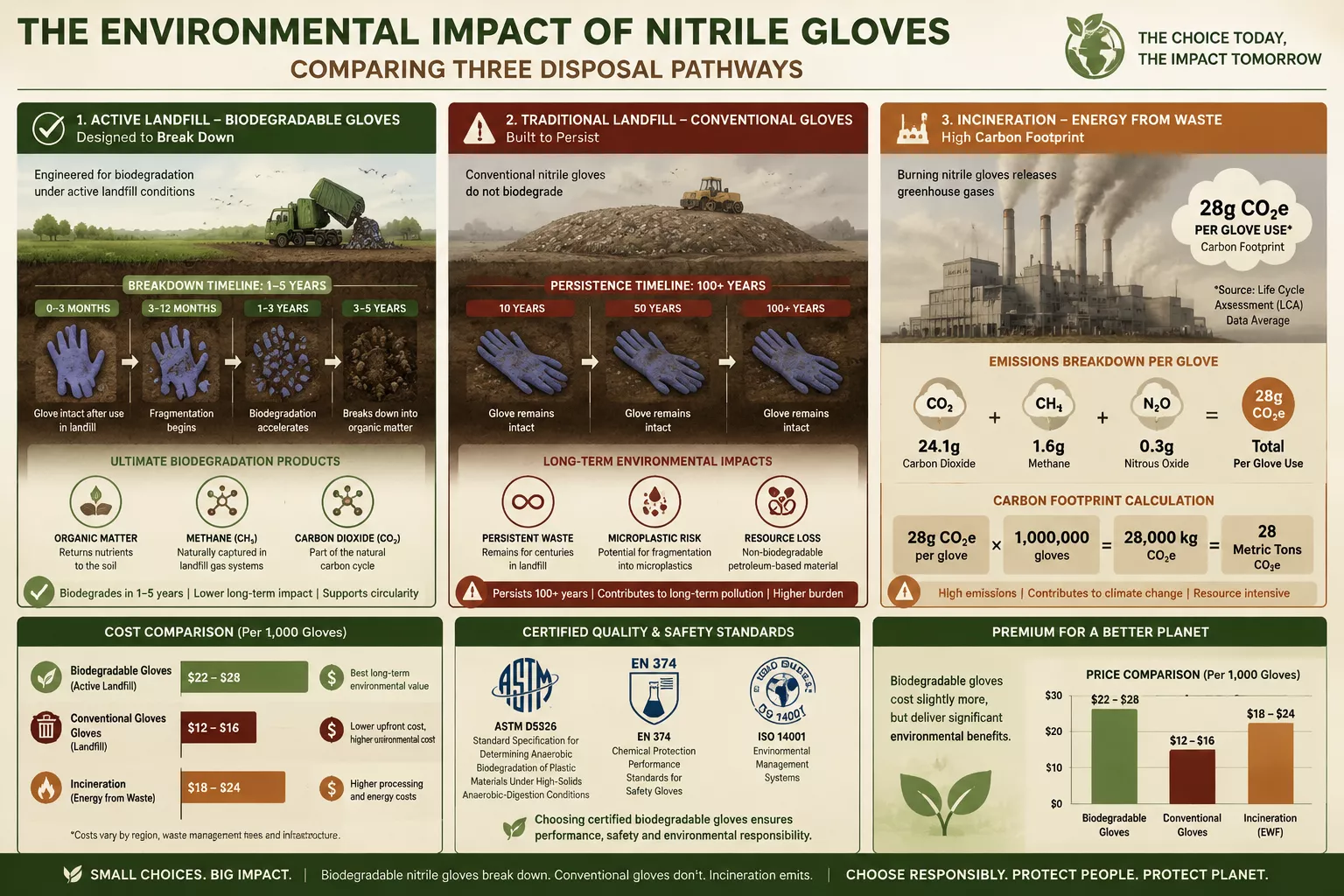
- Nitrile gloves sent to incineration emit 28g CO₂ equivalent per use
- This represents 40% higher emissions than landfill disposal
- Synthetic carbon doesn’t degrade in landfills but converts to CO₂ when burned
- Biodegradable additives offer no advantage in incineration scenarios
For facilities using nitrile gloves in healthcare or food service operations, understanding disposal pathways becomes crucial for accurate environmental impact assessment.
Manufacturing Considerations
The production of biodegradable additives requires additional chemical processing and energy inputs. While manufacturers claim these costs are minimal, comprehensive lifecycle analyses accounting for raw material extraction, additive synthesis, transportation, and end-of-life disposal remain scarce in peer-reviewed literature.
Premium Pricing Analysis
Biodegradable nitrile gloves typically cost 15-40% more than conventional options. For high-volume users—hospitals, laboratories, restaurants, tattoo studios—this premium adds up quickly.
Cost considerations:
- Box of 100 standard nitrile gloves: $8-15
- Box of 100 biodegradable nitrile gloves: $12-21
- Annual cost increase for facility using 50,000 gloves: $2,000-$3,000
Whether this premium justifies the environmental benefit depends entirely on disposal infrastructure. Facilities with access to active, well-managed landfills or composting operations may see genuine environmental returns. Those relying on dry landfills or incineration gain minimal to no benefit despite higher costs.
Making Informed Purchasing Decisions
When evaluating biodegradable nitrile gloves, consider these critical factors:
Questions to Ask Suppliers
- What specific ASTM certifications does the product hold?
- Can you provide independent third-party test results?
- What percentage biodegradation was achieved and over what timeline?
- Do the gloves maintain the same durability standards as conventional nitrile?
- What disposal infrastructure is required for optimal biodegradation?
Practical Alternatives
For organizations genuinely committed to reducing environmental impact:
- Reduce consumption through proper sizing and usage protocols
- Explore reusable options where appropriate and safe
- Verify local disposal infrastructure before investing in biodegradable products
- Calculate total lifecycle costs including disposal fees
- Consider conventional nitrile if incineration is the primary disposal method
Organizations using gloves for specialized applications should prioritize protection and performance while implementing waste reduction strategies that deliver measurable environmental benefits.
Conclusion
The True Cost of Biodegradable Nitrile Gloves: Environmental Claims vs. Real-World Degradation Data reveals a market where impressive laboratory results don’t always translate to real-world environmental benefits. While products like Unigloves BioTouch demonstrate legitimate 81% degradation in controlled conditions, independent testing shows other “biodegradable” options exhibit zero breakdown activity.
The premium pricing—15-40% above standard nitrile—may be justified for facilities with access to active landfills where microbial degradation can occur. However, for organizations using dry landfills or incineration, conventional nitrile gloves paired with waste reduction strategies often represent a more cost-effective and honest approach to environmental responsibility.
Action steps for buyers:
✅ Request third-party ASTM D5511 or D5526 test results before purchasing
✅ Audit your facility’s actual disposal methods and infrastructure
✅ Calculate total cost of ownership including premium pricing and disposal fees
✅ Implement glove usage protocols to reduce overall consumption
✅ Stay informed about emerging technologies and independent verification studies
The biodegradable glove market continues evolving, but until disposal infrastructure catches up with manufacturer claims, buyers should approach environmental marketing with healthy skepticism and demand transparent, verifiable data. The true environmental cost extends far beyond the landfill—it includes the premium paid for products that may not deliver promised benefits in real-world conditions.