Healthcare workers and industrial professionals wearing gloves for 10 to 12 hours daily face a critical challenge: hand fatigue, reduced dexterity, and premature glove failure can compromise both safety and productivity. With the global nitrile gloves market projected to reach $57.1 billion by 2026, driven by a 23.3% compound annual growth rate, the demand for ergonomic solutions specifically designed for extended wear has never been more urgent. Ergonomic Nitrile Gloves: Optimizing Fit, Tensile Strength, and Donning Techniques for Long Shifts addresses this need by combining advanced material science with precision sizing and proper application methods to reduce strain and maintain protection throughout demanding work periods.
Key Takeaways
- Modern ergonomic nitrile gloves achieve tensile strengths of 31 MPa, double the ASTM D6319 minimum standard, ensuring durability during extended shifts
- Proper hand measurement and size selection (ranging from 7.5 to 10.5 inches circumference) is critical for reducing fatigue and preventing glove failure
- Advanced donning techniques, validated by ergonomic certifications, significantly reduce hand strain during repetitive glove changes
- Powder-free formulations now represent 73.9% of the market, preventing skin irritation during prolonged wear
- Next-generation materials feature 480% elongation at break, facilitating easier application and improved comfort
Understanding Tensile Strength and Material Performance in Ergonomic Nitrile Gloves
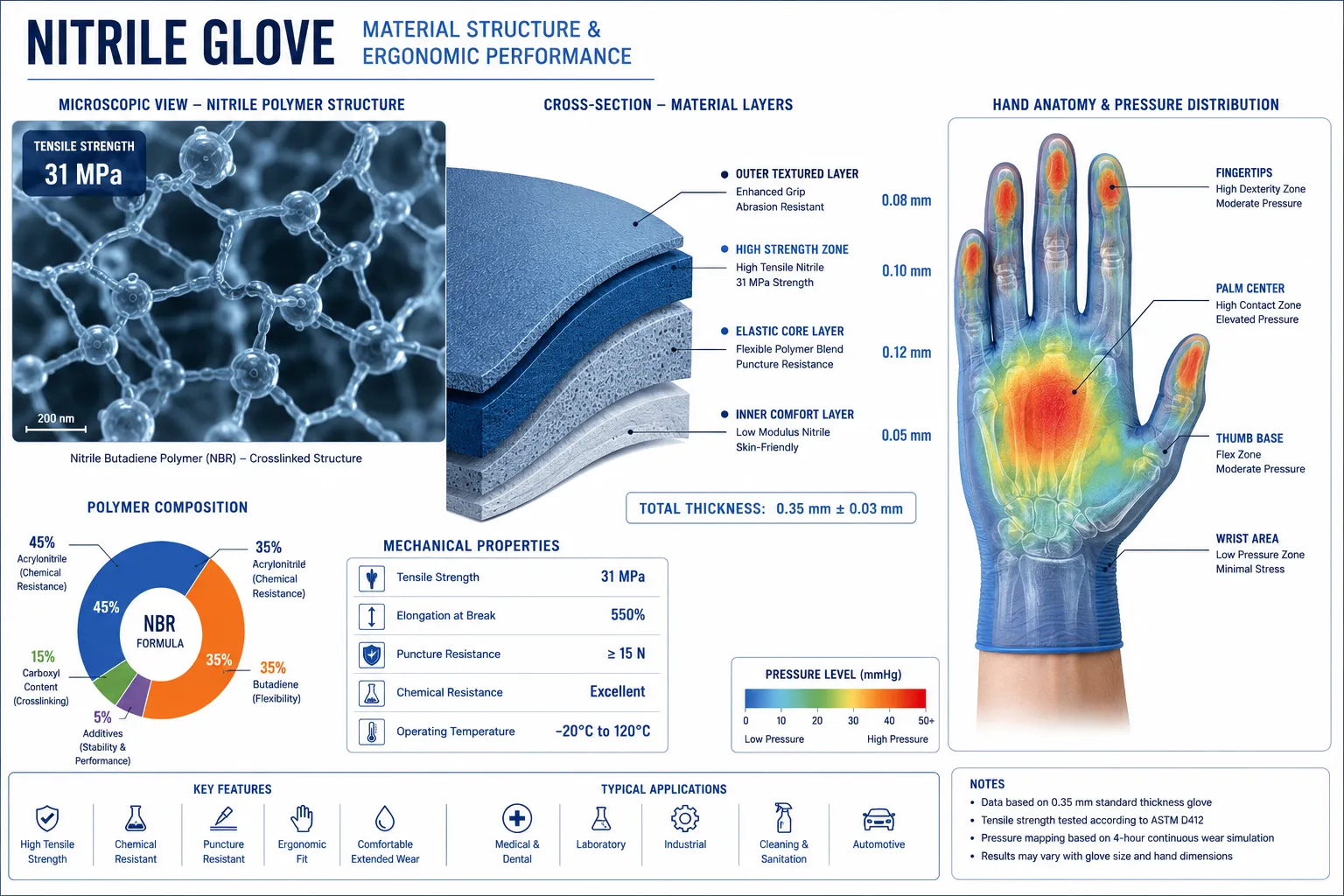
The foundation of Ergonomic Nitrile Gloves: Optimizing Fit, Tensile Strength, and Donning Techniques for Long Shifts lies in understanding the material properties that enable extended wear without compromising protection. Tensile strength, measured in megapascals (MPa), determines a glove’s resistance to tearing and puncturing under stress.
Advanced Tensile Performance Standards
The latest generation of ergonomic nitrile gloves achieves remarkable tensile strength specifications. Premium formulations now reach 31 MPa post-aging, which represents double the 14 MPa minimum required by ASTM D6319 standards. This enhanced durability directly translates to fewer mid-shift glove failures, particularly important for workers handling sharp instruments or abrasive materials.
Equally important is the elongation at break specification, which measures how much a glove can stretch before tearing. Modern ergonomic designs feature elongation rates of 480%, significantly exceeding standard requirements. This property facilitates easier donning and accommodates natural hand movements without creating stress points that lead to premature failure.
Material Composition and Chemical Resistance
Understanding what makes nitrile gloves suitable for use in oil-contaminated environments reveals why these materials excel in industrial settings. Advanced ergonomic formulations now provide protection against over 50 harsh chemicals and 24 chemotherapy drugs, triple the ASTM D6978 requirement.
For workers in specialized fields, the composition of nitrile gloves includes innovative additions like Kevlar, Dyneema, and HPPE fibers integrated with nitrile coatings. These hybrid materials enhance grip, durability, and comfort while maintaining the chemical resistance essential for long shifts in hazardous environments.
Powder-Free Formulations for Extended Comfort
The shift toward powder-free designs represents a critical advancement in ergonomic glove technology. With 73.9% of the 2026 market now powder-free, manufacturers have responded to FDA and EU regulations while addressing a primary cause of skin irritation during extended wear. Powder-free gloves eliminate the cornstarch particles that can cause dryness, allergic reactions, and contamination in sensitive environments.
For professionals concerned about latex-free disposable gloves performance in terms of durability and comfort during prolonged use, modern nitrile formulations provide superior alternatives that prevent the Type I allergic reactions associated with natural rubber latex.
Optimizing Fit: Precision Sizing for Ergonomic Performance
Proper sizing forms the cornerstone of Ergonomic Nitrile Gloves: Optimizing Fit, Tensile Strength, and Donning Techniques for Long Shifts. Incorrect sizing is the primary cause of glove failure, hand fatigue, and reduced dexterity during extended wear periods.
Hand Measurement Guidelines
To achieve optimal fit, measure hand circumference at the widest part of the palm, excluding the thumb. Industry standards recommend the following sizing:
- Small: 7.5 inches circumference
- Medium: 8 inches circumference
- Large: 9 inches circumference
- XL: 10 inches circumference
- XXL: 10.5 inches circumference
Understanding why L size nitrile gloves are so popular helps explain that large sizes accommodate the majority of adult hands while providing the balance between snugness and comfort necessary for extended wear.
Fit-Related Fatigue Factors
Gloves that are too tight restrict blood circulation and cause muscle strain, leading to numbness and reduced grip strength during long shifts. Conversely, oversized gloves create excess material that bunches at fingertips and palms, reducing tactile sensitivity and increasing the risk of snagging or tearing.
The ergonomic certification awarded to products like the Microflex XCEED glove by the United States Ergonomics organization validates designs that minimize hand strain through optimized fit parameters. These certifications consider factors including:
- Palm and finger length proportions
- Cuff length and elasticity
- Thumb positioning and flexibility
- Knuckle accommodation during flexion
Thickness Considerations for Different Applications
When exploring what is the best thickness for nitrile gloves, professionals must balance protection with tactile sensitivity. Standard disposable nitrile gloves range from 3 to 8 mils thickness:
- 3-4 mils: Maximum dexterity for precision tasks (laboratory work, electronics assembly)
- 5-6 mils: Balanced protection for general healthcare and food service
- 7-8 mils: Heavy-duty protection for industrial applications and chemical handling
For long shifts, mid-range thickness (5-6 mils) typically provides the best compromise between protection and comfort, preventing both premature fatigue from excessive material and inadequate protection from insufficient coverage.
Mastering Donning Techniques for Reduced Hand Strain
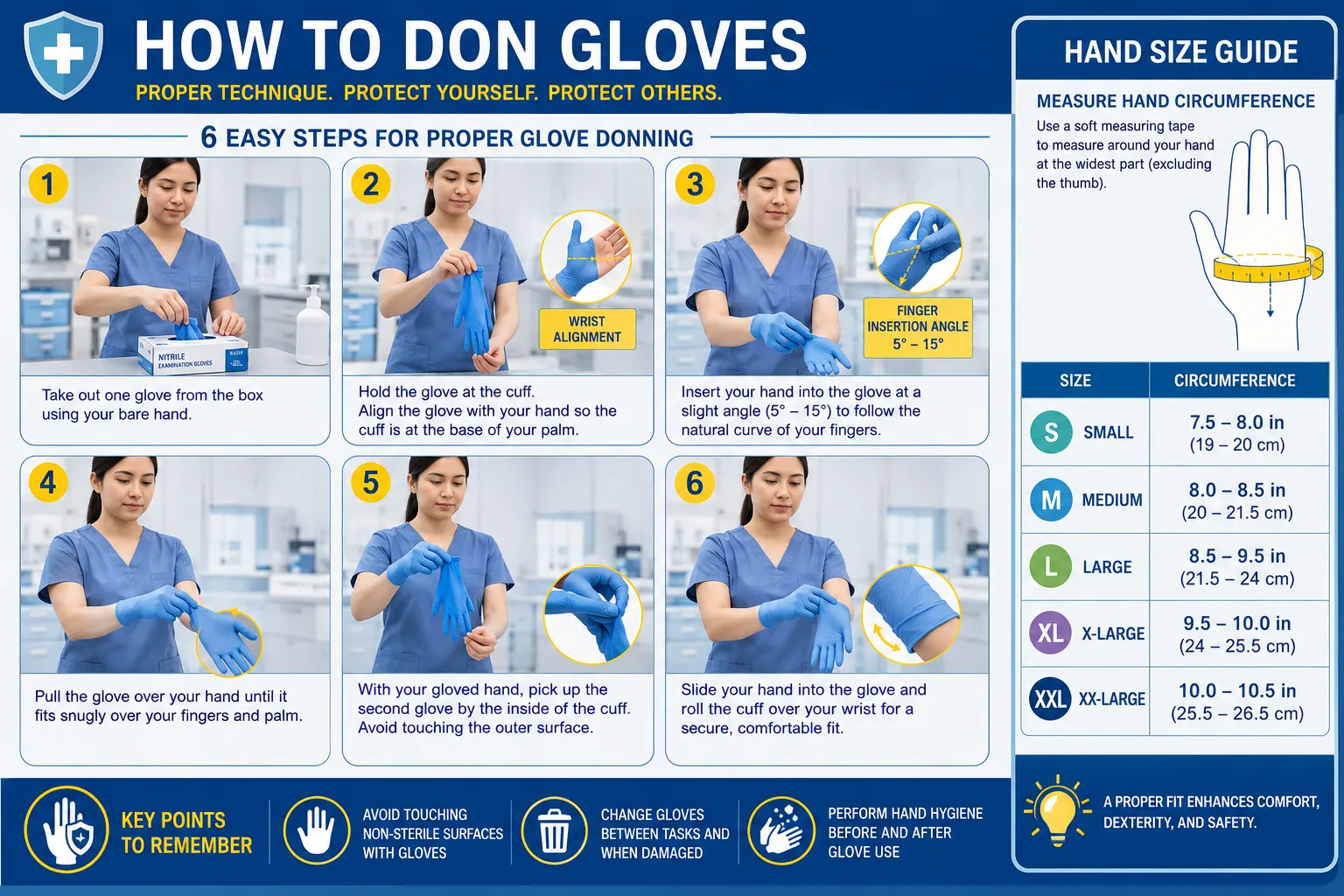
Proper donning technique significantly impacts comfort and glove longevity during extended shifts. Ergonomic Nitrile Gloves: Optimizing Fit, Tensile Strength, and Donning Techniques for Long Shifts requires mastering application methods that minimize stress on both hands and glove material.
Step-by-Step Ergonomic Donning Protocol
Step 1: Hand Preparation Ensure hands are completely dry. Moisture creates friction that makes donning difficult and can compromise glove integrity. Remove all jewelry that might puncture or stress the material.
Step 2: Initial Grip Hold the glove by the cuff with your dominant hand. Avoid gripping the glove body, which can create stress points and premature tears.
Step 3: Thumb-First Insertion Insert your thumb first, then slide remaining fingers into their respective channels. This technique, validated by ergonomic studies, reduces the twisting motion that causes material fatigue.
Step 4: Gradual Advancement Work the glove up your hand gradually rather than pulling forcefully at the cuff. Use your opposite hand to support the glove body while advancing it over your palm and wrist.
Step 5: Cuff Adjustment Once the glove is seated, adjust the cuff to ensure even coverage without rolling or bunching. The cuff should extend at least 2 inches beyond the wrist for adequate protection.
Step 6: Finger Positioning Gently work each finger to eliminate air pockets and ensure full extension. Trapped air reduces tactile sensitivity and creates pressure points during gripping motions.
Common Donning Errors That Increase Fatigue
Several frequent mistakes compromise both comfort and glove performance:
- Rushing the process: Forcing gloves on quickly creates micro-tears that propagate during use
- Using excessive force: Pulling hard on the cuff stretches the material unevenly, causing premature failure
- Ignoring air pockets: Trapped air at fingertips reduces dexterity and increases hand fatigue
- Improper cuff positioning: Rolled or bunched cuffs create pressure points that restrict circulation
Frequency of Changes During Long Shifts
Even with optimal donning technique, gloves should be changed regularly during extended shifts. Healthcare guidelines recommend:
- Every 2 hours for routine patient care
- Immediately after contact with bodily fluids or hazardous materials
- After 30-45 minutes of continuous wet work
- Whenever compromised by visible tears, punctures, or contamination
For professionals working in demanding conditions, understanding demand of nitrile gloves for healthcare contexts helps explain why proper donning technique becomes even more critical when frequent changes are necessary.
Industry-Specific Applications and Considerations
Different professional environments require tailored approaches to Ergonomic Nitrile Gloves: Optimizing Fit, Tensile Strength, and Donning Techniques for Long Shifts.
Healthcare Settings
Medical professionals face unique challenges during 12-hour shifts. Sterile procedures require understanding the difference between sterile and nonsterile gloves, as sterile gloves demand more careful donning techniques to maintain aseptic conditions.
Industrial and Mechanical Work
Workers in automotive and manufacturing environments benefit from understanding what is the best mechanic nitrile gloves specifications. These applications typically require thicker materials (7-8 mils) with enhanced grip texturing to maintain tool control during extended operations.
Food Service and Processing
Food industry professionals must consider 14 things to think about when buying gloves for food handling, including FDA compliance, allergen considerations, and temperature resistance for both hot and cold environments.
Addressing Allergic Reactions and Skin Sensitivity
While nitrile gloves are latex-free, some individuals experience reactions to accelerators and other chemical additives used in manufacturing. Understanding potential allergic reactions to nitrile gloves helps professionals identify symptoms early and switch to hypoallergenic formulations designed for sensitive skin.
For those experiencing issues, exploring the best disposable gloves for sensitive skin reveals alternatives with reduced chemical accelerators and enhanced moisture-wicking properties that minimize irritation during long shifts.
Cost Efficiency and Performance Trade-offs
Rising cost pressures in the disposable glove market during 2026 have driven manufacturers to focus on high-performance, long-lasting formulations. While premium ergonomic nitrile gloves carry higher upfront costs, their superior tensile strength and durability reduce replacement frequency, ultimately lowering total cost per shift.
Organizations should calculate cost efficiency based on:
- Gloves used per shift (standard vs. ergonomic formulations)
- Downtime from hand fatigue (reduced productivity with inferior gloves)
- Injury and contamination incidents (costs associated with glove failures)
- Worker satisfaction and retention (comfort impacts long-term employment)
Future Innovations in Ergonomic Glove Design
As demonstrated at industry exhibitions like Hospitalar 2026, manufacturers continue advancing ergonomic designs. Current innovations focus on integrating function, feel, and protection through:
- Smart materials that adapt to hand temperature and moisture levels
- Antimicrobial coatings that reduce bacterial growth during extended wear
- Biodegradable formulations that maintain performance while addressing environmental concerns
- Customizable sizing using 3D hand scanning technology for perfect fit
Conclusion
Ergonomic Nitrile Gloves: Optimizing Fit, Tensile Strength, and Donning Techniques for Long Shifts represents a comprehensive approach to hand protection that addresses the specific challenges faced by professionals working extended hours in demanding environments. By selecting gloves with superior tensile strength (31 MPa or higher), ensuring proper fit through accurate hand measurement, and mastering ergonomic donning techniques, workers can significantly reduce hand fatigue while maintaining the protection necessary for safe operations.
The shift toward powder-free, latex-free formulations with enhanced elongation properties (480% or greater) provides the foundation for comfortable extended wear. Combined with proper sizing guidelines and validated donning protocols, these advances enable professionals to maintain dexterity, comfort, and protection throughout 10 to 12-hour shifts.
Actionable Next Steps:
- Measure your hand circumference accurately and verify you’re using the correct glove size
- Evaluate your current gloves’ tensile strength specifications against the 31 MPa benchmark
- Practice the six-step ergonomic donning technique to reduce application stress
- Establish a regular change schedule appropriate for your work environment
- Monitor for signs of hand fatigue or skin irritation that indicate fit or material issues
- Consider upgrading to ergonomically certified gloves if experiencing persistent discomfort
By implementing these strategies, professionals across healthcare, industrial, and food service sectors can optimize their hand protection while minimizing the fatigue and discomfort that compromise both safety and productivity during long shifts.
SEO Meta Title: Ergonomic Nitrile Gloves for Long Shifts: Fit & Strength