Articles

Nitrile gloves have emerged as a prominent choice for hand protection across a diverse range of industries. Their utility stems from a combination of material properties that address critical safety and performance requirements. The following discussion elaborates on the multifaceted protective benefits offered by nitrile gloves, supported by contemporary facts and information. A primary function […]

In laboratory environments, maintaining stringent safety protocols is paramount. Among the fundamental protective equipment, gloves play a crucial role in safeguarding personnel from chemical exposure, biological hazards, and other contaminants. Nitrile gloves have become the industry standard for many laboratory applications due to their balance of protection, dexterity, and cost-effectiveness. However, a comprehensive understanding of […]
Last updated: April 16, 2026 Quick Answer Unopened nitrile gloves typically expire after 3-5 years from the manufacturing date when stored properly, though premium variants can last longer. The expiration reflects the manufacturer’s guarantee of optimal performance—material integrity, chemical resistance, and barrier protection all decline over time. Storage conditions matter more than the printed date: […]

The expiration of nitrile gloves is a critical consideration for ensuring safety and efficacy across numerous professions, from healthcare and laboratory work to food service and automotive repair. While often perceived as a durable material, nitrile rubber, like most polymers, undergoes degradation over time, impacting its protective properties. Understanding the typical lifespan of nitrile gloves, […]

Quick Answer Nitrile gloves outperform latex in puncture resistance, chemical protection, and allergy safety, making them the preferred choice for most medical, industrial, and food handling applications. Latex gloves offer superior tactile sensitivity and elasticity for precision work but carry significant allergy risks affecting up to 17% of healthcare workers. Choose nitrile for durability and […]

The selection of appropriate protective gloves is a fundamental consideration for a multitude of professional and personal applications. Primarily, the choice often narrows to two common materials: nitrile and latex. While both serve the basic function of a barrier against contaminants, their inherent properties diverge significantly, impacting safety, user comfort, and the protective capabilities offered. […]

Article Introduction Disposable gloves act like small safety shields for every hand. In hospitals, kitchens, salons, and factories, those shields work all day to block blood, food juices, hair color, grease, and harsh cleaners. When a glove holds, people stay safe and work stays on track. When it fails, exposure happens fast, so picking nitrile, […]
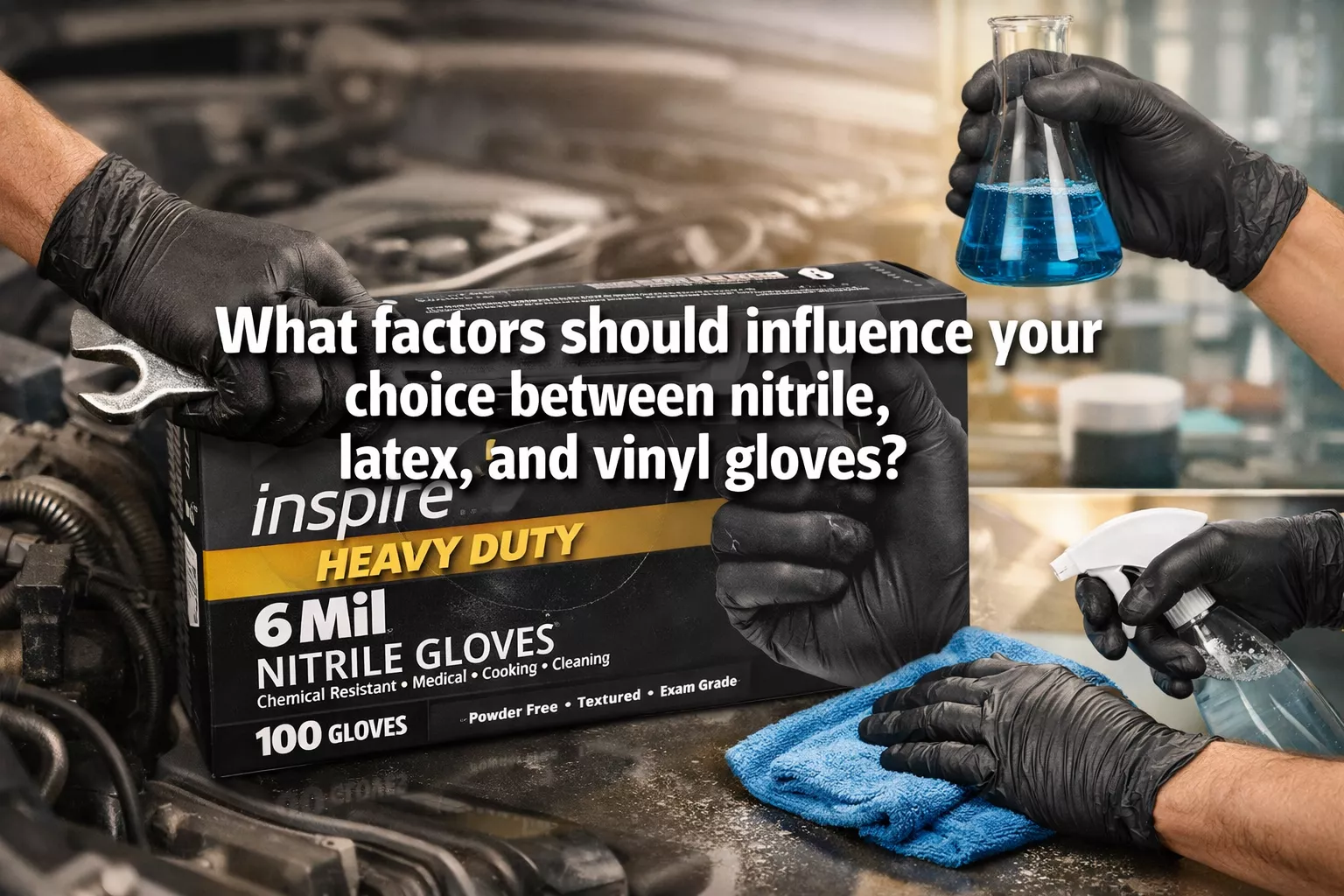
Last updated: April 12, 2026 Quick Answer The Inspire Black Nitrile Gloves are 6 mil heavy-duty disposable gloves designed for chemical resistance, medical use, cooking, and cleaning tasks. At $14.44 for a box, they offer thicker protection than standard 4 mil gloves, making them suitable for demanding applications where puncture resistance and chemical exposure are […]
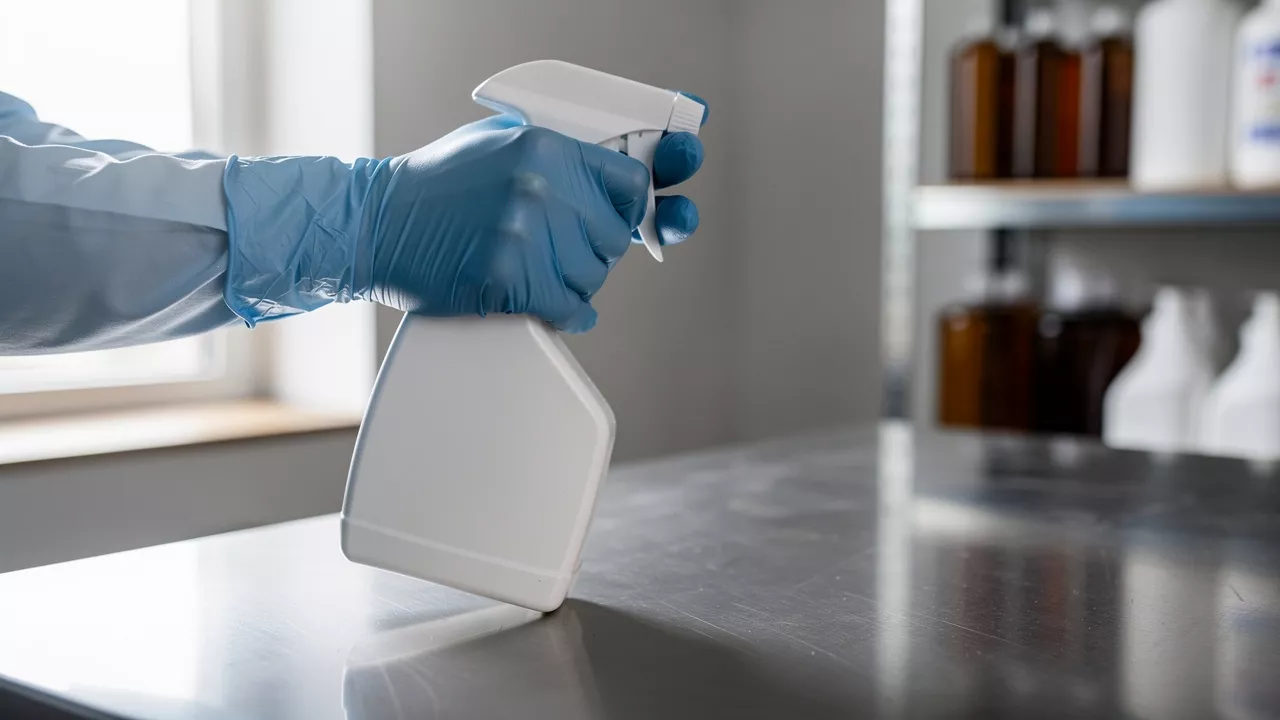
Introduction A bottle of bleach on the cart, a spray of acidic bathroom cleaner in hand, and a box of blue gloves on the shelf. Many workers pause and wonder whether those thin disposable nitrile gloves really stand up to all these strong cleaners. The relationship between disposable nitrile gloves and pH is not as […]