Article Introduction
Disposable gloves act like small safety shields for every hand. In hospitals, kitchens, salons, and factories, those shields work all day to block blood, food juices, hair color, grease, and harsh cleaners. When a glove holds, people stay safe and work stays on track. When it fails, exposure happens fast, so picking nitrile, latex, or vinyl gloves really matters.
Each glove material has clear strengths and clear limits:
Nitrile gloves stand out for strength and chemical resistance.
Latex gloves are known for comfort and a second‑skin feel.
Vinyl gloves keep costs low but offer the weakest barrier.
Choose poorly and safety or comfort can suffer. Thoughtful selection protects skin, reduces waste, and saves time on every shift.
This guide looks at four main factors that drive the right glove choice:
protection level
allergy and skin risk
industry and task fit
cost, comfort, and fit
With clear facts on each, it becomes much easier to match gloves to real tasks. Nitrile Gloves Info brings together expert data and field feedback to support that choice, helping you pick the best glove material for every shift and setting.
How Do Nitrile, Latex, And Vinyl Gloves Differ In Protection?
Protection comes first, because a glove that tears or soaks through is useless. The key test is how well the material blocks punctures, rips, and chemicals. Nitrile, latex, and vinyl behave very differently in real use, so understanding those gaps helps managers choose a safe base material before they even compare brands.
As many infection‑control trainers put it, “A glove that fails at the wrong moment is no glove at all.”
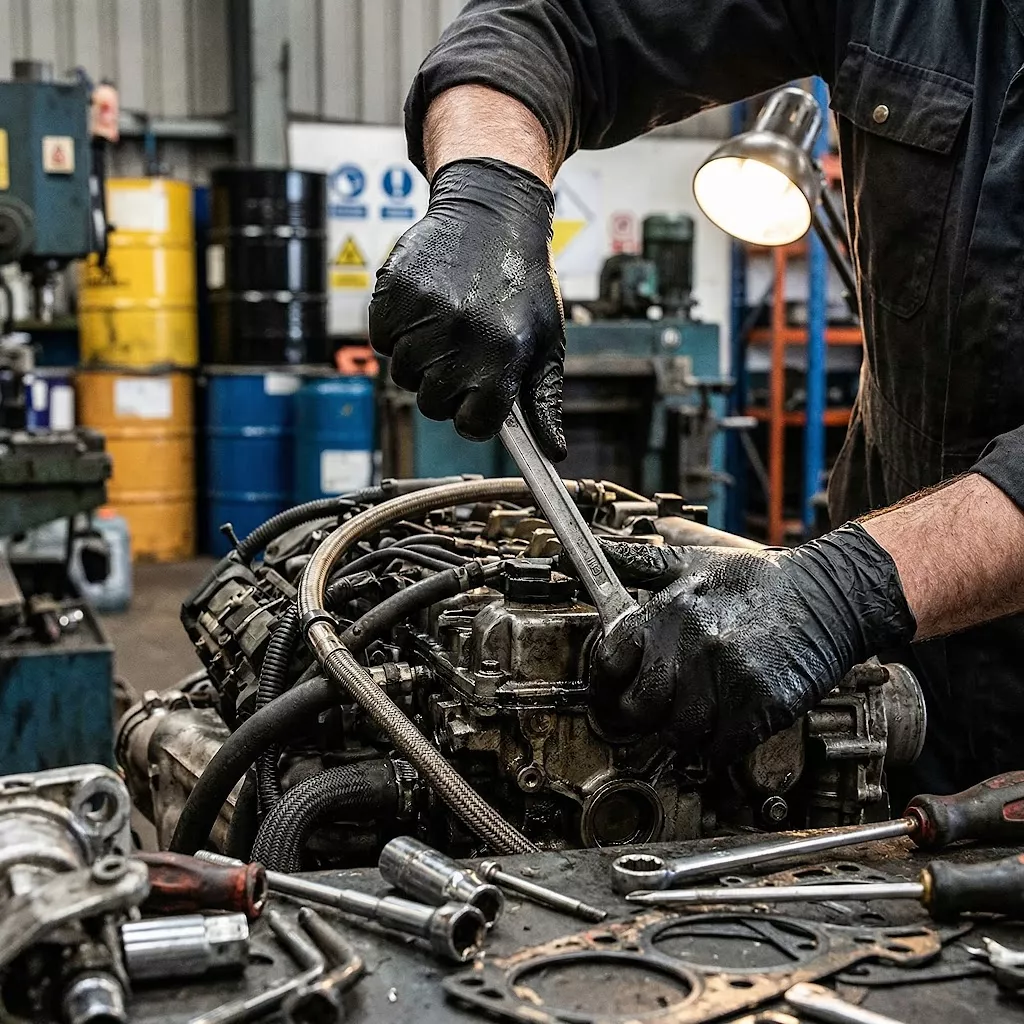
Nitrile gloves use a dense, cross‑linked synthetic rubber that resists damage. Tests from Nitrile Gloves Info show about 3.5 Newtons of puncture resistance, roughly three to five times stronger than standard latex exam gloves. Nitrile also stands up well to oils, greases, fuels, many solvents, and common acids. When a nitrile glove does tear, the rip is easy to see, so workers can change fast. For many healthcare, lab, and industrial jobs, nitrile from Nitrile Gloves Info offers strong, reliable protection.
Latex gloves form a strong shield against blood, body fluids, and many germs. They stretch well and handle light mechanical stress without tearing right away. However, natural rubber breaks down quickly in contact with oils, gasoline, and many lab chemicals. That makes latex fine for clean clinical work but poor for heavy chemical or greasy tasks, and tiny holes can hide in the stretchy surface, which makes damage harder to spot during use.
Vinyl gloves use a simple plastic film and bring the weakest barrier of the three. When vinyl stretches, the film can pull apart at a microscopic level and let liquids pass, raising the risk that microbes or chemicals reach the skin. Vinyl also tears more easily and does not handle twisting or gripping tools very well.
The table below gives a quick view of how the three materials compare on key protection points.
| Feature | Nitrile | Latex | Vinyl |
|---|---|---|---|
| Puncture resistance | Excellent | Good | Poor |
| Chemical resistance | Excellent | Fair | Poor |
| Pathogen barrier | Excellent | Excellent | Fair |
| Durability | High | Medium | Low |
What Role Do Allergies And Skin Sensitivities Play In Glove Selection?
Allergies and skin reactions can turn simple glove use into a health problem. Red, itchy hands make staff less willing to wear gloves at all, and severe reactions can even bring breathing trouble or emergency treatment. Because of this, employers need to factor allergy risk into every glove decision. Latex, nitrile, and vinyl each carry different levels of concern.
Type I latex allergy comes from proteins in natural rubber latex. Studies suggest around five to ten percent of healthcare workers react, with symptoms ranging from hives to rare, life‑threatening breathing problems. Many hospitals now cut routine latex use and shift daily work to nitrile gloves. Nitrile from Nitrile Gloves Info is fully synthetic and removes this latex protein risk.
Nitrile is latex free, so it avoids Type I latex allergy. It is the safest default when staff or clients may be sensitive, and most mixed workplaces now treat nitrile as their standard glove material.
Latex has the highest allergy rate because of its natural proteins. People can become sensitized over time even if early exposure seemed fine. For any worker with symptoms, best practice is to replace latex with nitrile.
Vinyl is also latex free and rarely causes classic allergy reactions. However, plasticizers in some vinyl gloves can move into fatty foods or onto skin, which is why food plants often require phthalate‑free vinyl or choose nitrile instead.
There is also Type IV chemical allergy linked to curing agents, which causes delayed rashes that appear hours after a shift ends. Accelerator‑free nitrile gloves help these workers stay protected without constant skin irritation.
Powdered gloves spread latex proteins through the air on tiny particles. This is why the Food and Drug Administration banned them in medical use and why powder‑free gloves are now the safer standard.

Which Glove Material Best Fits Your Industry And Task?
Protection levels and allergy risks only matter when they match real jobs. A lab tech, a meat packer, and a hair colorist do not face the same hazards, so the best choice among nitrile, latex, and vinyl gloves changes by task. Nitrile Gloves Info focuses on matching glove material and thickness to daily work demands so buyers are not guessing.
Industry-By-Industry Glove Recommendations
The guide below groups common workplaces, draws on lab tests plus field reports from staff and managers, and highlights the glove type that fits best. Use these notes as a starting point, then fine‑tune them with your own risk reviews based on contact time, exposure level, and how often gloves are changed.
Healthcare and laboratories need strong barriers against blood, body fluids, and lab agents.
Here, nitrile gloves are the main pick because they meet AQL tests and handle many chemicals; latex still appears in some surgery rooms, while vinyl is not advised for patient care.Food service and processing focus on food safety and easy glove visibility.
Blue nitrile gloves work well with oils, fats, and raw meat on lines, while vinyl can suit short, low‑risk jobs if buyers choose phthalate‑free versions.Industrial, automotive, and chemical work brings sharp tools, rough parts, and strong liquids.
Nitrile is the clear choice because it resists oils, fuels, and solvents; Nitrile Gloves Info also offers black industrial grades that hide grime during long shifts.Salon and beauty staff face hair color, bleach, toners, and nail or skin acids.
L3 level three nitrile from Nitrile Gloves Info stops color breakthrough while providing chemical resistance, all‑day comfort, and smooth touchscreen use.Janitorial and cleaning teams handle bleach, disinfectants, and contact with trash or body fluids.
Nitrile outperforms latex and vinyl because it holds up to strong cleaners; vinyl should be saved for light dusting only, not for high‑contact cleaning rounds.
How Do Cost, Comfort, And Fit Affect The Right Glove Choice?
Price per box catches attention first, but it can be misleading. Vinyl is usually the cheapest, latex sits in the middle, and nitrile costs more per glove. However, vinyl tears and fails more often, with failure rates near thirty percent. High failure means more glove changes, more waste, and more chances for bare‑hand contact. Quality nitrile gloves from Nitrile Gloves Info have failure rates under two percent, so fewer gloves are needed.
As many infection‑prevention trainers say, “Gloves are only effective when people can wear them comfortably for the whole task.”
When total cost of ownership is counted, nitrile often matches or beats cheaper vinyl. Stronger gloves last longer in each task, so fewer pairs get used in a shift, and staff lose less time stopping to change torn or soggy gloves.
Comfort then becomes the next big factor during long days on the line or in the clinic. Latex still offers the softest stretch, but modern nitrile exam gloves come close with thin walls and textured fingertips. Vinyl feels stiffest and can cause fatigue because it does not move well with the fingers.
Picking the right thickness and size helps any glove feel better and protect better. Thickness in mil balances touch feel and safety, as shown in the quick guide below. Workers with fine detail tasks often like thinner styles, while heavy industry prefers thicker, heavy‑duty grades. A tape measure across the widest part of the palm gives a good size starting point for each brand chart. Stored in a cool, dry place away from sun, nitrile can last about five years, latex three, and vinyl two to three.
| Thickness In Mil | Typical Use Case |
|---|---|
| 3 to 4 mil | Light exams, simple food prep, and other low risk fine work |
| 4 to 6 mil | Most medical, lab, and maintenance tasks that mix safety with feel |
| 6 plus mil | Heavy cleaning, strong chemicals, and rough industrial handling with tools |
Conclusion
Choosing between nitrile, latex, and vinyl gloves comes down to four checks: protection strength, allergy and skin safety, match to the job, and real‑life cost with comfort. Across those points, nitrile delivers the strongest mix of puncture resistance, chemical safety, and long wear life. Latex still has a place where touch feel is vital and no one on the team reacts to latex proteins. Vinyl works best for low‑risk, short tasks where tight budgets rule and hazards stay low.
Nitrile Gloves Info exists to make these choices clear for busy buyers and safety leaders. Its glove guides explain grades, thickness, and industry uses in plain, practical terms. When you are ready to update glove standards, start with nitrile options that match the highest‑risk work first. From advanced medical nitrile to industrial black and salon‑focused L3 gloves, there are styles for every field. Explore the Nitrile Gloves Info buying guide and product range to put the right gloves in every hand.
FAQs
Are nitrile gloves better than latex gloves?
For most tasks, nitrile gloves protect better than latex. They resist punctures more, so leaks are less likely, and they handle oils and many lab chemicals while avoiding latex proteins. Latex still feels softer, but nitrile suits most workplaces.
When should you use vinyl gloves instead of nitrile or latex?
Vinyl gloves fit short, low‑risk jobs that stay dry, such as simple food prep or quick, light cleaning. They should not touch strong chemicals, blood, or sharp tools, because vinyl can tear or leak fast. For higher‑risk tasks, pick nitrile or latex instead.
Can you use nitrile gloves if you have a latex allergy?
Yes, nitrile gloves are a top choice with latex allergy. They use synthetic rubber and contain no latex proteins, which removes the fast Type I reactions latex can trigger. Nitrile Gloves Info sells only latex‑free nitrile gloves; very sensitive users can also seek accelerator‑free nitrile styles.
What thickness of nitrile gloves do I need?
The right nitrile glove thickness depends on task and touch needs. Three to four mil fits light exams and simple food work. Four to six mil suits most clinic, lab, and shop jobs. Six mil and above fit chemicals, rough parts, and long scrubbing. If unsure, test two nearby thicknesses during real tasks.