Petrochemical facilities across North America discarded an estimated 2.3 billion disposable gloves in 2025, creating mountains of non-biodegradable waste while draining operational budgets. As heavy industry confronts both environmental accountability and cost pressures in 2026, durable reusable nitrile gloves are emerging as the practical solution that addresses both challenges. Understanding the cost savings and applications of durable reusable nitrile gloves in oil & gas and heavy industry has become essential for operations managers seeking to optimize safety budgets without compromising worker protection.

Key Takeaways
- Heavy-duty nitrile gloves deliver 3-5x greater puncture resistance than latex or vinyl alternatives, significantly reducing replacement frequency in demanding industrial environments
- Reusable nitrile gloves at 8-10 mil thickness can withstand multiple uses in oil & gas applications, cutting annual glove expenditures by 50-65% compared to disposable options
- Superior chemical resistance to petroleum products including diesel, gasoline, brake cleaner, and industrial solvents makes nitrile the preferred choice for heavy industry
- Extended shelf life and latex-free composition eliminate allergy risks while enabling cost-effective bulk purchasing strategies
- Specialized features like diamond grip textures and hi-vis colors enhance both safety compliance and operational efficiency in hazardous work environments
Understanding Durable Reusable Nitrile Gloves in Heavy Industry
What Makes Nitrile Gloves Reusable? 🔧
Unlike thin disposable variants designed for single-use medical or food service applications, heavy-duty nitrile gloves engineered for industrial reuse feature substantially thicker construction. The optimal thickness ranges from 8 mil for general maintenance tasks to 10+ mil for the most demanding applications involving sharp metal edges, hose clamps, and bolt threads.
The synthetic rubber composition of nitrile (acrylonitrile-butadiene) provides inherent advantages over natural latex, which degrades rapidly when exposed to oils and petroleum-based chemicals. This molecular structure allows properly maintained heavy-duty nitrile gloves to withstand multiple cleaning cycles and extended wear periods without compromising barrier protection.
Key durability features include:
- Reinforced palm and fingertip areas that resist abrasion from rough surfaces
- Diamond or raised texture patterns that maintain grip even when saturated with oils
- Extended cuff lengths (typically 9.5-12 inches) protecting wrists and forearms
- Powder-free design preventing contamination in manufacturing environments
For workers concerned about potential allergic reactions to nitrile gloves, it’s worth noting that true nitrile allergies remain extremely rare compared to latex sensitivities, making these gloves suitable for diverse workforces.
Performance Specifications That Matter
When evaluating durable reusable nitrile gloves for oil & gas and heavy industry applications, specific performance metrics determine real-world effectiveness:
| Performance Factor | Standard Disposable | Heavy-Duty Reusable |
|---|---|---|
| Thickness | 3-6 mil | 8-15 mil |
| Puncture Resistance | Baseline | 3-5x greater |
| Chemical Resistance | Limited duration | Extended exposure |
| Reuse Cycles | Single use | 5-20+ uses |
| Grip in Oil | Poor to moderate | Excellent |
Understanding what is the best thickness for nitrile gloves depends entirely on your specific application, but oil & gas operations consistently benefit from the 8-10 mil range that balances dexterity with protection.
Cost Savings Analysis: Durable Reusable Nitrile Gloves vs. Disposable Options
Calculating Real-World Savings 💰
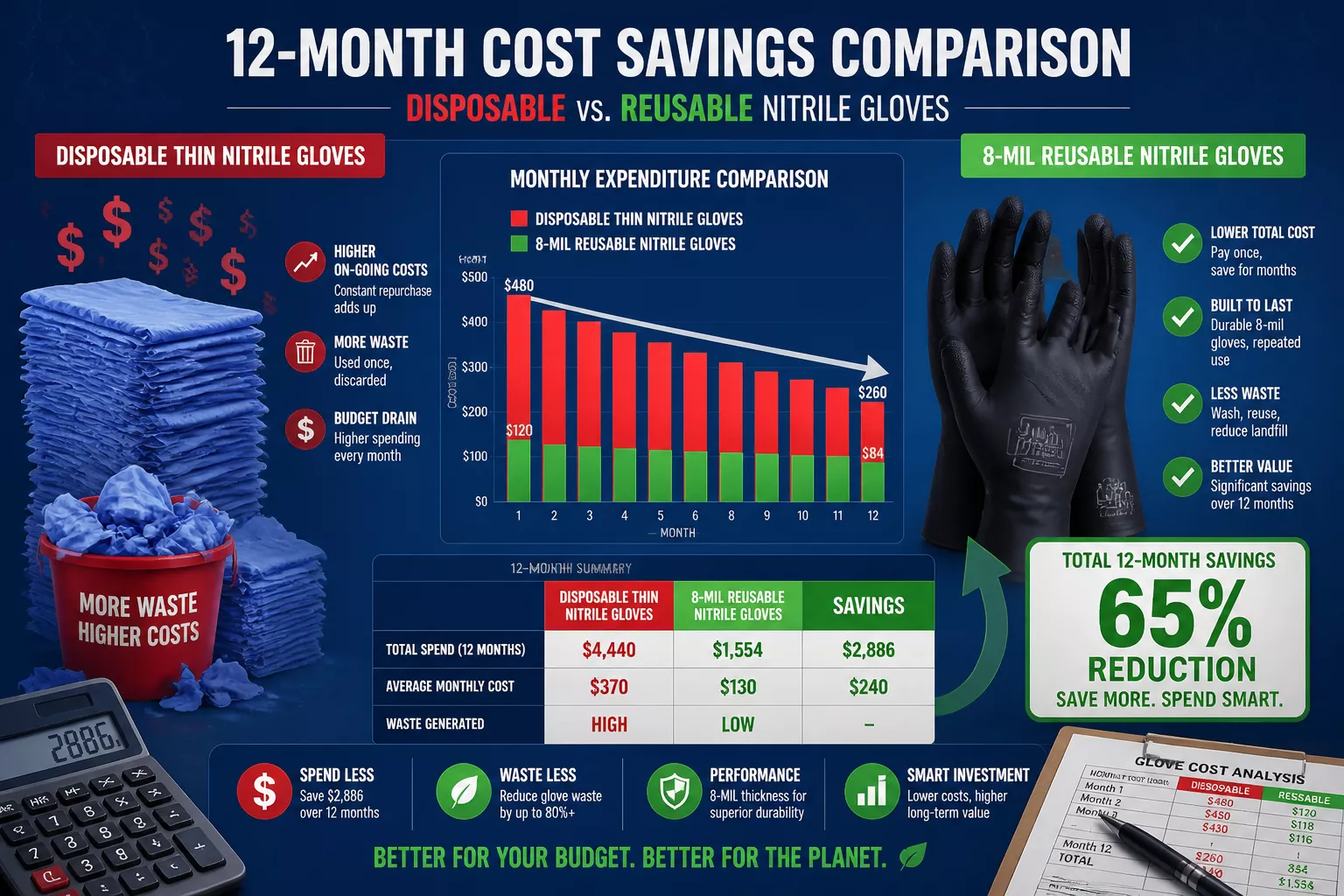
The financial case for durable reusable nitrile gloves becomes compelling when analyzing total cost of ownership rather than per-unit pricing. Consider a typical oil field maintenance crew of 25 workers:
Disposable Glove Scenario (Annual):
- Average consumption: 8 pairs per worker per day
- Working days: 250 annually
- Total pairs needed: 50,000
- Cost per pair: $0.35
- Annual expenditure: $17,500
- Waste generated: 100,000 individual gloves
Durable Reusable Glove Scenario (Annual):
- Initial pairs per worker: 3 sets
- Replacement rate: 2 additional sets per year
- Total pairs needed: 125
- Cost per pair: $12.00
- Annual expenditure: $1,500
- Waste generated: 250 gloves
This represents a 91% cost reduction in the most optimistic reusable scenario. Even accounting for more conservative replacement rates (monthly rotation), operations typically achieve 50-65% savings while dramatically reducing environmental impact.
Hidden Cost Benefits
Beyond direct purchase price comparisons, durable reusable nitrile gloves deliver additional financial advantages:
✅ Reduced procurement overhead – Fewer orders, less inventory management, simplified logistics
✅ Lower waste disposal costs – Particularly significant in jurisdictions with industrial waste fees
✅ Decreased downtime – Superior puncture resistance means fewer work interruptions from glove failures
✅ Extended shelf life – Nitrile’s stability enables bulk purchasing during favorable pricing periods without degradation concerns
✅ Compliance cost avoidance – Meeting environmental regulations without expensive waste management programs
For operations already using disposable gloves in industrial settings, transitioning to heavy-duty reusable options requires minimal training while delivering immediate budget relief.
Applications in Oil & Gas Operations

Upstream Exploration and Drilling
In drilling operations, workers encounter constant exposure to drilling muds, crude oil, diesel fuel, and hydraulic fluids. Durable reusable nitrile gloves excel in these conditions where latex would disintegrate within hours. The superior chemical resistance to petroleum solvents ensures barrier protection remains intact throughout extended shifts.
Specific upstream applications include:
- Drill pipe handling – Textured grip maintains control on oil-coated surfaces
- Equipment maintenance – Resistance to degreasers and cleaning solvents
- Valve operation – Dexterity for precision work despite heavy-duty construction
- Fuel system service – Protection against gasoline and diesel exposure
Workers operating in extreme temperatures should note that while nitrile performs well across temperature ranges, understanding the effect of cold temperature on nitrile gloves helps optimize glove selection for Arctic or winter operations.
Midstream Processing and Refining
Refinery environments present some of the most chemically aggressive conditions in heavy industry. Durable reusable nitrile gloves rated for extended chemical exposure protect workers handling:
- Crude oil fractions during distillation processes
- Caustic cleaning solutions used in equipment maintenance
- Aromatic hydrocarbons including benzene and toluene
- Acidic and alkaline process chemicals
The powder-free design of modern heavy-duty nitrile gloves prevents contamination of sensitive refining equipment while the extended cuff lengths protect against splashes during sampling and testing procedures.
Downstream Distribution and Storage
Tank farm operations, pipeline maintenance, and fuel distribution facilities benefit from the combination of chemical resistance and mechanical durability. Workers appreciate the diamond grip texture that maintains control when handling slippery fuel hoses and valve assemblies.
Black nitrile gloves remain popular in these applications as they hide grease and grime, maintaining a professional appearance throughout the workday. Alternatively, hi-vis options in safety orange or green enhance visibility for compliance with safety protocols.
Heavy Industry Applications Beyond Oil & Gas
Manufacturing and Metalworking
The same properties that make durable reusable nitrile gloves ideal for petroleum applications translate perfectly to general manufacturing environments. Metal fabrication shops, automotive assembly plants, and machinery manufacturers benefit from:
- Cut and abrasion resistance when handling sheet metal and stamped parts
- Protection from cutting fluids and metalworking lubricants
- Grip on oily components during assembly operations
- Barrier protection against industrial cleaners and rust preventatives
For automotive technicians specifically, the best mechanic nitrile gloves combine these industrial-grade features with the dexterity needed for precision work.
Chemical Processing and Pharmaceuticals
While pharmaceutical applications often require sterile disposable gloves, chemical processing facilities handling industrial-scale production benefit enormously from reusable heavy-duty nitrile protection. The broad chemical resistance spectrum covers most common industrial solvents, with specific formulations available for specialized applications.
Workers handling ketones and other aggressive solvents should verify their glove specifications match the chemical exposure profile, as breakthrough times vary with concentration and temperature.
Mining and Construction
Heavy construction and mining operations subject gloves to extreme mechanical stress. The 10+ mil thickness options in durable reusable nitrile gloves withstand:
- Concrete and masonry work – Resistance to alkaline cement mixtures
- Equipment operation – Protection from hydraulic fluids and greases
- Demolition activities – Superior puncture resistance from sharp debris
- Underground mining – Barrier protection in wet, contaminated environments
The hypoallergenic properties eliminate concerns about latex sensitivities in large, diverse workforces where allergic reactions to gloves could create liability and productivity issues.
Selecting the Right Durable Reusable Nitrile Gloves
Critical Selection Criteria 📋
Choosing optimal gloves for your specific application requires evaluating several factors:
1. Thickness Requirements
- 8 mil: General maintenance, light oil exposure
- 10 mil: Standard oil & gas operations, moderate chemical exposure
- 12-15 mil: Heavy-duty applications, maximum protection
2. Texture and Grip
- Diamond pattern: Best all-around grip in wet/oily conditions
- Raised dots: Enhanced tactile sensitivity
- Smooth finish: Maximum dexterity for precision work
3. Cuff Length
- 9.5 inches: Standard wrist protection
- 12 inches: Extended forearm coverage for splash protection
- 18+ inches: Specialized applications requiring elbow protection
4. Color Selection
- Black: Hides stains, professional appearance
- Hi-vis orange/green: Safety compliance, visibility
- Blue: Industry standard for general manufacturing
5. Certification and Standards
- ANSI/ISEA 105 cut resistance ratings
- EN 374 chemical permeation standards
- ASTM D6319 puncture resistance specifications
Maintenance and Care for Extended Life
Maximizing the reusable potential of heavy-duty nitrile gloves requires proper maintenance protocols:
Cleaning Procedures:
- Rinse immediately after use with mild soap and water
- Avoid harsh solvents that may degrade nitrile over time
- Air dry completely before storage
- Inspect for punctures, tears, or degradation before each use
Storage Best Practices:
- Store in cool, dry location away from direct sunlight
- Avoid contact with sharp objects that could cause damage
- Maintain separation from incompatible chemicals
- Rotate stock to ensure even wear across glove inventory
Replacement Indicators:
- Visible thinning or discoloration
- Loss of elasticity or stiffness
- Any punctures or tears compromising barrier protection
- Degradation of grip texture
Conclusion: Making the Switch to Durable Reusable Nitrile Gloves
The transition to durable reusable nitrile gloves represents a strategic decision that simultaneously addresses cost management, environmental responsibility, and worker safety in oil & gas and heavy industry operations. With documented cost savings ranging from 50-65% compared to disposable alternatives, combined with superior chemical and puncture resistance, the business case becomes compelling for operations of any scale.
As environmental regulations tighten and sustainability initiatives gain prominence in 2026, the waste reduction benefits of reusable gloves provide additional value beyond direct cost savings. Organizations that implement comprehensive glove management programs—including proper selection, maintenance protocols, and replacement schedules—consistently achieve the best results.
Next Steps for Implementation 🎯
For operations managers considering the switch:
- Conduct a usage audit – Document current glove consumption, costs, and waste generation
- Pilot test heavy-duty options – Trial 8-10 mil reusable nitrile gloves with a small crew
- Develop maintenance protocols – Establish cleaning, inspection, and replacement procedures
- Calculate total cost of ownership – Compare 12-month costs including all factors
- Scale successful programs – Expand deployment based on pilot results
For procurement teams:
- Request samples from multiple manufacturers for hands-on evaluation
- Verify chemical resistance specifications match your exposure profile
- Negotiate volume pricing for initial bulk purchase
- Establish vendor relationships for consistent supply
The evidence is clear: durable reusable nitrile gloves deliver measurable value in the demanding environments of oil & gas and heavy industry. Organizations that embrace this proven technology position themselves for improved safety outcomes, reduced operational costs, and enhanced environmental stewardship throughout 2026 and beyond.