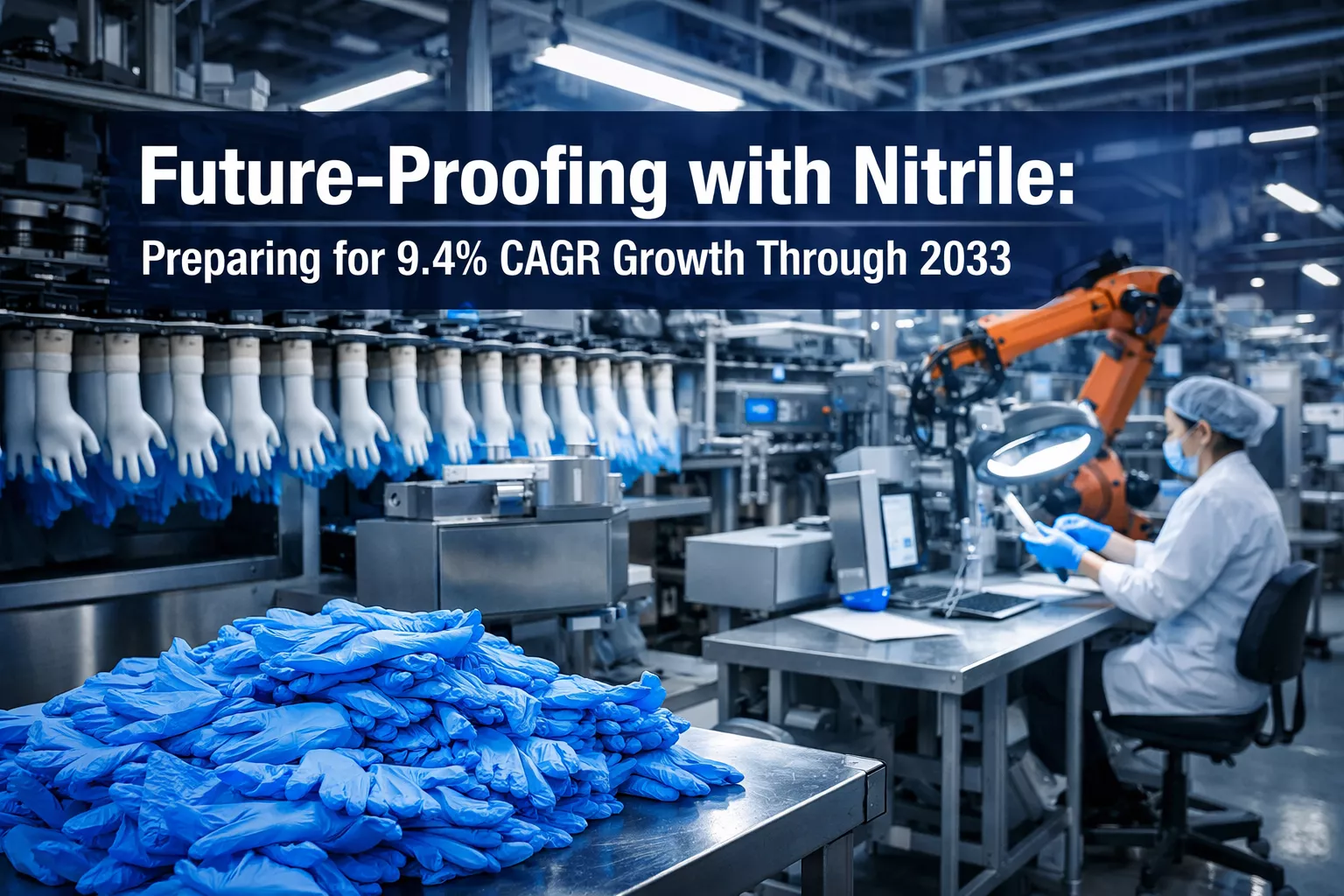
The global nitrile gloves market stands at a crossroads of unprecedented expansion, with projections showing growth from USD 6.5 billion in 2025 to USD 13.2 billion by 2033. This remarkable trajectory represents more than just numbers—it signals a fundamental shift in how industries worldwide prioritize safety, hygiene, and worker protection. Future-Proofing with Nitrile: Preparing for 9.4% CAGR Growth Through 2033 requires strategic planning, inventory optimization, and deep understanding of emerging market dynamics that will shape the next decade.
Key Takeaways
- 📈 The nitrile gloves market will grow at 9.4% CAGR from 2026-2033, reaching USD 13.2 billion
- 🌍 North America leads with 37.1% market share, while Asia Pacific shows fastest growth potential
- 💊 Pharmaceutical and healthcare sectors drive demand with 14.2% CAGR through 2033
- 🧤 Powder-free disposable gloves dominate trends, capturing 81.2% market share by 2035
- 🏭 Emerging economies present strategic opportunities for inventory expansion and market penetration
Understanding the 9.4% CAGR Growth Trajectory
The consistent 9.4% compound annual growth rate represents more than statistical projection—it reflects fundamental changes in workplace safety standards, healthcare protocols, and industrial hygiene practices. Multiple research firms converge on this growth figure, lending credibility to long-term planning strategies.
Market Size Evolution
Current valuations place the nitrile gloves market at approximately USD 6.5 billion in 2025, with steady expansion expected through 2033. This growth stems from several converging factors:
- Enhanced puncture resistance compared to latex and vinyl alternatives
- Superior chemical protection for industrial applications
- Latex allergy concerns driving healthcare facility transitions
- Regulatory compliance requirements across multiple industries
The future of disposable gloves increasingly favors nitrile formulations due to these performance advantages.
Regional Market Dynamics
North America maintains market leadership with 37.1% share, driven by robust demand from food processing, automotive manufacturing, and pharmaceutical sectors. The region’s stringent safety regulations and established healthcare infrastructure create sustained demand.
Asia Pacific emerges as the fastest-growing region, capturing 36.7% market share by 2026. This expansion reflects:
- 🏥 Healthcare system modernization
- 👴 Aging population demographics
- 🏭 Manufacturing sector investments
- 📊 Rising hygiene awareness
Understanding what is a nitrile glove helps businesses identify appropriate applications across these diverse markets.
Product Segment Trends Shaping Future Demand

Powder-Free Dominance
Powder-free nitrile gloves command the market with projected 10.2% CAGR and 81.2% market share by 2035. This dominance stems from:
- Reduced contamination risks in sterile environments
- Elimination of powder-related allergic reactions
- Technological advances in donning ease
- Regulatory preferences in healthcare settings
Organizations concerned about allergic reactions to nitrile gloves find powder-free options particularly valuable for sensitive applications.
Disposable vs. Reusable Dynamics
Disposable nitrile gloves project 9.8% CAGR from 2026-2033, reflecting hygiene-focused sector preferences. Single-use applications dominate in:
- Medical examinations and procedures
- Food handling and preparation
- Laboratory work and research
- Pharmaceutical manufacturing
The uses for nitrile gloves continue expanding as industries recognize versatility benefits.
End-Use Sector Opportunities for Future-Proofing with Nitrile
Healthcare and Pharmaceutical Leadership
The pharmaceutical end-use segment leads growth projections at 14.2% CAGR through 2033, while hospitals and clinics hold 46.5% market share in 2026. This dominance reflects:
- Stringent infection control protocols
- Increasing patient volumes globally
- Regulatory compliance requirements
- Surgical procedure growth
Specialized applications like forensic science work demonstrate nitrile’s expanding role in professional settings.
Industrial and Automotive Expansion
Beyond healthcare, industrial sectors drive significant demand:
- Automotive maintenance requiring chemical resistance
- Manufacturing with contamination control needs
- Chemical processing demanding barrier protection
- Food processing meeting safety standards
Businesses should consider what is a good thickness for nitrile gloves when selecting products for specific industrial applications.
Strategic Inventory Planning for Sustained Growth
Emerging Economy Focus
Future-Proofing with Nitrile: Preparing for 9.4% CAGR Growth Through 2033 requires targeted strategies for emerging markets:
Asia Pacific Priorities:
- Healthcare infrastructure expansion
- Manufacturing sector growth
- Rising middle-class hygiene awareness
- Government healthcare initiatives
Latin America and Middle East:
- Medical facility modernization
- Industrial safety regulation adoption
- Growing pharmaceutical sectors
- Increased healthcare spending
Inventory Optimization Strategies
Smart inventory management for sustained demand includes:
- Diversified product mix covering powder-free, textured, and various thickness options
- Regional demand forecasting based on healthcare and industrial growth patterns
- Flexible supply chain accommodating manufacturing location shifts
- Quality tier offerings from economy to premium grades
- Specialized applications for niche markets like fishing or salon services
Understanding nitrile gloves are better than latex and vinyl helps position products effectively against alternatives.
Versatility Enhancements Driving Long-Term Adoption
Material Innovation Trends
Ongoing nitrile formulation improvements enhance market appeal:
- Improved tactile sensitivity for precision work
- Extended wear comfort for prolonged use
- Enhanced grip texturing for wet conditions
- Biodegradable options addressing environmental concerns
These innovations expand applications beyond traditional sectors, creating new market opportunities.
Cross-Industry Applications
Nitrile versatility enables adoption across unexpected sectors:
- 🎨 Creative industries (tattooing, art handling)
- 🔧 Maintenance services (HVAC, electrical work)
- 🌾 Agriculture (animal handling, chemical application)
- 🏢 Office environments (cleaning, sanitation)
The secret weapon for germ-free office environments demonstrates expanding commercial applications.
Competitive Positioning for Market Leadership
Quality Differentiation
Success in the growing nitrile market requires clear quality positioning:
- Medical-grade certification for healthcare applications
- Food-safe compliance for processing facilities
- Chemical resistance ratings for industrial use
- Durability standards for demanding applications
Price-Performance Balance
Emerging economies particularly value cost-effective solutions without compromising safety. Strategic positioning includes:
- Economy tiers for high-volume, low-risk applications
- Premium options for specialized professional use
- Mid-range products balancing cost and performance
- Bulk packaging reducing per-unit costs
Risk Management and Supply Chain Resilience
Manufacturing Diversification
Future-Proofing with Nitrile: Preparing for 9.4% CAGR Growth Through 2033 demands resilient supply chains:
- Multiple manufacturing source relationships
- Regional production capacity awareness
- Raw material supply monitoring
- Geopolitical risk assessment
Regulatory Compliance Tracking
Staying ahead of evolving standards ensures market access:
- FDA and CE certification maintenance
- ASTM standard compliance
- Regional safety regulation monitoring
- Environmental regulation adaptation
Conclusion
The 9.4% CAGR growth trajectory through 2033 presents exceptional opportunities for businesses prepared to capitalize on expanding nitrile glove demand. Success requires understanding regional dynamics, particularly in high-growth Asia Pacific markets, while maintaining strategic inventory across diverse product segments. Powder-free disposable gloves will dominate, but versatility enhancements open doors to emerging applications beyond traditional healthcare and industrial sectors.
Actionable next steps for market participants:
- Assess current inventory mix against projected segment growth rates
- Develop emerging market entry strategies for Asia Pacific and Latin America
- Invest in supplier relationships ensuring powder-free product availability
- Monitor pharmaceutical and healthcare sector expansion in target regions
- Implement flexible inventory systems accommodating rapid demand shifts
- Track material innovations enabling new application opportunities
Organizations that align inventory strategies with these long-term trends position themselves for sustained success in a market projected to double in value over the next decade. The time to prepare for this growth is now—strategic planning today determines market leadership tomorrow. 🚀