Last updated: April 30, 2026
Quick Answer
Nitrile gloves provide hairdressers with superior protection against harmful salon chemicals including hair dyes, bleach, ammonia, and peroxide. These synthetic rubber gloves offer up to 99% chemical resistance, outperform latex and vinyl alternatives, and prevent dermatitis and allergic reactions caused by repeated exposure to harsh hair products. The 2025 EN ISO 374-6 standard now specifically certifies gloves for hairdressing use, ensuring adequate protection while maintaining the dexterity needed for precision work.
Key Takeaways
- Nitrile gloves protect against up to 99% of salon chemical concentrations, including hair dyes, bleach, ammonia, and peroxide
- The EN ISO 374-6:2025 standard (adopted July 2025) is the first certification designed specifically for hairdressing gloves
- Nitrile outperforms latex and vinyl in chemical resistance, puncture protection, and allergy prevention
- Replace gloves immediately when torn, punctured, or visibly stained to maintain protection
- Disposable nitrile gloves should never be reused due to chemical permeation and contamination risks
- Proper glove thickness matters: 4-6 mil provides adequate protection while maintaining tactile sensitivity
- Dermatitis prevention: Daily glove use creates a reliable barrier against skin irritation from repeated chemical exposure
- Best practice: Wear gloves during all mixing and application tasks, not just when handling concentrated products
What Harmful Chemicals Do Hairdressers Face Daily?
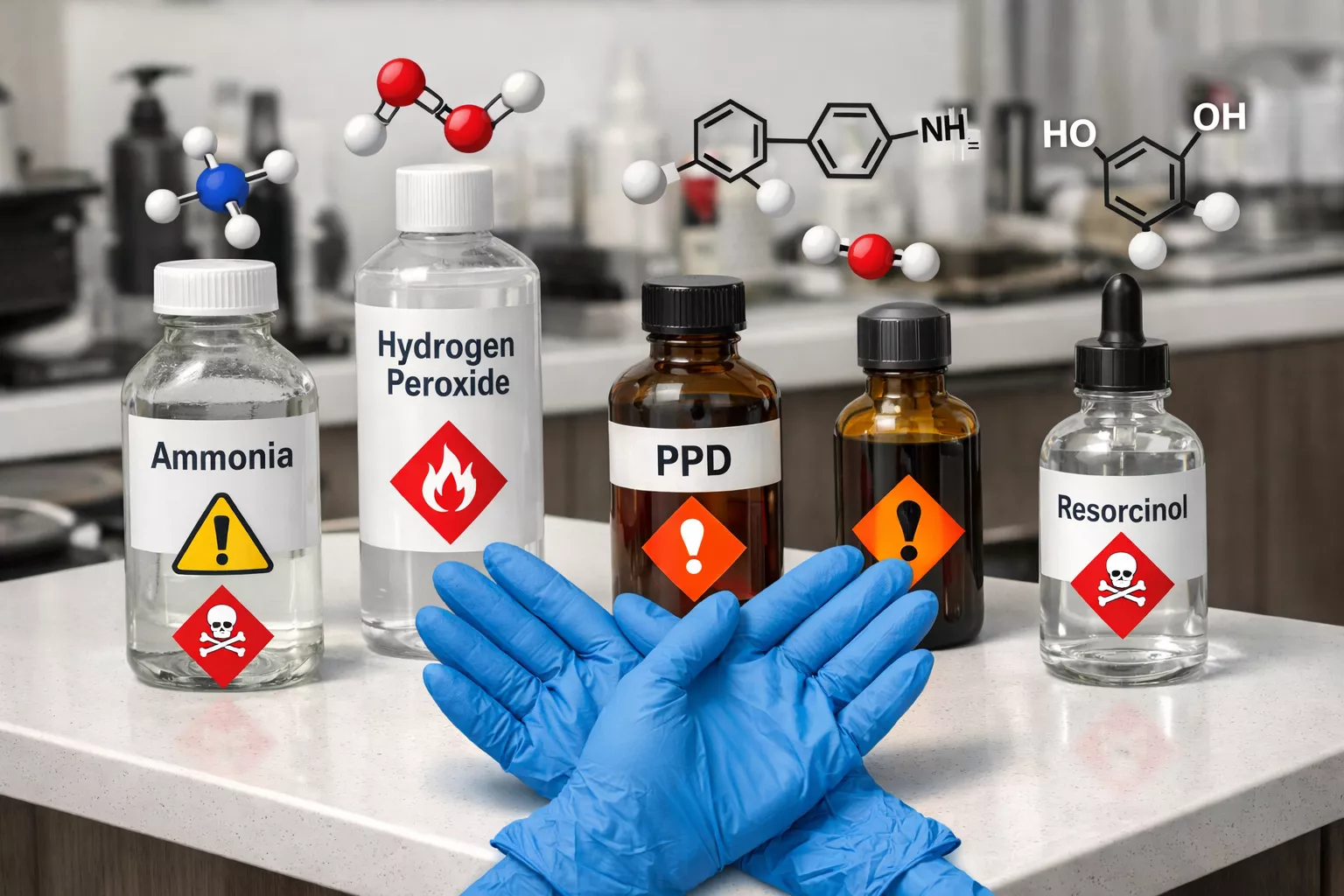
Hairdressers encounter multiple hazardous chemicals throughout their workday, primarily from hair coloring products, bleaching agents, and styling treatments. The most concerning substances include para-phenylenediamine (PPD) in permanent dyes, ammonia used to open hair cuticles, hydrogen peroxide as an oxidizing agent, resorcinol in color formulations, and thioglycolic acid in perming solutions.
These chemicals cause occupational skin diseases through repeated exposure:
- Hair dyes: Contain PPD and related compounds that trigger allergic contact dermatitis and skin sensitization
- Bleaching agents: High-concentration hydrogen peroxide (up to 40%) causes chemical burns and severe irritation
- Ammonia: Volatile alkaline compound causing skin burns, respiratory irritation, and eye damage
- Perming solutions: Thioglycolic acid breaks down skin proteins, leading to dermatitis and chemical burns
- Straightening treatments: Formaldehyde-releasing compounds pose cancer risks and respiratory hazards
A 2020 review of 44 studies confirmed that hairdressers face significant occupational chemical exposure, with skin contact being the primary route of contamination. Without proper barrier protection, these substances penetrate skin within minutes, causing immediate irritation or delayed allergic reactions that can end careers.
Common mistake: Many stylists only wear gloves when mixing concentrated products but remove them during application. Chemical exposure occurs throughout the entire coloring process, not just during mixing.
Why Are Nitrile Gloves the Best Choice for Salon Protection?
Nitrile gloves provide superior chemical resistance compared to latex and vinyl alternatives, making them the optimal choice for hairdressing professionals. Research demonstrates that nitrile rubber gloves offer the highest permeation resistance against hair dyes and salon chemicals, with protection levels reaching 99% for most common formulations.
Key advantages of nitrile gloves for hairdressers:
- Chemical resistance: Protects against dyes, bleach, ammonia, peroxide, and perming solutions
- Puncture resistance: 3-5 times more resistant to tears than latex or vinyl
- Latex-free composition: Eliminates allergic reactions from natural rubber proteins
- Oil and solvent resistance: Handles conditioning treatments and styling products without degradation
- Tactile sensitivity: Maintains dexterity for precision work like foil placement and sectioning
- Grip performance: Textured surfaces prevent slipping when handling wet hair and tools
The EN ISO 374-6:2025 standard, adopted in July 2025, specifically certifies gloves for hairdressing use. This landmark certification resulted from collaboration between trade unions, hairdressers, glove manufacturers, and researchers—marking the first time gloves were designed explicitly for salon chemical exposure.
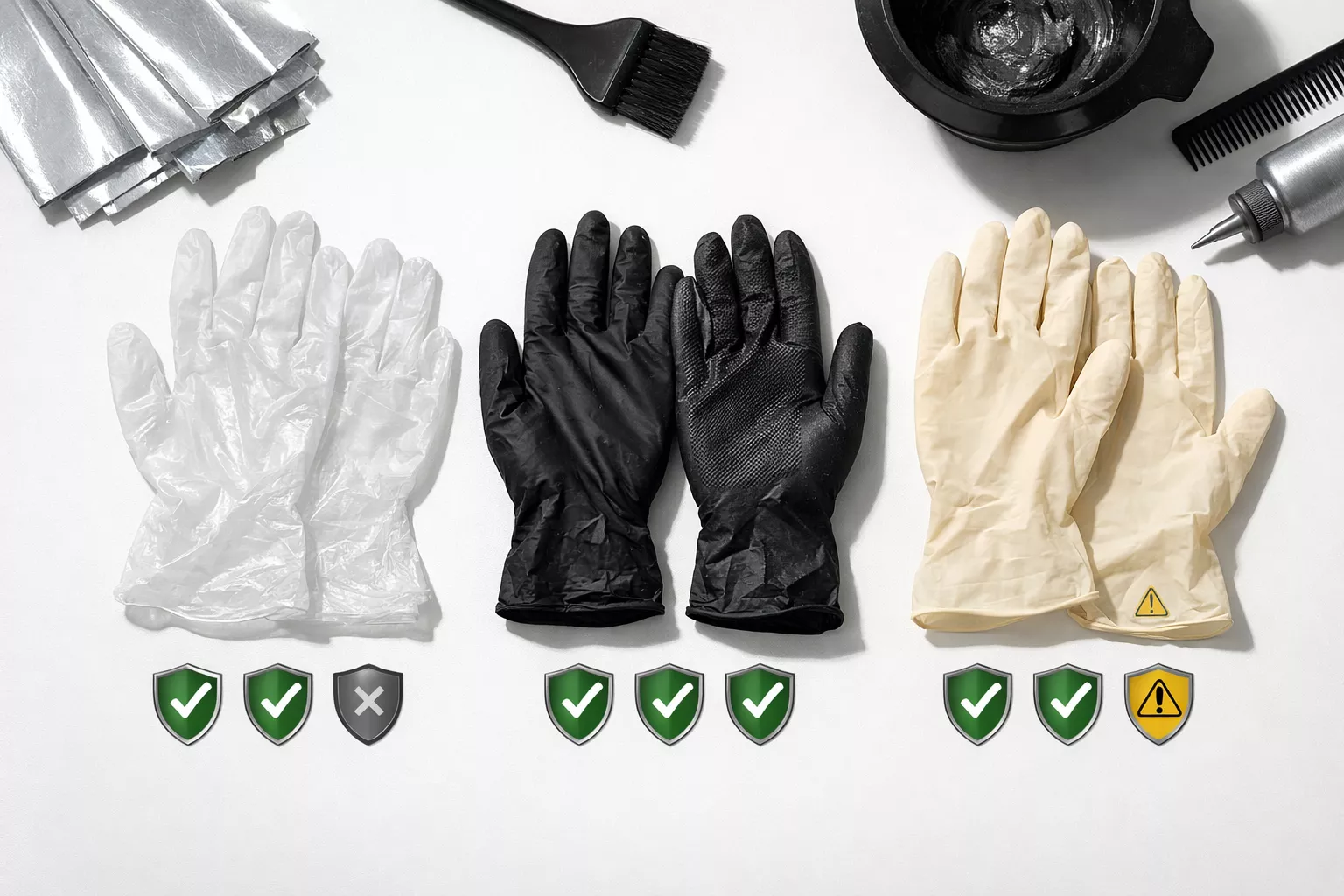
Choose nitrile over vinyl if: You work with hair dyes, bleach, or chemical treatments daily. Vinyl gloves have the lowest breakthrough time against salon chemicals and are not recommended for hairdressing.
Choose nitrile over latex if: You or your clients have latex allergies, or you experience skin irritation from repeated glove use. Latex proteins cause Type I allergic reactions with prolonged exposure.
For more details on chemical protection, see our guide on what nitrile gloves protect against.
How Do Nitrile Gloves Compare to Latex and Vinyl for Hairdressing?
Nitrile gloves consistently outperform both latex and vinyl in the specific demands of salon work. A comprehensive comparison reveals critical differences in chemical protection, durability, and safety.
| Feature | Nitrile Gloves | Latex Gloves | Vinyl Gloves |
|---|---|---|---|
| Chemical resistance | Excellent (up to 99%) | Moderate | Poor |
| Hair dye protection | Highest permeation resistance | Moderate resistance | Lowest breakthrough time |
| Puncture resistance | High | Moderate | Low |
| Allergy risk | Minimal (latex-free) | High (natural proteins) | Low |
| Tactile sensitivity | Excellent | Excellent | Fair |
| Grip when wet | Excellent | Good | Poor |
| Cost per glove | Moderate | Low | Lowest |
| Durability | High | Moderate | Low |
| Recommended for daily use | Yes | Conditional | No |
Nitrile advantages: Superior chemical barrier, no latex allergens, excellent durability for extended wear during multi-hour color services, maintains integrity when exposed to oils and solvents in conditioning treatments.
Latex limitations: Natural rubber proteins cause allergic sensitization with repeated exposure, leading to Type I hypersensitivity reactions. While latex offers good tactile feel, the allergy risk makes it unsuitable for daily professional use.
Vinyl inadequacy: Polyethylene gloves demonstrate the poorest chemical resistance in research studies. They’re appropriate only for brief, non-chemical tasks like shampooing or dry cutting—never for color services.
Edge case: Some hairdressers prefer latex for dry cutting due to superior elasticity and fit. However, this practice requires maintaining separate glove supplies and strict protocols to prevent cross-contamination with chemical services.
Learn more about material differences in our comparison of nitrile versus latex gloves.
What Thickness of Nitrile Gloves Should Hairdressers Use?
Hairdressers need nitrile gloves between 4-6 mil thickness to balance chemical protection with the tactile sensitivity required for precision work. This range provides adequate barrier protection while allowing stylists to feel hair sections, manipulate foils, and perform detailed application techniques.
Thickness guidelines for salon tasks:
- 3-4 mil (thin): Suitable for shampooing, blow-drying, and non-chemical services; maximum dexterity but minimal chemical protection
- 4-5 mil (medium): Optimal for hair coloring, highlighting, and most chemical services; balances protection and sensitivity
- 6-8 mil (thick): Best for bleach services, high-concentration peroxide, and extended chemical exposure; reduced tactile feel
- 8+ mil (heavy-duty): Unnecessary for hairdressing; compromises dexterity without additional benefit
Decision rule: Choose 4-5 mil gloves if you perform varied services throughout the day. Select 6 mil gloves if you specialize in bleach services or work primarily with high-concentration chemicals.
Glove thickness directly impacts chemical permeation resistance. Thicker gloves extend breakthrough time—the duration before chemicals penetrate the material. However, excessive thickness reduces the fine motor control needed for sectioning, foil placement, and root application.
Common mistake: Buying the thinnest gloves to save money. While 3 mil gloves cost less, they offer inadequate protection for chemical services and tear more easily, requiring frequent replacement that negates cost savings.
Pro tip: Stock both 4-5 mil gloves for standard color services and 6 mil gloves for bleach applications. This two-tier approach optimizes protection and comfort for different service types.
For detailed thickness recommendations, visit our guide on choosing the right nitrile glove thickness.
When Should Hairdressers Replace Their Nitrile Gloves?
Replace nitrile gloves immediately when they become torn, punctured, visibly stained, or after completing each chemical service. Nitrile gloves are single-use disposable items designed for one task or client, never for reuse across multiple services.
Mandatory replacement situations:
- Visible damage: Any tear, puncture, or hole compromises the entire barrier
- Chemical staining: Discoloration indicates chemical permeation has begun
- After each color service: Even intact gloves accumulate chemical residue
- Every 1-2 hours: During extended services, gloves degrade from continuous chemical contact
- When switching tasks: Remove gloves between chemical and non-chemical services
- If contaminated externally: Touching contaminated surfaces transfers chemicals to clean areas
Proper glove change protocol:
- Remove gloves carefully by peeling from wrist, turning inside-out
- Dispose immediately in designated waste container
- Wash hands thoroughly with soap and water
- Don fresh gloves before handling chemicals again
- Never touch face, phone, or clean surfaces while wearing contaminated gloves
Chemical permeation occurs even when gloves appear intact. Hair dye molecules penetrate nitrile material over time, with breakthrough times varying by chemical concentration and glove thickness. Once permeation begins, the glove no longer provides adequate protection.
Edge case: During long color services (3+ hours), change gloves at the 90-minute mark even if they appear undamaged. Extended chemical exposure degrades material integrity beyond visible signs.
Common mistake: Rinsing and reusing gloves between clients. This practice is unsafe—chemicals absorbed into the material cannot be washed out and will contact skin during subsequent wear.
Discover more about why disposable nitrile gloves are essential in beauty and personal care.
What Are the Best Practices for Using Nitrile Gloves During Hair Coloring?
Wear nitrile gloves throughout the entire hair coloring process, from mixing to final rinse, and follow strict protocols to maximize protection. Proper glove use prevents dermatitis, allergic sensitization, and chemical burns that can end hairdressing careers.
Essential best practices:
- Don gloves before mixing: Put on gloves before opening color tubes or measuring chemicals
- Inspect before use: Check each glove for tears, holes, or manufacturing defects
- Ensure proper fit: Gloves should fit snugly without restricting movement or leaving gaps at wrists
- Keep gloves on continuously: Don’t remove gloves during application, even briefly
- Avoid contaminating clean surfaces: Never touch phones, door handles, or client belongings while wearing contaminated gloves
- Change between clients: Use fresh gloves for each client, even for the same service
- Remove properly: Peel from wrist, turning inside-out to contain contamination
- Wash hands immediately: Soap and water for 20 seconds after glove removal
- Dispose correctly: Place used gloves in designated waste bins, not recycling
During mixing:
- Wear gloves before opening any chemical containers
- Mix in well-ventilated areas
- Use applicator bottles or brushes, never bare hands
- Wipe bottle exteriors before application to prevent glove contamination
During application:
- Maintain gloves throughout sectioning, application, and processing time
- Replace immediately if gloves tear during foil work
- Keep a box of gloves within arm’s reach at each station
- Use barrier cream under gloves for extended services (optional)
Common mistake: Removing gloves to answer phones or check processing time. Designate glove-free zones in the salon and use voice-activated timers to avoid contamination.
Pro tip: Choose textured or micro-roughened nitrile gloves for superior grip when handling wet hair and slippery foils. Smooth gloves may slip during application.
For specialized applications, see our guide on selecting the right nitrile gloves for specific tasks.
How Does the EN ISO 374-6:2025 Standard Protect Hairdressers?
The EN ISO 374-6:2025 standard, adopted in July 2025, establishes the first certification specifically designed for hairdressing gloves, ensuring they provide adequate chemical protection while maintaining the dexterity and tactile sensitivity professionals require. This landmark standard resulted from collaboration between trade unions, hairdressers, glove manufacturers, and occupational health researchers.
Key requirements of EN ISO 374-6:2025:
- Chemical permeation testing: Gloves must resist penetration by common hair dye chemicals including PPD, resorcinol, and ammonia
- Breakthrough time standards: Minimum resistance duration for salon chemical concentrations
- Dexterity requirements: Gloves must allow precision work like sectioning and foil placement
- Tactile sensitivity: Adequate touch perception for feeling hair texture and tension
- Grip performance: Textured surfaces for handling wet hair and tools
- Comfort specifications: Reduced hand fatigue during extended wear
- Allergen limits: Low or no chemical accelerators that cause Type IV allergies
Why this standard matters:
Before EN ISO 374-6, hairdressers relied on general-purpose gloves not tested against salon-specific chemicals. Standard industrial gloves often failed to protect against hair dye formulations or compromised the fine motor skills essential for quality work. The new standard ensures gloves meet both protection and performance requirements unique to hairdressing.
Certification benefits for salon owners:
- Verified protection: Third-party testing confirms chemical resistance claims
- Reduced liability: Demonstrates due diligence in worker protection
- Worker confidence: Staff trust certified gloves provide adequate safety
- Standardized procurement: Clear specifications simplify purchasing decisions
How to identify certified gloves:
Look for “EN ISO 374-6:2025” marking on glove boxes or product specifications. Certified gloves display this standard alongside other certifications like EN 455 (medical gloves) or ASTM standards.
Edge case: Some high-quality nitrile gloves manufactured before 2025 may meet the standard’s requirements but lack formal certification. These gloves remain effective but won’t carry the EN ISO 374-6 marking.
The standard represents a significant advancement in occupational health for beauty professionals, acknowledging the unique chemical hazards hairdressers face and providing clear protection criteria.
What Additional Protection Should Hairdressers Use with Nitrile Gloves?
Nitrile gloves provide essential hand protection but should be part of a comprehensive safety system that includes respiratory protection, proper ventilation, and skin care protocols. Complete protection addresses all exposure routes—dermal, inhalation, and ocular.
Complementary protective measures:
Respiratory protection:
- N95 masks: Filter airborne ammonia, formaldehyde, and volatile organic compounds
- Proper ventilation: Maintain legal ventilation standards; use local exhaust at mixing stations
- Air quality monitoring: Test salon air for chemical concentrations regularly
Skin protection beyond gloves:
- Barrier creams: Apply to forearms and wrists before services (under gloves)
- Long sleeves: Wear protective aprons or smocks to prevent forearm exposure
- Moisturizing routine: Use fragrance-free hand cream after each shift to maintain skin barrier
Eye protection:
- Safety glasses: Wear during mixing and application of high-concentration chemicals
- Face shields: Use for bleach services with concentrations above 30%
Workspace protocols:
- Designated glove-free zones: Keep break areas, phones, and personal items separate from chemical areas
- Hand washing stations: Accessible sinks with soap at each station
- Chemical storage: Sealed containers in ventilated cabinets away from workstations
- Spill kits: Immediate cleanup materials for chemical accidents
Training requirements:
- Proper glove donning/doffing: Train all staff on contamination prevention
- Chemical hazard awareness: Regular safety meetings on product risks
- Allergy recognition: Educate staff on early dermatitis symptoms
Common mistake: Relying solely on gloves while ignoring ventilation. Ammonia and formaldehyde vapors cause respiratory damage that gloves cannot prevent. Combine barrier protection with proper air quality management.
Decision rule: If your salon lacks adequate ventilation (windows, exhaust fans, air exchange systems), require N95 masks in addition to nitrile gloves for all chemical services.
For related protection information, see our article on nitrile gloves in beauty and personal care.
How Can Salon Owners Choose the Right Nitrile Gloves for Their Staff?
Salon owners should select nitrile gloves based on chemical resistance certification, appropriate thickness (4-6 mil), proper sizing options, and cost-effectiveness for high-volume use. The right gloves balance protection, comfort, and budget while meeting occupational safety requirements.
Selection criteria checklist:
✅ Certification: EN ISO 374-6:2025 compliance (or equivalent chemical resistance standards)
✅ Thickness: 4-6 mil for standard services; 6-8 mil for bleach specialists
✅ Sizing: Full size range (XS-XL) to fit all staff properly
✅ Texture: Micro-roughened or textured fingertips for wet grip
✅ Color: Darker colors (black, purple, blue) hide staining better than white
✅ Cuff length: Extended cuffs (9.5-12 inches) protect wrists and forearms
✅ Powder-free: Avoid powdered gloves that can irritate skin and contaminate products
✅ Latex-free certification: Verify no natural rubber proteins
✅ Ambidextrous design: Simplifies inventory and reduces waste
Cost considerations:
- Price per glove: Expect $0.08-$0.15 per glove for quality nitrile in bulk
- Usage rate: Average salon uses 20-40 gloves per stylist per day
- Bulk purchasing: Buy 1,000-2,000 glove cases for volume discounts
- Waste reduction: Proper sizing reduces accidental tears and premature disposal
Sizing guidelines:
Measure hand circumference at the widest part (across knuckles, excluding thumb):
- XS: 6-7 inches
- S: 7-8 inches
- M: 8-9 inches
- L: 9-10 inches
- XL: 10-11 inches
Trial process:
- Order sample boxes from 2-3 manufacturers
- Have staff test during actual services for one week
- Evaluate comfort, durability, and chemical resistance
- Survey staff preferences before bulk ordering
- Monitor tear rates and replacement frequency
Common mistake: Buying the cheapest gloves without testing. Low-quality nitrile tears easily, requiring frequent replacement that eliminates cost savings and frustrates staff.
Pro tip: Stock two glove types—standard 4-5 mil for general use and 6 mil for bleach services. This approach optimizes both protection and budget.
For more guidance, explore our article on the differences between thin and thick nitrile gloves.
What Are the Signs of Inadequate Glove Protection?
Recognize inadequate glove protection through visible damage, premature chemical breakthrough, skin reactions, and frequent glove failures during services. Early identification prevents occupational dermatitis and chemical injuries.
Warning signs of inadequate protection:
Physical glove failures:
- Tears or punctures within 15-30 minutes of use
- Visible staining or discoloration during application
- Gloves becoming sticky or tacky from chemical degradation
- Loss of elasticity or material breakdown
- Fingers splitting at seams during normal use
Skin reactions indicating breakthrough:
- Itching or burning sensation while wearing gloves
- Redness or irritation on hands after glove removal
- Dry, cracked skin on palms or fingers
- Contact dermatitis developing despite glove use
- Allergic reactions to hair dye chemicals
Performance issues:
- Difficulty gripping tools or foils due to poor texture
- Gloves slipping off during wet work
- Reduced tactile sensitivity affecting precision
- Hand fatigue from poor fit or excessive thickness
When to upgrade gloves:
- If gloves tear regularly: Switch to thicker material (5-6 mil) or higher-quality brand
- If skin reactions occur: Verify gloves meet EN ISO 374-6 standard; check for accelerator allergies
- If chemical staining appears quickly: Current gloves lack adequate permeation resistance
- If staff complain of discomfort: Reassess sizing and material quality
Testing glove integrity:
Perform a water test before use:
- Fill glove with water
- Hold up to light
- Look for leaks or weak spots
- Discard any glove that fails
Edge case: Some stylists develop Type IV allergies to chemical accelerators in nitrile gloves themselves (not the hair chemicals). Symptoms include delayed rash, itching, and dry skin. Switch to accelerator-free nitrile gloves if this occurs.
Action step: If more than 10% of gloves tear during normal use, your current gloves are inadequate. Immediately source higher-quality alternatives and document the issue for worker safety records.
Learn about nitrile glove allergies and symptoms to identify protection failures.
Conclusion
Nitrile gloves represent the gold standard for protecting hairdressers from harmful chemicals encountered daily in salon work. With superior resistance to hair dyes, bleach, ammonia, and peroxide—protecting against up to 99% of chemical concentrations—nitrile outperforms both latex and vinyl alternatives while eliminating latex allergy risks. The landmark EN ISO 374-6:2025 standard now provides hairdressers with certified gloves specifically designed for salon chemical exposure, ensuring adequate protection without compromising the dexterity and tactile sensitivity essential for quality work.
Immediate action steps for salon owners:
- Audit current gloves: Verify your gloves meet EN ISO 374-6:2025 or equivalent chemical resistance standards
- Stock appropriate thickness: Maintain 4-6 mil gloves for standard services and 6-8 mil for bleach work
- Ensure proper sizing: Provide XS through XL sizes so all staff achieve proper fit
- Train staff thoroughly: Implement protocols for glove use, replacement, and disposal
- Establish replacement policies: Require immediate glove changes when torn, stained, or after each service
- Combine protections: Integrate gloves with proper ventilation, N95 masks, and barrier creams
- Monitor for failures: Track tear rates and skin reactions to identify inadequate protection early
For hairdressers:
- Wear nitrile gloves throughout the entire chemical service, from mixing to rinse
- Replace gloves immediately when damaged or visibly stained
- Never reuse disposable gloves between clients or services
- Wash hands thoroughly after removing gloves
- Report skin reactions or frequent glove failures to management
- Use barrier cream and moisturizers to maintain healthy skin
The investment in quality nitrile gloves—typically $0.08-$0.15 per glove—is minimal compared to the cost of occupational dermatitis, lost work time, or career-ending chemical injuries. By implementing comprehensive hand protection protocols centered on certified nitrile gloves, salon owners protect their most valuable asset: their skilled professionals.
Don’t wait for skin problems to develop. Evaluate your current glove protection today and upgrade to certified nitrile gloves that meet the EN ISO 374-6:2025 standard. Your hands—and your career—depend on it.
Frequently Asked Questions
Can hairdressers reuse nitrile gloves between clients?
No. Nitrile gloves are single-use disposable items that must be discarded after each service. Chemicals permeate the material during use and cannot be washed out, making reuse unsafe and ineffective.
How long can you wear the same pair of nitrile gloves during a color service?
Replace nitrile gloves every 1-2 hours during extended services, or immediately if torn, punctured, or visibly stained. Chemical permeation increases with exposure time, reducing protection.
Do nitrile gloves protect against all salon chemicals?
Nitrile gloves protect against up to 99% of common salon chemicals including hair dyes, bleach, ammonia, and peroxide. However, some specialized chemicals may require specific glove materials—always check manufacturer compatibility charts.
What thickness of nitrile gloves is best for hair coloring?
Choose 4-6 mil thickness for hair coloring. This range provides adequate chemical protection while maintaining the tactile sensitivity needed for precision application and foil work.
Can you be allergic to nitrile gloves?
Yes, though rare. Some people develop Type IV allergies to chemical accelerators used in nitrile manufacturing. Symptoms include delayed rash and itching. Switch to accelerator-free nitrile gloves if this occurs.
Are black nitrile gloves better than blue for hairdressing?
Color doesn’t affect protection, but darker colors (black, purple, blue) hide chemical staining better than white or light colors, maintaining a more professional appearance during services.
Do you need to wear gloves when shampooing hair?
Gloves aren’t required for shampooing unless the client has recently had chemical services. However, wearing thin nitrile gloves protects against residual chemicals and prevents skin dryness from repeated water exposure.
How should you dispose of nitrile gloves contaminated with hair dye?
Place used gloves in designated waste bins immediately after removal. Don’t leave contaminated gloves on workstations. While nitrile gloves aren’t typically hazardous waste, check local regulations for chemical-contaminated materials.
Can nitrile gloves prevent hair dye allergies in hairdressers?
Yes. Proper nitrile glove use prevents skin contact with hair dye chemicals, significantly reducing the risk of developing allergic sensitization to PPD and other dye components that cause occupational dermatitis.
What’s the difference between medical-grade and industrial nitrile gloves for salons?
Medical-grade nitrile gloves meet stricter quality standards (EN 455, ASTM D6319) with lower defect rates. For hairdressing, choose gloves certified to EN ISO 374-6:2025, which specifically addresses salon chemical protection regardless of medical or industrial classification.
Should hairdressers use powdered or powder-free nitrile gloves?
Always choose powder-free nitrile gloves. Powder can irritate skin, contaminate hair products, and interfere with color application. Modern powder-free gloves don easily without powder lubrication.
How do you know if nitrile gloves are protecting you adequately?
Adequate protection means no skin reactions (itching, burning, redness) during or after glove use, gloves remain intact throughout services, and no chemical staining appears within the first hour of use. Any of these signs indicate inadequate protection.