Last updated: June 26, 2026
Quick Answer
Nitrile glove markets in Africa and Latin America are experiencing rapid expansion driven by healthcare infrastructure growth, industrial development, and lessons learned from pandemic-era supply shortages. Current investment trends show a shift toward local manufacturing in countries like Nigeria, Kenya, Brazil, and Mexico, with capital requirements ranging from $5 million to $25 million for mid-scale facilities. Supply chains remain heavily dependent on Asian imports, but regional production is growing at approximately 15-20% annually as governments incentivize domestic manufacturing to reduce import dependency and create jobs.
Key Takeaways
- Africa and Latin America currently import 85-90% of their nitrile gloves, primarily from Malaysia, Thailand, and China, creating supply chain vulnerabilities
- Local manufacturing initiatives are emerging in Nigeria, Kenya, South Africa, Brazil, Mexico, and Colombia with government support and tax incentives
- Mid-scale nitrile glove factories require $8-15 million in initial capital investment, with 18-24 month setup timelines in most emerging markets
- Healthcare sector demand is growing 12-18% annually in both regions, driven by hospital expansion and infection control protocol improvements
- Counterfeit and substandard gloves represent 20-30% of the African market, requiring rigorous quality vetting and certification verification
- Bulk nitrile glove costs in emerging markets range from $25-65 per 1,000 units depending on quality grade, import duties, and distribution channels
- Regulatory frameworks vary significantly, with some countries requiring ISO 13485, ASTM D6319, or EN 455 certifications while others have minimal oversight
- Local production can reduce costs by 15-25% compared to imports when facilities achieve economies of scale above 500 million gloves annually
What Are Nitrile Gloves and Why Are They Important in Emerging Markets
Nitrile gloves are synthetic rubber gloves made from acrylonitrile and butadiene polymers, offering superior puncture resistance, chemical protection, and latex-free safety compared to traditional latex alternatives. In emerging markets across Africa and Latin America, these gloves have become essential for healthcare delivery, food processing, pharmaceutical manufacturing, and industrial operations where worker safety and hygiene standards are rapidly improving.
The importance of nitrile gloves in these regions stems from three critical factors. First, growing healthcare infrastructure requires reliable personal protective equipment that meets international standards. Second, latex allergies affect 8-12% of healthcare workers globally, making latex-free alternatives medically necessary. Third, nitrile gloves provide better barrier protection against bloodborne pathogens and chemicals, which is crucial in resource-limited settings where exposure risks are higher.
Key applications driving demand include:
- Hospital surgical and examination procedures
- Pharmaceutical compounding and manufacturing
- Food processing and handling operations
- Industrial chemical handling and manufacturing
- Laboratory research and diagnostic testing
- Dental and veterinary care facilities
The COVID-19 pandemic exposed critical supply chain weaknesses when global nitrile glove shortages left African and Latin American healthcare systems struggling to secure adequate supplies. This vulnerability has accelerated regional interest in developing local manufacturing capacity and diversifying supply sources beyond traditional Asian producers.
For more context on different uses of nitrile gloves across industries, understanding application-specific requirements helps buyers select appropriate quality grades.
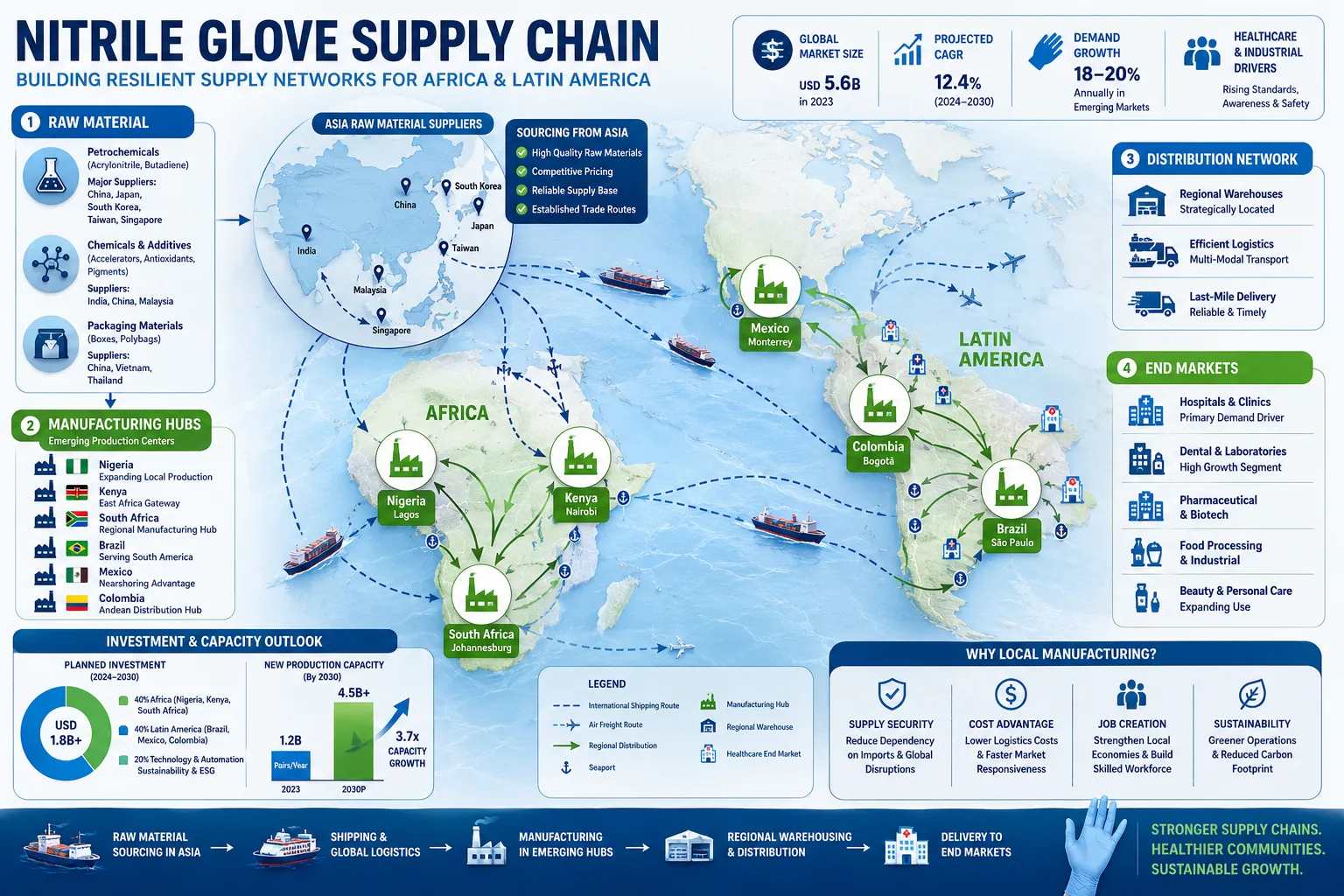
How Do Nitrile Glove Supply Chains Work in Africa and Latin America
Nitrile glove supply chains in Africa and Latin America currently operate through a hub-and-spoke model where Asian manufacturers ship bulk containers to regional distribution centers in major port cities, which then distribute to national wholesalers and end users. The typical supply chain involves 4-6 intermediaries between manufacturer and end user, adding 40-60% to the final cost compared to direct factory pricing.
The standard supply chain flow includes:
- Manufacturing: 90% occurs in Malaysia, Thailand, China, and Vietnam
- Export shipping: 30-45 day ocean freight to African or Latin American ports
- Import clearance: 5-15 days for customs, duties, and regulatory approval
- Regional distribution: Wholesalers in Lagos, Nairobi, São Paulo, Mexico City
- National distribution: Country-specific distributors and medical suppliers
- End users: Hospitals, clinics, industrial facilities, food processors
Major supply chain challenges include:
- Port congestion: African ports average 12-18 day clearance times versus 3-5 days in developed markets
- Cold chain requirements: Nitrile gloves degrade in temperatures above 35°C, problematic in tropical climates without climate-controlled storage
- Currency fluctuations: Dollar-denominated imports create price volatility for local buyers
- Documentation complexity: Multiple certifications required across different countries with inconsistent standards
- Last-mile logistics: Poor road infrastructure increases delivery costs and times to rural healthcare facilities
Brazil and Mexico have more developed distribution networks with established medical supply chains, while many African countries rely on fragmented networks of small importers. South Africa serves as a regional hub for Southern African markets, while Kenya and Nigeria function as distribution centers for East and West Africa respectively.
The supply chain for locally manufactured gloves is simpler but faces different challenges. Raw materials (nitrile latex, chemical accelerators, powder alternatives) still come from Asia, but finished goods move directly from factory to distributors, eliminating international shipping delays and import duties.
Nitrile Gloves vs Latex Gloves for Healthcare in Developing Countries
Nitrile gloves are increasingly preferred over latex gloves in developing country healthcare settings due to superior allergy safety, better chemical resistance, and longer shelf life in challenging storage conditions. While latex gloves cost 20-30% less than nitrile alternatives, the total cost of ownership favors nitrile when accounting for allergy-related complications, replacement rates, and storage degradation.
Comparison factors for healthcare decision-makers:
| Factor | Nitrile Gloves | Latex Gloves |
|---|---|---|
| Allergy risk | Minimal (chemical accelerators only) | 8-12% of healthcare workers affected |
| Puncture resistance | 3-4x stronger than latex | Moderate, tears more easily |
| Chemical resistance | Excellent for most disinfectants | Degrades with alcohol, oils |
| Shelf life in tropical climates | 3-5 years with proper storage | 1-2 years, degrades faster in heat |
| Cost per 1,000 gloves (bulk) | $35-65 | $25-45 |
| Tactile sensitivity | Good, improving with technology | Excellent, superior feel |
| Biodegradability | Slower decomposition | Faster, but still significant |
For resource-limited healthcare facilities in Africa and Latin America, nitrile gloves offer better value despite higher upfront costs. Latex allergies create hidden costs through worker compensation, replacement staff, and potential patient cross-contamination. In facilities without reliable climate control, latex gloves deteriorate faster, leading to higher waste rates.
Choose nitrile gloves when:
- Healthcare workers have documented latex allergies
- Facilities handle chemotherapy drugs or harsh disinfectants
- Storage conditions lack consistent temperature control below 25°C
- Procedures require extended wear times (over 30 minutes)
- Budget allows for 25-35% higher per-unit costs
Choose latex gloves when:
- No latex allergies exist among staff (requires testing)
- Tactile sensitivity is critical (delicate surgical procedures)
- Climate-controlled storage is guaranteed
- Budget constraints are severe and allergy screening is complete
Understanding the fundamental differences between latex and nitrile gloves helps procurement managers make informed decisions based on their specific facility needs and constraints.
Which Companies Are Investing in Nitrile Glove Manufacturing in Africa
Several multinational and regional companies are establishing nitrile glove manufacturing operations in Africa, with Nigeria, Kenya, and South Africa attracting the most investment. As of 2026, at least eight major projects are in development or early production stages, representing over $200 million in committed capital.
Notable investment projects include:
Nigeria:
- Shandong Intco Medical (China): $30 million facility in Lagos with 2 billion glove annual capacity, operational since 2024
- Blue Sail Medical (China): Joint venture with Nigerian partners for $25 million plant in Ogun State, targeting 1.5 billion gloves annually
- Local consortium: Nigerian investors partnering with Malaysian technical experts for $15 million facility in Kano
Kenya:
- Kenyan-Malaysian partnership: $20 million investment in Nairobi industrial zone, 1 billion glove capacity planned for 2027
- East African Glove Manufacturing: Regional initiative backed by development finance institutions targeting 800 million gloves annually
South Africa:
- Supermax Healthcare (Malaysia): Exploring $40 million facility in Gauteng province with 3 billion glove capacity
- Local pharmaceutical companies: Two South African firms developing smaller-scale operations (200-400 million gloves annually)
Egypt:
- Multiple Chinese investors: Three separate projects totaling $60 million targeting North African and Middle Eastern markets
These investments are driven by government incentives including tax holidays (5-10 years), duty-free import of manufacturing equipment, and preferential access to public sector procurement contracts. The African Continental Free Trade Area (AfCFTA) also makes local production more attractive by enabling tariff-free exports across 54 African countries.
Common investment structures include:
- Joint ventures between Asian manufacturers and local partners (60% of projects)
- Wholly-owned foreign subsidiaries (25% of projects)
- Local companies with technology licensing agreements (15% of projects)
Most investors target the medical examination glove segment rather than surgical gloves, which require more stringent quality control and higher capital investment. Production typically starts at 30-40% capacity and scales up over 2-3 years as technical expertise develops and market channels establish.
Cost of Setting Up a Nitrile Glove Factory in Latin America
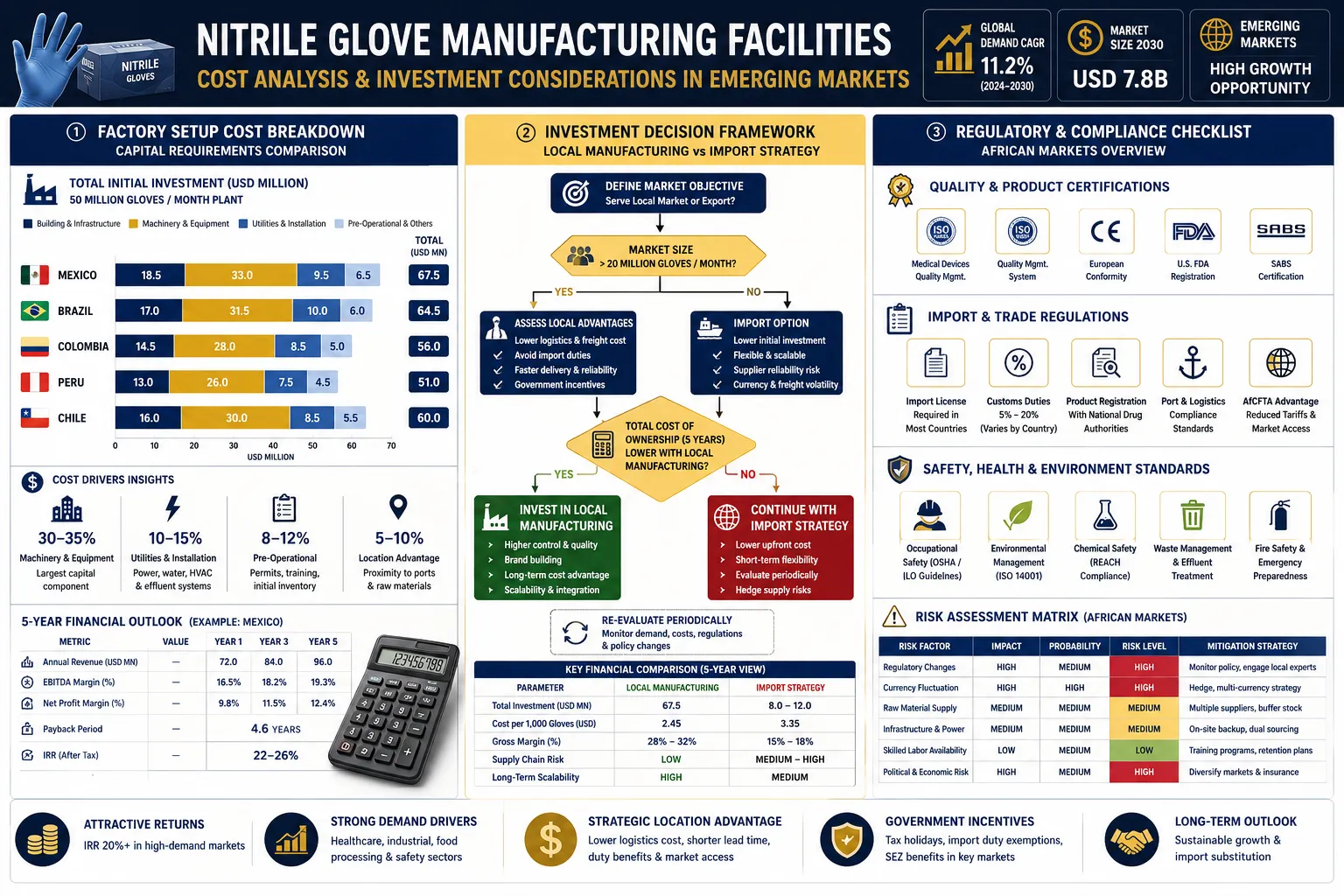
Setting up a nitrile glove manufacturing facility in Latin America requires $8-25 million in initial capital investment depending on production capacity, automation level, and location. Mid-scale facilities targeting 1-2 billion gloves annually typically require $12-15 million, while larger operations exceeding 3 billion gloves annually need $20-25 million or more.
Detailed cost breakdown for a 1.5 billion glove annual capacity facility:
Capital expenditures:
- Production line equipment (dipping lines, ovens, stripping): $6-8 million
- Building construction or renovation (15,000-20,000 sq ft): $1.5-2.5 million
- Quality control laboratory and testing equipment: $400,000-600,000
- Utilities infrastructure (water treatment, power backup): $500,000-800,000
- Clean room and environmental controls: $300,000-500,000
- Packaging and warehousing equipment: $400,000-600,000
- Initial raw material inventory: $800,000-1.2 million
Pre-operational costs:
- Regulatory approvals and certifications: $150,000-300,000
- Technical consultancy and training: $200,000-400,000
- Land acquisition or long-term lease: $300,000-1 million (varies significantly by location)
- Working capital reserve: $1-2 million
Total estimated investment: $12-18 million
Best countries for nitrile glove production investment in Latin America:
Mexico offers the strongest value proposition with proximity to the U.S. market, established medical device manufacturing expertise, and USMCA trade benefits. Setup costs run 10-15% higher than other Latin American countries but market access advantages offset this premium.
Brazil provides the largest domestic market (212 million population) and Mercosur trade bloc access, but complex regulatory requirements and higher operational costs (labor, utilities) add 20-25% to ongoing expenses compared to Mexico.
Colombia attracts investors with competitive labor costs, free trade agreements with the U.S. and EU, and government incentives for medical manufacturing. Setup costs are 15-20% lower than Mexico but market size is smaller.
Costa Rica offers political stability, educated workforce, and existing medical device cluster, but higher labor costs and smaller market size limit scalability.
Common mistakes when planning a facility:
- Underestimating working capital needs for 6-12 months of operations before reaching profitability
- Failing to secure long-term raw material supply contracts before construction begins
- Inadequate budget for quality certifications (ISO 13485, ASTM, EN standards)
- Insufficient technical training for local workforce, leading to high defect rates
- Poor site selection without considering water quality, power reliability, and logistics access
The profitability timeline typically spans 4-6 years to recover initial investment, assuming production reaches 70% capacity by year two and 85% by year three. Facilities achieving economies of scale above 2 billion gloves annually can reduce per-unit costs to $18-22 per 1,000 gloves, competitive with imported products after accounting for duties and logistics.
Why Is There a Shortage of Nitrile Gloves in African Hospitals
African hospitals face persistent nitrile glove shortages due to inadequate procurement budgets, supply chain inefficiencies, currency devaluation, and competition from higher-paying international buyers. While global production capacity has recovered since pandemic peaks, African healthcare facilities often cannot afford market prices or face 60-90 day lead times that disrupt inventory management.
Primary shortage drivers include:
Budget constraints: Public hospitals in most African countries allocate only $0.50-2.00 per patient per day for all consumable supplies, leaving insufficient funds for adequate glove stocks. Private facilities fare better but still face budget pressures.
Procurement inefficiencies: Centralized government procurement systems often involve 6-12 month tender cycles, creating gaps between order and delivery. Bureaucratic delays and corruption add further complications.
Currency weakness: Most African currencies have depreciated 20-40% against the dollar since 2020, making dollar-denominated imports increasingly expensive. A hospital that budgeted for gloves at one exchange rate may find funds insufficient when orders are placed months later.
Supply chain prioritization: When global supplies tighten, manufacturers prioritize large-volume buyers in developed markets who pay faster and order more predictably. African orders often get delayed or partially filled.
Counterfeit displacement: Low-quality counterfeit gloves flood markets at 30-50% below legitimate product prices, forcing quality suppliers out and creating shortages of certified products.
Storage and distribution losses: Inadequate climate control causes 10-20% of gloves to degrade before use in some facilities. Poor inventory management leads to stockouts despite adequate overall supply.
Seasonal demand spikes: Disease outbreaks (Ebola, cholera, measles) create sudden demand surges that overwhelm existing supply chains and deplete regional stocks.
Solutions being implemented:
- Regional pooled procurement through African Union initiatives to increase buying power
- Local manufacturing development to reduce import dependency
- Donor-funded strategic stockpiles for emergency response
- Digital procurement platforms to improve transparency and reduce corruption
- Training programs for healthcare supply chain managers
The shortage is not uniform across Africa. South Africa, Morocco, and Egypt generally maintain adequate supplies due to stronger economies and better infrastructure. West African countries (Nigeria, Ghana, Senegal) face moderate challenges, while Central and East African nations experience the most severe shortages.
What Are the Main Challenges for Nitrile Glove Distribution in Africa
Nitrile glove distribution in Africa faces infrastructure deficits, regulatory fragmentation, counterfeit infiltration, and financing constraints that add 50-80% to end-user costs compared to Asian factory prices. These challenges create market inefficiencies where urban private hospitals have adequate supplies while rural public clinics face chronic shortages.
Infrastructure challenges:
Port bottlenecks: Major African ports (Lagos, Mombasa, Dar es Salaam) average 12-18 day clearance times versus 3-5 days in efficient ports. Container demurrage charges add $500-1,500 per shipment.
Road network limitations: Only 25% of African roads are paved, increasing transport costs and delivery times. A shipment from Nairobi to rural Uganda may take 7-10 days for a 500 km journey.
Storage infrastructure: Limited climate-controlled warehousing means gloves often store in hot, humid conditions that accelerate degradation. Facilities with proper storage charge premium rates.
Power reliability: Frequent outages disrupt cold chain management and warehouse operations, requiring expensive backup generators.
Regulatory fragmentation:
Each African country maintains separate import requirements, quality standards, and certification processes. A distributor serving five countries needs to navigate five different regulatory systems, each requiring separate product registrations costing $2,000-10,000 per country.
Common regulatory requirements include:
- National pharmaceutical or medical device authority registration
- Import permits renewed annually or per shipment
- Certificate of conformity from accredited testing labs
- Good distribution practice (GDP) licensing for distributors
- Batch testing requirements at port of entry
Counterfeit and quality challenges:
Counterfeit nitrile gloves represent 20-30% of the African market, particularly in West and Central Africa. These products often fail basic quality tests but sell at 30-50% discounts, making them attractive to budget-constrained buyers.
Red flags for counterfeit products:
- Prices significantly below market rates ($15-20 per 1,000 vs. $35-45 for legitimate products)
- Missing or poorly printed certification marks
- Packaging with spelling errors or low-quality printing
- Sellers unable to provide batch certificates or manufacturer documentation
- Products failing simple visual inspection (uneven thickness, discoloration, chemical odor)
Financing constraints:
Most distributors operate on thin margins (8-15%) and lack access to affordable working capital. Banks charge 15-25% interest rates for inventory financing, making it difficult to maintain adequate stock levels. End users (hospitals, clinics) often delay payments 60-120 days, creating cash flow pressures.
Distribution best practices:
- Partner with established medical supply distributors who have existing logistics networks
- Invest in quality verification testing at point of import
- Build relationships with multiple suppliers to ensure supply continuity
- Implement track-and-trace systems to combat counterfeits
- Offer flexible payment terms to build customer loyalty while managing risk
Understanding proper thickness requirements for different applications helps distributors stock appropriate product ranges for diverse customer needs.
How Much Do Nitrile Gloves Cost in Bulk for Emerging Markets
Bulk nitrile glove prices in African and Latin American emerging markets range from $25-65 per 1,000 gloves depending on quality grade, order volume, import duties, and distribution channel. Medical examination grade gloves (3-4 mil thickness) typically cost $35-50 per 1,000 units in bulk orders of 10+ containers, while premium surgical-grade gloves cost $55-75 per 1,000 units.
Price breakdown by market segment (per 1,000 gloves, FOB Asian port):
- Economy grade (2-3 mil, basic quality): $18-25
- Standard examination grade (3-4 mil, ASTM D6319): $28-38
- Premium examination grade (4-5 mil, enhanced quality): $40-52
- Surgical grade (5-6 mil, sterile, EN 455): $55-75
Additional costs to reach end users in emerging markets:
- Ocean freight to Africa: $3-6 per 1,000 gloves
- Ocean freight to Latin America: $2-4 per 1,000 gloves
- Import duties: 5-25% of CIF value (varies by country)
- Port clearance and logistics: $2-4 per 1,000 gloves
- Distributor margin: 15-25%
- Retailer margin: 10-20%
Total landed cost examples:
Nigeria (West Africa):
- Standard examination gloves: $35 FOB + $5 freight + $6 duty (15%) + $3 clearance + $10 distribution = $59 per 1,000 to end user
Brazil (Latin America):
- Standard examination gloves: $35 FOB + $3 freight + $5 duty (13%) + $2 clearance + $8 distribution = $53 per 1,000 to end user
Kenya (East Africa):
- Standard examination gloves: $35 FOB + $4 freight + $4 duty (10%) + $3 clearance + $9 distribution = $55 per 1,000 to end user
Volume pricing tiers:
- 1-2 containers (20,000-40,000 boxes): Standard pricing
- 3-5 containers: 5-8% discount
- 6-10 containers: 10-15% discount
- 11+ containers (regular orders): 15-20% discount
Locally manufactured glove pricing:
When African or Latin American factories achieve scale (above 500 million gloves annually), local production costs reach $22-28 per 1,000 gloves for standard examination grade. Without import duties and reduced logistics costs, end-user prices can drop to $40-48 per 1,000 gloves, representing 15-25% savings versus imports.
Cost reduction strategies for buyers:
- Form purchasing cooperatives with other facilities to increase order volumes
- Establish direct relationships with manufacturers to eliminate intermediary margins
- Negotiate annual contracts with price locks to avoid currency fluctuation risk
- Invest in proper storage to reduce waste from degradation
- Implement inventory management systems to optimize order timing and quantities
For facilities considering bulk purchases for food handling applications, understanding food-safe certification requirements ensures compliance while managing costs.
Who Are the Major Suppliers of Nitrile Gloves to Africa and Latin America
The nitrile glove supply to Africa and Latin America is dominated by Malaysian and Thai manufacturers who control approximately 75% of imports, with Chinese producers accounting for another 15-20%. Top Glove, Hartalega, Kossan, Supermax (Malaysia), and Sri Trang, Thai Gloves (Thailand) are the primary suppliers, distributing through regional importers and medical supply companies.
Major Asian manufacturers supplying emerging markets:
Malaysian producers (55-60% market share):
- Top Glove: World’s largest manufacturer, 90+ billion gloves annually, strong presence in South Africa, Nigeria, Brazil
- Hartalega: Premium quality focus, 45 billion gloves annually, targets private hospitals and pharmaceutical sector
- Kossan: 35 billion gloves annually, competitive pricing for public sector tenders
- Supermax: 30 billion gloves annually, expanding direct distribution in Latin America
Thai producers (15-20% market share):
- Sri Trang Gloves: 50 billion gloves annually, strong in East Africa and Mexico
- Thai Gloves: 15 billion gloves annually, focus on examination grade for healthcare
Chinese producers (15-20% market share):
- Bluesail Medical: Growing presence in West Africa through direct investment
- Intco Medical: Established Nigerian manufacturing, supplies regional markets
- Multiple smaller producers: Compete primarily on price, variable quality
Regional distributors and importers:
Africa:
- Diacare Medical: South Africa-based, distributes across Southern African Development Community (SADC) countries
- Livingstone International: Kenya headquarters, covers East African markets
- Medshare: Nigeria-based, West African distribution network
- Pharma5: Morocco-based, North African focus
Latin America:
- Grupo Dimex: Mexico, largest medical supply distributor with U.S. and Central American reach
- Cremer: Brazil, comprehensive medical supply network across South America
- Promedon: Argentina-based, Mercosur distribution
- Medifarma: Colombia, Andean region coverage
Emerging local manufacturers:
As discussed earlier, local production is developing in Nigeria, Kenya, South Africa, Brazil, and Mexico. These facilities currently supply less than 10% of regional demand but are growing rapidly with government support.
Supplier selection criteria for buyers:
- Quality certifications: Verify ISO 13485, ASTM D6319, EN 455, or equivalent standards
- Batch testing: Request certificates of analysis for each shipment
- Supply reliability: Evaluate manufacturer’s track record for on-time delivery
- Financial stability: Larger manufacturers offer more consistent supply during market disruptions
- Local support: Suppliers with regional offices provide better service and faster problem resolution
- Pricing transparency: Avoid suppliers unable to explain cost components clearly
Common mistakes when selecting suppliers:
- Choosing based solely on lowest price without quality verification
- Failing to conduct factory audits or request third-party inspection reports
- Not establishing backup suppliers for supply chain resilience
- Accepting products without proper certification documentation
- Ignoring minimum order quantities that exceed storage capacity or cash flow
Understanding the various applications and quality requirements helps buyers match supplier capabilities to their specific needs.
Common Mistakes When Importing Nitrile Gloves to Developing Countries
Importers in developing countries frequently make costly errors including inadequate quality verification, poor documentation management, incorrect product specification, insufficient working capital planning, and failure to account for total landed costs. These mistakes result in rejected shipments, regulatory penalties, cash flow crises, and customer dissatisfaction.
Quality verification failures:
Mistake: Ordering based on supplier claims without independent testing or factory audits.
Consequence: Receiving substandard or counterfeit products that fail quality standards, leading to customer complaints, regulatory issues, and inventory write-offs.
Solution: Conduct pre-shipment inspections through independent agencies (SGS, Bureau Veritas, Intertek). Request samples for third-party testing before placing large orders. Verify manufacturer certifications directly with issuing bodies.
Documentation and compliance errors:
Mistake: Incomplete import documentation, missing certificates of conformity, or expired product registrations.
Consequence: Shipments held at customs for weeks or months, accumulating demurrage charges of $50-150 per day. Potential shipment rejection and total loss.
Solution: Work with experienced customs brokers familiar with medical device regulations. Maintain updated product registrations in each target country. Prepare complete documentation packages before shipment departure.
Product specification mismatches:
Mistake: Ordering wrong sizes, thicknesses, or quality grades for target market needs.
Consequence: Slow-moving inventory, customer rejection, price discounting to clear stock.
Solution: Conduct market research on size preferences (large gloves are typically most popular in many markets, as discussed in size preference analysis). Order mixed container loads initially to test market preferences before committing to single specifications.
Working capital miscalculations:
Mistake: Underestimating cash requirements for deposits, freight, duties, and carrying inventory until payment collection.
Consequence: Cash flow crises forcing distressed inventory sales or inability to reorder, losing market position.
Solution: Calculate total cash cycle (deposit + freight + clearance + distribution + customer payment terms). Maintain working capital reserves covering 2-3 order cycles. Negotiate payment terms with suppliers and customers that align cash flows.
Total cost miscalculations:
Mistake: Focusing only on FOB price without accounting for freight, duties, clearance, storage, distribution, and financing costs.
Consequence: Selling at prices below total cost, generating losses despite high sales volumes.
Solution: Build comprehensive cost models including all expenses from factory to end user. Add 10-15% contingency for unexpected costs. Price products based on total landed cost plus target margin.
Storage and handling errors:
Mistake: Storing gloves in hot, humid, or direct sunlight conditions that accelerate degradation.
Consequence: Product deterioration before sale, increased defect rates, customer complaints, and waste.
Solution: Invest in climate-controlled storage maintaining 15-25°C temperature and below 60% humidity. Implement first-in-first-out (FIFO) inventory rotation. Train staff on proper handling procedures.
Regulatory compliance oversights:
Mistake: Assuming products certified in one country are automatically acceptable in others.
Consequence: Regulatory penalties, product recalls, business license suspension.
Solution: Research specific requirements for each target country. Obtain necessary registrations before importing. Maintain updated knowledge of changing regulations.
Are Locally Manufactured Nitrile Gloves Cheaper Than Imported Ones in Africa
Locally manufactured nitrile gloves in Africa are not yet consistently cheaper than imports due to limited economies of scale, higher raw material costs, and developing technical expertise, but they can achieve 10-20% cost advantages in specific scenarios when facilities exceed 1 billion gloves annual production and benefit from duty exemptions and reduced logistics costs. The cost competitiveness improves significantly when accounting for total supply chain reliability and reduced foreign exchange risk.
Cost comparison analysis:
Imported gloves (standard examination grade, per 1,000 units):
- FOB Asian factory: $32-38
- Freight to African port: $4-6
- Import duty (10-15%): $4-6
- Clearance and logistics: $3-5
- Distributor margin (20%): $9-11
- Total end-user cost: $52-66
Locally manufactured gloves (per 1,000 units at 1.5 billion annual capacity):
- Raw materials (imported): $18-22
- Labor: $3-5
- Utilities and overhead: $4-6
- Quality control: $1-2
- Packaging: $2-3
- Depreciation and financing: $3-4
- Distributor margin (15%): $5-7
- Total end-user cost: $44-56
Potential savings: 12-18% when local production achieves scale
Factors affecting local cost competitiveness:
Production scale: Facilities below 500 million gloves annually struggle to achieve competitive costs due to fixed cost allocation. Above 1.5 billion gloves annually, per-unit costs approach import parity.
Raw material sourcing: Nitrile latex and chemical additives still come from Asia, so local manufacturers face similar input costs plus additional freight for smaller volumes.
Technical efficiency: New facilities typically operate at 60-70% efficiency in first 2-3 years, with defect rates of 8-12% versus 3-5% for established Asian manufacturers. This efficiency gap adds 10-15% to costs.
Government incentives: Tax holidays, duty-free equipment imports, and preferential procurement policies can provide 15-25% cost advantages that offset scale disadvantages.
Currency stability: Local production eliminates foreign exchange risk, providing price stability that importers cannot match when currencies depreciate.
Supply chain reliability: Local production reduces lead times from 60-90 days to 7-14 days, lowering inventory carrying costs and stockout risks worth 5-10% in total cost of ownership.
When local production offers better value:
- Government procurement contracts with local content requirements
- Customers prioritizing supply reliability over absolute lowest price
- Periods of currency depreciation making imports more expensive
- Situations requiring rapid delivery or custom specifications
- Markets with high import duties (above 15%)
When imports remain more cost-effective:
- Small volume requirements (below 10 million gloves annually)
- Premium quality requirements exceeding local technical capabilities
- Buyers with strong foreign currency access
- Markets with low or zero import duties
- Situations where lowest absolute price is the only consideration
The cost equation is shifting as African manufacturing matures. By 2028-2030, analysts expect locally produced gloves to achieve consistent 15-25% cost advantages over imports in countries with established facilities, assuming production scales continue growing and technical expertise improves.
What Regulations Affect Nitrile Glove Imports in Latin American Countries
Nitrile glove imports into Latin American countries are regulated by national health authorities requiring medical device registration, quality certifications (ISO 13485, ASTM D6319, or equivalent), import permits, and compliance with good manufacturing practices, with specific requirements varying significantly across countries. Brazil, Mexico, and Argentina maintain the most stringent regulatory frameworks, while smaller Central American and Caribbean nations often accept certifications from recognized international bodies.
Country-specific regulatory requirements:
Brazil (ANVISA – National Health Surveillance Agency):
- Medical device registration required before first import (6-12 month process)
- Registration cost: $3,000-8,000 depending on product classification
- Good manufacturing practice (GMP) certification from manufacturer
- Brazilian representative (legal entity) required for foreign manufacturers
- Batch testing at ANVISA-approved laboratories for initial registration
- Annual registration renewal with updated documentation
- Import permits required for each shipment
Mexico (COFEPRIS – Federal Commission for Protection Against Health Risks):
- Sanitary registration required (4-8 month process)
- Registration cost: $2,000-5,000
- ISO 13485 certification mandatory
- Mexican importer must hold sanitary license
- Certificate of free sale from country of origin
- Product labeling in Spanish with specific required information
- Compliance with Mexican Official Standards (NOM-241-SSA1)
Argentina (ANMAT – National Administration of Drugs, Food and Medical Technology):
- Product registration required (6-10 month process)
- Registration cost: $2,500-6,000
- Technical file including manufacturing process documentation
- GMP certification from competent authority in country of origin
- Argentine responsible representative required
- Batch certificates for each import shipment
Colombia (INVIMA – National Institute for Food and Drug Surveillance):
- Sanitary registration required (4-6 month process)
- Registration cost: $1,500-4,000
- ISO 13485 or equivalent quality certification
- Certificate of free sale from country of origin
- Colombian importer with sanitary license
- Labeling in Spanish with specific technical information
Chile (ISP – Public Health Institute):
- Product registration required (3-6 month process)
- Registration cost: $1,000-3,000
- Quality certifications (ISO 13485, CE mark, or FDA 510k)
- Chilean representative for foreign manufacturers
- Simplified process for products with recognized international certifications
Peru (DIGEMID – General Directorate of Medicines, Supplies and Drugs):
- Sanitary registration required (4-8 month process)
- Registration cost: $1,500-4,000
- GMP certification from manufacturer
- Certificate of free sale from country of origin
- Peruvian importer with pharmaceutical establishment license
Common regulatory challenges:
Documentation complexity: Each country requires slightly different documentation packages, making regional distribution complex. A distributor serving five Latin American countries needs five separate product registrations.
Translation requirements: All technical documentation, labeling, and instructions must be translated to Spanish or Portuguese by certified translators, adding $500-2,000 per product registration.
Registration timelines: The 4-12 month registration process creates barriers for new entrants and delays market access for new products.
Renewal requirements: Most registrations require renewal every 3-5 years with updated documentation and fees, creating ongoing compliance costs.
Changing standards: Regulatory requirements evolve, requiring importers to monitor updates and maintain compliance.
Best practices for regulatory compliance:
- Engage local regulatory consultants familiar with country-specific requirements
- Begin registration process 12-18 months before planned market entry
- Maintain comprehensive technical files with all manufacturing documentation
- Establish relationships with local representatives or distributors who hold necessary licenses
- Budget $10,000-25,000 per country for initial registration and first-year compliance
- Implement systems to track registration renewals and regulatory updates
- Consider regional harmonization initiatives (Mercosur, Pacific Alliance) that may simplify multi-country registration
Understanding food safety regulations for glove use is also important for importers serving food processing sectors alongside healthcare markets.
Is It Profitable to Invest in Nitrile Glove Manufacturing in Emerging Markets
Investing in nitrile glove manufacturing in emerging markets can be profitable with 15-25% internal rates of return over 7-10 year horizons, but success requires achieving minimum efficient scale (1+ billion gloves annually), securing reliable raw material supply, developing technical expertise, and accessing both domestic and export markets. Profitability timelines typically span 4-6 years to recover initial investment, with significant risks from quality control challenges, competition from established Asian producers, and market volatility.
Profitability drivers:
Market growth: Healthcare and industrial glove demand in Africa and Latin America is growing 12-18% annually, driven by healthcare infrastructure expansion, improved safety standards, and growing middle-class populations.
Import substitution: Local production eliminates 15-25% in import duties, freight, and intermediary margins, creating competitive advantages when facilities achieve scale.
Government support: Tax holidays (5-10 years), duty-free equipment imports, and preferential procurement contracts improve project economics by 20-30%.
Employment creation: Glove manufacturing creates 200-400 jobs per facility, making projects attractive for government support and community acceptance.
Export potential: African Continental Free Trade Area and Latin American trade blocs enable tariff-free exports to neighboring countries, expanding addressable markets.
Financial projections for a 1.5 billion glove annual capacity facility:
Investment requirements:
- Initial capital: $12-15 million
- Working capital: $2-3 million
- Total investment: $14-18 million
Revenue projections (year 3 at 80% capacity):
- Production: 1.2 billion gloves
- Average selling price: $40 per 1,000 gloves
- Annual revenue: $48 million
Operating costs:
- Raw materials: $26 million (55% of revenue)
- Labor: $6 million (12% of revenue)
- Utilities and overhead: $7 million (15% of revenue)
- Sales and distribution: $4 million (8% of revenue)
- Total operating costs: $43 million
Financial performance:
- EBITDA: $5 million (10% margin)
- Depreciation: $1.2 million
- Interest: $1.5 million (assuming 60% debt financing)
- Net profit: $2.3 million (5% margin)
- Payback period: 6-7 years
- IRR: 18-22%
Key success factors:
Technical expertise: Partner with experienced Asian manufacturers for technology transfer, training, and ongoing technical support. Most successful projects involve joint ventures with established producers.
Raw material security: Negotiate long-term supply contracts for nitrile latex and chemical additives before starting production. Raw material availability and pricing significantly impact profitability.
Quality management: Invest heavily in quality control systems, laboratory equipment, and trained personnel. Quality issues destroy profitability through waste, customer returns, and reputation damage.
Market access: Secure anchor customers (government contracts, large hospital groups) before production starts. Diversify across healthcare, industrial, and food processing sectors.
Scale achievement: Reach minimum efficient scale (1 billion gloves annually) within 2-3 years. Facilities operating below this threshold struggle with profitability.
Major risks:
Competition: Established Asian manufacturers can reduce prices to defend market share, squeezing margins for new entrants.
Quality challenges: New facilities typically experience 8-12% defect rates in first 2-3 years versus 3-5% for mature operations, significantly impacting costs.
Raw material price volatility: Nitrile latex prices fluctuate 20-40% based on global supply-demand, affecting profitability when long-term sales contracts fix prices.
Currency risk: Raw material imports in dollars while sales occur in local currency creates exchange rate exposure.
Regulatory changes: Shifting quality standards or import policies can affect market access and competitive dynamics.
Investment recommendation:
Nitrile glove manufacturing in emerging markets is most suitable for:
- Investors with 7-10 year time horizons and tolerance for 4-6 year payback periods
- Projects with government support (tax incentives, procurement contracts)
- Joint ventures with experienced manufacturers providing technical expertise
- Facilities targeting minimum 1.5 billion glove annual capacity
- Investors able to secure reliable raw material supply and market access
Avoid investment if:
- Capital is limited (below $15 million total)
- Technical expertise is unavailable
- Market access is uncertain
- Time horizon is short (under 5 years)
- Risk tolerance is low
Frequently Asked Questions
What is the minimum order quantity for importing nitrile gloves to Africa?
Most Asian manufacturers require minimum orders of 1-2 containers (approximately 20,000-40,000 boxes of 100 gloves each) for direct purchases. Smaller quantities can be purchased through regional distributors but at 15-25% price premiums. For first-time importers, consider starting with mixed container loads containing different sizes and specifications to test market preferences before committing to larger single-specification orders.
How long does it take to set up a nitrile glove manufacturing facility in Latin America?
Setting up a nitrile glove manufacturing facility typically requires 18-24 months from initial planning to commercial production. This includes 3-4 months for site selection and regulatory approvals, 8-12 months for construction and equipment installation, 3-4 months for equipment commissioning and staff training, and 2-4 months for trial production and quality certification. Delays in equipment delivery, regulatory approvals, or technical issues can extend timelines by 3-6 months.
Can nitrile gloves be stored in hot climates without degradation?
Nitrile gloves can be stored in hot climates but require climate-controlled conditions maintaining temperatures below 25-28°C and humidity below 60% to prevent accelerated degradation. Storage above 35°C significantly reduces shelf life from 3-5 years to 12-18 months. Facilities without climate control should order smaller quantities more frequently, implement strict FIFO rotation, and conduct regular quality checks for signs of degradation including discoloration, brittleness, or chemical odor.
What certifications are essential for selling nitrile gloves to hospitals in emerging markets?
Essential certifications include ISO 13485 (medical device quality management), ASTM D6319 (nitrile examination glove standard) or EN 455 (European medical glove standard), and country-specific medical device registrations. Additional valuable certifications include FDA 510k clearance, CE marking, and certificates of conformity from accredited testing laboratories. For food processing applications, FDA food contact approval is necessary. Always verify that certifications are current and issued by legitimate accredited bodies.
How can buyers verify nitrile glove quality and avoid counterfeits?
Verify quality by requesting batch certificates of analysis, conducting third-party testing through accredited laboratories, performing visual inspections for consistent thickness and finish, checking packaging for professional printing and correct certification marks, and conducting factory audits or accepting products only from manufacturers with verified certifications. Red flags include prices 30%+ below market rates, sellers unable to provide documentation, packaging with errors, and products failing simple stretch or puncture tests.
What is the typical profit margin for nitrile glove distributors in Africa?
Nitrile glove distributors in Africa typically operate on 15-25% gross margins, with net margins of 8-15% after accounting for operating expenses, financing costs, and bad debts. Margins vary based on market position, with exclusive distributors achieving higher margins (20-25%) compared to competitive markets (12-18%). Volume distributors serving government contracts often accept lower margins (10-15%) compensated by larger order sizes and more predictable demand.
Are there financing options available for purchasing nitrile gloves in bulk?
Financing options include supplier credit (30-90 day payment terms for established buyers), trade finance facilities from banks (letters of credit, import financing), inventory financing from specialized lenders, and development finance institutions offering healthcare supply chain financing in some countries. Interest rates range from 8-12% for creditworthy borrowers in stable markets to 18-25% in higher-risk environments. Building strong supplier relationships and demonstrating reliable payment history improves access to favorable financing terms.
What is the difference between powder-free and powdered nitrile gloves?
Powder-free nitrile gloves use polymer coatings or chlorination to reduce friction and ease donning, while powdered gloves use cornstarch powder for the same purpose. Powder-free gloves are strongly preferred in healthcare settings because powder can cause respiratory irritation, contaminate wounds, and interfere with surgical procedures. Most modern nitrile gloves are powder-free, and many countries have banned or restricted powdered gloves in medical applications. Powder-free gloves cost 5-10% more but are the standard for healthcare use.
How do import duties affect nitrile glove pricing in different countries?
Import duties on nitrile gloves range from 0-25% across emerging markets, significantly affecting final pricing. Countries with higher duties (15-25%) see end-user prices 20-35% above those in low-duty markets. Some countries offer duty exemptions for medical supplies or products from specific trade partners. For example, African Continental Free Trade Area members can import duty-free from other member countries, while Latin American trade blocs (Mercosur, Pacific Alliance) offer preferential rates. Buyers should research country-specific duty rates and available exemptions when planning imports.
What sizes of nitrile gloves are most in demand in emerging markets?
Large size nitrile gloves typically represent 35-45% of demand in most emerging markets, followed by medium (30-35%), extra-large (15-20%), and small (5-10%). This distribution varies by region and application, with industrial users preferring larger sizes and healthcare facilities requiring more balanced size mixes. First-time importers should order mixed sizes weighted toward large and medium to match typical demand patterns, as discussed in size preference analysis.
Can nitrile gloves be recycled or disposed of sustainably?
Nitrile gloves are not easily recyclable through standard municipal recycling programs due to contamination concerns and material composition. Some specialized recycling programs accept non-contaminated nitrile gloves, processing them into products like playground surfaces or industrial mats. In healthcare settings, used gloves must be disposed of as medical waste through incineration or autoclaving. Emerging sustainable alternatives include biodegradable nitrile formulations that decompose faster than traditional nitrile, though these remain more expensive and less widely available. For more information, see our guide on nitrile glove recycling options.
What quality standards should government procurement officers require?
Government procurement officers should require ISO 13485 certification, compliance with ASTM D6319 or EN 455 standards, batch certificates of analysis for each shipment, acceptable quality level (AQL) of 1.5 or better for critical defects, shelf life of at least 3 years from manufacturing date, and country-specific medical device registration. Additionally, require suppliers to provide factory audit reports, maintain traceability systems, and offer product liability insurance. Establish quality testing protocols for random batch sampling to verify ongoing compliance.
Conclusion
Nitrile gloves in emerging markets across Africa and Latin America represent a dynamic sector experiencing rapid transformation driven by healthcare expansion, industrial growth, and strategic efforts to reduce import dependency. While these regions currently rely on Asian manufacturers for 85-90% of supply, local manufacturing initiatives are gaining momentum with over $200 million in committed investments across Nigeria, Kenya, South Africa, Brazil, and Mexico.
The path to market success requires navigating complex supply chains, fragmented regulatory environments, quality verification challenges, and significant counterfeit infiltration. Buyers must implement rigorous supplier vetting, maintain comprehensive documentation, and build relationships with certified manufacturers and distributors. Investors considering local manufacturing face 4-6 year payback periods but can achieve 15-25% returns when projects reach minimum efficient scale above 1 billion gloves annually.
Actionable next steps for stakeholders:
For healthcare facilities and industrial buyers:
- Conduct supplier audits and quality testing before committing to large orders
- Diversify supply sources across multiple manufacturers and distributors
- Implement inventory management systems optimizing order timing and quantities
- Join purchasing cooperatives to increase negotiating power and reduce costs
- Budget for total landed costs including duties, logistics, and storage
For distributors and importers:
- Secure country-specific product registrations 12-18 months before market entry
- Invest in climate-controlled storage and proper handling infrastructure
- Establish relationships with multiple manufacturers for supply continuity
- Implement track-and-trace systems to combat counterfeits
- Develop financing arrangements supporting adequate inventory levels
For investors and manufacturers:
- Partner with experienced Asian manufacturers for technology transfer
- Secure long-term raw material supply contracts before starting production
- Target minimum 1.5 billion glove annual capacity for economic viability
- Pursue government incentives including tax holidays and procurement contracts
- Plan for 18-24 month setup timelines and 4-6 year profitability horizons
The nitrile glove market in emerging economies will continue evolving rapidly through 2026 and beyond, with local production gradually displacing imports in countries that successfully develop manufacturing ecosystems. Success requires patience, capital, technical expertise, and deep understanding of local market dynamics, regulatory requirements, and supply chain complexities.
SEO Meta Title: Nitrile Gloves Emerging Markets: Africa Latin America Supply