A sealed box of nitrile gloves sitting in a warehouse can lose up to 40% of its tensile strength before anyone opens it—simply because of where and how it was stored. While most facilities focus on expiration dates printed on packaging, the real threat to glove integrity happens silently through environmental exposure during the months or years between manufacturing and use.
Understanding nitrile glove shelf life and storage: how heat, humidity, and UV exposure affect performance before use is critical for healthcare facilities, laboratories, food service operations, and industrial settings that rely on these protective barriers. Poor storage conditions transform reliable personal protective equipment into brittle, tear-prone liabilities that fail precisely when protection matters most.
Key Takeaways
- Nitrile gloves typically maintain optimal performance for 3-5 years when stored properly, but environmental factors can dramatically shorten usable shelf life
- Storage temperature should remain between 10°C-30°C (50°F-86°F) with relative humidity below 60% to prevent degradation
- UV exposure from both sunlight and fluorescent lighting causes brittleness, cracking, and reduced elasticity even in sealed boxes
- Ozone from electrical equipment, motors, and HVAC systems damages nitrile polymer chains during storage
- Visible signs of degradation—discoloration, stiffness, tackiness, or cracking—indicate gloves should be discarded regardless of printed expiration dates
Understanding Nitrile Glove Shelf Life and Storage Fundamentals
Most disposable nitrile gloves carry a manufacturer-recommended shelf life of three to five years from the production date. This timeframe assumes ideal storage conditions and intact original packaging. The synthetic rubber polymer that gives nitrile gloves their protective properties against chemicals and oils remains stable for years when shielded from environmental stressors.
However, the printed expiration date represents a best-case scenario. Real-world storage environments rarely match laboratory conditions. Temperature fluctuations, moisture infiltration, light exposure, and airborne contaminants all accelerate the aging process. Once a box seal breaks, exposure to ambient air further reduces the effective shelf life.
The Science Behind Nitrile Degradation
Nitrile rubber consists of long polymer chains that provide elasticity and barrier protection. Environmental factors break these molecular bonds through several mechanisms:
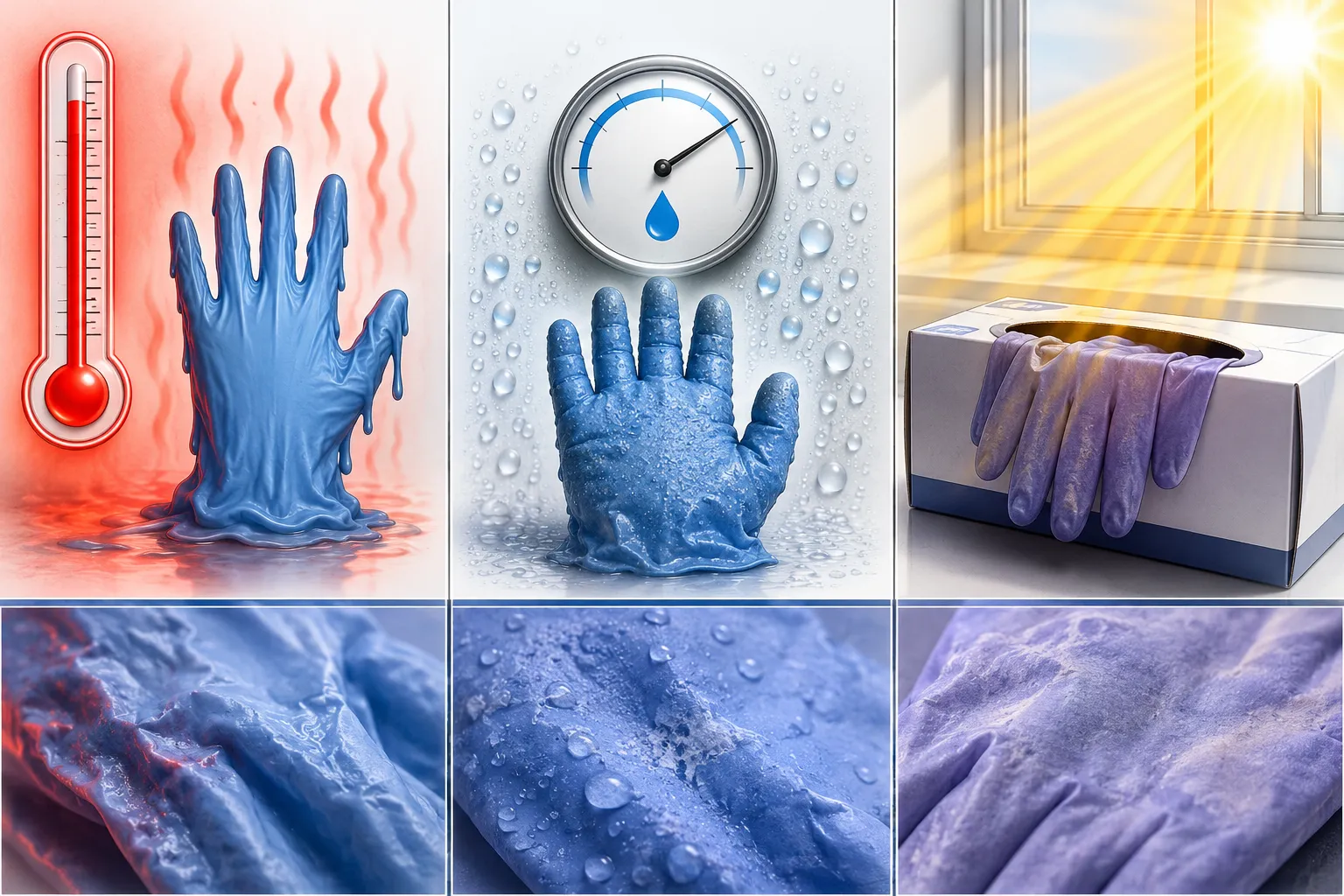
- Thermal degradation occurs when heat accelerates chemical reactions within the polymer structure
- Hydrolysis happens when moisture penetrates packaging and reacts with polymer additives
- Photo-oxidation results from UV radiation breaking carbon-carbon bonds in the polymer backbone
- Ozone cracking develops when ozone molecules attack double bonds in the nitrile structure
Each degradation pathway weakens the glove material, reducing tensile strength, elasticity, and barrier effectiveness. The damage accumulates over time, even when gloves remain boxed and unused.
How Heat, Humidity, and UV Exposure Affect Performance Before Use
Temperature: The Primary Storage Variable
Heat accelerates every chemical degradation process in nitrile gloves. Industry guidance consistently recommends storage temperatures between 10°C and 30°C (50°F-86°F), with some manufacturers setting an absolute upper limit of 40°C (104°F).
Storage above recommended temperatures causes:
- Accelerated aging that can reduce a five-year shelf life to less than two years
- Polymer cross-linking that makes gloves stiff and difficult to don
- Plasticizer migration leading to tackiness or surface changes
- Reduced tear resistance and increased puncture vulnerability
Warehouses with inadequate climate control, storage near heating equipment, or exposure to direct sunlight through windows create hot zones where glove degradation happens rapidly. Even seasonal temperature swings in unconditioned spaces compromise glove integrity over time.
Humidity: The Silent Destroyer
Relative humidity above 60% creates conditions for moisture-related damage. While nitrile itself resists water, the packaging materials, powder coatings, and chemical additives in glove formulations can absorb moisture.
High humidity environments cause:
- Packaging deterioration that allows air and contaminants to reach gloves
- Powder clumping in powdered glove varieties
- Mold or mildew growth on packaging materials
- Accelerated hydrolysis of polymer additives
Storage areas with poor ventilation, proximity to water sources, or direct floor contact increase humidity exposure. Facilities in humid climates require active dehumidification or climate-controlled storage to maintain glove quality. Choosing appropriate glove thickness becomes less relevant if storage conditions compromise the material before use.
UV Exposure: The Invisible Threat
Both natural sunlight and artificial lighting emit ultraviolet radiation that damages nitrile polymers. Photo-oxidation from UV exposure causes:
- Surface cracking and brittleness
- Discoloration ranging from yellowing to darkening
- Loss of elasticity making gloves prone to tearing during donning
- Reduced barrier protection as micro-cracks develop
Surprisingly, even low-level UV from fluorescent lighting contributes to degradation over extended storage periods. Industry best practices recommend opaque storage containers or enclosed cabinets rather than open shelving in brightly lit areas.
Windows, skylights, and glass doors create concentrated UV exposure zones. Facilities storing large glove inventories should map light exposure patterns and relocate stock away from high-UV areas.
Ozone: The Overlooked Hazard
Ozone represents a less obvious but significant storage threat. Common ozone sources in facilities include:
- Electric motors and generators
- HVAC systems and air purifiers
- Fluorescent light transformers
- Welding equipment and spark generators
- Medical electrocautery units
Ozone attacks the double bonds in nitrile polymer chains, causing surface cracking and loss of tensile strength. Storage near electrical equipment or in areas with ozone-generating air treatment systems accelerates this damage. Proper storage requires physical separation from ozone sources and adequate ventilation to prevent ozone accumulation.
Best Practices for Nitrile Glove Storage and Inventory Management
Environmental Controls
Implementing proper storage conditions protects glove investments and ensures reliable performance:
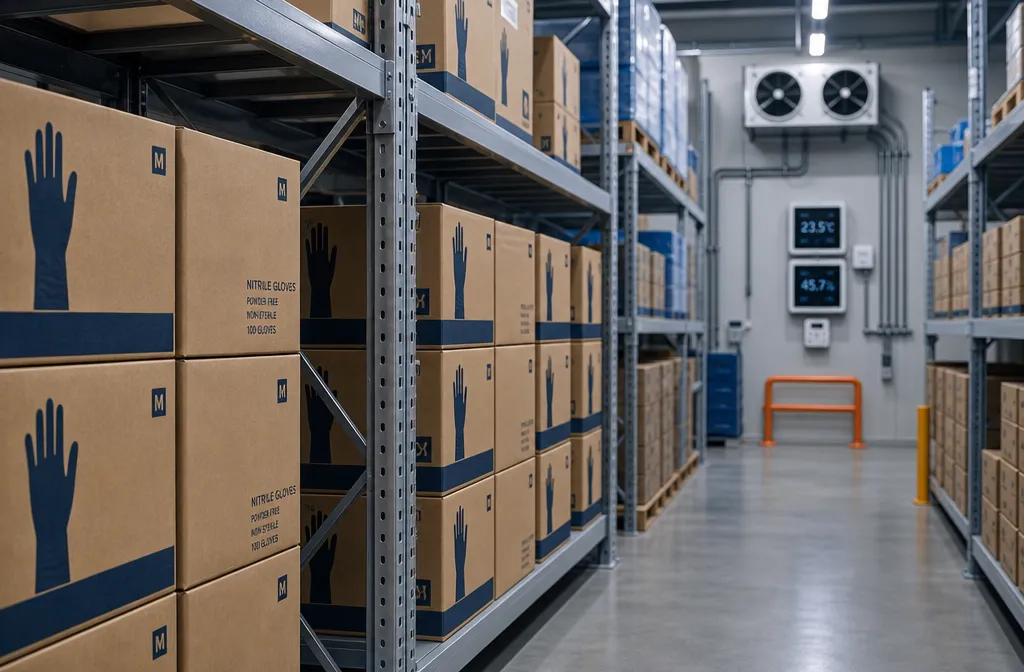
Temperature and humidity monitoring: Install digital sensors that log conditions continuously and alert staff to excursions outside acceptable ranges.
Climate control: Maintain storage areas between 50°F-72°F with relative humidity below 60% through HVAC systems or dedicated dehumidifiers.
Light protection: Store gloves in opaque containers, closed cabinets, or areas away from windows and bright artificial lighting.
Elevation: Keep cases on shelving or pallets at least 4-6 inches above floor level to prevent moisture wicking and facilitate air circulation.
Separation: Maintain distance from heat sources (radiators, steam pipes, loading docks), ozone generators, and chemical storage areas.
Packaging Integrity
The original sealed packaging provides the first line of defense against environmental damage. Once opened:
- Reseal boxes with tape after removing gloves to minimize air exposure
- Transfer remaining gloves to airtight containers if the original box is damaged
- Discard compromised packaging that shows water damage, crushing, or tears
- Label opened boxes with the date to track exposure time
Facilities using nitrile gloves for food handling or healthcare applications should be especially vigilant about packaging integrity to prevent contamination.
FIFO Rotation Systems
First-in, first-out inventory management prevents gloves from aging past their useful life:
- Label incoming shipments with receipt dates upon arrival
- Organize storage so older stock is accessible and used before newer inventory
- Conduct quarterly audits to identify and prioritize aging stock
- Track lot numbers to facilitate recalls and quality investigations
Automated inventory systems can flag approaching expiration dates and prompt rotation before degradation occurs.
Pre-Use Inspection Protocols
Even properly stored gloves should undergo visual inspection before use. Train staff to recognize degradation signs:
- Discoloration: Yellowing, darkening, or uneven color changes
- Texture changes: Brittleness, excessive stiffness, or unusual tackiness
- Surface defects: Cracks, crazing, or rough patches
- Odor: Chemical or musty smells indicating degradation or contamination
- Packaging damage: Torn boxes, moisture stains, or crushed containers
Gloves showing any degradation signs should be removed from inventory immediately, regardless of the printed expiration date. For specialized applications like tattooing or automotive work, compromised gloves pose both safety and quality risks.
Comparing Storage Requirements Across Glove Types
| Factor | Nitrile Gloves | Vinyl Gloves | Latex Gloves |
|---|---|---|---|
| Typical Shelf Life | 3-5 years | 3-5 years | 3-5 years |
| Heat Sensitivity | Moderate | Low | High |
| UV Sensitivity | High | Moderate | Very High |
| Humidity Tolerance | Good | Excellent | Poor |
| Ozone Resistance | Moderate | Good | Poor |
| Storage Complexity | Moderate | Low | High |
While nitrile gloves offer advantages over vinyl in chemical resistance and durability during use, they require more careful attention to UV and ozone exposure during storage compared to vinyl alternatives.
Cost Implications of Poor Storage
Degraded gloves represent both direct and indirect costs:
Direct losses include:
- Wasted purchase costs for unusable inventory
- Disposal fees for expired or damaged stock
- Emergency rush orders at premium prices when usable inventory runs short
Indirect costs involve:
- Increased glove failure rates during use
- Potential contamination or exposure incidents
- Regulatory compliance issues in audited industries
- Staff time spent managing degraded inventory
A facility storing 100,000 gloves annually at $0.10 per glove faces $10,000 in direct costs if poor storage conditions render 10% of inventory unusable before the expiration date. Implementing proper storage controls typically costs far less than the waste from environmental degradation.
Conclusion
Nitrile glove shelf life and storage: how heat, humidity, and UV exposure affect performance before use represents a critical but often overlooked aspect of PPE management. While manufacturers design nitrile gloves to last 3-5 years, real-world storage conditions frequently compromise this timeline through thermal degradation, moisture damage, UV-induced brittleness, and ozone cracking.
Protecting glove investments requires active environmental management: maintaining temperatures between 50°F-86°F, keeping humidity below 60%, shielding inventory from UV sources, and separating storage from ozone-generating equipment. Proper packaging integrity, FIFO rotation systems, and pre-use inspection protocols ensure that gloves maintain their protective properties from warehouse to application.
Take action today by auditing your current storage conditions. Install temperature and humidity monitors, relocate inventory away from windows and heat sources, implement rotation labeling, and train staff to recognize degradation signs. These straightforward steps transform storage from a passive holding function into an active quality control measure that protects both your investment and the people who depend on reliable hand protection.
For facilities managing diverse glove inventories across healthcare, industrial, or food service applications, proper storage practices ensure that every glove performs as designed when protection matters most.