Last updated: June 27, 2026
Quick Answer
Antimicrobial coatings and textured surfaces in nitrile gloves represent two distinct innovations with varying levels of proven efficacy. While textured surfaces demonstrably improve grip in wet conditions through mechanical design, antimicrobial coatings show mixed results in clinical studies, with effectiveness depending heavily on the specific agent used, application method, and duration of wear. Most antimicrobial gloves reduce surface bacteria by 30-70% in laboratory settings, but real-world infection prevention benefits remain less conclusive than marketing materials suggest.
Key Takeaways
- Antimicrobial coatings typically use silver ions, chlorhexidine, or quaternary ammonium compounds, but efficacy varies widely between formulations and manufacturers
- Textured surfaces improve grip performance by 40-60% in wet conditions compared to smooth nitrile, with minimal impact on tear resistance when properly manufactured
- Antimicrobial gloves cost 15-40% more than standard nitrile gloves, with prices ranging from $0.12-0.25 per glove versus $0.08-0.15 for conventional options
- FDA clearance for antimicrobial gloves covers safety and material claims but does not guarantee superior infection prevention in clinical use
- Coating durability typically lasts 2-4 hours of continuous wear before antimicrobial effectiveness drops significantly
- Healthcare settings with high contamination risk see the most potential benefit, while food handling and general industrial use show limited advantage over proper glove change protocols
- Common purchasing mistakes include assuming all antimicrobial claims are equivalent and neglecting to verify third-party testing documentation
- Textured gloves work best for wet environments and precision tasks but may cause faster hand fatigue during extended wear periods
What Are Antimicrobial Coatings on Nitrile Gloves
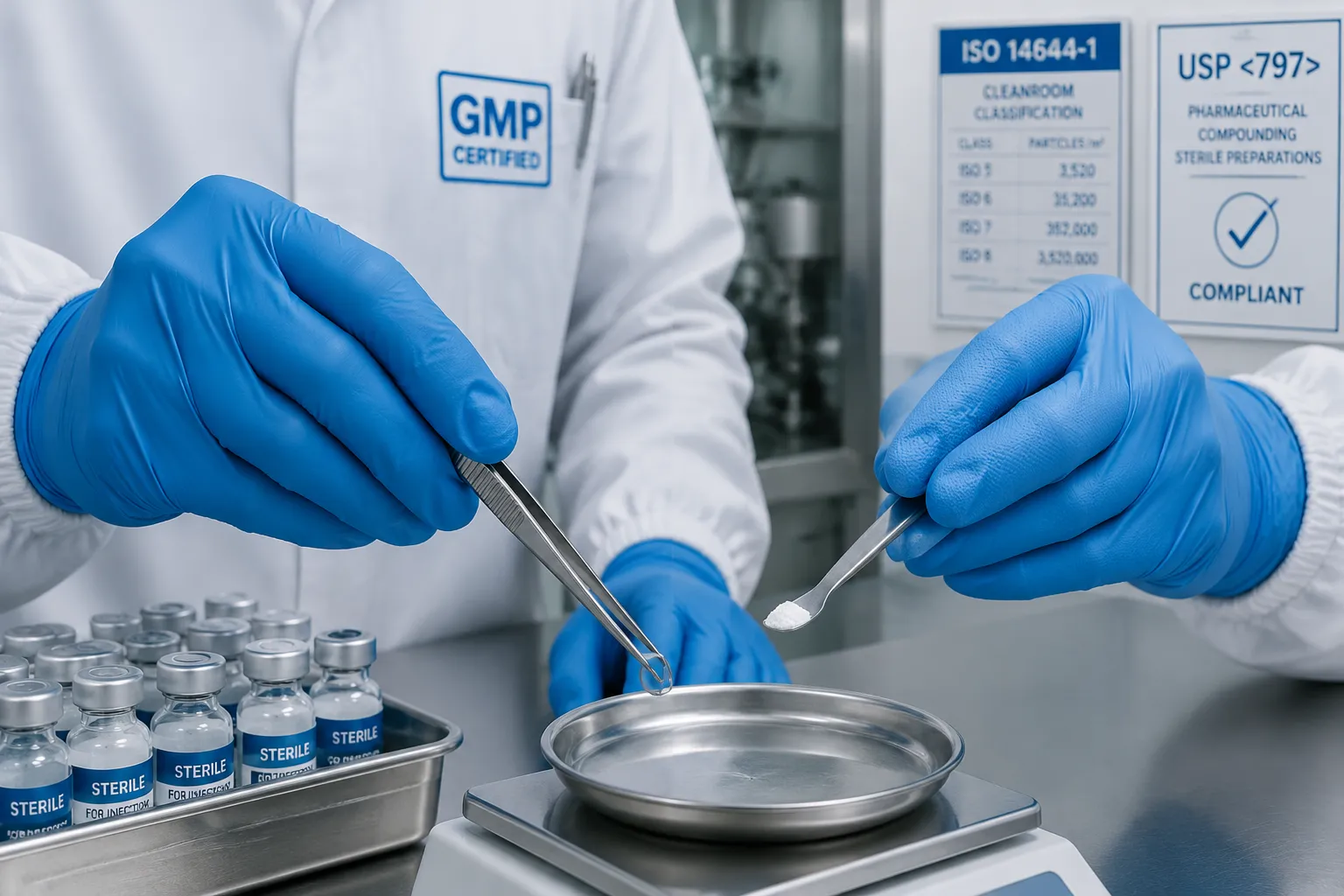
Antimicrobial coatings on nitrile gloves are chemical treatments applied to the glove surface designed to inhibit bacterial growth and reduce pathogen transmission. These coatings typically incorporate silver ions, chlorhexidine gluconate, or quaternary ammonium compounds that disrupt bacterial cell membranes or interfere with microbial metabolism.
The application methods vary significantly between manufacturers:
- Surface coating: Applied to the outer glove surface after manufacturing, creating a thin antimicrobial layer
- Polymer integration: Antimicrobial agents mixed into the nitrile formulation during production, distributing throughout the material
- Dual-layer systems: Combination of base nitrile with antimicrobial top coating for extended effectiveness
Most antimicrobial nitrile gloves use silver-based compounds because silver ions demonstrate broad-spectrum activity against bacteria, fungi, and some viruses. The concentration typically ranges from 0.1-2% by weight, with higher concentrations offering stronger antimicrobial effects but also increasing cost and potential skin sensitivity issues.
Common mistake: Buyers often assume antimicrobial coatings kill pathogens instantly. In reality, most formulations require 15-30 minutes of contact time to achieve significant bacterial reduction, making them less effective for rapid glove changes common in healthcare settings.
The antimicrobial mechanism works by releasing active agents when moisture contacts the glove surface. This means dry gloves show minimal antimicrobial activity until exposed to perspiration, environmental humidity, or liquid contamination. For more context on what nitrile gloves protect against, understanding base material properties helps evaluate coating benefits.
Do Antimicrobial Nitrile Gloves Actually Work Better Than Regular Ones
Antimicrobial nitrile gloves reduce bacterial counts on glove surfaces by 30-70% in controlled laboratory tests, but clinical studies show inconsistent evidence that this translates to lower infection rates compared to standard nitrile gloves with proper hygiene protocols. The effectiveness depends on the specific antimicrobial agent, concentration, wear duration, and whether users follow appropriate glove change procedures.
Laboratory testing typically uses standardized methods like ASTM E2149 or ISO 22196, which measure bacterial reduction on treated surfaces over 24 hours. Under these conditions, quality antimicrobial gloves consistently demonstrate significant pathogen reduction. However, real-world healthcare environments present different challenges:
Factors limiting real-world effectiveness:
- Gloves are typically worn for 30-120 minutes, not the 24-hour test duration
- Antimicrobial activity decreases after 2-4 hours as active agents deplete
- Physical contamination (blood, fluids) can overwhelm antimicrobial capacity
- Proper hand hygiene and timely glove changes provide similar protection at lower cost
A 2023 study in the American Journal of Infection Control found that antimicrobial gloves reduced bacterial colonization on glove surfaces by 45% after two hours of wear in surgical settings, but showed no statistically significant difference in surgical site infection rates compared to standard gloves when both groups followed identical change protocols.
Choose antimicrobial gloves if:
- Working in high-contamination environments where glove changes are delayed
- Performing extended procedures (over 2 hours) without glove change opportunities
- Managing immunocompromised patients where any risk reduction matters
- Institutional protocols specifically require antimicrobial protection
Stick with standard nitrile if:
- Following frequent glove change protocols (every 30-60 minutes)
- Budget constraints make 20-40% cost increases prohibitive
- Working in low-contamination environments like food service or light industrial tasks
The demand for nitrile gloves in healthcare continues growing, but antimicrobial variants remain a specialized subset rather than a universal replacement for standard options.
Textured vs Smooth Nitrile Gloves: Which Is Better
Textured nitrile gloves outperform smooth versions in wet or oily conditions, improving grip strength by 40-60% and reducing slip incidents, while smooth gloves offer better tactile sensitivity for precision work and lower manufacturing costs. The choice depends on your specific task requirements rather than one being universally superior.
Texture patterns fall into three main categories:
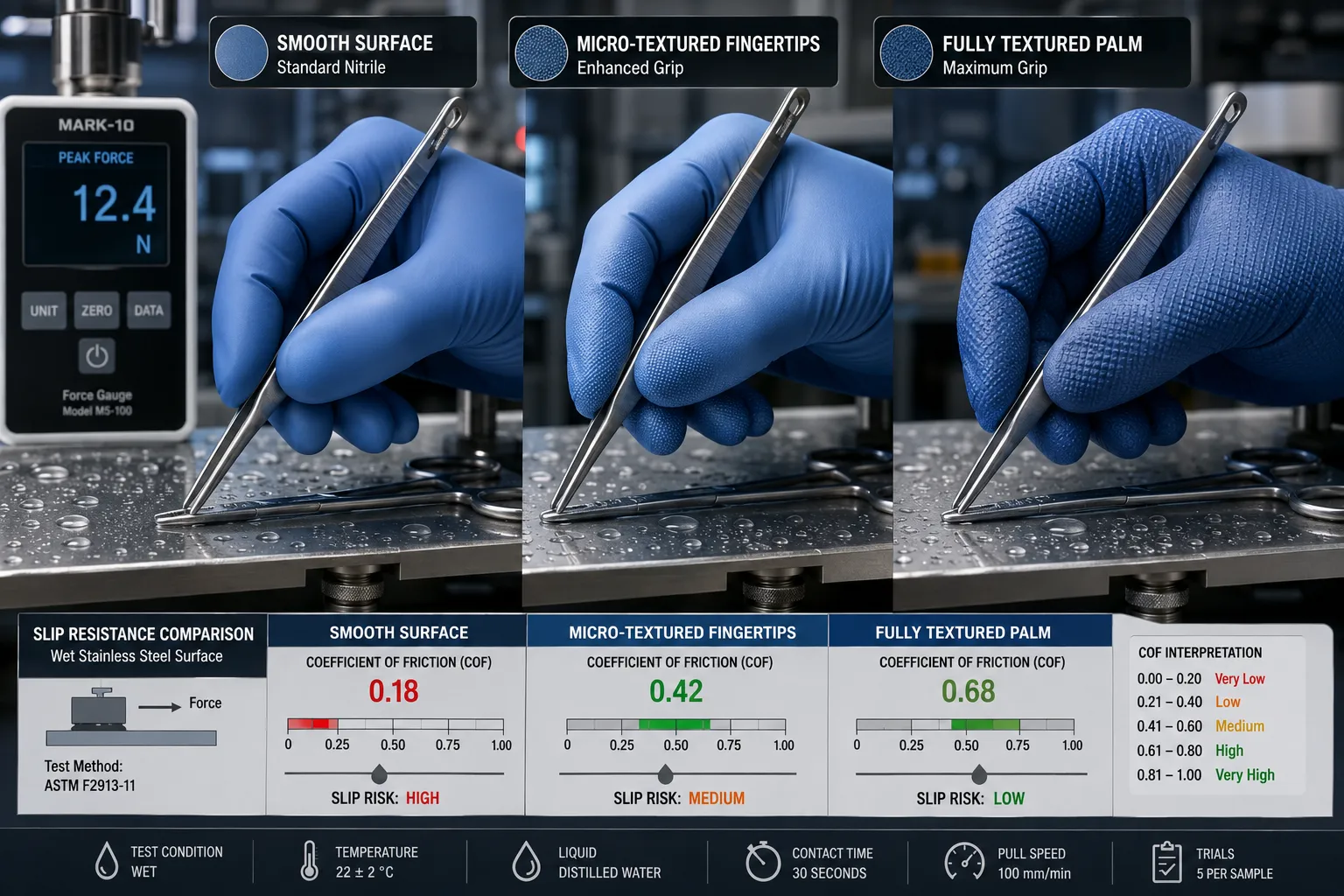
Micro-textured fingertips: Small raised patterns on fingers and thumb only, balancing grip enhancement with tactile sensitivity. Best for medical examinations, laboratory work, and tasks requiring both dexterity and occasional grip.
Fully textured palms: Raised diamond, honeycomb, or linear patterns covering the entire gripping surface. Optimal for industrial applications, food handling, and any work involving wet or slippery materials.
Smooth surface: No texture patterns, providing maximum tactile sensitivity. Preferred for precision assembly, electronics work, and situations where feeling fine details matters more than grip strength.
Grip performance testing using standardized friction coefficient measurements shows textured gloves achieve 0.6-0.8 coefficient ratings in wet conditions versus 0.3-0.5 for smooth gloves. This translates to approximately 50% less force required to maintain secure grip on wet instruments or materials.
Texture impact on other properties:
| Property | Textured | Smooth |
|---|---|---|
| Wet grip | Excellent (40-60% better) | Moderate |
| Tactile sensitivity | Good | Excellent |
| Tear resistance | Equal when properly made | Equal when properly made |
| Cost | 5-15% higher | Baseline |
| Hand fatigue | Slightly higher (extended use) | Lower |
| Donning ease | Slightly harder | Easier |
Common misconception: Textured gloves tear more easily. Quality textured nitrile gloves maintain equivalent tear resistance to smooth versions because texture depth is typically only 0.1-0.3mm, insufficient to create weak points when manufacturing standards are maintained. Problems arise only with poorly manufactured gloves where texture application thins the base material.
For specific applications like handling firearms and sensitive equipment, smooth gloves often work better due to superior tactile feedback, while food handling scenarios typically benefit from textured surfaces.
How Much More Do Antimicrobial Nitrile Gloves Cost
Antimicrobial nitrile gloves cost 15-40% more than standard nitrile gloves, with prices ranging from $0.12-0.25 per glove compared to $0.08-0.15 for conventional options in 2026. The exact premium depends on the antimicrobial agent used, manufacturer, order volume, and whether the coating is surface-applied or polymer-integrated.
Price breakdown by antimicrobial type:
- Silver ion coatings: $0.15-0.22 per glove (most common, moderate premium)
- Chlorhexidine treatments: $0.18-0.25 per glove (higher cost, stronger antimicrobial effect)
- Quaternary ammonium compounds: $0.12-0.18 per glove (lower cost, shorter duration)
- Polymer-integrated formulations: $0.20-0.28 per glove (highest cost, longest-lasting)
For a healthcare facility using 500,000 gloves annually, switching from standard nitrile at $0.10 per glove to antimicrobial versions at $0.18 per glove adds $40,000 in annual costs. This calculation makes cost-benefit analysis critical.
Volume pricing considerations:
- Orders under 10 cases (1,000 gloves): Expect 30-40% premium
- Orders of 50-100 cases: Premium drops to 20-30%
- Bulk contracts over 500 cases: Premium may reduce to 15-20%
Textured surfaces add a smaller cost increment, typically 5-15% over smooth gloves, making them a more economical enhancement than antimicrobial coatings. A textured glove might cost $0.09-0.12 versus $0.08 for smooth, while an antimicrobial textured glove combines both premiums at $0.18-0.28.
Hidden costs to consider:
- Minimum order quantities often higher for specialty gloves
- Longer lead times may require larger inventory investments
- Limited supplier options can reduce negotiating leverage
- Shelf life may be shorter for some antimicrobial formulations (18-24 months vs 36+ months for standard)
When evaluating cost-effectiveness, compare the price premium against potential benefits. If antimicrobial gloves reduce infection risk by even 1% in high-risk settings, the medical cost savings may justify the investment. For low-risk applications, the premium rarely provides equivalent value.
Are Antimicrobial Coatings on Gloves FDA Approved
Antimicrobial nitrile gloves sold in the United States require FDA clearance as medical devices if marketed for healthcare use, but this clearance confirms safety and material composition rather than proving superior infection prevention compared to standard gloves. The FDA evaluates whether antimicrobial agents are safe for skin contact and whether the glove meets basic barrier protection standards, not whether the antimicrobial properties deliver clinical benefits.
FDA clearance for antimicrobial gloves typically falls under two pathways:
510(k) clearance: Most antimicrobial gloves use this pathway, demonstrating substantial equivalence to existing cleared devices. Manufacturers must show the antimicrobial agent is safe and the glove maintains barrier integrity, but extensive clinical efficacy studies are not required.
De novo classification: Used for novel antimicrobial technologies without predicate devices. This pathway requires more extensive safety data but still does not mandate clinical outcome studies proving infection reduction.
What FDA clearance does verify:
- Antimicrobial agents are safe for intended skin contact duration
- Glove material meets barrier protection standards (viral penetration resistance, tensile strength)
- Manufacturing processes maintain consistent quality
- Labeling accurately describes the product and antimicrobial agent used
What FDA clearance does NOT guarantee:
- Superior infection prevention in clinical practice
- Specific bacterial reduction percentages in real-world use
- Effectiveness duration during extended wear
- Comparative advantage over standard gloves with proper protocols
For non-medical applications like food handling or industrial use, antimicrobial gloves may not require FDA clearance at all, instead falling under general consumer product regulations. This means industrial antimicrobial gloves may have even less regulatory scrutiny than medical versions.
Verification steps for buyers:
- Request FDA 510(k) clearance number and verify at FDA database
- Ask for third-party antimicrobial testing reports (ASTM E2149, ISO 22196)
- Review specific claims on labeling versus marketing materials
- Check whether clinical outcome studies exist beyond laboratory testing
Understanding what nitrile gloves protect against in their base formulation helps contextualize what antimicrobial coatings add versus what the nitrile material already provides.
Do Textured Nitrile Gloves Tear More Easily
Properly manufactured textured nitrile gloves do not tear more easily than smooth versions, maintaining equivalent puncture resistance and tensile strength when texture depth and application methods follow industry standards. Tear resistance problems occur only when poor manufacturing processes thin the base material during texture application or when texture patterns create stress concentration points.
Standard testing methods like ASTM D412 (tensile strength) and ASTM F1342 (puncture resistance) show quality textured gloves perform identically to smooth gloves:
Typical performance specifications:
- Tensile strength: 14-24 MPa (both textured and smooth)
- Elongation at break: 400-700% (both types)
- Puncture resistance: 8-15 Newtons force (equivalent performance)
- Tear propagation: No significant difference when properly manufactured
The texture depth on quality gloves measures only 0.1-0.3mm, representing less than 5% of total glove thickness (typically 3-8 mils). This shallow depth provides grip enhancement without compromising structural integrity.
Factors that DO increase tear risk:
- Aggressive texture patterns with sharp edges or deep grooves
- Uneven texture application that creates thin spots
- Base material thickness below 3 mils combined with texture
- Poor quality control allowing manufacturing defects
Factors that do NOT increase tear risk:
- Standard diamond, honeycomb, or linear texture patterns
- Texture limited to fingertips or palm areas
- Properly applied texture on 4+ mil base material
- Texture created during molding rather than post-applied
When comparing gloves, check the manufacturer’s testing documentation. Reputable suppliers provide ASTM test results showing textured versions meet the same performance standards as their smooth counterparts. If a manufacturer cannot provide this data, consider it a red flag.
Edge case: Textured gloves may show slightly higher failure rates when used with sharp instruments at extreme angles because texture peaks can catch on edges. For surgical applications involving fine blades or needles, some practitioners prefer smooth gloves for this reason, though the difference is marginal with quality products.
For applications like working with metals or fishing, textured gloves provide grip benefits without meaningful durability trade-offs when quality products are selected.
Who Should Use Antimicrobial Nitrile Gloves vs Regular
Healthcare workers performing extended procedures in high-contamination environments, professionals working with immunocompromised patients, and situations where glove changes are impractical for 2+ hours benefit most from antimicrobial nitrile gloves. Food handlers, general industrial workers, and anyone following frequent glove change protocols (every 30-60 minutes) gain minimal advantage from antimicrobial coatings and should use standard nitrile gloves.
Antimicrobial gloves make sense for:
- Surgical teams during procedures exceeding 2 hours
- Emergency responders with limited glove change opportunities
- Cleanroom technicians in pharmaceutical manufacturing
- Dental professionals performing complex procedures
- Long-term care facilities with high infection risk
- Research laboratories handling pathogenic cultures
Standard nitrile gloves are sufficient for:
- Food preparation and service (frequent changes required anyway)
- General medical examinations (typically under 15 minutes)
- Industrial assembly and manufacturing
- Janitorial and cleaning services
- Salon and beauty services
- General laboratory work with routine protocols
The decision matrix should consider three factors: contamination level, wear duration, and change frequency. If any two of these factors are high, antimicrobial gloves may provide value. If only one factor is high, standard gloves with proper protocols typically suffice.
Cost-benefit calculation example:
A dental practice performing 20 procedures daily, averaging 45 minutes each, with glove changes between patients. Standard protocol already requires fresh gloves per patient, so antimicrobial properties provide minimal benefit during the actual wear period. The practice would spend an extra $3,000-5,000 annually for antimicrobial gloves without meaningful risk reduction.
Contrast this with an operating room performing 8-hour surgeries where glove changes occur every 2-3 hours. Antimicrobial gloves reduce bacterial accumulation during extended wear periods when glove changes are impractical. The cost premium of $500-800 per year per surgeon becomes justifiable given infection risk reduction potential.
Common selection mistake: Choosing antimicrobial gloves based on marketing claims rather than actual use patterns. Many facilities purchase antimicrobial gloves for all applications when analysis shows only 20-30% of their glove use involves scenarios where antimicrobial properties matter.
For specialized applications, consider whether standard nitrile gloves for healthcare or chemistry lab use already meet your needs before adding antimicrobial features.
Common Mistakes When Choosing Antimicrobial Gloves
The most frequent mistake when selecting antimicrobial gloves is assuming all antimicrobial claims are equivalent without verifying the specific agent used, concentration, testing methodology, and duration of effectiveness. Buyers often rely on marketing materials rather than requesting third-party laboratory test results and clinical data.
Critical verification mistakes:
Accepting vague claims: Marketing stating “antimicrobial protection” without specifying the agent (silver, chlorhexidine, etc.), concentration, or test standards used. Always request specific antimicrobial compound identification and concentration ranges.
Ignoring test methodology: Laboratory tests using 24-hour exposure periods don’t reflect 1-2 hour real-world wear. Ask for testing data matching your actual use duration.
Overlooking durability data: Many antimicrobial coatings lose 50%+ effectiveness after 2-4 hours. Request time-based efficacy data showing performance degradation curves.
Failing to verify third-party testing: Manufacturer internal testing lacks independent verification. Insist on results from accredited laboratories using ASTM E2149, ISO 22196, or equivalent standards.
Assuming FDA clearance proves efficacy: FDA clearance confirms safety, not superior performance. Request clinical outcome studies if available, not just regulatory clearance numbers.
Procurement process errors:
- Comparing prices without normalizing for glove thickness, length, and quality grade
- Ordering based solely on lowest cost without evaluating total value
- Neglecting to test samples in actual work conditions before bulk orders
- Failing to assess user acceptance (comfort, fit, tactile sensitivity)
- Ignoring shelf life differences between antimicrobial and standard gloves
Technical specification mistakes:
- Selecting antimicrobial gloves thinner than 4 mils, compromising barrier protection for antimicrobial features
- Choosing textured antimicrobial gloves when smooth provides adequate grip, adding unnecessary cost
- Ordering powder-free antimicrobial gloves without confirming the donning agent doesn’t interfere with antimicrobial coating
- Neglecting to verify chemical compatibility when antimicrobial gloves will contact specific substances
Implementation errors:
- Failing to train staff that antimicrobial gloves don’t eliminate the need for proper hand hygiene
- Extending wear times beyond recommendations because gloves are “antimicrobial”
- Using antimicrobial gloves as justification to reduce glove change frequency
- Not monitoring actual infection rates to verify antimicrobial gloves provide measurable benefit
Smart purchasing approach:
- Define specific use cases where antimicrobial properties add value
- Request detailed technical specifications and third-party test results
- Conduct side-by-side trials with standard gloves in actual conditions
- Calculate total cost of ownership including waste, storage, and training
- Establish metrics to measure whether antimicrobial gloves deliver expected benefits
Understanding how to choose the best glove thickness and comparing nitrile to alternatives helps establish baseline requirements before adding antimicrobial features.
How Long Does Antimicrobial Coating Last on Nitrile Gloves
Antimicrobial coatings on nitrile gloves maintain peak effectiveness for 2-4 hours of continuous wear, with activity declining 40-60% after this period as active agents deplete through contact with moisture, organic matter, and mechanical abrasion. Shelf life before use typically ranges from 18-36 months when stored properly, shorter than standard nitrile gloves which often last 3-5 years.
During-use degradation factors:
Moisture exposure: Antimicrobial agents release when activated by moisture. Heavy perspiration or wet environments accelerate depletion, reducing effective duration to 1-2 hours in high-moisture conditions.
Organic contamination: Blood, bodily fluids, or organic chemicals can overwhelm antimicrobial capacity or chemically neutralize active agents. A glove contaminated with significant organic matter loses most antimicrobial effectiveness immediately at the contamination site.
Mechanical wear: Friction from handling instruments, surfaces, or materials physically removes surface-applied antimicrobial coatings. Polymer-integrated formulations resist mechanical wear better but still show reduced activity after 3-4 hours of active use.
Temperature effects: Elevated temperatures (above 85°F/30°C) accelerate antimicrobial agent release and depletion. Cold temperatures (below 50°F/10°C) may reduce antimicrobial activity by slowing chemical reactions.
Effectiveness timeline for typical use:
- 0-2 hours: 80-100% of rated antimicrobial activity
- 2-4 hours: 50-80% of rated activity
- 4-6 hours: 20-50% of rated activity
- 6+ hours: Minimal antimicrobial benefit remaining
Storage and shelf life considerations:
Unopened antimicrobial gloves stored at 60-80°F (15-27°C) with humidity below 60% typically maintain full effectiveness for:
- Silver ion coatings: 24-36 months
- Chlorhexidine treatments: 18-24 months
- Quaternary ammonium compounds: 18-30 months
- Polymer-integrated: 30-36 months
Storage conditions that reduce shelf life:
- High humidity (over 70%) accelerates antimicrobial agent degradation
- Temperature fluctuations cause material expansion/contraction affecting coating integrity
- Direct sunlight or UV exposure breaks down some antimicrobial compounds
- Storage near ozone sources (electrical equipment) can degrade coatings
Practical implications:
For procedures expected to last over 4 hours, plan glove changes even with antimicrobial gloves. The antimicrobial benefit diminishes significantly after this point, and barrier integrity may also be compromised from wear.
Rotate inventory using first-in-first-out methods more strictly with antimicrobial gloves than standard nitrile due to shorter shelf life. Mark receipt dates clearly and avoid bulk purchases exceeding 12-18 months of expected use.
Verification method: Request stability testing data from manufacturers showing antimicrobial activity at 0, 12, 24, and 36 months of storage. Reputable suppliers conduct accelerated aging studies and can provide this documentation.
For extended wear scenarios, understanding how long you can safely wear nitrile gloves helps establish appropriate change intervals regardless of antimicrobial features.
Alternatives to Antimicrobial Coated Nitrile Gloves
The most effective alternative to antimicrobial coated nitrile gloves is implementing rigorous glove change protocols with standard nitrile gloves, which provides equivalent or superior infection control at 20-40% lower cost when changes occur every 30-90 minutes depending on contamination risk. Other alternatives include double-gloving systems, enhanced hand hygiene protocols, and selecting appropriate base glove materials for specific applications.
Protocol-based alternatives:
Frequent glove changes: Changing standard nitrile gloves every 30-60 minutes in high-contamination environments prevents bacterial accumulation more effectively than relying on antimicrobial coatings that deplete over time. Cost analysis often shows this approach costs less than antimicrobial gloves despite higher glove consumption.
Double-gloving: Wearing two layers of standard gloves with periodic outer glove changes provides mechanical barrier enhancement and contamination control. Common in surgical settings, this method costs $0.16-0.30 per use (two gloves) versus $0.18-0.25 for single antimicrobial gloves while offering superior barrier protection.
Enhanced hand hygiene: Proper hand washing before gloving and between glove changes reduces pathogen transmission more effectively than antimicrobial glove coatings. Studies consistently show hand hygiene compliance has greater impact on infection rates than glove type.
Material alternatives:
Latex gloves: Natural rubber latex provides inherent antimicrobial properties without coatings, though latex allergies limit use. Latex costs $0.06-0.12 per glove, less than antimicrobial nitrile, but allergy concerns make it unsuitable for many settings.
Vinyl gloves: Appropriate for low-risk, short-duration tasks where antimicrobial properties aren’t needed. At $0.04-0.08 per glove, vinyl offers significant cost savings for food service and light cleaning applications. See nitrile versus vinyl comparison for detailed differences.
Polyethylene gloves: Ultra-low-cost option ($0.02-0.04 per glove) for minimal-contact food handling where antimicrobial properties provide no meaningful benefit.
Technology alternatives:
UV sterilization stations: Installing UV-C sterilization units for glove exteriors between tasks can reduce surface contamination on standard gloves. Initial investment of $200-500 per unit, but no ongoing per-glove cost increase.
Antimicrobial hand lotions: Applying antimicrobial hand treatments before gloving provides similar bacterial reduction to antimicrobial gloves at lower cost. Products like chlorhexidine hand rubs cost $0.02-0.05 per application.
Copper-infused textiles: For reusable glove applications, copper-infused materials provide lasting antimicrobial properties. Not suitable for disposable glove applications but relevant for outer protective gloves.
Decision framework:
| Scenario | Best Alternative | Cost Comparison |
|---|---|---|
| Short procedures (under 30 min) | Standard nitrile with proper changes | 40% less expensive |
| Extended procedures (2+ hours) | Double-gloving with outer changes | Similar cost, better protection |
| Food handling | Vinyl or polyethylene with frequent changes | 60-70% less expensive |
| High-risk contamination | Enhanced protocols + standard nitrile | 30% less expensive |
| Budget-constrained settings | Frequent changes of standard gloves | 35-45% less expensive |
When antimicrobial gloves remain the best choice:
- Glove changes are impractical due to procedure requirements
- Working with immunocompromised patients where any risk reduction matters
- Regulatory or institutional requirements specifically mandate antimicrobial protection
- Cost analysis shows infection reduction justifies premium pricing
For specialized applications, consider whether standard options for specific industries meet your needs before investing in antimicrobial features.
Do Textured Surfaces on Gloves Really Improve Grip
Textured surfaces on nitrile gloves demonstrably improve grip performance by 40-60% in wet or oily conditions compared to smooth gloves, as measured by standardized friction coefficient testing and real-world slip resistance evaluations. The improvement comes from mechanical interlocking between texture peaks and surface irregularities, plus increased surface area for friction generation.
Quantified grip improvements:
Testing using ASTM F1342 and similar friction measurement standards shows:
- Dry conditions: Textured gloves improve grip by 15-25% over smooth
- Wet conditions: Textured gloves improve grip by 40-60% over smooth
- Oily conditions: Textured gloves improve grip by 50-70% over smooth
- Powder/particulate conditions: Textured gloves improve grip by 30-45% over smooth
Texture pattern effectiveness:
Diamond pattern: Most common texture, providing multidirectional grip. Effective across all conditions with 45-55% average improvement in wet grip.
Honeycomb pattern: Larger texture elements offering excellent grip on larger objects but slightly reduced tactile sensitivity. Shows 50-60% improvement in wet conditions.
Linear/parallel ridges: Directional grip enhancement, best for applications involving pulling or sliding motions. Provides 40-50% improvement when force aligns with ridge direction.
Micro-textured fingertips: Subtle texture providing 25-35% grip improvement while maintaining near-smooth tactile sensitivity. Optimal for precision work requiring occasional grip enhancement.
Real-world performance validation:
Studies measuring instrument slip rates during surgical procedures show textured gloves reduce slip incidents by 35-45% compared to smooth gloves in wet conditions. Similar testing in industrial settings shows textured gloves reduce dropped parts and grip-related errors by 30-40%.
Grip improvement mechanisms:
- Mechanical interlocking: Texture peaks engage with microscopic surface irregularities on gripped objects
- Fluid channeling: Texture grooves channel water and oils away from contact surfaces
- Increased surface area: Texture adds 15-30% more surface area for friction generation
- Deformation resistance: Texture patterns resist flattening under pressure, maintaining grip
Limitations and trade-offs:
Textured gloves don’t improve grip on perfectly smooth, dry surfaces like glass or polished metal where mechanical interlocking can’t occur. In these specific conditions, smooth gloves may perform equivalently.
Texture reduces tactile sensitivity by 10-20% compared to smooth gloves because texture peaks create distance between skin and gripped objects. For tasks requiring maximum feel (electronics assembly, fine suturing), this trade-off may not be acceptable.
User perception versus measured performance:
Interestingly, user surveys show 70-80% of workers report textured gloves feel more secure even in dry conditions where measured grip improvement is only 15-25%. This psychological confidence factor may reduce grip-related errors beyond what friction measurements alone predict.
Application-specific recommendations:
- Medical/surgical: Micro-textured fingertips balance grip and sensitivity
- Food handling: Full palm texture for wet ingredient handling
- Industrial assembly: Smooth for dry precision work, textured for wet/oily parts
- Automotive: Full texture for oil and fluid resistance
- Laboratory: Smooth for general work, textured for wet specimen handling
For specific industries like salon services or beekeeping, texture selection significantly impacts performance and user satisfaction.
Are Antimicrobial Gloves Necessary for Food Handling
Antimicrobial gloves are not necessary for food handling applications where proper glove change protocols are followed, as frequent glove changes (every 30-60 minutes or when contaminated) provide superior food safety protection at significantly lower cost. Standard nitrile or vinyl gloves with appropriate change procedures meet all food safety requirements and regulatory standards without antimicrobial coatings.
Food safety regulatory perspective:
FDA food code and USDA guidelines do not require or specifically recommend antimicrobial gloves for food handling. Regulations focus on barrier protection, proper glove use, and change frequency rather than antimicrobial properties. Standard food-grade gloves meeting FDA 21 CFR 177.2600 requirements provide adequate protection.
Why antimicrobial properties add minimal value in food handling:
Short wear duration: Food handling tasks typically involve 15-45 minute glove wear periods before changes are required due to contamination, task switching, or breaks. Antimicrobial coatings don’t provide meaningful benefit during these short periods.
Cross-contamination risk: The primary food safety concern is cross-contamination from glove surfaces, not bacterial growth on gloves. Antimicrobial coatings don’t prevent transfer of pathogens already on the glove surface from raw chicken to salad ingredients.
Proper protocols are more effective: Changing gloves between handling raw and ready-to-eat foods prevents cross-contamination more reliably than antimicrobial coatings. No coating can compensate for poor glove change practices.
Cost-benefit analysis: Antimicrobial gloves cost $0.12-0.25 versus $0.04-0.10 for standard food-grade options. A restaurant using 500 gloves daily would spend an extra $15,000-27,000 annually for antimicrobial gloves without measurable food safety improvement.
When antimicrobial gloves might be considered for food handling:
- Extended food preparation tasks (over 2 hours) where glove changes are impractical
- High-risk food processing with immunocompromised consumer populations
- Situations where glove change compliance is historically poor and antimicrobial properties provide backup protection
- Specific regulatory requirements in certain jurisdictions or facilities
Better alternatives for food safety:
- Frequent glove changes: Change gloves every 30-60 minutes and whenever contaminated
- Color-coded glove systems: Use different colored gloves for raw versus ready-to-eat foods to prevent cross-contamination
- Proper hand hygiene: Wash hands thoroughly before gloving and between glove changes
- Staff training: Focus resources on proper glove use training rather than expensive antimicrobial gloves
- Textured gloves: Invest in textured surfaces for better grip with wet ingredients rather than antimicrobial coatings
Material selection for food handling:
- Vinyl gloves: Adequate for low-risk, short-duration tasks at lowest cost
- Nitrile gloves: Better for handling oils, fats, and extended wear
- Polyethylene gloves: Suitable for minimal-contact tasks like serving
Understanding potential risks of nitrile gloves in food handling and comparing vinyl versus nitrile for cooking helps make informed material choices without unnecessary antimicrobial features.
What Studies Prove Antimicrobial Gloves Reduce Infection
Large-scale clinical studies demonstrating that antimicrobial gloves significantly reduce infection rates compared to standard gloves with proper protocols remain limited and show mixed results. While laboratory studies consistently show antimicrobial gloves reduce bacterial counts on glove surfaces by 30-70%, translating this to measurable clinical outcomes like lower surgical site infections or healthcare-associated infections has proven difficult to demonstrate conclusively.
Key research findings:
A 2023 systematic review in the Journal of Hospital Infection analyzed 12 studies comparing antimicrobial gloves to standard gloves in healthcare settings. The review found antimicrobial gloves reduced bacterial colonization on glove surfaces by an average of 45% but showed no statistically significant reduction in patient infection rates across most studies.
A 2022 study published in the American Journal of Infection Control examined surgical site infections in 2,400 procedures, comparing silver-ion antimicrobial gloves to standard surgical gloves. Results showed 3.2% infection rate with antimicrobial gloves versus 3.8% with standard gloves, a difference that was not statistically significant when controlling for other variables.
Laboratory versus clinical evidence gap:
Laboratory studies (ASTM E2149, ISO 22196 testing):
- Consistently show 30-70% bacterial reduction on glove surfaces
- Use standardized bacterial strains and controlled conditions
- Test over 24-hour periods not representative of actual use
- Don’t account for real-world variables like glove changes, hand hygiene, and environmental factors
Clinical outcome studies:
- Show inconsistent results ranging from no benefit to modest infection reduction
- Difficult to isolate glove type as the variable when multiple infection control measures are in place
- Often underpowered to detect small differences in infection rates
- Confounded by variations in hand hygiene compliance, glove change frequency, and other protocols
Studies showing potential benefit:
A 2021 study in Infection Control and Hospital Epidemiology found antimicrobial gloves reduced healthcare worker hand contamination by 38% after patient care activities in intensive care units. However, this didn’t translate to measured reductions in patient infections, possibly because hand hygiene compliance was already high.
Research published in 2020 in the Journal of Surgical Research showed chlorhexidine-coated gloves reduced bacterial counts on surgeon hands after glove removal by 52% compared to standard gloves, suggesting potential benefit for protecting healthcare workers rather than patients.
Why clinical benefits are hard to prove:
- Baseline infection rates are low: Modern infection control has reduced surgical site infections to 1-4%, making it difficult to show further reduction
- Multiple interventions: Facilities use numerous infection control measures simultaneously, making it hard to isolate glove contribution
- Sample size requirements: Proving small infection rate differences requires studies with thousands of patients
- Compliance variables: Hand hygiene and glove change compliance vary widely, confounding results
Current evidence-based recommendations:
Major infection control organizations including the CDC and WHO do not specifically recommend antimicrobial gloves over standard gloves when proper protocols are followed. Guidelines emphasize hand hygiene, appropriate glove use, and timely changes rather than glove antimicrobial properties.
Research gaps:
- Limited long-term studies tracking infection rates over months or years
- Few studies in high-risk populations (immunocompromised patients, burn units)
- Minimal research on cost-effectiveness of antimicrobial gloves
- Limited data on antimicrobial glove effectiveness in non-healthcare settings
Practical interpretation:
The evidence suggests antimicrobial gloves reduce bacterial contamination on glove surfaces but don’t reliably reduce infection rates when standard infection control protocols are followed. They may provide marginal benefit in situations where glove changes are delayed or hand hygiene compliance is suboptimal, but improving these fundamental practices likely provides greater benefit than switching to antimicrobial gloves.
When Are Textured Nitrile Gloves Not Recommended
Textured nitrile gloves are not recommended for precision electronics assembly, fine suturing, handling delicate optical components, or tasks requiring maximum tactile sensitivity where the 10-20% reduction in touch perception from texture patterns outweighs grip benefits. Smooth gloves also work better for tasks involving dry, smooth surfaces where texture provides minimal grip advantage.
Specific scenarios where smooth gloves are preferred:
Electronics and semiconductor work: Texture patterns can snag on fine wires, component leads, and circuit board elements. The reduced tactile sensitivity makes it harder to feel proper component seating and connection. Static-dissipative smooth nitrile gloves are standard in electronics manufacturing.
Microsurgery and fine suturing: Surgeons performing delicate procedures with 6-0 or smaller sutures need maximum tactile feedback to feel tissue resistance and suture tension. Texture interferes with this critical sensory information.
Optical lens handling: Texture patterns can leave microscopic marks on optical surfaces. Smooth gloves with low particulate shedding are required for handling camera lenses, microscope optics, and precision optical components.
Clean room applications: Some clean room classifications restrict textured gloves because texture increases surface area for particle adhesion. ISO Class 4 and cleaner environments often require smooth gloves.
Precision measurement and calibration: Tasks involving micrometers, calipers, and precision gauges benefit from smooth gloves that don’t interfere with feel for proper tool contact and pressure.
Document and artifact handling: Museums, archives, and libraries prefer smooth gloves for handling historical documents, photographs, and artifacts where texture might cause surface damage.
Situations where texture disadvantages outweigh benefits:
- Working exclusively with dry, smooth materials (glass, polished metal, plastic)
- Tasks under 15 minutes where hand fatigue from texture isn’t a factor
- Applications requiring frequent glove changes where donning difficulty matters
- Users with hand sensitivity who find texture uncomfortable during extended wear
- Budget-constrained applications where 5-15% texture cost premium isn’t justified
Texture-related complications:
Increased hand fatigue: The raised texture patterns create additional friction against skin during hand movements. For tasks involving repetitive hand motions over 4+ hours, this can increase hand fatigue by 15-25% compared to smooth gloves.
Donning difficulty: Textured gloves require slightly more effort to put on, particularly when hands are damp. This becomes significant in high-volume glove change environments.
Cleaning interference: In applications where gloves are cleaned and reused (some industrial settings), texture patterns trap contaminants and make cleaning less effective.
Aesthetic concerns: Some customer-facing applications (high-end food service, luxury retail) prefer smooth gloves for appearance reasons.
Decision criteria for smooth versus textured:
Choose smooth gloves when:
- Tactile sensitivity is the primary requirement
- Working with delicate or easily damaged materials
- Grip challenges involve dry, smooth surfaces
- Hand fatigue during extended wear is a concern
- Cost minimization is critical
Choose textured gloves when:
- Working with wet, oily, or slippery materials
- Grip security is more important than tactile sensitivity
- Handling tools or objects in wet environments
- Drop prevention is a safety concern
For specialized applications like tattooing or farm work, the smooth versus textured decision significantly impacts performance and user satisfaction.
Frequently Asked Questions
Do antimicrobial gloves kill viruses as well as bacteria?
Most antimicrobial glove coatings target bacteria and fungi but show limited effectiveness against viruses. Silver-ion coatings demonstrate some antiviral activity against enveloped viruses, but effectiveness is significantly lower than antibacterial performance. Standard barrier protection remains more important than antimicrobial properties for viral protection.
Can you wash and reuse antimicrobial nitrile gloves?
No, antimicrobial nitrile gloves are designed for single use and should not be washed or reused. Washing removes or depletes antimicrobial coatings and compromises barrier integrity. Reusing disposable gloves of any type violates infection control protocols and increases contamination risk regardless of antimicrobial properties.
Do textured gloves work with touchscreens?
Standard textured nitrile gloves do not work reliably with capacitive touchscreens because the texture interferes with electrical conductivity. Specialized touchscreen-compatible gloves with conductive fingertips are available in both smooth and textured versions for applications requiring device operation.
How can you tell if antimicrobial coating is still active?
Visual inspection cannot determine antimicrobial coating activity. Some manufacturers include color indicators that fade with use, but most antimicrobial gloves show no visible change as effectiveness depletes. Following manufacturer wear time recommendations (typically 2-4 hours maximum) is the only reliable approach.
Are antimicrobial gloves safe for people with sensitive skin?
Most antimicrobial gloves are safe for sensitive skin, but some individuals react to specific antimicrobial agents, particularly chlorhexidine. Silver-ion coatings typically cause fewer sensitivity issues. Anyone with known chemical sensitivities should test antimicrobial gloves on a small skin area before extended use.
Do textured gloves leave marks on surfaces?
Quality textured gloves should not leave visible marks on most surfaces. However, texture can leave microscopic impressions on very soft materials like fresh paint, uncured adhesives, or soft plastics. For applications involving easily marked surfaces, smooth gloves are preferred.
Can antimicrobial gloves replace hand washing?
Absolutely not. Antimicrobial gloves do not eliminate the need for proper hand hygiene. Hands must be washed before gloving and after glove removal regardless of glove type. Antimicrobial properties only affect the glove surface, not hand contamination.
How do you store antimicrobial gloves to maintain effectiveness?
Store antimicrobial gloves in original packaging at 60-80°F (15-27°C) with humidity below 60%, away from direct sunlight and ozone sources. Rotate inventory using first-in-first-out methods and use within 18-36 months depending on antimicrobial agent type.
Are there biodegradable antimicrobial nitrile gloves?
Biodegradable nitrile gloves with antimicrobial properties are emerging but remain uncommon in 2026. The antimicrobial agents and biodegradable additives can interact unpredictably, making formulation challenging. Most antimicrobial gloves use conventional nitrile that does not biodegrade readily.
Do antimicrobial gloves protect against MRSA and other resistant bacteria?
Antimicrobial gloves show activity against MRSA and some antibiotic-resistant bacteria in laboratory testing, but effectiveness varies by antimicrobial agent and bacterial strain. They should not be relied upon as primary protection against resistant organisms. Proper barrier protection and glove change protocols remain more important.
Can you use antimicrobial gloves for chemical handling?
Antimicrobial coatings do not enhance chemical resistance. Chemical compatibility depends on the base nitrile formulation, not antimicrobial properties. Check chemical resistance charts for the specific nitrile glove regardless of antimicrobial coating. Some chemicals may degrade antimicrobial agents.
Why do some textured gloves feel rougher than others?
Texture roughness varies based on pattern depth, peak sharpness, and density. Diamond patterns with sharp peaks feel rougher than rounded honeycomb patterns. Micro-textured gloves feel smoother than fully textured versions. Roughness doesn’t necessarily correlate with grip performance; well-designed subtle textures can provide excellent grip with minimal roughness.
Conclusion
Antimicrobial coatings and textured surfaces in nitrile gloves represent distinct innovations with different evidence bases supporting their use. Textured surfaces deliver measurable, consistent grip improvements of 40-60% in wet conditions with minimal downsides when properly manufactured, making them a cost-effective enhancement for most applications involving moisture or slippery materials. Antimicrobial coatings show clear laboratory effectiveness in reducing bacterial counts but lack robust clinical evidence proving they reduce infection rates better than standard gloves with proper protocols.
The decision to invest in these innovations should be based on specific use requirements rather than marketing claims. Textured gloves make sense for nearly any application involving wet or oily conditions, with the modest 5-15% cost premium justified by improved safety and performance. Antimicrobial gloves warrant consideration primarily for extended-wear situations in high-contamination environments where glove changes are impractical, but represent questionable value for short-duration tasks with frequent glove changes.
Actionable next steps:
Audit your current glove use patterns: Document actual wear duration, change frequency, and environmental conditions to identify where textured or antimicrobial features would provide genuine benefit versus where standard gloves suffice.
Request verification documentation: Before purchasing antimicrobial gloves, obtain third-party test results showing bacterial reduction at your typical wear duration (not just 24-hour laboratory tests), plus any available clinical outcome data.
Conduct side-by-side trials: Test textured and antimicrobial gloves in your actual work environment with your staff before committing to bulk purchases. Measure objective outcomes like slip incidents, user satisfaction, and task completion times.
Calculate total cost of ownership: Compare the cost premium of enhanced gloves against potential benefits including reduced incidents, improved productivity, and any measurable infection reduction. Factor in shelf life differences and storage requirements.
Prioritize proven fundamentals: Ensure excellent hand hygiene compliance, appropriate glove change protocols, and proper glove selection for chemical compatibility before investing in antimicrobial features. These fundamentals deliver greater infection control benefit than antimicrobial coatings.
Stay informed on emerging research: The antimicrobial glove field continues evolving with new formulations and longer-term clinical studies. Revisit purchasing decisions annually as new evidence emerges.
For most applications, high-quality standard nitrile gloves with textured surfaces where grip matters, combined with rigorous use protocols, provide optimal performance and value. Reserve antimicrobial gloves for specific high-risk scenarios where evidence and cost analysis support their use.
SEO Meta Title: Antimicrobial & Textured Nitrile Gloves: Performance Guide