Last updated: June 28, 2026
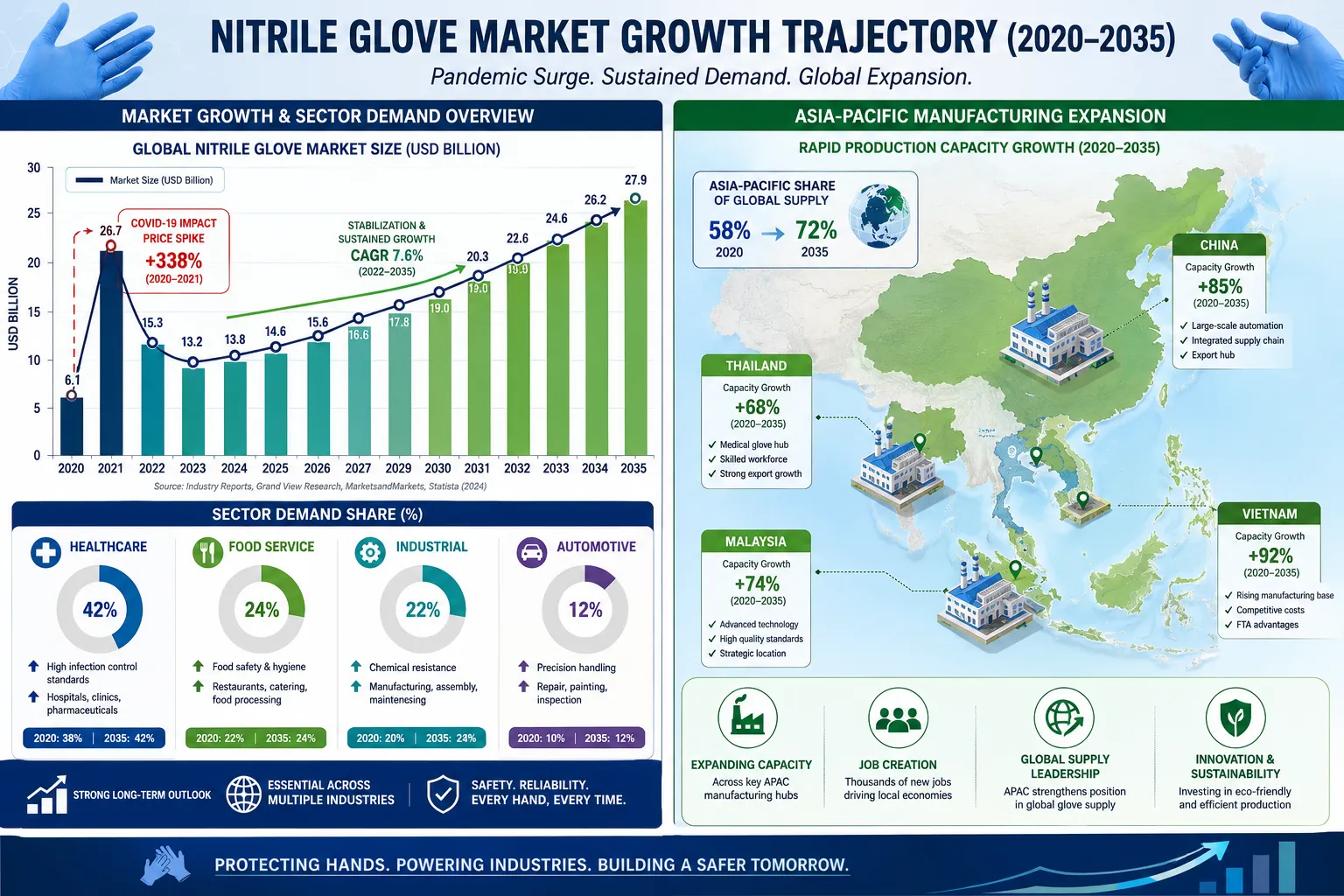
The global nitrile gloves market is projected to reach $25 billion by 2035, driven by Asia-Pacific manufacturing expansion, automation advances, and sustained demand across healthcare, food service, and industrial sectors. Understanding the Nitrile Gloves Market Forecast to 2035: Key Trends Shaping Purchases Today helps procurement managers, safety officers, and business owners make informed purchasing decisions amid evolving supply chains, regulatory requirements, and environmental concerns. Price stabilization after the COVID-19 spike, combined with emerging markets in Africa and Southeast Asia, creates both opportunities and challenges for bulk buyers navigating quality standards, thickness specifications, and sustainability pressures.
Key Takeaways
- Nitrile glove prices stabilized in 2024-2025 after the COVID-19 spike, with average costs ranging from $8-15 per 100-count box depending on thickness and certification
- Asia-Pacific manufacturers, particularly in Malaysia, Thailand, and Vietnam, control over 70% of global production capacity through 2035
- Healthcare remains the largest end-user at 45% market share, but food service and industrial sectors show faster growth rates of 8-9% annually
- Automation and robotics in manufacturing reduce production costs by 15-20% while improving quality consistency and reducing lead times
- Powder-free nitrile gloves dominate 95% of the market due to reduced contamination risk and lower allergy rates compared to powdered alternatives
- Environmental concerns drive development of biodegradable nitrile formulations, though traditional nitrile takes 100+ years to decompose
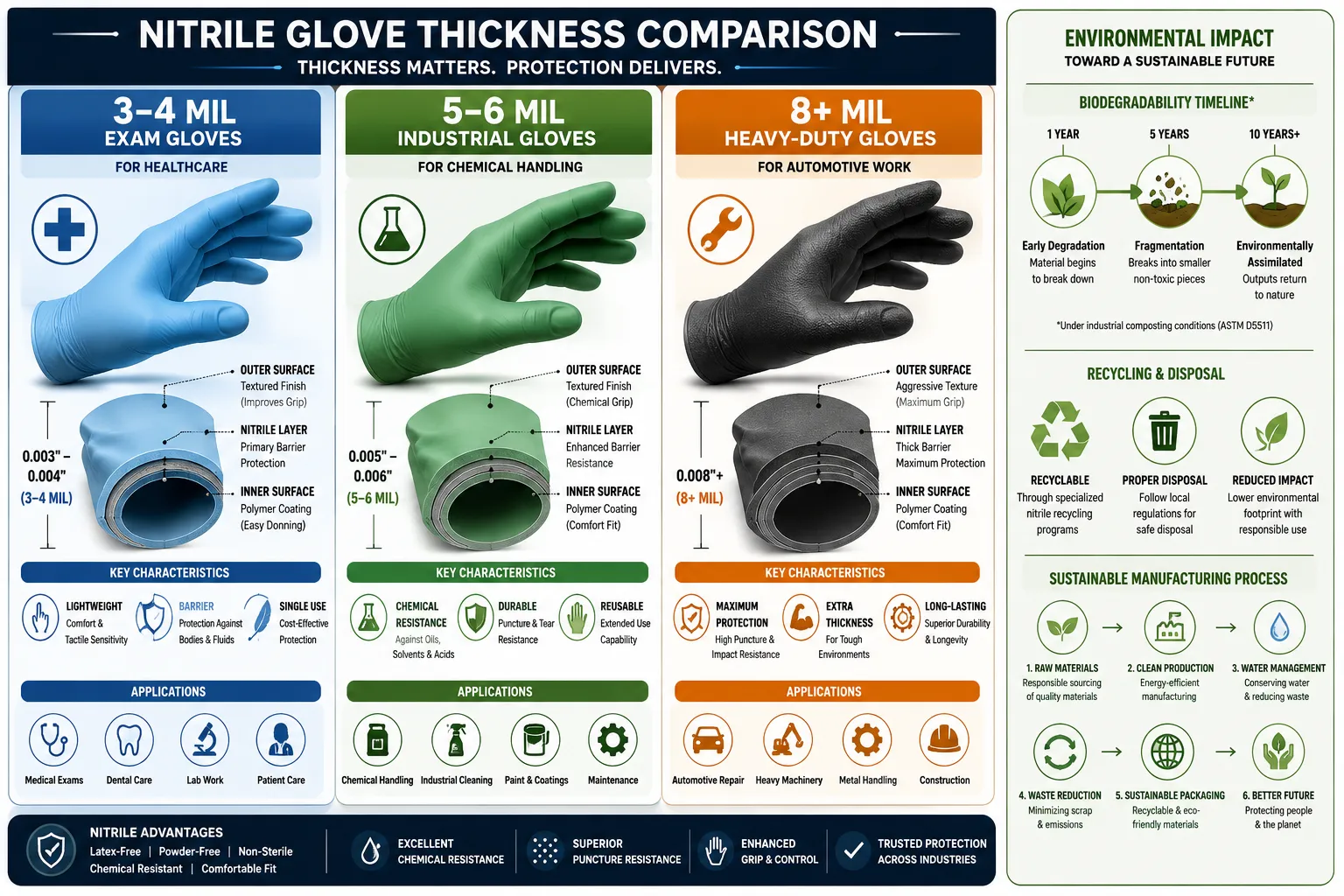
- Thickness specifications matter: 3-4 mil for general exam use, 5-6 mil for chemical resistance, 8+ mil for heavy industrial applications
- Common bulk purchasing mistakes include ignoring certification standards, overlooking storage conditions, and failing to test samples before large orders
What Are Nitrile Gloves and Why Are They Used in Healthcare
Nitrile gloves are synthetic rubber gloves made from acrylonitrile and butadiene polymers, offering superior puncture resistance, chemical protection, and latex-free composition. Healthcare facilities prefer nitrile because it eliminates latex allergy risks while providing barrier protection against bloodborne pathogens, medications, and cleaning chemicals.
The material’s molecular structure creates a tight barrier that resists permeation from most acids, bases, and solvents better than vinyl or polyethylene alternatives. Medical professionals rely on nitrile for:
- Exam procedures: Patient assessments, minor treatments, and routine care where tactile sensitivity matters
- Surgical applications: Sterile procedures requiring extended wear time and maximum barrier protection
- Laboratory work: Handling biological samples, chemicals, and pharmaceuticals safely
- Infection control: Preventing cross-contamination between patients and healthcare workers
Nitrile’s flexibility improves with body heat, conforming to hand shape for better dexterity during fine motor tasks like IV insertion or suturing. This adaptability, combined with shelf life of 3-5 years when stored properly, makes nitrile the default choice for 80% of healthcare glove purchases in 2026.
For detailed applications across different sectors, see our guide on top uses of disposable nitrile gloves.
Nitrile Gloves vs Latex Gloves: Which Is Better for Medical Use
Nitrile gloves outperform latex for medical use in most scenarios due to superior chemical resistance, no allergy risk, and longer shelf life, though latex offers slightly better elasticity and tactile sensitivity. Healthcare facilities have largely transitioned to nitrile since 2015 as latex allergy prevalence affects 8-12% of healthcare workers.
Key comparison factors:
| Feature | Nitrile | Latex |
|---|---|---|
| Allergy risk | Minimal (rare Type IV reactions) | High (8-12% of healthcare workers) |
| Chemical resistance | Excellent against oils, solvents, acids | Poor with petroleum products |
| Puncture resistance | 3x stronger than latex | Good but tears more easily |
| Tactile sensitivity | Very good (improves with wear) | Excellent (best feel) |
| Shelf life | 3-5 years | 2-3 years (degrades faster) |
| Cost per box | $8-15 | $6-10 |
| Environmental impact | 100+ years to decompose | 5-10 years (natural rubber) |
Choose nitrile when chemical exposure is likely, allergy concerns exist, or long-term storage is needed. Latex remains appropriate only for short procedures requiring maximum tactile feedback where no allergy risk exists and no chemical contact occurs.
The shift toward nitrile accelerated after regulatory bodies including OSHA and CDC recommended latex-free environments to protect sensitized workers. By 2026, nitrile represents 65% of all medical glove purchases globally, with that share expected to reach 75% by 2035 according to industry forecasts.
Learn more about potential allergic reactions to nitrile gloves and how to identify them.
How Much Do Nitrile Gloves Cost Per Box in 2026
Nitrile glove prices in 2026 range from $8-15 per 100-count box for standard exam-grade gloves, with industrial-grade and specialty formulations costing $12-25 per box depending on thickness, certifications, and order volume. Bulk purchases of 10+ cases typically reduce per-box costs by 15-30%.
Price breakdown by category:
- Basic exam gloves (3-4 mil, non-sterile): $8-12 per box
- Industrial gloves (5-6 mil, textured): $10-15 per box
- Heavy-duty gloves (8+ mil, chemical-rated): $15-25 per box
- Sterile surgical gloves: $25-40 per box (50 pairs)
- Specialty formulations (extended cuff, antimicrobial): $18-30 per box
Volume discounts apply at different thresholds. Purchasing 10 cases (1,000 boxes) typically reduces costs by 15%, while orders of 100+ cases can achieve 25-30% savings. However, buyers must balance discount benefits against storage space requirements and shelf life considerations.
Additional cost factors include:
- Certification requirements: FDA, ASTM, EN standards add $1-3 per box
- Brand premium: Recognized manufacturers charge 20-40% more than generic brands
- Shipping and logistics: Container costs from Asia add $0.50-1.50 per box
- Minimum order quantities: Smaller orders face 10-20% price premiums
Common mistake: Buyers focusing solely on per-box price often overlook total cost of ownership, including defect rates, worker comfort affecting productivity, and potential liability from substandard protection. A $2 cheaper box that increases defect rates from 1% to 5% costs more in wasted gloves and potential exposure incidents.
Why Did Nitrile Glove Prices Spike During COVID and Are They Stable Now
Nitrile glove prices increased 400-600% during 2020-2021 due to sudden demand surges, production capacity constraints, and raw material shortages, but stabilized by late 2024 as manufacturers expanded capacity and demand normalized. Prices in 2026 remain 30-50% higher than pre-pandemic levels but show consistent month-to-month stability.
Timeline of price movements:
- Pre-COVID (2019): $5-8 per box average
- Peak pandemic (Q2 2020 – Q1 2021): $25-40 per box
- Gradual decline (2022-2023): $15-25 per box
- Stabilization (2024-2026): $8-15 per box
- Forecast (2027-2035): $9-17 per box (2-3% annual inflation)
The spike occurred because global demand jumped from 330 billion gloves annually in 2019 to over 600 billion in 2020, while production capacity could only increase 15-20% per year. Malaysia and Thailand, which produce 65% of global supply, faced labor shortages and raw material bottlenecks as acrylonitrile and butadiene prices doubled.
Market stability returned through:
- Capacity expansion: 40% increase in global production lines from 2020-2024
- New market entrants: Vietnam, China, and India added significant manufacturing capacity
- Demand normalization: Healthcare usage returned to pre-pandemic levels plus 15-20% baseline increase
- Supply chain diversification: Buyers developed multi-source strategies reducing single-supplier dependence
Current stability indicators suggest prices will remain predictable through 2035 barring major disruptions. However, buyers should monitor raw material costs, energy prices in manufacturing regions, and geopolitical factors affecting Asian production hubs.
What Industries Are Driving Nitrile Glove Demand Growth
Healthcare accounts for 45% of nitrile glove demand, but food service (growing 9% annually), automotive (8% annually), and industrial manufacturing (7% annually) drive faster expansion through 2035. Combined, non-healthcare sectors will represent 60% of market growth between 2026-2035.
Demand by sector (2026 market share and growth rate):
- Healthcare and medical: 45% share, 5% annual growth
- Food service and processing: 22% share, 9% annual growth
- Industrial manufacturing: 15% share, 7% annual growth
- Automotive and mechanical: 10% share, 8% annual growth
- Janitorial and sanitation: 5% share, 6% annual growth
- Other applications: 3% share, 5% annual growth
Food service growth stems from stricter food safety regulations globally, particularly in emerging markets implementing HACCP standards. The FDA Food Safety Modernization Act and similar regulations in Europe and Asia mandate glove use for ready-to-eat food handling, driving adoption in restaurants, catering, and food processing facilities.
For food safety applications, compare nitrile vs vinyl gloves for food safety.
Automotive sector demand increases as:
- Electric vehicle production requires contamination-free battery assembly
- Advanced coatings and adhesives need chemical-resistant hand protection
- Quality control standards mandate glove use to prevent fingerprint contamination on sensitive components
Industrial manufacturing adoption accelerates due to workplace safety regulations, insurance requirements, and worker compensation cost reduction strategies. Companies find that consistent glove use reduces hand injury claims by 40-60%, offsetting glove costs through lower insurance premiums.
Are Nitrile Gloves Biodegradable or Bad for the Environment
Traditional nitrile gloves are not biodegradable and take 100+ years to decompose in landfills, creating significant environmental concerns as global usage exceeds 500 billion gloves annually. However, biodegradable nitrile formulations introduced since 2022 break down in 1-5 years under proper composting conditions, though they cost 30-50% more than standard nitrile.
Environmental impact factors:
- Decomposition time: Standard nitrile persists 100-200 years; biodegradable versions 1-5 years in industrial composting
- Annual waste volume: Approximately 2.5 million tons of nitrile gloves enter landfills globally
- Recycling challenges: Contamination from biological or chemical exposure prevents most recycling programs from accepting used gloves
- Manufacturing footprint: Production generates 3-4 kg CO2 per kg of nitrile material
- Water usage: Manufacturing requires 15-20 liters of water per kg of finished gloves
Biodegradable nitrile options use additives that allow microorganisms to break down the polymer chains when exposed to moisture, oxygen, and bacteria in composting environments. These formulations maintain the same performance characteristics as traditional nitrile during use and storage but decompose rapidly once disposed.
Limitations of biodegradable nitrile:
- Requires industrial composting facilities (not effective in standard landfills)
- Higher cost limits adoption to environmentally-conscious buyers
- Limited availability from major manufacturers
- Shorter shelf life (2-3 years vs 3-5 years for standard nitrile)
Organizations reducing environmental impact should consider:
- Right-sizing purchases: Avoid over-ordering to reduce waste from expired inventory
- Reusable alternatives: Heavy-duty nitrile gloves for non-contaminated applications can be washed and reused 5-10 times
- Proper disposal programs: Partner with specialized recyclers for clean, uncontaminated gloves
- Biodegradable options: Specify eco-friendly formulations for applications where contamination allows composting
The Nitrile Gloves Market Forecast to 2035 predicts biodegradable options will capture 15-20% market share by 2035 as costs decrease and composting infrastructure expands.
Best Nitrile Glove Brands for Food Service Industry
Top nitrile glove brands for food service include Ansell Microflex, Kimberly-Clark Purple Nitrile, and Ammex GlovePlus, chosen for FDA food-contact approval, powder-free formulation, and textured grip suitable for wet environments. Food service buyers should prioritize brands meeting ASTM D6319 standards and NSF/ANSI 51 certification for food handling.
Recommended brands and key features:
Ansell Microflex 93-852
- FDA 21 CFR 177.2600 compliant for direct food contact
- 4 mil thickness balances protection and dexterity
- Textured fingertips for grip on wet or greasy items
- Cost: $12-15 per 100-count box
Kimberly-Clark Purple Nitrile
- Distinctive purple color for easy identification
- Ambidextrous design reduces waste
- Extended 9.5-inch cuff protects wrists
- Cost: $13-16 per 100-count box
Ammex GlovePlus Industrial
- Budget-friendly option at $9-12 per box
- ASTM D6319 certified for food service
- Available in multiple colors for task coding
- Slightly thicker 5 mil for durability
Medline SensiCare Silk
- Premium comfort for extended wear
- Low dermatitis potential for sensitive workers
- Excellent tactile sensitivity for detailed work
- Cost: $14-17 per 100-count box
Choose brands based on:
- Certification requirements: Verify FDA food-contact approval and local health department standards
- Color coding needs: Different colors help separate tasks (blue for raw meat, purple for ready-to-eat)
- Worker comfort: Higher-quality gloves reduce hand fatigue during long shifts
- Defect rates: Premium brands typically show 0.5-1% defect rates vs 3-5% for budget options
Common mistake: Selecting automotive or industrial-grade nitrile not certified for food contact. These may contain additives or processing chemicals unsuitable for direct food contact, risking health code violations.
For cooking applications specifically, review our guide on best disposable gloves for cooking.
Common Mistakes When Buying Nitrile Gloves in Bulk
The most critical bulk purchasing mistakes include ignoring certification standards, failing to test samples before large orders, and overlooking proper storage requirements that affect shelf life. These errors cost buyers 15-30% in wasted inventory, compliance issues, and worker safety problems.
Top purchasing mistakes and solutions:
Mistake 1: Focusing only on price Cheapest options often have 3-5x higher defect rates, costing more through waste and potential exposure incidents. Calculate total cost including defect rates, worker productivity, and compliance risk.
Mistake 2: Skipping sample testing Order 5-10 boxes from potential suppliers before committing to pallet quantities. Test for sizing accuracy, comfort during extended wear, and actual thickness vs specifications.
Mistake 3: Ignoring certification requirements Verify ASTM, FDA, EN, or ISO certifications match your application. Medical facilities need ASTM D6319 for exam gloves; food service requires FDA 21 CFR 177.2600; chemical handling needs EN 374 ratings.
Mistake 4: Inadequate storage planning Nitrile gloves require cool (50-70°F), dry storage away from direct sunlight and ozone sources. Poor storage reduces shelf life from 3-5 years to 6-12 months. Calculate warehouse space before ordering 100+ cases.
Mistake 5: Wrong size distribution Most facilities need 15% small, 35% medium, 40% large, 10% extra-large. Ordering equal quantities of all sizes leaves excess inventory in less-common sizes. Learn more about why large-size nitrile gloves are popular.
Mistake 6: Single-source dependency Relying on one supplier creates vulnerability to disruptions. Develop relationships with 2-3 approved vendors to ensure supply continuity.
Mistake 7: Ignoring lead times Asian manufacturers typically require 60-90 days from order to delivery. Domestic distributors offer 1-2 week delivery but charge 20-30% premiums. Plan inventory 4-6 months ahead.
Mistake 8: Overlooking minimum order quantities Direct manufacturer purchases often require full container loads (20-40 pallets). Smaller buyers should work with distributors offering case-level ordering despite slightly higher costs.
Best practice: Create a detailed specification sheet including thickness, certifications, color, size distribution, packaging requirements, and delivery schedule before requesting quotes. This ensures accurate comparisons and reduces miscommunication.
Who Should Avoid Using Nitrile Gloves: Are There Allergies
Most people can safely use nitrile gloves, but individuals with Type IV hypersensitivity to rubber accelerators (thiurams, carbamates) may experience contact dermatitis affecting 1-2% of regular glove users. True nitrile allergy is extremely rare compared to latex allergy, which affects 8-12% of healthcare workers.
Allergy types and symptoms:
Type IV delayed hypersensitivity (most common nitrile reaction)
- Symptoms: Redness, itching, dry skin, cracking appearing 24-48 hours after exposure
- Cause: Chemical accelerators used in manufacturing, not the nitrile polymer itself
- Prevalence: 1-2% of regular glove users
- Solution: Switch to accelerator-free or low-chemical nitrile formulations
Irritant contact dermatitis (not a true allergy)
- Symptoms: Dry, irritated skin from friction, moisture, or frequent handwashing
- Cause: Mechanical irritation, not immune response
- Prevalence: 5-10% of healthcare workers with frequent glove use
- Solution: Proper hand hygiene, moisturizers, and ensuring gloves fit correctly
Cross-reactivity concerns
- Some individuals allergic to latex may react to nitrile if manufacturing residues remain
- Extremely rare (less than 0.1% of cases)
- Choose certified latex-free facilities for sensitive individuals
For comprehensive information, see our detailed guide on allergic reactions to nitrile gloves.
Who should use caution:
- Workers with existing hand dermatitis or eczema
- Individuals with known sensitivity to rubber chemicals
- People experiencing persistent skin reactions despite proper glove use
- Those with multiple chemical sensitivities
Testing for sensitivity:
Perform a patch test by wearing a small piece of glove material on the inner forearm for 24-48 hours. Redness, itching, or rash indicates potential sensitivity. Consult an allergist for formal testing if reactions occur.
Alternative options for sensitive individuals include vinyl gloves for low-risk applications or specialized hypoallergenic nitrile formulations that eliminate common accelerators. However, these alternatives may sacrifice some protection or durability.
How Is Automation Changing Nitrile Glove Manufacturing
Automation and robotics reduce nitrile glove production costs by 15-20% while improving quality consistency, with fully automated lines producing 50,000+ gloves per hour compared to 30,000 for semi-automated facilities. By 2035, 60% of global nitrile production will use fully automated systems, up from 35% in 2026.
Key automation technologies:
Robotic dipping systems
- Precise control of ceramic hand forms entering nitrile compound
- Consistent coating thickness within 0.1 mil tolerance
- Reduced material waste by 10-15%
- Faster production cycles (8-10 seconds vs 12-15 seconds manual)
AI-powered quality inspection
- Computer vision systems detect pinholes, tears, and thickness variations
- 99.9% defect detection vs 95% for manual inspection
- Real-time production adjustments prevent batch defects
- Reduces defect rates from 2-3% to 0.5-1%
Automated packaging and palletizing
- Robotic systems handle boxing, case packing, and pallet building
- Eliminates 40-60% of manual labor in finishing operations
- Improves packaging consistency and reduces damage during shipping
Smart manufacturing integration
- IoT sensors monitor temperature, humidity, and curing conditions
- Predictive maintenance reduces downtime by 25-30%
- Real-time inventory tracking optimizes raw material usage
Impact on the Nitrile Gloves Market Forecast to 2035:
Automation drives market changes through:
- Lower production costs: Enables price stability despite raw material fluctuations
- Improved quality: Consistent specifications meet stricter regulatory requirements
- Faster response times: Automated facilities adjust production mix within hours vs days
- Reduced labor dependency: Addresses workforce shortages in traditional manufacturing regions
- Environmental benefits: Precise material application reduces waste by 15-20%
Manufacturers investing in automation gain competitive advantages through lower costs and higher quality, forcing traditional producers to modernize or exit the market. This consolidation trend will reduce the number of global manufacturers from 200+ in 2026 to approximately 100-120 by 2035, with remaining players operating at higher efficiency levels.
Buyers benefit from automation through more consistent product quality, better supply reliability, and gradual price reductions as efficiency gains offset inflation.
Nitrile Glove Shortage 2024: Will Supply Issues Continue
Nitrile glove supply stabilized by mid-2024 with no significant shortages expected through 2035, as global production capacity now exceeds demand by 15-20% following massive expansion during 2020-2023. However, regional disruptions from natural disasters, labor issues, or geopolitical events may cause temporary 2-4 week delays.
Current supply situation (2026):
- Global capacity: 750 billion gloves annually
- Global demand: 620 billion gloves annually
- Capacity utilization: 82% (healthy buffer for demand spikes)
- Lead times: 60-90 days from Asian manufacturers, 1-2 weeks from domestic distributors
- Inventory levels: Most distributors maintain 4-6 weeks stock
Factors supporting supply stability:
Capacity expansion completed Malaysia, Thailand, Vietnam, and China added 300+ new production lines between 2020-2024, increasing global capacity by 40%. This expansion exceeded demand growth, creating the current supply surplus.
Geographic diversification New manufacturing in Vietnam, India, and China reduces dependency on Malaysia and Thailand, which historically controlled 80% of production. By 2026, these traditional producers represent 65% of capacity, with other regions filling gaps.
Improved raw material supply Acrylonitrile and butadiene production increased 25% globally, eliminating the bottlenecks that constrained glove manufacturing during peak pandemic demand.
Strategic inventory practices Large buyers and distributors now maintain 3-6 months safety stock compared to just-in-time practices pre-pandemic, buffering against short-term disruptions.
Potential disruption risks through 2035:
- Natural disasters: Flooding in Malaysia or Thailand could temporarily reduce 30-40% of global capacity
- Labor disputes: Worker strikes at major manufacturers may cause 2-4 week delays
- Energy costs: High electricity prices in manufacturing regions could force temporary production cuts
- Regulatory changes: New environmental or labor regulations may increase costs or reduce capacity
Mitigation strategies for buyers:
- Maintain 2-3 month inventory buffer for critical applications
- Develop relationships with multiple suppliers across different geographic regions
- Monitor industry news for early warning of potential disruptions
- Consider domestic manufacturing options despite 20-30% cost premiums for strategic applications
The Nitrile Gloves Market Forecast to 2035 indicates stable supply conditions with gradual capacity increases matching demand growth, making severe shortages unlikely barring unprecedented global events.
What Thickness of Nitrile Gloves Do I Need for Chemical Handling
Chemical handling requires 5-8 mil nitrile gloves minimum, with specific thickness depending on chemical type, exposure duration, and breakthrough time requirements. For hazardous chemicals, consult EN 374 permeation data and choose gloves rated for your specific substances with breakthrough times exceeding expected exposure by 2-3x.
Thickness recommendations by application:
Light chemical exposure (3-4 mil)
- Diluted cleaning solutions
- Brief contact with mild acids or bases
- General laboratory work with low-hazard substances
- Maximum exposure: 10-15 minutes
Moderate chemical exposure (5-6 mil)
- Concentrated cleaning chemicals
- Automotive fluids (oils, coolants, brake fluid)
- Industrial solvents (acetone, toluene, xylene)
- Maximum exposure: 30-60 minutes
Heavy chemical exposure (8-12 mil)
- Strong acids and bases
- Aggressive solvents
- Pesticides and herbicides
- Extended exposure: 2-4 hours
Specialized chemical protection (15+ mil)
- Highly corrosive substances
- Carcinogenic or mutagenic chemicals
- Situations requiring maximum barrier protection
- Extended exposure: 4+ hours
For detailed guidance, review our article on best thickness for nitrile gloves.
Critical factors beyond thickness:
Permeation resistance Thickness alone doesn’t guarantee protection. Check EN 374 ratings showing breakthrough time for specific chemicals. A 6 mil glove may resist one chemical for hours but another for only minutes.
Degradation effects Some chemicals physically damage nitrile, causing swelling, stiffening, or brittleness. Inspect gloves regularly during use and replace immediately if material changes occur.
Dexterity requirements Thicker gloves provide better protection but reduce tactile sensitivity and hand mobility. Balance protection needs against task requirements. For precision work with chemicals, consider double-gloving with thin inner gloves and thicker outer protection.
Cuff length Chemical handling often requires extended cuffs (12-18 inches) to protect wrists and forearms, regardless of thickness. Standard 9-10 inch cuffs leave gaps when reaching into containers.
Common mistake: Assuming all nitrile provides equal chemical protection. Nitrile resists petroleum products and many solvents well but offers poor protection against ketones, strong oxidizers, and some aromatic hydrocarbons. Always verify compatibility before use.
For laboratory applications, see our guide on powder-free nitrile gloves for chemistry labs.
Are Powder-Free Nitrile Gloves Worth the Extra Cost
Powder-free nitrile gloves cost $1-3 more per box than powdered versions but eliminate contamination risks, reduce allergic reactions, and meet modern regulatory requirements, making them worth the premium for 95% of applications. Most healthcare facilities, food service operations, and clean manufacturing environments mandate powder-free gloves.
Powder-free advantages:
Contamination prevention Cornstarch powder transfers to surfaces, products, and wounds, creating infection risks in medical settings and quality issues in manufacturing. Powder-free gloves eliminate this transfer, critical for:
- Surgical procedures where powder can cause adhesions
- Electronics assembly where particles damage sensitive components
- Food preparation where powder affects taste and texture
- Clean room environments requiring particle control
Reduced allergic reactions Powder acts as a carrier for latex proteins and chemical residues, increasing sensitization rates. Powder-free gloves reduce contact dermatitis incidence by 40-60% compared to powdered alternatives.
Regulatory compliance FDA banned powdered surgical and exam gloves in 2017 due to health risks. Many facilities extend this ban to all glove types for consistency and safety. Using powder-free gloves ensures compliance with current and future regulations.
Improved grip Modern powder-free gloves use textured surfaces or polymer coatings for grip, often outperforming powdered gloves in wet conditions without the mess of powder residue.
Easier donning Chlorination or polymer coating processes used in powder-free manufacturing create slippery inner surfaces that slide on easily, matching or exceeding the donning ease of powdered gloves.
Situations where powdered gloves remain acceptable:
- Non-critical industrial applications with no contamination concerns
- Short-term use where cost savings matter more than convenience
- Applications where powder actually helps (some food processing tasks)
- Facilities with existing large inventories transitioning to powder-free
Cost-benefit analysis shows powder-free gloves pay for themselves through:
- Reduced cleaning costs (no powder residue on surfaces)
- Lower allergy-related worker compensation claims
- Decreased product defects from contamination
- Improved regulatory compliance and audit results
The Nitrile Gloves Market Forecast to 2035 predicts powder-free options will represent 98% of all nitrile glove sales by 2030, with powdered versions limited to niche industrial applications.
Emerging Markets for Nitrile Gloves in Asia and Africa
Asia-Pacific and Africa represent the fastest-growing nitrile glove markets, with combined annual growth rates of 11-13% through 2035 driven by healthcare infrastructure expansion, rising hygiene awareness, and manufacturing sector growth. India, Indonesia, Nigeria, and Kenya show particularly strong adoption as middle-class populations expand and regulatory frameworks strengthen.
Key emerging market drivers:
Healthcare infrastructure expansion Developing nations invest heavily in hospital construction and primary care facilities, creating demand for medical supplies including examination gloves. India alone plans to add 150,000 hospital beds annually through 2030, each requiring thousands of gloves per year.
Regulatory modernization Countries adopting WHO guidelines and implementing food safety standards mandate glove use in healthcare and food service. Indonesia’s 2024 food safety regulations require gloves for all ready-to-eat food handling, affecting 2 million food service workers.
Manufacturing sector growth Electronics, automotive, and pharmaceutical manufacturing expanding in Southeast Asia and East Africa requires contamination control and worker protection, driving industrial glove demand.
Rising disposable income Growing middle classes in emerging markets prioritize health and hygiene, increasing willingness to pay for quality protective equipment. Per capita glove consumption in India increased from 2 gloves per person in 2020 to 8 gloves in 2026, with projections reaching 25 by 2035.
Regional market analysis:
India
- Market size: $850 million (2026), projected $2.1 billion (2035)
- Growth drivers: Healthcare expansion, pharmaceutical manufacturing, food service modernization
- Challenges: Price sensitivity, competition from lower-quality alternatives
Indonesia
- Market size: $420 million (2026), projected $980 million (2035)
- Growth drivers: Food safety regulations, palm oil industry, tourism sector
- Challenges: Import dependency, distribution infrastructure
Nigeria
- Market size: $180 million (2026), projected $520 million (2035)
- Growth drivers: Oil and gas sector, healthcare investment, population growth
- Challenges: Currency volatility, import logistics
Kenya (East Africa hub)
- Market size: $95 million (2026), projected $280 million (2035)
- Growth drivers: Regional healthcare hub, agricultural processing, manufacturing growth
- Challenges: Limited local production, high import costs
Opportunities for suppliers:
Manufacturers and distributors targeting emerging markets should:
- Develop price-competitive product lines balancing quality and affordability
- Establish local distribution partnerships understanding regional logistics
- Provide education and training on proper glove selection and use
- Offer flexible packaging sizes suitable for smaller operations
- Build relationships with government health ministries and regulatory bodies
The Nitrile Gloves Market Forecast to 2035: Key Trends Shaping Purchases Today identifies emerging markets as the primary growth engine, with Asia-Pacific and Africa accounting for 65% of new demand between 2026-2035.
Frequently Asked Questions
How long do nitrile gloves last in storage? Nitrile gloves last 3-5 years when stored properly in cool (50-70°F), dry conditions away from direct sunlight and ozone sources. Check manufacturer date codes and rotate inventory using first-in-first-out practices to ensure freshness.
Can nitrile gloves be reused safely? Heavy-duty nitrile gloves (8+ mil) for non-contaminated applications can be washed and reused 5-10 times if no tears or degradation occur. Never reuse gloves exposed to biological hazards, chemicals, or showing visible damage.
What do mil ratings mean for nitrile gloves? Mil measures thickness in thousandths of an inch. A 4 mil glove is 0.004 inches thick. Thicker gloves provide better protection and durability but reduce tactile sensitivity. Most exam gloves are 3-4 mil, industrial gloves 5-8 mil.
Are black nitrile gloves different from blue ones? Color differences are primarily aesthetic, though some manufacturers formulate black gloves slightly thicker for automotive and industrial use. Performance depends on specifications, not color. Choose based on thickness, certifications, and application requirements. Learn more about colors of nitrile disposable gloves.
Do nitrile gloves protect against viruses? Yes, intact nitrile gloves provide effective barrier protection against viruses including COVID-19, influenza, and bloodborne pathogens when used correctly. Proper donning, avoiding contamination during removal, and hand hygiene remain critical for maximum protection.
What’s the difference between exam and surgical nitrile gloves? Surgical gloves are sterile, have tighter quality standards (lower defect rates), offer better tactile sensitivity, and cost 2-3x more than exam gloves. Exam gloves are non-sterile and suitable for most medical procedures not requiring sterile fields. For more details, see our comparison of nitrile surgical gloves and exam gloves for hospitals.
Can nitrile gloves cause skin problems? Nitrile rarely causes true allergic reactions, but 1-2% of users may develop contact dermatitis from chemical accelerators used in manufacturing. Irritant dermatitis from moisture and friction affects 5-10% of frequent users. Proper hand hygiene and moisturizing reduce these issues.
How do I know if nitrile gloves meet food safety standards? Look for FDA 21 CFR 177.2600 compliance or NSF/ANSI 51 certification marked on packaging. These certifications verify gloves are safe for direct food contact without transferring harmful substances.
What causes nitrile gloves to tear during use? Common causes include wrong size (too small stretches material), sharp objects, chemical degradation, expired gloves, and manufacturing defects. Choose appropriate thickness for your application and inspect gloves before use.
Are textured nitrile gloves better than smooth? Textured fingertips improve grip on wet or slippery items, making them preferable for food service, laboratory work, and industrial applications. Smooth gloves offer slightly better tactile sensitivity for precision work and easier cleaning for reusable heavy-duty gloves.
How much do shipping costs add to nitrile glove prices? Container shipping from Asia adds $0.50-1.50 per box depending on order size and destination. Domestic shipping within the US costs $0.20-0.50 per box. Large volume buyers can negotiate freight-included pricing.
What’s the minimum order quantity for buying direct from manufacturers? Most Asian manufacturers require full container loads (20-40 pallets, 40,000-80,000 boxes) for direct orders. Smaller buyers should work with distributors offering case-level ordering (10-100 boxes) despite 20-30% price premiums.
Conclusion
The Nitrile Gloves Market Forecast to 2035: Key Trends Shaping Purchases Today reveals a stable, growing market driven by healthcare demand, food safety regulations, and industrial expansion, particularly in Asia-Pacific and African emerging markets. Buyers benefit from price stabilization after COVID-19 disruptions, increased production capacity, and automation improvements that enhance quality while controlling costs.
Smart purchasing decisions require understanding thickness specifications for your application, verifying appropriate certifications, and balancing cost against quality and compliance requirements. Powder-free formulations dominate the market for good reason, eliminating contamination risks worth far more than the modest price premium. Environmental concerns drive gradual adoption of biodegradable alternatives, though traditional nitrile remains the standard for most applications through 2035.
Actionable next steps for buyers:
- Assess your specific needs: Document required thickness, certifications, size distribution, and monthly usage to create detailed specifications
- Request samples: Test 5-10 boxes from potential suppliers before committing to bulk orders, evaluating comfort, durability, and defect rates
- Develop multi-source strategy: Establish relationships with 2-3 approved suppliers across different geographic regions to ensure supply continuity
- Plan inventory strategically: Maintain 2-3 months safety stock while respecting 3-5 year shelf life to balance availability and waste
- Monitor market trends: Stay informed about raw material costs, regulatory changes, and emerging technologies affecting pricing and availability
- Calculate total cost: Look beyond per-box price to include defect rates, worker productivity, compliance risk, and storage costs
- Consider sustainability: Evaluate biodegradable options for applications where contamination allows composting, supporting environmental goals
The nitrile glove market through 2035 offers buyers unprecedented choice, quality, and supply reliability. Success comes from informed decision-making based on application requirements, quality standards, and total cost of ownership rather than simply choosing the lowest price option.
SEO Meta Title: Nitrile Gloves Market Forecast to 2035: Key Trends