Last updated: May 1, 2026
Quick Answer
Nitrile gloves prevent contamination in electronics by generating minimal particles (≤800 particles/cm² for ISO Class 4 compliance), providing ESD-safe properties with surface resistivity of 10^9-10^11 Ω/sq, and maintaining ultra-low non-volatile residues through specialized cleaning processes. Their powder-free, pathogen-free design eliminates common contamination sources that damage sensitive semiconductor components and circuit boards.
Key Takeaways
- Cleanroom-grade nitrile gloves meet ISO Class 4 standards with particle generation below 800 particles/cm² (≥0.5μm), protecting wafers and components from defects
- ESD protection through surface resistivity of 10^9-10^11 Ω/sq per ANSI/ESD S20.20 prevents electrostatic discharge damage to sensitive electronics
- Ultra-low non-volatile residues (NVR) achieved through ultra-pure water cleaning minimizes surface ions and silicon contamination
- Powder-free design eliminates powder particle introduction during precision tasks like PCB soldering and component inspection
- Pathogen-free certification confirms absence of bacteria including Staphylococcus aureus and E. coli for verifiable contamination control
- Chemical resistance maintains barrier integrity against oils, solvents, and cleaning agents used in electronics manufacturing
- Superior durability compared to vinyl reduces particle shedding and glove failure during extended cleanroom operations
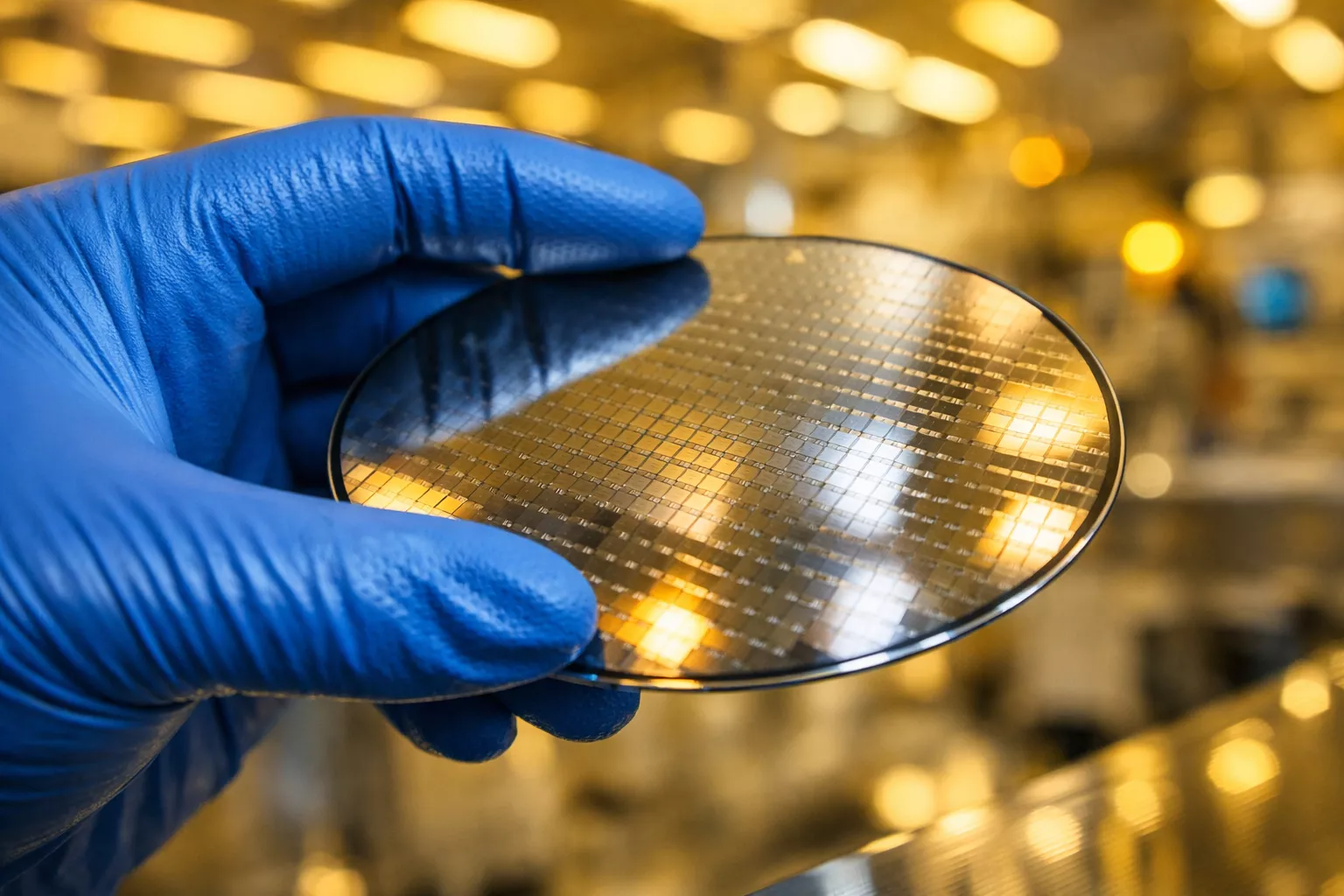
What Makes Nitrile Gloves Essential for Electronics Manufacturing?
Nitrile gloves serve as the primary barrier between human contamination sources and sensitive electronic components in semiconductor fabrication and assembly environments. Electronics manufacturing requires materials that won’t introduce particles, oils, or static charges that cause defects in microchips, circuit boards, and precision devices.
Human hands naturally shed:
- Skin cells and oils
- Bacteria and microorganisms
- Moisture and salts
- Static charges
Cleanroom-grade nitrile gloves address each contamination vector through specialized manufacturing and testing. Unlike standard disposable gloves, electronics-grade versions undergo rigorous cleaning with ultra-pure water and meet strict particle generation limits defined by ISO 23464:2020 standards.[1]
Choose nitrile gloves for electronics when:
- Working in ISO Class 3-7 cleanrooms
- Handling bare silicon wafers or dies
- Assembling PCBs with surface-mount components
- Inspecting or testing sensitive devices
- Performing quality control on finished electronics
The material composition of nitrile (acrylonitrile-butadiene rubber) provides inherent advantages over latex and vinyl alternatives, including consistent quality without natural rubber proteins and better durability than vinyl during extended wear.
How Do Nitrile Gloves Achieve Low Particle Generation?
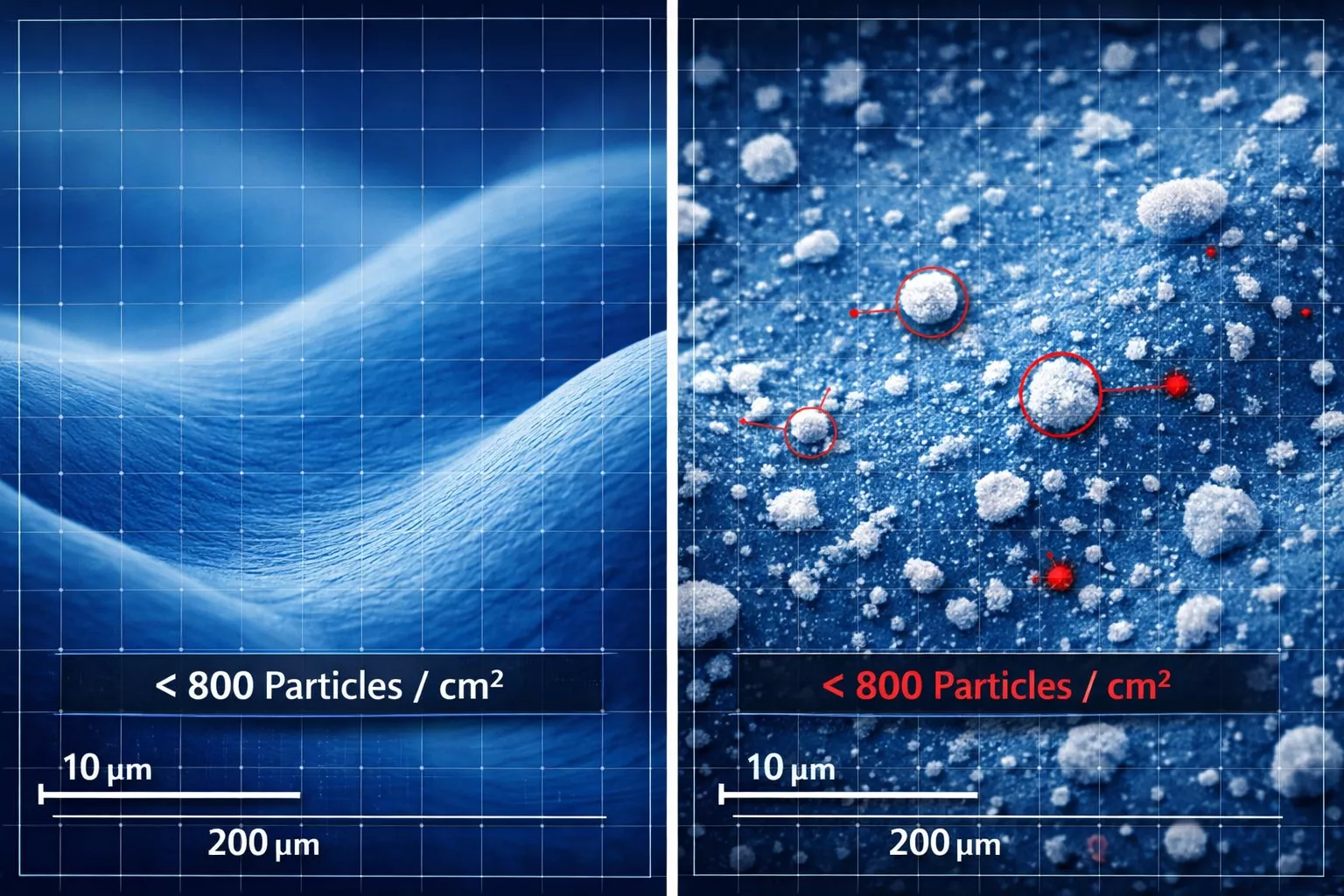
Cleanroom nitrile gloves prevent particulate contamination by maintaining particle generation at or below 800 particles/cm² for particles ≥0.5μm in size, meeting ISO Class 4 cleanroom requirements.[1] This low particle count protects semiconductor wafers and electronic assemblies from defects caused by foreign material.
Manufacturing processes that reduce particle generation:
- Polymer formulation control – Consistent nitrile compound mixing eliminates weak points that shed particles
- Ultra-pure water washing – Multiple rinse cycles remove manufacturing residues and loose particles
- Controlled drying environments – Prevents particle redeposition during the final production stages
- Double-bagging in cleanroom packaging – Maintains cleanliness from factory to point of use
Testing protocols measure both particle count and Total Non-Volatile Residue (TNVR), with premium cleanroom gloves achieving TNVR <2.5μg/m².[1] This specification matters because residues can migrate onto wafer surfaces during handling, creating defects visible only after processing steps.
Common mistake: Using standard medical-grade nitrile gloves in cleanrooms. These gloves aren’t manufactured or tested to electronics industry particle standards and can introduce 10-100x more contamination than cleanroom-certified versions.
For semiconductor workers handling Class 10-100 cleanroom operations, selecting the appropriate glove thickness balances contamination control with tactile sensitivity needed for precision work.
What Role Does ESD Protection Play in Contamination Prevention?
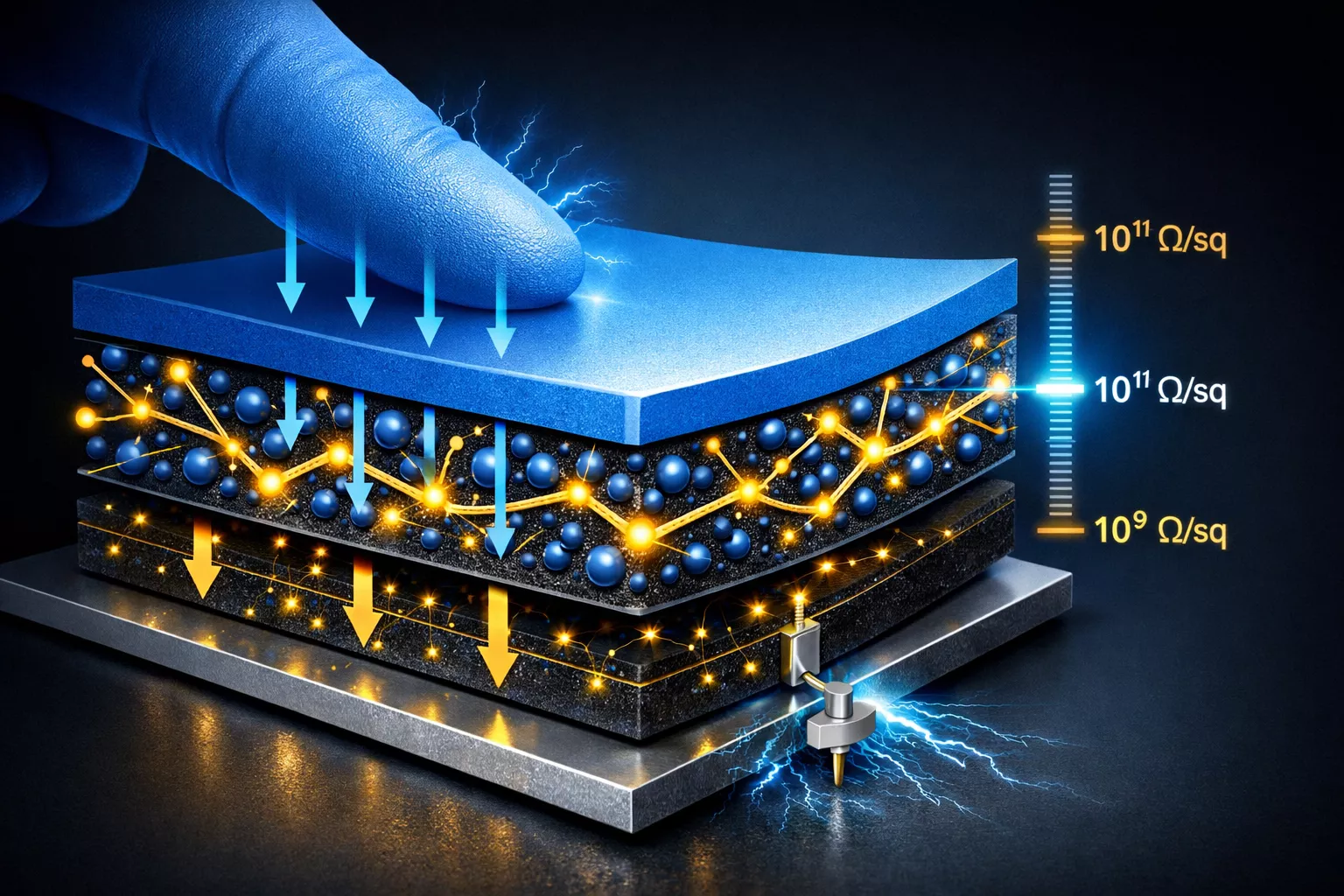
Nitrile gloves provide electrostatic discharge (ESD) protection through controlled surface resistivity of 10^9-10^11 Ω/sq, meeting ANSI/ESD S20.20 standards for electronics manufacturing.[1][2] This resistivity range allows static charges to dissipate gradually rather than discharge suddenly, preventing component damage and secondary contamination from ESD events.
How ESD protection prevents contamination:
- Prevents component failure – Sudden discharge can create micro-cracks or junction damage in semiconductors
- Eliminates particle attraction – Static charges attract airborne particles to component surfaces
- Maintains cleanroom integrity – Reduces particle redistribution caused by electrostatic fields
- Protects sensitive assemblies – Prevents latent defects that appear after customer delivery
Surface resistivity testing follows standardized protocols where electrodes measure charge dissipation time across the glove material. Values below 10^9 Ω/sq conduct too quickly (potential shock hazard), while values above 10^12 Ω/sq don’t dissipate charges effectively (insulative).
Decision rule: Choose ESD-rated nitrile gloves when handling:
- Integrated circuits and microprocessors
- Memory modules and storage devices
- Display panels and sensors
- Any component marked with ESD-sensitive warnings
The combination of low particle generation and ESD protection makes nitrile gloves superior to alternatives. Latex gloves may generate acceptable particle counts but lack consistent ESD properties, while vinyl gloves often fail durability requirements for extended cleanroom use.[3]
Workers in electronics assembly should understand that nitrile gloves also provide chemical resistance against flux, solvents, and cleaning agents without compromising ESD protection.
How Does Ultra-Pure Water Cleaning Minimize Non-Volatile Residues?
Clean nitrile gloves undergo specialized washing with ultra-pure water to minimize non-volatile residues (NVR), surface ions, silicon levels, and particulates that cause defects in electronics manufacturing.[2] This cleaning process removes manufacturing aids, mold release agents, and chemical residues that standard glove production leaves behind.
The ultra-pure water cleaning process:
- Multiple rinse cycles – Removes water-soluble contaminants and ionic residues
- Deionized water final rinse – Eliminates mineral deposits and ionic contamination
- Controlled drying – Prevents recontamination during moisture removal
- Cleanroom packaging – Maintains cleanliness until point of use
NVR testing measures the mass of residue remaining after glove material is extracted and dried. Premium cleanroom nitrile gloves achieve TNVR values below 2.5μg/m², compared to 10-50μg/m² for standard medical gloves.[1] This difference matters significantly in wafer fabrication where even nanogram-level contamination creates yield-limiting defects.
Surface ions and silicon contamination present particular risks in semiconductor processing. Sodium, potassium, and chloride ions can migrate into oxide layers during high-temperature processing steps, altering electrical properties. Silicon contamination from glove manufacturing can create false particle counts during wafer inspection.
Edge case: Some flux and soldering operations require gloves with specific chemical resistance. Standard cleanroom nitrile gloves resist most electronics chemicals, but workers should verify compatibility with aggressive solvents like acetone or MEK before use.
The cleaning investment in premium cleanroom gloves costs 2-4x more than standard nitrile gloves but prevents defects that cost 100-1000x more in scrapped wafers or failed assemblies.
Why Are Powder-Free Nitrile Gloves Critical for Electronics?
Powder-free nitrile gloves eliminate cornstarch powder contamination that damages electronic components and creates defects in cleanroom environments. Powdered gloves, while easier to don, release thousands of powder particles per glove during use, with each particle capable of causing shorts, adhesion failures, or optical defects.[3]
Contamination risks from powdered gloves:
- Particle contamination – Cornstarch particles range from 5-50μm, far exceeding cleanroom limits
- Residue buildup – Powder accumulates on work surfaces and equipment
- Chemical interference – Powder can react with flux, adhesives, and coatings
- Optical defects – Particles create visible defects on displays and lenses
Electronics manufacturing universally specifies powder-free gloves for Class 10-100,000 cleanrooms. The powder-free manufacturing process uses polymer coatings or chlorination to reduce surface friction, allowing easy donning without powder.
Proper powder-free glove donning technique:
- Remove gloves from inner cleanroom packaging
- Touch only the cuff area during initial donning
- Allow gloves to warm to hand temperature for best fit
- Avoid touching non-cleanroom surfaces after donning
- Change gloves every 2-4 hours or when visibly contaminated
Some semiconductor workers report difficulty donning powder-free gloves compared to powdered versions. Using gloves with textured fingertips or applying approved cleanroom-compatible donning aids solves this issue without introducing contamination.
For workers concerned about allergic reactions to nitrile gloves, powder-free versions actually reduce sensitization risk because powder particles can carry and aerosolize chemical accelerators that cause contact dermatitis.
What Pathogen-Free Certification Means for Electronics Cleanrooms?
Pathogen-free certified nitrile gloves undergo third-party testing to confirm absence of bacteria including Staphylococcus aureus, E. coli, Listeria monocytogenes, and Salmonella, providing verifiable contamination control in electronics environments.[4] While electronics don’t suffer biological contamination like food or pharmaceuticals, pathogen-free certification indicates rigorous manufacturing hygiene that correlates with lower overall contamination levels.
Why pathogen testing matters for electronics:
- Manufacturing cleanliness indicator – Facilities that control biological contamination also control particles and residues
- Cross-contamination prevention – Workers moving between food/pharma and electronics areas need consistent protection
- Quality system verification – Third-party testing validates manufacturer quality control
- Regulatory compliance – Some electronics facilities require pathogen-free certification for all consumables
Testing protocols expose glove samples to specific bacterial strains under controlled conditions, then culture and count any surviving organisms. Pathogen-free certification requires zero detectable colony-forming units (CFU) after testing.
Choose pathogen-free certified gloves when:
- Facility quality systems require third-party verification
- Workers handle both electronics and food/pharma products
- Customer specifications mandate pathogen-free materials
- Maximum contamination control justifies premium pricing
The certification adds 10-20% to glove costs but provides documented evidence of manufacturing cleanliness that standard particle testing alone doesn’t capture. For high-value semiconductor fabrication where single defects can scrap $10,000+ wafers, this verification provides cost-effective risk reduction.
How Do Nitrile Gloves Compare to Latex and Vinyl for Electronics?
Nitrile gloves outperform latex and vinyl alternatives in electronics manufacturing through superior particle control, consistent ESD properties, and better durability during extended cleanroom use.[3] Each material offers distinct advantages and limitations that affect contamination prevention.
Material comparison for electronics applications:
| Property | Nitrile | Latex | Vinyl |
|---|---|---|---|
| Particle Generation | Low (≤800/cm²) | Moderate (protein shedding) | Low-Moderate |
| ESD Protection | Excellent (10^9-10^11 Ω/sq) | Variable (inconsistent) | Poor (insulative) |
| Durability | High (puncture resistant) | High (elastic) | Low (tears easily) |
| Chemical Resistance | Excellent | Moderate | Poor |
| Allergy Risk | Minimal | High (latex proteins) | Minimal |
| Cost | Moderate-High | Low-Moderate | Low |
Latex gloves provide excellent tactile sensitivity and elasticity but shed natural rubber proteins that contaminate sensitive surfaces. The protein particles can interfere with adhesion processes and create defects in optical coatings. Additionally, latex allergies affect 8-12% of healthcare workers and create liability concerns for employers.
Vinyl gloves offer the lowest cost but fail durability requirements for extended electronics work. The material tears easily during component handling and provides poor chemical resistance to flux, solvents, and cleaning agents. Vinyl also lacks consistent ESD properties, making it unsuitable for semiconductor fabrication.
Nitrile advantages for semiconductor workers:
- Consistent quality batch-to-batch
- No natural rubber proteins
- Excellent chemical resistance
- Reliable ESD protection when specified
- Suitable for 8+ hour shifts
Common mistake: Assuming all nitrile gloves provide equal contamination control. Standard medical nitrile gloves don’t meet electronics cleanroom requirements. Always specify cleanroom-grade or electronics-grade nitrile gloves with documented particle generation and ESD testing.
Workers transitioning from latex should expect a brief adjustment period as nitrile feels slightly different during donning and use. Most adapt within 1-2 weeks and prefer nitrile’s superior durability for electronics tasks.
What Thickness and Texture Work Best for Electronics Assembly?
Electronics assembly requires nitrile gloves between 4-6 mils (0.10-0.15mm) thickness to balance contamination control, tactile sensitivity, and durability for precision component handling.[3] Thinner gloves provide better dexterity for small parts, while thicker versions offer extended wear life and chemical protection.
Thickness selection guidelines:
- 3-4 mils – Maximum dexterity for microelectronics assembly, shorter wear life
- 4-5 mils – Optimal balance for PCB assembly and component inspection
- 5-6 mils – Extended durability for chemical handling and longer shifts
- 6+ mils – Heavy-duty applications with chemical exposure
Texture affects both contamination control and handling performance. Smooth nitrile gloves generate fewer particles but provide less grip on components and tools. Textured fingertips combine low particle generation with improved handling for most electronics tasks.
Texture options for electronics:
- Fully smooth – Lowest particle generation, best for wafer handling
- Textured fingertips – Balanced grip and cleanliness for general assembly
- Fully textured – Maximum grip for tool use, slightly higher particle generation
Decision rule: Choose smooth gloves for direct wafer contact and Class 10-100 cleanrooms. Use textured fingertip gloves for PCB assembly, component placement, and quality inspection where grip matters more than absolute minimum particle counts.
For detailed guidance on selecting appropriate thickness, semiconductor workers can reference our comprehensive thickness comparison guide that covers specific applications and trade-offs.
Edge case: Some precision assembly tasks require gloves thinner than 3 mils for maximum tactile sensitivity. These ultra-thin gloves sacrifice durability and should be changed more frequently to maintain contamination control.
How Long Can Semiconductor Workers Safely Wear Nitrile Gloves?
Semiconductor workers can safely wear cleanroom nitrile gloves for 2-4 hours during continuous use before particle generation and contamination risk increase significantly. Extended wear beyond 4 hours requires glove change to maintain contamination control standards, though some premium gloves support 8-hour shifts with proper protocols.
Factors affecting safe wear duration:
- Physical stress – Repeated flexing and stretching degrades material integrity
- Chemical exposure – Solvents and cleaning agents reduce barrier effectiveness
- Moisture buildup – Hand perspiration increases particle generation
- Mechanical damage – Micro-tears compromise contamination barriers
- Task intensity – Precision assembly causes more wear than inspection
Best practices for extended cleanroom operations:
- Change gloves every 2-4 hours during active assembly work
- Inspect for damage before entering critical work areas
- Rotate between tasks to reduce repetitive stress on glove material
- Use glove liners to manage moisture during long shifts
- Store spare gloves at workstations for quick changes
Research on how long nitrile gloves maintain effectiveness shows that particle generation increases 2-3x after 4 hours of continuous wear, even without visible damage. This degradation occurs as polymer chains break down from flexing and environmental exposure.
Common mistake: Wearing the same gloves for entire 8-12 hour shifts to reduce costs. The contamination risk from degraded gloves far exceeds the cost of regular changes, especially in semiconductor fabrication where single defects can scrap high-value wafers.
Some facilities implement color-coded glove systems where workers change to different colored gloves at scheduled intervals, providing visual confirmation of compliance with change protocols.
What Quality Standards Should Electronics Facilities Require?
Electronics facilities should require nitrile gloves meeting ISO 23464:2020 for particle generation testing, ANSI/ESD S20.20 for electrostatic properties, and ASTM D6319 for material quality to ensure consistent contamination control.[1][3] These standards provide objective verification that gloves perform as specified in cleanroom environments.
Essential quality certifications:
- ISO 23464:2020 – Cleanroom glove particle generation and extractables testing
- ANSI/ESD S20.20 – ESD control program requirements including surface resistivity
- ASTM D6319 – Standard specification for nitrile examination gloves
- ISO 14644 – Cleanroom classification and testing standards
- IEST-RP-CC005 – Cleanroom gloves and finger cots recommended practices
Documented testing requirements:
- Particle generation – ≤800 particles/cm² for ≥0.5μm particles
- Surface resistivity – 10^9-10^11 Ω/sq for ESD protection
- TNVR – <2.5μg/m² for ultra-clean applications
- Extractable ions – Sodium, potassium, chloride below specified limits
- Physical properties – Tensile strength, elongation, and puncture resistance
Premium cleanroom glove manufacturers provide Certificates of Analysis (CoA) with each lot, documenting actual test results for particle generation, ESD properties, and extractables. Facilities should maintain these records for quality system audits and failure investigations.
Procurement checklist:
- ✓ Request CoA with particle generation data
- ✓ Verify ESD testing per ANSI/ESD S20.20
- ✓ Confirm cleanroom manufacturing environment
- ✓ Check packaging for double-bagging in cleanroom
- ✓ Review extractables testing for critical ions
- ✓ Validate lot traceability systems
Edge case: Some specialized semiconductor processes require additional testing for specific contaminants like boron, phosphorus, or heavy metals. Discuss these requirements with glove manufacturers during qualification to ensure appropriate testing protocols.
Facilities should qualify at least two approved glove suppliers to ensure supply continuity and competitive pricing while maintaining quality standards. Qualification typically requires 3-6 months of testing and validation before full production use.
Conclusion
Nitrile gloves prevent contamination in electronics manufacturing through multiple engineered properties that work together: ultra-low particle generation meeting ISO Class 4 standards, ESD protection with controlled surface resistivity, minimal non-volatile residues from specialized cleaning, and powder-free construction that eliminates common contamination sources. These characteristics make cleanroom-grade nitrile gloves essential for semiconductor fabrication, PCB assembly, and precision electronics work where even microscopic contamination causes costly defects.
Actionable next steps for semiconductor workers:
- Verify your facility uses cleanroom-certified nitrile gloves with documented particle generation testing, not standard medical-grade gloves
- Implement 2-4 hour glove change protocols to maintain contamination control during extended shifts
- Request Certificates of Analysis from suppliers showing actual test results for particle counts and ESD properties
- Train workers on proper donning techniques for powder-free gloves to prevent contamination during glove changes
- Qualify backup suppliers meeting the same quality standards to ensure supply continuity
The investment in premium cleanroom nitrile gloves costs 2-4x more than standard disposable gloves but prevents defects that cost 100-1000x more in scrapped components and failed assemblies. For semiconductor facilities operating Class 10-100 cleanrooms, this cost-benefit calculation strongly favors specification of properly certified contamination control gloves.
Workers should remember that glove performance depends on proper selection, storage, and use protocols. Even the highest-quality cleanroom nitrile gloves fail to prevent contamination if stored improperly, worn too long, or used outside their specified applications. Consistent adherence to contamination control procedures ensures that glove investments deliver their full protective value.
FAQ
What particle count qualifies nitrile gloves for semiconductor cleanrooms? Cleanroom nitrile gloves must generate ≤800 particles/cm² for particles ≥0.5μm to meet ISO Class 4 standards suitable for semiconductor fabrication. This specification prevents particulate contamination on wafers and sensitive components during handling.
Can standard medical nitrile gloves be used for electronics assembly? No, standard medical nitrile gloves lack the specialized cleaning, particle testing, and ESD properties required for electronics manufacturing. They generate 10-100x more particles than cleanroom-certified versions and may damage sensitive components through electrostatic discharge.
How does ESD protection in nitrile gloves prevent component damage? ESD-rated nitrile gloves maintain surface resistivity of 10^9-10^11 Ω/sq, allowing static charges to dissipate gradually rather than discharge suddenly. This prevents component failure from electrostatic discharge and reduces particle attraction to component surfaces.
Why are powder-free nitrile gloves required in electronics cleanrooms? Powder-free gloves eliminate cornstarch particles that cause shorts, adhesion failures, and optical defects in electronic components. Powdered gloves release thousands of 5-50μm particles during use, far exceeding cleanroom particle limits.
What thickness of nitrile gloves works best for PCB assembly? PCB assembly typically requires 4-5 mil (0.10-0.13mm) thickness nitrile gloves with textured fingertips. This thickness balances tactile sensitivity for component placement with durability for extended wear and chemical resistance to flux and solvents.
How often should semiconductor workers change nitrile gloves? Change cleanroom nitrile gloves every 2-4 hours during active assembly work to maintain contamination control. Particle generation increases 2-3x after 4 hours of continuous wear even without visible damage, compromising cleanroom standards.
Do nitrile gloves protect against all electronics manufacturing chemicals? Nitrile gloves resist most electronics chemicals including flux, isopropyl alcohol, and mild solvents, but aggressive chemicals like acetone or MEK may require specialized gloves. Always verify chemical compatibility before use with specific substances.
What certifications should electronics facilities require for nitrile gloves? Require ISO 23464:2020 for particle generation testing, ANSI/ESD S20.20 for electrostatic properties, and ASTM D6319 for material quality. Request Certificates of Analysis documenting actual test results for each lot.
Can latex or vinyl gloves substitute for nitrile in electronics work? No, latex sheds natural rubber proteins that contaminate surfaces and cause allergies, while vinyl lacks durability and consistent ESD properties. Nitrile provides the optimal combination of low particle generation, ESD protection, and chemical resistance for electronics.
What is TNVR and why does it matter for semiconductor manufacturing? Total Non-Volatile Residue (TNVR) measures chemical residues remaining on glove surfaces that can migrate onto wafers. Premium cleanroom nitrile gloves achieve TNVR <2.5μg/m² through ultra-pure water cleaning, preventing defects in semiconductor processing.
How do textured nitrile gloves affect particle generation? Textured fingertip nitrile gloves generate slightly more particles than fully smooth versions but remain within cleanroom limits while providing better grip. Choose smooth gloves for direct wafer contact and textured fingertips for general PCB assembly.
What storage conditions maintain nitrile glove quality for electronics use? Store cleanroom nitrile gloves in original double-bagged packaging at 15-25°C (59-77°F) with <60% relative humidity, away from direct sunlight and ozone sources. Proper storage maintains particle generation and ESD properties until use.
References
[1] The Importance Of Cleanroom Nitrile Gloves In Maintaining Contamination Control – https://www.intcoglove.com/news/the-importance-of-cleanroom-nitrile-gloves-in-maintaining-contamination-control
[2] Id 709 – https://www.medicalkingfa.com/solution-detail/id-709.html
[3] How To Choose The Right Cleanroom Gloves For Electronics Manufacturing Industry – https://droppe.com/blog/article/how-to-choose-the-right-cleanroom-gloves-for-electronics-manufacturing-industry/
[4] Certified Pathogen Free Nitrile Gloves A Critical Innovation In Contamination Control – https://blog.amerisan.com/certified-pathogen-free-nitrile-gloves-a-critical-innovation-in-contamination-control