A nurse finishes a long shift, pulls off a pair of “hypoallergenic” nitrile gloves, and feels that familiar sting. The skin on the backs of the hands is red, itchy, and starting to flake. The box insisted the gloves were safe for sensitive skin, so the natural question pops up right away – is nitrile truly hypoallergenic or just safer than latex?
That question matters to anyone who spends hours in gloves. In healthcare, food service, labs, auto shops, and industrial work, hands live inside disposable gloves. The word “hypoallergenic” sounds like a promise, yet no glove can guarantee zero reactions for every person. In the glove world, allergies usually trace back to three main culprits:
- Natural latex proteins
- Powder used in older glove styles
- Chemical accelerators that help cure the rubber
In this article, we walk through what hypoallergenic really means for disposable gloves, how nitrile compares to latex, and why some people still react even when there is no latex in sight. We look at the research on Type I latex allergy, Type IV contact dermatitis from accelerators, and the role of powder. Then we turn that science into a practical guide so it is easier to pick safer gloves for sensitive skin.
At Nitrile Gloves Info, we focus only on nitrile gloves, and our Inspire Nitrile Exam Gloves are latex-free, powder-free options built around these exact concerns.
Key Takeaways
These points give a fast answer when someone asks whether nitrile is truly hypoallergenic and how to lower the chances of a bad skin reaction:
- Nitrile gloves do not contain natural latex proteins, so they are a strong choice for people with Type I latex allergy. Hypoallergenic here means less likely to trigger a reaction, not a promise that no one will ever react. Individual immune systems still differ, which is why some people need extra care beyond standard nitrile.
- Many reactions blamed on nitrile actually come from additives, especially chemical accelerators and glove powder. These can cause a delayed rash called allergic contact dermatitis, particularly in people who wear gloves all day. Powder-free and accelerator-free nitrile gloves give the lowest overall risk for users with very sensitive skin.
- Nitrile outperforms latex in puncture resistance, chemical resistance, and long-wear comfort across healthcare, food service, lab, and industrial work. The safest choice is to match glove features such as latex-free, powder-free, accelerator-free, and thickness to personal sensitivities and to the tasks on the job.
What Does “Hypoallergenic” Really Mean For Disposable Gloves?
The word “hypoallergenic” sounds very scientific, yet in the glove market it is not a strict scientific or regulatory term. Manufacturers use it to signal that a product is less likely to cause an allergy than standard options, usually by removing major known triggers. It does not mean the glove is allergy-proof for every person, which is why the question “is nitrile truly hypoallergenic?” needs a careful answer instead of a simple yes.
Glove allergies come from contact with specific substances, not from the idea of a glove itself. The common triggers are:
- Natural rubber latex proteins, which can set off Type I reactions
- Cornstarch powder and other additives, which can irritate skin or carry allergens into the air
- Chemical accelerators used during curing, which can cause slower but very uncomfortable Type IV contact dermatitis
A glove marked as hypoallergenic usually cuts out one or more of these, such as being latex-free and powder-free, yet small traces of chemicals may still be present.
For someone with very reactive skin, even these traces can be enough to trigger a response. That is why the real key is figuring out the specific trigger with help from a healthcare professional, then choosing gloves that remove that element.
As many allergy specialists explain, “Hypoallergenic means lower risk, not zero risk.”
When we write guides at Nitrile Gloves Info, our goal is to make it simple to connect what a doctor finds on a patch test with what appears on a glove box label such as latex-free, powder-free, or accelerator-free.
The Latex Allergy Problem – Why Nitrile Became Essential
Natural rubber latex used to dominate exam and work gloves. Then doctors began to see more cases of Type I hypersensitivity, the fast immune reaction to latex proteins. The Asthma and Allergy Foundation of America estimates that around 4.3% of the general population has latex allergy, and the rate is much higher among healthcare workers who wear gloves every day. Once this risk became clear, it changed how we think about glove safety.
Type I latex allergy can show up as:
- Redness and hives where the glove touches the skin
- Swelling of the lips after contact with a latex mouthpiece
- Wheezing, trouble breathing, or even full anaphylactic shock
Anaphylaxis is a medical emergency and can be fatal without quick treatment. Repeated exposure tends to make matters worse over time, so “just a little rash” today can grow into something far more serious later.
A common teaching in allergy medicine is: “The more often you meet an allergen, the more forcefully your body may respond.”
Because both workers and the people they serve might have an undiagnosed latex allergy, many hospitals, clinics, dental offices, and food service companies decided it was safer to move away from latex altogether.
Nitrile gloves stepped into that gap. They are made from a synthetic acrylonitrile butadiene rubber that contains no natural latex proteins, so they break the link to Type I latex reactions. When the question is only about latex, nitrile is truly hypoallergenic in the sense that it removes the main allergen from the picture.
At Nitrile Gloves Info, our Inspire Nitrile Exam Gloves are fully latex-free and medical grade. That makes them a strong choice for staff and patients in healthcare, as well as for food handlers and industrial workers who want to avoid any chance of a latex-triggered event.
Beyond Latex – Other Allergens Hiding In Nitrile Gloves
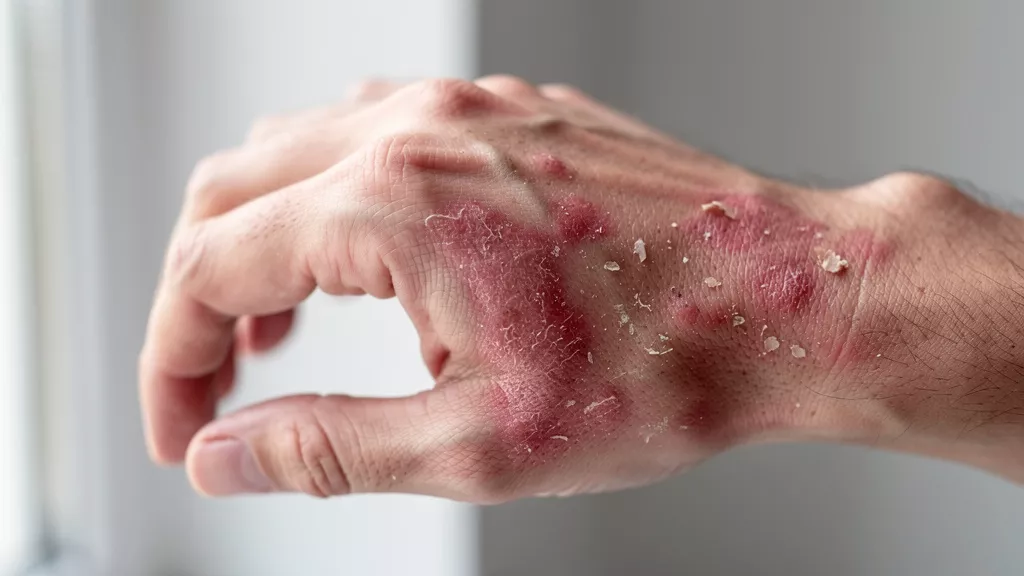
Once latex is gone, many people assume the glove problem is solved for good, yet emerging research has identified a new allergen in nitrile gloves that can affect hand safety. Yet a small group of users still gets red, itchy hands after wearing nitrile, which leads them to wonder again whether nitrile is truly hypoallergenic in real life. In most of those cases, the nitrile rubber is not to blame. The real troublemakers are:
- Older glove powders
- Chemical accelerators used during curing
Understanding these other triggers is important for anyone with stubborn glove rashes. The encouraging news is that there are clear ways to cut these risks as well.
The Problem With Powdered Gloves
For many years, manufacturers used sterilized cornstarch powder inside gloves to make them easier to pull on and off. In latex gloves, this powder could pick up latex proteins and carry them into the air whenever the glove snapped, creating an invisible cloud of allergens in exam rooms and food prep areas. For some workers and patients, that airborne mix helped spark both skin reactions and breathing symptoms.
Even with nitrile gloves, powder can:
- Dry out the skin
- Rub into small cracks and cause irritation through friction
- Spread particles that bother the eyes or airways
To move away from this, factories adopted extra washing steps such as chlorination to remove powder and leave the surface smoother. These powder-free gloves cost a bit more to produce, but they greatly reduce the risk of both irritation and airborne exposure.
Powder-free styles are now the standard for medical and food service use, and they are a basic expectation for anyone with sensitive skin. Our Inspire Nitrile Exam Gloves at Nitrile Gloves Info are all powder-free, which helps users focus on whether nitrile is truly hypoallergenic for them without having powder muddy the picture.
Chemical Accelerators – The Hidden Culprit In Type IV Reactions
The more subtle threat comes from chemical accelerators such as carbamates and thiazoles. These chemicals help speed up vulcanization, the curing step that gives nitrile its stretch and strength, and research on contact dermatitis in nail cosmetics has shown similar sensitization patterns from chemical additives in rubber-based products. While most of the chemicals bond during this process, small residues can remain on the surface of the finished glove and can soak into the outer layers of skin with repeated wear.
In some users this leads to Type IV hypersensitivity, also called allergic contact dermatitis. This reaction is delayed, often starting several hours after the gloves come off. It may begin as:
- Redness and intense itching on the backs of the hands or around the wrists
- Tiny blisters or weeping spots
- Dry, cracked, scaly skin
Because the timing is slower than a latex reaction, people often confuse it with simple dryness or soap irritation.
What makes this confusing is that the allergy is not to the nitrile rubber itself, but to one or more of the accelerators used in a specific glove formula. That explains why someone can react to one brand of nitrile but do fine with another. The risk is highest in people who wear gloves for many hours a day, such as nurses, lab techs, dental staff, mechanics, cleaners, and food workers.
For those users, accelerator-free nitrile gloves offer a better path. These gloves use different curing systems that avoid the main sensitizing accelerators while keeping the same barrier strength and stretch.
When we hear from readers who still have glove rashes even after leaving latex behind, we often suggest talking with an allergist about patch testing for accelerator chemicals and then moving to clearly labeled accelerator-free nitrile styles.
How Nitrile Gloves Outperform Latex In Protection And Safety
Once latex allergy risk is reduced, safety questions turn to performance. Here, nitrile does more than just fill a gap left by latex. It also gives stronger protection against punctures and chemicals while still allowing a precise grip. This mix is the reason many workplaces now choose nitrile first, rather than seeing it as a backup plan.
Superior Puncture Resistance And Durability

Nitrile is naturally more resistant to punctures than latex. Studies and field use show that good nitrile exam gloves can be three to five times more puncture resistant than standard latex gloves of similar thickness. In healthcare, that matters when a needle or sharp instrument slips. In auto shops and factories, it matters when hands move past sharp metal edges or small parts.
Another safety advantage is the way nitrile fails under stress:
- When a nitrile glove is pierced, the material tends to tear in a more visible way, so the user sees the damage and changes gloves right away.
- Latex can hold tiny micro-tears that are almost invisible, which may leave a hidden path for fluids or chemicals to reach the skin.
Our Inspire Nitrile Exam Gloves are built with this strength in mind so the barrier stays intact for as long as the glove is in use.
Exceptional Chemical Resistance
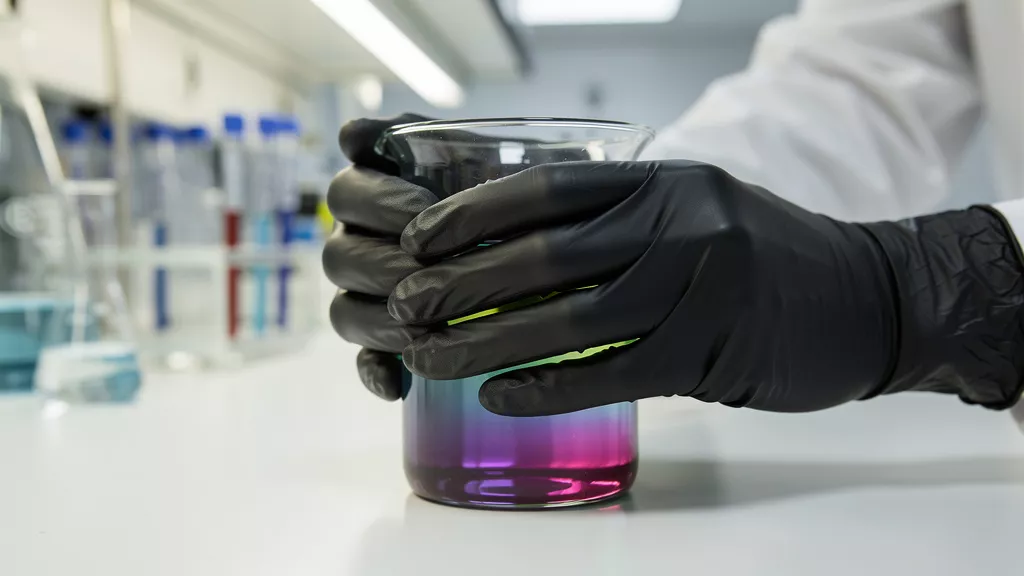
Nitrile’s synthetic structure makes it far more stable in the presence of many oils, fuels, and common lab chemicals than latex. Latex can swell, soften, or weaken when it comes into contact with solvents and some cleaning agents, which reduces protection long before the glove actually rips. Nitrile, by contrast, keeps its shape and barrier performance over a wider range of substances.
This chemical resistance is why nitrile has become standard in:
- Laboratories
- Automotive repair
- Manufacturing
- Industrial cleaning
In those fields, workers need to think about skin safety from both allergens and harsh liquids at the same time. For them, the question “is nitrile truly hypoallergenic?” ties directly into whether one glove can safely stand up to many different risks in a shift.
Comfort, Fit, And Tactile Sensitivity
Early nitrile gloves had a reputation for feeling stiff compared to latex. Modern nitrile is very different. Thin, exam-grade nitrile warms with body heat and molds closely to the hand, giving a snug fit that still allows easy finger movement. That helps with detailed work such as:
- Drawing blood or placing a suture
- Plating food
- Handling glassware in a lab
- Performing careful cleaning tasks
Users often tell us that Inspire Nitrile Exam Gloves feel comfortable even over long shifts, whether they are in EMS work, home care, food prep, or cleaning. That comfort matters because hands stay protected only while the gloves stay on.
As one occupational health maxim puts it, “The best protective glove is the one you can wear all day without thinking about it.”
When nitrile gives both strong protection and a natural feel, it becomes easier to wear gloves as long as each task requires.
Choosing The Right Nitrile Glove – A Practical Selection Guide
Knowing that nitrile is safer than latex is only the first step. The next step is picking the right nitrile glove for a specific person and job. That means thinking about allergies, powder and accelerators, glove thickness, and proper sizing. When we help readers sort through options, we break the process into a few simple steps.
Step 1: Identify Your Specific Allergy Or Sensitivity
If hands react to gloves, guessing rarely fixes the problem. A visit with a healthcare professional or allergist can sort out whether the issue is:
- A true Type I latex allergy
- A Type IV reaction to chemical accelerators
- Simple irritant dermatitis from sweat, friction, or harsh soaps
Patch testing can pinpoint which substances trigger the rash. Once that information is clear, it becomes much easier to choose gloves that leave those triggers out of the picture. This step saves time, money, and a lot of trial and error.
Step 2: Prioritize Powder-Free Options
For anyone with sensitive skin, powder-free should be a basic rule. Removing powder:
- Cuts out a common source of dryness and irritation on the hands
- Lowers the chance of breathing in particles that may carry allergens
- Matches medical and food safety guidelines, which already favor powder-free gloves
All Inspire Nitrile Exam Gloves are made powder-free for exactly this reason.
Step 3: Consider Accelerator-Free For Chemical Sensitivities
If a person moves from latex to nitrile and still has a rash that fits the pattern of allergic contact dermatitis, chemical accelerators are a likely suspect, as studies on the safety and efficacy of nail products have documented similar chemical sensitivity patterns in rubber-based materials. In that case, switching to accelerator-free nitrile gloves makes sense.
Look for packaging or product pages that clearly state:
- Accelerator-free
- Low dermatitis potential
- Designed for sensitive skin
These gloves offer the same kind of barrier as standard nitrile without the chemicals that set off Type IV reactions. For workers who live in gloves all day, this change can make a huge difference in comfort.
Step 4: Match Glove Thickness To Your Task
Glove thickness, often listed in mils, affects both protection and feel:
- Thinner gloves (around 3–4 mils)
- More touch sensitivity
- Good for medical exams, lab work, and fine assembly tasks
- Thicker gloves (around 5–8 mils)
- Better for heavy-duty jobs such as automotive repair, industrial maintenance, or cleaning with strong chemicals
- Correct sizing matters as much as thickness
- The glove should be snug without cutting off circulation
- Fingers should move freely without extra bunching of material
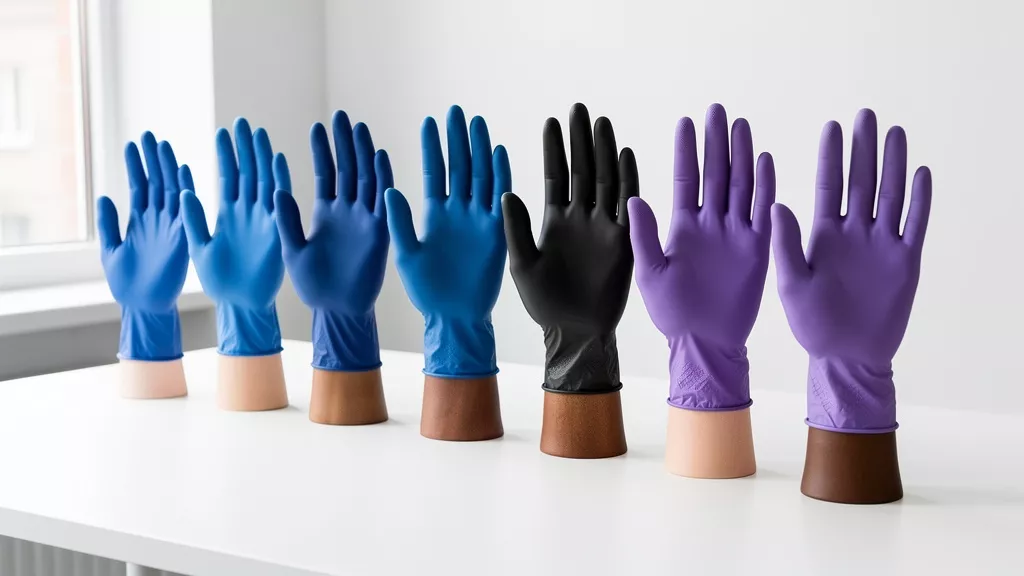
Our Inspire Nitrile Exam Gloves come in a full size range from Small through XXL and in several colors. That helps teams color-code gloves by task or area while still getting the right fit.
Conclusion
So, is nitrile truly hypoallergenic? When the concern is Type I allergy to natural rubber latex proteins, the answer is yes for nearly everyone, because nitrile contains no latex at all. That is why it has replaced latex in so many clinics, food operations, and industrial settings where worker and customer safety come first.
At the same time, a small group of users reacts not to nitrile itself, but to the chemical accelerators or powder associated with some gloves. For these people, the safest path is latex-free, powder-free, and, when needed, accelerator-free nitrile gloves. That combination gives the lowest chance of both fast and delayed allergic responses.
Nitrile also brings clear advantages in puncture resistance, chemical resistance, and long-term comfort compared to traditional latex. When people ask us whether nitrile is truly hypoallergenic, we encourage them to:
- Look closely at their own skin sensitivities and job tasks
- Talk with a healthcare professional if reactions continue
- Match glove features (latex-free, powder-free, accelerator-free, thickness, size) to those needs
At Nitrile Gloves Info, our Inspire Nitrile Exam Gloves reflect that thinking. They are latex-free, powder-free, exam grade, and trusted by professionals in healthcare, food service, cleaning, and industrial work. Taking a few minutes to choose the right nitrile glove pays off in safer, more comfortable hands on every shift.
FAQs
Question 1: Are Nitrile Gloves 100% Allergy-Free?
No disposable glove can be guaranteed allergy-free for every single person. Nitrile gloves are free of natural rubber latex proteins, which makes them a very safe choice for people with Type I latex allergies. However, some users react to chemical accelerators or other additives left from manufacturing. Those people may need accelerator-free nitrile styles to avoid allergic contact dermatitis. For that reason, it is wise to see nitrile as very low risk rather than as completely risk free.
Question 2: Can You Be Allergic To Nitrile Gloves?
True allergy to the nitrile rubber itself is extremely rare. Most reactions blamed on nitrile are actually Type IV hypersensitivity to chemical accelerators used during curing. This delayed reaction often shows up hours after glove use as:
- Redness
- Itching or burning
- Blisters
- Dry, scaly skin limited to the hands and wrists
Irritant dermatitis from sweat and friction can look similar. A healthcare professional or allergist can help sort out the cause and may recommend switching to accelerator-free nitrile gloves.
Question 3: What Is The Difference Between Latex-Free And Accelerator-Free Nitrile Gloves?
- Latex-free means the glove contains no natural rubber latex proteins that cause Type I latex allergy.
- Accelerator-free means the glove is made without common curing chemicals that can trigger Type IV allergic contact dermatitis.
All nitrile gloves are latex-free by design, but many still use accelerators. People with very sensitive skin or a confirmed accelerator allergy should look for nitrile gloves that clearly state they are accelerator-free on the packaging or product description.
Question 4: How Do I Know If I Need Accelerator-Free Nitrile Gloves?
Signs that point toward accelerator sensitivity include:
- Repeated rashes, intense itching, or burning on the hands after wearing standard nitrile gloves
- No latex or powder present, yet symptoms continue
- A rash that appears several hours later and closely matches the glove area
If this pattern sounds familiar, an allergist can perform patch testing to check for specific accelerator allergies. Based on those results, switching to accelerator-free nitrile gloves is often a helpful next step.
Question 5: Are Powder-Free Nitrile Gloves Better Than Powdered Ones?
Yes, powder-free nitrile gloves are recommended for nearly all uses, especially for people with sensitive skin. Glove powder can:
- Dry and irritate the skin
- Carry allergens
- Become airborne, where it may bother the lungs or eyes
Powder-free gloves go through extra washing steps that leave a smoother surface and reduce residue. For medical, food service, and most professional settings, powder-free nitrile gloves are now considered the safer and more comfortable standard.