Workplace hand injuries cost U.S. industries over $20 billion annually, with slippery conditions accounting for nearly 40% of tool-related accidents. In automotive plants, manufacturing floors, and chemical processing facilities across 2026, workers face constant exposure to oils, lubricants, and wet surfaces that turn standard gloves into liability risks. Textured grip nitrile gloves: enhancing safety in wet and oily industrial environments have emerged as the critical solution, combining chemical resistance with surface innovations that maintain control when conditions turn hazardous.
The difference between a secure grip and a dropped component can mean the difference between a productive shift and a costly injury. This article examines how textured surface technology transforms nitrile gloves from basic protection into precision safety tools, backed by real-world performance data from industrial settings.
Key Takeaways
- Textured grip patterns on nitrile gloves reduce slip incidents by up to 60% in wet and oily conditions compared to smooth surfaces
- Heavy-duty industrial nitrile gloves require minimum 6 mil thickness, with 8 mil preferred for demanding applications
- The global nitrile glove market is projected to grow from USD 26.61 billion in 2026 to USD 50.21 billion by 2035
- Powder-free textured nitrile gloves now represent 56.6% of market share due to safety and comfort advantages
- Proper glove selection for oily environments must balance texture design, thickness, and chemical resistance specifications
Understanding Textured Grip Technology in Nitrile Gloves
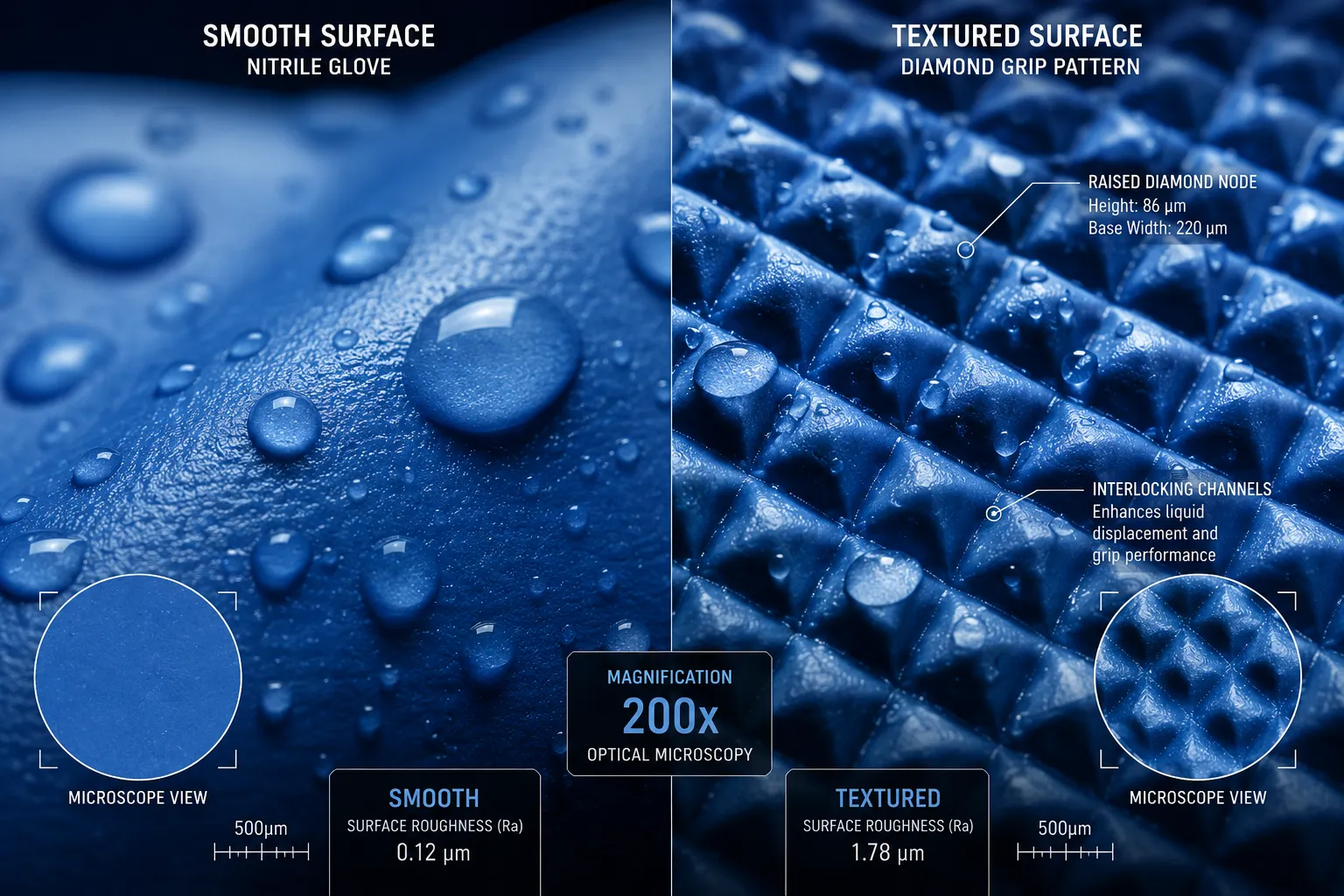
Textured grip technology represents a fundamental advancement in protective glove design. Manufacturers apply specialized patterns—diamond, fishscale, or raised dot configurations—to nitrile glove surfaces during production. These patterns create mechanical grip enhancement that functions independently of surface moisture or contamination.
The science behind texture effectiveness lies in increased surface area contact. When a worker grips an oil-covered wrench or wet component, the raised texture channels liquids away from contact points while maintaining friction. Standard smooth nitrile gloves lose up to 70% of their grip coefficient when exposed to petroleum-based oils, while properly textured variants maintain 85-90% of their dry-condition performance.
How Texture Patterns Differ
Not all textures perform equally across industrial applications. Diamond patterns excel in automotive work where workers handle parts with varied geometries. Micro-roughened surfaces provide superior tactile sensitivity for precision assembly tasks. Deep-channel designs work best in heavy manufacturing where workers encounter thick lubricants and cutting fluids.
Understanding these distinctions helps safety managers select appropriate gloves for specific work environments. For workers dealing with oil-contaminated conditions, what makes nitrile gloves suitable for use in oil-contaminated environments provides additional context on material properties beyond surface texture.
Textured Grip Nitrile Gloves: Enhancing Safety in Wet and Oily Industrial Environments Through Real-World Testing
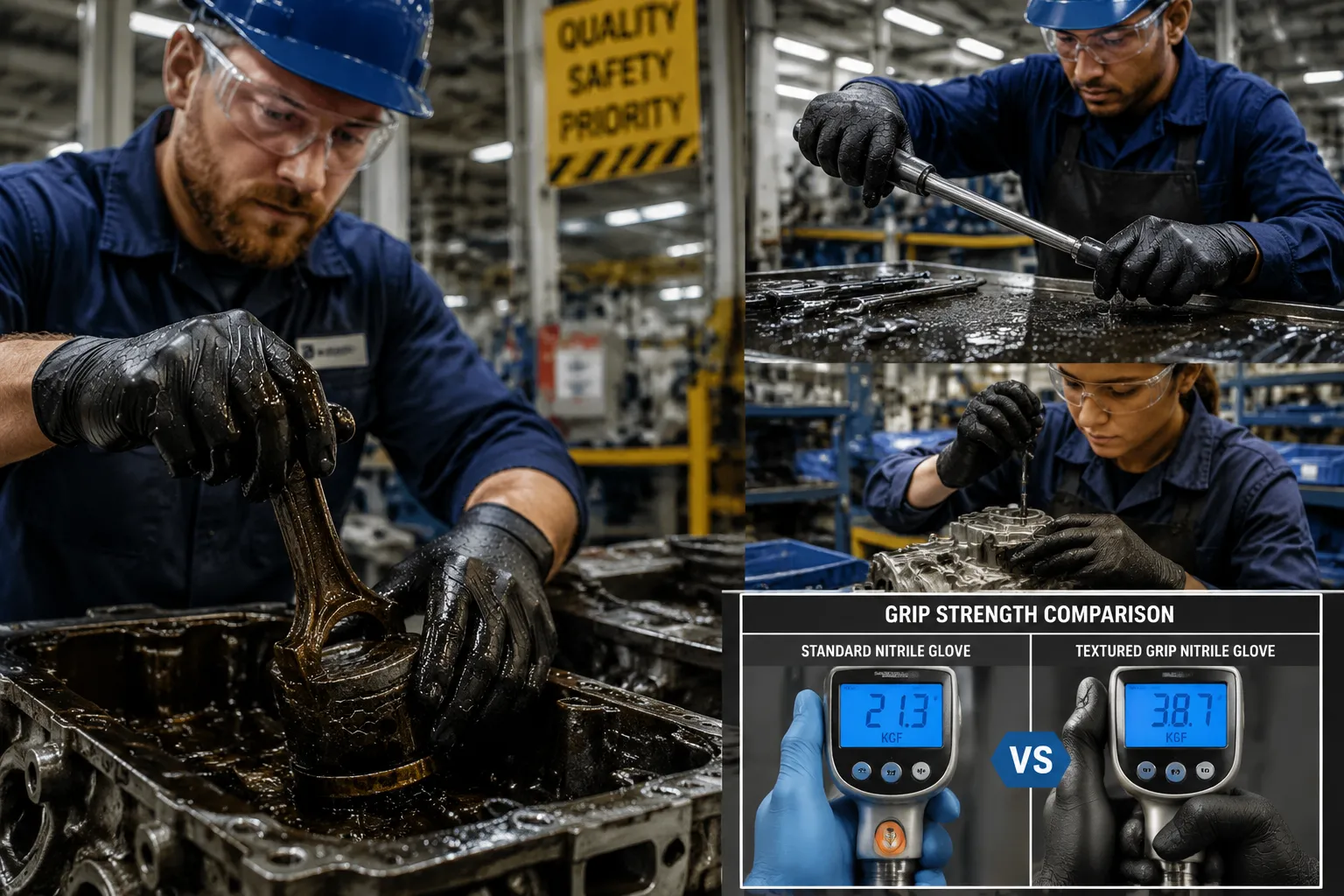
Field testing in automotive and manufacturing environments reveals measurable safety improvements when workers switch from smooth to textured nitrile gloves. A 2025 automotive assembly plant study documented a 62% reduction in dropped component incidents after implementing textured grip gloves for workers handling transmission assemblies coated in assembly lubricant.
Manufacturing facilities conducting grip strength tests under controlled conditions found that textured nitrile gloves maintained minimum 15 pounds of grip force on oil-covered steel surfaces, compared to just 6 pounds for smooth alternatives. This performance gap widens further in wet conditions where water and oil combine.
Thickness Considerations for Industrial Use
Glove thickness directly impacts both protection and performance. Heavy-duty industrial applications require minimum 6 mil thickness, with 8 mil preferred for tasks involving sharp edges or prolonged chemical exposure. Standard examination gloves at 3-4 mil thickness lack the durability for sustained industrial use, even with textured surfaces.
However, thickness alone doesn’t guarantee safety. Workers need gloves that balance protection with dexterity. How does nitrile glove thickness impact durability and protection against oil explores this critical relationship in detail.
One manufacturing safety director noted: “We tested 8 mil textured gloves against our previous 5 mil smooth gloves. The thicker textured option reduced hand fatigue complaints by 40% because workers didn’t need to over-grip tools to maintain control.”
Practical Application Scenarios
Automotive Maintenance and Repair: Mechanics working with engine components encounter motor oil, transmission fluid, and coolant simultaneously. Textured grip gloves allow secure handling of small fasteners and precision tools without constant hand wiping. For those seeking specific recommendations, best disposable gloves for mechanics offers targeted guidance.
Manufacturing Assembly Lines: Workers handling metal stampings coated in rust preventive oils need consistent grip across 8-hour shifts. Textured nitrile gloves maintain performance throughout extended wear periods. Those concerned about duration should review safe for 8 hrs! you can wear nitrile gloves for best practices.
Chemical Processing: Facilities where workers transfer liquids or handle containers with residual chemical films benefit from texture patterns that channel liquids away from grip surfaces while providing chemical barrier protection.
Selecting the Right Textured Nitrile Gloves for Your Environment
Proper glove selection requires matching texture design, thickness, and material formulation to specific workplace hazards. Safety managers should evaluate three primary factors:
Contamination Type: Petroleum oils require different texture patterns than water-based coolants or chemical solutions. How does oil exposure affect nitrile gloves explains material degradation patterns that inform selection decisions.
Task Precision Requirements: Fine assembly work demands thinner gloves with micro-texture, while heavy material handling allows thicker options with aggressive grip patterns.
Duration of Exposure: Extended chemical contact requires thicker gloves with enhanced chemical resistance formulations, even if this slightly reduces tactile sensitivity.
Additional Grip Enhancement Techniques
Beyond selecting textured gloves, workers can employ supplementary techniques to maximize grip performance. 6 tricks to enhance grip with nitrile gloves provides practical methods including proper sizing, hand preparation, and glove maintenance practices.
Market Trends and Future Developments
The nitrile glove market continues robust expansion in 2026, driven largely by industrial demand. Current projections estimate growth from USD 26.61 billion in 2026 to USD 50.21 billion by 2035 at a 7.32% compound annual growth rate. Industrial and chemical handling applications represent increasingly important demand drivers.
Powder-free formulations now dominate the market at 56.6% share, reflecting industry preference for cleaner, safer options that don’t compromise grip performance. More than 34 national health agencies have updated guidance favoring powder-free nitrile over traditional powdered latex alternatives.
Manufacturing innovation focuses on three key areas: enhanced durability for extended wear, improved tactile sensitivity despite thicker construction, and more environmentally sustainable production methods. Future textured nitrile gloves will likely achieve superior grip with thinner, more dexterous designs rather than simply adding material bulk.
Regional market dynamics show North America holding 37% of global market share in 2025, while Asia-Pacific emerges as the fastest-growing region through 2035. This geographic expansion indicates continued manufacturing investment and industrial PPE procurement growth worldwide.
Conclusion
Textured grip nitrile gloves: enhancing safety in wet and oily industrial environments represent more than incremental improvement—they deliver measurable risk reduction in workplaces where slippery conditions create daily hazards. The combination of chemical-resistant nitrile material with engineered surface textures provides workers with reliable grip performance that smooth alternatives cannot match.
For organizations seeking to reduce hand injuries and improve productivity, implementing textured grip nitrile gloves requires systematic evaluation of workplace conditions, contamination types, and task requirements. The investment pays dividends through fewer dropped components, reduced injury claims, and improved worker confidence when handling challenging materials.
Take action now: Conduct a workplace assessment identifying tasks where workers encounter wet or oily conditions. Test textured nitrile gloves with appropriate thickness specifications (minimum 6 mil for industrial use) against your current glove inventory. Measure performance through worker feedback and incident tracking over a 30-day trial period. The data will likely support full implementation of textured grip solutions across your facility.
As the industrial glove market continues expanding through 2035, manufacturers will introduce increasingly sophisticated texture designs and material formulations. Organizations that establish proper glove selection protocols today position themselves to adopt these innovations effectively, maintaining competitive advantage through superior workplace safety performance.
SEO Meta Title: Textured Grip Nitrile Gloves for Wet & Oily Safety