Between 8-17% of healthcare workers develop latex allergies during their careers, forcing hospitals worldwide to rethink their glove protocols. This staggering statistic has triggered a fundamental shift in medical protective equipment, with nitrile gloves now dominating hospital supply rooms where latex once reigned supreme.
Understanding the Nitrile vs. Latex: The Complete Allergy-Free Comparison for Healthcare Workers isn’t just about material preferences—it’s about patient safety, staff protection, and creating truly allergy-conscious medical environments. As healthcare facilities continue prioritizing hypoallergenic solutions in 2026, the choice between these two materials has never been more critical.
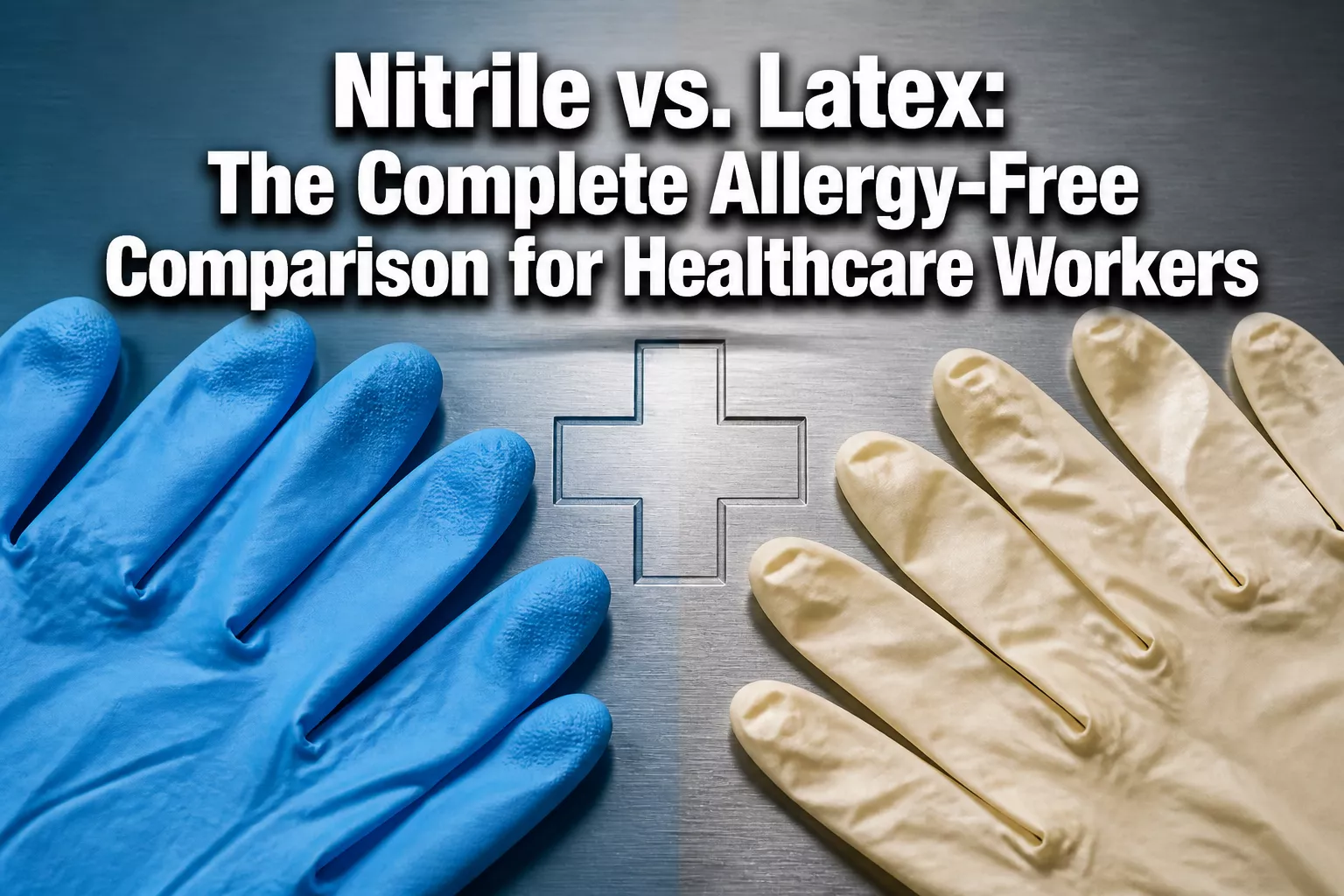
Key Takeaways
- Nitrile is 100% latex-free, eliminating dangerous Type I allergic reactions that affect up to 17% of healthcare workers
- Nitrile offers 3x better puncture resistance than latex, providing superior protection during high-risk procedures
- Both materials can cause Type IV reactions (contact dermatitis), but accelerator-free nitrile options minimize this risk
- Modern nitrile closes the tactile sensitivity gap, making it suitable for both surgical and examination procedures
- Healthcare facilities have widely adopted nitrile as standard, creating safer environments for allergic staff and patients
Why Healthcare Facilities Abandoned Latex: The Allergy Crisis
The medical community’s shift away from latex wasn’t gradual—it was necessary. Latex allergies present in two distinct forms, each posing serious risks to healthcare workers and patients alike.
Type I Allergic Reactions: The Immediate Threat ⚠️
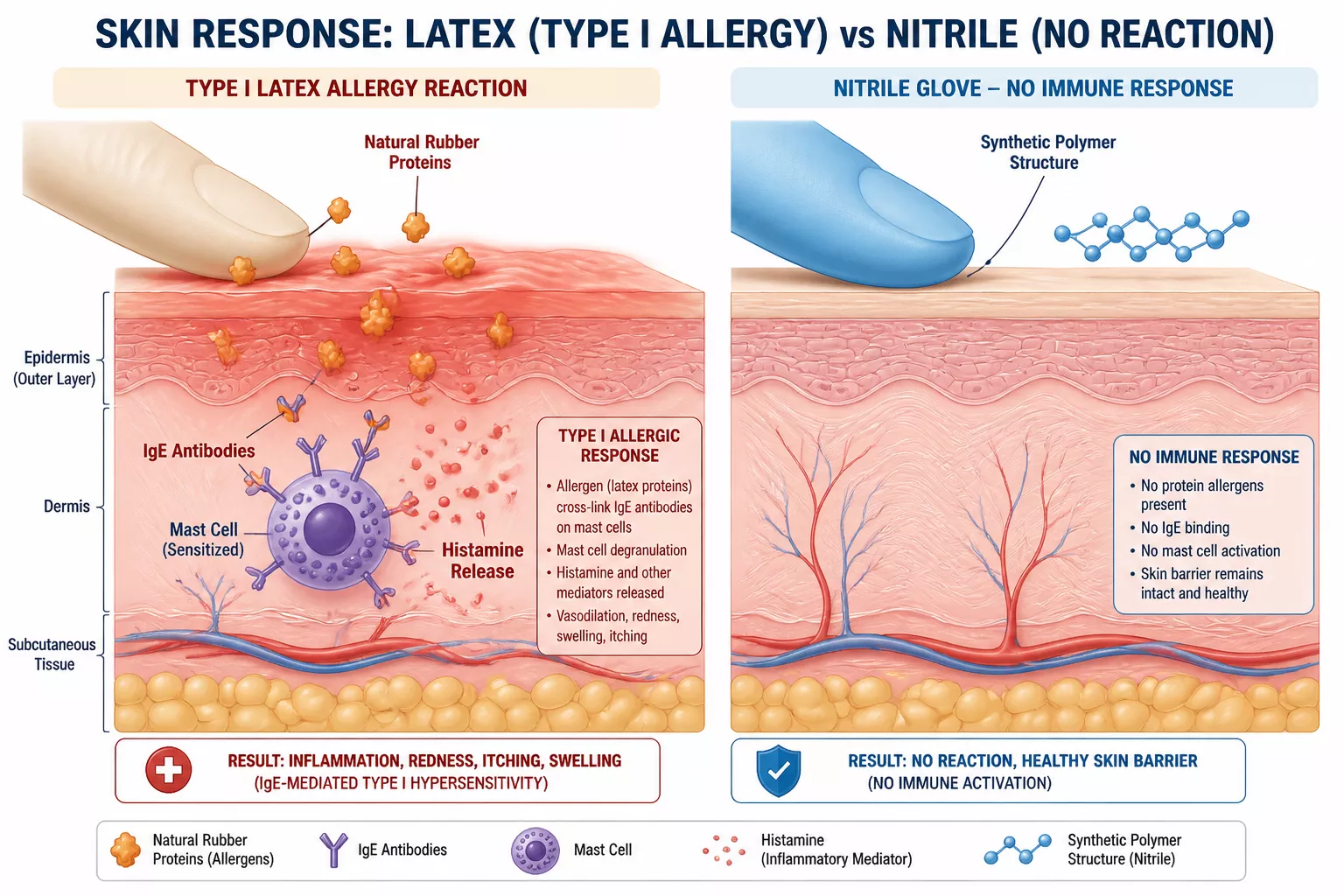
Type I hypersensitivity represents the most dangerous latex response. Natural rubber proteins trigger immediate immune reactions that can include:
- Hives and skin welts
- Respiratory difficulties
- Anaphylactic shock (potentially fatal)
- Severe swelling and inflammation
These reactions occur within minutes of latex exposure, creating emergency situations in the very environments designed to handle emergencies. The danger of latex allergy cannot be overstated—even trace amounts of latex proteins can trigger life-threatening responses in sensitized individuals.
Type IV Reactions: The Delayed Response
Contact dermatitis develops 12-48 hours after exposure, causing red, itchy, inflamed skin. While less immediately dangerous than Type I reactions, these delayed responses create chronic discomfort and can force healthcare workers to leave their professions entirely.
Both nitrile and latex gloves can trigger Type IV reactions due to chemical accelerators used in manufacturing. However, accelerator-free nitrile formulations now address this concern for highly sensitive users.
The Nitrile Advantage: Why It’s Become the Healthcare Standard
The demand for nitrile gloves in healthcare has skyrocketed for compelling reasons that extend far beyond allergy prevention.
Complete Latex-Free Protection 🛡️
Nitrile’s synthetic composition eliminates natural rubber proteins entirely, making it the only truly hypoallergenic option for latex-sensitive individuals. This 100% latex-free guarantee has made nitrile the FDA-recommended choice for allergic healthcare workers and patients.
Superior Puncture Resistance
Nitrile gloves demonstrate 3x better puncture resistance compared to latex alternatives. This enhanced durability proves critical during:
- Surgical procedures with sharp instruments
- Emergency trauma care
- Dental work involving needles and scalpels
- Laboratory handling of glass and metal equipment
Enhanced Chemical Resistance
While latex excels at protecting against blood and bodily fluids, nitrile outperforms in chemical resistance. Nitrile gloves provide superior protection against:
- Oils and petroleum-based products
- Greases and solvents
- Chemotherapy drugs
- Disinfectants and cleaning agents
This versatility makes nitrile suitable for diverse healthcare settings, from operating rooms to pharmaceutical compounding areas.
Nitrile vs. Latex: The Complete Allergy-Free Comparison for Healthcare Workers—Material Properties
| Property | Nitrile | Latex |
|---|---|---|
| Allergy Risk | Very low (Type IV only, rare) | Moderate to high (Type I & IV) |
| Puncture Resistance | Excellent (3x stronger) | Good |
| Chemical Resistance | Superior (oils, solvents) | Moderate (weak against oils) |
| Tactile Sensitivity | Good to excellent | Excellent |
| Durability | High | Moderate |
| Cost | Moderate | Lower |
| Elasticity | Good | Excellent |
Tactile Sensitivity: Closing the Gap
Historically, latex maintained an advantage in dexterity and tactile sensitivity, particularly for delicate procedures requiring fine finger control. However, modern nitrile formulations have dramatically narrowed this gap.
Healthcare facilities now use thickness-specific nitrile gloves:
- 3-4 mil thickness: Standard examination gloves with excellent sensitivity
- 5-8 mil thickness: Surgical-grade protection with maintained dexterity
- 8+ mil thickness: Heavy-duty protection for specialized procedures
Studies comparing latex and nitrile dexterity for gross motor tasks show comparable performance, with only minimal differences in fine finger manipulation for certain specialized procedures.
Understanding “Allergy-Free” Claims: Important Nuances
While nitrile is marketed as “allergy-free,” this term requires clarification. Nitrile eliminates latex protein allergies entirely, but rare mild reactions to manufacturing residues can occur. These reactions are:
- Far less common than latex allergies
- Typically mild (slight skin irritation)
- Often resolved with accelerator-free formulations
- Never life-threatening like latex anaphylaxis
For comprehensive protection, healthcare facilities should also understand allergic reactions to nitrile gloves and maintain allergy-safe protocols across all departments.
When Latex Still Makes Sense (Rarely)
Despite nitrile’s dominance, latex retains limited applications in 2026:
✅ Precision non-surgical tasks where maximum tactile sensitivity is essential
✅ Budget-constrained settings without allergy concerns
✅ Specific procedures requiring superior elasticity
However, these scenarios represent the exception rather than the rule. Most healthcare facilities have eliminated latex entirely to create universally safe environments.
Making the Right Choice for Your Healthcare Facility
When evaluating the Nitrile vs. Latex: The Complete Allergy-Free Comparison for Healthcare Workers, consider these decision factors:
Choose Nitrile When:
- Any staff or patients have latex sensitivities
- Chemical exposure is likely
- Puncture resistance is critical
- Creating an allergy-safe environment is priority
- Long-term durability matters
Consider Latex Only When:
- Zero allergy concerns exist (rare)
- Maximum tactile sensitivity is non-negotiable
- Budget constraints are severe
- Procedures don’t involve chemical exposure
For most healthcare settings in 2026, nitrile represents the clear choice for comprehensive protection, allergy safety, and superior performance.
Conclusion
The Nitrile vs. Latex: The Complete Allergy-Free Comparison for Healthcare Workers reveals a decisive winner for modern medical environments. With 8-17% of healthcare workers affected by latex allergies, nitrile’s 100% latex-free composition eliminates life-threatening Type I reactions while providing 3x better puncture resistance and superior chemical protection.
While latex once dominated due to tactile sensitivity advantages, modern nitrile formulations have closed this gap significantly. The rare possibility of mild Type IV reactions to nitrile pales in comparison to latex’s moderate-to-high allergy risks and potential for anaphylactic shock.
Take action today: Audit your facility’s glove inventory, identify latex-containing products, and transition to nitrile alternatives. Train staff on different types of latex allergy recognition and response protocols. Consider accelerator-free nitrile options for highly sensitive individuals. By prioritizing allergy-safe equipment, you protect both healthcare workers and patients while maintaining the high-performance standards modern medicine demands.
The evidence is clear—nitrile gloves represent the future of healthcare protection, combining safety, durability, and performance in one allergy-conscious solution.