A single microscopic pinhole in a nitrile glove can expose healthcare workers to bloodborne pathogens, compromise sterile fields during surgery, or contaminate food processing operations. Studies show that even gloves meeting industry standards can have defect rates between 1.5% and 4.0%, making pinhole detection not just a quality control measure but a critical safety protocol that protects both workers and end users across medical, industrial, and food service environments.
Understanding the Nitrile Gloves Pinhole Detection Guide: ASTM Standards, Testing Tools, and Avoiding Hidden Risks is essential for procurement managers, safety officers, and quality control professionals who rely on barrier protection. This comprehensive guide explores standardized testing methods, practical detection tools, and strategies to minimize risks associated with compromised glove integrity.
Key Takeaways
- ASTM D5151 water leak testing remains the gold standard for detecting pinholes in nitrile gloves, with specific protocols for volume, duration, and inspection criteria
- Acceptable Quality Levels (AQL) ratings determine defect thresholds, with medical-grade gloves typically requiring AQL 1.5 or lower
- Multiple detection methods exist beyond water testing, including electronic detection, dye penetration, and visual inspection under specialized lighting
- Pre-use inspection and proper storage significantly reduce the risk of using compromised gloves in critical applications
- Understanding glove thickness standards helps select appropriate protection levels for specific tasks
Understanding ASTM Standards for Nitrile Gloves Pinhole Detection
The American Society for Testing and Materials (ASTM) has established rigorous protocols that form the foundation of the Nitrile Gloves Pinhole Detection Guide: ASTM Standards, Testing Tools, and Avoiding Hidden Risks. These standards ensure consistent quality across manufacturers and provide measurable benchmarks for glove integrity.
ASTM D5151: The Water Leak Test Standard
ASTM D5151 represents the most widely recognized method for detecting pinholes in disposable gloves. The procedure involves:
Test Protocol Requirements:
- Fill each glove with 1000ml of water (±50ml tolerance)
- Suspend the glove for a minimum of 2 minutes
- Inspect for visible water leakage or seepage
- Document any defects found during inspection
The test must be conducted under controlled conditions with water temperature between 20-25°C. Gloves are considered defective if any water passes through the material, regardless of pinhole size.
Acceptable Quality Levels (AQL) Explained
AQL ratings determine the maximum acceptable defect rate in a production batch. Understanding these numbers is crucial for risk assessment:
| AQL Rating | Maximum Defect Rate | Typical Application |
|---|---|---|
| AQL 1.5 | 1.5% defective | Medical examination, surgical |
| AQL 2.5 | 2.5% defective | General healthcare, laboratory |
| AQL 4.0 | 4.0% defective | Industrial, food service |
Medical-grade nitrile gloves should meet AQL 1.5 standards, meaning no more than 1.5% of gloves in a batch can fail the water leak test. This stringent requirement is particularly important for procedures involving bloodborne pathogen exposure or sterile environments.
ASTM D6319: Additional Testing Requirements
Beyond water leak testing, ASTM D6319 establishes standards for:
- Physical properties: Tensile strength, elongation, and modulus
- Dimensional requirements: Length, width, and thickness measurements
- Chemical resistance: Performance against specific substances like acetone
- Shelf life stability: Degradation testing over time
These complementary standards ensure gloves maintain integrity throughout their intended use period.
Testing Tools and Methods in the Nitrile Gloves Pinhole Detection Guide
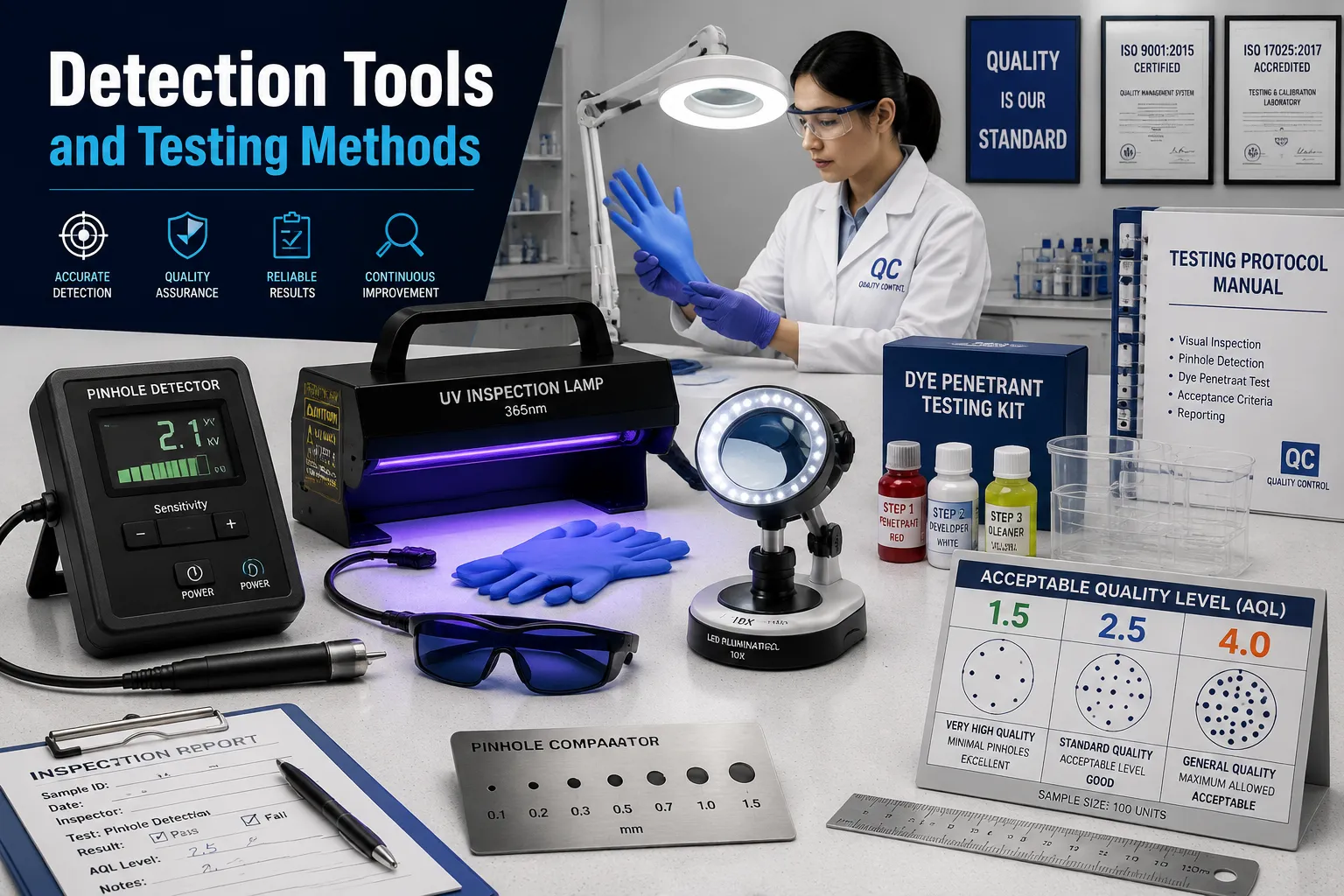
Implementing effective pinhole detection requires understanding available tools and selecting appropriate methods for different operational contexts. The Nitrile Gloves Pinhole Detection Guide: ASTM Standards, Testing Tools, and Avoiding Hidden Risks encompasses both laboratory-grade equipment and practical field inspection techniques.
Laboratory Testing Equipment
Electronic Pinhole Detectors
These sophisticated devices use electrical conductivity principles to identify breaches in glove material. A conductive solution coats the glove exterior while an electrode probe scans the interior surface. Any pinhole creates a complete circuit, triggering an audible or visual alert.
Advantages include:
- Rapid testing (30-60 seconds per glove)
- Detection of pinholes as small as 10 micrometers
- Objective, quantifiable results
- No water mess or disposal concerns
UV Light Inspection Systems
Ultraviolet inspection involves coating gloves with fluorescent dye and examining them under UV light. Pinholes appear as bright spots where dye penetrates the material. This method is particularly effective for:
- Batch sampling in manufacturing facilities
- Quality control verification
- Training demonstrations
- Identifying manufacturing defects versus damage
Field Inspection Methods
For end-users who need practical verification before use, several accessible methods exist:
Visual Inspection Protocol:
- Hold glove up to bright light source
- Stretch material gently to reveal micro-tears
- Examine high-stress areas (fingertips, thumb web, cuff)
- Look for discoloration indicating material degradation
- Check for manufacturing defects like thin spots
Water Fill Test (Simplified):
- Fill glove with tap water
- Seal opening by twisting
- Gently squeeze while observing for leaks
- Hold for 30-60 seconds minimum
- Inspect all surfaces, especially seams
This simplified version of ASTM D5151 provides reasonable assurance for individual glove verification, though it lacks the precision of laboratory testing.
Dye Penetration Testing
Dye penetration methods use colored solutions to identify breaches. The glove is filled with dye solution, sealed, and observed for external color changes indicating penetration. This technique offers:
- Clear visual confirmation of defects
- Permanent documentation (photographable results)
- Identification of pinhole location and size
- Cost-effective batch testing capability
Avoiding Hidden Risks: Best Practices for Glove Integrity
Beyond formal testing, the Nitrile Gloves Pinhole Detection Guide: ASTM Standards, Testing Tools, and Avoiding Hidden Risks emphasizes preventive measures that reduce the likelihood of using compromised gloves.
Storage and Handling Protocols
Environmental Controls:
- Maintain storage temperature between 10-30°C
- Keep relative humidity below 80%
- Protect from direct sunlight and UV exposure
- Store away from ozone-generating equipment
- Avoid contact with oils, solvents, and sharp objects
Improper storage accelerates material degradation, increasing pinhole formation risk. Nitrile rubber is particularly susceptible to ozone damage, which creates microscopic cracks that compromise barrier protection.
Pre-Use Inspection Checklist
Implement a standardized inspection routine before donning gloves:
- Package integrity: Check for tears, moisture, or contamination
- Expiration date: Verify gloves are within shelf life
- Visual defects: Look for obvious holes, tears, or discoloration
- Tactile assessment: Feel for unusual texture or brittleness
- Stretch test: Gently stretch to reveal hidden defects
This 15-second protocol significantly reduces the risk of using defective gloves in critical applications, complementing proper glove selection for specific tasks.
Double Gloving Strategies
For high-risk environments, double gloving provides redundant protection:
Recommended Applications:
- Surgical procedures
- Handling chemotherapy agents
- Bloodborne pathogen exposure scenarios
- Extended wear situations (over 2 hours)
- Work with sharp instruments
Studies show double gloving reduces perforation exposure by 87% compared to single glove use. When implementing this strategy, use different colored gloves for inner and outer layers to make breaches immediately visible.
Supplier Quality Verification
Procurement decisions significantly impact glove integrity. Establish vendor qualification criteria:
- Certification documentation: Request ASTM test reports
- AQL verification: Confirm stated quality levels
- Manufacturing standards: ISO 13485 certification for medical gloves
- Batch testing: Require lot-specific quality data
- Traceability: Ensure clear product identification and tracking
Working with reputable suppliers who provide transparent quality documentation reduces the risk of receiving substandard products. Understanding potential allergic reactions also helps in selecting appropriate glove formulations.
Recognizing Wear and Damage Indicators
During use, monitor for signs of compromised integrity:
- Color changes: Fading or darkening indicating chemical exposure
- Texture changes: Stiffening, softening, or tackiness
- Visible stress: Whitening at stress points
- Swelling: Material expansion from chemical absorption
- Loss of elasticity: Reduced snap-back when stretched
Any of these indicators warrants immediate glove replacement, regardless of task completion status.
Regulatory Compliance and Documentation
The Nitrile Gloves Pinhole Detection Guide: ASTM Standards, Testing Tools, and Avoiding Hidden Risks extends beyond testing to encompass compliance requirements across industries.
FDA Requirements for Medical Gloves
The Food and Drug Administration classifies medical gloves as Class I or Class II devices, requiring:
- 510(k) premarket notification for examination gloves
- Quality System Regulation (QSR) compliance
- Adverse event reporting for defect-related incidents
- Establishment registration for manufacturers and distributors
Healthcare facilities must maintain documentation demonstrating glove quality meets FDA standards, including batch testing records and supplier certifications.
OSHA Bloodborne Pathogen Standards
The Occupational Safety and Health Administration mandates employers provide appropriate personal protective equipment, including gloves meeting specific criteria:
- Barrier protection against bloodborne pathogens
- Appropriate size and fit for all employees
- Replacement when contaminated or compromised
- Accessibility without cost to employees
Pinhole detection protocols support OSHA compliance by ensuring provided gloves meet protective requirements.
Food Safety Modernization Act (FSMA) Considerations
Food processing facilities must implement preventive controls including:
- Glove quality standards appropriate for food contact
- Change-out protocols to prevent contamination
- Inspection procedures for glove integrity
- Documentation systems tracking glove quality
Understanding food-safe glove selection helps facilities maintain FSMA compliance while protecting product integrity.
Conclusion
The Nitrile Gloves Pinhole Detection Guide: ASTM Standards, Testing Tools, and Avoiding Hidden Risks provides essential knowledge for maintaining barrier protection integrity across healthcare, industrial, and food service applications. ASTM D5151 water leak testing remains the gold standard, with AQL ratings defining acceptable defect thresholds for different use cases. Medical-grade gloves should meet AQL 1.5 standards, while industrial applications may accept higher defect rates.
Effective pinhole detection combines laboratory testing equipment, field inspection methods, and preventive protocols including proper storage, pre-use inspection, and supplier quality verification. Double gloving strategies provide additional protection in high-risk scenarios, while regulatory compliance requirements from FDA, OSHA, and FSMA mandate documented quality assurance processes.
Actionable next steps:
- Establish standardized pre-use inspection protocols for your facility
- Verify supplier AQL ratings and request batch testing documentation
- Implement proper storage conditions to prevent material degradation
- Train staff on visual inspection techniques and damage indicators
- Consider electronic detection equipment for high-volume quality control
- Review and update glove selection criteria based on specific risk profiles
By integrating these testing standards, detection tools, and preventive measures, organizations can significantly reduce the hidden risks associated with compromised nitrile gloves, protecting both workers and the populations they serve.
SEO Meta Title: Nitrile Gloves Pinhole Detection: ASTM Standards & Tools