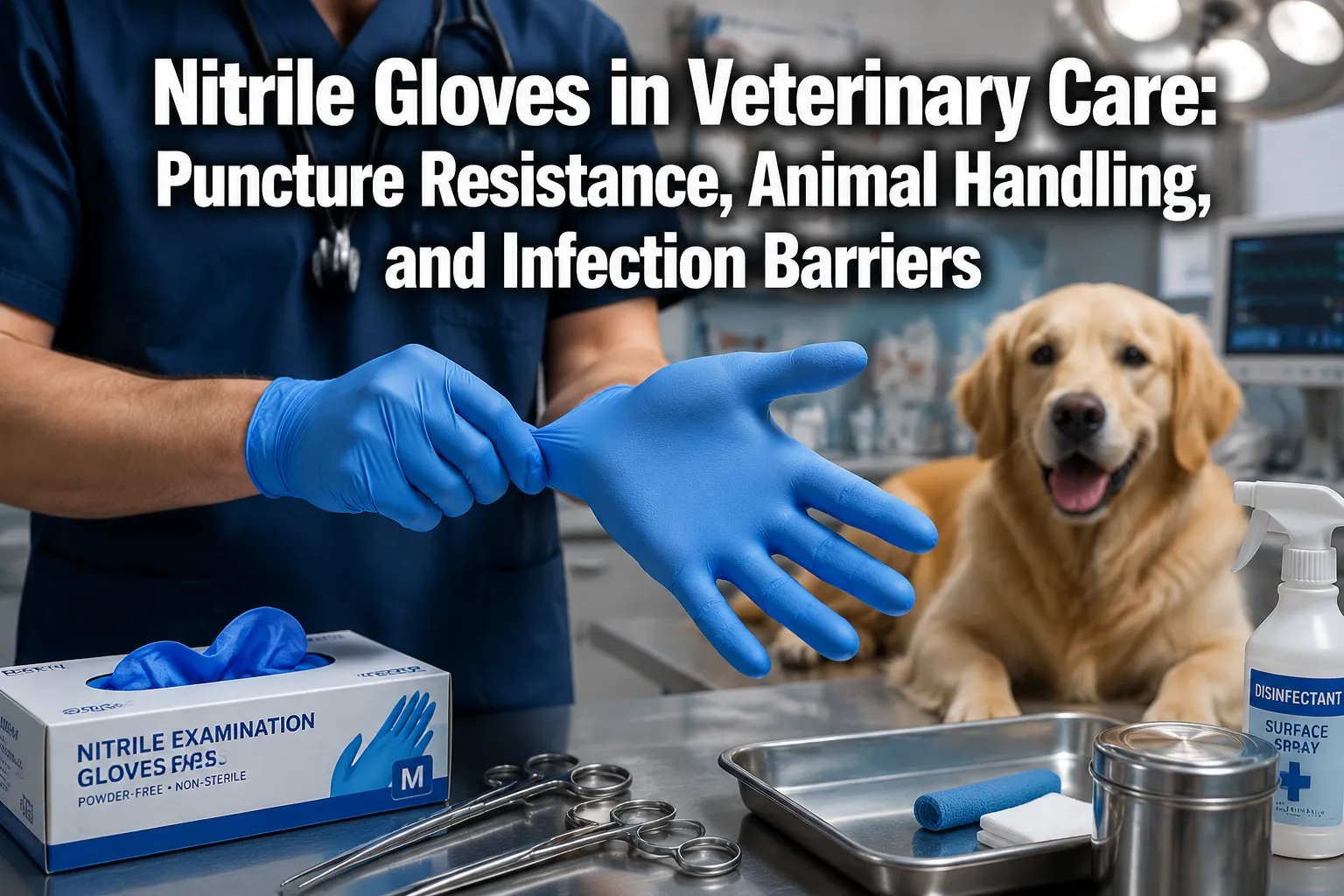
Veterinary professionals face a unique challenge: protecting themselves from zoonotic diseases, chemical disinfectants, and animal bites while maintaining the tactile sensitivity needed for delicate procedures. Studies show that punctured nitrile gloves can fail as infection barriers 100% of the time when penetrated by needles 0.4 mm or larger, yet nitrile remains the most widely recommended glove material in animal care settings. Understanding the real-world performance of Nitrile Gloves in Veterinary Care: Puncture Resistance, Animal Handling, and Infection Barriers helps clinics make informed decisions that protect both staff and animals.
Key Takeaways
- Nitrile gloves offer superior chemical resistance to disinfectants and medications compared to latex or vinyl alternatives, making them ideal for routine veterinary tasks
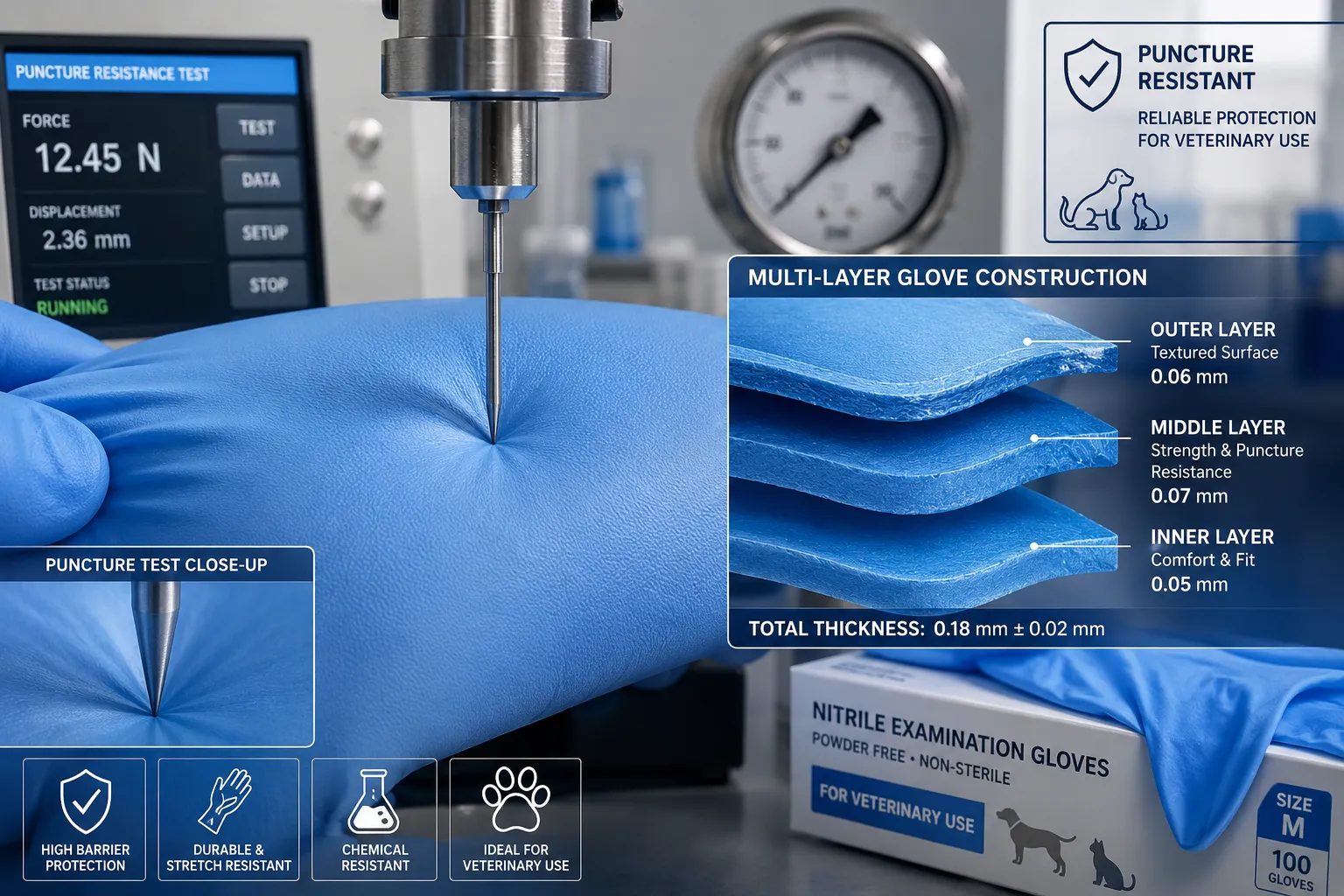
- Puncture resistance varies significantly by glove thickness and construction; standard exam nitrile gloves show 100% failure rates with needles 0.4 mm or larger
- Multi-layer or heavy-duty nitrile formulations provide up to 5.6 times better perforation resistance for high-risk surgical procedures
- Matching glove specifications to specific tasks—routine handling versus surgical procedures—is more important than assuming all nitrile gloves provide equal protection
- Latex-free nitrile options eliminate allergy concerns for both veterinary staff and animals during repeated exposure
Understanding Puncture Resistance in Veterinary Nitrile Gloves
Puncture resistance and barrier integrity represent two distinct protective qualities that veterinary professionals must understand. A glove may feel durable during routine handling yet still transmit fluids if penetrated by sharp objects. Research demonstrates that nitrile gloves punctured with 0.4 mm needles allowed virus-suspension leakage exceeding 2,500 microliters under laboratory conditions, highlighting the critical difference between perceived strength and actual barrier performance.
The diameter of penetrating objects matters substantially. Studies show that nitrile gloves exhibited 53% failure rates with 0.22 mm acupuncture needles but reached 100% failure with needles 0.4 mm or larger. This data reveals that standard exam-grade nitrile gloves, while excellent for chemical protection and routine animal contact, may not provide adequate defense during procedures involving needles, scalpels, or suturing.
For veterinary clinics performing surgical procedures, heavy-duty nitrile gloves designed for demanding applications offer enhanced protection. Tri-layer nitrile-latex constructions have demonstrated 5.6 times lower odds of perforation compared to single-layer natural rubber latex gloves in equine intestinal anastomoses, suggesting that layered designs provide measurably better protection for high-sharps-risk procedures.
Thickness specifications directly impact puncture performance. While standard nitrile glove thickness ranges from 3 to 6 mils, veterinary applications involving large animals, aggressive patients, or surgical instruments benefit from gloves at the upper end of this range or specialized heavy-duty formulations exceeding 8 mils.
Chemical Resistance and Infection Control in Animal Care Settings
Veterinary workflows combine multiple hazard exposures within single patient encounters—handling animals, administering medications, cleaning examination surfaces, and disposing of biological waste. Nitrile gloves excel in these environments due to their broad chemical resistance profile, protecting against common veterinary disinfectants, topical medications, and petroleum-based products used in animal care.
The synthetic rubber composition of nitrile provides superior resistance to alcohols, phenols, and quaternary ammonium compounds found in veterinary disinfectants. This chemical barrier remains stable during extended wear periods, unlike vinyl gloves that may degrade when exposed to certain cleaning agents. Healthcare settings have documented high demand for nitrile gloves precisely because of this reliable chemical protection combined with latex-free composition.
Infection barrier integrity depends on maintaining uncompromised glove surfaces. Even microscopic breaches can allow pathogen transmission, making proper glove selection and change protocols essential. Veterinary clinics should implement task-based glove protocols: standard exam nitrile for routine handling and physical examinations, and thicker or multi-layer options for procedures involving sharps or aggressive animals.
Latex allergy avoidance represents another critical factor in veterinary glove selection. Both staff members and animals may develop sensitivities with repeated latex exposure, making nitrile the preferred baseline material for general veterinary use. The latex-free composition eliminates Type I hypersensitivity risks while maintaining the flexibility and tactile sensitivity needed for palpation and fine motor tasks.
Selecting Nitrile Gloves for Specific Veterinary Tasks
Matching glove specifications to task requirements improves both safety and cost-efficiency in veterinary practices. Routine wellness examinations, vaccinations, and general animal handling require different protective qualities than surgical procedures, dental work, or large animal husbandry.
For routine small animal examinations and handling:
- 4-5 mil exam-grade nitrile gloves provide adequate protection
- Textured fingertips enhance grip when handling instruments or restraining animals
- Powder-free formulations prevent respiratory irritation in confined examination rooms
- Standard cuff length (9-10 inches) offers sufficient coverage for most tasks
For surgical procedures and high-risk interventions:
- 6-8 mil surgical-grade nitrile or multi-layer constructions reduce perforation risk
- Extended cuff lengths (12 inches or longer) protect forearms during large animal procedures
- Sterile packaging meets infection control standards for invasive procedures
- Consider specialized surgical nitrile gloves designed for healthcare environments
For large animal and livestock care:
- Heavy-duty nitrile formulations (8+ mils) withstand abrasion from hooves and rough handling
- Longer cuff lengths protect against contamination during rectal examinations and obstetric procedures
- Chemical resistance remains important for livestock disinfection protocols
- Farm-specific nitrile glove selection considers both durability and agricultural chemical exposure
Veterinary dental procedures present unique challenges requiring gloves that balance puncture resistance with tactile sensitivity. Sharp instruments, confined working spaces, and potential for sudden patient movement demand gloves thick enough to resist perforation yet flexible enough for precise manipulation.
Best Practices for Nitrile Glove Use in Veterinary Settings
Proper glove protocols extend beyond selection to include donning, changing, and disposal procedures that maintain infection control standards. Veterinary staff should change gloves between patients, after handling contaminated materials, and whenever glove integrity becomes compromised through visible tears or suspected punctures.
Double-gloving strategies improve protection during high-risk procedures. Wearing two layers of nitrile gloves provides redundant barrier protection, with the outer glove absorbing initial contamination and the inner glove maintaining a clean barrier. This approach proves particularly valuable during surgical procedures where perforation risk remains elevated throughout extended procedures.
Storage conditions affect glove performance and longevity. Nitrile gloves should be stored in cool, dry environments away from direct sunlight and ozone-generating equipment. Excessive heat or UV exposure can degrade nitrile polymers, reducing puncture resistance and barrier integrity before gloves are even used.
Regular staff training on proper glove use reinforces infection control protocols and helps identify situations requiring enhanced protection. Veterinary teams should understand the limitations of standard exam gloves and know when to upgrade to heavier-duty options based on procedure type and patient characteristics.
Emerging Developments in Veterinary Glove Technology
The veterinary glove market continues evolving with formulations designed to address specific limitations of standard nitrile products. Manufacturers now offer extended-wear nitrile gloves with enhanced durability for procedures requiring prolonged glove use, addressing concerns about material fatigue during lengthy surgeries or multiple-patient examination sessions.
Textured surface treatments improve grip performance in wet or bloody conditions common in veterinary work. Advanced manufacturing techniques create micro-patterns on glove surfaces that enhance friction without significantly increasing material thickness or reducing tactile sensitivity. These grip-enhanced nitrile gloves prove particularly valuable during surgical procedures requiring secure instrument handling.
Antimicrobial-treated nitrile gloves represent another innovation, though their practical benefit in veterinary settings remains debated. While surface treatments may reduce bacterial colonization on glove exteriors, proper glove change protocols and hand hygiene practices remain the primary infection control measures.
Color-coding systems help veterinary practices implement task-specific glove protocols. Using different colored nitrile gloves for examination, surgery, and cleaning tasks creates visual cues that reinforce proper glove selection and reduce cross-contamination risks through inadvertent glove misuse.
Cost Considerations and Procurement Strategies
Balancing protection quality with budget constraints challenges veterinary practices of all sizes. While premium heavy-duty nitrile gloves cost more per unit than standard exam gloves, strategic procurement that matches glove specifications to actual task requirements optimizes both safety and spending.
Bulk purchasing reduces per-glove costs but requires adequate storage space and consideration of shelf life. Nitrile gloves typically maintain performance characteristics for three to five years when properly stored, making larger purchases economically viable for practices with predictable usage patterns.
Calculating true glove costs requires considering:
- Purchase price per glove
- Failure rates and need for mid-procedure changes
- Staff time lost to glove-related complications
- Potential exposure incidents from inadequate protection
- Waste disposal costs for different glove types
Generic versus name-brand nitrile gloves present quality trade-offs that veterinary practices must evaluate. While established manufacturers often provide more consistent quality control and performance specifications, some generic options meet the same ASTM standards at lower costs. Practices should test sample batches before committing to large purchases of unfamiliar brands.
Regulatory Compliance and Quality Standards
Veterinary nitrile gloves sold in the United States must meet FDA regulations for medical devices when marketed for patient care applications. ASTM D6319 establishes performance standards for nitrile examination gloves, specifying requirements for dimensions, physical properties, and barrier integrity.
The Acceptable Quality Level (AQL) indicates the maximum percentage of defective gloves acceptable in a manufacturing lot. Medical-grade nitrile gloves typically carry AQL ratings of 1.5 or lower, meaning no more than 1.5% of gloves in a lot may contain pinholes or defects. Veterinary practices should verify AQL ratings when selecting suppliers to ensure consistent barrier protection.
ISO 13485 certification indicates that glove manufacturers maintain quality management systems specific to medical device production. While not legally required, this certification provides additional assurance of consistent manufacturing processes and quality control procedures.
State veterinary boards may establish specific requirements for protective equipment in clinical settings. Practices should verify local regulations regarding glove use during surgical procedures, controlled substance handling, and zoonotic disease protocols to ensure compliance with applicable standards.
Conclusion
Nitrile Gloves in Veterinary Care: Puncture Resistance, Animal Handling, and Infection Barriers require careful selection based on specific task requirements rather than assuming all nitrile gloves provide equivalent protection. While nitrile offers superior chemical resistance and latex-free composition ideal for routine veterinary work, puncture resistance varies significantly by thickness and construction. Standard exam-grade nitrile gloves excel for general animal handling and medication administration but may fail when exposed to needles 0.4 mm or larger.
Veterinary practices should implement task-based glove protocols: 4-5 mil exam gloves for routine examinations, 6-8 mil surgical-grade or multi-layer constructions for procedures involving sharps, and heavy-duty formulations exceeding 8 mils for large animal work. Understanding these distinctions and matching glove specifications to actual hazards protects both veterinary staff and animal patients while optimizing procurement budgets.
Moving forward, veterinary clinics should audit current glove usage patterns, identify high-risk procedures requiring enhanced protection, and establish clear protocols for glove selection and changing. Regular staff training on glove limitations and proper use reinforces infection control standards and reduces exposure incidents. By treating glove selection as a critical safety decision rather than a commodity purchase, veterinary practices create safer working environments while maintaining the tactile sensitivity and chemical protection essential for quality animal care.
SEO Meta Title: Nitrile Gloves Veterinary Care: Puncture & Infection Guide