Last updated: June 25, 2026
Quick Answer
The Asia-Pacific region now dominates global nitrile glove production, with Malaysia, Thailand, Vietnam, and China collectively manufacturing over 70% of the world’s supply in 2026. This production surge offers buyers competitive pricing and improved availability, but requires careful quality verification through certification checks, pre-shipment testing, and supplier audits. Buyers can secure reliable products by prioritizing manufacturers with ISO 13485, ASTM D6319, and EN 455 certifications while implementing systematic quality control protocols before placing bulk orders.
Key Takeaways
- Asia-Pacific manufacturers now produce more than 70% of global nitrile glove supply, with Malaysia leading production capacity followed by Thailand and Vietnam
- Quality varies significantly between manufacturers; certification verification (ISO 13485, ASTM D6319, EN 455) is essential before purchasing
- Malaysian and Thai producers generally offer higher quality standards compared to newer Vietnamese and Chinese facilities, though exceptions exist in both directions
- Budget nitrile gloves from emerging markets can be safe when properly certified and tested, but require more rigorous quality checks than established brands
- Medical-grade nitrile gloves require FDA 510(k) clearance for U.S. markets and CE marking for European distribution
- Common defects include pinholes, inconsistent thickness, poor tensile strength, and premature tearing during donning
- Bulk pricing from Asia-Pacific suppliers ranges from $3-12 per 100-glove box depending on quality tier, certifications, and order volume
- Pre-shipment AQL (Acceptable Quality Limit) testing and factory audits reduce counterfeit risk and quality failures
- Hospitals increasingly source from emerging market suppliers when manufacturers demonstrate consistent quality documentation and third-party testing
- Supply chain disruptions remain a concern due to raw material shortages, shipping delays, and regulatory changes across Southeast Asia
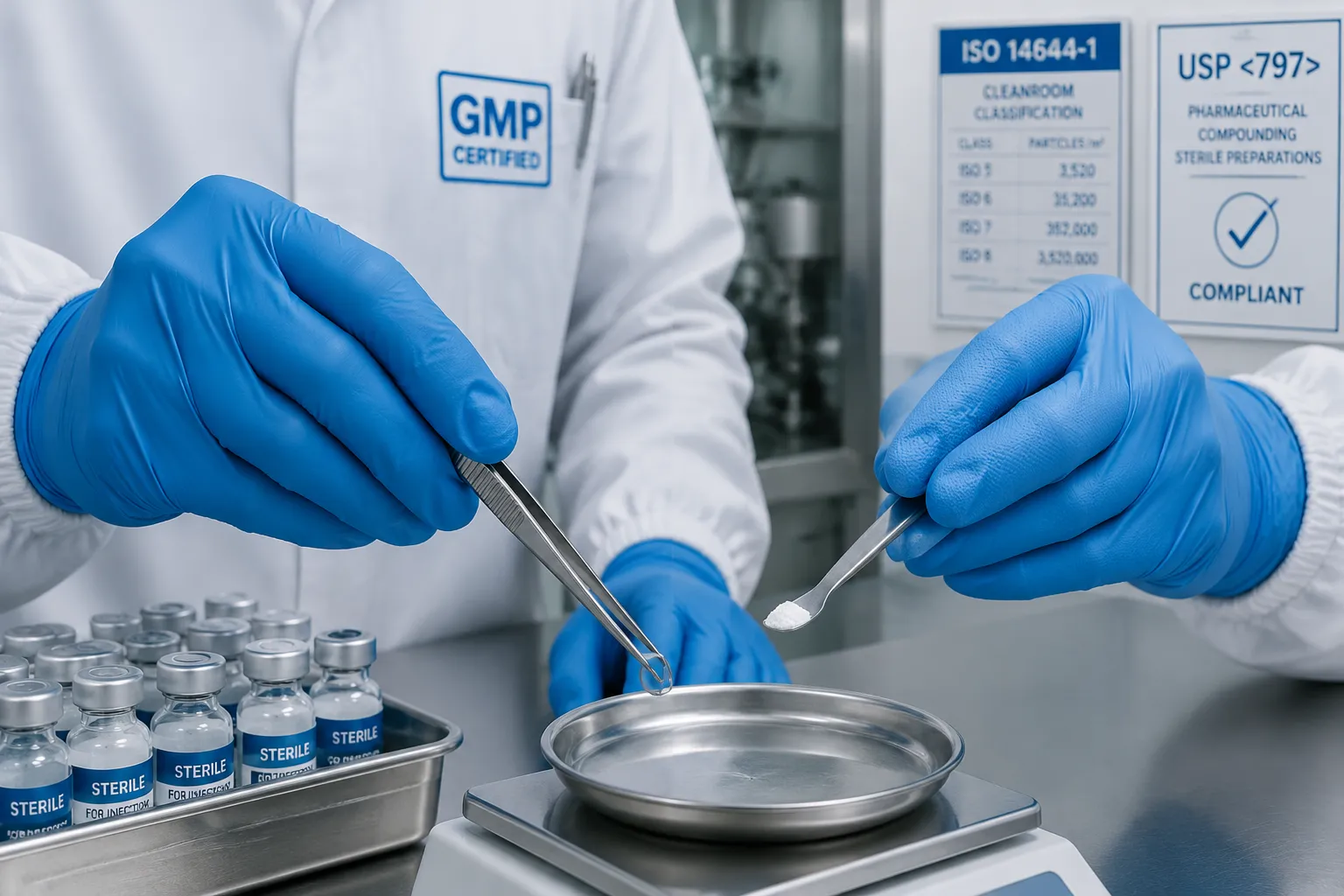
What Are Nitrile Gloves and Why Are They Popular in Asia-Pacific
Nitrile gloves are synthetic rubber gloves made from acrylonitrile and butadiene polymers, offering superior chemical resistance, puncture protection, and latex-free composition. The Asia-Pacific region has become the global manufacturing hub because of lower labor costs, established rubber supply chains, government incentives for medical device production, and proximity to raw material sources.
The region’s dominance accelerated during the global health crisis when demand surged beyond traditional supply capacity. Governments in Malaysia, Thailand, and Vietnam offered tax incentives and streamlined regulatory approvals to expand production capacity rapidly. By 2026, these countries have matured their manufacturing infrastructure while maintaining cost advantages over Western producers.
Why Asia-Pacific leads production:
- Access to natural rubber and synthetic polymer feedstocks at lower costs
- Established manufacturing expertise in rubber and polymer processing
- Labor cost advantages of 40-60% compared to North American or European facilities
- Government support through tax breaks, export incentives, and infrastructure investment
- Proximity to major global shipping routes reducing logistics costs
- Existing quality management systems adapted from electronics and automotive industries
The popularity extends beyond cost factors. Many Asian manufacturers have invested heavily in automation, clean room facilities, and quality control systems that rival or exceed Western standards. This combination of competitive pricing and improving quality makes the region attractive for buyers across healthcare, industrial, and consumer markets.
How to Check Quality of Nitrile Gloves from Asian Manufacturers
Quality verification requires a systematic approach combining documentation review, physical testing, and supplier assessment. Start by requesting certification documents, then validate them through independent verification, and finally conduct pre-shipment testing before committing to large orders.
Essential quality verification steps:
- Request certification documentation – Ask for ISO 13485 (medical device quality management), ASTM D6319 (nitrile examination gloves), and EN 455 (medical gloves) certificates with current dates
- Verify certifications independently – Contact the issuing body directly or use their online verification systems to confirm authenticity
- Review test reports – Examine third-party laboratory reports for AQL (Acceptable Quality Limit) testing, typically 1.5 or 2.5 for medical-grade gloves
- Check manufacturing dates – Nitrile gloves have a shelf life of 3-5 years; verify production dates to ensure freshness
- Request samples – Order sample boxes from multiple production batches to assess consistency
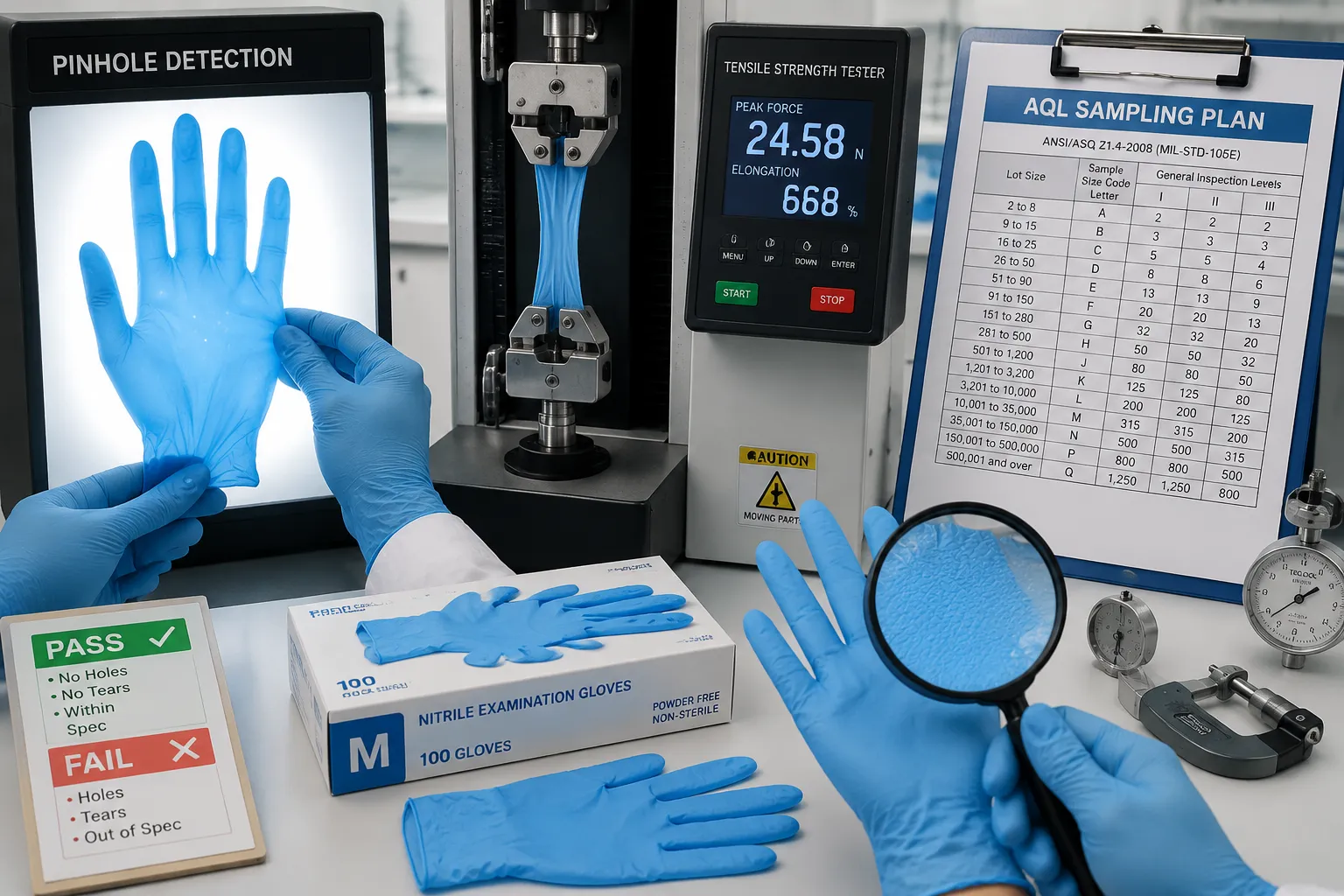
- Conduct physical inspection – Test for pinholes using water fill tests, check thickness uniformity, and assess tensile strength
Red flags indicating potential quality issues:
- Reluctance to provide certification documents or test reports
- Certificates that cannot be independently verified
- Significant price discounts (30%+ below market average) without clear explanation
- Inconsistent branding or packaging across batches
- Missing lot numbers or manufacturing dates on packaging
- Supplier cannot provide factory audit reports or refuses facility visits
For buyers placing orders above $10,000, hiring a third-party inspection service to conduct pre-shipment quality checks provides additional protection. These services typically cost $300-800 per inspection but can prevent costly quality failures.
When evaluating glove thickness, remember that medical examination gloves typically range from 3-6 mils (0.076-0.152mm), while industrial gloves may be 8-15 mils depending on application requirements.
Nitrile Gloves Made in Malaysia vs Thailand vs China: Quality Differences
Malaysian manufacturers generally lead in quality consistency and international certifications, followed closely by Thai producers, while Chinese and Vietnamese manufacturers show wider quality variation ranging from excellent to substandard. However, individual manufacturer capabilities matter more than country of origin alone.
Malaysia:
- Longest established nitrile glove industry (since 1990s)
- Highest percentage of ISO 13485 and FDA-registered facilities
- Stricter government oversight and quality enforcement
- Premium pricing tier: $8-12 per 100-glove box for medical-grade
- Major brands: Top Glove, Hartalega, Supermax, Kossan
- Best choice for medical and pharmaceutical applications requiring consistent quality
Thailand:
- Strong quality standards with competitive pricing
- Growing automation and clean room investments
- Good balance of quality and cost-effectiveness
- Mid-premium pricing: $6-10 per 100-glove box
- Increasing FDA registrations and international certifications
- Suitable for healthcare, laboratory, and industrial applications
Vietnam:
- Rapidly expanding production capacity since 2020
- Quality varies significantly between established and new facilities
- Lower labor costs enabling competitive pricing
- Budget to mid-tier pricing: $4-8 per 100-glove box
- Newer manufacturers may lack quality management maturity
- Requires more thorough supplier vetting and quality testing
China:
- Widest quality range from premium to budget-grade
- Some manufacturers match Malaysian quality standards
- Others produce lower-grade products for price-sensitive markets
- Pricing range: $3-10 per 100-glove box depending on manufacturer
- Essential to verify specific factory certifications and conduct testing
- Best for non-medical industrial applications unless premium manufacturer verified
Decision criteria:
Choose Malaysian or established Thai manufacturers if you need consistent medical-grade quality with minimal quality control overhead. Consider Vietnamese or vetted Chinese suppliers if price sensitivity is high and you can implement robust incoming quality inspection processes.
For specialized applications like tattooing or mechanical work, prioritize certification compliance over country of origin, as application-specific requirements matter more than manufacturing location.
Are Cheaper Nitrile Gloves from Emerging Markets Safe to Use
Budget nitrile gloves from emerging markets can be safe when they carry proper certifications and pass quality testing, but they require more rigorous verification than premium brands. Safety depends on intended use, with medical applications demanding stricter standards than general industrial or household tasks.
Safety considerations by use case:
Medical and healthcare settings:
- Only use gloves with FDA 510(k) clearance or CE marking for medical devices
- Verify AQL 1.5 or better for critical barrier protection
- Budget gloves meeting these standards are safe but require batch testing
- Non-certified budget gloves pose infection control risks and liability issues
Industrial and manufacturing:
- ASTM D6319 compliance ensures basic protection standards
- Budget gloves acceptable for low-risk tasks (assembly, packaging, light cleaning)
- Higher-risk chemical or sharp object handling requires premium grades
- Cost savings of 30-40% may justify slightly higher defect rates for non-critical applications
Food service and preparation:
- FDA food contact approval essential (21 CFR 177.2600)
- Budget gloves safe if properly certified and stored
- Higher turnover in food service makes cost savings significant
- See our guide on food-safe gloves for detailed requirements
Household and general use:
- Lower regulatory requirements make budget options safer choice
- Basic quality standards sufficient for cleaning, gardening, general protection
- Cost savings of 50%+ compared to premium brands often justified
Common safety compromises in budget gloves:
- Higher pinhole rates (2-3% vs. 0.5-1% in premium gloves)
- Inconsistent thickness leading to weak spots
- Lower tensile strength increasing tear risk during donning
- Shorter shelf life due to lower-grade polymer stabilizers
- Less comfortable fit and reduced tactile sensitivity
When to avoid budget options:
- Surgical procedures or sterile environments
- Handling highly hazardous chemicals or infectious materials
- Applications where glove failure creates significant safety or liability risk
- Situations requiring extended wear periods (4+ hours)
- Users with latex allergies requiring guaranteed latex-free manufacturing
The key is matching glove quality to risk level. Budget gloves meeting basic certifications work well for low-risk applications, while critical uses justify premium pricing for enhanced reliability.
What Certifications Should Nitrile Gloves Have for Medical Use
Medical-grade nitrile gloves require FDA 510(k) clearance for U.S. markets, CE marking under MDR 2017/745 for European markets, and ISO 13485 certification for quality management systems. Additional standards include ASTM D6319 for examination gloves and EN 455 parts 1-4 for European medical glove specifications.
Essential certifications by market:
United States:
- FDA 510(k) clearance (Class I or II medical device)
- ASTM D6319 compliance (nitrile examination gloves)
- ASTM D5250 for surgical gloves if applicable
- Registered establishment with FDA (verify at FDA.gov)
European Union:
- CE marking under Medical Device Regulation (MDR) 2017/745
- EN 455-1 (freedom from holes)
- EN 455-2 (physical properties)
- EN 455-3 (biological evaluation)
- EN 455-4 (shelf life determination)
- Notified Body certification number on packaging
International markets:
- ISO 13485 (medical device quality management)
- ISO 11193 (single-use medical examination gloves)
- Country-specific registrations (Health Canada, TGA Australia, etc.)
Quality level indicators:
AQL (Acceptable Quality Limit) ratings:
- AQL 0.65: Surgical gloves (highest quality)
- AQL 1.5: Medical examination gloves (standard medical grade)
- AQL 2.5: General examination gloves (acceptable for non-critical medical use)
- AQL 4.0: Industrial grade (not suitable for medical applications)
Lower AQL numbers indicate fewer defects per batch. Medical facilities should specify AQL 1.5 or better in procurement specifications.
Additional quality markers:
- Powder-free designation (powder banned in medical gloves since 2017)
- Lot number and expiration date on each box
- Manufacturing facility address and registration numbers
- Third-party testing laboratory reports available on request
- Compliance with OSHA bloodborne pathogen standards
Verification process:
- Request copies of all relevant certifications
- Verify FDA 510(k) number at accessdata.fda.gov
- Check CE certificate authenticity through Notified Body database
- Confirm ISO 13485 certificate with issuing registrar
- Review test reports showing AQL compliance
- Validate manufacturing facility registration in target markets
For hospital procurement, establish approved vendor lists requiring annual recertification and random batch testing. This reduces the burden of verifying every order while maintaining quality standards.
How to Avoid Counterfeit or Low-Quality Nitrile Gloves from Asia
Counterfeit prevention requires multi-layered verification including supplier due diligence, certification authentication, physical product inspection, and secure supply chain management. Establish relationships with verified manufacturers rather than trading companies or unknown distributors.
Supplier verification steps:
- Conduct factory audits – Visit manufacturing facilities in person or hire third-party audit services (SGS, Bureau Veritas, Intertek)
- Verify business registration – Check company registration with local government authorities and trade bureaus
- Request customer references – Contact existing customers in your region or industry
- Check trade databases – Use platforms like Alibaba’s Trade Assurance or Global Sources verification programs
- Validate export licenses – Confirm supplier holds necessary export permits for medical devices
Counterfeit detection techniques:
Packaging inspection:
- Authentic products have consistent, high-quality printing without spelling errors
- Lot numbers and dates should be clearly printed, not hand-written
- Certification marks (CE, FDA) should include registration numbers
- Packaging should match manufacturer’s official specifications
Physical product checks:
- Consistent color across all gloves in a box
- Uniform thickness without thin spots or irregularities
- Smooth surface without excessive powder residue or tackiness
- Proper elasticity and tensile strength
- Correct sizing matching labeled specifications
Documentation red flags:
- Certificates with suspicious formatting or unofficial logos
- Registration numbers that don’t verify through official databases
- Test reports from unknown or unaccredited laboratories
- Missing traceability information (lot numbers, production dates)
- Prices significantly below market rates (30%+ discount)
Supply chain security measures:
- Order directly from manufacturers rather than distributors when possible
- Use letter of credit payment terms requiring inspection before release
- Implement tamper-evident packaging or serialization for high-value orders
- Establish minimum order quantities that discourage small-scale counterfeiters
- Monitor gray market channels for unauthorized distribution of your orders
Common counterfeiting schemes:
- Repackaging lower-grade industrial gloves as medical-grade products
- Printing fake certification marks on non-certified products
- Mixing certified gloves with non-certified products in the same shipment
- Using expired or rejected inventory with altered date codes
- Creating fake company websites mimicking legitimate manufacturers
Protection strategies:
For orders above $25,000, consider these additional safeguards:
- Hire pre-shipment inspection services ($500-1,200 per inspection)
- Require manufacturer to provide certificate of origin
- Use blockchain-based supply chain tracking if available
- Establish exclusive distribution agreements with verified suppliers
- Implement incoming quality control testing for every shipment
Small buyers can reduce risk by purchasing through established distributors with quality guarantees rather than unknown overseas suppliers, even if per-unit costs are 15-20% higher.
Bulk Nitrile Glove Prices from Asia-Pacific Suppliers in 2026
Bulk nitrile glove pricing from Asia-Pacific suppliers ranges from $3-12 per 100-glove box depending on quality tier, certifications, order volume, and manufacturer location. Medical-grade certified gloves command premium pricing while industrial-grade products offer significant cost savings.
Price ranges by quality tier (per 100-glove box, FOB Asia):
| Quality Tier | Price Range | Typical Certifications | Best For |
|---|---|---|---|
| Premium Medical | $9-12 | FDA 510(k), CE, ISO 13485, AQL 1.5 | Hospitals, surgical centers, pharmaceutical |
| Standard Medical | $6-9 | ASTM D6319, EN 455, AQL 2.5 | Medical clinics, dental offices, laboratories |
| Industrial Grade | $4-7 | ASTM D6319, basic quality standards | Manufacturing, automotive, general industrial |
| Budget/Commodity | $3-5 | Minimal or no certifications | Household, light cleaning, non-critical tasks |
Volume discounts:
- 1-10 cases (1,000-10,000 gloves): List price
- 10-50 cases: 5-10% discount
- 50-100 cases: 10-15% discount
- 100+ cases (container load): 15-25% discount
- Annual contracts: Additional 5-10% discount with volume commitments
Additional cost factors:
Shipping and logistics:
- Ocean freight from Asia to U.S. West Coast: $0.30-0.60 per box
- Ocean freight to U.S. East Coast or Europe: $0.50-0.90 per box
- Air freight (for urgent orders): $2-4 per box
- Customs duties and import fees: 0-5% depending on trade agreements
Payment terms impact:
- Letter of credit: Standard pricing
- 30-day payment terms: 2-3% price increase
- Prepayment/wire transfer: 2-5% discount
- Trade credit (60-90 days): 5-8% price increase
Seasonal pricing variations:
Prices typically increase 10-20% during peak demand periods (September-February in Northern Hemisphere) and decrease during slower months (March-June). Planning purchases during off-peak periods can yield significant savings.
2026 market trends affecting pricing:
- Raw material costs (acrylonitrile, butadiene) have stabilized after 2024-2025 volatility
- Increased competition from Vietnamese manufacturers putting downward pressure on prices
- Automation investments reducing labor costs by 15-20% at major facilities
- Sustainability requirements adding $0.20-0.40 per box for eco-certified products
- Currency fluctuations affecting USD pricing by 5-10% depending on supplier country
Cost comparison with Western manufacturers:
Asia-Pacific suppliers typically offer 30-50% lower pricing than North American or European manufacturers for comparable quality levels. However, Western suppliers provide advantages in lead times, smaller minimum orders, and reduced supply chain complexity.
Negotiation strategies:
- Request quotes from 3-5 suppliers for competitive pricing
- Commit to annual volumes for better rates
- Consolidate orders to reach volume discount thresholds
- Negotiate payment terms that balance cost and cash flow
- Consider multi-year contracts with price adjustment clauses
For budget-conscious buyers, choosing the right glove specifications can reduce costs without compromising essential protection requirements.
Who Should Buy Nitrile Gloves from Emerging Markets vs Established Brands
Buyers with robust quality control capabilities, high volume requirements, and price sensitivity benefit most from emerging market suppliers, while those needing consistent quality with minimal oversight, small order quantities, or critical medical applications should prefer established brands.
Choose emerging market suppliers if:
- You purchase 50+ cases per order and can negotiate volume discounts
- Your organization has quality control staff to conduct incoming inspections
- You can manage longer lead times (6-12 weeks) and plan inventory accordingly
- Price is a primary decision factor and you need 30-50% cost savings
- You’re sourcing for non-critical applications where occasional defects are acceptable
- You have experience with international procurement and import logistics
- You can conduct supplier audits or hire third-party inspection services
Choose established brands if:
- You need small quantities (1-10 cases) with frequent reordering
- Your application is critical (surgery, hazardous chemical handling, sterile environments)
- You lack quality control resources for incoming inspection
- You require consistent product specifications across all batches
- You need rapid delivery (1-2 weeks) and can’t maintain large inventories
- Regulatory compliance documentation must be immediately available
- Brand reputation matters for customer confidence or liability protection
Hybrid approach:
Many organizations use a two-tier strategy:
- Established brands for critical applications and emergency backup stock
- Emerging market suppliers for high-volume, routine use applications
This balances cost savings with risk management.
Industry-specific recommendations:
Hospitals and surgical centers:
- Use established brands for surgical and intensive care units
- Consider certified emerging market suppliers for examination gloves in non-critical departments
- Maintain 30-day safety stock of premium brands as backup
Dental and veterinary practices:
- Emerging market suppliers work well for routine examinations
- Ensure FDA 510(k) clearance and conduct quarterly quality testing
- Small practices may prefer established brands for simplicity
Industrial and manufacturing:
- Emerging market suppliers excellent for production floor use
- Focus on ASTM compliance rather than medical certifications
- Cost savings of 40-50% significantly impact large workforce operations
Laboratories and research:
- Match glove quality to specific chemical resistance requirements
- Emerging market suppliers acceptable for general lab work
- Premium brands for handling hazardous or expensive materials
Food service and hospitality:
- Emerging market suppliers provide excellent value for high-turnover applications
- Verify FDA food contact approval
- Cost savings allow more frequent glove changes improving hygiene
Common mistakes:
- Switching to budget suppliers without implementing quality control processes
- Assuming all emerging market products are inferior quality
- Failing to account for total landed cost including shipping and duties
- Not maintaining backup suppliers for supply chain resilience
- Choosing suppliers based solely on price without certification verification
The decision should balance cost, quality requirements, risk tolerance, and organizational capabilities rather than following blanket rules about supplier origin.
Common Defects in Budget Nitrile Gloves from Asian Factories
The most common defects include pinholes and micro-tears, inconsistent wall thickness, poor tensile strength, premature tearing during donning, and inadequate cuff strength. These defects typically result from lower-grade raw materials, insufficient quality control, or aggressive cost-cutting in manufacturing processes.
Pinhole defects:
- Occur in 2-5% of budget gloves vs. 0.5-1.5% in premium products
- Caused by contamination during dipping process or inadequate polymer curing
- Most dangerous defect as it compromises barrier protection
- Detection: Water fill test (fill glove with water and check for leaks)
- Prevention: Specify AQL 2.5 or better and conduct batch testing
Inconsistent thickness:
- Thin spots typically at fingertips or palm areas
- Results from uneven dipping or poor mold maintenance
- Creates weak points prone to tearing
- Detection: Measure thickness at multiple points with micrometer
- Standard: Medical gloves should be 0.08-0.15mm with less than 20% variation
Poor tensile strength:
- Gloves tear easily during donning or use
- Caused by low-quality polymers or improper vulcanization
- ASTM D6319 requires minimum 14 MPa tensile strength before aging
- Detection: Stretch test (glove should elongate 500%+ before breaking)
- Impact: Increases glove consumption and user frustration
Cuff tearing:
- Beaded cuff separates or tears when pulling glove on
- Results from inadequate polymer at cuff edge
- Common in ultra-budget products using minimal material
- Detection: Visual inspection and donning test
- Prevention: Specify minimum cuff thickness requirements
Surface defects:
- Excessive tackiness or powder residue
- Rough texture or visible imperfections
- Color inconsistency between gloves
- Usually cosmetic but may indicate process control issues
- Can cause skin irritation with extended wear
Sizing inconsistencies:
- Gloves don’t match labeled size specifications
- Varies between production batches
- Creates fit problems and user dissatisfaction
- Detection: Measure length and width against ASTM standards
- Prevention: Request size specification sheets and verify samples
Premature aging:
- Gloves become brittle or discolored before expiration date
- Caused by inadequate UV stabilizers or antioxidants
- Reduces effective shelf life to 1-2 years vs. 3-5 years standard
- Detection: Accelerated aging tests or monitoring stored inventory
- Prevention: Verify manufacturing date and rotate stock properly
Quality control gaps causing defects:
- Inadequate incoming raw material testing
- Insufficient process monitoring during production
- Rushed production schedules to meet demand
- Poorly maintained dipping molds and equipment
- Inadequate worker training on quality standards
- Skipping final inspection steps to reduce costs
Defect rate expectations:
| Defect Type | Premium Gloves | Standard Gloves | Budget Gloves |
|---|---|---|---|
| Pinholes | 0.5-1% | 1-2% | 2-5% |
| Thickness variation | <10% | 10-20% | 20-30% |
| Tensile failures | <0.5% | 0.5-1% | 1-3% |
| Cuff tears | <0.5% | 1-2% | 3-5% |
Mitigation strategies:
- Implement incoming quality inspection for every shipment
- Conduct random sampling using AQL protocols
- Maintain relationships with multiple suppliers for comparison
- Document defect rates and provide feedback to manufacturers
- Consider upgrading to mid-tier products if defect rates exceed 3%
Understanding these common defects helps buyers set realistic expectations and implement appropriate quality control measures when sourcing budget nitrile gloves.
How to Test Nitrile Glove Quality Before Placing Large Orders
Pre-order quality testing should include visual inspection, water leak testing, physical property evaluation, and donning trials with end users. Request samples from multiple production batches and conduct systematic testing before committing to orders above 10,000 gloves.
Sample request protocol:
- Request 3-5 boxes from different production lots
- Verify lot numbers and manufacturing dates differ by at least 2 weeks
- Ensure samples come from the same specification you’ll order in bulk
- Request samples in all sizes you plan to purchase
- Ask for current test reports and certifications with samples
Visual inspection checklist:
- Consistent color across all gloves without discoloration
- Smooth surface without bumps, wrinkles, or rough patches
- Clean, uniform beaded cuff without tears or weak spots
- No visible pinholes when held up to light
- Proper packaging with clear labeling and lot numbers
- Absence of powder residue or excessive tackiness
Water leak test (pinhole detection):
- Fill glove with 1 liter of water
- Suspend glove for 2 minutes
- Observe for leaks or water droplets
- Test 10-20 gloves per box
- Acceptable failure rate: Less than 2% for medical-grade gloves
This simple test catches the most critical defect affecting barrier protection.
Physical property testing:
Tensile strength test (requires equipment):
- Cut dumbbell-shaped specimen from glove palm
- Use tensile testing machine to measure breaking strength
- ASTM D6319 requires minimum 14 MPa before aging
- Consider sending samples to testing laboratory for $50-150 per test
Elongation test:
- Stretch glove material until it breaks
- Should elongate 500% or more before failure
- Lower elongation indicates brittle or low-quality polymer
Thickness measurement:
- Use digital micrometer at fingertips, palm, and cuff
- Medical examination gloves: 0.08-0.15mm typical
- Variation should be less than 20% across measurement points
- Thinner than 0.06mm at any point indicates quality concern
Donning and comfort evaluation:
Conduct user trials with 5-10 staff members:
- Easy to don without tearing
- Comfortable fit without excessive tightness or looseness
- Good tactile sensitivity for intended tasks
- No skin irritation after 30-minute wear test
- Adequate grip for handling objects
- Cuff stays in place without rolling down
Chemical resistance testing (if applicable):
For industrial applications involving chemicals:
- Expose glove samples to intended chemicals for specified duration
- Check for degradation, swelling, or breakthrough
- Compare results to manufacturer’s chemical resistance chart
- Consider third-party permeation testing for critical applications
Accelerated aging test:
- Store samples at elevated temperature (70°C) for 7 days
- Simulates approximately 1 year of shelf aging
- Retest physical properties after aging
- Significant degradation indicates poor polymer stabilization
Comparative testing:
Test emerging market samples alongside:
- Your current supplier’s product
- Established brand benchmark
- Competitor samples from other Asian manufacturers
This provides context for evaluating quality relative to known standards.
Documentation review:
- Verify certification numbers match official databases
- Check test report dates are recent (within 6 months)
- Confirm test reports cover the specific product model
- Validate testing laboratory accreditation (ISO 17025)
- Review manufacturing facility inspection reports if available
Decision criteria:
Proceed with bulk order if samples meet these thresholds:
- Pinhole rate less than 2%
- Consistent thickness within 20% variation
- Tensile strength meets ASTM requirements
- User acceptance rating above 7/10
- All required certifications verified
- No significant quality differences between production lots
Testing costs:
- Basic visual and water testing: $0 (in-house)
- Third-party laboratory testing: $200-500 per sample set
- Factory audit: $800-2,000
- Pre-shipment inspection: $300-800
For orders above $50,000, investing $1,000-2,000 in comprehensive testing provides excellent risk mitigation.
Are Vietnamese Nitrile Glove Manufacturers Reliable
Vietnamese manufacturers vary significantly in reliability, with established facilities producing quality products comparable to Thai manufacturers, while newer entrants may lack quality management maturity and consistent production capabilities. Reliability depends on individual manufacturer assessment rather than blanket country judgments.
Vietnamese manufacturing landscape:
Vietnam’s nitrile glove industry expanded rapidly from 2020-2026, with production capacity growing from minimal to approximately 15% of regional output. This rapid expansion created a two-tier market: experienced manufacturers with international partnerships and new facilities rushing to capture market demand.
Reliable Vietnamese manufacturers typically have:
- Operations established before 2020 with proven track record
- Joint ventures or technical partnerships with Malaysian or Thai companies
- ISO 13485 certification from recognized registrars
- FDA 510(k) clearance or active registration process
- Modern automated production lines rather than manual processes
- Transparent factory audit policies welcoming customer visits
- Established export relationships with Western buyers
Red flags for unreliable suppliers:
- Facilities established after 2022 without experienced management
- Reluctance to provide factory tour opportunities
- Missing or unverifiable certifications
- Extremely low pricing (40%+ below market average)
- Limited English communication capabilities
- No references from established international customers
- Frequent production delays or quality inconsistencies
Quality comparison:
Established Vietnamese manufacturers:
- Quality comparable to mid-tier Thai producers
- Pricing 10-15% lower than Thai equivalents
- Good for medical examination gloves and industrial applications
- Improving automation and quality systems
- Suitable for buyers willing to conduct initial verification
New Vietnamese facilities:
- Quality highly variable, requiring extensive testing
- May offer attractive pricing but higher risk
- Suitable only for non-critical applications
- Require ongoing quality monitoring
- Better for experienced buyers with quality control resources
Specific considerations:
Supply chain stability:
- Vietnamese manufacturers depend on imported raw materials
- Shipping disruptions can affect delivery reliability
- Newer facilities may lack inventory buffers
- Establish longer lead times (8-12 weeks) than Malaysian suppliers
Regulatory compliance:
- Some facilities still working toward international certifications
- Verify specific regulatory approvals for your target market
- Documentation quality improving but may require additional support
- Language barriers can complicate compliance verification
Production capacity:
- Newer facilities may overcommit capacity
- Quality can suffer when production is rushed
- Verify manufacturer has adequate capacity for your order size
- Consider splitting large orders between multiple suppliers
Due diligence recommendations:
For Vietnamese suppliers, implement enhanced verification:
- Mandatory factory audit before first order
- Start with small trial order (5-10 cases)
- Conduct comprehensive quality testing on trial shipment
- Gradually increase order size based on performance
- Maintain alternative supplier as backup
- Implement batch testing for first 6-12 months
Success stories:
Several Vietnamese manufacturers have successfully supplied major Western distributors and hospital systems, demonstrating that reliable sourcing is possible with proper supplier selection and quality management.
When to choose Vietnamese suppliers:
- You need competitive pricing with acceptable quality
- You can invest time in supplier development and verification
- Your application allows for slightly higher quality variation
- You want to diversify away from Malaysian/Thai concentration
- You have quality control capabilities to monitor incoming shipments
When to avoid:
- Critical medical applications requiring absolute consistency
- Small orders where supplier development cost isn’t justified
- Tight delivery schedules without buffer time
- Limited quality control resources
- First-time international procurement experience
Vietnamese manufacturers represent an emerging opportunity requiring more careful evaluation than established Malaysian or Thai suppliers, but can deliver good value for buyers willing to invest in proper supplier qualification.
What Mistakes Do Buyers Make When Sourcing Nitrile Gloves from Asia
The most common mistakes include prioritizing price over total cost of quality, inadequate supplier verification, insufficient quality testing, poor communication of specifications, and lack of contingency planning for supply chain disruptions. These errors often result in quality failures, delivery delays, and higher total costs despite lower unit prices.
Critical sourcing mistakes:
1. Choosing suppliers based solely on lowest price
Buyers often select the cheapest quote without considering quality implications. A supplier offering 40% below market price likely cuts corners on raw materials, quality control, or certifications.
Better approach: Evaluate total cost including defect rates, returns, and potential liability. A glove costing $0.02 more but with 3% fewer defects saves money overall.
2. Skipping factory audits and verification
Many buyers rely on supplier-provided documentation without independent verification, leading to counterfeit products or misrepresented capabilities.
Better approach: Conduct factory audits for orders above $25,000. Use third-party inspection services if you can’t visit personally. Verify all certifications through issuing authorities.
3. Inadequate sample testing before bulk orders
Buyers often test a single box or skip testing entirely, missing quality variations between production batches.
Better approach: Request samples from 3-5 different production lots. Conduct systematic testing including water leak tests, physical property evaluation, and user trials.
4. Poor specification communication
Vague requirements like “medical-grade nitrile gloves” leave room for interpretation. Suppliers may provide products meeting minimal standards rather than your actual needs.
Better approach: Provide detailed specifications including:
- Required certifications (FDA 510(k), CE, ASTM standards)
- AQL requirements (1.5, 2.5, etc.)
- Thickness specifications and tolerances
- Size requirements and acceptable variation
- Packaging and labeling requirements
- Shelf life expectations
5. Ignoring payment term risks
Paying 100% upfront removes leverage for quality issues. Paying on extended terms without inspection increases counterfeit risk.
Better approach: Use letter of credit with inspection clause, or 30% deposit with balance after pre-shipment inspection approval.
6. Single-source dependency
Relying on one supplier creates vulnerability to production issues, quality problems, or supply disruptions.
Better approach: Qualify 2-3 suppliers and split orders. Maintain relationships with backup suppliers even if you primarily use one source.
7. Underestimating lead times
Buyers often assume 4-6 week delivery like domestic suppliers, but Asian sourcing typically requires 8-12 weeks including production and shipping.
Better approach: Plan inventory 3-4 months ahead. Maintain safety stock equal to lead time plus buffer. Order before running low rather than when stock depletes.
8. Neglecting import compliance
Failing to understand customs requirements, duties, and medical device import regulations causes delays and unexpected costs.
Better approach: Work with experienced customs broker. Verify import requirements for medical devices in your country. Factor duties and fees into total cost calculations.
9. Inadequate quality control systems
Assuming supplier quality control is sufficient without implementing incoming inspection processes.
Better approach: Inspect every shipment for first 6 months. Conduct random sampling thereafter. Document defect rates and provide feedback to suppliers.
10. Ignoring cultural and communication differences
Misunderstandings about specifications, timelines, or quality expectations due to language barriers and business culture differences.
Better approach: Use clear, written specifications with visual examples. Confirm understanding through samples and mock-ups. Build relationships through regular communication.
11. Failing to plan for supply chain disruptions
Not accounting for shipping delays, port congestion, raw material shortages, or regulatory changes.
Better approach: Maintain 60-90 day safety stock. Diversify suppliers across multiple countries. Monitor supply chain news and adjust orders proactively.
12. Overlooking total landed cost
Focusing on FOB price without calculating shipping, duties, inspection costs, and quality-related expenses.
Better approach: Calculate total landed cost per unit including all fees. Compare this to domestic supplier pricing for accurate cost comparison.
Cost of mistakes:
A typical scenario: Buyer saves $2,000 on a $10,000 order by choosing cheapest supplier. Shipment arrives with 5% defect rate requiring returns and rush reorder from premium supplier at 30% premium. Total loss: $5,000 plus customer dissatisfaction.
Prevention checklist:
Before placing orders above $10,000:
- Verify supplier certifications independently
- Conduct factory audit or hire inspection service
- Test samples from multiple production batches
- Establish clear written specifications
- Use secure payment terms with inspection clause
- Qualify backup suppliers
- Calculate total landed cost
- Plan lead times with adequate buffer
- Implement incoming quality inspection process
Learning from these common mistakes helps buyers capture the cost benefits of Asian sourcing while managing quality and supply chain risks effectively.
Nitrile Glove Supply Chain Issues in Southeast Asia
Southeast Asian nitrile glove supply chains face ongoing challenges including raw material shortages, shipping container availability, port congestion, labor shortages, and evolving regulatory requirements. These issues create delivery delays, price volatility, and quality inconsistencies requiring buyers to implement risk mitigation strategies.
Current supply chain challenges (2026):
Raw material constraints:
- Acrylonitrile and butadiene supply depends on petroleum refining capacity
- Price fluctuations of 20-40% based on crude oil markets
- Some manufacturers substitute lower-grade materials during shortages
- Lead times for raw materials extended to 8-12 weeks
- Impact: Price volatility and potential quality compromises
Shipping and logistics:
- Container shortages during peak seasons (September-February)
- Shipping costs fluctuate $2,000-8,000 per container
- Port congestion adds 1-3 weeks to delivery times
- Limited air freight capacity for urgent shipments
- Impact: Unpredictable delivery schedules and cost increases
Labor availability:
- Manufacturing facilities struggle to maintain adequate staffing
- Skilled quality control personnel particularly scarce
- Wage inflation of 5-10% annually in major production countries
- Impact: Production delays and potential quality control gaps
Regulatory changes:
- Evolving certification requirements in importing countries
- Increased scrutiny of medical device imports
- New sustainability and environmental compliance requirements
- Impact: Potential shipment rejections and compliance costs
Energy supply:
- Power shortages in some regions affect production schedules
- Rising energy costs increase manufacturing expenses
- Impact: Production delays and price increases
Risk mitigation strategies:
For buyers:
- Extend planning horizons – Order 3-4 months ahead rather than 6-8 weeks
- Maintain larger safety stock – Keep 60-90 days inventory vs. 30 days
- Diversify suppliers – Source from multiple countries to reduce concentration risk
- Lock in pricing – Negotiate quarterly or annual contracts with price protection
- Build supplier relationships – Priority allocation during shortages goes to established customers
- Monitor supply chain news – Stay informed about regional issues affecting production
- Consider air freight options – For critical shortages despite higher cost
- Implement demand forecasting – Share projections with suppliers for better planning
Supplier strategies improving reliability:
- Vertical integration securing raw material supplies
- Automation reducing labor dependency
- Inventory buffers of raw materials and finished goods
- Multiple shipping line relationships
- Renewable energy investments reducing grid dependency
Geographic considerations:
Malaysia:
- Most mature supply chain infrastructure
- Better raw material access and inventory management
- Higher reliability but premium pricing
- Best choice for critical applications requiring consistency
Thailand:
- Good infrastructure with occasional port congestion
- Balanced reliability and pricing
- Suitable for most applications
Vietnam:
- Developing infrastructure with more variability
- Raw material dependency creates vulnerability
- Lower pricing but higher supply chain risk
- Requires longer lead times and larger safety stock
China:
- Extensive logistics infrastructure
- Raw material access advantages
- Regulatory complexity for medical device exports
- Variable reliability depending on specific region
Supply chain visibility:
Request from suppliers:
- Production schedule updates
- Raw material inventory status
- Shipping booking confirmations
- Proactive notification of potential delays
- Alternative shipping options during disruptions
Contractual protections:
Include in purchase agreements:
- Maximum acceptable delivery delay (e.g., 2 weeks)
- Price adjustment clauses for raw material changes
- Force majeure definitions and remedies
- Quality guarantee with replacement provisions
- Minimum inventory requirements for suppliers
2026 outlook:
Supply chain conditions have stabilized compared to 2020-2023 disruptions but remain more volatile than pre-2020 norms. Buyers should expect:
- Lead times 2-4 weeks longer than domestic suppliers
- Price volatility of 10-20% annually
- Occasional delivery delays requiring safety stock
- Continued need for supply chain monitoring and flexibility
Successful buyers treat supply chain management as an ongoing process rather than one-time procurement, maintaining regular communication with suppliers and adjusting strategies based on changing conditions.
Do Hospitals Use Nitrile Gloves from Emerging Market Suppliers
Many hospitals and healthcare systems increasingly source nitrile gloves from emerging market suppliers, particularly for non-surgical examination gloves, when manufacturers demonstrate consistent quality documentation, proper certifications, and reliable supply chain performance. Adoption varies by hospital size, risk tolerance, and procurement sophistication.
Hospital adoption patterns:
Large hospital systems (500+ beds):
- 60-70% now source some gloves from Asian manufacturers
- Typically use established Malaysian or Thai suppliers
- Maintain dual sourcing with premium brands for critical areas
- Have quality control staff to verify incoming shipments
- Realize 30-40% cost savings on examination glove budgets
Mid-size hospitals (100-500 beds):
- 40-50% source from emerging markets
- Often work through group purchasing organizations (GPOs)
- May lack resources for extensive supplier verification
- Focus on suppliers with strong GPO relationships and references
- Balance cost savings with quality assurance capabilities
Small hospitals and clinics (under 100 beds):
- 20-30% source from emerging markets
- Typically purchase through distributors rather than direct import
- Rely on distributor quality guarantees
- Limited ability to conduct independent verification
- May prefer established brands for simplicity and liability protection
Usage by department:
Surgical and sterile environments:
- Primarily use established premium brands
- Emerging market suppliers rarely used due to consistency requirements
- Quality variation unacceptable for surgical applications
- Liability concerns favor proven brands
Emergency departments and intensive care:
- Mixed approach with premium brands for critical procedures
- Emerging market suppliers for routine examinations
- Quality requirements similar to surgical but with more flexibility
General examination and outpatient:
- High adoption of emerging market suppliers
- Cost savings significant due to high volume usage
- Quality requirements less stringent than surgical applications
- Acceptable defect rates higher (2-3% vs. under 1%)
Laboratory and pathology:
- Good fit for certified emerging market suppliers
- Chemical resistance more important than absolute consistency
- Cost savings allow more frequent glove changes
Housekeeping and environmental services:
- Excellent application for budget emerging market products
- Non-medical grade acceptable
- Significant cost savings (40-50%)
Procurement criteria:
Hospitals typically require:
Certifications:
- FDA 510(k) clearance (mandatory for U.S. hospitals)
- ISO 13485 certification
- ASTM D6319 compliance
- AQL 1.5 or 2.5 depending on application
Quality documentation:
- Batch-specific test reports
- Certificate of conformance with each shipment
- Traceability through lot numbers
- Manufacturing facility inspection reports
Supply reliability:
- Demonstrated on-time delivery record
- Adequate inventory to prevent stockouts
- Backup production capacity
- Clear communication during disruptions
Liability protection:
- Product liability insurance
- Clear recall procedures
- Responsive customer service
- Established U.S. presence or representative
Quality assurance programs:
Hospitals using emerging market suppliers implement:
- Incoming inspection of every shipment
- Random sampling using AQL protocols
- Quarterly quality audits
- Defect tracking and supplier scorecards
- Annual supplier reviews and recertification
- Backup supplier qualification
Case example:
A 300-bed regional hospital system switched 70% of examination glove purchases to a Malaysian supplier in 2024:
- Annual savings: $85,000 (35% reduction in glove costs)
- Quality metrics: 1.8% defect rate vs. 1.2% for previous premium brand
- User satisfaction: 8.2/10 vs. 8.7/10 for premium brand
- Conclusion: Acceptable quality trade-off for significant cost savings
- Maintained premium brand for surgical and ICU departments
Barriers to adoption:
- Concerns about quality consistency
- Lack of internal resources for supplier verification
- Liability concerns and risk aversion
- Preference for established supplier relationships
- Complexity of international procurement
- Longer lead times requiring larger inventory investment
Facilitators of adoption:
- Group purchasing organization (GPO) contracts with verified suppliers
- Peer hospital references and success stories
- Significant budget pressures driving cost reduction initiatives
- Improved quality and certifications from Asian manufacturers
- Distributor partnerships handling import complexity
- Successful trial programs demonstrating acceptable quality
Trend outlook:
Hospital adoption of emerging market nitrile gloves is expected to continue growing as:
- Quality gaps narrow between Asian and Western manufacturers
- Cost pressures intensify in healthcare
- More hospitals develop procurement expertise
- GPOs expand verified supplier networks
- Regulatory frameworks mature in producing countries
By 2028, industry analysts project 60-70% of U.S. hospitals will source at least some examination gloves from Asia-Pacific suppliers, up from approximately 45% in 2026.
For healthcare facilities considering this transition, starting with a pilot program in low-risk departments, implementing robust quality controls, and maintaining backup suppliers provides a balanced approach to capturing cost savings while managing quality and supply chain risks.
Frequently Asked Questions
What is the typical shelf life of nitrile gloves from Asian manufacturers?
Nitrile gloves from quality Asian manufacturers have a shelf life of 3-5 years when stored properly in cool, dry conditions away from direct sunlight. Budget manufacturers may use fewer polymer stabilizers resulting in 1-2 year shelf life. Always check the manufacturing date on packaging and rotate stock using first-in-first-out principles.
Can I mix nitrile gloves from different suppliers in the same facility?
Yes, you can use gloves from multiple suppliers in the same facility, but maintain clear separation by department or application. Ensure each supplier’s products meet the specific requirements for their intended use. Document which supplier serves which area to track performance and address quality issues effectively.
How do I verify an FDA 510(k) number is legitimate?
Visit the FDA’s 510(k) Premarket Notification database at accessdata.fda.gov/scripts/cdrh/cfdocs/cfPMN/pmn.cfm and search by the 510(k) number, manufacturer name, or device name. Legitimate clearances will show complete information including clearance date, manufacturer details, and device specifications. If you cannot find the number, the certification is likely fraudulent.
What’s the minimum order quantity for direct import from Asian manufacturers?
Most manufacturers require minimum orders of 20-40 cases (20,000-40,000 gloves) for direct export, with full container loads (800-1,200 cases) offering best pricing. Smaller buyers should work with distributors or consider group purchasing to access Asian suppliers without meeting high minimums.
Are black nitrile gloves lower quality than blue or white gloves?
Color does not indicate quality. Black nitrile gloves use carbon black pigment but can meet the same quality standards as other colors. Some users prefer black for aesthetic reasons or because they show less visible soiling. Verify certifications and test quality regardless of color choice. Learn more about black nitrile gloves and their applications.
How often should I conduct quality testing on shipments from the same supplier?
Test every shipment for the first 6 months to establish baseline quality. After demonstrating consistency, transition to random sampling of 25% of shipments. Increase testing frequency immediately if defect rates rise or after any supplier production changes.
What payment method is safest for first-time orders from Asian suppliers?
Letter of credit with pre-shipment inspection clause provides best protection. This ensures payment releases only after independent inspection confirms quality and quantity. Avoid 100% prepayment for first orders. For smaller orders, consider using trade platforms with buyer protection like Alibaba Trade Assurance.
Can nitrile gloves be recycled or disposed of sustainably?
Most nitrile gloves are not recyclable through standard programs due to contamination concerns. Some manufacturers now offer biodegradable nitrile formulations that break down faster in landfills. For large facilities, specialized medical waste recycling programs can process used gloves, though at additional cost.
Do thicker nitrile gloves always provide better protection?
Not necessarily. Thickness affects puncture resistance but not chemical permeation protection, which depends on polymer formulation. For chemical resistance, check specific permeation data rather than assuming thicker is better. For general use, 4-6 mil thickness balances protection and tactile sensitivity. See our guide on glove thickness selection for detailed recommendations.
What should I do if a shipment arrives with quality issues?
Document defects with photos and testing data immediately. Contact the supplier within 48 hours with detailed evidence. For serious issues (high pinhole rates, missing certifications), quarantine the shipment and request replacement. Use contractual remedies including withholding payment or returning goods. This is why pre-shipment inspection and letter of credit payment terms are valuable.
Are powder-free nitrile gloves required for medical use?
Yes, the FDA banned powdered medical gloves in 2017 due to health risks. All medical-grade nitrile gloves must be powder-free. Industrial gloves may still use powder, but powder-free is now standard across the industry. Verify “powder-free” labeling on all medical glove purchases.
How do I know if my staff has a nitrile allergy?
Nitrile allergies are rare but possible. Symptoms include skin redness, itching, rash, or hives after glove use. More severe reactions may include respiratory symptoms. If suspected, discontinue use and consult a healthcare provider for allergy testing. Consider alternative glove materials for confirmed allergies.
Conclusion
The Asia-Pacific supply boom has fundamentally transformed the nitrile glove market, offering buyers unprecedented access to competitively priced products while requiring more sophisticated quality assurance approaches. Success in sourcing from emerging markets depends on balancing cost savings with rigorous supplier verification, systematic quality testing, and proactive supply chain management.
Malaysian manufacturers continue to lead in quality consistency and international certifications, making them the safest choice for critical medical applications. Thai producers offer excellent quality-to-price ratios suitable for most healthcare and industrial uses. Vietnamese and Chinese suppliers present opportunities for significant cost savings but require enhanced due diligence and quality control processes.
Key action steps for buyers:
Define your requirements clearly – Specify certifications, AQL levels, and performance standards based on your actual application needs rather than generic “medical-grade” descriptions
Invest in supplier verification – Conduct factory audits, verify certifications independently, and check references before committing to large orders
Implement systematic testing – Test samples from multiple production batches using water leak tests, physical property evaluation, and user trials
Start small and scale gradually – Begin with trial orders of 5-10 cases, verify quality, then increase volume based on demonstrated performance
Maintain supply chain resilience – Qualify multiple suppliers, keep 60-90 days safety stock, and plan orders 3-4 months ahead
Establish quality control processes – Inspect incoming shipments, track defect rates, and provide feedback to suppliers
Calculate total landed cost – Include shipping, duties, inspection costs, and quality-related expenses in pricing comparisons
Build supplier relationships – Regular communication and long-term commitments earn priority treatment during shortages
The emerging market opportunity is real and substantial. Healthcare facilities report 30-40% cost savings on examination glove budgets when sourcing from qualified Asian suppliers. Industrial buyers achieve even greater savings of 40-50% while maintaining acceptable quality for their applications.
However, success requires treating international sourcing as a strategic capability rather than a simple purchasing transaction. Organizations that invest in supplier development, quality systems, and supply chain management capture the benefits while managing risks effectively. Those that chase the lowest price without adequate verification often experience quality failures that eliminate any cost savings.
As the Asia-Pacific supply base continues maturing, quality gaps are narrowing while cost advantages persist. Buyers who develop expertise in emerging market sourcing now will be well-positioned to benefit from this ongoing transformation of the global nitrile glove industry.
For specialized applications, remember to match glove specifications to your specific needs, whether that’s chemical resistance for laboratory work, food safety compliance, or protection for specific industries. The right sourcing strategy combines appropriate quality levels with cost-effective procurement from verified suppliers.
SEO Meta Title: Nitrile Gloves Emerging Markets: Asia-Pacific Quality Tips