Last updated: June 29, 2026
Healthcare workers handling hazardous chemotherapy drugs face significant exposure risks that demand specialized protective equipment. Nitrile gloves for chemotherapy handling provide superior drug resistance, safety protocols, and healthcare guidelines compliance compared to other glove materials, making them the gold standard for oncology nurses, pharmacy technicians, and medical staff working with cytotoxic agents. Understanding proper selection, usage, and replacement protocols is critical for minimizing occupational exposure to these dangerous substances.
Key Takeaways
- Nitrile gloves offer superior chemical resistance to most chemotherapy drugs compared to latex or vinyl alternatives, but no glove provides complete protection against all cytotoxic agents
- OSHA and USP 800 guidelines mandate chemotherapy-rated nitrile gloves with minimum 0.005-inch thickness for hazardous drug handling
- Double-gloving with two pairs of nitrile gloves is required for chemotherapy preparation and administration in most healthcare settings
- Gloves must be changed every 30 minutes during continuous chemotherapy handling, or immediately upon visible contamination or suspected breach
- Powder-free nitrile gloves are mandatory for chemotherapy work to prevent drug particle dispersion and contamination
- Certain individuals including pregnant healthcare workers should avoid chemotherapy handling even with proper protective equipment
- Breakthrough time varies significantly by drug type, with some aggressive agents penetrating nitrile within minutes
- Immediate glove removal, hand washing, and incident reporting are required if chemotherapy spills on gloves
What Are Nitrile Gloves and Why Are They Used for Chemotherapy
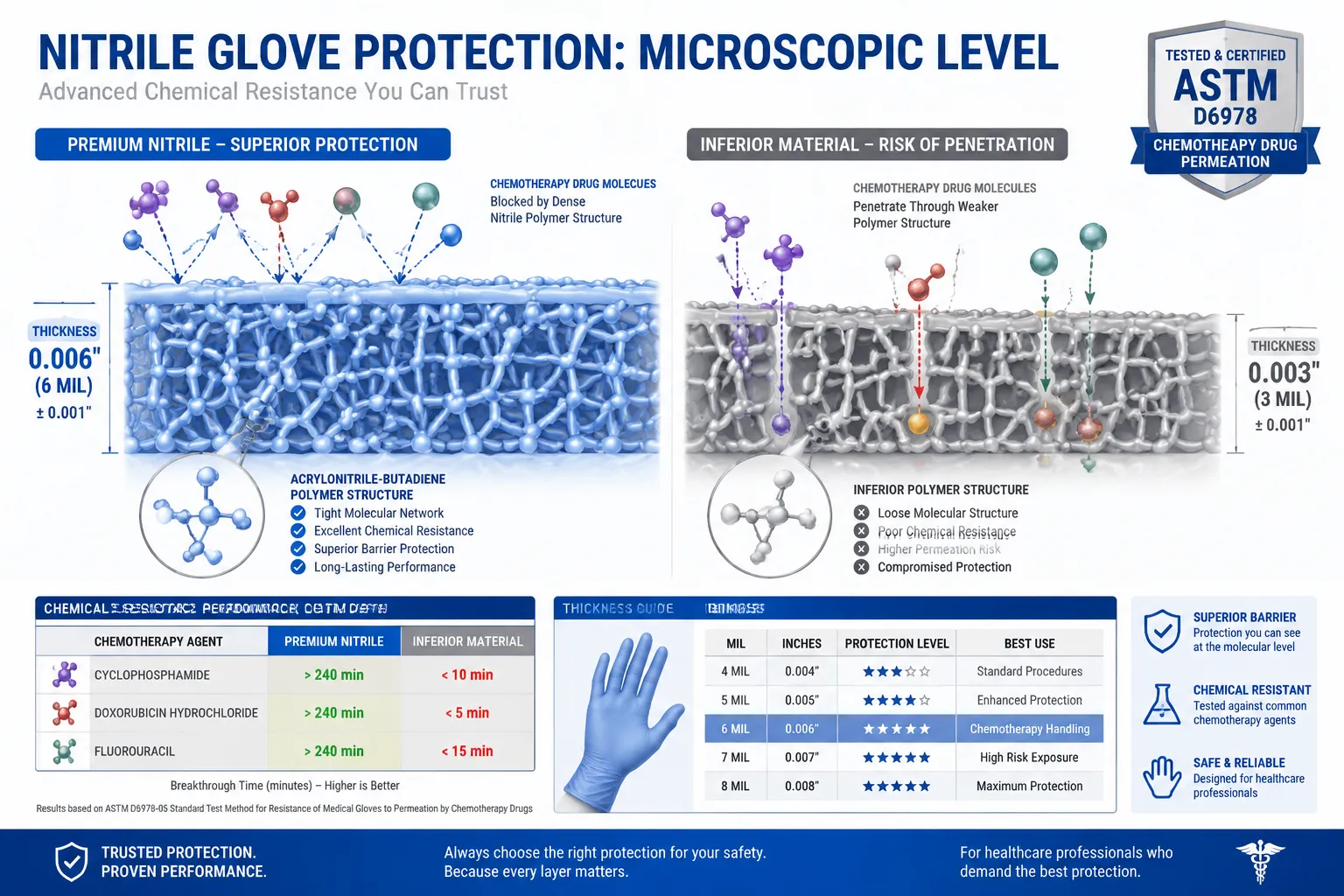
Nitrile gloves are synthetic rubber gloves made from acrylonitrile and butadiene polymers that provide exceptional chemical resistance and barrier protection. Healthcare facilities use nitrile gloves for chemotherapy handling because their molecular structure resists penetration by most cytotoxic drugs better than latex or vinyl, while also eliminating latex allergy risks that could sideline critical oncology staff.
The polymer chains in nitrile create a dense barrier that slows or prevents chemotherapy drug molecules from passing through the glove material. This chemical resistance is measured as “breakthrough time,” which indicates how long a glove can safely protect against a specific chemical before penetration occurs.
Key advantages of nitrile for chemotherapy work:
- Resistance to oils, solvents, and most pharmaceutical compounds
- Puncture resistance three times greater than latex
- No natural rubber proteins that trigger allergic reactions
- Maintains barrier integrity across temperature variations in pharmacy compounding areas
- Tactile sensitivity sufficient for precise medication preparation tasks
Nitrile gloves have become the preferred choice in oncology settings since the early 2000s, when research demonstrated their superior performance against common chemotherapy agents. The material’s synthetic nature allows manufacturers to engineer specific thickness and formulation characteristics optimized for hazardous drug handling.
Do Nitrile Gloves Protect Against All Chemotherapy Drugs
No single glove material, including nitrile, provides complete protection against all chemotherapy drugs. Breakthrough time varies dramatically depending on the specific cytotoxic agent, glove thickness, and exposure duration, with some aggressive drugs penetrating nitrile gloves in as little as 10-15 minutes.
Testing conducted under ASTM D6978 standards reveals that nitrile gloves perform well against many common chemotherapy agents but show limited resistance to others. For example, nitrile demonstrates excellent protection against doxorubicin and cyclophosphamide but offers reduced breakthrough times for drugs like carmustine and thiotepa.
Chemotherapy drugs with good nitrile resistance (breakthrough time over 60 minutes):
- Doxorubicin
- Cyclophosphamide
- Fluorouracil
- Methotrexate
- Vincristine
Drugs requiring extra caution with nitrile (breakthrough time under 30 minutes):
- Carmustine (BCNU)
- Thiotepa
- Melphalan in certain concentrations
- Dimethyl sulfoxide (DMSO) carriers
This variability explains why healthcare guidelines mandate frequent glove changes and double-gloving protocols. The American Society of Health-System Pharmacists recommends consulting manufacturer permeation data for specific drug-glove combinations when available, and defaulting to maximum protection protocols when data is unavailable.
Nitrile vs Latex vs Vinyl Gloves for Chemo Handling
Nitrile gloves significantly outperform both latex and vinyl gloves for chemotherapy handling, with latex offering moderate protection but allergy risks, while vinyl provides inadequate chemical resistance for hazardous drug work. Current USP 800 standards effectively prohibit vinyl gloves for chemotherapy preparation and administration due to their poor barrier properties.
Comparison of glove materials for chemotherapy:
| Feature | Nitrile | Latex | Vinyl |
|---|---|---|---|
| Chemical resistance | Excellent | Moderate | Poor |
| Breakthrough time (avg) | 30-240 minutes | 15-60 minutes | 5-20 minutes |
| Puncture resistance | High | Moderate | Low |
| Allergy risk | Minimal | High | Minimal |
| Tactile sensitivity | Good | Excellent | Fair |
| Cost per glove | $0.15-0.40 | $0.10-0.25 | $0.05-0.15 |
| USP 800 compliant | Yes (when rated) | Sometimes | No |
Latex gloves were once common in chemotherapy settings but have been largely replaced due to healthcare worker latex allergies affecting 8-12% of medical staff. While latex offers reasonable protection against some chemotherapy drugs, the allergy risk creates staffing complications that outweigh any benefits.
Vinyl gloves lack the molecular structure needed to resist chemical penetration and should never be used for chemotherapy handling. Their lower cost makes them suitable for non-hazardous tasks, but they fail to meet safety standards for cytotoxic drug exposure. For more information on material differences, see our comparison of nitrile vs vinyl gloves.
Choose nitrile if you’re handling any chemotherapy drugs, preparing hazardous medications, or administering cytotoxic agents. Reserve latex only for non-drug tasks if no staff allergies exist, and avoid vinyl entirely in oncology settings.
What Thickness Nitrile Gloves Are Required for Chemo Drugs
Chemotherapy-rated nitrile gloves must have a minimum thickness of 0.005 inches (5 mils) according to OSHA and USP 800 guidelines, though many facilities specify 0.007-0.008 inches (7-8 mils) for enhanced protection during extended compounding sessions. Standard examination gloves at 0.003-0.004 inches do not provide adequate protection for hazardous drug handling.
Glove thickness directly impacts breakthrough time and puncture resistance. Testing shows that doubling glove thickness can extend breakthrough time by 200-400% for many chemotherapy agents, making thickness selection a critical safety decision.
Thickness recommendations by task:
- Chemotherapy preparation/compounding: 0.007-0.008 inches minimum, double-gloved
- Chemotherapy administration: 0.005-0.007 inches minimum, double-gloved
- Cleaning contaminated surfaces: 0.008-0.010 inches, utility-grade nitrile
- Waste handling: 0.007-0.008 inches minimum
- Spill cleanup: 0.010-0.015 inches, heavy-duty nitrile
Thicker gloves provide better protection but reduce tactile sensitivity, creating a trade-off that healthcare facilities must balance. Most oncology pharmacies use 8-mil gloves for the inner layer and 7-mil for the outer layer during double-gloving protocols, optimizing both protection and dexterity.
The relationship between thickness and protection is not linear. A glove twice as thick does not necessarily provide twice the protection, as factors like polymer formulation and manufacturing quality also affect performance. Always verify that gloves are specifically tested and rated for chemotherapy handling, not just thick. For detailed guidance on glove thickness, review our article on what is a good thickness for nitrile gloves.
Can Chemotherapy Drugs Penetrate Through Nitrile Gloves
Yes, chemotherapy drugs can and do penetrate through nitrile gloves given sufficient time and concentration, which is why time-based glove change protocols are mandatory in all chemotherapy handling procedures. Penetration occurs at the molecular level as drug molecules gradually work through the polymer matrix, a process that accelerates with higher drug concentrations, elevated temperatures, and mechanical stress on the glove material.
Breakthrough occurs in three stages: permeation (molecules enter the glove material), diffusion (molecules move through the material), and breakthrough (molecules emerge on the inner surface). This process is invisible and provides no warning to the wearer, making timed glove changes essential rather than optional.
Factors that accelerate drug penetration:
- Extended contact time beyond 30 minutes
- High drug concentrations during preparation
- Elevated temperatures in compounding areas
- Mechanical stress from repeated gripping or manipulation
- Microscopic defects in glove material
- Incompatible drug-glove combinations
- Oil or alcohol-based drug carriers
Research published in the Journal of Oncology Pharmacy Practice demonstrates that even chemotherapy-rated nitrile gloves show measurable drug penetration after 30-45 minutes of continuous exposure to common agents. This finding supports the widespread 30-minute change interval mandated by most healthcare facilities.
The penetration risk is why double-gloving is required. If the outer glove becomes contaminated or experiences breakthrough, the inner glove provides a secondary barrier. Visual inspection of the outer glove during removal can reveal contamination that might have otherwise gone unnoticed.
OSHA Guidelines for Gloves When Handling Chemotherapy
OSHA requires employers to provide chemotherapy-rated gloves that meet ASTM D6978 standards for permeation resistance, mandate double-gloving for all hazardous drug preparation and administration, and establish written procedures for glove selection, use, and disposal. These requirements fall under OSHA’s Hazard Communication Standard and general duty clause to protect workers from occupational exposure to hazardous drugs.
The ASTM D6978 standard specifically tests glove materials against a panel of chemotherapy drugs to determine breakthrough times and permeation rates. Gloves that pass this testing receive certification indicating they meet minimum performance criteria for hazardous drug handling.
Core OSHA requirements for chemotherapy glove use:
- Gloves must be powder-free to prevent drug particle dispersion
- Double-gloving required for preparation, administration, and waste handling
- Gloves must be changed every 30 minutes during continuous use
- Immediate glove change required if torn, punctured, or contaminated
- Gloves must be removed carefully to avoid skin contact with outer surface
- Hand washing mandatory immediately after glove removal
- Gloves must be disposed of as hazardous pharmaceutical waste
OSHA also requires employers to train all staff on proper glove selection, donning, doffing, and disposal procedures. This training must be documented and repeated annually or whenever procedures change.
Facilities must maintain records of glove specifications, including manufacturer permeation data for drugs used in their setting. When specific permeation data is unavailable, facilities must default to maximum protection protocols including more frequent glove changes and thicker glove materials.
Violations of OSHA glove requirements can result in citations and fines, but more importantly, they expose healthcare workers to serious health risks including reproductive harm, cancer, and acute toxicity from chemotherapy drug absorption.
Do Pharmacy Techs Need Double Gloving for Chemo Preparation
Yes, pharmacy technicians must use double-gloving when preparing chemotherapy drugs, wearing two pairs of chemotherapy-rated nitrile gloves simultaneously as mandated by USP 800 standards and OSHA guidelines. The outer glove serves as the primary barrier and contamination indicator, while the inner glove provides backup protection if the outer glove is breached or contaminated.
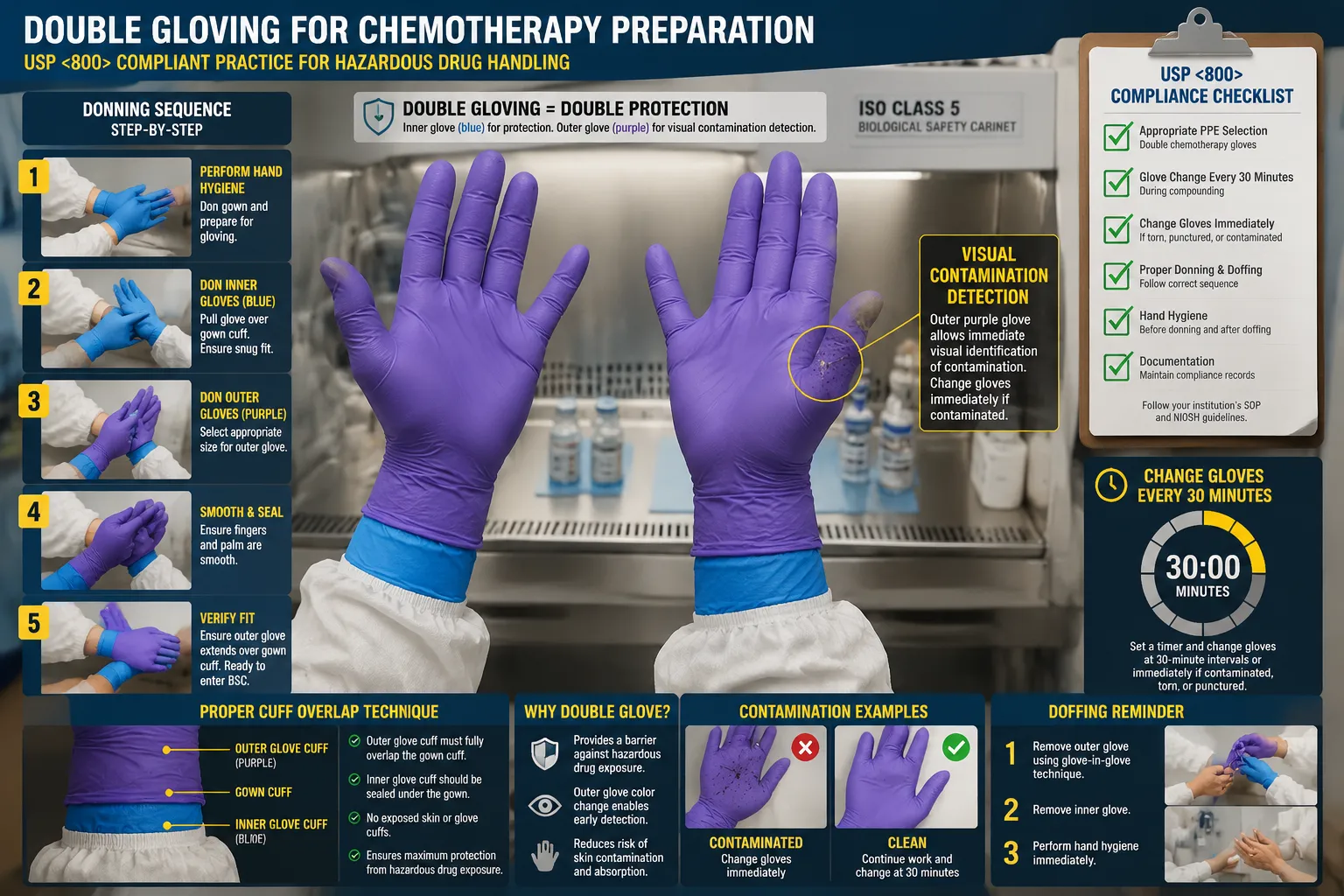
Double-gloving protocols require specific techniques to maximize protection. The inner glove is donned first, followed by the outer glove with cuffs overlapping the sleeves of the protective gown. Many facilities use different colored gloves for each layer to make contamination visible during removal.
Proper double-gloving technique:
- Wash hands thoroughly before gloving
- Don inner gloves, ensuring complete coverage of wrists
- Don protective gown with cuffs extending over inner glove wrists
- Don outer gloves, pulling cuffs over gown sleeves
- Inspect both glove layers for tears or defects
- Change outer gloves every 30 minutes or if contaminated
- Change both glove layers if inner glove integrity is questioned
The outer glove takes the brunt of contamination during drug preparation, protecting the inner glove from direct drug contact. Studies show that outer gloves frequently test positive for chemotherapy drug residue after compounding sessions, while inner gloves remain clean when protocols are followed correctly.
Some facilities implement a three-glove system for high-risk preparations, though this significantly reduces dexterity and is typically reserved for specific high-penetration drugs or extended compounding sessions. The standard two-glove approach provides adequate protection for most chemotherapy preparation when combined with proper technique and timely changes.
Pharmacy technicians should never compromise on double-gloving to improve dexterity or speed. The temporary convenience is not worth the long-term health risks associated with chemotherapy exposure.
What to Do If Chemotherapy Spills on Your Gloves
Immediately remove contaminated gloves using proper doffing technique, wash hands thoroughly with soap and water, don fresh gloves, and report the incident to your supervisor while documenting the exposure in your facility’s hazardous drug exposure log. Do not attempt to wipe off the spill or continue working with contaminated gloves, as this spreads contamination and increases absorption risk.
Time is critical when chemotherapy contacts gloves. Even chemotherapy-rated nitrile gloves provide limited protection once saturated with liquid drug, and breakthrough can occur within minutes depending on the agent and concentration.
Step-by-step spill response on gloves:
- Stop work immediately – Do not continue the task
- Alert nearby staff – Warn others of contamination
- Remove outer gloves carefully – Peel from wrist to fingertips, turning inside-out
- Inspect inner gloves – Check for visible contamination
- Remove inner gloves – Use same careful technique
- Wash hands thoroughly – Minimum 30 seconds with soap and water
- Don fresh double gloves – Complete new set
- Clean contaminated surfaces – Follow facility spill protocols
- Document the incident – Complete exposure report
- Seek medical evaluation – If skin contact suspected
If the spill penetrated to your skin, wash the affected area immediately with soap and water for at least 15 minutes. Do not use alcohol-based hand sanitizers on chemotherapy-contaminated skin, as alcohol can enhance drug absorption. Seek immediate medical evaluation and follow your facility’s post-exposure protocols.
Large spills exceeding 5 milliliters or involving high-risk drugs may require evacuation of the immediate area and response by specially trained spill teams. Know your facility’s threshold for calling additional help versus managing the spill yourself.
Common mistake: Healthcare workers sometimes try to rinse contaminated gloves rather than removing them. This is ineffective and dangerous, as it spreads contamination and wastes critical response time.
Are Powder-Free Nitrile Gloves Better for Chemo Handling
Powder-free nitrile gloves are not just better for chemotherapy handling, they are mandatory under current USP 800 standards because powder particles can absorb and disperse chemotherapy drugs throughout the work environment, creating an inhalation hazard and contaminating surfaces. Powdered gloves have been effectively banned from hazardous drug handling since 2019.
The powder in traditional gloves (typically cornstarch) serves as a donning lubricant but creates serious problems in chemotherapy settings. When contaminated with cytotoxic drugs, powder particles become airborne during glove removal, allowing healthcare workers to inhale drug-laden particles or spreading contamination to faces, clothing, and work surfaces.
Risks of powdered gloves with chemotherapy:
- Drug particles become airborne during glove removal
- Powder settles on surfaces, creating secondary contamination
- Inhalation exposure to cytotoxic drugs
- Contamination of sterile compounding areas
- Interference with biological safety cabinet airflow
- Residue on hands after glove removal
Modern powder-free nitrile gloves use polymer coatings or chlorination processes to reduce friction and ease donning without powder. These gloves may feel slightly different initially but provide equivalent or better dexterity once healthcare workers adjust to them.
All chemotherapy-rated gloves sold in 2026 are powder-free by design. If your facility still has powdered gloves in stock, they should not be used for any hazardous drug handling and should be reserved strictly for non-chemotherapy tasks or disposed of entirely.
Who Should Not Handle Chemotherapy Drugs Even With Gloves
Pregnant healthcare workers, those actively trying to conceive, and breastfeeding staff should avoid handling chemotherapy drugs even with proper protective equipment, as research demonstrates that cytotoxic agents can be absorbed through skin and mucous membranes despite glove use, potentially causing reproductive harm and fetal toxicity. Many healthcare facilities have formal policies allowing these workers to decline chemotherapy assignments without penalty.
The decision to restrict chemotherapy handling for certain populations stems from documented cases of reproductive harm among healthcare workers with occupational exposure. While proper protective equipment significantly reduces risk, it does not eliminate it entirely, and the consequences of exposure during pregnancy can be severe.
Populations that should avoid chemotherapy handling:
- Pregnant women at any stage of pregnancy
- Women actively trying to conceive
- Breastfeeding mothers
- Workers with compromised immune systems
- Staff with open wounds or skin conditions on hands
- Individuals with documented chemotherapy drug allergies
- Workers unable to properly don protective equipment due to disability
Healthcare facilities must provide alternative assignments for workers who decline chemotherapy handling for medical or reproductive reasons. This is protected under OSHA regulations and various state laws regarding workplace safety and pregnancy accommodation.
Some facilities extend these restrictions to male workers whose partners are pregnant or trying to conceive, though this is less common and more controversial. The evidence for male-mediated reproductive harm from occupational chemotherapy exposure is less robust but not absent.
Workers with skin conditions like eczema or dermatitis face increased absorption risk because compromised skin barrier function allows greater drug penetration. These individuals should consult occupational health before handling chemotherapy, even with gloves.
How Often Should You Change Gloves During Chemo Compounding
Change both pairs of gloves every 30 minutes during continuous chemotherapy compounding, or immediately if gloves become torn, punctured, or visibly contaminated, whichever occurs first. This 30-minute interval is based on permeation testing showing that breakthrough begins for many chemotherapy agents after 30-45 minutes of continuous exposure, even through chemotherapy-rated nitrile gloves.
The 30-minute rule applies to continuous work. If you take a break from compounding, remove gloves, wash hands, and don fresh gloves when resuming work. Do not wear the same gloves across work sessions, even if the total wear time is under 30 minutes.
Glove change triggers during compounding:
- Every 30 minutes of continuous use (set a timer)
- Visible contamination with drug or solution
- Suspected puncture or tear
- Contact with outer glove surface by bare hand
- Completion of compounding session
- Before leaving the compounding area
- After handling contaminated waste
- When switching between different chemotherapy agents
Some high-risk drugs require more frequent changes. Carmustine, for example, shows breakthrough through nitrile in as little as 10-15 minutes, requiring glove changes every 10 minutes during compounding. Always consult manufacturer permeation data for specific drugs when available.
Outer gloves typically require more frequent changes than inner gloves. Many facilities change outer gloves every 30 minutes while keeping inner gloves for the entire compounding session, provided the inner gloves show no signs of contamination during outer glove removal.
Pharmacy supervisors should audit glove change compliance regularly. Wipe sampling of work surfaces and glove exteriors can reveal whether staff are following protocols or extending wear times beyond safe limits.
What Happens If You Touch Chemo Drugs Without Proper Gloves
Direct skin contact with chemotherapy drugs can cause immediate effects including chemical burns, skin irritation, and allergic reactions, plus long-term risks such as increased cancer risk, reproductive harm, and genetic damage from cytotoxic agent absorption through the skin. The severity depends on the specific drug, concentration, contact duration, and exposed skin area.
Acute effects appear within minutes to hours and include redness, burning, blistering, and tissue damage at the contact site. Some chemotherapy agents like nitrogen mustard cause severe chemical burns requiring immediate medical treatment. Other drugs produce delayed reactions that may not appear for 24-48 hours.
Immediate health effects of unprotected chemotherapy contact:
- Chemical burns and skin irritation
- Allergic contact dermatitis
- Blistering and tissue necrosis
- Absorption leading to nausea and dizziness
- Mucous membrane irritation if transferred to eyes or mouth
Long-term health risks from repeated exposure:
- Increased cancer risk, particularly leukemia
- Reproductive harm including miscarriage and birth defects
- Genetic damage and chromosomal abnormalities
- Liver and kidney damage
- Immune system suppression
Healthcare workers who experience unprotected chemotherapy contact should immediately flush the affected area with water for at least 15 minutes, remove contaminated clothing, and seek medical evaluation. Document the exposure through your facility’s incident reporting system and follow post-exposure monitoring protocols.
Studies of healthcare workers with documented chemotherapy exposure show elevated rates of certain cancers and reproductive problems compared to unexposed populations. While individual exposure incidents may seem minor, cumulative exposure over a career creates significant health risks.
The risk is why proper glove use is non-negotiable in chemotherapy settings. Even brief contact during tasks that seem low-risk, like wiping down a contaminated surface or handling patient waste, can result in meaningful drug absorption.
Best Nitrile Glove Brands Approved for Hazardous Drug Handling
Leading nitrile glove brands approved for chemotherapy handling include Microflex, Ansell, Kimberly-Clark, Cardinal Health, and Medline, all offering products that meet ASTM D6978 standards with documented permeation data for common chemotherapy agents. Selection should be based on specific drug compatibility, thickness requirements, and facility budget rather than brand loyalty alone.
Not all products from these manufacturers are chemotherapy-rated. Look for specific product lines designated for hazardous drug handling, typically labeled as “chemotherapy tested,” “ASTM D6978 compliant,” or “USP 800 approved.”
Top chemotherapy-rated nitrile glove products (2026):
- Microflex 93-260 – 9.4 mil thickness, extended cuff, tested against 20+ chemotherapy agents
- Ansell GAMMEX Non-Latex Sensitive – 7.9 mil, powder-free, excellent tactile sensitivity
- Kimberly-Clark Purple Nitrile Xtra – 6.3 mil, cost-effective, good general protection
- Cardinal Health Esteem Stretchy Nitrile – 8.7 mil, high comfort, extended wear
- Medline Aloetouch Chemo – 7.5 mil, aloe coating, reduced hand fatigue
When evaluating glove brands, request permeation data sheets showing breakthrough times for the specific chemotherapy drugs used in your facility. Generic claims of “chemotherapy protection” are insufficient. You need documented testing results for your drug panel.
Consider these factors beyond brand name:
- Sizing accuracy – Proper fit is critical for dexterity and protection
- Cuff length – Longer cuffs (12+ inches) provide better coverage
- Texture – Textured fingertips improve grip on vials and syringes
- Color – Different colors for inner/outer gloves aid contamination detection
- Cost per pair – Balance protection with budget constraints
- Availability – Ensure reliable supply chain for your chosen product
Many facilities standardize on two products: a thicker glove (8-10 mil) for compounding and a thinner glove (6-7 mil) for administration. This approach optimizes protection where risk is highest while maintaining dexterity for patient care tasks.
Avoid switching glove brands frequently, as healthcare workers need time to adapt to the fit and feel of specific products. Consistent use of the same glove improves technique and reduces the risk of tears or improper donning.
Understanding Glove Thickness and Chemical Resistance
The relationship between glove thickness and chemical resistance is complex and not always linear, making it essential to consider both physical thickness measurements and chemical-specific permeation data when selecting gloves for chemotherapy handling. A thicker glove does not automatically provide better protection against all drugs, as polymer formulation and manufacturing quality significantly impact performance.
Thickness is measured in mils (thousandths of an inch) or millimeters. Standard examination gloves range from 3-4 mils, while chemotherapy gloves typically range from 5-10 mils. Heavy-duty utility gloves for spill cleanup may exceed 15 mils.
How thickness affects performance:
- Breakthrough time – Generally increases with thickness, but varies by drug
- Puncture resistance – Directly correlates with thickness
- Dexterity – Decreases as thickness increases
- Comfort – Thicker gloves cause more hand fatigue
- Cost – Increases with thickness
Testing shows that doubling glove thickness from 4 mils to 8 mils might extend breakthrough time for cyclophosphamide from 45 minutes to 180 minutes, but only extend breakthrough time for carmustine from 15 minutes to 25 minutes. This drug-specific variation is why consulting permeation data is more important than simply choosing the thickest available glove.
Some facilities mistakenly believe that wearing three or four pairs of thin gloves provides equivalent protection to one pair of thick gloves. This is false. Multiple thin layers do not create the same barrier as a single thick layer, and the interfaces between glove layers can trap contamination and create false security.
For detailed information on selecting appropriate glove thickness for various applications, see our guide on thin vs thick nitrile gloves.
Proper Glove Donning and Doffing Techniques
Correct glove donning and doffing techniques are as important as glove selection itself, as improper removal is a leading cause of skin contamination among healthcare workers handling chemotherapy. The outer glove surface becomes heavily contaminated during use, and touching this surface with bare hands during removal defeats the entire purpose of wearing gloves.
Donning is relatively straightforward but requires attention to detail. Doffing requires careful technique to avoid self-contamination, particularly when removing double gloves after chemotherapy handling.
Proper donning sequence:
- Wash hands thoroughly with soap and water
- Inspect first pair of gloves for tears or defects
- Don inner gloves, ensuring cuffs cover wrists completely
- Don protective gown, pulling sleeves over inner glove cuffs
- Inspect second pair of gloves for defects
- Don outer gloves, pulling cuffs over gown sleeves
- Verify complete coverage with no skin exposed
Proper doffing sequence:
- While still gloved, remove any contaminated materials from work area
- Grasp outer glove at wrist with opposite gloved hand
- Peel outer glove off, turning it inside-out as you remove it
- Hold removed glove in remaining gloved hand
- Slide fingers of ungloved hand under cuff of remaining outer glove
- Peel second outer glove off, turning inside-out and enclosing first glove
- Inspect inner gloves for visible contamination
- Remove inner gloves using same technique
- Dispose of all gloves in hazardous pharmaceutical waste
- Wash hands immediately for minimum 30 seconds
Never pull gloves off by the fingers, as this increases the risk of tearing and contamination. Always peel from the wrist, turning gloves inside-out to contain contamination.
If you touch the outer surface of a contaminated glove with bare skin during removal, immediately wash the affected area and report the exposure. Do not wait until you finish doffing to address contamination.
Glove Storage and Handling Best Practices
Proper storage and handling of chemotherapy-rated nitrile gloves maintains their protective properties and prevents degradation that could compromise safety. Store gloves in their original packaging in a cool, dry location away from direct sunlight, ozone sources, and chemical vapors, and inspect gloves before each use for signs of deterioration such as discoloration, stiffness, or tackiness.
Nitrile gloves have a finite shelf life, typically 3-5 years from manufacture when stored properly. Exposure to heat, light, ozone, and certain chemicals accelerates degradation and reduces breakthrough times for chemotherapy drugs.
Storage requirements:
- Temperature: 50-70°F (10-21°C)
- Humidity: 40-60% relative humidity
- Light: Protected from direct sunlight and UV exposure
- Location: Away from ozone-generating equipment (motors, electrical equipment)
- Packaging: Keep in original boxes until use
- Organization: First-in, first-out rotation to use oldest stock first
Inspect gloves before donning. Look for discoloration (yellowing or darkening), stiffness, excessive tackiness, or visible defects. Discard any gloves showing these signs, as they may have degraded polymer structures that provide reduced protection.
Do not store gloves near chemotherapy compounding areas where they might be exposed to drug vapors or contamination. Maintain a clean storage area separate from the active work zone.
Avoid purchasing excessive inventory. While bulk purchasing may reduce costs, gloves that sit in storage for years may degrade before use. Calculate usage rates and order quantities that will be consumed within 12-18 months.
Training and Competency Requirements
Healthcare workers handling chemotherapy must complete initial training on glove selection, use, and disposal before beginning hazardous drug work, with annual competency assessments and retraining required to maintain current knowledge of safety protocols. Training must be documented and include both didactic instruction and hands-on demonstration of proper techniques.
USP 800 standards mandate specific training content for all personnel involved in chemotherapy handling, from pharmacy technicians to nurses to environmental services staff who clean contaminated areas.
Required training topics:
- Health risks of chemotherapy exposure
- Glove selection criteria for different drugs and tasks
- Proper donning and doffing techniques
- Double-gloving protocols
- Glove change intervals and triggers
- Inspection procedures before and during use
- Spill response procedures
- Disposal requirements
- Documentation and reporting
Competency assessment should include observation of actual glove use during chemotherapy handling, not just written tests. Supervisors should watch staff don and doff gloves, verify proper technique, and correct errors immediately.
Annual retraining is mandatory even for experienced staff. Updates to guidelines, new research on drug permeation, and introduction of new glove products all require refresher training to maintain current knowledge.
Many facilities use fluorescent markers or UV-detectable lotions during training to demonstrate contamination patterns and reveal technique errors. Staff apply the marker to outer gloves, perform simulated tasks, then use UV light to show where contamination spread during glove removal.
Regulatory Compliance and Documentation
Healthcare facilities must maintain comprehensive documentation of glove selection, permeation data, training records, and exposure incidents to demonstrate compliance with OSHA, USP 800, and state regulations governing chemotherapy handling. This documentation serves as evidence of due diligence in protecting worker safety and is subject to inspection by regulatory agencies.
Required documentation includes written policies and procedures for glove use, manufacturer specifications and permeation data for all glove products used, training records for all staff, and logs of exposure incidents and corrective actions taken.
Essential compliance documents:
- Written glove selection policy specifying approved products
- Manufacturer permeation data sheets for all gloves in use
- Training curriculum and materials
- Individual training completion records with dates and signatures
- Competency assessment results
- Exposure incident reports and investigations
- Glove change logs for high-risk compounding
- Audit results and corrective action plans
OSHA inspectors specifically look for documentation demonstrating that facilities have assessed the hazards of their specific chemotherapy drugs and selected appropriate protective equipment based on that assessment. Generic policies stating “use chemotherapy gloves” are insufficient.
Facilities should conduct annual audits of glove use practices, including observation of staff technique, review of change intervals, and environmental sampling to detect contamination. Document audit findings and implement corrective actions for any deficiencies identified.
Maintain records for at least 30 years for exposure incidents involving individual workers, as long-term health effects of chemotherapy exposure may not appear for decades. General training and policy records should be kept for at least 5 years.
Emerging Technologies and Future Developments
Glove technology for chemotherapy handling continues to evolve, with 2026 seeing introduction of smart gloves with embedded sensors that detect chemical breakthrough and alert wearers before drug penetration reaches the skin. These innovations promise to reduce occupational exposure by providing real-time feedback that current gloves cannot offer.
Research institutions and manufacturers are developing several promising technologies that may change chemotherapy glove practices in coming years.
Emerging glove technologies:
- Chemical detection sensors – Embedded indicators that change color when specific drugs penetrate
- Breakthrough timing chips – RFID tags that track wear time and alert at 30-minute intervals
- Enhanced polymer formulations – New nitrile blends with improved resistance to problem drugs
- Biodegradable chemotherapy gloves – Environmentally friendly materials that maintain protection
- Custom-fit gloves – 3D scanning and printing for optimal fit and reduced fatigue
Smart glove technology currently costs 3-5 times more than standard chemotherapy gloves, limiting adoption to research settings and high-risk compounding facilities. As production scales up, costs are expected to decrease, making these technologies accessible to more healthcare facilities by 2028-2030.
Some facilities are piloting reusable chemotherapy gloves made from heavy-duty materials that can be decontaminated and reused multiple times. While this approach reduces waste, it requires rigorous cleaning protocols and validation to ensure complete decontamination between uses.
The future may also bring drug-specific glove recommendations based on artificial intelligence analysis of molecular structures, predicting permeation rates for new chemotherapy agents before extensive testing is conducted.
Frequently Asked Questions
Can you reuse nitrile gloves after handling chemotherapy?
No, never reuse gloves after chemotherapy handling. Gloves become contaminated with cytotoxic drugs during use and cannot be adequately cleaned or decontaminated. Dispose of all chemotherapy gloves as hazardous pharmaceutical waste after single use.
How do you know if chemotherapy has penetrated your gloves?
You cannot detect breakthrough by feel or appearance. Chemotherapy penetration is invisible and provides no warning. This is why timed glove changes every 30 minutes are mandatory regardless of whether gloves appear intact.
Are black nitrile gloves better for chemotherapy than purple or blue?
Color does not affect chemical resistance. Choose gloves based on ASTM D6978 certification and permeation data, not color. Some facilities use different colors for inner and outer gloves to aid in contamination detection during removal.
Do you need special gloves for oral chemotherapy medications?
Yes, use the same chemotherapy-rated nitrile gloves when handling oral chemotherapy tablets or capsules. These drugs are just as hazardous as injectable forms and require identical protective equipment.
Can you use hand sanitizer while wearing chemotherapy gloves?
No, alcohol-based hand sanitizers can degrade nitrile gloves and potentially enhance drug penetration. If hand hygiene is needed during glove use, change to fresh gloves instead. Always wash hands with soap and water after glove removal.
What should you do if you develop a rash from nitrile gloves?
Discontinue use immediately and consult occupational health. While nitrile allergies are rare, they do occur. You may need to switch to alternative materials or use cotton liners under nitrile gloves if cleared by medical evaluation.
Are chemotherapy gloves required for cleaning patient rooms?
Yes, use chemotherapy-rated gloves when cleaning rooms of patients receiving chemotherapy, as body fluids contain active drug metabolites for 48-72 hours after treatment. Standard examination gloves do not provide adequate protection.
How long after chemotherapy administration should you wear special gloves?
Wear chemotherapy-rated gloves for all patient contact and waste handling for 48 hours after the last chemotherapy dose, as drugs and active metabolites persist in body fluids during this period.
Can pharmacy students handle chemotherapy with proper gloves?
Yes, if they have completed required training and are under direct supervision of licensed pharmacists. The same protective equipment and protocols apply to students as to licensed staff.
Do you need different gloves for different chemotherapy drugs?
Ideally yes, as breakthrough times vary significantly by drug. However, most facilities standardize on gloves that provide adequate protection for their most commonly used agents and implement more frequent changes for high-penetration drugs.
Are nitrile gloves safe for patients with latex allergies?
Yes, nitrile gloves contain no natural rubber latex proteins and are safe for latex-allergic patients. This is one reason nitrile has replaced latex in most healthcare settings.
What thickness gloves do you need for chemotherapy spill cleanup?
Use heavy-duty nitrile gloves of at least 10-15 mils thickness for spill cleanup, as you will be exposed to higher drug concentrations than during normal handling. Some facilities use utility-grade gloves designed specifically for hazardous material cleanup.
Conclusion
Nitrile gloves for chemotherapy handling represent a critical component of healthcare worker safety, but they are not a complete solution on their own. Proper glove selection based on ASTM D6978 certification, appropriate thickness for specific tasks, and strict adherence to double-gloving protocols form the foundation of protection. However, these measures must be combined with rigorous training, timed glove changes every 30 minutes, proper donning and doffing techniques, and immediate response to contamination incidents.
Healthcare facilities must prioritize compliance with USP 800 and OSHA guidelines, maintaining comprehensive documentation of glove specifications, permeation data, and training records. Workers should never compromise on protective equipment quality or protocol adherence, as the long-term health consequences of chemotherapy exposure can be severe and irreversible.
For healthcare workers handling chemotherapy, the action steps are clear: verify that your facility provides chemotherapy-rated nitrile gloves meeting ASTM D6978 standards, complete required training on proper use techniques, set timers to ensure 30-minute glove changes during continuous work, and report any exposure incidents immediately. For facility managers, conduct regular audits of glove use practices, maintain current permeation data for all drugs in use, and invest in ongoing staff education to maintain high compliance rates.
The evolution of glove technology, including smart sensors and enhanced polymer formulations, promises improved protection in coming years. However, current chemotherapy-rated nitrile gloves provide excellent protection when used correctly and consistently. The key to safety lies not in waiting for perfect technology, but in flawless execution of proven protocols with the high-quality gloves available today.
SEO Meta Title: Nitrile Gloves for Chemotherapy: Safety Protocols Guide