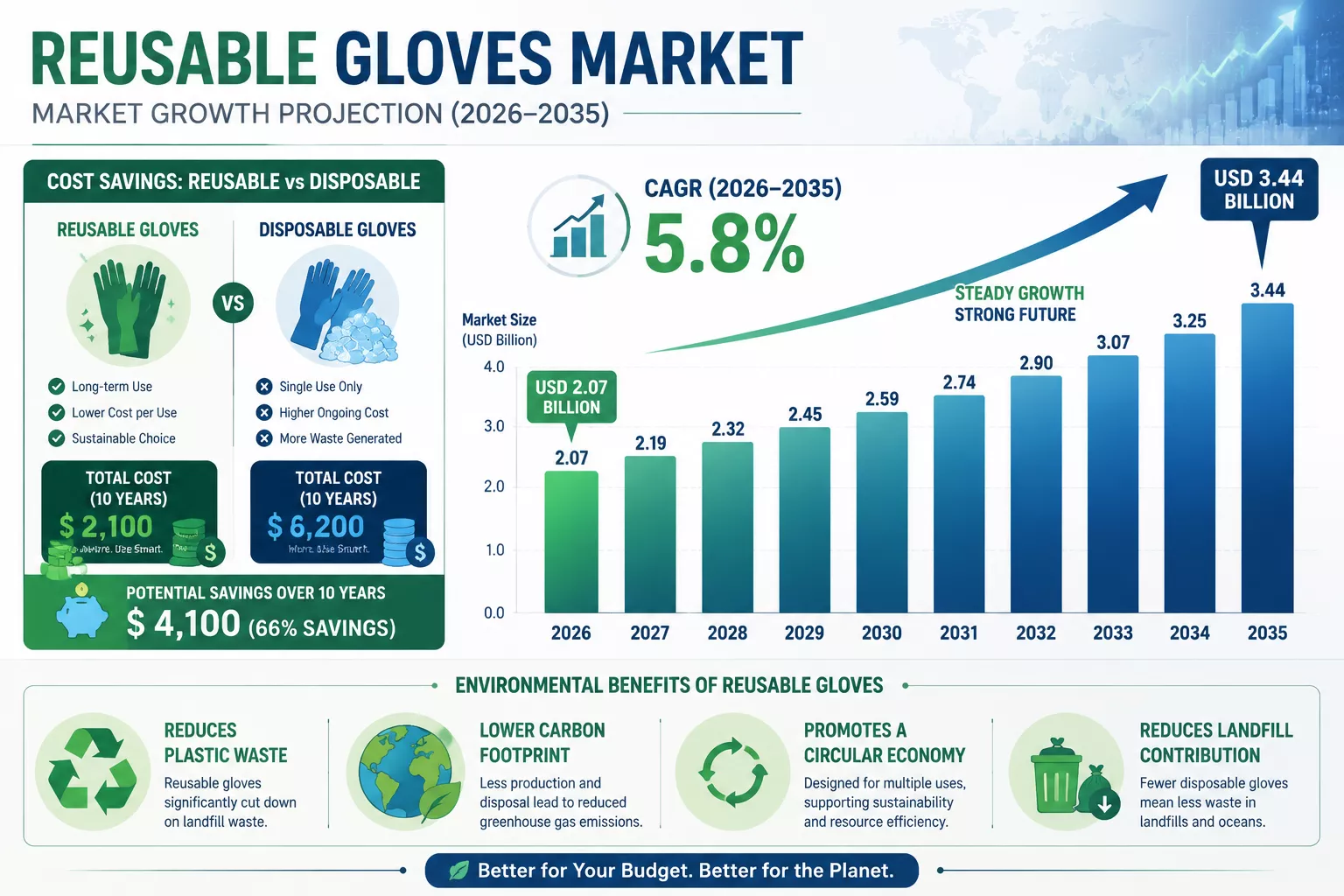
The global reusable nitrile gloves market is set to surge from USD 2.07 billion in 2026 to USD 3.44 billion by 2035, representing a robust 5.8% compound annual growth rate. This remarkable expansion reflects a fundamental shift in how high-risk industries approach worker safety, cost management, and environmental responsibility. Unlike their disposable counterparts, durable reusable nitrile gloves deliver extended protection in harsh environments while reducing long-term operational costs and waste generation.

Key Takeaways
- 📈 The reusable nitrile gloves market will grow from $2.07 billion to $3.44 billion between 2026 and 2035
- 💰 Cost savings and reduced waste make reusable options increasingly attractive for long-term industrial use
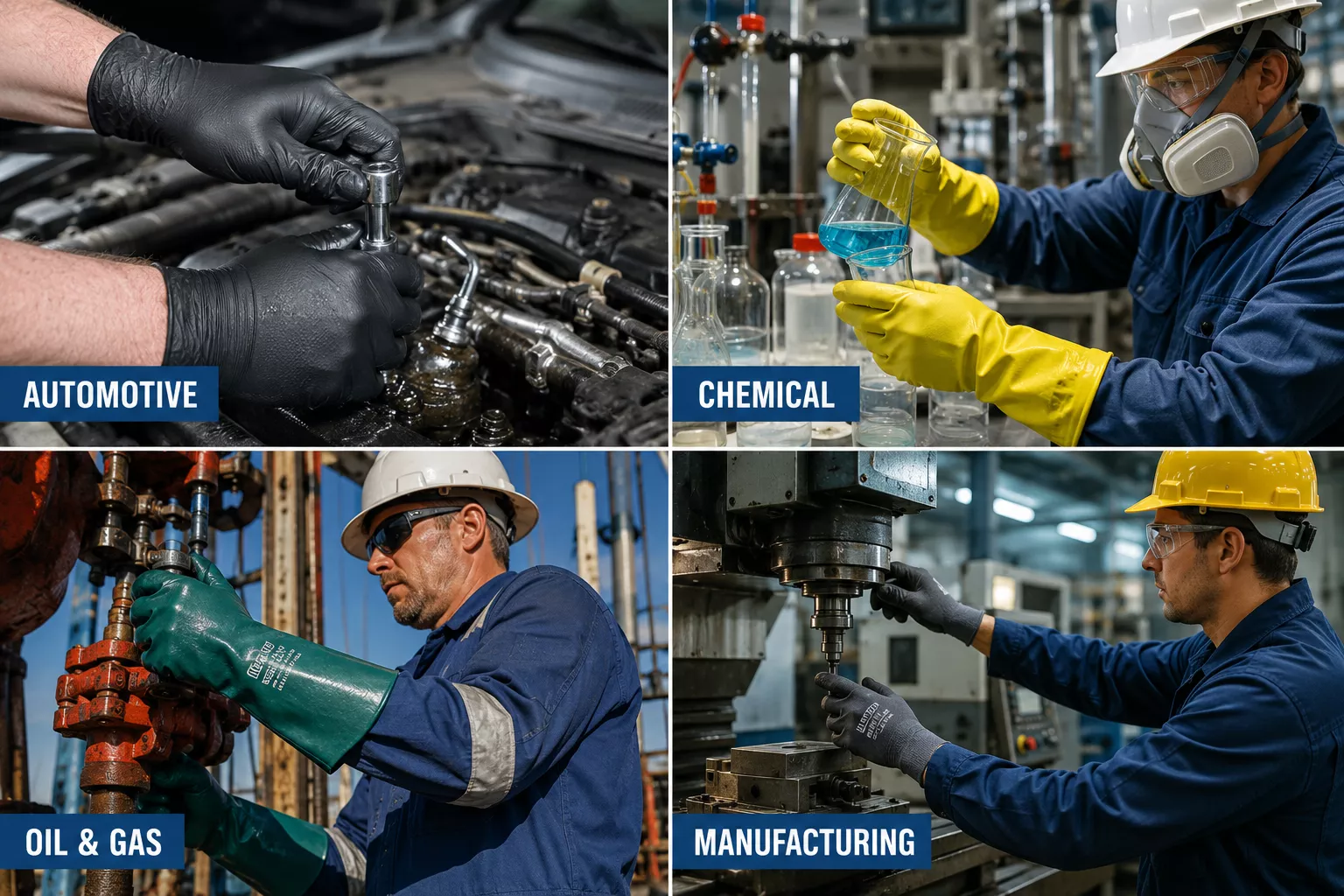
- 🏭 High-risk sectors including oil & gas, chemical, automotive, and manufacturing drive primary demand
- 🛡️ Superior chemical resistance and durability outperform natural rubber alternatives in hazardous conditions
- 🌱 Sustainability innovations including biodegradable formulations are gaining traction in developed markets
Understanding Durable Reusable Nitrile Gloves: Growth Drivers and Top Applications in High-Risk Industries
What Makes Reusable Nitrile Gloves Different?
Reusable nitrile gloves represent a specialized category designed for extended wear and multiple uses in demanding environments. Unlike thin disposable versions, these gloves feature thicker construction—typically ranging from 15 to 22 mils—providing enhanced puncture resistance and longevity. The optimal thickness for nitrile gloves depends on specific application requirements, but reusable variants prioritize durability above all else.
The synthetic rubber composition offers exceptional resistance to oils, chemicals, and pathogens that would quickly degrade natural rubber alternatives. This makes them particularly valuable in industrial settings where workers face continuous exposure to harsh substances. Understanding how nitrile glove thickness impacts durability and protection against oil helps organizations select appropriate protection levels.
Economic and Environmental Advantages
The financial case for reusable nitrile gloves becomes compelling when examining total cost of ownership rather than per-unit pricing. While disposable gloves may cost less initially, facilities using hundreds or thousands daily face mounting expenses and waste management challenges. Reusable options reduce both financial burden and environmental impact through extended service life.
Industries prioritizing sustainability find that durable gloves avoid wastage in long-term use scenarios, helping protect ecosystems while maintaining rigorous safety standards. This dual benefit of cost efficiency and environmental responsibility drives adoption across sectors facing increasing pressure to demonstrate corporate sustainability commitments.
Key Growth Drivers for Durable Reusable Nitrile Gloves: Growth Drivers and Top Applications in High-Risk Industries
Rising Demand from High-Risk Industries
The broader nitrile gloves market is projected to grow at 8.9% CAGR through 2034, with the durable segment capturing the highest market share. This growth stems primarily from sectors operating in harsh and hazardous conditions where worker safety cannot be compromised.
Primary demand drivers include:
- ⚙️ Oil & Gas Operations – Extreme conditions requiring maximum durability and chemical resistance
- 🧪 Chemical & Petrochemical – Continuous exposure to corrosive substances demanding superior protection
- 🚗 Automotive & Metal Industries – Contact with oils, solvents, and sharp materials requiring long-lasting gloves
- 🏭 Machinery & Manufacturing – Extended wear scenarios where frequent glove changes disrupt productivity
These industries recognize that nitrile gloves protect against various types of oils and chemicals more effectively than alternatives, making them indispensable for worker safety protocols.
Material Innovation and Performance Enhancement
Recent product developments demonstrate the industry’s commitment to continuous improvement. In December 2024, MAPA Professional introduced the Solo 980 thick nitrile glove featuring enhanced durability, chemical resistance, and dexterity. Such innovations expand application possibilities while maintaining the protective qualities that define the category.
Manufacturers are also developing gentler nitrile formulations that minimize skin irritation and improve breathability. These advancements support prolonged use in safety-sensitive environments and reduce hand fatigue during extended wear—critical factors for workers in demanding roles. Understanding how nitrile gloves fare against abrasion helps users appreciate these material improvements.
Sustainability and Biodegradable Solutions
Environmental concerns increasingly influence purchasing decisions, particularly in Europe and North America. Companies are investing in biodegradable nitrile gloves with enzyme-based additions that improve degradation speed without compromising performance during use. This innovation addresses the persistent challenge of whether nitrile gloves can be recycled through alternative disposal pathways.
The sustainability angle resonates with organizations seeking to balance worker protection with environmental stewardship. As regulatory frameworks tighten around industrial waste, reusable and biodegradable options provide compliant solutions that align with corporate responsibility goals.
Top Applications in High-Risk Industries
Chemical and Petrochemical Sectors
Chemical handling represents a primary growth area for durable reusable nitrile gloves due to the material’s exceptional chemical resistance. Workers in these environments face daily exposure to acids, bases, solvents, and other hazardous substances that demand reliable barrier protection.
The extended durability of reusable gloves proves particularly valuable in continuous process operations where frequent glove changes create contamination risks and workflow interruptions. Facilities benefit from consistent protection levels throughout extended shifts while reducing disposal logistics.
Oil & Gas Operations
The oil & gas sector presents some of the most demanding conditions for personal protective equipment. Workers encounter petroleum products, drilling fluids, and harsh weather requiring gloves that maintain integrity across temperature extremes and chemical exposures.
Reusable nitrile gloves excel in these applications through superior puncture resistance and flexibility retention. The investment in higher-quality reusable options pays dividends through reduced injury rates and improved operational efficiency. For related applications, choosing nitrile gloves for automotive work follows similar selection criteria.
Automotive and Metal Industries
Automotive maintenance and metal fabrication involve continuous contact with oils, greases, cutting fluids, and sharp edges. These conditions quickly compromise disposable gloves, leading to frequent changes that interrupt workflow and increase costs.
Durable reusable nitrile gloves withstand these challenges while providing the tactile sensitivity needed for precision work. Mechanics and fabricators appreciate gloves that last through complete shifts without sacrificing dexterity. Organizations seeking the best mechanic nitrile gloves increasingly specify reusable options for their superior value proposition.
Manufacturing and Machinery Operations
Industrial machinery operations require protection from lubricants, coolants, and mechanical hazards while maintaining grip and control. Reusable nitrile gloves deliver this combination through textured surfaces and robust construction that endures repetitive tasks.
Manufacturing facilities implementing lean principles recognize that reducing glove change frequency eliminates waste and improves productivity. The durability factor directly supports operational excellence initiatives while maintaining safety compliance. Understanding best practices for nitrile gloves ensures proper selection and use across applications.
Selection Criteria for Durable Reusable Nitrile Gloves
Thickness and Protection Level
Choosing appropriate thickness balances protection, dexterity, and durability. Thicker gloves (18-22 mils) provide maximum chemical resistance and puncture protection for heavy industrial use, while medium thickness (15-18 mils) offers versatility across mixed applications.
Organizations should assess specific hazards and task requirements when specifying glove thickness. The best thickness for nitrile gloves varies by industry, but reusable options generally trend toward heavier gauges for extended service life.
Chemical Compatibility
Not all nitrile formulations resist every chemical equally. Manufacturers provide permeation and degradation data for specific substances, enabling informed selection based on workplace exposures. Critical applications require verification that gloves maintain barrier integrity against relevant chemicals throughout their intended service life.
Comfort and Ergonomics
Extended wear demands attention to comfort features including anatomical shaping, flexible materials, and moisture management. Workers are more likely to maintain proper glove use when products minimize hand fatigue and discomfort during long shifts.
Modern reusable nitrile gloves incorporate ergonomic designs that reduce strain while maintaining protective qualities. This focus on user experience supports compliance with safety protocols and reduces injury risks associated with improper glove use.
Conclusion
The projected growth of Durable Reusable Nitrile Gloves: Growth Drivers and Top Applications in High-Risk Industries through 2035 reflects their compelling value proposition for organizations prioritizing worker safety, cost efficiency, and environmental responsibility. With the market expanding from $2.07 billion to $3.44 billion, industries operating in harsh conditions increasingly recognize that reusable options deliver superior long-term performance compared to disposable alternatives.
High-risk sectors including oil & gas, chemical processing, automotive, and manufacturing drive this growth through demand for gloves that withstand extreme exposures while reducing operational costs and waste generation. Material innovations enhancing durability, comfort, and sustainability further strengthen the category’s appeal.
Action Steps for Organizations:
✅ Assess current glove usage patterns to identify opportunities for reusable alternatives
✅ Calculate total cost of ownership comparing disposable versus reusable options
✅ Evaluate specific chemical exposures to ensure proper glove selection
✅ Implement proper care protocols to maximize reusable glove service life
✅ Monitor emerging innovations in biodegradable and enhanced-comfort formulations
Organizations that strategically adopt durable reusable nitrile gloves position themselves to benefit from cost savings, improved worker protection, and enhanced sustainability performance throughout the coming decade.