Healthcare-associated infections affect approximately 1 in 31 hospital patients on any given day, with contaminated gloves contributing significantly to pathogen transmission. While copper-infused antimicrobial gloves have dominated the market for years, 2026 marks a turning point as silver ion technology, graphene oxide coatings, and revolutionary surface chemistry challenge traditional approaches with superior durability, faster kill times, and broader pathogen coverage.
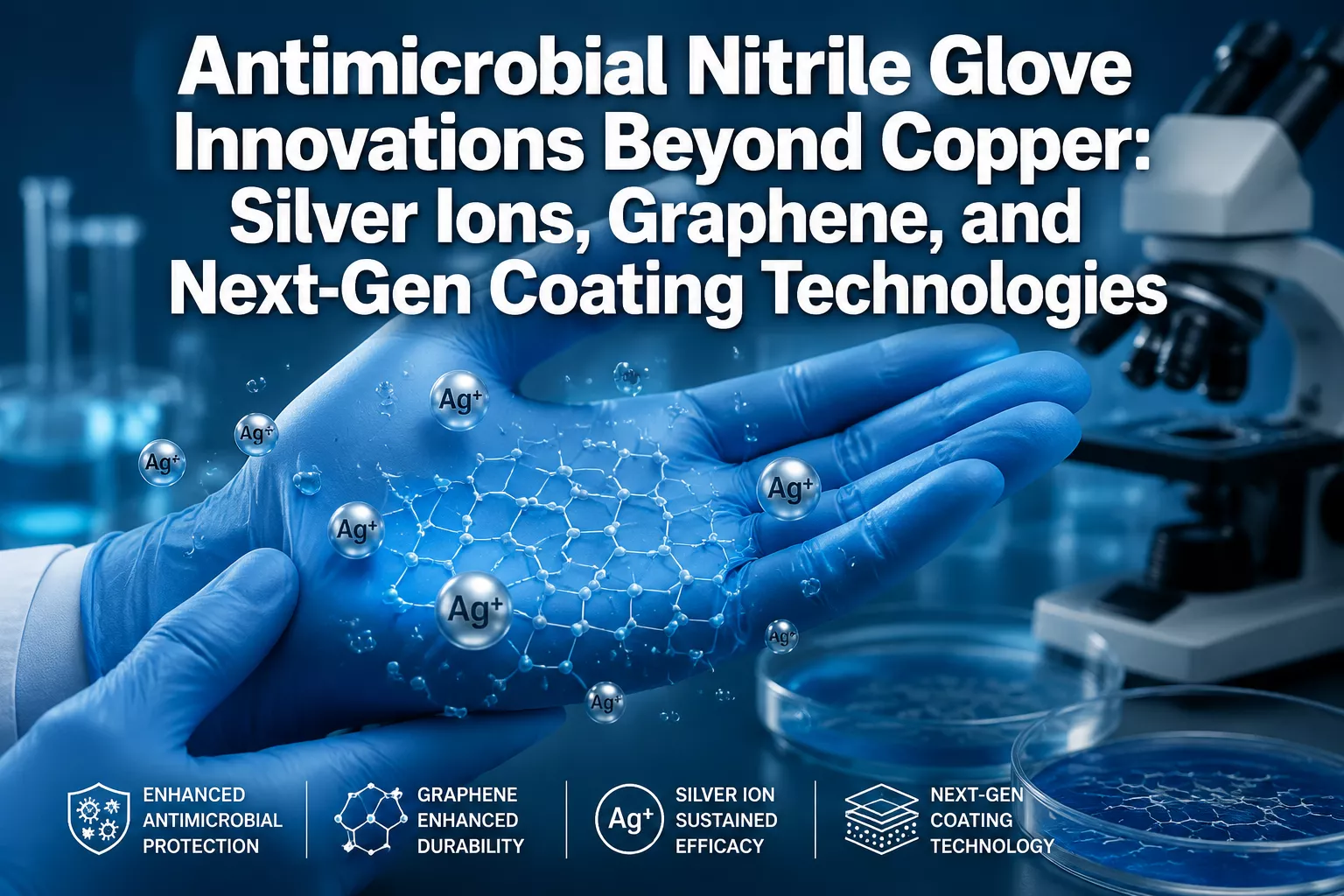
The landscape of Antimicrobial Nitrile Glove Innovations Beyond Copper: Silver Ions, Graphene, and Next-Gen Coating Technologies is rapidly evolving, driven by breakthrough research from institutions like the University of Manchester’s National Graphene Institute and commercial partnerships with medical technology leaders. These innovations promise to reshape infection control protocols across healthcare, food processing, and laboratory environments.
Key Takeaways
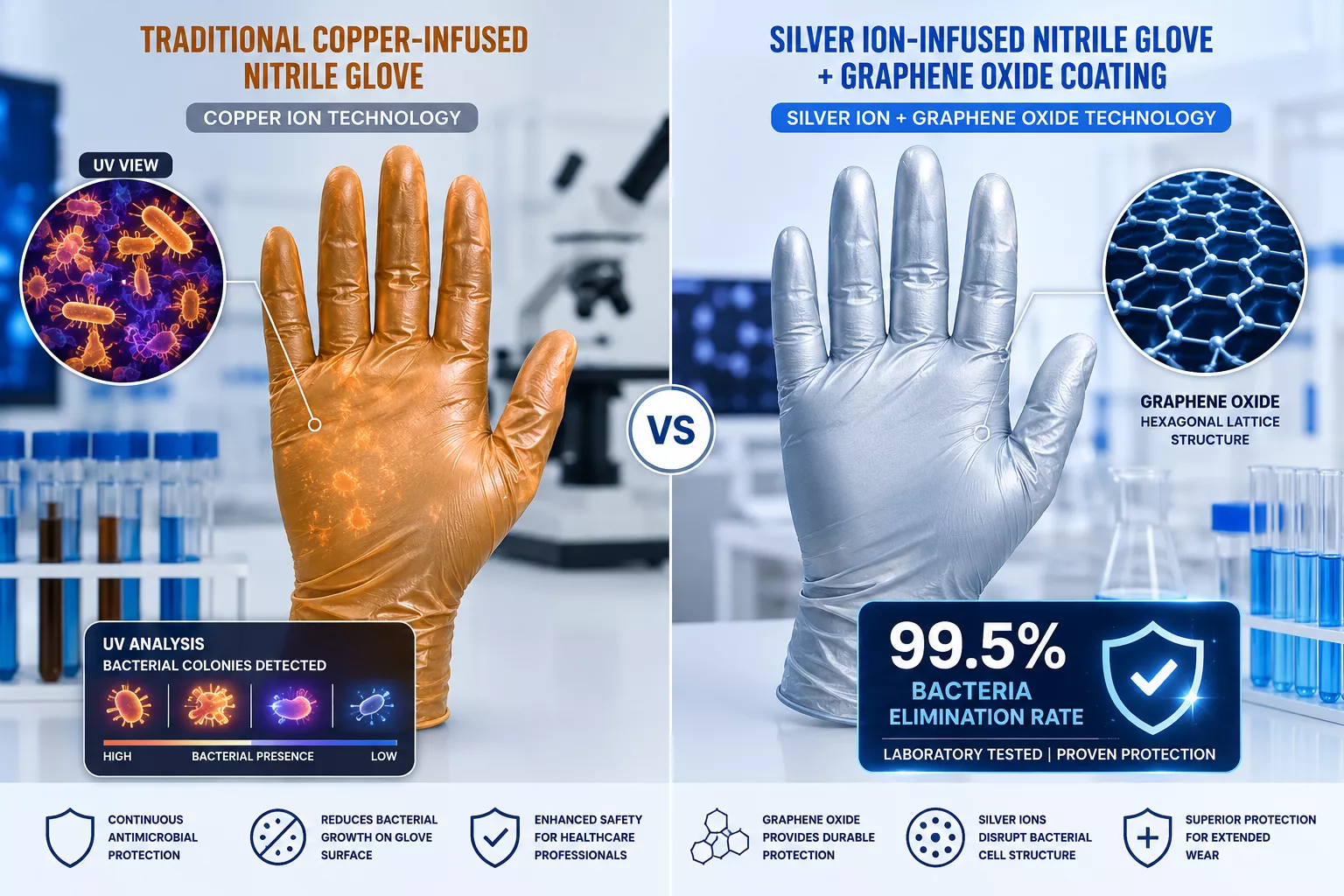
- Silver ion technology eliminates up to 99.5% of bacteria through cellular disruption, outperforming traditional copper coatings in speed and spectrum
- Graphene oxide laminates enable controlled antimicrobial release for over 10 days, preventing the tissue damage caused by uneven silver distribution
- Next-generation surface chemistry achieves 99.99% pathogen elimination in 60 seconds without active ingredients, offering cost-effective alternatives
- Hybrid coating systems combine multiple technologies for enhanced barrier protection, stretchability, and chemical resistance
- Real-world testing in biomimetic environments validates long-term effectiveness beyond laboratory conditions
Understanding Silver Ion Antimicrobial Technology in Nitrile Gloves
Silver ions represent one of the most promising alternatives in Antimicrobial Nitrile Glove Innovations Beyond Copper. Unlike copper, which requires direct contact and longer exposure times, silver ions actively penetrate bacterial cell walls, binding to proteins and DNA to prevent reproduction. This mechanism delivers faster kill times—often within minutes rather than hours.
How Silver Ion Technology Works
When embedded in nitrile glove materials, silver ions create a continuous antimicrobial shield on the glove surface. As bacteria contact the glove, positively charged silver ions (Ag+) disrupt multiple cellular functions simultaneously:
- Cell membrane disruption through electrostatic attraction
- Protein denaturation that halts metabolic processes
- DNA interference preventing bacterial replication
- Respiratory enzyme inhibition causing cellular death
Commercial products like Unigloves Fortified with BioCote technology demonstrate this effectiveness, achieving 99% to 99.5% bacterial elimination rates. These gloves prove particularly valuable in healthcare settings where cross-contamination poses significant risks, including surgical suites, dental offices, and tattoo studios.
Advantages Over Traditional Copper Coatings
Silver ion technology offers several distinct benefits:
✅ Broader spectrum activity against bacteria, fungi, and certain viruses
✅ Faster kill times (minutes vs. hours)
✅ Lower concentration requirements for effective antimicrobial action
✅ Reduced skin irritation compared to copper compounds
✅ Maintained tactile sensitivity critical for precision work
However, early silver-infused gloves faced challenges with uneven ion distribution and rapid depletion, limiting their effectiveness beyond initial use. This limitation sparked the development of more sophisticated delivery systems.
Graphene Oxide: The Game-Changing Coating Technology
The breakthrough in Antimicrobial Nitrile Glove Innovations Beyond Copper: Silver Ions, Graphene, and Next-Gen Coating Technologies came in 2025 when researchers at the University of Manchester’s National Graphene Institute developed a revolutionary graphene oxide laminate coating system.
The Manchester Innovation: Controlled Release Mechanism
Professor Rahul R. Nair’s team created a 3D stacked graphene oxide structure ranging from tens of nanometers to hundreds of micrometers thick. This architecture traps silver ions within nanoscale water reservoirs between graphene layers, enabling precise, sustained release at approximately 10 μg/cm² per day.
“Our research represents a paradigm shift in antimicrobial coating technology. By controlling the release of silver ions from graphene oxide, we’ve created a system that delivers just the right amount of silver for extended protection without harming healthy tissue.” — Prof. Rahul R. Nair
Published in the journal Small, the research demonstrated antimicrobial activity lasting over 10 days in foetal bovine serum tests—conditions that closely simulate real biological environments. This represents a dramatic improvement over traditional silver coatings that deplete within hours or days.
Real-World Applications and Industry Partnerships
The Manchester team partnered with Smith & Nephew, a global medical technology company, to adapt this coating for healthcare applications including:
- Surgical and examination gloves for extended procedures
- Wound dressings requiring long-term antimicrobial protection
- Medical implants where infection prevention is critical
- Laboratory gloves for handling sensitive materials
The graphene oxide platform also enhances other glove properties. Recent research published by the Royal Society of Chemistry shows that multifunctional graphene-based films on nitrile gloves improve:
- Barrier properties against chemical penetration
- Stretchability through microscale folding mechanisms
- Droplet repellency (lotus effect) for liquid resistance
- Durability under repeated stress and flexing
These improvements make graphene-coated gloves ideal for demanding applications in automotive, industrial, and laboratory settings where glove thickness and protection levels matter significantly.
Next-Generation Surface Chemistry: Beyond Active Ingredients
While silver and graphene represent major advances, the latest Antimicrobial Nitrile Glove Innovations Beyond Copper include revolutionary approaches that eliminate pathogens without traditional antimicrobial agents.
KluraLabs Technology: Surface Optimization
Unigloves recently launched CrossGuard gloves featuring KluraLabs surface chemistry optimization, which achieves 99.99% elimination of selected bacteria, viruses, and fungi within 60 seconds. This technology works through:
- Modified surface topology that physically disrupts pathogen membranes
- Hydrophobic-hydrophilic patterning that destabilizes microbial adhesion
- Electrostatic surface charges that repel and damage pathogens
- No active ingredient release, eliminating concerns about depletion or resistance
Third-party testing validates effectiveness across healthcare, laboratory, and food processing environments, with additional features like textured fingertips for enhanced grip and rolled cuffs for easy donning.
Cost-Benefit Analysis: Comparing Technologies
| Technology | Kill Time | Duration | Spectrum | Cost Premium | Best Applications |
|---|---|---|---|---|---|
| Copper-infused | 2-4 hours | 8-12 hours | Bacteria | +15-25% | General healthcare |
| Silver ions (BioCote) | 5-15 minutes | 4-8 hours | Bacteria, some fungi | +30-40% | High-risk procedures |
| Graphene-silver laminate | 10-30 minutes | 10+ days | Bacteria, fungi | +50-70% | Extended procedures, implants |
| Surface chemistry (KluraLabs) | 60 seconds | Continuous | Bacteria, viruses, fungi | +25-35% | Fast-paced environments |
For healthcare facilities, the choice depends on use case duration and contamination risk. Short procedures may benefit from rapid-kill surface chemistry, while extended surgeries justify graphene-laminate investments. Food handling applications often prioritize cost-effectiveness with silver ion technology.
Hybrid Systems and Future Directions
The most promising developments in Antimicrobial Nitrile Glove Innovations Beyond Copper: Silver Ions, Graphene, and Next-Gen Coating Technologies involve combining multiple approaches for synergistic benefits.
Multi-Layer Coating Architectures
Researchers are developing hybrid systems that stack technologies:
- Base layer: Graphene oxide for structural enhancement and barrier properties
- Middle layer: Silver ion reservoirs for sustained antimicrobial activity
- Surface layer: Optimized chemistry for rapid pathogen elimination
These architectures deliver immediate protection through surface chemistry while maintaining long-term effectiveness via controlled silver release, all supported by graphene’s mechanical advantages.
Addressing Environmental and Safety Concerns
As antimicrobial glove adoption increases, manufacturers face pressure to address:
- Silver ion environmental impact from disposal and wastewater
- Graphene production sustainability and energy requirements
- Recycling challenges with complex coating systems
- Potential allergic reactions to novel materials
Current research focuses on biodegradable antimicrobial alternatives and closed-loop manufacturing processes. Some manufacturers are exploring plant-based antimicrobial compounds and enzymatic coatings that break down naturally after disposal.
Regulatory Landscape and Adoption Barriers
Despite proven effectiveness, widespread adoption faces hurdles:
- Regulatory approval timelines for medical device classifications
- Cost sensitivity in price-competitive healthcare markets
- User education requirements about proper handling and disposal
- Performance validation across diverse real-world conditions
However, growing awareness of healthcare-associated infections and antibiotic resistance is accelerating regulatory pathways and institutional adoption.
Conclusion: Choosing the Right Antimicrobial Technology
The evolution of Antimicrobial Nitrile Glove Innovations Beyond Copper: Silver Ions, Graphene, and Next-Gen Coating Technologies offers healthcare providers, food processors, and industrial users unprecedented options for infection control. Silver ion technology delivers proven broad-spectrum effectiveness with faster kill times than copper, while graphene oxide laminates enable sustained protection for extended procedures. Next-generation surface chemistry provides rapid pathogen elimination without active ingredients, and hybrid systems combine the best attributes of multiple approaches.
Actionable Next Steps
For healthcare facilities:
- Conduct cost-benefit analysis comparing antimicrobial technologies against current infection rates
- Pilot test different technologies in high-risk departments to measure real-world effectiveness
- Establish protocols for proper disposal considering environmental impact
- Train staff on proper glove usage duration and limitations
For procurement managers:
- Request third-party testing data in conditions matching your environment
- Evaluate total cost of ownership including reduced infection rates and associated costs
- Consider glove thickness requirements alongside antimicrobial properties
- Verify compatibility with existing safety protocols and equipment
For researchers and manufacturers:
- Prioritize sustainability in coating production and disposal
- Develop standardized testing protocols for real-world conditions
- Investigate hybrid systems combining multiple antimicrobial mechanisms
- Address potential allergic reaction concerns with novel materials
The future of antimicrobial gloves extends far beyond copper, offering tailored solutions for specific applications. As graphene production scales and surface chemistry advances, these innovations will become increasingly accessible, transforming infection control across industries while addressing environmental sustainability concerns.