Last updated: July 4, 2026
Quick Answer
Nitrile glove demand has expanded dramatically beyond healthcare into automotive, construction, and industrial sectors due to post-pandemic hygiene awareness, stricter workplace safety regulations, and superior chemical resistance compared to latex alternatives. These industries now account for a significant portion of global nitrile glove consumption, driven by protection needs against oils, solvents, and contaminants. The shift reflects both regulatory changes and worker preference for latex-free, durable hand protection.
Key Takeaways
- Automotive shops prefer nitrile gloves for their resistance to oils, greases, and petroleum-based chemicals that degrade latex
- Construction workers increasingly choose nitrile over vinyl for superior puncture resistance and durability in rough environments
- Industrial sectors now mandate nitrile gloves in manufacturing, metalworking, and chemical handling due to updated safety standards
- Bulk industrial nitrile gloves typically cost between $0.05-$0.15 per glove depending on thickness and order volume
- Powder-free nitrile gloves reduce contamination risks in manufacturing and prevent respiratory issues in enclosed workspaces
- Thickness requirements vary by application: 4-6 mil for automotive work, 6-8 mil for heavy construction, 3-4 mil for light assembly
- Proper disposal protocols for contaminated industrial nitrile gloves prevent environmental hazards and comply with OSHA regulations
- Common purchasing mistakes include choosing inadequate thickness, ignoring chemical compatibility charts, and overlooking textured grip needs
- Post-2020 hygiene regulations have made nitrile gloves standard PPE across blue-collar industries previously reliant on bare hands or cloth gloves
What Industries Use Nitrile Gloves Besides Hospitals
Nitrile gloves have become essential personal protective equipment across automotive repair, construction, manufacturing, food processing, janitorial services, painting, metalworking, electronics assembly, and chemical handling industries. These sectors adopted nitrile gloves because they offer latex-free protection, excellent chemical resistance, and durability that outperforms vinyl alternatives in demanding work environments.
The automotive industry represents one of the largest non-medical consumers of nitrile gloves. Mechanics and technicians handle motor oils, transmission fluids, brake cleaners, and other petroleum products that quickly degrade latex gloves. Nitrile gloves provide superior protection in automotive work because the synthetic rubber resists these chemicals while maintaining tactile sensitivity for precision tasks.
Construction and building trades have shifted to nitrile gloves for tasks involving concrete, adhesives, sealants, and cleaning solvents. Workers appreciate the puncture resistance when handling rough materials and the grip texture that functions in both wet and dry conditions.
Manufacturing facilities use nitrile gloves for assembly line work, quality control inspections, and equipment maintenance. The latex-free composition eliminates allergy concerns in workplaces where hundreds of employees wear gloves throughout their shifts.
Food processing plants require nitrile gloves because they meet FDA food-contact standards while providing better durability than vinyl during repetitive tasks like cutting, packaging, and equipment cleaning.
Why Are Nitrile Gloves Used in Automotive Industry
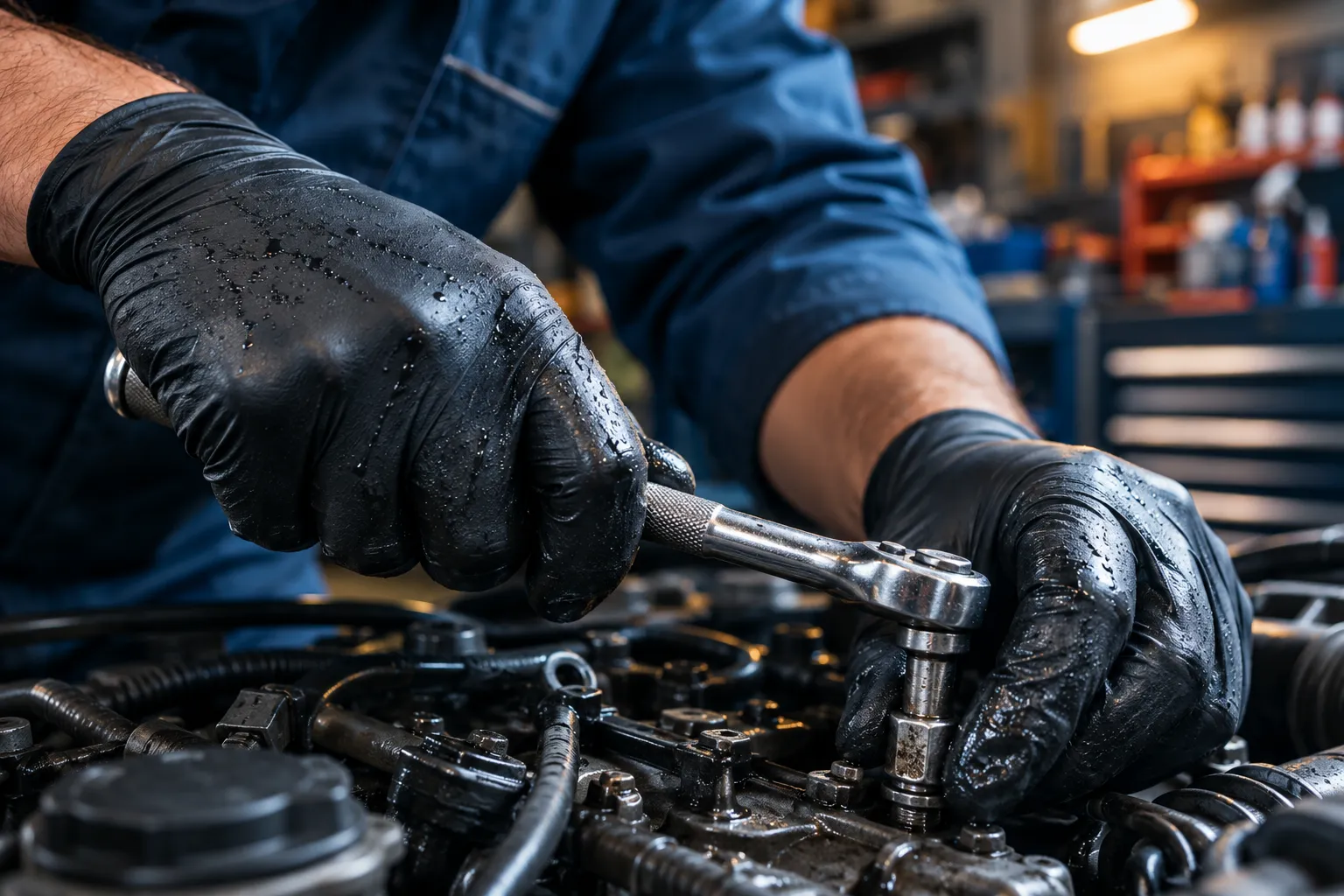
Automotive professionals use nitrile gloves because they resist degradation from motor oils, gasoline, brake fluid, transmission fluid, antifreeze, and other petroleum-based chemicals that mechanics encounter daily. Unlike latex gloves that swell and break down when exposed to these substances, nitrile maintains its integrity and protective barrier for extended periods.
The automotive industry specifically values these nitrile glove characteristics:
Chemical resistance: Nitrile rubber withstands exposure to oils, greases, fuels, and most automotive chemicals without compromising the glove structure. This oil resistance makes nitrile gloves ideal for oil-contaminated environments.
Tactile sensitivity: Despite their chemical resistance, nitrile gloves maintain enough dexterity for mechanics to feel small parts, thread bolts, and operate diagnostic equipment without removing gloves.
Puncture resistance: Automotive work involves sharp edges, metal burrs, and pointed tools. Nitrile gloves offer three times the puncture resistance of latex gloves of equivalent thickness.
Grip performance: Textured nitrile gloves maintain grip on oily tools and parts, reducing the risk of dropped components or slipped wrenches that could cause injury.
Auto shops typically stock 6-mil nitrile gloves for general repair work and 8-mil gloves for heavy-duty tasks involving prolonged chemical exposure. The best mechanic nitrile gloves balance thickness with flexibility to prevent hand fatigue during long repair jobs.
One common mistake is assuming all nitrile gloves offer equal chemical protection. Breakthrough time varies significantly based on glove thickness and the specific chemical involved. Mechanics working with aggressive solvents like acetone should consult chemical compatibility charts and change gloves more frequently.
Do Nitrile Gloves Protect Against Oil and Grease
Yes, nitrile gloves provide excellent protection against oils and greases because the synthetic nitrile rubber polymer resists degradation from petroleum-based substances. The gloves create a barrier that prevents skin contact with these contaminants while maintaining structural integrity during extended exposure.
Nitrile glove thickness directly impacts durability and protection against oil. Thicker gloves (6-8 mil) offer longer breakthrough times when handling concentrated oils, while thinner gloves (3-4 mil) work for brief contact or light oil exposure.
However, not all oils behave identically with nitrile gloves. Different types of oils affect nitrile gloves differently:
- Motor oils and lubricants: Excellent resistance with minimal swelling
- Cutting oils and metalworking fluids: Good resistance, but some metalworking fluids can soak through disposable nitrile gloves after prolonged exposure
- Vegetable and cooking oils: Excellent resistance with no degradation
- Synthetic oils: Generally good resistance, though some formulations may reduce glove lifespan
For maximum protection in oil-heavy environments, choose textured nitrile gloves that maintain grip when surfaces become slippery. Change gloves when you notice any swelling, stiffness, or loss of flexibility, as these indicate the glove material is beginning to degrade.
Workers handling oils should also consider that while nitrile resists the oil itself, sharp metal edges or abrasive surfaces can still puncture gloves. Combining appropriate thickness with careful handling practices provides the best protection.
Are Nitrile Gloves Chemical Resistant for Mechanics
Nitrile gloves offer strong chemical resistance for most automotive chemicals mechanics encounter, including motor oils, gasoline, diesel fuel, brake fluid, transmission fluid, coolant, and many cleaning solvents. However, chemical resistance is not absolute and varies based on glove thickness, exposure duration, and the specific chemical involved.
Mechanics should understand these chemical resistance principles:
Breakthrough time measures how long a chemical takes to permeate through the glove material. Thicker nitrile gloves provide longer breakthrough times. A 6-mil glove might resist gasoline for 30 minutes, while a 4-mil glove might only last 10 minutes before the chemical reaches skin.
Degradation occurs when chemicals break down the glove material, causing swelling, stiffening, or brittleness. Nitrile resists petroleum products well but degrades faster when exposed to ketones (like acetone), strong acids, or certain aromatic hydrocarbons.
Permeation happens at the molecular level as chemicals pass through intact glove material without visible damage. This invisible process means gloves may fail to protect even when they appear undamaged.
For mechanics, these chemicals work well with nitrile gloves:
- Motor oils and lubricants (excellent resistance)
- Brake fluid (good resistance)
- Antifreeze/coolant (excellent resistance)
- Diesel fuel (good resistance)
- Most degreasers (good to excellent resistance)
These chemicals require caution or alternative protection:
- Acetone and strong ketones (poor resistance, rapid degradation)
- Carburetor cleaner (variable, check product MSDS)
- Paint thinners containing aromatic solvents (limited resistance)
- Concentrated acids or bases (poor resistance)
Choose gloves rated for the specific chemicals you handle. Manufacturers provide chemical resistance charts showing breakthrough times for common substances. When working with aggressive chemicals, change gloves frequently and consider double-gloving for added protection.
What Thickness Nitrile Gloves Do Auto Shops Need
Auto shops should stock multiple nitrile glove thicknesses to match different tasks: 4-5 mil for light-duty work requiring maximum dexterity, 6-7 mil for general automotive repair, and 8-9 mil for heavy-duty tasks involving prolonged chemical exposure or sharp objects. Understanding the best thickness for nitrile gloves helps balance protection with hand mobility.
4-5 mil gloves work for:
- Diagnostic work and computer interface
- Interior detailing and cleaning
- Light assembly tasks
- Quick inspections where frequent glove changes occur
6-7 mil gloves suit:
- General mechanical repairs
- Oil changes and fluid services
- Brake work and suspension repairs
- Parts cleaning and degreasing
- Most daily automotive tasks
8-9 mil gloves handle:
- Transmission and differential work
- Prolonged exposure to harsh chemicals
- Working with sharp metal edges or burrs
- Heavy equipment maintenance
- Tasks requiring extended wear time
Thicker gloves provide better protection but reduce tactile sensitivity and increase hand fatigue during extended wear. Many mechanics prefer 6-mil gloves as the optimal balance for general shop work, keeping thicker gloves available for specific heavy-duty tasks.
Consider that glove thickness alone doesn’t determine quality. A well-manufactured 6-mil glove from a reputable brand often outperforms a poorly made 8-mil glove. Look for gloves with consistent thickness throughout (no thin spots), reinforced fingertips, and quality control certifications.
Auto shops serving diverse needs should maintain inventory across thickness ranges rather than stocking only one type. This approach lets technicians select appropriate protection for each task without over-protecting (and losing dexterity) or under-protecting (risking chemical exposure).
Nitrile Gloves vs Latex for Construction Work
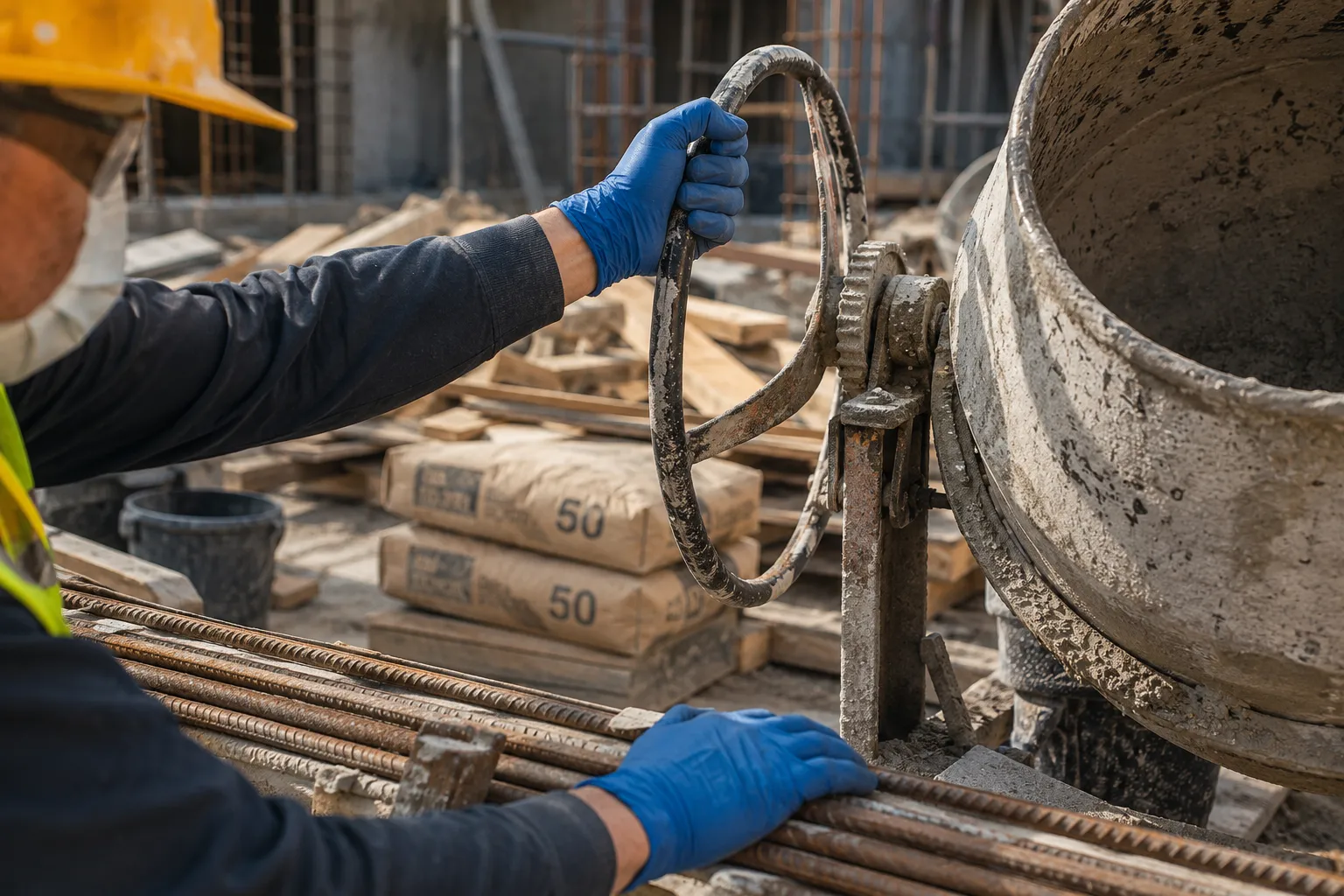
Nitrile gloves outperform latex gloves for construction work due to superior puncture resistance, better chemical resistance against construction materials, and elimination of latex allergy risks that affect 8-12% of workers. Construction environments demand gloves that withstand rough handling, sharp materials, and exposure to concrete, adhesives, and solvents that degrade latex rapidly.
Key differences for construction applications:
| Factor | Nitrile Gloves | Latex Gloves |
|---|---|---|
| Puncture resistance | 3x stronger than latex | Lower resistance to sharp objects |
| Chemical resistance | Excellent against solvents, adhesives, oils | Poor resistance, degrades quickly |
| Durability | Maintains integrity in rough conditions | Tears easily on rough surfaces |
| Allergy concerns | Latex-free, minimal allergy risk | 8-12% of workers have latex sensitivity |
| Cost per glove | $0.08-$0.15 (bulk) | $0.05-$0.10 (bulk) |
| Shelf life | 5+ years when stored properly | 3 years, degrades faster |
| Grip in wet conditions | Excellent with textured surface | Good but becomes slippery when wet |
Construction workers handling concrete benefit from nitrile’s resistance to the alkaline pH that causes latex to break down. Workers applying adhesives, caulks, or sealants need nitrile’s chemical resistance to prevent skin contact with these substances.
The higher upfront cost of nitrile gloves is offset by longer wear time and fewer glove changes per task. A construction worker might use 2-3 latex gloves to complete a task that requires only one nitrile glove, making the actual cost difference minimal.
For construction applications, choose textured nitrile gloves with palm and finger grip patterns. These maintain hold on tools and materials even when wet or dusty, reducing the risk of dropped materials or tool slippage that could cause injuries.
Can Construction Workers Use Vinyl Gloves Instead of Nitrile
Construction workers should not substitute vinyl gloves for nitrile gloves in most construction applications because vinyl offers significantly lower puncture resistance, minimal chemical protection, and poor durability in rough work environments. Vinyl gloves work only for light-duty construction tasks that don’t involve sharp objects, chemicals, or sustained physical stress.
Comparing nitrile gloves vs vinyl gloves reveals critical differences:
Vinyl glove limitations in construction:
- Tears easily when snagged on rough materials like concrete, wood splinters, or metal edges
- Provides minimal protection against construction adhesives, solvents, or petroleum products
- Loose fit reduces dexterity and increases risk of gloves catching on equipment
- Becomes brittle in cold weather common on construction sites
- Offers no meaningful protection against punctures from nails, screws, or wire
Appropriate vinyl glove uses in construction:
- Light cleaning tasks in finished areas
- Handling non-hazardous materials during final inspections
- Temporary protection during painting prep (not during actual painting with solvents)
- Administrative tasks in construction offices
The cost savings of vinyl gloves ($0.03-$0.06 per glove) disappear when workers must change gloves multiple times per task due to tears or when vinyl fails to protect against chemical exposure, leading to skin irritation and lost work time.
For construction work, nitrile gloves are the minimum acceptable standard. Workers handling particularly hazardous materials or working in high-risk puncture environments should consider even more robust options like nitrile-coated work gloves that combine the chemical resistance of nitrile with the cut resistance of woven liners.
Choose vinyl gloves only when the task involves no chemical exposure, no sharp objects, and minimal physical stress on the gloves. For actual construction work, the superior protection of nitrile gloves justifies the modest additional cost.
Common Mistakes When Choosing Industrial Gloves
The most common mistake when selecting industrial gloves is choosing based solely on price without considering the specific hazards workers face, leading to inadequate protection, increased injury rates, and higher overall costs from frequent glove changes and potential worker compensation claims. Proper glove selection requires matching glove properties to workplace hazards.
Critical selection errors to avoid:
Ignoring chemical compatibility: Not all nitrile gloves resist all chemicals equally. Workers exposed to specific solvents, acids, or other chemicals need gloves tested against those substances. Consult manufacturer chemical resistance charts showing breakthrough times for your specific chemicals.
Choosing inadequate thickness: Selecting thin gloves (3-4 mil) for heavy-duty applications saves money initially but results in frequent tears, chemical breakthrough, and increased glove consumption. Match thickness to task intensity: light assembly (3-4 mil), general industrial work (5-6 mil), heavy-duty chemical handling (7-9 mil).
Overlooking grip texture: Smooth nitrile gloves become slippery when handling oily parts or wet materials. Textured gloves with diamond or raised patterns maintain grip in these conditions, reducing dropped tools and materials.
Buying wrong sizes: Gloves that are too large reduce dexterity and increase snag risk. Gloves too small cause hand fatigue and tear more easily. Provide multiple sizes and ensure workers know their correct size.
Neglecting powder-free options: Powdered gloves leave residue that contaminates products in manufacturing and causes respiratory issues in enclosed spaces. Industrial settings should use powder-free nitrile gloves.
Failing to consider disposable vs. reusable: Disposable gloves can be safely used in industrial settings for many applications, but some heavy-duty tasks require reusable gloves with higher durability ratings.
Ignoring compliance requirements: Some industries have specific glove standards (OSHA, FDA, ASTM). Verify gloves meet applicable regulations for your industry.
Not training workers: Purchasing appropriate gloves means nothing if workers don’t understand when to change them, how to inspect for damage, or which glove type to use for specific tasks.
Before purchasing, conduct a workplace hazard assessment identifying all chemicals, physical hazards, and task requirements. Match glove specifications to these hazards rather than selecting based on price or availability alone.
How Much Do Industrial Nitrile Gloves Cost in Bulk
Industrial nitrile gloves purchased in bulk typically cost between $0.05 and $0.15 per glove depending on thickness, quality grade, order volume, and current market conditions. Bulk orders of 10,000+ gloves receive the best pricing, while smaller quantities of 1,000-5,000 gloves cost 20-30% more per unit.
Price ranges by thickness and grade (2026 bulk pricing):
- 3-4 mil light-duty: $0.05-$0.08 per glove (cases of 1,000-2,000)
- 5-6 mil medium-duty: $0.07-$0.11 per glove (cases of 1,000)
- 7-8 mil heavy-duty: $0.10-$0.15 per glove (cases of 500-1,000)
- 9+ mil extra heavy-duty: $0.15-$0.25 per glove (cases of 500)
Factors affecting bulk pricing:
Order volume: Purchasing 50,000+ gloves can reduce per-unit cost by 15-25% compared to 5,000-glove orders. Distributors offer volume discounts at thresholds of 10,000, 25,000, 50,000, and 100,000+ gloves.
Quality grade: Medical-grade nitrile gloves cost 10-20% more than industrial-grade gloves due to stricter manufacturing standards and quality control testing. For most industrial applications, industrial-grade gloves provide adequate protection at lower cost.
Brand vs. generic: Name-brand manufacturers charge premium prices but offer consistent quality. Generic brands may cost 20-30% less but quality varies significantly between suppliers.
Market conditions: Nitrile glove prices fluctuate based on raw material costs (butadiene), manufacturing capacity, and demand. Prices spiked during 2020-2022 but stabilized in 2024-2026 as production capacity expanded.
Features: Textured gloves, extended cuffs, and specialized formulations (chemical-resistant, anti-static) add $0.01-$0.03 per glove to base pricing.
Packaging: Gloves sold in individual boxes of 100 cost more per unit than bulk cases. Industrial buyers should purchase full cases to maximize savings.
For budget planning, industrial facilities using 10,000 gloves monthly should expect annual glove costs of $7,000-$12,000 depending on thickness requirements and negotiated pricing. Establishing relationships with multiple suppliers and buying during promotional periods can reduce costs by 10-15%.
Consider total cost of ownership rather than just purchase price. Higher-quality gloves that last longer and require fewer changes per task often cost less overall despite higher per-glove pricing.
Are Powder-Free Nitrile Gloves Better for Manufacturing
Powder-free nitrile gloves are superior for manufacturing environments because they eliminate contamination risks, reduce respiratory issues among workers, and prevent powder residue from interfering with products, equipment, and quality control processes. Most modern manufacturing facilities mandate powder-free gloves as standard PPE.
Advantages of powder-free nitrile gloves in manufacturing:
Contamination prevention: Cornstarch powder from gloves contaminates products during assembly, packaging, and quality inspection. Electronics manufacturing, pharmaceutical production, and food processing cannot tolerate powder residue on products.
Equipment protection: Powder accumulates on machinery, conveyor belts, and precision equipment, requiring additional cleaning and potentially causing mechanical issues in sensitive equipment.
Worker health: Airborne glove powder causes respiratory irritation in enclosed manufacturing spaces. Workers with asthma or allergies experience worsened symptoms. Powder-free gloves eliminate this occupational health concern.
Better grip: Powder-free gloves with textured surfaces provide superior grip compared to powdered gloves, especially when handling small parts or operating controls.
Cleaner work environment: Eliminating powder reduces housekeeping requirements and maintains cleaner production areas, which is critical for ISO-certified facilities and cleanroom environments.
Regulatory compliance: Many industry standards (FDA for food contact, ISO cleanroom classifications) prohibit or discourage powdered gloves.
Disadvantages of powder-free gloves:
Donning difficulty: Powder-free gloves require slightly more effort to put on, especially when hands are damp. This minor inconvenience is easily overcome with proper technique or glove donning aids.
Slightly higher cost: Powder-free gloves cost $0.005-$0.01 more per glove than powdered versions, a negligible difference for the benefits provided.
Manufacturing facilities should standardize on powder-free nitrile gloves across all operations. The minimal cost difference is far outweighed by reduced contamination, improved worker health, and compliance with quality standards.
For workers who struggle with donning powder-free gloves, provide glove donning stations with approved donning aids or consider gloves with polymer coatings that ease application without introducing powder contamination.
How to Dispose of Used Nitrile Gloves in Factories
Used nitrile gloves in factories should be disposed of according to the level of contamination: non-hazardous gloves go into regular trash receptacles, while gloves contaminated with chemicals, oils, or regulated substances require disposal as hazardous waste following OSHA and EPA guidelines. Proper disposal prevents environmental contamination and ensures regulatory compliance.
Disposal protocols by contamination level:
Non-hazardous disposal (clean gloves):
- Gloves used for general handling, assembly, or inspection without chemical exposure
- Dispose in regular trash bins lined with plastic bags
- Empty bins daily to prevent odor and bacterial growth
- No special handling required
Chemical-contaminated disposal:
- Gloves exposed to oils, solvents, paints, or other chemicals
- Place in designated hazardous waste containers labeled with contents
- Containers must be compatible with contaminants (metal cans for flammable residues)
- Schedule regular hazardous waste pickup through licensed disposal companies
- Maintain disposal logs documenting waste type, quantity, and disposal date
Regulated substance disposal:
- Gloves contaminated with materials regulated under RCRA, DOT, or EPA rules
- Follow specific disposal requirements for the contaminant
- May require special labeling, storage, and disposal methods
- Consult Material Safety Data Sheets (MSDS) for disposal requirements
Best practices for factory glove disposal:
Establish disposal stations: Place clearly labeled disposal containers at convenient locations throughout the facility. Use color-coded bins (black for regular trash, red for hazardous waste) to prevent confusion.
Train workers: Ensure all employees understand which disposal method applies to their tasks. Post visual guides showing disposal decision trees at disposal stations.
Prevent cross-contamination: Never mix hazardous and non-hazardous waste. Contaminating regular trash with hazardous materials requires disposing of the entire container as hazardous waste, significantly increasing costs.
Consider recycling: Some companies offer nitrile glove recycling programs for non-contaminated gloves. While not widely available, these programs divert gloves from landfills. Nitrile glove recycling remains limited but is expanding.
Document disposal: Maintain records of hazardous waste disposal for regulatory compliance and environmental audits. Most regulations require 3-5 years of disposal documentation.
Factories should conduct annual reviews of disposal practices to ensure compliance with current regulations and identify opportunities to reduce waste through process improvements or glove reuse where appropriate.
Which Industries Are Driving Nitrile Glove Shortage
The automotive, food processing, and general manufacturing sectors are driving increased nitrile glove demand and periodic shortages alongside healthcare, as post-pandemic hygiene standards and updated workplace safety regulations have made nitrile gloves mandatory PPE in industries that previously used minimal hand protection. This demand surge has strained global production capacity despite significant manufacturing expansion since 2020.
Industries contributing to tight nitrile glove supply:
Automotive and transportation: The automotive repair and maintenance industry has standardized on nitrile gloves for all service work. With millions of vehicles requiring regular maintenance, this sector consumes billions of gloves annually. Electric vehicle production and battery manufacturing have added new demand as these processes require contamination-free handling.
Food processing and service: Stricter food safety regulations and consumer expectations for hygiene have made gloves mandatory throughout food production, processing, and service. This industry shifted from bare-hand contact and cloth gloves to disposable nitrile gloves, creating massive new demand.
E-commerce and logistics: Warehouse workers, package handlers, and delivery personnel now wear gloves as standard practice, a change driven by pandemic hygiene awareness that has persisted. The explosive growth of e-commerce has multiplied this demand.
Construction and building trades: Construction sites that previously relied on reusable work gloves or bare hands now provide disposable nitrile gloves for tasks involving chemicals, adhesives, and contaminants. This represents a fundamental shift in construction site safety practices.
Manufacturing and assembly: Electronics, automotive parts, appliances, and general manufacturing have increased glove usage for quality control and contamination prevention. Many facilities that previously used gloves only in specific areas now require them throughout production floors.
Janitorial and sanitation: Professional cleaning services have dramatically increased glove usage as clients demand visible hygiene practices and workers seek protection from cleaning chemicals.
Supply chain factors affecting availability:
Raw material constraints for butadiene (the primary component of nitrile rubber) limit how quickly manufacturers can expand production. Manufacturing capacity has increased significantly since 2020, but demand growth has matched or exceeded capacity additions in many regions.
Geopolitical factors affect supply chains, as most nitrile glove production occurs in Southeast Asia (Malaysia, Thailand, Vietnam). Shipping disruptions, trade policies, and regional production issues create supply volatility.
To manage supply challenges, industrial buyers should establish relationships with multiple suppliers, maintain larger inventory buffers for critical operations, and consider long-term supply contracts that guarantee allocation during shortage periods.
What Are the Best Nitrile Glove Brands for Industrial Use
The best nitrile glove brands for industrial use include Ansell, Kimberly-Clark, Showa, Microflex, and Ammex, which offer consistent quality, reliable supply chains, comprehensive product lines across thickness ranges, and documented chemical resistance data. However, “best” depends on specific application requirements, budget constraints, and availability in your region.
Top-tier industrial nitrile glove brands:
Ansell: Known for heavy-duty industrial gloves with excellent chemical resistance. Their TouchNTuff and Microflex lines serve diverse industrial applications. Higher price point but exceptional durability and consistent quality.
Kimberly-Clark (Kimtech): Offers industrial-grade gloves with good balance of protection and cost. Strong supply chain and availability. Popular in manufacturing and automotive sectors.
Showa: Specializes in chemical-resistant gloves with detailed compatibility charts. Excellent for workers handling aggressive solvents or specialized chemicals. Japanese quality control standards.
Ammex: Mid-range pricing with good quality for general industrial use. Wide distribution network and reliable availability. Popular choice for cost-conscious buyers who won’t compromise on basic quality.
Superior Glove: Canadian manufacturer offering industrial gloves with strong cold-weather performance. Good choice for outdoor construction and industrial applications in cold climates.
Evaluation criteria for industrial glove brands:
Consistency: Quality should remain consistent across production batches. Reputable brands maintain strict quality control, while generic brands may have significant batch-to-batch variation.
Chemical resistance data: Reliable brands provide detailed chemical compatibility charts showing breakthrough times for common industrial chemicals. This data is essential for proper glove selection.
Availability: The best glove is worthless if you can’t obtain it when needed. Consider brands with strong distribution in your region and multiple supply sources.
Certification: Look for gloves meeting relevant standards (ASTM, EN, ISO) for your industry. Medical-grade certifications indicate higher quality control even for industrial applications.
Cost-performance ratio: Premium brands cost more but often last longer and require fewer glove changes per task. Calculate cost per task rather than cost per glove.
Many industrial buyers maintain approved vendor lists with 2-3 preferred brands to balance quality, cost, and supply reliability. Testing multiple brands in your specific applications before committing to large purchases ensures the gloves perform well in your actual work environment.
When Should You Not Use Nitrile Gloves in Construction
Construction workers should not use nitrile gloves when performing tasks that require cut resistance against sharp blades or rotating equipment, when working with extremely high heat sources above 200°F, or when handling certain aromatic solvents and ketones that rapidly degrade nitrile rubber. In these situations, alternative glove types provide better protection.
Situations requiring alternatives to nitrile gloves:
Cut hazards: Nitrile gloves offer minimal protection against cuts from utility knives, saw blades, sheet metal edges, or glass. Use cut-resistant gloves with Kevlar, Dyneema, or steel mesh liners for these tasks. Some manufacturers offer nitrile-coated cut-resistant gloves that combine chemical protection with cut resistance.
High heat: Nitrile gloves melt and degrade at temperatures above 200°F. Welding, torch work, handling hot pipes, or working near heat sources require leather welding gloves or heat-resistant gloves rated for specific temperature ranges.
Electrical work: Standard nitrile gloves provide no electrical insulation. Nitrile gloves do not protect against electric shock. Electricians need voltage-rated insulating gloves tested to ASTM standards for electrical work.
Heavy abrasion: While nitrile resists punctures well, heavy abrasion from concrete, masonry, or rough lumber wears through disposable nitrile gloves quickly. Consider nitrile-coated work gloves with textile backing for better abrasion resistance.
Specific chemical incompatibilities: Nitrile degrades rapidly when exposed to:
- Acetone and MEK (methyl ethyl ketone)
- Strong oxidizing acids (nitric acid, sulfuric acid)
- Aromatic hydrocarbons (benzene, toluene, xylene)
- Some paint strippers and removers
For these chemicals, consult chemical resistance charts and consider alternative glove materials like butyl rubber, neoprene, or PVC.
Tasks requiring maximum dexterity: Some precision work requires bare hands or extremely thin gloves. While 3-4 mil nitrile gloves offer good dexterity, tasks like threading small fasteners or working with tiny electronic components may require bare hands with frequent hand washing.
Extended outdoor work in extreme cold: Nitrile gloves become stiff and less flexible in temperatures below 20°F. For extended cold-weather work, use insulated work gloves or nitrile gloves as liners under insulated outer gloves.
The key is matching glove type to the primary hazard. For tasks involving multiple hazards, prioritize protection against the most severe risk. For example, when cutting materials coated with chemicals, cut resistance takes priority over chemical resistance since cuts cause immediate injury while chemical exposure may have delayed effects.
Beyond Healthcare: Nitrile Glove Demand Surge in Automotive, Construction, and Industrial Sectors – Market Outlook
The expansion of nitrile glove demand beyond healthcare into automotive, construction, and industrial sectors represents a permanent shift in workplace safety practices rather than a temporary pandemic response. Post-2020 hygiene awareness, updated OSHA guidelines, and worker expectations for protective equipment have fundamentally changed how blue-collar industries approach hand protection.
Market trends shaping future demand:
Regulatory drivers: Workplace safety regulations increasingly mandate appropriate hand protection for chemical exposure and contamination risks. Industries that previously relied on voluntary glove use now face compliance requirements that specify nitrile gloves for many applications.
Worker preferences: Employees who experienced enhanced safety protocols during the pandemic now expect employers to maintain these standards. Worker retention and recruitment increasingly depend on demonstrating commitment to safety, including providing quality PPE.
Liability concerns: Employers face increased liability for workplace injuries and chemical exposures. Providing appropriate nitrile gloves reduces workers’ compensation claims and demonstrates due diligence in safety practices.
Supply chain maturation: Manufacturing capacity has expanded significantly since 2020, with new production facilities in Southeast Asia, China, and emerging production in North America and Europe. This capacity growth should stabilize pricing and improve availability for industrial buyers.
Product innovation: Manufacturers are developing specialized nitrile gloves optimized for specific industrial applications: enhanced grip patterns for automotive work, extended cuffs for construction, anti-static formulations for electronics, and improved cold-weather flexibility.
Sustainability initiatives: Growing environmental concerns are driving development of biodegradable nitrile formulations and expanded recycling programs for non-contaminated gloves. These innovations may reduce the environmental impact of increased glove consumption.
Cost normalization: After pandemic-driven price spikes, nitrile glove pricing has stabilized at levels only modestly higher than pre-2020 prices. Continued capacity expansion should maintain reasonable pricing for industrial buyers.
Industrial buyers should plan for continued high demand and potential periodic supply constraints. Strategies for managing supply include maintaining 60-90 day inventory buffers, establishing relationships with multiple suppliers, and considering long-term supply agreements that guarantee allocation during tight supply periods.
The shift toward nitrile gloves in industrial sectors is irreversible. Companies should integrate nitrile gloves into standard operating procedures, budget for ongoing costs, and train workers on proper selection and use to maximize protection and cost-effectiveness.
Frequently Asked Questions
Can nitrile gloves be reused in industrial settings?
Nitrile gloves are designed for single-use and should not be reused in industrial settings because washing or sanitizing compromises the glove’s protective barrier, creates microscopic holes that allow chemical permeation, and may trap contaminants that cause skin irritation. Reusing gloves also violates most workplace safety protocols and manufacturer recommendations.
How long can you safely wear nitrile gloves during industrial work?
You can safely wear nitrile gloves for 2-4 hours during industrial work, but change them immediately if they tear, puncture, become contaminated with chemicals, or show signs of degradation like swelling or stiffness. Extended wear beyond 4 hours increases contamination risk and reduces protective effectiveness even if gloves appear intact.
Do nitrile gloves protect against battery acid in automotive work?
Nitrile gloves provide limited short-term protection against dilute battery acid (sulfuric acid) but degrade rapidly with concentrated acid exposure. For battery work, use 8-mil or thicker nitrile gloves and change them immediately after acid contact. For prolonged acid exposure, consider acid-resistant gloves made from butyl rubber or neoprene.
What size nitrile gloves do most industrial workers need?
Most industrial workers need size Large (9-10 inch palm circumference), followed by Medium and Extra Large. Facilities should stock all sizes from Small through XXL to accommodate diverse workforces. Properly fitted gloves should feel snug without restricting movement or causing hand fatigue.
Can you wear nitrile gloves under work gloves for added protection?
Yes, wearing thin nitrile gloves (3-4 mil) under work gloves provides chemical protection while the outer glove offers cut, abrasion, or impact resistance. This layering approach works well for construction and heavy industrial applications requiring protection against multiple hazards. Ensure the outer glove fits properly over the nitrile liner.
Are black nitrile gloves better than blue for industrial use?
Black nitrile gloves offer no performance advantage over blue gloves but hide dirt, grease, and oil stains better, making them popular in automotive and manufacturing settings. Color choice is primarily aesthetic, though some facilities use different colors to designate gloves for specific tasks or areas.
How should nitrile gloves be stored in industrial facilities?
Store nitrile gloves in cool, dry locations away from direct sunlight, ozone sources, and temperature extremes. Keep gloves in original packaging until use, maintain storage temperatures between 50-80°F, and use older stock first following FIFO (first in, first out) rotation. Properly stored nitrile gloves maintain quality for 5+ years.
Do textured nitrile gloves provide better grip than smooth gloves?
Yes, textured nitrile gloves with raised patterns on palms and fingers provide significantly better grip than smooth gloves, especially when handling oily parts, wet materials, or smooth surfaces. The texture increases friction and channels away liquids, maintaining grip in conditions where smooth gloves become slippery.
Can nitrile gloves cause allergic reactions in industrial workers?
Nitrile gloves rarely cause allergic reactions because they contain no latex proteins, but some workers develop contact dermatitis from chemical accelerators used in manufacturing. True nitrile allergies affect less than 1% of users. Allergic reactions to nitrile gloves are far less common than latex allergies.
What’s the difference between medical-grade and industrial-grade nitrile gloves?
Medical-grade nitrile gloves meet FDA standards for healthcare use, undergo more rigorous quality testing, and have lower acceptable defect rates (1.5 AQL vs. 2.5-4.0 AQL for industrial grades). Industrial-grade gloves provide adequate protection for non-medical applications at lower cost, though some facilities choose medical-grade for consistency.
How do you know when nitrile gloves have been chemically compromised?
Chemically compromised nitrile gloves show visible signs including swelling, stiffening, discoloration, surface tackiness, or brittleness. However, some chemical permeation occurs without visible changes. Change gloves based on manufacturer breakthrough time recommendations for specific chemicals rather than waiting for visible degradation.
Are nitrile gloves safe for food handling in industrial kitchens?
Yes, nitrile gloves are safe for food handling when they meet FDA food-contact standards (21 CFR 177.2600). Look for gloves specifically labeled as food-safe. Nitrile gloves used in food handling must be powder-free to prevent contamination and changed frequently to maintain hygiene.
Conclusion
The surge in nitrile glove demand beyond healthcare into automotive, construction, and industrial sectors reflects a fundamental transformation in workplace safety standards that will persist long after pandemic concerns fade. These industries have recognized that nitrile gloves provide superior protection against oils, chemicals, and contaminants while eliminating latex allergy concerns that affect millions of workers.
For industrial buyers and safety managers, the key to maximizing protection while controlling costs lies in matching glove specifications to actual workplace hazards. Conduct thorough hazard assessments identifying specific chemicals, physical risks, and task requirements before purchasing. Stock multiple thickness ranges (4-6 mil for light duty, 6-8 mil for general use, 8+ mil for heavy duty) and ensure workers understand which glove type suits each task.
Establish relationships with multiple reputable suppliers to ensure consistent supply during market fluctuations. Consider long-term supply agreements for high-volume operations, but maintain flexibility to adjust as needs change. Monitor glove usage patterns to identify opportunities for optimization, such as switching to thinner gloves for tasks that don’t require heavy-duty protection.
Train workers on proper glove selection, inspection for damage, and timely changing to maintain protection. Even the best gloves fail to protect if used incorrectly or worn beyond their effective lifespan. Post visual guides at glove storage areas showing which glove type applies to common tasks.
As manufacturing capacity continues expanding and product innovation addresses specific industrial needs, nitrile gloves will become even more integral to workplace safety across blue-collar industries. Organizations that invest in appropriate hand protection now will benefit from reduced injury rates, lower workers’ compensation costs, improved regulatory compliance, and enhanced worker satisfaction.
The transition from viewing gloves as optional to recognizing them as essential PPE marks a positive evolution in industrial safety culture. By choosing the right nitrile gloves for each application and ensuring proper use, companies protect their most valuable asset: their workers.
SEO Meta Title: Nitrile Glove Demand in Automotive, Construction & Industry