Last updated: July 4, 2026
Between 8% and 17% of healthcare workers worldwide now show sensitivity to natural rubber latex proteins, a dramatic increase from less than 1% before 1980. This surge has fundamentally reshaped medical supply procurement, patient safety protocols, and the global disposable glove market. Understanding latex allergy epidemiology and nitrile’s role in modern healthcare, including market demand drivers and patient safety implications, has become essential for hospital administrators, procurement officers, and clinical staff navigating the transition from traditional latex to synthetic alternatives.
Key Takeaways
- Latex allergy affects 8-17% of healthcare workers and 1-6% of the general population, with prevalence rising due to increased exposure in medical settings
- Nitrile gloves have become the preferred alternative, offering comparable barrier protection without natural rubber latex proteins that trigger allergic reactions
- Healthcare facilities switching to nitrile report 60-90% reduction in allergic reactions among staff and patients
- The global nitrile glove market reached approximately $8.2 billion in 2025, driven primarily by latex allergy concerns and infection control requirements
- Repeated latex exposure can cause sensitization, with symptoms ranging from contact dermatitis to life-threatening anaphylaxis
- Nitrile gloves cost 15-40% more than latex but reduce liability costs, worker compensation claims, and patient adverse events
- Over 70% of U.S. hospitals have implemented latex-safe or latex-free policies as of 2026
- Type IV chemical allergies to accelerators can occur with both latex and nitrile gloves, though less frequently with nitrile
- High-risk groups include healthcare workers, patients with spina bifida, and individuals with multiple surgical histories
- Proper transition planning prevents supply chain disruptions and ensures staff training on new glove materials
What Is Latex Allergy and How Common Is It in Healthcare Workers?

Latex allergy is an immune system reaction to proteins found in natural rubber latex, derived from the Hevea brasiliensis tree. Healthcare workers face the highest occupational risk, with prevalence rates between 8% and 17% depending on the study population and geographic region. This represents a significant increase from pre-1980 levels when latex allergy was rarely documented.
The dramatic rise correlates directly with the implementation of universal precautions in the late 1980s, which mandated glove use for all patient contact. Healthcare workers began using 10-20 pairs of gloves daily instead of occasional use, creating unprecedented exposure levels. Powdered latex gloves, which were common until the early 2000s, accelerated sensitization by dispersing latex proteins into the air.
High-risk healthcare occupations include:
- Operating room nurses and surgical technicians (prevalence up to 17%)
- Dentists and dental hygienists (12-15%)
- Emergency department staff (10-14%)
- Laboratory technicians (8-12%)
- Anesthesiologists and nurse anesthetists (10-13%)
The condition develops through repeated exposure, with most affected workers showing symptoms after 2-5 years of regular glove use. Once sensitized, individuals may experience reactions from minimal contact with latex products including blood pressure cuffs, stethoscope tubing, and catheters. For more information on the dangers of latex allergy, healthcare facilities must implement comprehensive screening and prevention programs.
Latex Allergy Symptoms and Prevalence Rates Worldwide

Latex allergy manifests in three distinct clinical patterns, each with different mechanisms and severity levels. Type IV hypersensitivity (allergic contact dermatitis) affects 4-8% of healthcare workers and causes delayed skin reactions 24-48 hours after exposure. Type I hypersensitivity represents the more dangerous immediate allergic reaction, affecting 1-6% of the general population and up to 17% of healthcare workers.
Common symptoms by reaction type:
Type IV (Delayed Contact Dermatitis):
- Dry, itchy patches on hands and wrists
- Scaling, cracking skin
- Eczema-like rash
- Symptoms appear 24-96 hours after contact
Type I (Immediate Hypersensitivity):
- Hives and skin welts within minutes
- Nasal congestion and sneezing
- Itchy, watery eyes
- Difficulty breathing or wheezing
- Anaphylaxis in severe cases (rare but potentially fatal)
Global prevalence varies significantly by region and occupation. European studies report 3-9.5% prevalence among healthcare workers, while Asian healthcare facilities document 2.9-12.1% rates. North American data shows 8-12% among medical professionals. The general population shows lower rates: 1-3% in Europe, 0.8-6.5% in North America, and 2-4% in Asia.
Children with spina bifida show exceptionally high rates (20-67%) due to multiple surgeries and catheterizations during early development. Patients with a history of eight or more surgical procedures face 5-10 times higher risk than the general population. Understanding these different types of latex allergy helps healthcare facilities identify at-risk populations and implement appropriate protective measures.
Why Are Nitrile Gloves Better Than Latex for Allergies?
Nitrile gloves eliminate the primary allergen concern because they contain no natural rubber latex proteins. Made from synthetic rubber (acrylonitrile-butadiene copolymer), nitrile provides a safe alternative for individuals with Type I latex hypersensitivity, which can cause life-threatening anaphylaxis. This fundamental difference makes nitrile the preferred choice for latex-sensitive healthcare workers and patients.
Beyond allergen elimination, nitrile offers several clinical advantages. The material provides superior puncture resistance compared to latex, with studies showing 3-5 times greater resistance to needle sticks and sharp instrument penetration. Nitrile also demonstrates better chemical resistance to petroleum-based products, chemotherapy drugs, and many disinfectants commonly used in healthcare settings.
Key advantages of nitrile over latex:
- Zero latex proteins: Eliminates Type I hypersensitivity risk entirely
- Superior puncture resistance: 40-60% stronger than comparable latex gloves
- Chemical resistance: Better protection against oils, solvents, and chemotherapy agents
- Consistent quality: Less variation in barrier properties across manufacturing batches
- Longer shelf life: 3-5 years compared to 1-3 years for latex
- Memory fit: Conforms to hand shape with body heat for improved dexterity
The primary limitation involves Type IV hypersensitivity to chemical accelerators used in manufacturing. Both latex and nitrile gloves can contain thiurams, carbamates, or mercaptobenzothiazoles that cause delayed contact dermatitis in 1-3% of users. However, accelerator-free nitrile formulations are now available for individuals with documented chemical sensitivities.
Healthcare facilities should note that nitrile performs differently than latex in certain applications. Nitrile provides less elastic stretch, which some surgeons find less comfortable for extended procedures. The material also generates more friction against instruments, though powder-free formulations and polymer coatings have largely addressed this concern. For detailed comparisons, see our guide on the difference between latex and nitrile gloves.
Nitrile vs Latex Gloves: Which Is Safer for Patients?
Nitrile gloves provide superior patient safety for individuals with known or suspected latex allergy, eliminating the risk of allergic reactions during medical procedures. For the general patient population without latex sensitivity, both materials offer equivalent barrier protection when used appropriately. The safety advantage of nitrile becomes critical in high-risk patient groups and environments where latex allergen exposure could trigger severe reactions.
Patient safety extends beyond direct contact. Powdered latex gloves, though largely phased out, created airborne latex particles that caused respiratory reactions in sensitive individuals. Even powder-free latex gloves shed proteins that can contaminate surfaces and equipment. Nitrile gloves eliminate this environmental contamination risk, making them safer for latex-allergic patients even when not in direct contact with the gloves.
Patient populations requiring nitrile over latex:
- Individuals with documented latex allergy (any type)
- Patients with spina bifida or congenital urological abnormalities
- People with history of multiple surgeries (8 or more procedures)
- Healthcare workers with occupational latex sensitivity
- Patients with food allergies to banana, avocado, kiwi, or chestnuts (cross-reactivity risk)
- Anyone with previous unexplained reactions during medical procedures
Clinical outcomes data supports the safety advantage. Hospitals implementing latex-safe environments report 60-90% reduction in perioperative allergic reactions. A 2023 study of 47 U.S. hospitals found zero intraoperative anaphylaxis cases attributed to gloves in facilities using exclusively nitrile, compared to 0.3-0.8 cases per 10,000 procedures in facilities still using latex.
The safety equation changes slightly for patients without latex allergy. Both materials provide equivalent viral and bacterial barrier protection when manufactured to appropriate standards (ASTM D6319 for nitrile, ASTM D3578 for latex). Latex offers slightly better tactile sensitivity for complex procedures, though modern thin-mil nitrile (2-3 mil thickness) has narrowed this gap considerably.
How Much Does Latex Allergy Cost Healthcare Systems Annually?
Latex allergy imposes substantial direct and indirect costs on healthcare systems, though comprehensive economic data remains limited. Direct costs include treatment of allergic reactions, worker compensation claims, disability payments, and litigation settlements. Indirect costs encompass lost productivity, staff replacement and training, and implementation of latex-safe protocols.
Worker compensation claims for latex allergy range from $15,000 to $250,000 per case depending on severity and jurisdiction. Healthcare workers who develop severe latex allergy often cannot continue in patient care roles, representing a complete loss of specialized training investment. Facilities face additional costs recruiting and training replacement staff, estimated at $50,000-$150,000 per clinical position.
Estimated annual costs per healthcare facility:
- Small clinic (10-50 staff): $5,000-$25,000 in prevention, screening, and alternative supplies
- Medium hospital (200-500 beds): $150,000-$400,000 including worker compensation, alternative products, and environmental controls
- Large medical center (500+ beds): $500,000-$2 million for comprehensive latex-safe programs
Patient-related costs add another dimension. Perioperative anaphylaxis from latex exposure costs $25,000-$75,000 per incident for emergency treatment, extended hospitalization, and procedure rescheduling. Litigation settlements for latex-related injuries range from $100,000 to several million dollars in cases involving permanent disability or death.
The economic argument for transitioning to nitrile becomes compelling when comparing these costs against the 15-40% price premium for nitrile gloves. A 300-bed hospital using 2 million gloves annually might spend an additional $50,000-$100,000 for nitrile over latex, but potentially avoid $150,000-$400,000 in allergy-related costs. This cost-benefit analysis has driven widespread adoption of nitrile in healthcare settings.
What Percentage of Hospitals Have Switched to Nitrile Gloves?
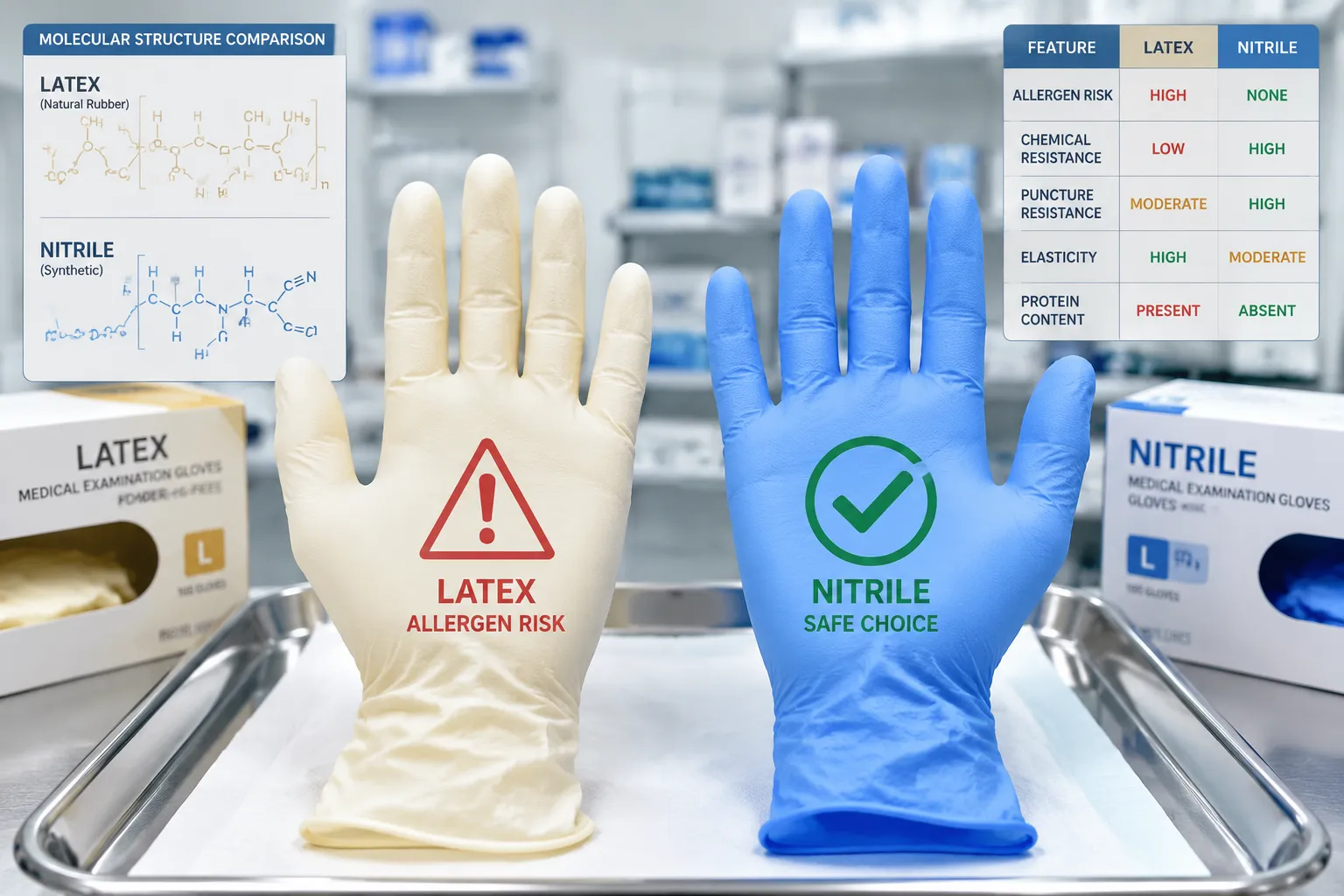
Over 70% of U.S. hospitals have implemented latex-safe or latex-free policies as of 2026, with most designating nitrile as the standard examination and surgical glove material. This represents a dramatic shift from 2010, when only 35-40% of facilities had comprehensive latex reduction programs. The transition accelerated between 2015 and 2022 due to regulatory pressure, liability concerns, and improved nitrile product availability.
The adoption rate varies by facility type and region. Academic medical centers and large hospital systems show the highest conversion rates (85-95%), driven by occupational health programs and research demonstrating cost-effectiveness. Community hospitals lag slightly (65-75%), often citing budget constraints and procurement inertia. Rural and critical access hospitals show the lowest adoption (50-60%), though this gap is narrowing as nitrile prices decline.
Global adoption patterns:
- United States: 70-75% of hospitals latex-safe or latex-free
- Canada: 65-70% with provincial variations
- United Kingdom: 80-85% following NHS guidance
- European Union: 60-75% varying by country
- Australia/New Zealand: 75-80% with strong regulatory support
- Asia: 40-60% with rapid growth in urban centers
Complete latex elimination remains rare, with only 15-20% of facilities achieving truly latex-free status. Most hospitals maintain “latex-safe” environments where latex products are restricted to specific areas and used only when clinically superior alternatives don’t exist. Common exceptions include certain surgical gloves preferred by specialists and specific medical devices where latex components cannot be substituted.
The transition continues to accelerate. Industry analysts project 85-90% of North American hospitals will use nitrile as the primary glove material by 2028. This shift reflects not only allergy concerns but also supply chain lessons from the COVID-19 pandemic, which demonstrated the importance of diversified glove sources and synthetic material manufacturing capacity.
Can You Develop Latex Allergy from Repeated Exposure?
Yes, latex allergy develops through repeated exposure in most cases, with sensitization occurring after months or years of regular contact with latex products. This acquired sensitivity follows a dose-response relationship where frequency and duration of exposure increase the likelihood of developing allergic reactions. Healthcare workers using latex gloves daily face the highest risk, with most cases developing after 2-5 years of occupational exposure.
The sensitization process involves the immune system recognizing latex proteins as foreign threats and producing IgE antibodies. Initial exposures may cause no symptoms, but the immune system “remembers” the proteins. Subsequent exposures trigger progressively stronger reactions as antibody levels increase. This explains why healthcare workers often report years of problem-free glove use before suddenly developing symptoms.
Factors that accelerate latex sensitization:
- Exposure frequency: Daily glove use versus occasional contact
- Glove type: Powdered latex gloves increase risk 3-5 times over powder-free
- Skin condition: Damaged or irritated skin allows greater protein penetration
- Atopic history: Individuals with asthma, eczema, or hay fever face 2-3 times higher risk
- Genetic factors: Family history of allergies increases susceptibility
- Exposure route: Mucous membrane contact (surgical procedures) carries higher risk than skin contact
Not everyone exposed to latex develops allergy. Genetic predisposition plays a significant role, with certain HLA (human leukocyte antigen) types associated with increased susceptibility. Approximately 1-6% of the general population and 8-17% of healthcare workers develop clinically significant latex allergy despite widespread exposure.
Prevention focuses on minimizing exposure, particularly during the critical sensitization window. Facilities using nitrile gloves for routine procedures significantly reduce sensitization rates among new healthcare workers. For individuals already sensitized, complete latex avoidance is essential because continued exposure can worsen reactions and increase the risk of anaphylaxis. Learn more about whether nitrile gloves are safe for latex allergy.
Are Nitrile Gloves More Expensive Than Latex and Why?
Nitrile gloves typically cost 15-40% more than comparable latex gloves, though this price gap has narrowed significantly since 2020. As of 2026, examination-grade nitrile gloves cost $0.08-$0.15 per glove in bulk, compared to $0.06-$0.11 for latex. Surgical-grade nitrile ranges from $0.40-$0.80 per glove versus $0.30-$0.60 for latex surgical gloves.
The price difference stems from several manufacturing and material factors. Nitrile production requires petroleum-based raw materials (acrylonitrile and butadiene) subject to oil market volatility, while latex comes from renewable rubber tree plantations with more stable pricing. The synthetic rubber polymerization process is more energy-intensive and requires more sophisticated equipment than latex processing.
Cost factors favoring nitrile:
- Longer shelf life: 3-5 years reduces waste from expiration
- Lower defect rates: 1.5-2.5% AQL (acceptable quality limit) versus 2.5-4% for latex
- Reduced breakage: Fewer mid-procedure glove changes
- Decreased liability: Elimination of latex allergy claims
- Lower worker compensation costs: Fewer occupational health issues
Cost factors favoring latex:
- Raw material cost: Natural rubber 20-30% cheaper than synthetic
- Established infrastructure: Mature supply chains and production facilities
- Lower energy requirements: Less intensive manufacturing process
- Simpler formulations: Fewer additives required for basic performance
The total cost of ownership calculation often favors nitrile despite higher unit prices. A 2024 analysis of 50 U.S. hospitals found that facilities switching to nitrile saved an average of $85,000-$200,000 annually when accounting for reduced allergic reactions, fewer worker compensation claims, and decreased glove waste from breakage. The payback period for the higher glove cost averaged 6-18 months.
Market dynamics continue to shift in nitrile’s favor. Global manufacturing capacity for nitrile gloves increased 300% between 2019 and 2025, driven by pandemic demand and strategic diversification away from latex dependency. This capacity expansion has compressed profit margins and reduced price premiums, making nitrile increasingly cost-competitive with latex for routine applications.
Who Is Most at Risk for Developing Latex Allergies?
Healthcare workers represent the highest-risk occupational group, with 8-17% developing latex sensitivity compared to 1-6% of the general population. Within healthcare, certain specialties face elevated risk due to prolonged glove use and frequent exposure to latex medical devices. Operating room personnel, dentists, and emergency department staff show the highest prevalence rates.
Patients with spina bifida face extraordinary risk, with 20-67% developing latex allergy by adolescence. This elevated rate results from multiple surgeries and catheterizations during infancy and childhood, creating intense early-life exposure during critical immune system development. Children requiring eight or more surgical procedures before age 10 show similar elevated risk regardless of underlying condition.
High-risk occupational groups:
- Operating room nurses and surgical technicians
- Dentists and dental hygienists
- Laboratory technicians handling latex gloves daily
- Housekeeping staff in healthcare facilities
- Emergency medical technicians and paramedics
- Anesthesiologists and certified nurse anesthetists
High-risk patient populations:
- Individuals with spina bifida or congenital urological abnormalities
- Patients with history of multiple surgeries (8+ procedures)
- Healthcare workers with occupational exposure
- People with atopic conditions (asthma, eczema, allergic rhinitis)
- Individuals with food allergies to banana, avocado, kiwi, chestnut, or passion fruit
- Rubber industry workers with occupational exposure
Genetic and immunological factors influence susceptibility. Individuals with atopic conditions (asthma, eczema, hay fever) face 2-3 times higher risk than non-atopic individuals. This association reflects underlying immune system characteristics that predispose to allergic reactions generally, not latex specifically.
Cross-reactivity with certain foods creates an additional risk dimension. Latex proteins share structural similarities with proteins in banana, avocado, kiwi, chestnut, and several other foods. Individuals allergic to these foods show increased latex allergy risk, and conversely, latex-allergic individuals may develop food allergies. This “latex-fruit syndrome” affects 30-50% of latex-allergic individuals.
Prevention strategies target high-risk groups through early identification and exposure minimization. Healthcare facilities should screen new employees for atopic history and previous reactions, use nitrile gloves as the default option, and maintain latex-safe environments in areas serving high-risk patient populations. For individuals already sensitized, complete latex avoidance is essential to prevent reaction escalation.
What Are Alternatives to Both Latex and Nitrile Gloves?
Several synthetic materials provide alternatives when both latex and nitrile sensitivities exist or when specific performance characteristics are required. Vinyl (polyvinyl chloride) gloves offer the most economical latex-free option, costing 20-40% less than nitrile. However, vinyl provides inferior barrier protection and puncture resistance, making it suitable only for low-risk, short-duration tasks like food service or light cleaning.
Polyisoprene gloves represent a synthetic alternative that closely mimics natural latex’s elastic properties without containing latex proteins. These gloves cost 30-50% more than nitrile but provide superior tactile sensitivity and comfort for extended wear. Surgeons who prefer latex feel often transition successfully to polyisoprene when latex allergy concerns arise.
Alternative glove materials and applications:
Vinyl (PVC):
- Best for: Food service, light cleaning, non-hazardous tasks
- Advantages: Lowest cost, latex-free, suitable for Type I latex allergy
- Limitations: Poor barrier protection, high failure rate, not suitable for medical procedures
- Cost: $0.04-$0.08 per glove
Polyisoprene:
- Best for: Surgery, procedures requiring high tactile sensitivity
- Advantages: Latex-like feel, excellent elasticity, no latex proteins
- Limitations: Higher cost, may contain accelerators causing Type IV reactions
- Cost: $0.50-$1.20 per surgical glove
Neoprene:
- Best for: Chemical handling, laboratory work, individuals with multiple sensitivities
- Advantages: Broad chemical resistance, hypoallergenic formulations available
- Limitations: Less tactile sensitivity, higher cost, limited availability
- Cost: $0.30-$0.60 per glove
Polyethylene:
- Best for: Food handling, short-duration tasks, cost-sensitive applications
- Advantages: Very low cost, latex-free, minimal allergen risk
- Limitations: Poor fit and dexterity, tears easily, not suitable for medical use
- Cost: $0.01-$0.03 per glove
For individuals with Type IV hypersensitivity to chemical accelerators, accelerator-free formulations exist across multiple materials. These specialty gloves use alternative curing systems that eliminate common sensitizers like thiurams and carbamates. They cost 40-60% more than standard gloves but provide the only option for individuals with documented accelerator allergies.
Material selection should match the specific application and user needs. Healthcare facilities typically maintain multiple glove types: nitrile for general use, polyisoprene for surgery, and accelerator-free options for sensitive individuals. This tiered approach balances cost, performance, and safety while accommodating diverse user needs and clinical requirements.
Common Mistakes When Switching from Latex to Nitrile in Hospitals
Healthcare facilities transitioning from latex to nitrile frequently underestimate the complexity of comprehensive material substitution. The most common error involves replacing only examination gloves while overlooking the hundreds of other latex-containing medical devices and supplies. Blood pressure cuffs, stethoscope tubing, tourniquets, catheters, and medication vial stoppers all may contain latex and require systematic identification and replacement.
Inadequate staff training represents another critical failure point. Healthcare workers accustomed to latex gloves often don nitrile gloves incorrectly, failing to account for differences in stretch, donning technique, and sizing. Nitrile gloves require more precise sizing because they stretch less than latex, and workers often need to move up one size for comparable fit and comfort.
Common transition mistakes:
Incomplete product inventory:
- Failing to identify all latex-containing medical devices beyond gloves
- Overlooking latex in medication packaging, equipment components, and facility infrastructure
- Not auditing supply chain for latex contamination in “latex-free” products
Inadequate staff education:
- Insufficient training on nitrile glove donning techniques
- Failure to communicate sizing differences between latex and nitrile
- Not explaining performance differences (stretch, tactile sensitivity, chemical resistance)
Poor sizing and selection:
- Ordering identical size distribution as previous latex inventory
- Not providing adequate size range (XS through XXL)
- Failing to offer different thickness options for various procedures
Budget miscalculation:
- Underestimating total cost including all latex product replacement
- Not accounting for initial higher consumption during adjustment period
- Failing to budget for specialty gloves (accelerator-free, polyisoprene surgical)
Incomplete environmental controls:
- Removing latex gloves but allowing personal latex items (balloons, rubber bands)
- Not establishing latex-safe zones for high-risk patients
- Inadequate signage and communication about latex-safe status
Successful transitions require 6-12 months of planning and phased implementation. Best practice involves forming a multidisciplinary committee including procurement, infection control, occupational health, clinical leadership, and frontline staff. This team conducts comprehensive latex product audits, develops substitution protocols, creates training programs, and monitors outcomes during the transition period.
Facilities should anticipate a 15-25% increase in glove consumption during the first 3-6 months as staff adjust to new materials and sizing. This temporary increase results from more frequent glove changes due to unfamiliarity and perceived fit issues. Consumption typically normalizes after staff gain experience with nitrile characteristics and proper sizing.
Do Nitrile Gloves Cause Any Allergic Reactions Themselves?
Nitrile gloves can cause Type IV delayed hypersensitivity reactions in 1-3% of users, though they do not contain the latex proteins responsible for Type I immediate allergic reactions. These reactions result from chemical accelerators (thiurams, carbamates, mercaptobenzothiazoles) used in the manufacturing process to speed vulcanization and improve material properties. The symptoms typically appear 24-96 hours after exposure and manifest as contact dermatitis rather than systemic allergic reactions.
Type IV reactions to nitrile present as dry, itchy, scaly patches on the hands and wrists, similar in appearance to irritant contact dermatitis but with an immunological mechanism. Unlike Type I latex allergy, these reactions do not progress to respiratory symptoms or anaphylaxis. However, they can cause significant discomfort and may force affected individuals to seek alternative glove materials.
Chemical accelerators that may cause reactions:
- Thiurams: Most common sensitizer, present in 60-70% of nitrile gloves
- Carbamates: Secondary sensitizer, used in 30-40% of formulations
- Mercaptobenzothiazoles: Less common, found in 10-20% of nitrile gloves
- Thioureas: Rare sensitizer in newer formulations
Distinguishing between irritant contact dermatitis and true allergic contact dermatitis requires clinical evaluation, often including patch testing. Irritant dermatitis affects 20-30% of healthcare workers who wear gloves frequently and results from mechanical irritation, moisture, and chemical exposure rather than immune system activation. This non-allergic condition improves with moisturizers, proper hand hygiene, and glove rotation, while true allergic reactions require complete avoidance of the sensitizing chemical.
Accelerator-free nitrile gloves provide a solution for individuals with documented Type IV hypersensitivity. These specialty gloves use alternative curing systems or extended processing to eliminate residual accelerator chemicals. They cost 40-60% more than standard nitrile but allow continued glove use for individuals who would otherwise need to switch to less suitable materials like vinyl or polyethylene.
Healthcare facilities should maintain a supply of accelerator-free gloves for affected staff and provide access to occupational health evaluation for workers developing persistent hand dermatitis. Early identification and appropriate material substitution prevent progression to severe dermatitis that might force career changes. For more information on allergic reactions to nitrile gloves, facilities should consult occupational health specialists and dermatologists familiar with contact allergen patterns.
How Has Latex Allergy Awareness Changed Medical Supply Demand?
Latex allergy awareness has fundamentally restructured the global medical glove market, driving nitrile from a niche specialty product in the 1990s to the dominant material by 2026. The nitrile glove market reached approximately $8.2 billion globally in 2025, representing 60-65% of total medical glove volume compared to less than 10% in 2000. This shift reflects not only allergy concerns but also broader recognition of nitrile’s performance advantages and supply chain benefits.
Demand patterns show clear regional variations based on regulatory environments and healthcare system maturity. North American and European markets show 70-80% nitrile penetration, driven by strong occupational health regulations and litigation risk. Asian markets, while growing rapidly, maintain higher latex usage (40-50% of volume) due to price sensitivity and established rubber plantation infrastructure.
Market demand drivers beyond allergy concerns:
Infection control requirements:
- Enhanced barrier protection against bloodborne pathogens
- Superior resistance to chemical disinfectants
- Lower failure rates during extended procedures
Supply chain diversification:
- Reduced dependence on natural rubber supply fluctuations
- Geographic distribution of synthetic rubber manufacturing
- Lessons from COVID-19 pandemic supply disruptions
Performance characteristics:
- Better puncture and tear resistance for high-risk procedures
- Chemical resistance for chemotherapy and pharmaceutical handling
- Longer shelf life reducing inventory waste
Regulatory pressure:
- OSHA guidelines favoring latex alternatives
- FDA recommendations for latex-safe healthcare environments
- International standards promoting allergen reduction
The COVID-19 pandemic accelerated these trends dramatically. Global glove demand increased 300-400% during 2020-2021, with nitrile capturing 85-90% of new capacity additions. Manufacturers invested heavily in synthetic rubber production infrastructure, creating lasting capacity that continues to pressure latex market share even as pandemic demand normalizes.
Procurement strategies have evolved accordingly. Healthcare systems increasingly negotiate long-term contracts with multiple nitrile suppliers to ensure supply security and price stability. Group purchasing organizations report that 75-80% of member facilities now specify nitrile as the preferred or mandatory glove material for routine use, with latex restricted to specific clinical applications where alternatives don’t exist.
The market shift extends beyond gloves to comprehensive latex reduction across medical devices. Manufacturers have reformulated thousands of products to eliminate latex components, from blood pressure cuffs to IV tubing. This broader material substitution reflects both liability concerns and recognition that comprehensive latex-safe environments provide better protection than glove substitution alone.
Are There Situations Where Latex Gloves Are Still Preferred Over Nitrile?
Certain surgical specialties continue to prefer latex gloves for specific procedures where tactile sensitivity and elastic recovery properties provide clinical advantages. Microsurgery, neurosurgery, and ophthalmic surgery represent the most common applications where surgeons report superior performance with latex. The material’s natural elasticity provides better “snap-back” after stretching, which some surgeons find advantageous for delicate tissue manipulation.
Latex surgical gloves offer slightly superior tactile sensitivity compared to standard-thickness nitrile, though this gap has narrowed considerably with thin-mil nitrile formulations (2-3 mil). Surgeons accustomed to latex often report better “feel” for tissue planes and suture handling. However, this preference appears largely experiential rather than objectively measurable, with studies showing minimal performance differences in controlled testing.
Clinical scenarios where latex may be preferred:
Surgical applications:
- Microsurgery requiring maximum tactile sensitivity
- Extended procedures (4+ hours) where elastic comfort matters
- Surgeons with strong material preference based on training and experience
Performance considerations:
- Maximum elasticity and stretch recovery needed
- Procedures requiring frequent instrument manipulation
- Situations where glove cost is secondary to surgeon preference
Important limitations on latex use:
Even when clinical preference exists, latex use requires strict protocols to protect latex-allergic individuals. Facilities maintaining latex gloves must implement comprehensive safeguards including dedicated latex-safe operating rooms, rigorous patient screening, and environmental controls to prevent protein contamination.
The clinical justification for latex preference has weakened substantially as nitrile technology advances. Modern thin-mil nitrile surgical gloves (2.5-3.5 mil) provide tactile sensitivity approaching latex while maintaining superior puncture resistance. Polyisoprene surgical gloves offer latex-like elasticity without allergen concerns, providing a middle ground for surgeons unwilling to compromise on material properties.
Many healthcare systems have eliminated latex surgical gloves entirely, requiring surgeons to adapt to alternatives. Data from these facilities shows no increase in surgical complications or adverse outcomes, suggesting that surgeon preference rather than objective clinical necessity drives continued latex use. Training programs increasingly expose surgical residents exclusively to nitrile and polyisoprene, creating a new generation of surgeons without latex dependence.
The trend clearly favors continued latex reduction even in specialty surgical applications. Industry analysts project that latex surgical gloves will represent less than 10% of the surgical glove market by 2030, confined primarily to individual surgeon preference rather than clinical necessity. This trajectory reflects the convergence of improved nitrile technology, liability concerns, and generational shifts in surgical training and material familiarity.
Frequently Asked Questions
Can latex allergy develop suddenly after years of safe glove use?
Yes, latex allergy typically develops after repeated exposure over months or years. Most healthcare workers who develop latex sensitivity report 2-5 years of problem-free glove use before symptoms appear. The immune system requires multiple exposures to become sensitized, after which reactions can occur with minimal contact.
Do nitrile gloves protect against all chemicals that latex does not?
Nitrile gloves provide superior protection against petroleum-based oils, greases, and many organic solvents compared to latex. However, no glove material protects against all chemicals. Nitrile shows poor resistance to ketones, acetates, and concentrated acids. Always consult chemical compatibility charts for specific substances.
How can I tell if I have latex allergy or just irritant dermatitis?
Latex allergy causes itching, hives, or respiratory symptoms that occur consistently with latex exposure and improve with avoidance. Irritant dermatitis causes dry, cracked skin from mechanical irritation and moisture, affecting anyone who wears gloves frequently. Patch testing by an allergist or dermatologist provides definitive diagnosis.
Are powder-free latex gloves safe for people with latex allergy?
No, powder-free latex gloves still contain the proteins that cause allergic reactions. While they reduce airborne protein dispersal compared to powdered gloves, direct contact still triggers reactions in sensitized individuals. People with latex allergy must use non-latex alternatives like nitrile or polyisoprene.
What should hospitals do if a patient reports latex allergy?
Document the allergy prominently in the medical record, apply visible allergy alerts (wristbands, chart flags), use only latex-free equipment and supplies for that patient, and schedule procedures in latex-safe environments. Ensure all staff members are aware of the allergy before patient contact.
Can you be allergic to both latex and nitrile gloves?
Yes, though the mechanisms differ. Latex allergy involves proteins in natural rubber, while nitrile reactions result from chemical accelerators used in manufacturing. Individuals allergic to both materials typically react to accelerators present in both glove types and require accelerator-free formulations.
How long does it take for latex allergy symptoms to appear?
Type I immediate hypersensitivity causes symptoms within minutes of exposure, including hives, itching, and potentially anaphylaxis. Type IV delayed hypersensitivity causes contact dermatitis that appears 24-96 hours after exposure. The reaction type depends on individual immune response patterns.
Do nitrile gloves cost more than latex in 2026?
Nitrile examination gloves cost approximately 15-40% more than comparable latex gloves, though this gap has narrowed significantly. When accounting for reduced allergic reactions, lower breakage rates, and decreased liability costs, nitrile often provides better total cost of ownership despite higher unit prices.
What foods should latex-allergic people avoid?
Individuals with latex allergy should be cautious with banana, avocado, kiwi, chestnut, passion fruit, papaya, fig, and melon. These foods contain proteins structurally similar to latex proteins, causing cross-reactive allergic reactions in 30-50% of latex-allergic individuals. Not everyone reacts to all foods.
Are vinyl gloves a good alternative to both latex and nitrile?
Vinyl gloves provide a low-cost latex-free option suitable for low-risk tasks like food service and light cleaning. However, they offer inferior barrier protection, high failure rates, and poor puncture resistance compared to nitrile or latex. Vinyl is not appropriate for medical procedures or hazardous material handling.
How do hospitals test for latex allergy in healthcare workers?
Occupational health programs use questionnaires to identify symptoms and exposure history, followed by skin prick testing or blood tests (specific IgE) for suspected cases. Patch testing identifies Type IV hypersensitivity to accelerator chemicals. Early identification allows intervention before severe reactions develop.
Can latex allergy go away if you avoid latex products?
Latex allergy rarely resolves completely once developed. Avoiding latex prevents reactions and may reduce symptom severity, but the underlying immune sensitization typically persists. Individuals with documented latex allergy should maintain lifelong avoidance and carry emergency medication if they have history of severe reactions.
Conclusion
The epidemiology of latex allergy has fundamentally reshaped healthcare supply procurement and patient safety protocols over the past three decades. With 8-17% of healthcare workers and 1-6% of the general population affected, latex sensitivity represents a significant occupational and clinical concern that extends far beyond simple material substitution. The rise of nitrile gloves as the preferred alternative reflects not only allergen elimination but also superior performance characteristics, supply chain resilience, and favorable total cost of ownership.
Healthcare facilities must approach latex allergy as a comprehensive safety issue requiring systematic product audits, staff education, patient screening, and environmental controls. Simply replacing examination gloves with nitrile addresses only part of the challenge; hundreds of medical devices and supplies contain latex components requiring identification and substitution. Successful transitions require multidisciplinary planning, adequate budgeting for both materials and training, and ongoing monitoring to ensure compliance and effectiveness.
The market dynamics driving nitrile adoption will continue accelerating through 2030 and beyond. Improved manufacturing technology, expanded global capacity, and generational shifts in healthcare worker training are creating a future where latex becomes a specialty material rather than the default choice. Organizations that proactively implement comprehensive latex reduction programs position themselves advantageously in terms of worker safety, patient outcomes, liability reduction, and supply chain resilience.
For healthcare administrators and procurement officers, the action steps are clear: conduct comprehensive latex product inventories, develop phased transition plans with adequate timelines and budgets, invest in staff education about material differences and proper use, maintain specialty glove options for individuals with multiple sensitivities, and establish monitoring systems to track allergic reactions and material performance. These investments in patient and worker safety deliver measurable returns through reduced complications, lower liability costs, and improved operational efficiency in an increasingly latex-conscious healthcare environment.
SEO Meta Title: Latex Allergy Epidemiology & Nitrile in Healthcare 2026