Last updated: July 1, 2026
Quick Answer
Nitrile gloves typically last 3-5 years when stored properly, but degradation can occur much faster under poor conditions. Store gloves at temperatures between 59-77°F (15-25°C), away from direct sunlight, ozone sources, and high humidity. Keep them in original packaging in a cool, dry location to maintain their protective properties and prevent premature failure.
Key Takeaways
- Nitrile gloves have a shelf life of 3-5 years from manufacture date when stored under optimal conditions
- Temperature extremes above 86°F (30°C) or below 32°F (0°C) accelerate material degradation
- Direct sunlight and UV exposure break down nitrile polymers, causing brittleness and discoloration
- Humidity levels above 80% can compromise packaging integrity and promote material degradation
- Ozone exposure from electrical equipment damages nitrile at the molecular level
- Original packaging provides essential protection against environmental factors
- Visible signs of degradation include discoloration, brittleness, tackiness, or unusual odors
- Using expired or degraded gloves significantly reduces barrier protection and increases failure risk
- Proper storage requires cool, dry, dark locations away from chemicals and ozone sources
- First-in-first-out (FIFO) inventory rotation prevents gloves from exceeding shelf life
How Long Do Nitrile Gloves Last in Storage
Nitrile gloves typically maintain their protective properties for 3-5 years from the manufacturing date when stored under proper conditions. The actual shelf life depends heavily on storage environment, with optimal conditions preserving glove integrity at the upper end of this range while poor storage can reduce usability to less than one year.
Manufacturing date codes appear on most glove boxes, usually printed on the bottom or side panel. These codes help track age and implement effective inventory rotation. Unlike food products, nitrile gloves don’t always display explicit expiration dates, making it essential to understand the manufacturing date format used by your supplier.
Factors affecting storage duration:
- Manufacturing quality: Higher-grade medical examination gloves often last longer than industrial-grade alternatives
- Storage temperature stability: Consistent temperatures extend shelf life more than fluctuating conditions
- Packaging integrity: Unopened boxes last significantly longer than opened or damaged packaging
- Initial quality: Thicker nitrile gloves generally resist degradation better than thinner variants
A common mistake is assuming all gloves in storage are equally viable. Gloves stored near windows, heating systems, or in unconditioned spaces degrade faster than those in climate-controlled environments. Implement a tracking system that notes both purchase date and storage location to identify potential problem areas.
What Temperature Should Nitrile Gloves Be Stored At
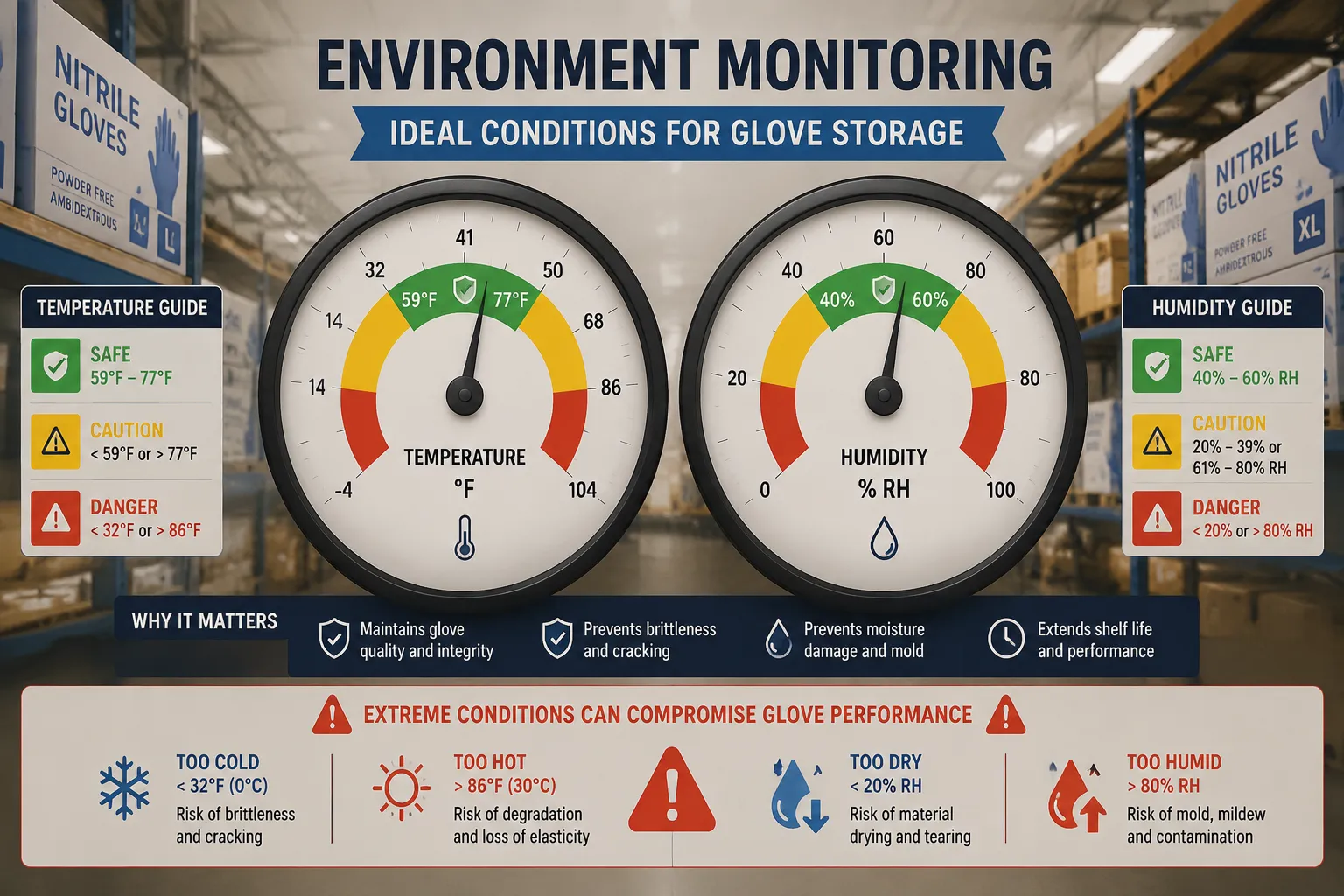
The ideal storage temperature range for nitrile gloves is 59-77°F (15-25°C), with 68°F (20°C) considered optimal. Temperatures outside this range accelerate chemical degradation processes that compromise glove elasticity, tensile strength, and barrier protection.
Heat exposure above 86°F (30°C) causes nitrile polymers to break down more rapidly, leading to increased brittleness and reduced flexibility. Cold temperatures below 32°F (0°C) can make gloves stiff and prone to cracking when donned, though this effect is often reversible if gloves return to room temperature before use.
Temperature-related storage guidelines:
- Maintain consistent temperatures rather than allowing daily fluctuations
- Avoid storage near heat sources like radiators, furnaces, or hot water pipes
- Keep gloves away from cold exterior walls in winter months
- Use climate-controlled storage rooms for large inventories
- Monitor temperature with calibrated thermometers placed at glove storage height
Choose temperature-controlled storage if:
- Your facility experiences seasonal temperature swings exceeding 20°F
- You store gloves for medical or critical safety applications
- Your inventory turnover is slow (more than 6 months)
- You operate in extreme climate regions
For facilities without climate control, position glove storage in interior rooms away from exterior walls and roof areas where temperature extremes are most pronounced.
Do Nitrile Gloves Expire If Unopened
Yes, unopened nitrile gloves do expire, though they generally last longer than opened boxes. Unopened gloves in original packaging typically remain usable for 3-5 years from manufacture date, while opened boxes should be used within 1-2 years depending on storage conditions.
The original packaging provides a protective barrier against humidity, light, and airborne contaminants that accelerate degradation. Once opened, gloves face increased exposure to environmental factors even if the box is reclosed. This doesn’t mean opened gloves immediately become unusable, but their degradation rate increases noticeably.
Packaging protection benefits:
- Sealed boxes maintain lower humidity levels around gloves
- Opaque packaging blocks UV light exposure
- Original containers prevent dust and chemical vapor contamination
- Factory packaging often includes desiccants or protective liners
An edge case involves gloves stored in their original sealed boxes but in poor environmental conditions. These gloves may degrade faster than opened gloves stored properly. The packaging helps, but it cannot overcome extreme heat, humidity, or ozone exposure indefinitely.
For bulk purchases, keep boxes sealed until needed and implement strict FIFO rotation. Mark each box with the received date using permanent marker to track inventory age, especially important for healthcare applications where glove reliability is critical.
Signs That Nitrile Gloves Have Degraded or Gone Bad
Degraded nitrile gloves display visible and tactile changes that indicate compromised protective properties. The most common signs include discoloration (yellowing or darkening), increased brittleness, surface tackiness, unusual chemical odors, and visible cracking or stress marks.
Primary degradation indicators:
- Color changes: Yellowing, browning, or fading from original color
- Texture alterations: Sticky or tacky surface feel, or excessive dryness
- Brittleness: Gloves crack or tear easily during donning
- Odor: Strong chemical or rubber smell not present in fresh gloves
- Surface defects: Visible cracks, crazing, or stress whitening
- Loss of elasticity: Gloves don’t return to shape after stretching
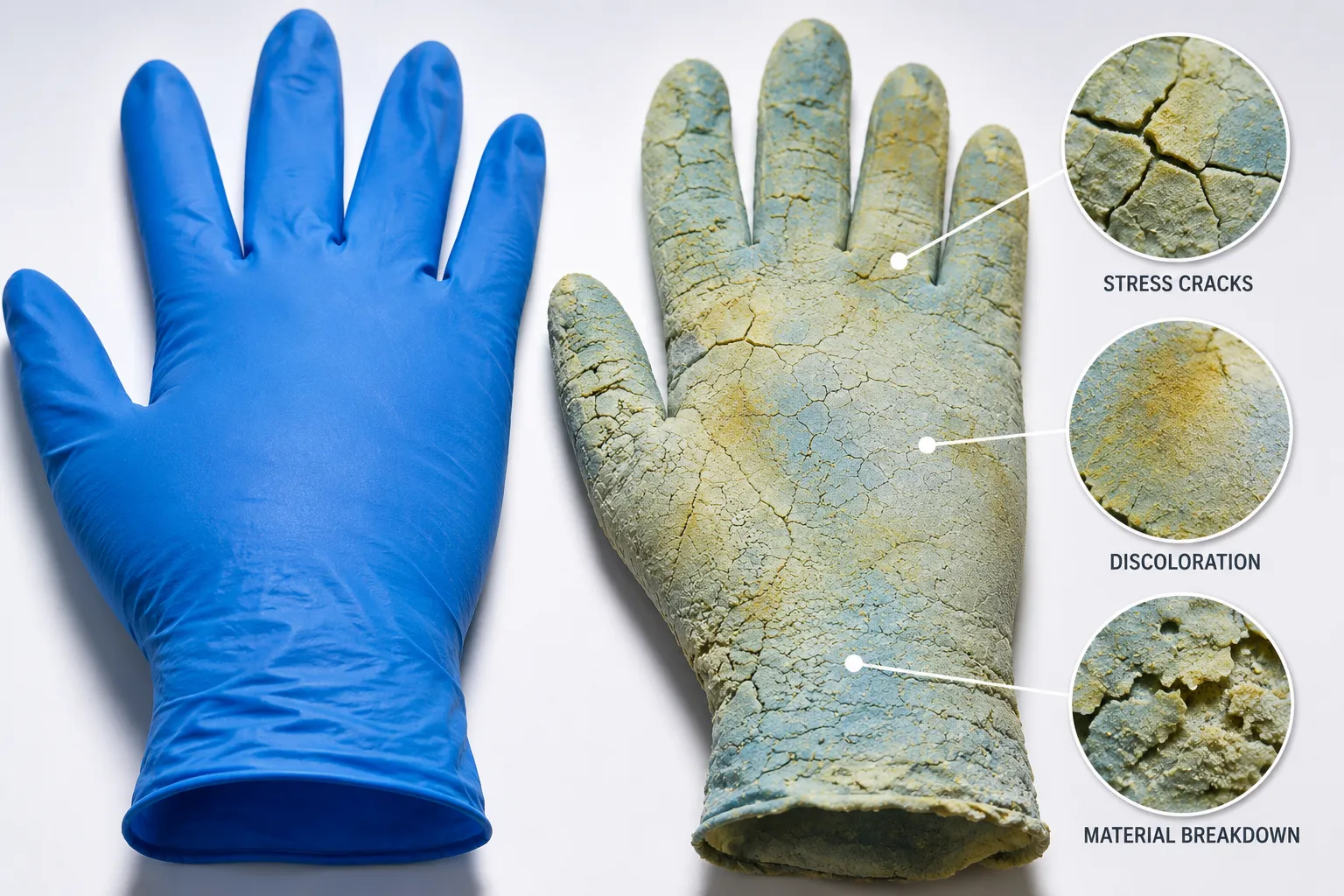
Perform a simple stretch test by gently pulling a glove from the cuff. Fresh nitrile stretches smoothly and returns to shape. Degraded gloves may tear at stress points, feel stiff, or show white stress marks that don’t disappear. This test should be done carefully with a sample glove, not the entire inventory.
Testing protocol for questionable gloves:
- Inspect 3-5 gloves from different areas of the box
- Check for uniform color and texture
- Perform gentle stretch test on one glove
- Note any unusual odors when opening the box
- Compare to a known fresh sample if available
If any degradation signs appear, the entire box should be removed from service. Using compromised gloves in food handling, medical, or chemical protection applications creates serious safety and contamination risks.
Can You Store Nitrile Gloves in a Hot Garage
Storing nitrile gloves in a hot garage is not recommended, as garage temperatures frequently exceed the safe storage range of 59-77°F (15-25°C). Garages commonly reach 90-120°F (32-49°C) during summer months, accelerating nitrile degradation and potentially reducing shelf life by 50-75%.
If garage storage is unavoidable, take specific precautions to minimize heat damage. Store gloves on interior walls away from garage doors and windows, use insulated storage containers, and consider moving gloves to conditioned spaces during peak summer months.
Garage storage risk factors:
- Temperature swings from day to night and season to season
- Direct sunlight through windows or door openings
- Vehicle exhaust containing ozone and chemical vapors
- High humidity in many garage environments
- Proximity to water heaters, furnaces, or other heat sources
Mitigation strategies for garage storage:
- Use insulated storage bins or coolers (without ice)
- Position gloves on interior shelving away from exterior walls
- Cover storage areas with reflective insulation
- Install temperature monitoring with high-temp alerts
- Rotate inventory more frequently (every 3-6 months)
- Bring gloves to room temperature before use
For mechanics and automotive workers who need gloves readily accessible in garage workspaces, keep only a small working supply (1-2 weeks worth) in the garage and maintain bulk storage in climate-controlled areas. This approach balances convenience with proper preservation.
Nitrile Gloves vs Latex Gloves Shelf Life Comparison
Nitrile gloves generally have a longer shelf life than latex gloves, typically lasting 3-5 years compared to latex gloves’ 2-3 years under similar storage conditions. Nitrile’s synthetic polymer structure resists oxidation and ozone degradation better than natural rubber latex, making it more stable during long-term storage.
Latex gloves are more susceptible to environmental degradation because natural rubber proteins break down more readily when exposed to heat, light, and ozone. This makes latex particularly vulnerable in storage environments with electrical equipment or poor climate control.
Storage stability comparison:
| Factor | Nitrile Gloves | Latex Gloves |
|---|---|---|
| Typical shelf life | 3-5 years | 2-3 years |
| Heat resistance | Better (up to 86°F) | Lower (degrades faster above 77°F) |
| Ozone sensitivity | Moderate | High |
| UV resistance | Good | Poor |
| Humidity tolerance | Better | More sensitive |
| Storage cost | Lower (longer life) | Higher (faster replacement) |
For facilities storing both types, latex requires more stringent environmental controls and faster inventory turnover. The longer shelf life of nitrile makes it more economical for bulk purchasing and emergency stockpiling, though latex allergy considerations often drive the choice toward nitrile regardless of storage factors.
Choose nitrile over latex for storage if your facility has limited climate control, slow inventory turnover, or needs emergency backup supplies that may sit unused for extended periods.
Does Sunlight Damage Nitrile Gloves in Storage
Direct sunlight causes significant damage to nitrile gloves through UV radiation that breaks down polymer chains at the molecular level. Even brief daily sun exposure through windows can reduce glove shelf life by 40-60%, causing brittleness, discoloration, and loss of elasticity within months rather than years.
UV radiation initiates photo-oxidation reactions in nitrile rubber, creating free radicals that degrade the material structure. This process is cumulative, meaning even intermittent sun exposure adds up over time. Gloves stored near windows, skylights, or in areas with indirect sunlight face accelerated aging.
UV damage mechanisms:
- Polymer chain scission reduces tensile strength
- Surface oxidation creates brittle outer layers
- Color changes from blue/purple to yellow or brown
- Loss of flexibility and increased tear susceptibility
Sunlight protection strategies:
- Store gloves in opaque containers or original boxes
- Use interior storage rooms without windows
- Install UV-blocking window film on storage area windows
- Keep gloves in closed cabinets or drawers
- Use light-blocking curtains or blinds in storage areas
- Position shelving perpendicular to windows, not facing them
Even fluorescent lighting contains small amounts of UV radiation, though far less than sunlight. For long-term storage exceeding one year, minimize all light exposure by keeping gloves in closed containers. This is particularly important for tattooing and medical applications where glove integrity is critical.
A common mistake is storing gloves in clear plastic bins near windows for visibility and access. Switch to opaque containers or relocate transparent storage to interior locations away from all natural light sources.
What Happens If You Use Expired Nitrile Gloves
Using expired nitrile gloves significantly increases the risk of glove failure during use, potentially exposing users to chemicals, pathogens, or contaminants the gloves should protect against. Expired gloves may tear more easily, develop micro-perforations, or fail to provide adequate barrier protection even if they appear intact.
The consequences of using expired gloves vary by application severity. In medical settings, compromised gloves can lead to pathogen transmission. For chemical handling, degraded gloves may allow hazardous substances to penetrate. Even in lower-risk applications like food preparation, expired gloves increase contamination risk and may shed particles into food.
Risks of using expired gloves:
- Increased tear and puncture rates during donning and use
- Reduced chemical resistance and breakthrough times
- Micro-perforations invisible to the naked eye
- Unpredictable failure points under stress
- Potential allergic reactions from degraded materials
- Regulatory compliance violations in healthcare and food service
Application-specific concerns:
- Medical/healthcare: Infection control failures, regulatory violations
- Chemical handling: Skin exposure to hazardous substances
- Food service: Contamination, health code violations
- Industrial work: Reduced protection against oils, solvents, and abrasives
If you discover expired gloves in inventory, remove them from service immediately. Don’t assume they’re “probably fine” based on appearance alone. Internal degradation often precedes visible signs, and the cost of replacing expired gloves is minimal compared to the consequences of glove failure.
For emergency situations where expired gloves are the only option, double-gloving and frequent glove changes can provide temporary risk mitigation, but this should never be standard practice.
Best Way to Store Bulk Nitrile Gloves at Home
The best way to store bulk nitrile gloves at home is in a cool, dry, dark location such as an interior closet, basement storage room, or climate-controlled pantry area. Keep gloves in their original sealed boxes, stacked no more than 6-8 boxes high to prevent compression damage, and away from household chemicals, cleaning products, and appliances that generate ozone.
Home storage presents unique challenges compared to commercial facilities, including temperature fluctuations, limited climate control, and proximity to degradation sources like laundry rooms or garages. Strategic placement and simple protective measures can extend glove life significantly.
Ideal home storage locations:
- Interior bedroom or hallway closets
- Finished basement storage areas (not damp unfinished basements)
- Climate-controlled pantries or utility rooms
- Under-bed storage in climate-controlled bedrooms
- Interior cabinets away from exterior walls
Locations to avoid:
- Garages (temperature extremes)
- Attics (heat buildup)
- Bathrooms (high humidity)
- Laundry rooms (heat, humidity, ozone from motors)
- Near windows or exterior doors
- Kitchen areas near stoves or dishwashers
- Unfinished basements (moisture)
Home storage best practices:
- Keep gloves in original packaging until needed
- Use plastic storage bins with tight-fitting lids for extra protection
- Label boxes with purchase date for rotation tracking
- Store boxes horizontally rather than on edge
- Maintain 6-inch clearance from walls and floor
- Check storage area temperature monthly during extreme seasons
- Inspect gloves quarterly for degradation signs
For households purchasing bulk gloves for emergency preparedness, consider vacuum-sealing unopened boxes in large bags with oxygen absorbers for extended preservation. This extra step can extend shelf life beyond the typical 3-5 years, though gloves should still be inspected before use.
Do Nitrile Gloves Need to Be Stored in Original Packaging
Nitrile gloves don’t absolutely require original packaging for storage, but keeping them in factory boxes significantly extends shelf life and maintains quality. Original packaging provides optimized protection against light, humidity, and contamination that generic storage containers may not match.
If you must transfer gloves to different containers, use opaque, airtight containers that block light and maintain low humidity. Never store loose gloves in open bins or bags, as this exposes them to accelerated degradation and contamination.
Original packaging advantages:
- Engineered to maintain optimal humidity levels
- Blocks UV and visible light exposure
- Prevents dust and airborne chemical contamination
- Includes manufacturing date and lot information
- Designed to prevent compression damage
- Often includes protective inner liners or desiccants
Acceptable alternative storage:
- Opaque plastic bins with airtight seals
- Resealable mylar bags for opened boxes
- Dedicated glove dispensers with protective covers
- Metal cabinets with door seals
Unacceptable storage methods:
- Clear plastic bags (allows light exposure)
- Open cardboard boxes (humidity and dust exposure)
- Mesh or perforated containers (no environmental protection)
- Stacking loose gloves in drawers
When opening a box for daily use, fold the top flaps closed between uses or transfer remaining gloves to a resealable container. This simple step prevents the accelerated degradation that occurs once factory seals are broken. For workplace environments requiring frequent access, wall-mounted dispensers with protective covers offer convenient access while maintaining reasonable protection.
Can Humidity Affect Nitrile Glove Quality
High humidity can compromise nitrile glove quality by affecting packaging integrity, promoting surface changes, and accelerating certain degradation processes. While nitrile itself is relatively moisture-resistant compared to latex, humidity levels consistently above 80% can cause problems, particularly with packaging materials and powder coatings on powdered gloves.
Excessive humidity softens cardboard packaging, potentially allowing light penetration and reducing structural support. Moisture can also affect powder coatings, causing clumping or uneven distribution that makes donning difficult. In extreme cases, high humidity combined with temperature fluctuations can cause condensation that damages gloves directly.
Humidity-related issues:
- Cardboard box degradation and structural failure
- Powder clumping in powdered gloves
- Increased tackiness in powder-free gloves
- Mold or mildew growth on packaging materials
- Accelerated oxidation when combined with heat
- Label deterioration affecting traceability
Optimal humidity range: 40-60% relative humidity
Humidity control strategies:
- Use dehumidifiers in storage areas with persistent dampness
- Avoid storing gloves in bathrooms, laundries, or near water sources
- Elevate storage boxes 6 inches off concrete floors
- Ensure adequate ventilation in storage rooms
- Use moisture-absorbing products (silica gel, desiccants) in storage containers
- Monitor humidity with hygrometers placed at storage height
Conversely, extremely low humidity below 20% can make some nitrile formulations more brittle, though this is less common than high-humidity problems. Most climate-controlled buildings naturally maintain acceptable humidity ranges for glove storage.
For facilities in humid climates or with seasonal humidity challenges, consider storing gloves in sealed plastic bins with desiccant packets as an additional protective layer beyond original packaging.
How to Tell If Nitrile Gloves Are Still Safe to Use
To determine if nitrile gloves remain safe for use, perform a systematic inspection checking for discoloration, texture changes, odor, and physical integrity through visual examination and gentle stretch testing. Safe gloves maintain their original color, smooth texture, flexibility, and show no signs of cracking, brittleness, or unusual smells.
Pre-use inspection checklist:
- Visual inspection: Check for uniform color matching fresh gloves
- Texture test: Feel surface for tackiness, excessive dryness, or roughness
- Odor check: Note any chemical or unusual smells
- Flexibility test: Gently stretch cuff area for smooth elasticity
- Integrity check: Look for visible cracks, holes, or thin spots
- Date verification: Confirm gloves are within 3-5 year shelf life
Detailed testing procedure:
- Remove 2-3 gloves from different areas of the box
- Hold gloves up to light to check for thin spots or holes
- Gently stretch the cuff area 2-3 inches and release
- Observe whether material returns to original shape smoothly
- Check for white stress marks that persist after stretching
- Compare questionable gloves to a known fresh sample when possible
Immediate discard indicators:
- Any visible holes, tears, or cracks
- Discoloration to yellow, brown, or faded appearance
- Sticky or tacky surface texture
- Strong chemical or rubber odor
- Brittleness or cracking during gentle stretching
- Gloves that feel stiff or don’t return to shape
For critical applications like medical procedures or hazardous chemical handling, err on the side of caution. If gloves show any questionable signs, discard them and use fresh stock. The cost of replacement gloves is negligible compared to the consequences of barrier failure.
Implement a formal inspection protocol for high-risk applications, documenting inspection dates and findings. This creates accountability and helps identify storage problems before they affect large quantities of inventory.
Common Mistakes When Storing Disposable Gloves
The most common storage mistakes include keeping gloves in temperature-extreme locations, storing them near ozone-generating equipment, failing to rotate stock using FIFO methods, and storing gloves in areas with chemical vapor exposure. These errors can reduce shelf life by 50% or more while creating false confidence in compromised inventory.
Frequent storage errors:
- Garage or attic storage: Exposes gloves to temperature extremes
- Near electrical equipment: Ozone from motors degrades nitrile
- Window-adjacent storage: UV exposure causes photo-degradation
- Poor inventory rotation: Old stock sits unused while new stock is consumed
- Mixed storage with chemicals: Vapor exposure compromises material
- Compression damage: Stacking boxes too high crushes bottom gloves
- Open box storage: Accelerates degradation after seal is broken
- Ignoring manufacturing dates: No tracking system for age monitoring
Ozone exposure sources to avoid:
- Electric motors (fans, HVAC equipment, refrigerators)
- Photocopiers and laser printers
- Welding equipment
- UV sterilization devices
- High-voltage electrical equipment
Ozone is particularly damaging to nitrile because it attacks carbon-carbon double bonds in the polymer structure, causing rapid deterioration even at low concentrations. Keep gloves at least 10 feet away from ozone-generating equipment, or use separate storage rooms entirely.
Proper inventory rotation system:
- Mark each box with received date using permanent marker
- Store newest boxes behind older stock
- Create a simple log tracking box locations and dates
- Conduct quarterly inventory audits
- Set calendar reminders to check oldest stock
- Train all staff on FIFO principles
Another overlooked mistake is storing different glove types together without organization. Mixing various thicknesses, sizes, and brands makes rotation difficult and increases the chance of using inappropriate gloves for specific tasks.
Should Nitrile Gloves Be Stored in Airtight Containers
Nitrile gloves don’t require airtight storage, but sealed containers provide additional protection against environmental factors that accelerate degradation. Original factory packaging offers adequate protection for most applications, while airtight containers add an extra barrier beneficial for long-term storage, humid environments, or areas with chemical vapor exposure.
The decision to use airtight containers depends on your storage environment and inventory turnover rate. Fast-turnover operations (gloves used within 6 months) gain minimal benefit from airtight storage beyond original packaging. Slow-turnover or emergency stockpiles benefit significantly from the added protection.
When airtight storage adds value:
- Long-term storage exceeding 1 year
- High-humidity environments (above 70% RH)
- Areas with chemical vapor exposure
- Locations with temperature fluctuations
- Emergency preparedness stockpiles
- Storage in non-climate-controlled spaces
When original packaging is sufficient:
- Climate-controlled storage areas
- Fast inventory turnover (under 6 months)
- Interior storage away from environmental stressors
- Professional facilities with proper storage infrastructure
Airtight container selection criteria:
- Opaque or light-blocking materials
- Adequate size to avoid glove compression
- Tight-sealing lids with gaskets
- Durable construction for stacking
- Easy access for inventory rotation
- Moisture-resistant materials
For home storage or small businesses, food-grade plastic storage bins with gasket-sealed lids offer excellent protection at reasonable cost. Add silica gel packets to absorb residual moisture, replacing them every 6-12 months.
Avoid vacuum-sealing individual glove boxes unless for extreme long-term storage, as the compression can damage gloves. Instead, place sealed boxes inside larger airtight containers with desiccants for optimal protection without compression risk.
Storage and Shelf-Life Best Practices for Nitrile Gloves: Practical Checklist
Implementing comprehensive storage and shelf-life best practices for nitrile gloves requires a systematic approach covering environmental controls, inventory management, and regular monitoring. This practical checklist provides actionable steps for warehouses, clinics, and work sites to prevent degradation before use.
Environmental control checklist:
- Maintain storage temperature between 59-77°F (15-25°C)
- Keep relative humidity between 40-60%
- Eliminate direct sunlight and UV exposure
- Position storage away from ozone-generating equipment
- Ensure adequate ventilation without temperature extremes
- Use interior rooms away from exterior walls
- Install temperature and humidity monitoring devices
Inventory management checklist:
- Mark all boxes with received date upon delivery
- Implement strict FIFO rotation system
- Conduct quarterly inventory audits
- Track manufacturing dates from box codes
- Remove and inspect gloves approaching 3-year storage mark
- Maintain inventory log with locations and dates
- Train staff on proper rotation procedures
Storage configuration checklist:
- Keep gloves in original sealed packaging until use
- Stack boxes no more than 6-8 high
- Maintain 6-inch clearance from walls and floors
- Use shelving rather than floor storage
- Separate glove storage from chemical storage areas
- Organize by size, type, and age for easy rotation
- Label shelving with storage date ranges
Inspection protocol checklist:
- Inspect oldest stock monthly for degradation signs
- Check storage area conditions quarterly
- Test sample gloves from aging inventory
- Document inspection findings
- Remove questionable stock immediately
- Compare stored gloves to fresh samples periodically
- Review and update storage procedures annually
For specific facility types:
Medical clinics and hospitals:
- Prioritize climate-controlled storage rooms
- Implement strict expiration tracking systems
- Maintain backup stock in separate location
- Document storage conditions for compliance
- Use medical-grade storage cabinets
Industrial work sites:
- Designate specific storage areas away from production
- Protect from chemical vapors and heat sources
- Keep working supply separate from bulk storage
- Educate workers on proper glove handling
- Inspect gloves before each shift
Home or small business:
- Use interior closets or cabinets
- Store in sealed containers if climate control is limited
- Buy quantities matching 6-12 month usage
- Check gloves seasonally for degradation
- Keep emergency supply separate from daily use stock
This systematic approach to storage and shelf-life best practices for nitrile gloves ensures maximum protection and value from your glove investment while maintaining safety and compliance standards.
Frequently Asked Questions
How can you tell how old nitrile gloves are?
Check the manufacturing date code printed on the box, usually on the bottom or side panel. The code format varies by manufacturer but typically includes month and year. If no code is visible, contact the supplier with the lot number. Without manufacturing information, assume gloves are fresh only if purchased recently from a reputable source.
Can nitrile gloves be stored in a car?
Storing nitrile gloves in a car is not recommended due to extreme temperature fluctuations. Car interiors regularly exceed 120°F in summer and drop below freezing in winter, both of which accelerate degradation. If you must keep gloves in a vehicle, store only a small quantity for immediate use and replace them monthly.
Do black nitrile gloves last longer than blue ones?
Color doesn’t significantly affect shelf life, as pigments used in nitrile gloves are generally stable. Storage conditions matter far more than color. However, degradation signs like discoloration may be harder to detect in black gloves, making regular inspection more important for darker colors.
What’s the best container for storing opened boxes of nitrile gloves?
Use opaque, resealable plastic containers or large ziplock-style bags that block light and maintain low humidity. Fold the original box top closed and place the entire box in the container, or transfer gloves to a dedicated dispenser with a protective cover. Avoid clear containers that allow light exposure.
Can you freeze nitrile gloves to extend shelf life?
Freezing doesn’t extend nitrile glove shelf life and may cause brittleness. Nitrile degradation is primarily chemical rather than biological, so cold storage provides no preservation benefit. Frozen gloves become stiff and prone to cracking. Store at room temperature in the recommended 59-77°F range instead.
How often should you inspect stored nitrile gloves?
Inspect gloves monthly if they’re approaching 2-3 years in storage, quarterly for gloves under 2 years old, and annually for recently purchased stock. Always inspect before use in critical applications. Increase inspection frequency if storage conditions are less than ideal or during extreme weather seasons.
Do nitrile gloves need to acclimate before use if stored cold?
Yes, allow cold-stored gloves to reach room temperature before use. Cold gloves are stiffer and more prone to tearing during donning. Let gloves sit at room temperature for 2-4 hours before use if they’ve been stored in cold conditions. This is especially important for thin gloves used in medical or precision work.
Can you store nitrile gloves with other PPE items?
Yes, nitrile gloves can be stored with most other PPE items like safety glasses, masks, and protective clothing. However, keep them separate from chemicals, solvents, oils, and items that generate ozone. Ensure adequate space to prevent compression and maintain organization for easy inventory management.
What should you do with gloves that smell unusual?
Discard gloves with unusual chemical or strong rubber odors, as this indicates degradation. Fresh nitrile gloves have a mild, neutral smell. Strong odors suggest polymer breakdown, potential contamination, or improper storage. Don’t attempt to air out or wash gloves; replace them with fresh stock.
Are powder-free nitrile gloves more stable in storage than powdered?
Powder-free nitrile gloves generally store slightly better because powder can absorb moisture and clump in humid conditions. However, the difference is minimal in proper storage environments. Both types last 3-5 years under optimal conditions. Choose based on application needs rather than storage considerations.
How does altitude affect nitrile glove storage?
Altitude has minimal direct effect on nitrile glove storage. However, high-altitude locations often experience greater temperature fluctuations and lower humidity, which can affect storage conditions. Focus on maintaining proper temperature and humidity ranges regardless of altitude. Sealed packaging may bulge at high altitude due to pressure differences but this doesn’t harm the gloves.
Can you store nitrile gloves in a storage unit?
Climate-controlled storage units are acceptable for nitrile glove storage, but avoid non-climate-controlled units where temperatures can reach extremes. If using a storage unit, choose one with temperature control, place gloves in sealed containers with desiccants, and check them monthly. Non-climate-controlled units will significantly reduce shelf life.
Conclusion
Proper storage and shelf-life management of nitrile gloves directly impacts their protective performance and your investment value. By maintaining storage temperatures between 59-77°F, eliminating UV exposure, controlling humidity, and implementing systematic inventory rotation, you can achieve the full 3-5 year shelf life these gloves are designed to provide.
The key to preventing degradation before use lies in understanding that nitrile gloves face multiple environmental threats simultaneously. Heat, light, ozone, humidity, and chemical vapors work together to break down polymer structures, often in ways not immediately visible. A comprehensive approach addressing all these factors provides the best protection.
Take these immediate actions:
- Audit your current glove storage locations against the environmental criteria outlined in this guide
- Implement a FIFO inventory system with clear date marking on all boxes
- Relocate any gloves stored in garages, attics, or near windows to appropriate interior locations
- Establish a quarterly inspection schedule for all stored glove inventory
- Document your storage procedures and train all staff who handle glove inventory
For facilities with significant glove inventories, consider designating a storage coordinator responsible for monitoring conditions, conducting inspections, and maintaining rotation systems. This single point of accountability dramatically improves compliance with best practices.
Remember that the cost of proper storage is minimal compared to the consequences of glove failure during critical applications. Whether you’re protecting against pathogens in healthcare, chemicals in industrial settings, or contamination in food service, degraded gloves compromise safety and create liability risks far exceeding the price of replacement inventory.
Start by addressing the most critical issues first: temperature control and light exposure typically cause the fastest degradation. Once these are resolved, refine your approach with humidity control, ozone source separation, and advanced inventory management systems.
The storage and shelf-life best practices for nitrile gloves outlined in this guide apply across all industries and facility types. Adapt the specific recommendations to your operational context, but maintain the core principles of cool, dry, dark storage with systematic rotation and regular inspection. Your commitment to these practices ensures that every glove performs as designed when protection matters most.
SEO Meta Title: Nitrile Glove Storage & Shelf-Life: Prevent Degradation