Last updated: June 30, 2026
Quick Answer
Allergen-Free High-Performance Nitrile Gloves: Formulations for Sensitive Healthcare and Food Workers are specialized disposable gloves manufactured without common chemical accelerators and irritants that cause contact dermatitis. These gloves use low-accelerator or accelerator-free formulations, removing thiurams, carbamates, and other sensitizing chemicals while maintaining the puncture resistance and barrier protection required for medical and food service applications. They provide a safe alternative for workers with sensitive skin, eczema, or Type IV chemical allergies who cannot tolerate standard nitrile or latex gloves.
Key Takeaways
- Allergen-free nitrile gloves eliminate chemical accelerators (thiurams, carbamates) that cause 80-90% of glove-related contact dermatitis cases
- These specialized formulations maintain comparable puncture resistance and barrier protection to standard nitrile gloves, typically 2-6 mil thickness
- Workers with latex allergies can safely use nitrile gloves, but those with chemical sensitivities need specifically labeled “allergen-free” or “low-accelerator” products
- Powder-free does not equal allergen-free; powder-free gloves may still contain chemical accelerators that trigger reactions
- Allergen-free nitrile gloves cost approximately 15-30% more than standard nitrile ($12-18 per 100-count box versus $8-12)
- Healthcare facilities and food service operations report 60-75% reduction in hand dermatitis complaints after switching to allergen-free formulations
- People with acrylonitrile sensitivity should avoid all nitrile gloves, even allergen-free versions
- Proper glove selection requires checking manufacturer specifications for “accelerator-free” or “low-accelerator” labeling, not just “hypoallergenic” claims
- Allergen-free gloves typically last 2-4 hours during continuous food prep or patient care before requiring replacement
- Bulk purchasing from medical or food service suppliers offers better pricing than retail, with cases of 1,000 gloves ranging $100-150
What Makes Nitrile Gloves Allergen-Free Compared to Latex Gloves
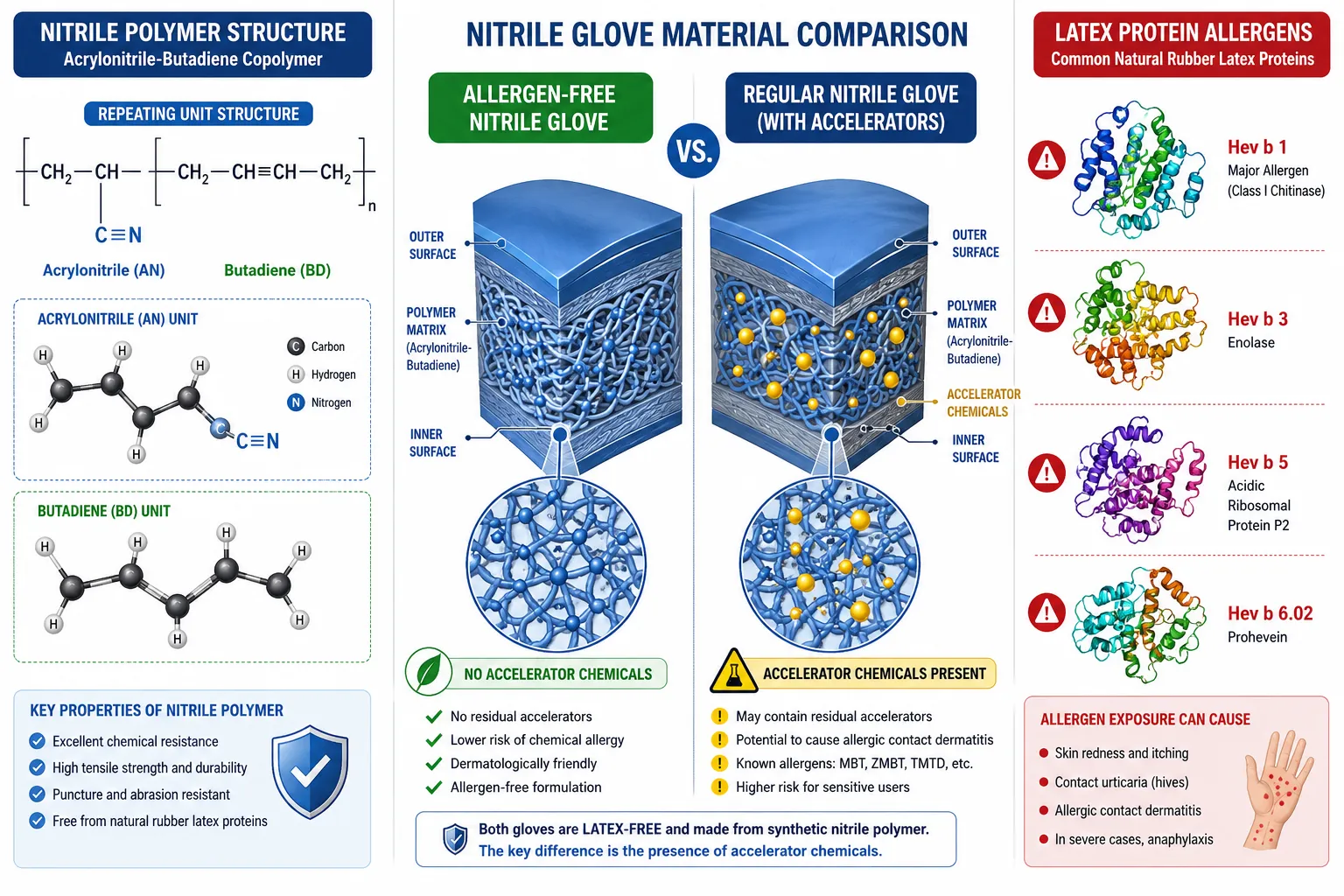
Allergen-free nitrile gloves contain no natural rubber latex proteins, which are the primary allergens in latex gloves that trigger Type I immediate hypersensitivity reactions. Nitrile is a synthetic polymer made from acrylonitrile and butadiene, eliminating the protein allergens responsible for latex anaphylaxis. However, standard nitrile gloves still contain chemical accelerators used in manufacturing that can cause Type IV delayed hypersensitivity reactions.
The key difference in truly allergen-free nitrile formulations is the removal or significant reduction of these chemical accelerators:
- Thiurams – most common accelerator causing contact dermatitis
- Carbamates – secondary accelerator linked to skin sensitization
- Thiazoles – less common but still problematic for sensitive individuals
- Mercaptobenzothiazole (MBT) – industrial accelerator that causes delayed reactions
Standard nitrile manufacturing uses these chemicals to speed vulcanization (the process that gives gloves their elasticity and strength). Allergen-free formulations either eliminate these accelerators entirely or reduce them to trace levels below 1 microgram per gram of glove material.
Latex gloves pose two distinct allergy risks: the natural rubber proteins cause immediate allergic reactions (hives, breathing difficulty, anaphylaxis), while the chemical accelerators cause delayed contact dermatitis (redness, itching, cracking skin 24-48 hours after exposure). Allergen-free nitrile eliminates both risks for most users.
Common mistake: Assuming all nitrile gloves are automatically allergen-free because they’re latex-free. Many healthcare workers switched from latex to standard nitrile only to develop new chemical sensitivities from accelerators.
Are Nitrile Gloves Completely Hypoallergenic for People with Latex Allergies
Yes, nitrile gloves are safe for people with latex allergies because they contain no natural rubber latex proteins. The synthetic nitrile polymer (acrylonitrile-butadiene rubber) does not cross-react with latex antibodies, making any nitrile glove suitable for latex-allergic individuals.
However, “hypoallergenic” is not the same as “allergen-free.” A person with latex allergy can safely wear standard nitrile gloves without risk of latex reaction, but they may still develop contact dermatitis from chemical accelerators if they have sensitive skin or existing dermatological conditions.
For latex-allergic individuals, the decision tree is:
- Latex allergy only, no skin sensitivity: Standard nitrile gloves work fine
- Latex allergy plus eczema or sensitive skin: Choose allergen-free or low-accelerator nitrile
- Latex allergy plus known chemical sensitivity: Require accelerator-free nitrile with third-party testing certification
- Acrylonitrile sensitivity (rare): Cannot use any nitrile gloves; must use vinyl or polyethylene alternatives
The term “hypoallergenic” on glove packaging is not regulated and can be misleading. Manufacturers may label standard nitrile as hypoallergenic simply because it lacks latex, even though it contains full levels of chemical accelerators. Look specifically for “low-accelerator,” “accelerator-free,” or “reduced chemical” labeling with supporting test data.
Edge case: Some individuals develop sensitivity to nitrile itself (the base polymer), though this is extremely rare. These workers experience reactions with all nitrile gloves regardless of accelerator content and must switch to vinyl or other alternatives.
Best Allergen-Free Nitrile Gloves for Healthcare Workers with Sensitive Skin
The best allergen-free nitrile gloves for healthcare workers combine low-accelerator formulations with adequate barrier protection and tactile sensitivity for medical procedures. Healthcare applications require gloves that meet ASTM D6319 standards for examination gloves while minimizing chemical irritants.
Top selection criteria for healthcare use:
- Accelerator content below detection limits (less than 1 mcg/g)
- Minimum 3-4 mil thickness for adequate barrier protection
- Textured fingertips for instrument handling and medication administration
- Extended cuff length (9.5-12 inches) for forearm protection during procedures
- Acceptable quality level (AQL) of 1.5 or lower for pinhole defects
- Powder-free formulation to prevent powder-related irritation
Healthcare workers with eczema, psoriasis, or existing hand dermatitis benefit most from allergen-free formulations. Clinical studies following powder ban implementations show that workers with pre-existing skin conditions experience 70-80% improvement in symptoms when switched to low-accelerator nitrile gloves combined with proper hand hygiene protocols.
Choose allergen-free nitrile if:
- You have a history of contact dermatitis from gloves
- You wear gloves more than 4 hours daily
- You have eczema, psoriasis, or chronically dry hands
- You’ve experienced itching, redness, or cracking after glove use
- You work in high-glove-use areas (surgery, ICU, emergency departments)
Stick with standard nitrile if:
- You have no history of skin reactions
- You wear gloves intermittently (less than 2 hours daily)
- Cost is a primary constraint and you have healthy skin
- You need specialized features (chemical resistance, extended length) not available in allergen-free versions
For more information on healthcare-specific glove requirements, see our guide on nitrile surgical and exam gloves for hospitals.
Allergen-Free Nitrile Gloves vs Regular Nitrile Gloves: What’s the Difference
The primary difference between allergen-free and regular nitrile gloves is the chemical accelerator content used during manufacturing. Regular nitrile gloves contain 1-5% chemical accelerators by weight, while allergen-free versions contain less than 0.1% or use alternative curing processes that eliminate accelerators entirely.
Key differences:
| Feature | Regular Nitrile | Allergen-Free Nitrile |
|---|---|---|
| Chemical accelerators | 1-5% thiurams, carbamates | <0.1% or accelerator-free |
| Contact dermatitis risk | Moderate to high for sensitive users | Low to minimal |
| Manufacturing process | Standard sulfur vulcanization | Modified curing or polymer-coated |
| Cost per box (100 count) | $8-12 | $12-18 |
| Puncture resistance | 2-6 mil, standard performance | 2-6 mil, comparable performance |
| Tactile sensitivity | Standard | Comparable or slightly reduced |
| Shelf life | 3-5 years | 3-5 years |
| Availability | Widely available | Limited suppliers, specialty orders |
Performance characteristics remain largely equivalent. Both types meet the same ASTM standards for barrier protection, tensile strength, and elongation. The allergen-free formulations achieve similar mechanical properties through alternative curing methods, polymer coating technologies, or extended vulcanization times that don’t require high accelerator levels.
The manufacturing difference matters most for workers who develop Type IV hypersensitivity reactions. These delayed allergic responses typically appear 24-72 hours after glove exposure, presenting as:
- Red, itchy patches on hands and wrists
- Dry, cracked, or peeling skin
- Small fluid-filled blisters
- Thickened skin with continued exposure
Regular nitrile gloves work perfectly well for the majority of users who don’t have chemical sensitivities. The additional cost of allergen-free versions is only justified when workers experience reactions or have pre-existing conditions that increase sensitivity risk.
Common mistake: Buying allergen-free gloves for an entire facility when only a small percentage of workers need them. Better approach: stock both types and provide allergen-free options to workers who report symptoms or have documented sensitivities.
How Much Do Allergen-Free Nitrile Gloves Cost Per Box
Allergen-free nitrile gloves typically cost $12-18 per 100-count box for standard examination grade, compared to $8-12 for regular nitrile gloves. This represents a 30-50% price premium for the specialized formulation. Prices vary based on thickness, cuff length, texture, and whether gloves are purchased retail or through bulk medical/food service suppliers.
Price breakdown by purchase volume (2026 estimates):
- Single box (100 gloves): $15-18 retail
- Case of 10 boxes (1,000 gloves): $120-150 ($12-15 per box)
- Bulk order 10+ cases: $100-130 per case ($10-13 per box)
- Contract pricing for facilities: $8-12 per box with annual agreements
The cost difference narrows significantly with bulk purchasing. Healthcare facilities and restaurants ordering by the case or pallet can negotiate pricing that brings allergen-free options within 15-20% of standard nitrile costs rather than the 50% premium seen at retail.
Cost-benefit considerations:
For employers, the higher upfront cost often offsets against reduced workers’ compensation claims, decreased absenteeism from hand dermatitis, and lower turnover in high-glove-use positions. Healthcare facilities report that providing allergen-free gloves to affected workers costs less than managing occupational dermatitis cases, which average $2,000-4,000 per worker in medical treatment and lost productivity.
For individual workers purchasing their own gloves, the premium is worthwhile if you experience any skin reactions. A $5 difference per box ($0.05 per glove) is negligible compared to the cost and discomfort of treating contact dermatitis.
Where to find better pricing:
- Medical supply distributors (McKesson, Henry Schein, Medline)
- Food service suppliers (Sysco, US Foods, Restaurant Depot)
- Direct from manufacturers for large orders
- Group purchasing organizations (GPOs) for healthcare facilities
Avoid retail pharmacy pricing, which typically runs 40-60% higher than wholesale channels. For food service applications, see our guide on nitrile gloves for food handling for supplier recommendations.
Why Do My Hands Still Itch When Wearing Nitrile Gloves If They’re Allergen-Free
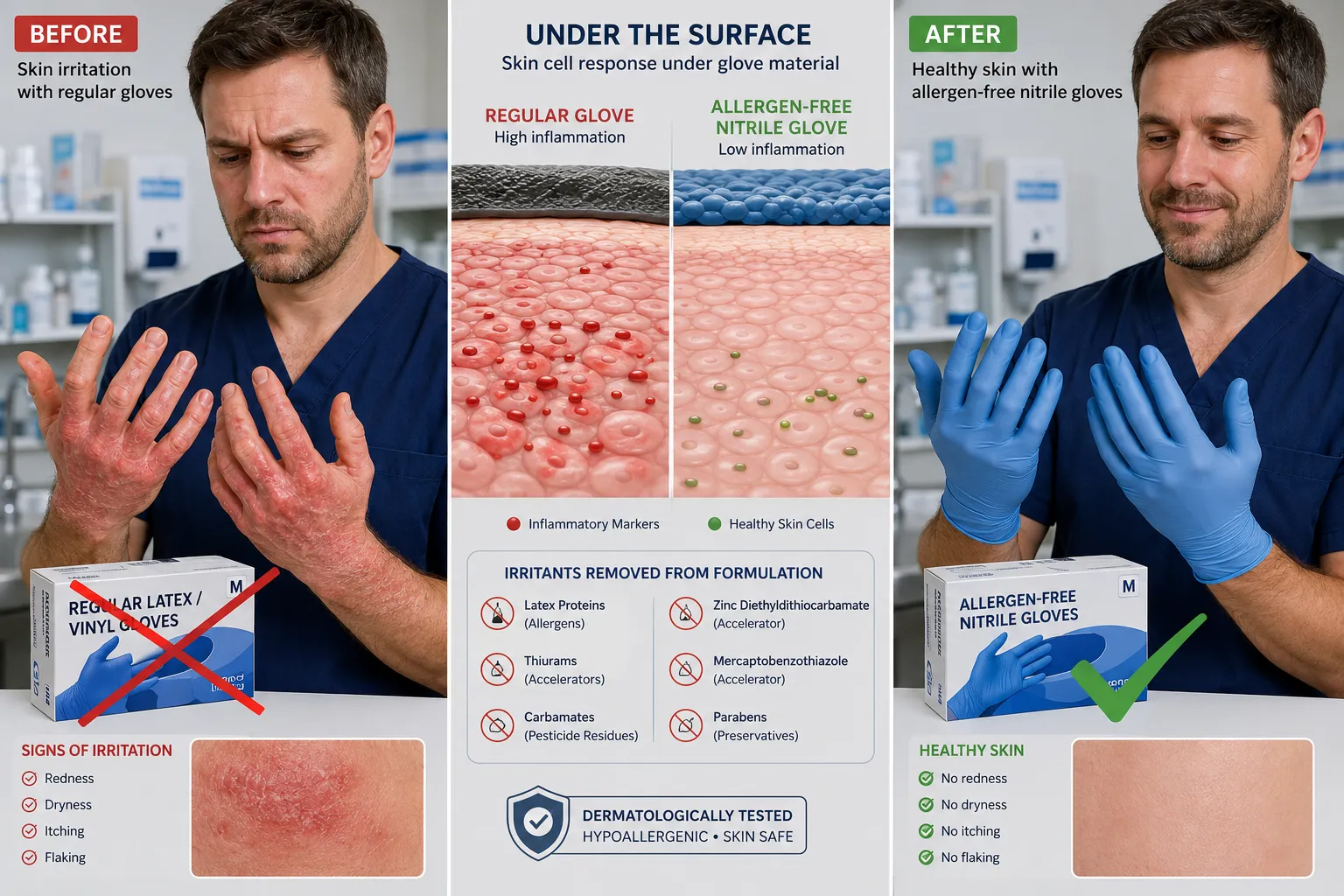
Hands may still itch when wearing allergen-free nitrile gloves due to several non-allergic causes: moisture buildup and maceration, irritant contact dermatitis from hand hygiene products, friction and mechanical irritation, or sensitivity to residual manufacturing chemicals other than accelerators. True allergen-free gloves eliminate chemical accelerators but don’t address these other irritation sources.
Common causes of itching despite allergen-free gloves:
Moisture and occlusion: Wearing gloves for extended periods traps sweat and moisture against skin, causing maceration (softening and breakdown of skin barrier). This creates itching and increases susceptibility to irritants. Solution: Change gloves every 2-3 hours, use cotton glove liners, or apply moisture-wicking hand cream before gloving.
Hand sanitizer and soap reactions: Alcohol-based sanitizers and antimicrobial soaps can irritate skin, especially when trapped under gloves. The irritation is chemical but not allergic. Solution: Allow hands to dry completely after washing, use fragrance-free gentle cleansers, and apply barrier cream.
Mechanical friction: Repeated donning and doffing of gloves, or friction during work tasks, causes physical irritation independent of glove chemistry. Solution: Ensure proper glove sizing (snug but not tight), use textured gloves for better grip with less hand movement.
Residual manufacturing chemicals: Even allergen-free gloves may contain trace amounts of processing aids, mold release agents, or polymer stabilizers. While not classified as allergens, these can irritate sensitive skin. Solution: Try gloves from different manufacturers, as formulations vary.
Pre-existing skin conditions: Eczema, psoriasis, or compromised skin barrier makes hands more reactive to any occlusive covering. The glove itself isn’t causing the problem but exacerbating an underlying condition. Solution: Treat the underlying dermatological condition with appropriate medical care.
Rare nitrile polymer sensitivity: In very rare cases, individuals react to the base nitrile polymer itself (acrylonitrile-butadiene rubber), not the accelerators. This affects less than 1% of glove users. Solution: Switch to vinyl or polyethylene gloves.
Diagnostic approach: If itching persists with allergen-free gloves, try this elimination process:
- Ensure gloves are truly labeled “accelerator-free” or “low-accelerator” with test data
- Reduce wearing time to 1-2 hours and assess if symptoms improve
- Switch hand hygiene products to fragrance-free, gentle formulations
- Try a different brand of allergen-free nitrile gloves
- Test vinyl or polyethylene gloves to rule out nitrile polymer sensitivity
- Consult a dermatologist for patch testing if symptoms persist
Edge case: Some workers develop psychological sensitization after experiencing glove reactions, where the sensation of wearing any glove triggers itching even when no chemical irritation is present. This requires behavioral desensitization rather than different glove selection.
Can Food Handlers with Eczema Safely Use Allergen-Free Nitrile Gloves
Yes, food handlers with eczema can safely use allergen-free nitrile gloves, and these specialized formulations significantly reduce the risk of eczema flare-ups compared to standard gloves. Allergen-free nitrile eliminates chemical accelerators that commonly trigger contact dermatitis in people with compromised skin barriers, making them the preferred choice for food service workers with eczema, psoriasis, or sensitive skin.
Eczema (atopic dermatitis) compromises the skin’s protective barrier, making it more permeable to irritants and allergens. Standard nitrile gloves containing chemical accelerators can penetrate this weakened barrier and trigger inflammatory responses. Studies of food service workers show that those with pre-existing eczema experience 3-4 times higher rates of occupational hand dermatitis when using standard gloves versus allergen-free formulations.
Best practices for food handlers with eczema:
- Use allergen-free or low-accelerator nitrile gloves exclusively
- Apply prescribed eczema medication before work shifts (allow to absorb fully)
- Use fragrance-free barrier cream under gloves after medication absorption
- Change gloves every 2 hours to prevent moisture buildup
- Wash hands with gentle, fragrance-free cleansers (avoid harsh antimicrobial soaps)
- Pat hands dry thoroughly before gloving (never put gloves on damp hands)
- Use cotton glove liners for extended wear periods if permitted by food safety protocols
- Remove gloves during breaks to allow hands to breathe
Food safety regulations require gloves for ready-to-eat food handling, but they don’t specify glove type. Allergen-free nitrile meets all FDA food contact requirements and provides the same barrier protection as standard nitrile. For more details, see our guide on food-safe nitrile gloves.
When to avoid gloves entirely: If eczema is actively weeping, cracked, or bleeding, food handlers should not work with food regardless of glove type, as this poses both a health risk to the worker and a potential contamination risk. Active eczema requires medical treatment before returning to food handling duties.
Choose allergen-free nitrile over vinyl for food service if:
- You need better puncture resistance (nitrile is 3-5 times more puncture-resistant)
- You handle oily or greasy foods (nitrile provides better grip)
- You work with acidic foods (nitrile offers superior chemical resistance)
- You need gloves for tasks beyond food prep (cleaning, sanitizing)
Consider vinyl alternatives if:
- You have confirmed nitrile polymer sensitivity (extremely rare)
- You only handle dry, non-greasy foods for short periods
- Cost is the primary constraint and you need frequent glove changes
What Chemicals Are Removed from Allergen-Free Nitrile Glove Formulations
Allergen-free nitrile glove formulations remove or drastically reduce chemical accelerators used in vulcanization, specifically thiurams, carbamates, thiazoles, and mercaptobenzothiazole (MBT). These accelerators speed the cross-linking process that gives nitrile gloves their elasticity and strength but are responsible for 80-90% of glove-related allergic contact dermatitis cases.
Primary chemicals removed or reduced:
Thiurams (most common allergen)
- Tetramethylthiuram disulfide (TMTD)
- Tetramethylthiuram monosulfide (TMTM)
- Tetraethylthiuram disulfide (TETD)
- Dipentamethylenethiuram disulfide (PTD)
Carbamates (secondary allergens)
- Zinc diethyldithiocarbamate (ZDEC)
- Zinc dibutyldithiocarbamate (ZDBC)
- Sodium diethyldithiocarbamate
Thiazoles
- Mercaptobenzothiazole (MBT)
- Dibenzothiazyl disulfide (MBTS)
- Morpholinylmercaptobenzothiazole (MOR)
Other sensitizers
- Zinc oxide (processing aid)
- Antioxidants (some formulations)
- Certain mold release agents
Standard nitrile gloves contain 1-5% of these chemicals by weight. Allergen-free formulations reduce total accelerator content to less than 0.1% (below 1 microgram per gram of glove material) or eliminate them entirely through alternative manufacturing processes.
Alternative manufacturing methods:
- Extended vulcanization: Longer curing times at lower temperatures reduce accelerator requirements
- Polymer coating: Post-manufacture coating seals residual chemicals inside the glove material
- Accelerator-free curing: Alternative cross-linking agents that don’t cause sensitization
- Chlorination treatment: Surface treatment that reduces extractable proteins and chemicals
The base nitrile polymer (acrylonitrile-butadiene rubber) remains the same. The difference is entirely in the curing agents and processing aids. For more information on nitrile glove composition, see our detailed guide on nitrile glove composition.
Important distinction: Allergen-free formulations remove sensitizing chemicals but retain the base polymer and necessary stabilizers. They are not “chemical-free” (no synthetic glove is), but they eliminate the specific chemicals that cause allergic reactions in sensitive individuals.
Verification: Look for gloves tested to ASTM D7866 (Standard Specification for Nitrile Examination Gloves for Medical Application with Reduced Chemical Allergen Content) or similar European standards (EN 455). Manufacturers should provide extractable protein and chemical allergen test data showing levels below detection limits.
Do Allergen-Free Nitrile Gloves Have the Same Puncture Resistance as Regular Ones
Yes, allergen-free nitrile gloves maintain comparable puncture resistance to regular nitrile gloves when manufactured to the same thickness specifications. Both types must meet identical ASTM D6319 standards for examination gloves, which require minimum tensile strength of 14 MPa and elongation of 500% before breaking. The removal of chemical accelerators does not significantly compromise mechanical performance.
Puncture resistance depends primarily on glove thickness (measured in mils) and the quality of the nitrile polymer, not on accelerator content. A 4-mil allergen-free nitrile glove provides equivalent puncture protection to a 4-mil standard nitrile glove.
Typical puncture resistance by thickness:
- 2-3 mil (thin): Suitable for light-duty tasks, high tactile sensitivity, lower puncture resistance
- 4-5 mil (medium): Standard examination grade, balanced protection and dexterity
- 6-8 mil (thick): Enhanced puncture resistance for high-risk procedures or extended wear
- 8+ mil (heavy-duty): Industrial applications, maximum protection, reduced tactile sensitivity
Some allergen-free formulations may feel slightly different due to alternative curing processes or polymer coatings, but standardized testing shows no clinically significant difference in barrier performance. Studies comparing accelerator-free and standard nitrile gloves found less than 5% variation in puncture resistance, well within normal manufacturing tolerances.
Performance considerations:
- Barrier protection: Equivalent for bloodborne pathogens, bacteria, and most chemicals
- Tensile strength: Comparable when tested to ASTM standards
- Elasticity: Similar stretch and recovery properties
- Grip texture: May vary by manufacturer but not inherently different
- Shelf life: Equivalent 3-5 years when stored properly
Choose thicker allergen-free gloves (6+ mil) if:
- You work in high-risk environments (emergency departments, surgery, trauma care)
- You handle sharps frequently
- You need extended wear time (4+ hours)
- You work with harsh chemicals or cleaning agents
Standard thickness (4-5 mil) works for:
- Routine patient care and examinations
- Food preparation and service
- General laboratory work
- Beauty and personal care services
For more information on how thickness impacts protection, see our guide on nitrile glove thickness and durability.
Common mistake: Assuming allergen-free means weaker protection. The “allergen-free” designation refers only to chemical accelerator content, not mechanical performance. Always check thickness specifications and ASTM compliance rather than making assumptions based on allergen-free labeling.
Where to Buy Allergen-Free Nitrile Gloves in Bulk for Restaurants
Restaurants can purchase allergen-free nitrile gloves in bulk from food service distributors, medical supply wholesalers, and direct from manufacturers. The best pricing comes from establishing accounts with major food service suppliers who offer case pricing (1,000-10,000 gloves) at 30-50% below retail costs.
Primary bulk suppliers for restaurants:
Food service distributors:
- Sysco (national coverage, account required)
- US Foods (regional distribution, competitive pricing)
- Restaurant Depot (cash-and-carry, no membership fee in most locations)
- Gordon Food Service (Midwest and Eastern US)
- Performance Foodservice (regional, good for independent restaurants)
Medical supply wholesalers:
- Medline (food-grade and medical-grade options)
- McKesson (requires business account)
- Henry Schein (medical and food service products)
Online bulk suppliers:
- Uline (industrial and food service supplies, fast shipping)
- WebstaurantStore (restaurant equipment and supplies)
- Amazon Business (bulk pricing with business account)
Direct from manufacturers:
- Ansell (Microflex brand allergen-free line)
- Kimberly-Clark (Purple Nitrile line)
- Ammex (GlovePlus allergen-free options)
Pricing expectations for bulk orders (2026):
- Case of 1,000 gloves (10 boxes): $120-150
- 5 cases (5,000 gloves): $110-140 per case
- 10+ cases (10,000+ gloves): $100-130 per case
- Pallet quantities (50,000+ gloves): $90-120 per case
Purchasing tips for restaurants:
- Establish distributor accounts: Food service distributors offer better pricing than retail and deliver on regular schedules
- Join group purchasing organizations: Independent restaurants can access better pricing through GPOs
- Order by the case: Never buy individual boxes; case pricing saves 20-30%
- Compare food-grade vs. medical-grade: Food-grade allergen-free nitrile costs less and meets all FDA requirements for food contact
- Stock multiple sizes: Order S, M, L, XL to fit all staff (improper fit increases glove usage and waste)
- Calculate usage rates: Track gloves used per shift to optimize order quantities and avoid overstocking
Minimum order quantities:
- Most distributors require minimum orders of $100-250 for delivery
- Cash-and-carry suppliers (Restaurant Depot) have no minimums but require pickup
- Direct manufacturer orders typically require 5-10 case minimums
Storage considerations: Allergen-free nitrile gloves have a 3-5 year shelf life when stored in cool, dry conditions away from direct sunlight. Bulk purchasing is cost-effective if you have adequate storage space and consistent usage rates.
For more information on food safety requirements, see our guide on nitrile gloves for food handling.
Common Mistakes When Switching to Allergen-Free Nitrile Gloves in Healthcare
The most common mistake when switching to allergen-free nitrile gloves in healthcare is assuming all staff need them and ordering them facility-wide, which unnecessarily increases costs by 30-50%. A better approach is targeted distribution to workers with documented sensitivities or high-risk profiles while maintaining standard nitrile for the general population.
Critical mistakes and solutions:
Mistake 1: Not identifying which workers actually need allergen-free gloves
Many facilities switch entire departments without assessing individual needs. This wastes budget on premium gloves for workers who don’t require them.
Solution: Implement a screening process:
- Survey staff about current or past glove-related skin reactions
- Provide allergen-free gloves to workers with eczema, psoriasis, or documented sensitivities
- Stock both types and allow workers to self-select based on their experience
- Monitor workers’ compensation claims for occupational dermatitis patterns
Mistake 2: Confusing “powder-free” with “allergen-free”
Powder-free gloves eliminate cornstarch powder (which was banned in many healthcare settings) but still contain full levels of chemical accelerators. Workers switching from powdered latex to powder-free standard nitrile may still develop reactions.
Solution: Specifically order gloves labeled “low-accelerator,” “accelerator-free,” or “reduced chemical allergen” with ASTM D7866 compliance, not just “powder-free” or “hypoallergenic.”
Mistake 3: Not addressing hand hygiene practices during the transition
Glove-related dermatitis often results from a combination of chemical sensitivity and poor hand hygiene practices (over-washing, harsh soaps, inadequate drying). Switching gloves alone may not resolve symptoms.
Solution: Implement comprehensive hand care protocols:
- Use pH-balanced, fragrance-free hand cleansers
- Ensure hands are completely dry before gloving
- Provide barrier creams for use before shifts
- Educate staff on proper glove donning and doffing techniques
- Encourage regular breaks from glove wear when clinically appropriate
Mistake 4: Inadequate trial period before facility-wide adoption
Ordering large quantities without testing how staff respond to specific brands can result in waste if the chosen gloves don’t work well for your population.
Solution: Conduct a 4-6 week pilot program:
- Order sample cases from 2-3 manufacturers
- Distribute to affected workers and collect feedback
- Assess comfort, fit, durability, and symptom improvement
- Calculate actual cost impact based on usage patterns
- Select the best-performing option before bulk ordering
Mistake 5: Not educating staff about the difference
Workers may not understand why some gloves are designated for specific individuals or may resist using different gloves than their colleagues.
Solution: Provide clear communication:
- Explain the difference between allergen-free and standard formulations
- Emphasize that both types provide equivalent barrier protection
- Make allergen-free gloves available to anyone who requests them
- Avoid stigmatizing workers who need specialized gloves
Mistake 6: Failing to track outcomes
Without measuring the impact of the switch, facilities can’t justify the increased cost or assess whether the intervention is working.
Solution: Monitor key metrics:
- Number of occupational dermatitis reports before and after switch
- Workers’ compensation claims related to glove reactions
- Staff satisfaction surveys about hand health
- Glove usage rates (increased comfort may reduce excessive glove changes)
- Absenteeism related to hand dermatitis
For more information on managing glove-related allergic reactions, see our guide on allergic reactions to nitrile gloves.
Are Powder-Free Nitrile Gloves the Same as Allergen-Free Nitrile Gloves
No, powder-free nitrile gloves are not the same as allergen-free nitrile gloves. Powder-free refers only to the absence of cornstarch powder used to ease donning, while allergen-free refers to the removal or reduction of chemical accelerators that cause contact dermatitis. A glove can be powder-free but still contain full levels of sensitizing chemicals.
The confusion arises because both terms relate to reducing adverse reactions, but they address completely different problems:
Powder-free gloves:
- Remove cornstarch powder coating
- Prevent powder-related respiratory irritation and latex protein aerosolization
- Required in most healthcare settings since powder bans (2016-2017)
- Still contain standard levels of chemical accelerators (1-5%)
- Do not prevent Type IV chemical hypersensitivity reactions
Allergen-free gloves:
- Remove or reduce chemical accelerators (thiurams, carbamates)
- Prevent Type IV delayed hypersensitivity (contact dermatitis)
- May be powdered or powder-free (though most are powder-free)
- Specifically address chemical sensitivity, not powder irritation
- Cost 30-50% more than standard powder-free gloves
Historical context: Healthcare facilities banned powdered gloves because airborne powder particles carried latex proteins throughout facilities, causing respiratory reactions in latex-allergic individuals. The powder ban solved the aerosolization problem but did not address chemical accelerator sensitivity. Many workers who switched from powdered latex to powder-free nitrile subsequently developed new reactions to the accelerators in standard nitrile formulations.
What to look for on packaging:
- “Powder-free” = no cornstarch coating (now standard for most medical gloves)
- “Latex-free” = no natural rubber latex proteins (all nitrile gloves are latex-free)
- “Hypoallergenic” = marketing term with no regulated definition (may or may not be allergen-free)
- “Low-accelerator” = reduced chemical accelerator content (typically <0.1%)
- “Accelerator-free” = no chemical accelerators used in manufacturing
- “ASTM D7866 compliant” = meets standard for reduced chemical allergen content
Decision matrix:
- Powder-free standard nitrile: For workers with no sensitivities, latex-free environment required
- Powder-free allergen-free nitrile: For workers with chemical sensitivities or compromised skin
- Powdered latex: Banned in most healthcare settings, only used in specific industrial applications
- Powder-free latex: For workers who prefer latex feel and have no latex allergy (rare in healthcare now)
Common mistake: Assuming that because your facility switched to powder-free gloves years ago, you’ve already addressed allergen concerns. The powder ban addressed latex protein aerosolization and respiratory issues but did not eliminate chemical accelerator dermatitis.
Who Should Not Use Nitrile Gloves Even If They’re Allergen-Free
Individuals with confirmed acrylonitrile or butadiene sensitivity should not use any nitrile gloves, including allergen-free formulations, because these chemicals form the base polymer of all nitrile rubber. This sensitivity is extremely rare (affecting less than 1% of the population) but requires complete avoidance of nitrile products.
Specific populations who should avoid nitrile gloves:
People with nitrile polymer allergy:
- Confirmed sensitivity to acrylonitrile-butadiene rubber (NBR)
- History of reactions to all nitrile products (gloves, seals, gaskets)
- Positive patch test results for nitrile rubber components
- Must use vinyl, polyethylene, or polychloroprene (neoprene) alternatives
Workers with severe, uncontrolled hand dermatitis:
- Active weeping, cracked, or bleeding skin
- Open wounds or infections on hands
- Should not wear any occlusive gloves until skin heals
- Require medical treatment before returning to glove-required work
Individuals with specific chemical sensitivities:
- Sensitivity to polymer stabilizers or processing aids (not just accelerators)
- Reactions persist even with multiple brands of allergen-free gloves
- May need to try vinyl or polyethylene alternatives
People working in extreme heat environments:
- Nitrile gloves (allergen-free or standard) degrade faster above 100°F (38°C)
- Consider heat-resistant alternatives for high-temperature applications
- Not specific to allergen-free formulations but applies to all nitrile
Rare contraindications:
- Documented allergy to antioxidants or stabilizers used in nitrile manufacturing
- Severe reactions to all synthetic rubber products
- Specific occupational exposures that degrade nitrile (certain solvents, concentrated acids)
How to identify nitrile polymer sensitivity:
If you experience reactions with multiple brands of allergen-free nitrile gloves from different manufacturers, you may have sensitivity to the base polymer rather than accelerators. Symptoms include:
- Reactions occur with all nitrile gloves regardless of accelerator content
- Symptoms appear within minutes to hours (faster than typical accelerator reactions)
- Reactions also occur with other nitrile rubber products (rubber bands, seals)
- Patch testing shows positive reaction to nitrile rubber but not to accelerators
Alternative glove options:
- Vinyl (PVC): Lower cost, adequate for low-risk food service and light-duty tasks
- Polyethylene: Very thin, suitable for food service, minimal protection
- Polychloroprene (neoprene): More expensive, good chemical resistance, latex-free
- Styrene-based synthetic: Newer alternative, limited availability
For more information on glove alternatives, see our comparison of nitrile vs. vinyl gloves.
Testing recommendation: If you suspect nitrile polymer sensitivity, consult a dermatologist for patch testing. Standard patch test panels include nitrile rubber and can definitively diagnose this rare allergy. Don’t assume you have nitrile sensitivity without proper testing, as it’s far more likely that other factors (moisture, friction, residual chemicals) are causing symptoms.
How Long Do Allergen-Free Nitrile Gloves Last During Food Prep Shifts
Allergen-free nitrile gloves typically last 2-4 hours during continuous food preparation work before requiring replacement due to moisture buildup, loss of barrier integrity, or visible contamination. The duration depends on the specific tasks performed, glove thickness, and whether gloves are removed between different food handling activities.
Expected wear time by task intensity:
Light food prep (2-4 hours):
- Assembling sandwiches or salads
- Plating and garnishing
- Handling pre-packaged ingredients
- Dry food handling
- Minimal moisture exposure
Moderate food prep (1-3 hours):
- Washing and cutting vegetables
- Handling raw proteins
- Mixing ingredients
- Working with liquids and sauces
- Frequent hand washing between tasks
Heavy-duty food prep (1-2 hours):
- Butchering or processing raw meat
- Working with hot foods
- Handling acidic ingredients (citrus, tomatoes)
- Cleaning and sanitizing between tasks
- High-moisture environments
Factors that shorten glove life:
- Moisture accumulation: Sweat and humidity inside gloves weaken material and promote bacterial growth
- Mechanical stress: Repetitive gripping, cutting, and handling creates micro-tears
- Temperature exposure: Hot foods or equipment accelerate material degradation
- Chemical contact: Acids, oils, and cleaning agents compromise barrier integrity
- Visible contamination: Cross-contamination risk requires immediate change
Best practices for maximizing glove life and safety:
- Change gloves every 2 hours minimum during continuous wear
- Change immediately when switching tasks (raw to cooked foods, food to non-food)
- Change after any contamination event (touching face, phone, non-food surfaces)
- Remove gloves during breaks to allow hands to dry and breathe
- Inspect gloves regularly for tears, punctures, or visible wear
- Use appropriate thickness (4-5 mil for general food prep, 6+ mil for heavy-duty tasks)
Cost-effective glove management:
Restaurants concerned about the higher cost of allergen-free gloves can optimize usage without compromising safety:
- Train staff on proper glove use to reduce waste
- Use task-based glove changes rather than time-based (change when switching tasks, not arbitrarily)
- Stock multiple thicknesses (use thinner gloves for light tasks, reserve thicker gloves for heavy-duty work)
- Implement hand washing protocols that reduce the need for glove changes
- Calculate actual usage rates to optimize ordering and reduce overstock
Regulatory compliance: Food safety regulations require gloves to be changed when they become contaminated or damaged, but don’t specify exact time limits. The 2-4 hour guideline balances practical durability with hygiene requirements. Some health departments recommend more frequent changes (every hour) for high-risk foods, so check local regulations.
Common mistake: Wearing the same pair of gloves for an entire shift because they “still look clean.” Even intact gloves accumulate bacteria and lose barrier effectiveness after 2-3 hours of continuous wear. The moisture trapped inside gloves creates an ideal environment for bacterial growth, which can contaminate food even if the outside of the glove appears clean.
For more information on food safety practices with gloves, see our guide on nitrile gloves for food handling.
Frequently Asked Questions
Can I develop an allergy to allergen-free nitrile gloves over time?
It’s extremely unlikely to develop an allergy to allergen-free nitrile gloves because they contain minimal or no chemical accelerators, which are the primary sensitizing agents. However, you can develop irritant contact dermatitis from moisture, friction, or hand hygiene products, which is not a true allergy. Rare cases of sensitivity to the base nitrile polymer exist but don’t develop over time; they’re present from first exposure.
Do allergen-free nitrile gloves protect against COVID-19 and other viruses?
Yes, allergen-free nitrile gloves provide the same viral barrier protection as standard nitrile gloves. Both types meet ASTM standards for barrier protection against bloodborne pathogens and viruses. The allergen-free designation refers only to chemical accelerator content and does not affect the glove’s ability to block viral particles.
Can I wash and reuse allergen-free nitrile gloves?
No, allergen-free nitrile gloves are designed for single use and should not be washed and reused. Washing compromises the barrier integrity, introduces contamination risks, and does not effectively sanitize the gloves. Reusing disposable gloves violates food safety and infection control protocols in healthcare and food service settings.
Are allergen-free nitrile gloves biodegradable or recyclable?
Most allergen-free nitrile gloves are not biodegradable and cannot be recycled through standard municipal programs. Some manufacturers offer specialized recycling programs for bulk quantities, but contaminated gloves (used in healthcare or food service) must be disposed of as regular waste or biohazard waste depending on the application. For more information, see our guide on nitrile glove recycling.
How can I tell if my gloves are truly allergen-free?
Look for specific labeling: “low-accelerator,” “accelerator-free,” or “ASTM D7866 compliant” on the packaging. Avoid relying on vague terms like “hypoallergenic” or “sensitive skin.” Reputable manufacturers provide test data showing chemical accelerator levels below 1 microgram per gram. Check the manufacturer’s website for technical specifications and allergen test results.
Will insurance or workers’ compensation cover allergen-free gloves for employees with sensitivities?
Coverage varies by jurisdiction and policy. Some workers’ compensation programs cover allergen-free gloves as a reasonable accommodation for workers with documented occupational dermatitis. Employers may be required to provide appropriate PPE under OSHA regulations if standard gloves cause adverse reactions. Consult your workers’ compensation carrier or occupational health provider for specific guidance.
Can children or people with small hands use allergen-free nitrile gloves?
Yes, allergen-free nitrile gloves are available in extra-small and small sizes suitable for children and adults with smaller hands. Proper fit is essential for both safety and comfort. Gloves that are too large increase contamination risk and reduce dexterity, while gloves that are too tight cause fatigue and may tear more easily.
Do allergen-free nitrile gloves work for people with latex-fruit syndrome?
Yes, allergen-free nitrile gloves are safe for people with latex-fruit syndrome (cross-reactivity between latex and certain fruits like banana, avocado, kiwi). This syndrome is caused by latex proteins, which are completely absent from all nitrile gloves. The allergen-free designation provides additional protection against chemical accelerator sensitivity but is not specifically related to latex-fruit syndrome.
How should I store allergen-free nitrile gloves to maximize shelf life?
Store allergen-free nitrile gloves in a cool, dry location away from direct sunlight, heat sources, and ozone-generating equipment. Ideal storage temperature is 50-70°F (10-21°C) with humidity below 80%. Keep gloves in original packaging until use. Properly stored allergen-free nitrile gloves maintain quality for 3-5 years from manufacture date.
Are there allergen-free nitrile gloves specifically designed for people with eczema?
While there are no gloves specifically marketed for eczema, allergen-free or low-accelerator nitrile gloves are the best choice for people with eczema because they eliminate the chemical accelerators that commonly trigger flare-ups in compromised skin. Some manufacturers offer “dermatologically tested” lines with additional polymer coatings that further reduce skin contact with residual chemicals. Combine allergen-free gloves with proper hand care (barrier creams, gentle cleansers, frequent breaks from glove wear) for best results.
Can I use allergen-free nitrile gloves for cleaning with harsh chemicals?
Allergen-free nitrile gloves provide the same chemical resistance as standard nitrile gloves and are suitable for most cleaning applications. However, check the manufacturer’s chemical compatibility chart for specific cleaners you use. Nitrile offers good resistance to most common cleaning agents, oils, and solvents but may degrade with prolonged exposure to ketones, strong acids, or concentrated oxidizers. For heavy-duty chemical work, consider thicker gloves (6-8 mil) regardless of allergen-free status.
Do allergen-free nitrile gloves come in different colors?
Yes, allergen-free nitrile gloves are available in multiple colors including blue, purple, black, white, and green. Color coding helps facilities designate gloves for specific tasks (blue for general use, purple for food allergen handling, black for non-food tasks). The color does not affect allergen-free properties or performance; it’s purely for organizational purposes.
Conclusion
Allergen-Free High-Performance Nitrile Gloves: Formulations for Sensitive Healthcare and Food Workers represent a significant advancement in occupational health for workers with chemical sensitivities, eczema, or compromised skin barriers. By removing or drastically reducing chemical accelerators like thiurams and carbamates, these specialized formulations eliminate the primary cause of glove-related contact dermatitis while maintaining the puncture resistance, barrier protection, and tactile sensitivity required for medical and food service applications.
The key to successful implementation is understanding that allergen-free gloves serve a specific population rather than being necessary for all workers. Healthcare facilities and food service operations achieve the best outcomes by conducting targeted screening to identify workers who genuinely need allergen-free formulations, implementing comprehensive hand care protocols alongside glove selection, and monitoring outcomes to justify the 30-50% cost premium.
Actionable next steps:
Assess your current situation: Survey workers about glove-related skin reactions and identify those with eczema, psoriasis, or documented sensitivities who would benefit from allergen-free formulations.
Verify product specifications: When purchasing, look specifically for “low-accelerator,” “accelerator-free,” or “ASTM D7866 compliant” labeling rather than relying on vague “hypoallergenic” claims.
Conduct a pilot program: Order sample cases from 2-3 manufacturers and test with affected workers for 4-6 weeks before committing to bulk orders.
Implement proper hand care protocols: Combine allergen-free gloves with gentle hand hygiene practices, barrier creams, and regular breaks from glove wear for maximum benefit.
Establish bulk purchasing relationships: Contact food service distributors or medical supply wholesalers to access case pricing that brings costs within 15-20% of standard nitrile rather than the 50% retail premium.
Monitor and measure outcomes: Track occupational dermatitis reports, workers’ compensation claims, and staff satisfaction to demonstrate the value of the investment.
Educate your team: Ensure workers understand the difference between powder-free, latex-free, and allergen-free designations so they can make informed choices about their hand protection.
For workers experiencing persistent reactions despite using allergen-free gloves, consult a dermatologist for patch testing to rule out rare nitrile polymer sensitivity or identify other contributing factors like moisture buildup or hand hygiene product reactions. The goal is comfortable, safe hand protection that allows healthcare and food service professionals to perform their essential work without compromising their skin health.
For additional guidance on selecting appropriate gloves for your specific application, explore our resources on disposable gloves for sensitive skin and managing allergic reactions to gloves.
SEO Meta Title: Allergen-Free Nitrile Gloves for Sensitive Healthcare Workers