Last updated: June 29, 2026
Quick Answer
The Global Nitrile Gloves Production Boom is driven by Asia Pacific manufacturers expanding capacity to meet projected demand that could exceed 800 billion units by 2035. Malaysia, Thailand, Vietnam, and China dominate production through established supply chains, lower labor costs, and proximity to raw material sources. Healthcare, food service, and industrial sectors are fueling this surge as nitrile gloves replace latex alternatives due to superior chemical resistance and allergen-free properties.
Key Takeaways
- Asia Pacific produces over 70% of the world’s nitrile gloves, with Malaysia and Thailand leading manufacturing capacity
- Global demand is projected to grow at 8-10% annually through 2035, driven by healthcare expansion, food safety regulations, and industrial applications
- Nitrile gloves offer superior chemical resistance and eliminate latex allergy risks, making them the preferred choice for medical and industrial use
- Raw material availability, particularly acrylonitrile and butadiene, remains adequate but requires strategic sourcing partnerships
- Automation and advanced manufacturing technologies are increasing production efficiency by 30-40% in major facilities
- Environmental concerns around disposal and production waste are driving innovation in biodegradable nitrile formulations
- Quality certifications including ISO 13485, ASTM D6319, and EN 455 ensure Asia Pacific manufacturers meet international safety standards
- Price stabilization is expected by 2030 as new capacity comes online, with costs potentially decreasing 15-20% from 2026 levels
- Industries beyond healthcare including automotive, electronics, food processing, and pharmaceuticals will account for 45% of demand by 2035
- Competition from other regions remains limited due to Asia Pacific’s established infrastructure, skilled workforce, and cost advantages
What Is Driving the Surge in Nitrile Gloves Demand by 2035
Multiple converging factors are propelling nitrile glove demand toward unprecedented levels by 2035. Healthcare sector expansion in emerging markets, aging populations requiring more medical care, and stricter infection control protocols are primary drivers. The World Health Organization’s emphasis on universal precautions has made disposable gloves standard practice across all patient interactions.
Beyond healthcare, food safety regulations worldwide now mandate glove use in food preparation and processing. The U.S. Food and Drug Administration and European Food Safety Authority have tightened requirements, pushing food service establishments to adopt single-use gloves. This regulatory shift affects millions of restaurants, catering services, and food manufacturing facilities globally.
Industrial applications are expanding rapidly. Electronics manufacturing requires contamination-free environments where nitrile gloves protect both workers and sensitive components. Automotive repair shops use nitrile gloves for chemical resistance when handling oils, solvents, and cleaning agents. Pharmaceutical production facilities require sterile glove use throughout manufacturing processes.
Key demand drivers include:
- Population growth in developing nations with expanding healthcare infrastructure
- Increased awareness of cross-contamination risks in food handling
- Growing pharmaceutical and biotechnology sectors requiring cleanroom protocols
- Automotive and manufacturing industries adopting stricter worker safety standards
- Beauty and personal care services requiring hygienic practices
- Pandemic preparedness stockpiling by governments and healthcare systems
The shift away from latex gloves due to allergy concerns has accelerated nitrile adoption. Approximately 8-12% of healthcare workers develop latex sensitivity, making nitrile the safer alternative. This transition alone represents billions of units in substitution demand.
Choose nitrile over latex if your application involves chemical exposure, requires allergen-free materials, or needs superior puncture resistance. For more details on material differences, see our comparison of nitrile versus latex resistance to petroleum-based oils.
Why Is Asia Pacific the Main Producer of Nitrile Gloves
Asia Pacific dominates global nitrile glove production because of established manufacturing ecosystems, competitive labor costs, and strategic proximity to raw material suppliers. Malaysia alone accounts for approximately 65% of global production capacity, with Thailand contributing another 15-20%. These countries built specialized industrial zones dedicated to glove manufacturing over the past three decades.
Labor cost advantages remain significant. Manufacturing wages in Malaysia and Thailand are 60-70% lower than in Western countries, allowing producers to maintain competitive pricing while investing in automation. Skilled workers with decades of experience in glove production provide quality consistency that newer manufacturing regions struggle to match.
Raw material access provides strategic advantages. Acrylonitrile and butadiene, the primary components of nitrile rubber, are produced in petrochemical facilities across Asia Pacific. Shorter supply chains reduce transportation costs and lead times. Malaysia’s Port Klang and Thailand’s Laem Chabang port facilitate efficient export to global markets.
Regional advantages include:
- Established supply chains with chemical suppliers, equipment manufacturers, and logistics providers
- Government incentives including tax breaks, infrastructure investment, and streamlined regulatory approval
- Concentrated technical expertise in polymer chemistry and manufacturing processes
- Economies of scale allowing bulk purchasing of raw materials at favorable rates
- Reliable electrical power and water supply essential for continuous production
- Quality control systems meeting international certification standards
Vietnam and China are expanding capacity rapidly. Vietnam offers even lower labor costs and is attracting investment from Malaysian manufacturers seeking to diversify production locations. China’s domestic market growth drives local production expansion, though much of Chinese output serves internal demand rather than export markets.
The region’s manufacturing infrastructure includes specialized equipment suppliers, mold makers, and maintenance service providers. This ecosystem reduces downtime and allows rapid capacity expansion when demand surges. New facilities can become operational within 18-24 months compared to 36-48 months in regions without established support networks.
Nitrile Gloves vs Latex Gloves: Which Is Better for Medical Use
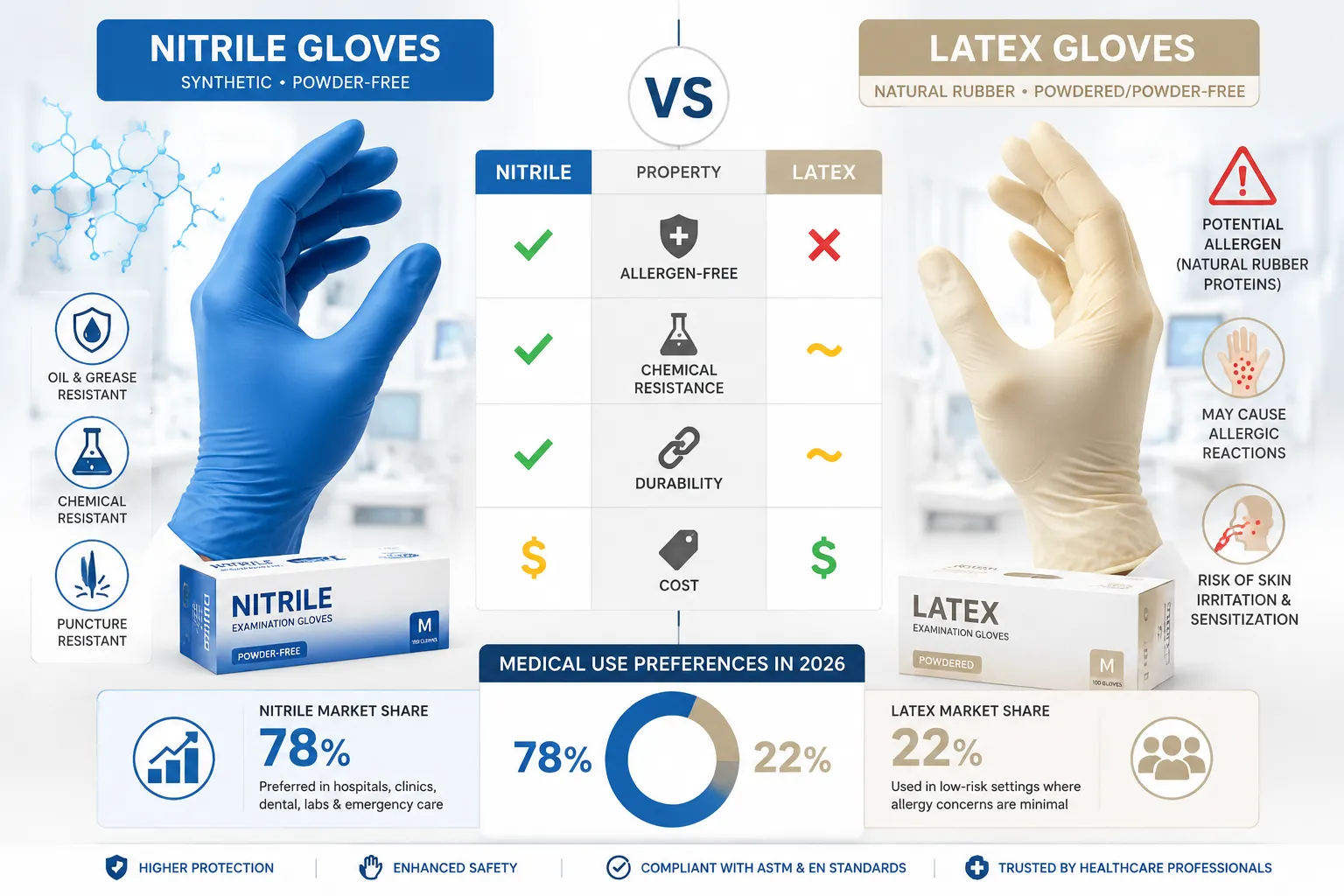
Nitrile gloves are superior for medical use in most applications because they eliminate latex allergy risks, provide better chemical resistance, and offer comparable tactile sensitivity. Healthcare facilities increasingly specify nitrile as the standard for examination and surgical procedures. The only scenario where latex maintains advantages is in surgical applications requiring maximum elasticity and tactile feedback, though high-quality nitrile now matches these properties.
Performance comparison:
| Property | Nitrile Gloves | Latex Gloves |
|---|---|---|
| Allergen Risk | None (synthetic) | High (natural proteins) |
| Chemical Resistance | Excellent (oils, solvents, most chemicals) | Poor to moderate |
| Puncture Resistance | Superior (3x stronger) | Good |
| Tactile Sensitivity | Excellent (improves with wear) | Excellent |
| Elasticity | Very good | Superior |
| Shelf Life | 5+ years | 3 years |
| Cost | Moderate (decreasing) | Lower |
| Biodegradability | Limited | Better |
Nitrile’s chemical resistance makes it essential for handling chemotherapy drugs, disinfectants, and laboratory reagents. Latex gloves degrade rapidly when exposed to petroleum-based products, alcohols, and many cleaning agents. This limitation makes latex unsuitable for many medical procedures involving chemical exposure.
Puncture resistance matters in high-risk environments. Nitrile gloves withstand needle sticks and sharp instrument contact better than latex. Studies show nitrile reduces puncture incidents by 40-50% compared to latex in surgical settings. This protection is critical when handling contaminated sharps or performing invasive procedures.
The allergen-free property of nitrile protects both healthcare workers and patients. Latex allergies can cause reactions ranging from contact dermatitis to life-threatening anaphylaxis. Hospitals that switched to nitrile reported 90% reductions in glove-related allergic reactions among staff.
Common mistake: Assuming all nitrile gloves provide equal protection. Thickness, manufacturing quality, and certification standards vary significantly. Medical-grade nitrile must meet ASTM D6319 standards for examination gloves or ASTM D3578 for surgical gloves. Always verify certification before purchasing for medical applications. Learn more about appropriate thickness for different applications.
How Much Will Nitrile Glove Prices Change by 2035
Nitrile glove prices are expected to decrease 15-25% from 2026 levels by 2035 as new production capacity comes online and manufacturing efficiency improves through automation. Current prices reflect the post-pandemic capacity expansion and raw material cost stabilization. Industry analysts project prices will reach equilibrium around 2030 before gradual declines through 2035.
Price dynamics depend on several factors. Raw material costs for acrylonitrile and butadiene fluctuate with crude oil prices, typically representing 40-45% of production costs. As petrochemical production increases globally and alternative sourcing develops, input cost volatility should moderate. Long-term supply contracts between glove manufacturers and chemical suppliers will further stabilize pricing.
Automation investments are reducing labor costs per unit. Advanced production lines can operate with 30-40% fewer workers while increasing output by 25-35%. Malaysian manufacturers are investing heavily in robotics for packaging, quality inspection, and material handling. These efficiency gains translate to lower unit costs even as wages increase in producing countries.
Price trend factors:
- Production capacity additions of 200-300 billion units annually through 2030
- Automation reducing labor costs by 20-30% in modern facilities
- Competition from new entrants in Vietnam, India, and Indonesia
- Raw material price stabilization through diversified sourcing
- Economies of scale as individual facilities expand to 40-50 billion units annually
- Currency fluctuations affecting export pricing from Asia Pacific producers
Market oversupply risk exists if demand growth slows while capacity expansion continues. The 2022-2023 period saw temporary price crashes when pandemic-driven demand normalized faster than expected. Manufacturers learned from this experience and are now matching capacity additions more carefully to projected demand growth.
Bulk purchasing will offer significant discounts. Large healthcare systems and distributors negotiating multi-year contracts can secure prices 25-35% below spot market rates. Smaller buyers should consider group purchasing organizations to access volume pricing.
Edge case: Specialty nitrile gloves for specific applications (chemical-resistant, extended cuff, textured grip) will maintain premium pricing. These represent 15-20% of the market and serve applications where standard examination gloves are inadequate. Premium products may see only 5-10% price decreases by 2035.
Which Countries in Asia Pacific Produce the Most Nitrile Gloves
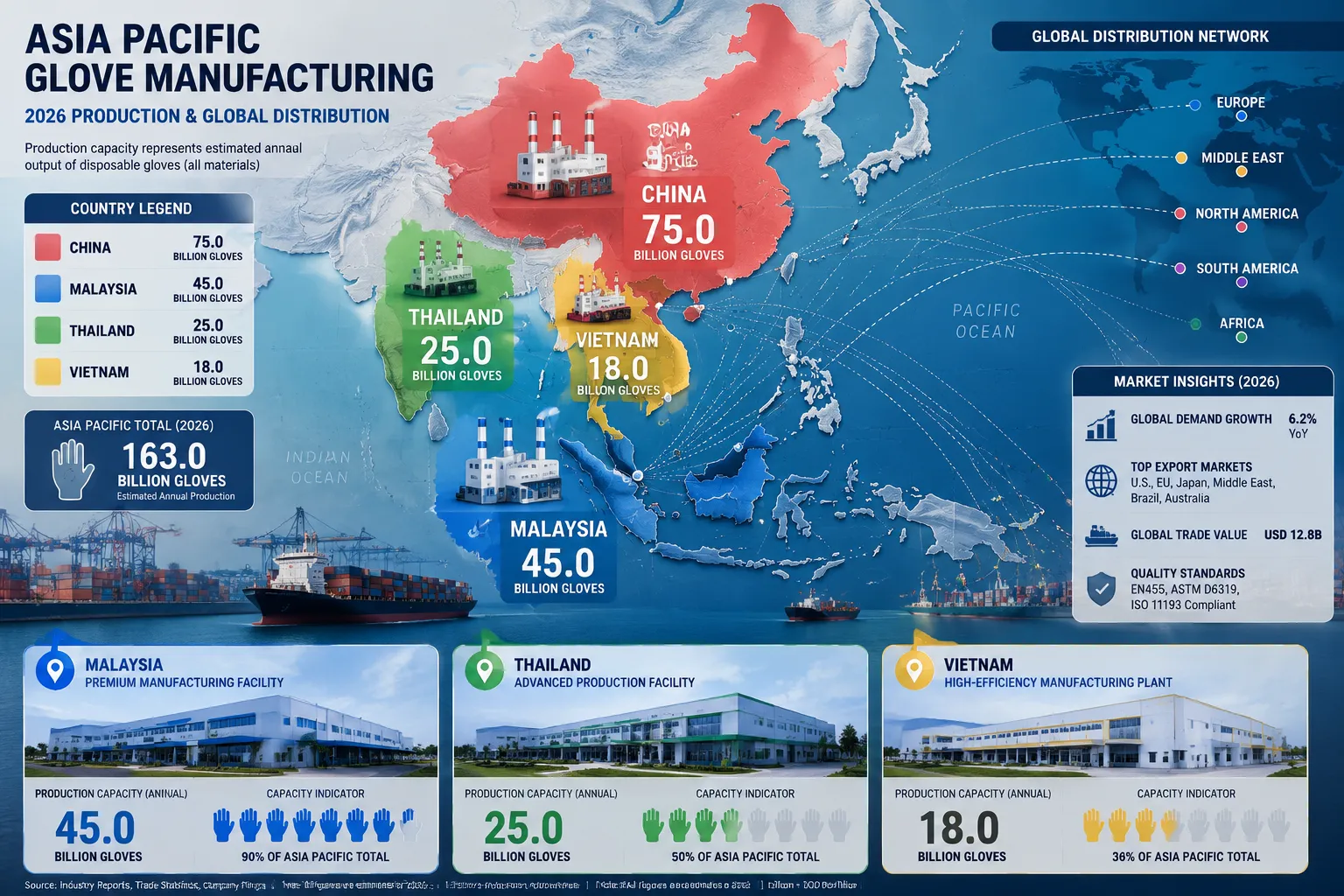
Malaysia produces approximately 220-240 billion nitrile gloves annually in 2026, representing 60-65% of global output. Thailand manufactures 50-60 billion units (15-18% of global production), while Vietnam and China each produce 20-30 billion units. These four countries account for over 90% of Asia Pacific production and 75-80% of worldwide supply.
Top producing countries and key manufacturers:
Malaysia:
- Top Glove Corporation (world’s largest, 90+ billion units annually)
- Hartalega Holdings (specialized in advanced manufacturing, 40+ billion units)
- Supermax Corporation (35+ billion units)
- Kossan Rubber Industries (30+ billion units)
- Production concentrated in Selangor, Negeri Sembilan, and Perak states
- Government support through Malaysian Rubber Board and investment incentives
Thailand:
- Sri Trang Gloves (25+ billion units)
- Srithai Superware (15+ billion units)
- Multiple mid-size manufacturers (5-10 billion units each)
- Production centered in Songkhla, Phuket, and Rayong provinces
- Strong domestic rubber production supporting raw material supply
Vietnam:
- Rapidly expanding capacity with Chinese and Malaysian investment
- Targeting 40-50 billion units by 2030
- Lower labor costs attracting new facility construction
- Government prioritizing medical device manufacturing
China:
- Primarily serves domestic market (1.4 billion population)
- Blue Sail Medical, Intco Medical, and Zhonghong Pulin leading producers
- Export capacity limited but growing
- Focus on vertical integration from raw materials to finished products
Malaysia’s dominance stems from 40+ years of glove manufacturing experience. The country developed specialized technical schools training workers in polymer chemistry, quality control, and production management. This skilled workforce cannot be quickly replicated in emerging production regions.
Infrastructure advantages include dedicated industrial parks with reliable power, water treatment facilities, and waste management systems. Malaysia’s glove manufacturers invested billions in automation and cleanroom facilities meeting international standards. This capital investment creates high barriers to entry for competitors.
Thailand benefits from natural rubber production leadership, though nitrile is synthetic. The country’s rubber industry expertise translated effectively to synthetic glove manufacturing. Thai producers focus on premium segments including surgical gloves and specialized industrial products.
Can Other Regions Compete with Asia Pacific in Nitrile Glove Manufacturing
Other regions face significant challenges competing with Asia Pacific in nitrile glove manufacturing due to established infrastructure, cost structures, and technical expertise concentrated in Southeast Asia. However, limited competition is emerging in specific market segments and geographic regions prioritizing supply chain resilience.
North American and European manufacturers focus on niche markets rather than commodity examination gloves. U.S. producers like Showa Group and Ansell (Australian-owned, U.S. facilities) manufacture premium industrial gloves, chemical-resistant gloves, and specialized products where quality commands higher prices. These segments represent 10-15% of the market but generate 25-30% of industry profits.
Barriers to competition include:
- Capital requirements of $200-500 million for a competitive-scale facility (30+ billion units annually)
- Labor costs 3-5 times higher than Asia Pacific in developed countries
- Lack of specialized equipment suppliers and maintenance expertise
- Longer regulatory approval timelines for medical device manufacturing
- Limited access to competitively priced raw materials
- Absence of trained workforce with glove manufacturing experience
Regional production initiatives are emerging for strategic reasons. The U.S. government’s pandemic response highlighted supply chain vulnerabilities when Asian exports were constrained. Federal programs now incentivize domestic production through procurement guarantees and infrastructure grants. Several facilities are under construction in the southern United States, though their combined capacity will serve only 5-10% of domestic demand.
India is attempting to build nitrile glove manufacturing capacity. The country has petrochemical infrastructure, pharmaceutical manufacturing expertise, and competitive labor costs. However, Indian producers face quality consistency challenges and lack the specialized knowledge base that Malaysian manufacturers developed over decades. Indian production currently serves primarily domestic markets.
Latin American countries including Brazil and Mexico are exploring production. Proximity to North American markets offers logistics advantages, and labor costs are competitive. However, these initiatives remain small-scale and focused on regional markets rather than global export.
Choose regional suppliers if supply chain security, faster delivery, or supporting local manufacturing outweighs cost considerations. For commodity examination gloves where price is paramount, Asia Pacific producers will remain dominant through 2035 and beyond.
What Are the Environmental Concerns with Increased Nitrile Glove Production
Environmental concerns with increased nitrile glove production center on non-biodegradable waste accumulation, energy-intensive manufacturing processes, and chemical byproducts from production. Global consumption of 400+ billion nitrile gloves annually in 2026 generates approximately 2-3 million tons of waste, with projections reaching 5-6 million tons by 2035. Most nitrile gloves end up in landfills or incinerators because recycling infrastructure is limited.
Nitrile rubber takes 100+ years to decompose naturally. Unlike latex, which is a natural material that biodegrades within 5-10 years, synthetic nitrile persists in the environment. Single-use gloves compound the problem because they’re contaminated after use, making recycling impractical in most applications. Healthcare waste regulations often require incineration, which releases carbon dioxide and potentially toxic compounds if combustion is incomplete.
Manufacturing processes consume significant energy and water. Producing one ton of nitrile gloves requires approximately 15-20 megawatt-hours of electricity and 50-80 cubic meters of water for cooling, cleaning, and processing. Scaling to meet 2035 demand will increase energy consumption by 60-80% from current levels. Most production facilities in Asia Pacific rely on fossil fuel-based electricity, contributing to carbon emissions.
Key environmental challenges:
- Waste volume overwhelming landfill capacity in producing and consuming countries
- Microplastic pollution as degraded gloves break into particles
- Chemical waste from production including unreacted monomers and processing agents
- Carbon footprint from energy-intensive manufacturing and global shipping
- Water pollution from facility discharge if treatment is inadequate
- Packaging waste from individual boxes and shipping materials
Innovative solutions are emerging. Several manufacturers are developing biodegradable nitrile formulations using additives that accelerate decomposition to 3-5 years in landfill conditions. These products cost 15-25% more but appeal to environmentally conscious buyers. Certification standards for biodegradable claims are still evolving, making verification challenging.
Recycling programs are expanding in limited applications. Unused or lightly contaminated gloves from manufacturing and electronics industries can be collected and reprocessed into rubber products like flooring, playground surfaces, and automotive components. However, contaminated medical gloves remain unsuitable for recycling due to infection control requirements.
Manufacturers are improving production efficiency to reduce environmental impact per unit. Advanced formulation chemistry reduces raw material waste by 10-15%. Closed-loop water systems recycle 80-90% of process water. Solar panel installations at Malaysian and Thai facilities are offsetting 15-20% of electricity consumption.
Common mistake: Assuming reusable gloves are always more environmentally friendly. Washing and sterilizing reusable gloves consumes water, energy, and cleaning chemicals. Life cycle analyses show reusable gloves become environmentally preferable only after 50-100 uses, which is impractical for medical applications requiring sterile, single-use products.
Who Are the Biggest Nitrile Glove Manufacturers in Malaysia and Thailand
Malaysia’s Top Glove Corporation is the world’s largest nitrile glove manufacturer, producing 90+ billion units annually across 47 factories. The company holds approximately 25% of global market share and exports to 195 countries. Top Glove operates vertically integrated facilities including raw material compounding, glove manufacturing, and packaging operations. The company invested over $1 billion in automation and capacity expansion between 2020-2025.
Hartalega Holdings pioneered advanced nitrile glove manufacturing in Malaysia. The company developed proprietary production technology that reduces manufacturing time by 30% compared to conventional methods. Hartalega produces 40+ billion gloves annually with focus on premium segments including surgical gloves and specialized examination gloves. Their Next Generation Integrated Glove Manufacturing Complex in Sepang represents the industry’s most automated facility.
Major Malaysian manufacturers:
- Top Glove Corporation: Largest global producer, broad product range, aggressive capacity expansion
- Hartalega Holdings: Technology leader, premium positioning, highest profit margins in industry
- Supermax Corporation: 35+ billion units annually, strong presence in European markets
- Kossan Rubber Industries: 30+ billion units, focus on technical and industrial gloves
- Careplus Group: Mid-size producer, specialized in powder-free examination gloves
Thailand’s Sri Trang Gloves leads production with 25+ billion units annually. The company leverages parent company Sri Trang Agro-Industry’s position as the world’s largest natural rubber producer, though nitrile is synthetic. This rubber industry expertise translates to superior quality control and process management. Sri Trang invested $500+ million in new nitrile capacity between 2021-2025.
Major Thai manufacturers:
- Sri Trang Gloves: Largest Thai producer, quality focus, expanding surgical glove capacity
- Srithai Superware: 15+ billion units, diversified product line including household gloves
- Maxter Glove Manufacturing: Mid-size producer, focus on industrial and chemical-resistant gloves
- Thaigloves: Specialized in extended cuff and heavy-duty industrial applications
These manufacturers maintain quality through rigorous certification. All major producers hold ISO 13485 (medical device quality management), ISO 9001 (quality management systems), and product-specific certifications including ASTM D6319 (examination gloves), EN 455 (European medical glove standards), and FDA 510(k) clearance for U.S. markets.
Manufacturing scale provides competitive advantages. Facilities producing 30+ billion units annually achieve per-unit costs 20-30% lower than smaller competitors. Bulk raw material purchasing, specialized equipment amortization, and process optimization create barriers to entry that protect market leaders.
Vertical integration is increasing. Top manufacturers are backward integrating into nitrile rubber compounding and forward integrating into distribution networks. This control over the supply chain improves margins and ensures quality consistency from raw materials to end users.
Will There Be Enough Raw Materials for Nitrile Gloves Production Boom
Raw material supply for nitrile gloves production appears adequate through 2035 based on current petrochemical capacity and planned expansions. Nitrile rubber (acrylonitrile-butadiene rubber) requires two primary monomers: acrylonitrile and butadiene. Global production capacity for these chemicals exceeds glove manufacturing requirements by comfortable margins, though regional supply chain optimization remains important.
Acrylonitrile global production capacity exceeds 7 million tons annually, with glove manufacturing consuming approximately 400,000-500,000 tons (6-7% of total capacity). The chemical serves multiple industries including plastics (ABS, SAN), acrylic fibers, and adiponitrile for nylon production. Capacity additions in China, Saudi Arabia, and the United States will add 1+ million tons by 2030, ensuring adequate supply for glove demand growth.
Butadiene production capacity exceeds 16 million tons globally, with nitrile glove manufacturing consuming approximately 300,000-400,000 tons (2-3% of capacity). Butadiene is a byproduct of ethylene production in petrochemical crackers. As global ethylene capacity expands to meet plastics demand, butadiene availability increases proportionally. The chemical also serves tire manufacturing, which represents 70% of butadiene consumption.
Supply chain considerations:
- Petrochemical facility locations concentrated in Middle East, Asia, and U.S. Gulf Coast
- Transportation costs favor regional supply chains (Asian glove makers sourcing from Asian chemical producers)
- Long-term supply contracts (3-5 years) provide price stability and guaranteed allocation
- Alternative feedstocks including bio-based acrylonitrile under development but not yet commercial scale
- Strategic inventory management by glove manufacturers maintaining 60-90 days raw material stock
Price volatility presents more concern than absolute availability. Acrylonitrile and butadiene prices fluctuate with crude oil and natural gas costs because they’re derived from petroleum feedstocks. A 50% increase in oil prices typically translates to 30-40% increases in monomer costs. Glove manufacturers manage this risk through hedging strategies and pass-through pricing agreements with large customers.
Quality consistency matters as much as quantity. Nitrile rubber for medical gloves requires high purity with minimal residual monomers and contaminants. Not all chemical producers meet pharmaceutical-grade specifications. Malaysian and Thai glove manufacturers maintain qualified supplier lists and conduct rigorous incoming material testing. This quality focus limits sourcing flexibility but ensures product safety.
Sulfur and other compounding ingredients are readily available. Nitrile glove formulations include accelerators, antioxidants, and processing aids that represent 5-10% of total material weight. These specialty chemicals are produced globally with adequate capacity. For more information on sulfur’s role in nitrile glove manufacturing, see our detailed guide.
Edge case: Geopolitical disruptions could temporarily constrain regional supply. Trade restrictions, sanctions, or conflicts affecting major petrochemical producing regions could force supply chain reconfigurations. Glove manufacturers are diversifying supplier bases across multiple countries to mitigate this risk.
Common Quality Issues with Mass Produced Nitrile Gloves
Common quality issues with mass-produced nitrile gloves include inconsistent thickness, pinholes or tears, inadequate chemical resistance, and sizing variations. These problems typically arise from production speed pressures, inadequate quality control, or cost-cutting measures by lower-tier manufacturers. Reputable producers maintain defect rates below 1.5% through automated inspection and statistical process control.
Pinhole defects represent the most critical quality concern. Microscopic holes compromise barrier protection, allowing pathogen transmission or chemical exposure. Industry standards (ASTM D6319, EN 455) specify maximum acceptable quality levels (AQL) of 1.5 for examination gloves and 0.65 for surgical gloves. This means 1.5% or 0.65% of gloves in a batch may have pinholes. Lower-quality manufacturers may exceed these limits, particularly in budget product lines.
Common defects and causes:
- Pinholes: Contamination on formers (molds), inadequate dipping time, or thin spots in coating
- Tears at cuff or fingertips: Improper stripping from formers, over-curing, or inadequate tensile strength
- Sizing inconsistencies: Former wear, temperature variations, or formulation changes
- Surface tackiness: Incomplete curing, excessive residual chemicals, or inadequate washing
- Discoloration: Oxidation, contamination, or improper storage conditions
- Chemical resistance failure: Incorrect formulation, insufficient nitrile content, or manufacturing shortcuts
Thickness variations affect both protection and tactile sensitivity. Specifications typically allow ±0.02mm variation, but poor process control can produce gloves ranging from 0.04mm to 0.10mm within the same batch. Thin areas compromise puncture resistance while thick areas reduce dexterity. Automated thickness monitoring systems on modern production lines detect and reject out-of-specification products.
Accelerator residues cause allergic reactions in sensitive individuals. While nitrile eliminates latex protein allergies, chemical accelerators used in vulcanization can trigger Type IV hypersensitivity (contact dermatitis). Quality manufacturers use low-accelerator formulations and thorough washing processes to reduce residual chemicals below 100 ppm. Budget products may contain 300-500 ppm, increasing reaction risk. Learn more about potential allergic reactions to nitrile gloves.
Testing and certification verify quality. Reputable manufacturers conduct:
- Water leak testing (inflating gloves to detect pinholes)
- Tensile strength and elongation testing per ASTM D412
- Chemical permeation testing for specific resistance claims
- Biocompatibility testing per ISO 10993
- Shelf life validation through accelerated aging studies
Common mistake: Assuming all certified gloves perform equally. Certification represents minimum standards, not optimal performance. Premium manufacturers exceed minimum requirements by 50-100% in key properties like tensile strength and chemical resistance. Compare technical specifications, not just certification marks, when selecting gloves for critical applications.
Batch-to-batch consistency separates quality manufacturers from commodity producers. Leading companies maintain statistical process control with capability indices (Cpk) above 1.33, ensuring 99.99% of production meets specifications. Lower-tier manufacturers may have Cpk values below 1.0, resulting in significant quality variation.
Are Nitrile Gloves from Asia Pacific Safe and Certified
Nitrile gloves from reputable Asia Pacific manufacturers are safe and meet international certification standards including FDA 510(k) clearance, CE marking for European markets, and ISO 13485 quality management certification. Major producers invest heavily in quality systems and regulatory compliance because export markets demand verified safety. However, quality varies significantly between established manufacturers and smaller, uncertified producers.
FDA registration and 510(k) clearance are required for medical gloves sold in the United States. This process requires manufacturers to demonstrate substantial equivalence to legally marketed devices and maintain quality system regulations (21 CFR Part 820). All major Malaysian and Thai producers hold FDA clearance for their medical-grade product lines. Buyers can verify registration through the FDA’s device database.
Key certifications and standards:
- ASTM D6319: Standard specification for nitrile examination gloves (U.S. market)
- EN 455 (Parts 1-4): European standard for medical gloves covering freedom from holes, physical properties, biocompatibility, and shelf life
- ISO 13485: Medical device quality management system certification
- ISO 9001: General quality management system certification
- FDA 510(k): U.S. market clearance for medical devices
- CE marking: European conformity marking for medical devices
- ASTM D6978: Standard specification for chemical-resistant gloves
Biocompatibility testing ensures gloves don’t cause adverse reactions. ISO 10993 standards require testing for cytotoxicity, sensitization, and irritation. Quality manufacturers conduct these tests on every formulation and maintain documentation for regulatory audits. Products passing biocompatibility testing are safe for prolonged skin contact in medical and food handling applications.
Chemical testing verifies claimed resistance properties. Manufacturers stating resistance to specific chemicals must conduct permeation testing per ASTM F739 or EN 374. This testing measures breakthrough time and permeation rate for each chemical. Reputable producers publish detailed chemical resistance charts based on actual testing rather than generic claims.
Third-party audits provide independent verification. Organizations like SGS, TÜV, and Intertek conduct facility audits and product testing for manufacturers seeking certification. These audits verify quality systems, manufacturing processes, and product performance. Buyers should request third-party test reports for critical applications.
Red flags indicating questionable quality:
- Lack of specific certification marks on packaging
- Prices significantly below market averages (30%+ lower than established brands)
- Inability to provide batch-specific test reports
- Missing or vague technical specifications
- No FDA registration number for medical gloves
- Unfamiliar brand names without verifiable company information
Counterfeit products occasionally enter supply chains. During the pandemic, counterfeit gloves bearing fraudulent certification marks appeared in some markets. Verify authenticity by purchasing from authorized distributors and checking manufacturer databases. Major producers maintain authorized distributor lists on their websites.
Choose certified products from established manufacturers for medical, food handling, and chemical exposure applications. Budget uncertified gloves may be acceptable for light-duty cleaning or non-critical tasks where barrier protection is less critical. For guidance on selecting appropriate gloves for specific industries, see our article on disposable gloves for industrial settings.
What Industries Will Need More Nitrile Gloves by 2035 Besides Healthcare
Industries beyond healthcare will account for approximately 45% of nitrile glove demand by 2035, up from 35% in 2026. Food service and processing, automotive maintenance, electronics manufacturing, pharmaceuticals, and beauty services are experiencing the fastest growth. Regulatory requirements, worker safety awareness, and contamination control needs are driving adoption across diverse sectors.
Food service and processing represent the largest non-medical segment. Restaurants, catering services, food manufacturing plants, and retail food preparation use billions of gloves annually. U.S. food safety regulations increasingly mandate glove use for ready-to-eat food handling. Global quick-service restaurant chains specify nitrile gloves for all food contact to prevent cross-contamination and allergen transfer. This sector will consume an estimated 120-150 billion gloves annually by 2035. Learn more about nitrile gloves for food safety.
Growing industrial applications:
Automotive maintenance and repair: Mechanics use nitrile gloves for protection against oils, solvents, and chemicals. The global automotive aftermarket employs 10+ million technicians, each using 500-1,000 gloves annually. Electric vehicle maintenance requires gloves for high-voltage system work. See our guide on best mechanic nitrile gloves.
Electronics manufacturing: Cleanroom environments require contamination-free glove use. Semiconductor fabrication, smartphone assembly, and computer manufacturing employ millions of workers who change gloves multiple times per shift. Industry growth in Southeast Asia and India is driving regional demand.
Pharmaceutical production: Drug manufacturing requires sterile glove use throughout production processes. Biologics and injectable medications demand the highest quality standards. Pharmaceutical industry expansion in emerging markets is increasing glove consumption by 12-15% annually.
Beauty and personal care services: Hair salons, nail salons, spas, and tattoo parlors use nitrile gloves for hygiene and chemical protection. Coloring agents, nail products, and cleaning chemicals require chemical-resistant gloves. This fragmented industry represents 50+ billion gloves annually. For more on beauty industry applications, see our detailed guide.
Laboratory and research: Academic, government, and commercial laboratories use nitrile gloves for chemical handling and biological safety. Research expansion in biotechnology, materials science, and environmental testing is driving steady demand growth.
Janitorial and sanitation services: Professional cleaning services use gloves for protection against cleaning chemicals and biological hazards. The global commercial cleaning industry employs 20+ million workers with increasing glove usage requirements.
Agriculture and veterinary care: Pesticide application, animal handling, and veterinary procedures require protective gloves. Intensive farming operations and veterinary clinics are adopting disposable gloves to prevent disease transmission. See our article on animal handling glove equipment.
Law enforcement and forensic applications are growing. Crime scene investigation, evidence handling, and forensic laboratory work require gloves that prevent contamination while maintaining tactile sensitivity. For more information, see our guide on why forensic scientists need disposable nitrile gloves.
Industrial safety regulations are expanding glove requirements. OSHA in the United States and equivalent agencies globally are strengthening personal protective equipment mandates. Industries previously using reusable gloves or no gloves are transitioning to disposable nitrile for improved hygiene and safety.
Choose glove specifications based on application requirements. Food service needs powder-free, food-safe certified gloves. Automotive work requires thicker gloves (6-8 mil) with textured grip. Electronics manufacturing demands low-particulate cleanroom gloves. Matching glove properties to specific applications optimizes both protection and cost-effectiveness.
How Does Automation Affect Nitrile Glove Production Capacity in Asia
Automation is increasing nitrile glove production capacity by 30-40% in modern Asia Pacific facilities while reducing labor requirements by 25-35%. Advanced manufacturing lines incorporate robotics for material handling, automated quality inspection systems, and computer-controlled production parameters. These technologies allow 24/7 operation with minimal human intervention, dramatically improving output per facility.
Automated dipping lines represent the core technology advancement. Traditional production requires manual loading of formers (hand-shaped molds) onto production lines. Robotic systems now handle former preparation, dipping, drying, and stripping operations. Computer vision systems monitor coating thickness in real-time, adjusting dip time and formulation to maintain specifications. These systems reduce defect rates by 40-50% compared to manual operations.
Key automation technologies:
- Robotic former handling: Automated loading, cleaning, and maintenance of production molds
- Inline quality inspection: Vision systems detecting pinholes, thickness variations, and surface defects at production speed
- Automated stripping and packaging: Robotic systems removing gloves from formers and preparing them for packaging
- Process control systems: Computer monitoring and adjustment of temperature, humidity, and chemical concentrations
- Predictive maintenance: Sensors monitoring equipment condition and predicting failures before they occur
- Automated material handling: Conveyors and robotic systems moving materials between production stages
Hartalega’s Next Generation facilities demonstrate automation potential. The company’s newest plant produces 40+ billion gloves annually with 40% fewer workers than conventional facilities of similar capacity. Automated systems handle 80% of material movement and quality inspection. The facility operates at 95%+ uptime compared to 75-80% for older plants.
Labor cost savings justify automation investment. A fully automated production line costs $50-80 million compared to $30-40 million for conventional lines. However, annual labor savings of $5-10 million provide payback within 5-7 years. As wages increase in Malaysia and Thailand, automation becomes increasingly attractive.
Quality consistency improves with automation. Human operators introduce variability in dipping time, stripping technique, and quality judgment. Automated systems maintain precise control over every production parameter. This consistency is critical for medical-grade gloves where regulatory standards demand batch-to-batch uniformity.
Production capacity impacts:
- Modern automated facility: 40-50 billion gloves annually per plant
- Conventional facility: 25-30 billion gloves annually per plant
- Capacity increase per dollar invested: 35-45% higher for automated systems
- Defect rate reduction: 40-50% lower with automated inspection
- Energy efficiency: 15-20% improvement through optimized process control
Smaller manufacturers face automation barriers. The capital investment required for advanced automation favors large producers with access to financing and technical expertise. This dynamic is consolidating the industry as smaller players struggle to compete on cost and quality. Mid-size manufacturers are forming partnerships or accepting acquisition offers from industry leaders.
Workforce implications are significant. Automation reduces demand for low-skill production workers while increasing need for technicians, engineers, and maintenance specialists. Malaysian and Thai manufacturers are investing in technical training programs to develop the skilled workforce needed for automated facilities. This transition is raising average wages in the industry while reducing total employment.
Future automation will incorporate artificial intelligence for predictive quality control and production optimization. Machine learning algorithms analyzing production data can identify subtle patterns predicting quality issues before they occur. These systems will further improve efficiency and reduce waste.
Conclusion
The Global Nitrile Gloves Production Boom driven by Asia Pacific manufacturers represents a fundamental shift in global healthcare and industrial supply chains. Malaysia, Thailand, Vietnam, and China have established dominant positions through decades of investment in manufacturing infrastructure, technical expertise, and quality systems. Their combined capacity of 350+ billion units annually in 2026 will expand to 600-800 billion units by 2035 to meet surging demand across healthcare, food service, automotive, electronics, and pharmaceutical sectors.
Asia Pacific’s competitive advantages in labor costs, raw material access, and manufacturing scale create formidable barriers to competition from other regions. While niche producers in North America and Europe serve specialized markets, commodity examination gloves will remain predominantly Asian-produced through 2035 and beyond. Automation investments are further strengthening this position by improving efficiency, quality, and cost competitiveness.
Quality and safety concerns are being addressed through rigorous certification systems and third-party verification. Reputable manufacturers meet international standards including FDA 510(k) clearance, CE marking, and ISO 13485 certification. Buyers should prioritize certified products from established manufacturers for critical applications while understanding that quality varies significantly across the industry.
Environmental challenges require ongoing attention. The industry must develop biodegradable formulations, improve recycling infrastructure, and reduce manufacturing energy consumption. Current initiatives show promise but need acceleration to address the 5-6 million tons of annual waste projected by 2035.
Actionable next steps for stakeholders:
For healthcare facilities and large buyers:
- Establish long-term supply contracts with certified manufacturers to secure pricing and availability
- Diversify supplier base across multiple countries to mitigate geopolitical risks
- Specify detailed quality requirements beyond minimum certification standards
- Implement sustainability criteria in procurement decisions
For manufacturers and investors:
- Invest in automation technologies to maintain cost competitiveness
- Develop biodegradable formulations to address environmental concerns
- Pursue vertical integration to control quality and margins
- Expand capacity strategically based on demand projections rather than speculative growth
For emerging market producers:
- Focus on niche segments and regional markets rather than competing directly with established leaders
- Prioritize quality certification and regulatory compliance from the outset
- Develop specialized products for specific applications
- Build technical expertise through partnerships with equipment suppliers and chemical companies
For end users across industries:
- Match glove specifications to application requirements for optimal protection and cost-effectiveness
- Verify certification and request batch-specific test reports for critical applications
- Consider total cost of ownership including quality, reliability, and supply chain security
- Stay informed about industry developments affecting availability and pricing
The nitrile glove industry’s trajectory through 2035 appears clear: continued growth driven by expanding applications, Asia Pacific manufacturing dominance, improving automation and quality, and gradual price stabilization. Success for all stakeholders depends on balancing cost pressures with quality requirements, addressing environmental impacts, and maintaining supply chain resilience in an increasingly complex global market.
SEO Meta Title: Nitrile Gloves Production Boom: Asia Pacific’s 2035 Role