Last updated: June 29, 2026
Quick Answer
Counterfeit and substandard nitrile gloves can be identified through several quality control red flags: missing or fake certification marks (ASTM, EN, FDA), unusually low prices, excessive tearing during normal use, visible white powder or particles indicating calcium carbonate fillers, inconsistent thickness measurements, and lack of verifiable manufacturer information. Genuine medical-grade nitrile gloves must meet ASTM D6319 standards with minimum thickness of 0.05-0.08mm and pass specific tensile strength tests, while counterfeits often substitute cheaper PVC materials or use excessive fillers that compromise barrier protection.
Key Takeaways
- Genuine nitrile gloves must display clear certification marks including ASTM D6319, EN 455, or FDA registration numbers that can be verified through official databases
- Counterfeit gloves often contain calcium carbonate fillers or PVC substitutes that appear as white particles and significantly reduce chemical resistance and barrier protection
- Medical-grade nitrile gloves should measure 0.05-0.08mm thick for examination gloves and 0.10-0.15mm for surgical gloves, with consistent measurements across the entire glove
- Legitimate manufacturers provide complete traceability including lot numbers, manufacturing dates, and verifiable contact information on packaging
- Price points significantly below market average (typically 30-50% cheaper) indicate potential counterfeits or substandard products
- Simple at-home tests include the stretch test (should elongate 500% before breaking), water fill test (no leaks), and visual inspection under bright light for uniform color and thickness
- Using counterfeit gloves in medical settings violates infection control protocols and exposes healthcare workers and patients to bloodborne pathogens and chemical hazards
- The FDA accepts reports of counterfeit medical gloves through their MedWatch program, and buyers should verify manufacturers through FDA establishment registration databases
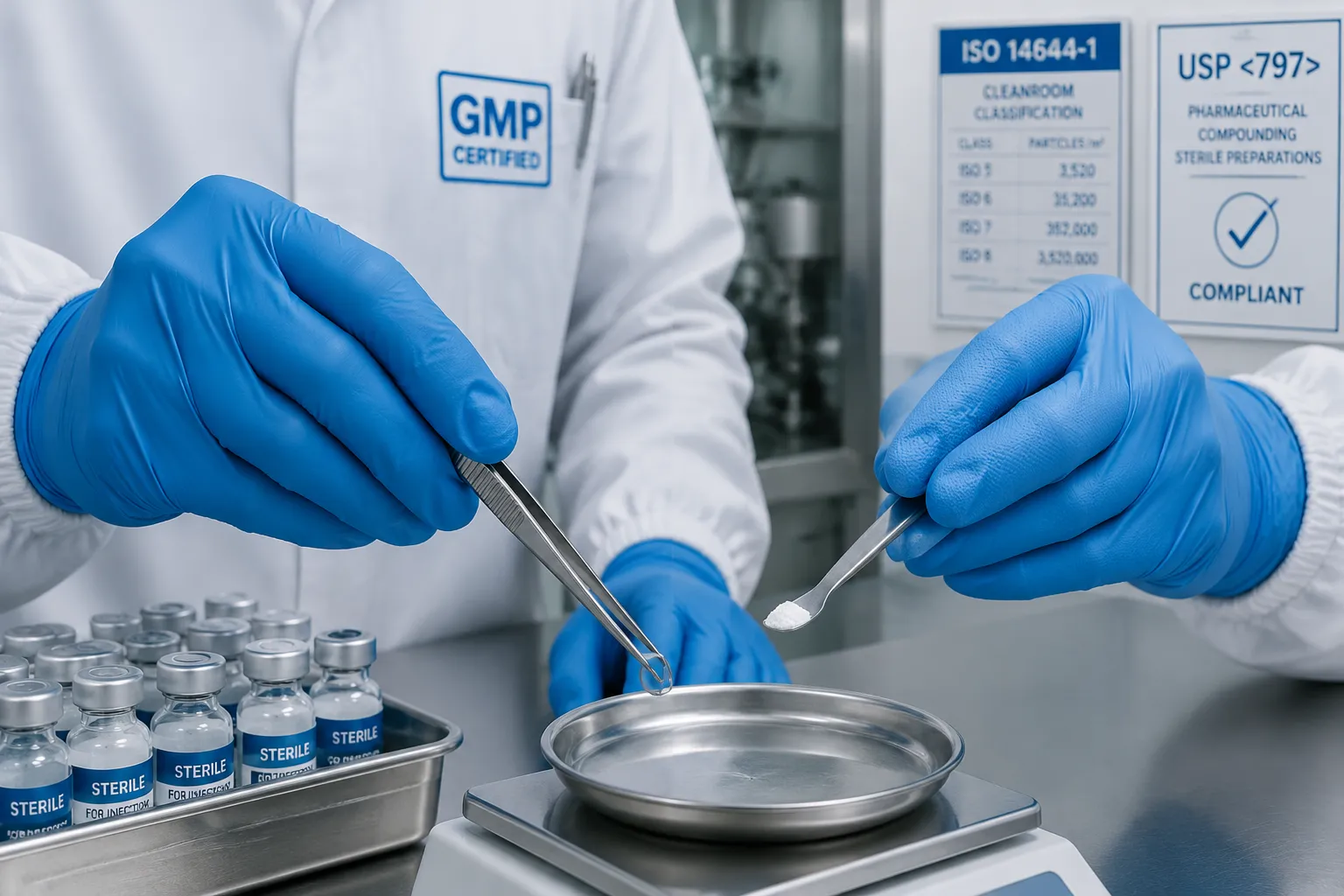
How Can You Tell If Nitrile Gloves Are Counterfeit?
Counterfeit nitrile gloves can be identified by examining certification marks, packaging details, and physical characteristics. Genuine gloves display clear ASTM D6319, EN 455, or ISO 11193 standards printed on boxes with verifiable lot numbers and manufacturing dates, while counterfeits often show blurred printing, misspelled words, or completely missing certification information.
Check these specific indicators:
Certification and Documentation
- Authentic gloves list specific ASTM standards (D6319 for examination gloves, D6977 for surgical gloves)
- FDA establishment registration number should be present and verifiable at FDA.gov
- CE marking for European standards must include a four-digit notified body number
- Lot numbers and expiration dates should be clearly printed, not handwritten or stamped
Physical Packaging Red Flags
- Poor quality printing with faded colors or misaligned text
- Grammatical errors or awkward phrasing in English descriptions
- Missing or incomplete manufacturer contact information
- Boxes that feel flimsy or use low-quality cardboard
- Gloves packaged loosely without proper folding or stacking
Price and Source Verification
- Prices 30-50% below established market rates signal potential counterfeits
- Sellers without verifiable business addresses or proper licensing
- Products sold through unauthorized distributors or unvetted online marketplaces
- Lack of proper invoicing or documentation for bulk purchases
A common mistake buyers make is assuming all gloves sold on major e-commerce platforms are legitimate. Even reputable marketplaces can host third-party sellers offering counterfeit products. Always verify the seller’s credentials and check if they are an authorized distributor for the brand.
What Are the Signs of Fake or Low Quality Nitrile Gloves?
Fake or low-quality nitrile gloves exhibit several physical and performance defects including excessive tearing during donning, visible white particles or powder residue, uneven thickness, strong chemical odors, and poor elasticity. These signs indicate the use of inferior materials, excessive fillers, or improper manufacturing processes.
Visual and Tactile Indicators
- White particles or chalky residue: Indicates excessive calcium carbonate filler used to reduce costs
- Uneven color distribution: Genuine nitrile has consistent color throughout; fakes show streaks or blotches
- Stiff or brittle texture: Quality nitrile feels supple and elastic, not rigid or paper-like
- Strong chemical smell: Authentic nitrile has minimal odor; counterfeits may smell of vinyl or harsh chemicals
- Surface imperfections: Bubbles, dimples, or rough patches indicate poor quality control
Performance Failures
- Tears easily during normal donning (before any work begins)
- Splits at fingertips or stress points with minimal pressure
- Loses elasticity quickly, becoming loose and baggy
- Develops pinholes or micro-tears invisible to naked eye
- Fails to return to shape after stretching
Material Substitution Signs
Some manufacturers substitute PVC (polyvinyl chloride) for genuine nitrile to cut costs. PVC gloves feel stiffer, have less chemical resistance, and often emit a distinct plastic odor. They also tend to yellow or discolor more quickly when exposed to light or heat.
Choose genuine nitrile if you need chemical resistance, durability, and barrier protection for medical or industrial use. Accept lower-grade options only for very light-duty tasks where barrier protection is not critical, but never for medical applications.
Difference Between Genuine and Counterfeit Nitrile Gloves
Genuine nitrile gloves are manufactured from acrylonitrile-butadiene rubber with controlled filler content (typically 10-15% by weight), while counterfeit gloves often contain 30-40% calcium carbonate filler or are made entirely from PVC plastic disguised as nitrile. This material difference directly impacts barrier protection, chemical resistance, and durability.
Material Composition Comparison
| Feature | Genuine Nitrile | Counterfeit/Substandard |
|---|---|---|
| Base material | Acrylonitrile-butadiene rubber | PVC or heavily filled nitrile |
| Filler content | 10-15% calcium carbonate | 30-40% or higher |
| Tensile strength | 14-24 MPa (ASTM D6319) | 6-10 MPa (fails standards) |
| Elongation at break | 500-700% | 200-300% |
| Chemical resistance | Excellent against oils, solvents | Poor, degrades quickly |
| Barrier protection | Passes viral penetration tests | May allow pathogen transmission |
Manufacturing Quality Differences
Genuine manufacturers follow Good Manufacturing Practices (GMP) with:
- Clean room environments to prevent contamination
- Automated quality control systems checking every batch
- Documented testing protocols for tensile strength, barrier integrity, and dimensions
- Traceability systems linking each lot to specific production runs
Counterfeit operations typically lack these controls, resulting in inconsistent quality, contamination risks, and unreliable performance.
Certification and Testing Standards
Authentic nitrile gloves undergo third-party testing to verify compliance with:
- ASTM D6319 (examination gloves)
- ASTM D6977 (surgical gloves)
- EN 455 (European medical glove standards)
- FDA 21 CFR 880.6250 (medical device classification)
Counterfeits either skip testing entirely or falsify test reports. When examining gloves for medical or healthcare applications, always request Certificates of Analysis (CoA) from the manufacturer and verify them with the testing laboratory.
How to Test Nitrile Gloves for Quality at Home
You can perform several simple quality tests at home to assess nitrile glove integrity: the water fill test for leak detection, the stretch test for elasticity and tensile strength, the visual inspection under bright light for uniformity, and the thickness measurement using a digital caliper. These tests reveal major defects but cannot replace laboratory certification.
Water Fill Test (Leak Detection)
- Fill the glove with 1 liter of water
- Hold it suspended for 2 minutes
- Gently squeeze to apply pressure
- Inspect for any water droplets, seepage, or wet spots
- Pass criteria: Zero leaks or moisture penetration
This test identifies pinholes and manufacturing defects. Quality gloves should hold water without any leakage. If water seeps through, the barrier protection is compromised.
Stretch and Elasticity Test
- Put on the glove and make a fist
- Stretch the palm area gently but firmly
- Pull fingertips to extend length
- Release and observe recovery
- Pass criteria: Returns to original shape, no tearing or permanent deformation
Genuine nitrile should stretch to at least 500% of its original length before breaking. If the glove tears during normal stretching or doesn’t recover its shape, it contains excessive fillers or is made from inferior materials.
Visual Inspection Protocol
- Hold glove up to bright LED light or window
- Look for consistent color throughout (no streaks or discoloration)
- Check for uniform thickness (no thin spots or thick patches)
- Inspect for white particles, specks, or powder residue
- Examine edges and cuffs for clean, even cuts
Thickness Measurement
Use a digital caliper (available for under $20) to measure thickness at multiple points:
- Fingertips: Should match stated thickness (typically 0.05-0.08mm for exam gloves)
- Palm area: Usually slightly thicker than fingertips
- Cuff: Thickest area for secure fit
Measurements should vary by no more than 0.01mm across the glove. Greater variation indicates poor quality control.
Chemical Resistance Spot Test
Apply a small amount of isopropyl alcohol (70%) to the glove surface and wait 30 seconds. Quality nitrile shows no degradation, softening, or color change. If the material becomes sticky, swells, or discolors, it likely contains PVC or excessive fillers.
These home tests provide useful screening but cannot verify compliance with medical standards. For critical applications, always purchase gloves with verified third-party testing certificates.
What Certifications Should Real Nitrile Gloves Have?
Real nitrile gloves must carry specific certifications depending on their intended use: ASTM D6319 or D6977 for medical applications in the United States, EN 455 or EN 374 for European markets, and FDA registration for any gloves marketed as medical devices. These certifications verify that gloves meet minimum performance standards for barrier protection, physical properties, and biocompatibility.
United States Certifications
ASTM D6319: Standard specification for nitrile examination gloves for medical application
- Defines minimum tensile strength (14 MPa)
- Sets elongation requirements (500% minimum)
- Establishes acceptable quality levels (AQL) for pinholes
- Required for medical examination gloves
ASTM D6977: Standard specification for powder-free nitrile examination gloves for medical application
- Similar to D6319 but specifically for powder-free variants
- Includes additional requirements for residual powder limits
FDA Registration: All medical glove manufacturers must register with FDA
- Establishment registration number should be verifiable at FDA.gov
- Products must be listed in FDA’s medical device database
- Manufacturers must follow Quality System Regulation (QSR)
European Union Certifications
EN 455 (Parts 1-4): Medical gloves for single use
- Part 1: Requirements and testing for freedom from holes
- Part 2: Requirements and testing for physical properties
- Part 3: Requirements and testing for biological evaluation
- Part 4: Requirements and testing for shelf life determination
EN 374: Protective gloves against dangerous chemicals and micro-organisms
- Required for gloves claiming chemical resistance
- Specifies permeation testing protocols
- Includes pictograms indicating protection levels
International Standards
- ISO 11193: Single-use medical examination gloves
- Part 1: Specification for gloves made from rubber latex or rubber solution
- Part 2: Specification for gloves made from poly(vinyl chloride)
Food Safety Certifications
For gloves used in food handling, look for:
- FDA 21 CFR 177.2600 compliance (food contact substances)
- NSF certification for food equipment
- EU Regulation 1935/2004 and 10/2011 compliance
How to Verify Certifications
- Check the glove box for printed certification marks
- Request Certificate of Conformity (CoC) from supplier
- Verify FDA registration at accessdata.fda.gov/scripts/cdrh/cfdocs/cfRL/rl.cfm
- For CE marks, confirm the four-digit notified body number is legitimate
- Contact the testing laboratory listed on certificates to confirm authenticity
A common mistake is accepting gloves that claim to “meet” or be “equivalent to” standards without actual certification. Phrases like “ASTM-style” or “similar to EN 455” are red flags indicating the gloves have not been formally tested and certified.
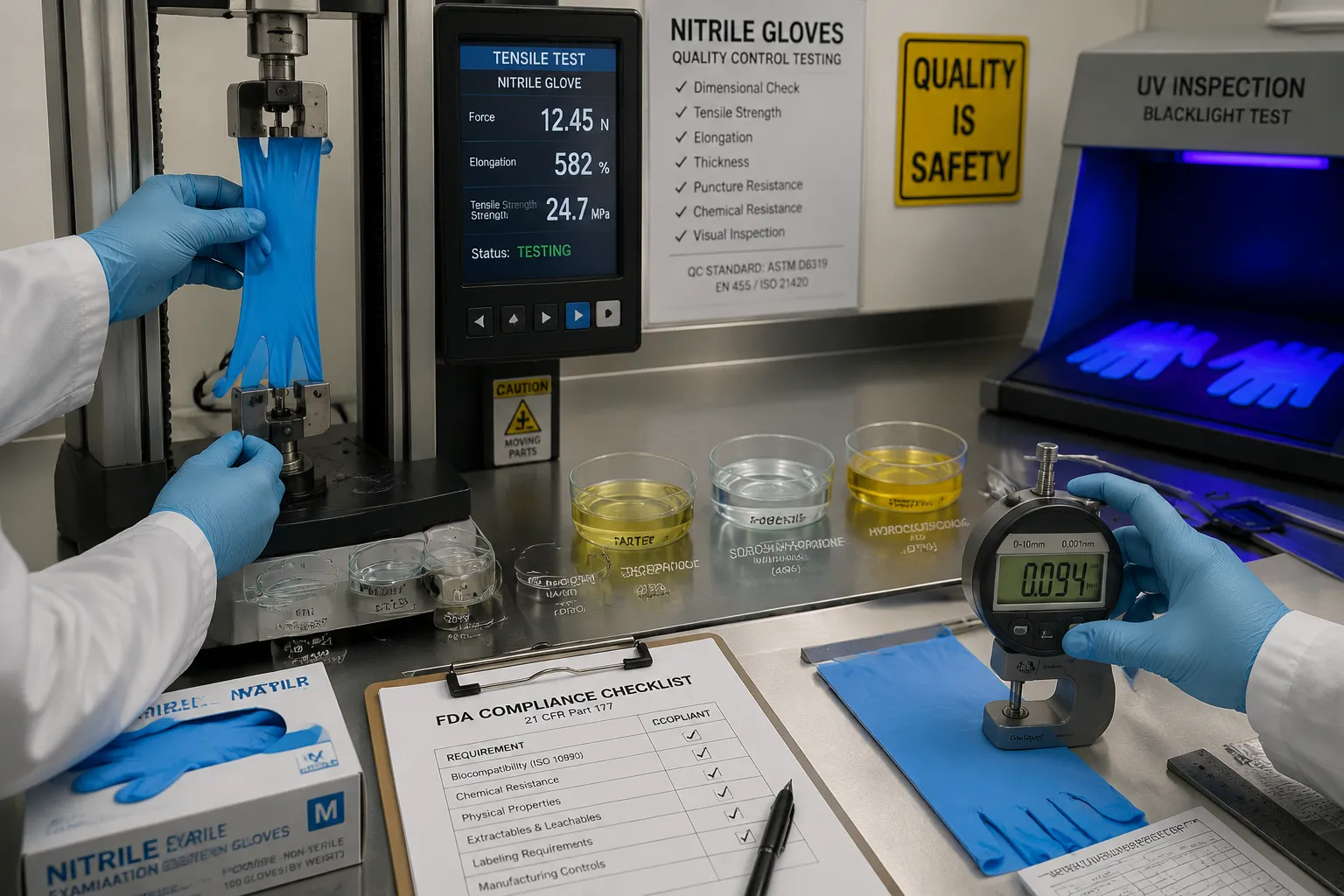
Why Do Some Nitrile Gloves Tear So Easily?
Nitrile gloves tear easily due to three primary factors: excessive calcium carbonate filler content (above 20% by weight), insufficient polymer chain length in the nitrile rubber, or inadequate vulcanization during manufacturing. These defects reduce tensile strength below the ASTM D6319 minimum of 14 MPa, causing gloves to fail during normal use.
Filler Content Problems
Manufacturers add calcium carbonate to reduce costs, but excessive amounts compromise structural integrity:
- 10-15% filler: Acceptable, maintains performance
- 20-25% filler: Noticeable reduction in strength and elasticity
- 30%+ filler: Severe degradation, tears easily, fails standards
High filler content appears as white particles visible when stretching the glove or as chalky residue on hands after use.
Manufacturing Defects
- Incomplete vulcanization: Rubber molecules don’t cross-link properly, resulting in weak polymer chains
- Uneven dipping: Inconsistent thickness creates weak spots that tear under stress
- Contamination: Dust, moisture, or foreign particles in the production line create structural flaws
- Improper curing time: Rushing the manufacturing process prevents proper polymer formation
Material Substitution
Some manufacturers blend nitrile with cheaper materials:
- PVC blends: Significantly less elastic and more prone to tearing
- Recycled nitrile: Shorter polymer chains from reprocessed material
- Low-grade synthetic rubber: Inferior mechanical properties
Storage and Age Factors
Even quality gloves can become brittle and tear easily if:
- Stored in direct sunlight or high heat (above 30°C/86°F)
- Exposed to ozone or oxidizing chemicals
- Past expiration date (typically 3-5 years from manufacture)
- Stored in very low humidity (below 30%)
Choose thicker gloves (6-8 mil) for tasks requiring durability, but understand that thickness alone doesn’t guarantee quality. A thin glove made from quality nitrile with proper filler content will outperform a thick glove made from substandard materials.
Are Cheap Nitrile Gloves from Amazon Real or Fake?
Cheap nitrile gloves sold on Amazon or other online marketplaces may be genuine budget-grade products, counterfeit items with false certifications, or substandard gloves that fail to meet stated specifications. Prices 30-50% below market average (typically below $8-10 per 100-count box in 2026) combined with unknown brand names and third-party sellers are strong indicators of counterfeit or substandard products.
Risk Factors for Online Purchases
High-risk indicators:
- Brand names you cannot find through independent web searches
- Sellers with recently created accounts or limited feedback
- Product descriptions with grammatical errors or vague specifications
- No verifiable manufacturer contact information
- Certification claims without certificate numbers or testing lab details
- Prices significantly below established brands (Kimberly-Clark, Ansell, Medline)
Verification Steps Before Buying
- Check if the seller is an authorized distributor (contact manufacturer directly)
- Search for the brand name and manufacturer independently
- Verify FDA registration number if medical gloves are claimed
- Read recent reviews specifically mentioning tearing, quality issues, or fake concerns
- Compare prices across multiple legitimate medical supply distributors
- Request Certificates of Analysis before purchasing bulk quantities
Legitimate Budget Options
Not all inexpensive gloves are fake. Some manufacturers produce lower-grade but genuine nitrile gloves for non-medical applications:
- Industrial-grade gloves (not certified for medical use)
- Thinner gloves (3-4 mil) for light-duty tasks
- Gloves with higher filler content but still within acceptable ranges
- Products from newer manufacturers with lower marketing costs
These are acceptable for general tasks like cooking or light cleaning but should never be used for medical procedures or handling hazardous chemicals.
What to Do If You Receive Suspected Counterfeits
- Do not use the gloves for any critical application
- Document the product with photos of packaging and gloves
- Report to Amazon or the marketplace through their counterfeit reporting system
- File a complaint with FDA MedWatch if medical claims were made
- Request a full refund citing misrepresentation
- Leave a detailed review warning other buyers
The marketplace’s return policy and buyer protection can help recover costs, but the safety risk of using counterfeit gloves in medical or hazardous material settings cannot be reversed.
What Happens If You Use Substandard Nitrile Gloves in Medical Settings?
Using substandard nitrile gloves in medical settings creates serious infection control risks including bloodborne pathogen exposure, surgical site infections, and chemical burns from inadequate barrier protection. Gloves that fail ASTM D6319 standards may allow viral and bacterial penetration through micro-tears or pinholes, violating OSHA Bloodborne Pathogens Standard (29 CFR 1910.1030) and Joint Commission safety requirements.
Patient Safety Risks
- Infection transmission: Compromised barrier allows bacteria and viruses to pass between healthcare worker and patient
- Surgical site infections: Defective surgical gloves introduce contaminants into sterile fields
- Allergic reactions: Undisclosed additives or contaminants may trigger patient sensitivities
- Cross-contamination: Gloves that tear during procedures spread pathogens between patients
Healthcare Worker Exposure
- Bloodborne pathogen exposure: HIV, Hepatitis B, Hepatitis C can penetrate defective gloves
- Chemical exposure: Inadequate protection against disinfectants, chemotherapy drugs, or sterilants
- Needlestick injury risk: Weak gloves tear during sharps handling, increasing injury likelihood
- Dermatological reactions: Unknown chemicals or excessive fillers cause contact dermatitis
Regulatory and Legal Consequences
Healthcare facilities using counterfeit or substandard gloves face:
- OSHA citations and fines for failing to provide adequate PPE
- Joint Commission deficiencies during accreditation surveys
- State health department violations
- Malpractice liability if patient harm occurs
- Loss of Medicare/Medicaid reimbursement eligibility
- Criminal charges in cases of knowing fraud
Compliance Requirements
Medical facilities must:
- Purchase gloves only from FDA-registered manufacturers
- Maintain documentation of product certifications
- Implement quality control procedures for incoming supplies
- Train staff to recognize and report defective gloves
- Establish incident reporting systems for glove failures
A 2020 FDA investigation found that some hospitals unknowingly purchased counterfeit nitrile gloves during pandemic shortages, leading to documented cases of healthcare worker exposure. The financial savings from cheaper gloves never justify the patient safety and legal risks.
How to Verify Nitrile Glove Manufacturer Is Legitimate
Verify a nitrile glove manufacturer’s legitimacy by checking their FDA establishment registration, confirming factory certifications (ISO 13485, ISO 9001), reviewing third-party audit reports, and conducting direct factory verification through video calls or site visits. Legitimate manufacturers provide transparent documentation and welcome verification inquiries.
FDA Registration Verification
- Obtain the manufacturer’s FDA establishment registration number
- Search the FDA database at accessdata.fda.gov/scripts/cdrh/cfdocs/cfRL/rl.cfm
- Verify the registration is current and active
- Confirm the product types listed match what you’re purchasing
- Check for any FDA warning letters or enforcement actions
Factory Certification Checks
Legitimate manufacturers hold:
- ISO 13485: Quality management systems for medical devices
- ISO 9001: General quality management systems
- ISO 14001: Environmental management (optional but indicates serious operation)
- Good Manufacturing Practice (GMP) certification
Request copies of these certificates and verify them with the issuing certification body. Certificates should include:
- Certificate number
- Issue and expiry dates
- Scope of certification
- Accreditation body logo
- Certification body contact information
Third-Party Audit Reports
Ask for recent audit reports from:
- Customers’ quality assurance teams
- Independent inspection companies (SGS, Bureau Veritas, TÜV)
- Industry associations
- Regulatory bodies
Direct Verification Methods
- Factory video tour: Request live video call showing production lines, quality control labs, and warehouse
- Sample testing: Send samples to independent testing laboratory (Intertek, SGS, UL)
- Reference checks: Contact other customers purchasing from the same manufacturer
- Trade references: Verify through industry associations or trade shows
- Financial verification: Check business registration, tax identification, and credit reports
Red Flags Indicating Illegitimate Operations
- Refuses to provide FDA registration or certification documents
- Cannot arrange factory video calls or visits
- Provides only generic product photos (stock images)
- Offers prices far below market rates without explanation
- Pressures for immediate payment or unusual payment methods
- Cannot provide customer references
- Email domain doesn’t match company name
- Physical address is residential or mail forwarding service
Documentation to Request
Before placing large orders, obtain:
- Certificate of Analysis for specific lot numbers
- FDA establishment registration certificate
- ISO certification documents
- Product specification sheets
- Test reports from accredited laboratories
- Business license and tax registration
- Export licenses (if applicable)
- Insurance certificates
For healthcare facilities, consider working only with manufacturers that have supplied major hospital systems or government agencies, as these buyers conduct thorough vetting processes.
Common Mistakes When Buying Nitrile Gloves in Bulk
The most common mistakes when buying nitrile gloves in bulk include focusing solely on price without verifying quality, failing to request lot-specific testing certificates, not conducting sample testing before large orders, ignoring storage requirements, and purchasing from unvetted suppliers without checking references. These errors lead to receiving counterfeit products, wasting budget on unusable inventory, and creating safety risks.
Price-Focused Purchasing Errors
- Accepting the lowest bid without quality verification
- Failing to calculate total cost including defect rates and waste
- Not accounting for the cost of potential safety incidents
- Ignoring the price-quality relationship for medical-grade products
Calculate true cost per usable glove, not just per box. If 20% of cheap gloves tear during donning, your actual cost per usable glove increases significantly.
Documentation and Verification Failures
- Not requesting Certificates of Analysis (CoA) for each lot
- Accepting generic certificates not specific to your order
- Failing to verify certificate authenticity with testing laboratories
- Not maintaining documentation for regulatory compliance
- Skipping FDA registration verification
Sample Testing Mistakes
- Ordering full quantities without testing samples first
- Testing samples but not verifying production lots match sample quality
- Not conducting periodic quality checks on ongoing orders
- Failing to test gloves from different lot numbers
Supplier Vetting Oversights
- Using new suppliers without reference checks
- Not verifying supplier is authorized distributor
- Accepting verbal assurances without written guarantees
- Failing to include quality specifications in purchase contracts
- Not establishing clear acceptance criteria and return policies
Storage and Handling Errors
- Ordering quantities exceeding storage capacity
- Not controlling temperature and humidity in storage areas
- Storing gloves past expiration dates
- Failing to rotate stock (FIFO – First In, First Out)
- Exposing gloves to direct sunlight or heat sources
Contract and Legal Mistakes
- Not including specific quality standards in purchase agreements
- Failing to establish inspection and acceptance procedures
- Not defining clear remedies for non-conforming products
- Accepting “as-is” or “no returns” terms for medical supplies
- Not requiring supplier to maintain product liability insurance
Best Practices for Bulk Purchasing
- Develop written specifications including ASTM standards, thickness, AQL levels
- Qualify suppliers through audits or third-party verification
- Order samples and conduct independent testing
- Start with smaller trial orders before committing to large quantities
- Include quality requirements and testing protocols in contracts
- Establish incoming inspection procedures
- Maintain relationships with multiple qualified suppliers
- Monitor market prices to identify suspiciously low offers
- Document all quality issues and supplier responses
- Review supplier performance quarterly
For healthcare organizations, consider joining group purchasing organizations (GPOs) that pre-qualify suppliers and negotiate contracts with verified manufacturers. This reduces individual facility risk while maintaining competitive pricing.
Do Counterfeit Nitrile Gloves Contain Harmful Chemicals?
Counterfeit nitrile gloves may contain harmful chemicals including excessive accelerators (thiurams, carbamates), unreacted monomers, heavy metals from low-grade pigments, and undisclosed plasticizers used in PVC substitutes. These substances can cause allergic contact dermatitis, respiratory sensitization, and in extreme cases, toxic exposure when handling food or pharmaceuticals.
Common Harmful Substances in Counterfeits
Chemical Accelerators (Excessive Levels)
- Thiurams and carbamates used in vulcanization
- Cause Type IV allergic contact dermatitis
- Symptoms: redness, itching, blistering, skin cracking
- Legitimate gloves minimize residual accelerators through proper washing
Unreacted Monomers
- Acrylonitrile (ACN) from incomplete polymerization
- Classified as possible human carcinogen
- Causes skin irritation and sensitization
- Quality manufacturers ensure complete reaction and washing
Heavy Metals
- Lead, cadmium, or chromium in low-grade colorants
- Particularly concerning in brightly colored gloves
- Can leach into food or pharmaceuticals
- Regulated in legitimate products but uncontrolled in counterfeits
Plasticizers and Additives
- Phthalates in PVC-substituted gloves
- Endocrine-disrupting compounds
- Not disclosed on counterfeit packaging
- Banned or restricted in medical and food-contact applications
Testing for Chemical Hazards
If you suspect chemical contamination:
- Send samples to testing laboratory for extractables and leachables analysis
- Request heavy metals testing (ICP-MS method)
- Test for residual accelerators (HPLC method)
- Check for phthalates if PVC substitution is suspected
Health Effects and Symptoms
Immediate reactions:
- Skin redness, itching, or burning sensation
- Hives or contact urticaria
- Respiratory irritation if powder-coated
Delayed reactions:
- Allergic contact dermatitis developing over days or weeks
- Sensitization leading to reactions with future exposures
- Cumulative toxic effects from repeated exposure
Regulatory Limits
Legitimate manufacturers comply with:
- FDA biocompatibility requirements (ISO 10993)
- EU REACH regulations restricting hazardous substances
- California Proposition 65 limits for carcinogens
- Food contact substance regulations (FDA 21 CFR 177.2600)
Counterfeits bypass these regulations entirely, using whatever materials minimize cost regardless of safety.
Protection Strategies
- Purchase only from verified manufacturers with proper certifications
- Request Material Safety Data Sheets (MSDS) for glove products
- Implement worker reporting systems for skin reactions
- Provide alternative glove options for sensitized workers
- Consider nitrile alternatives if reactions occur
Workers experiencing persistent skin reactions should consult occupational health professionals and consider patch testing to identify specific sensitizers.
Where Do Most Fake Nitrile Gloves Come From?
Most counterfeit nitrile gloves originate from unregulated factories in Southeast Asia, particularly in countries with established rubber manufacturing infrastructure but weak enforcement of quality standards and intellectual property protections. These operations produce gloves that mimic legitimate brands or create fictional brands with false certification claims, then distribute through gray-market channels and unvetted online sellers.
Geographic Sources
Primary counterfeit production regions:
- Unlicensed factories operating alongside legitimate manufacturers
- Small-scale operations in industrial zones with minimal oversight
- Facilities that previously produced legitimate gloves but lost certifications
- Operations specifically established to produce counterfeit medical supplies
Distribution Channels
Counterfeits enter the market through:
- Unauthorized distributors claiming to represent legitimate manufacturers
- Online marketplaces with insufficient seller verification
- Gray-market importers offering “surplus” or “overstock” products
- Brokers operating during supply shortages
- Direct-to-consumer websites mimicking legitimate suppliers
Supply Chain Vulnerabilities
Counterfeits infiltrate legitimate supply chains when:
- Buyers prioritize price over supplier verification during shortages
- Distributors source from multiple suppliers without proper vetting
- Emergency procurement bypasses normal quality control procedures
- Long supply chains obscure original manufacturer identity
- Products are repackaged to hide true origin
Identifying Origin Red Flags
- Country of origin label doesn’t match manufacturer’s known facilities
- Multiple different countries of origin within same brand
- Vague origin statements like “Made in Asia” or “Imported”
- Shipping directly from freight forwarders rather than manufacturers
- Products available through channels inconsistent with brand’s distribution model
Legitimate Manufacturing Regions
Major legitimate nitrile glove manufacturers operate in:
- Malaysia (largest global producer)
- Thailand
- China (licensed facilities with proper certifications)
- Vietnam
- United States (smaller scale, specialty products)
The presence of legitimate manufacturers in a region doesn’t mean all products from that region are genuine. Verification of specific manufacturer credentials remains essential regardless of country of origin.
Pandemic Impact on Counterfeits
The 2020-2021 pandemic created unprecedented demand that:
- Enabled counterfeit operations to scale rapidly
- Overwhelmed normal verification processes
- Created urgency that bypassed quality checks
- Attracted criminal enterprises to medical supply counterfeiting
- Established distribution networks that persist in 2026
Prevention Through Supply Chain Management
- Establish direct relationships with verified manufacturers
- Limit number of approved suppliers
- Require full supply chain documentation
- Conduct periodic audits of distributors
- Implement track-and-trace systems for high-value orders
- Verify country of origin matches manufacturer’s facilities
Organizations should maintain a qualified supplier list updated annually with reverification of certifications and capabilities.
Can You Report Counterfeit Medical Gloves to FDA?
Yes, you can and should report counterfeit medical gloves to the FDA through their MedWatch program, which accepts reports of counterfeit, substandard, or misbranded medical devices. Reports can be submitted online at www.fda.gov/medwatch, by phone at 1-800-FDA-1088, or through the FDA’s Counterfeit Medical Products reporting portal, and the agency uses these reports to investigate manufacturers, issue warnings, and coordinate with law enforcement.
How to Report to FDA
MedWatch Reporting Process
- Go to www.fda.gov/medwatch or call 1-800-FDA-1088
- Select “Report a Problem” for medical devices
- Provide detailed information about the product
- Include photos of packaging, gloves, and any documentation
- Describe the quality issues or suspected counterfeiting
- Submit contact information for follow-up
Information to Include
- Product name and brand
- Manufacturer name and address (if available)
- Lot number and expiration date
- Where and when purchased
- Seller or distributor information
- Specific quality concerns (tearing, missing certifications, etc.)
- Photos of packaging showing certification claims
- Any adverse events or injuries resulting from use
Additional Reporting Channels
FDA Office of Criminal Investigations
- For suspected criminal counterfeiting operations
- Contact through local FDA district office
- Coordinate with law enforcement agencies
U.S. Customs and Border Protection
- Report suspected counterfeit imports
- File complaint at www.iprcenter.gov
- Provide product details and import documentation
State Health Departments
- Report to state licensing boards
- File complaints about distributors or sellers
- Coordinate with state consumer protection agencies
Professional Organizations
- Report to Joint Commission if affecting accredited facilities
- Notify professional associations (AAMI, APIC)
- Alert group purchasing organizations
What Happens After Reporting
FDA may:
- Investigate the manufacturer or distributor
- Inspect facilities or import shipments
- Issue warning letters or import alerts
- Coordinate with international regulatory agencies
- Publish safety communications
- Pursue criminal prosecution in serious cases
Whistleblower Protections
Healthcare workers reporting counterfeit products are protected under:
- False Claims Act whistleblower provisions
- OSHA anti-retaliation protections
- State whistleblower laws
Facilities cannot legally retaliate against employees who report safety concerns to regulatory agencies.
Reporting Obligations
Healthcare facilities have regulatory obligations to:
- Report adverse events from medical devices (MDR reporting)
- Notify FDA of suspected counterfeits
- Remove suspected counterfeit products from use
- Document and investigate quality failures
- Implement corrective actions
Confidentiality
FDA maintains reporter confidentiality to the extent permitted by law. Reports become part of FDA’s surveillance system but personal information is protected under Privacy Act provisions.
Impact of Reporting
Individual reports contribute to:
- Pattern recognition across multiple facilities
- Targeted inspections and investigations
- Public warnings protecting other healthcare organizations
- Enforcement actions against bad actors
- Improved supply chain security
Even if uncertain whether gloves are counterfeit, reporting quality concerns helps FDA identify emerging problems and protect public health.
What Thickness Should Medical Grade Nitrile Gloves Be?
Medical-grade nitrile examination gloves should measure 0.05-0.08mm (2-3 mil) thick at the palm and fingertips, while surgical gloves require 0.10-0.15mm (4-6 mil) thickness. ASTM D6319 specifies minimum thickness requirements, but thickness alone doesn’t guarantee quality since substandard gloves may achieve thickness through excessive fillers rather than quality nitrile material.
Standard Thickness Ranges by Application
| Glove Type | Minimum Thickness | Typical Range | Standard |
|---|---|---|---|
| Examination (non-surgical) | 0.05mm (2 mil) | 0.05-0.08mm | ASTM D6319 |
| Surgical | 0.10mm (4 mil) | 0.10-0.15mm | ASTM D6977 |
| Chemotherapy | 0.10mm (4 mil) | 0.10-0.20mm | ASTM D6978 |
| Heavy-duty industrial | 0.15mm (6 mil) | 0.15-0.30mm | ASTM D6319 |
Measurement Requirements
ASTM standards specify:
- Measure at the palm area (defined location)
- Take multiple measurements per glove
- Calculate average thickness for the lot
- Minimum single-point thickness must meet standard
- Thickness must be uniform (variation under 0.02mm)
Thickness vs. Quality
Thicker doesn’t always mean better:
- A 0.06mm glove from quality nitrile outperforms a 0.10mm glove with 40% filler
- Excessive thickness reduces tactile sensitivity
- Very thick gloves increase hand fatigue
- Proper material quality matters more than thickness alone
How to Measure Thickness
Use a digital micrometer or caliper:
- Calibrate instrument to zero
- Measure at palm center (avoid seams or edges)
- Apply gentle, consistent pressure
- Take 5-10 measurements per glove
- Test multiple gloves from the box
- Calculate average and check for consistency
Variation greater than 0.02mm between measurements indicates poor quality control.
Application-Specific Thickness Selection
Choose thinner gloves (0.05-0.06mm) for:
- Tasks requiring high tactile sensitivity
- Procedures involving fine motor skills
- Extended wear periods (less hand fatigue)
- Cost-sensitive applications with frequent glove changes
Choose thicker gloves (0.08-0.15mm) for:
- Extended contact with chemicals
- Procedures with high puncture risk
- Handling sharp instruments
- Situations requiring double-gloving
Thickness and Barrier Protection
Thickness contributes to but doesn’t guarantee barrier protection:
- Viral barrier testing (ASTM F1671) tests actual penetration, not just thickness
- Pinholes and manufacturing defects compromise any thickness
- Material quality affects barrier performance independent of thickness
- Proper donning technique matters more than marginal thickness differences
Regulatory Minimums
FDA requires medical gloves to meet ASTM thickness standards, but also:
- Pass viral penetration testing
- Meet tensile strength requirements
- Achieve acceptable quality levels (AQL) for pinholes
- Demonstrate biocompatibility
A glove meeting thickness requirements but failing other tests cannot be marketed as medical-grade.
Thickness Labeling
Legitimate manufacturers clearly label:
- Thickness in millimeters or mils
- Measurement location (palm, fingertip, cuff)
- Whether thickness is minimum or average
- Applicable ASTM standard
Vague claims like “heavy duty” or “extra thick” without specific measurements are red flags for substandard products.
When selecting gloves for specific applications like tattooing, balance thickness requirements with tactile sensitivity needs while ensuring all other quality standards are met.
Frequently Asked Questions
How long do genuine nitrile gloves last in storage?
Genuine nitrile gloves typically have a shelf life of 3-5 years from the manufacturing date when stored properly in cool, dry conditions away from direct sunlight and ozone sources. The expiration date should be clearly printed on the box. Gloves stored beyond expiration may become brittle and lose barrier protection properties.
Can you tell if gloves are counterfeit just by looking at them?
Visual inspection can reveal many counterfeits through missing or poorly printed certification marks, inconsistent color, visible white particles indicating excessive fillers, and packaging quality issues. However, sophisticated counterfeits require physical testing or laboratory analysis to definitively identify. Always verify certifications through official databases.
Are all cheap nitrile gloves counterfeit?
No, not all inexpensive nitrile gloves are counterfeit. Some manufacturers produce legitimate lower-grade gloves for non-medical industrial use at reduced prices. However, medical-grade gloves priced 30-50% below market average from unknown brands are high-risk for being counterfeit or substandard.
What should I do if my hospital bought counterfeit gloves?
Immediately remove the gloves from use and quarantine remaining inventory. Report to FDA through MedWatch, document all product information with photos, notify your purchasing department and risk management, and file an incident report. Contact the supplier for refund and investigate how the counterfeit products entered your supply chain.
Do counterfeit gloves always fail quality tests?
Most counterfeit gloves fail standard quality tests for tensile strength, barrier protection, or chemical resistance. However, some counterfeits may pass basic tests while still misrepresenting certifications, manufacturer identity, or material composition. Complete verification requires checking certifications, manufacturer legitimacy, and product testing.
Can you use industrial-grade nitrile gloves for medical procedures?
No, industrial-grade gloves lack the required certifications, testing, and quality controls for medical use. They may not meet viral barrier protection standards, biocompatibility requirements, or acceptable quality levels for pinholes. Using non-medical gloves in healthcare settings violates regulatory requirements and creates patient safety risks.
How can small clinics verify glove quality without a laboratory?
Small clinics can perform basic quality checks including water fill tests, visual inspection under bright light, stretch testing, and thickness measurements with an inexpensive digital caliper. More importantly, purchase only from verified distributors, request Certificates of Analysis, verify FDA registration numbers, and start with small orders from new suppliers.
Are nitrile gloves from major retailers like Costco or Sam’s Club safe?
Major retailers typically have supplier vetting processes, but third-party brands sold through these channels still require verification. Check for proper certification marks, FDA registration, and manufacturer information. Major retailer presence doesn’t guarantee medical-grade quality, especially for unknown brands.
What’s the difference between AQL 1.5 and AQL 2.5 gloves?
AQL (Acceptable Quality Level) indicates the maximum acceptable defect rate. AQL 1.5 allows 1.5% defective gloves per lot, while AQL 2.5 allows 2.5%. Medical examination gloves should meet AQL 1.5 or better. Surgical gloves require AQL 0.65 or better. Lower AQL numbers indicate higher quality control.
Can you wash and reuse nitrile gloves to test quality?
Nitrile gloves are designed for single use and should never be washed and reused for actual applications. However, you can test glove integrity by washing a sample glove and checking if it maintains structural integrity, which quality gloves should. Degradation during washing indicates poor material quality.
Do black nitrile gloves have different quality standards than blue ones?
Color doesn’t affect quality standards. Both black and blue nitrile gloves must meet the same ASTM requirements if marketed for medical use. However, darker colors may hide visual defects more easily, so inspect black gloves carefully under bright light. Some users prefer black gloves for specific applications like tattooing due to aesthetic preferences.
How often should healthcare facilities audit their glove suppliers?
Healthcare facilities should conduct annual audits of glove suppliers, including verification of certifications, FDA registration status, and quality documentation. Perform more frequent checks when changing suppliers, during supply shortages, or if quality issues arise. Maintain documentation of all verification activities for regulatory compliance.
Conclusion
Detecting counterfeit or substandard nitrile gloves requires vigilance across multiple quality control checkpoints, from initial supplier verification through ongoing product testing. The proliferation of counterfeit medical supplies in 2026 makes it essential for healthcare facilities, laboratories, and industrial users to implement comprehensive verification protocols rather than relying solely on price or supplier reputation.
The key quality control red flags include missing or unverifiable certifications, prices significantly below market rates, excessive tearing during normal use, visible filler particles, inconsistent thickness measurements, and lack of transparent manufacturer information. These indicators, when present in combination, strongly suggest counterfeit or substandard products that compromise safety and regulatory compliance.
Immediate Action Steps
Organizations should take these concrete steps to protect against counterfeit gloves:
- Verify all current glove suppliers through FDA registration database checks and certification verification
- Implement incoming inspection procedures including visual checks, thickness measurements, and periodic water fill testing
- Establish relationships with verified manufacturers or authorized distributors only
- Require Certificates of Analysis for each lot and verify them with testing laboratories
- Train purchasing staff and end users to recognize quality red flags
- Develop written specifications including ASTM standards and AQL requirements for all purchase orders
- Report suspected counterfeits to FDA MedWatch and relevant regulatory agencies
Long-Term Quality Assurance
Building sustainable protection against counterfeit gloves requires:
- Annual supplier audits and reverification of certifications
- Diversification across multiple qualified suppliers to reduce shortage-driven compromises
- Participation in group purchasing organizations with established vetting processes
- Investment in staff education about glove quality standards and testing methods
- Documentation systems that maintain traceability from purchase through use
- Incident reporting processes that capture and investigate quality failures
The financial temptation of cheaper gloves never justifies the patient safety risks, regulatory violations, and potential legal liability of using counterfeit products. Quality nitrile gloves represent a small fraction of healthcare costs but provide critical frontline protection for workers and patients alike.
As global supply chains continue to evolve and counterfeiters develop more sophisticated operations, the responsibility for quality verification increasingly falls on end users. By implementing the verification methods, testing protocols, and supplier management practices outlined in this guide, organizations can confidently maintain the barrier protection that nitrile gloves are designed to provide while avoiding the serious consequences of counterfeit products.
SEO Meta Title: Detecting Counterfeit Nitrile Gloves: Quality Control