Between 2020 and 2023, nitrile butadiene rubber (NBR) prices swung by more than 180%, forcing glove manufacturers to absorb millions in unexpected costs or pass steep increases to buyers. As crude oil markets remain turbulent in 2026, understanding Nitrile Glove Raw Material Volatility: Navigating NBR Price Fluctuations and Hedging Strategies for Manufacturers has become essential for survival in the disposable glove industry. The synthetic rubber that forms the backbone of nitrile gloves derives directly from petroleum feedstocks, creating an unavoidable link between energy markets and production costs.
Key Takeaways
- NBR prices correlate strongly with crude oil and butadiene costs, creating significant margin pressure for glove manufacturers
- Forward contracts, inventory buffers, and supplier diversification form the foundation of effective hedging strategies
- Manufacturers can reduce exposure by 30-50% through strategic raw material procurement and financial instruments
- Long-term supply agreements with price adjustment clauses protect both buyers and producers from extreme volatility
- Alternative formulations and process optimization offer additional pathways to mitigate raw material cost impacts

Understanding NBR Price Drivers in the Synthetic Rubber Market
Nitrile butadiene rubber originates from two primary petrochemical building blocks: butadiene and acrylonitrile. Both compounds derive from crude oil refining and natural gas processing, making NBR prices inherently sensitive to energy market fluctuations. When oil prices rise, refineries adjust their production mix, often reducing butadiene output in favor of more profitable products like gasoline and diesel. This supply constraint pushes butadiene prices higher, directly impacting NBR costs.
The relationship extends beyond simple correlation. Butadiene typically represents 60-70% of NBR production costs, while acrylonitrile accounts for another 20-25%. Transportation, polymerization energy, and catalyst expenses make up the remainder. In 2026, geopolitical tensions, OPEC production decisions, and renewable energy transitions continue to inject uncertainty into crude oil markets, creating ripple effects throughout the synthetic rubber supply chain.
Asian markets dominate NBR production, with China, South Korea, and Japan accounting for approximately 75% of global capacity. This geographic concentration creates additional volatility when regional disruptions occur. Typhoons, plant shutdowns, or regulatory changes in these manufacturing hubs can trigger price spikes that reverberate across the entire nitrile glove manufacturing sector.
The Oil-to-Glove Cost Transmission Mechanism
A $10 increase in crude oil prices typically translates to a 12-18% rise in NBR costs within 60-90 days. This lag reflects the time required for feedstock price changes to move through the supply chain. Manufacturers purchasing NBR on spot markets face immediate exposure, while those with quarterly contracts experience delayed but inevitable adjustments.
The transmission mechanism works through several pathways:
- Direct feedstock costs: Higher oil prices increase butadiene and acrylonitrile production expenses
- Energy costs: Polymerization requires significant thermal energy, making electricity and steam costs relevant
- Transportation: Shipping NBR from Asian producers to global markets becomes more expensive with rising fuel costs
- Opportunity costs: When oil prices surge, petrochemical producers may redirect capacity toward more profitable products
Hedging Strategies for Nitrile Glove Raw Material Volatility
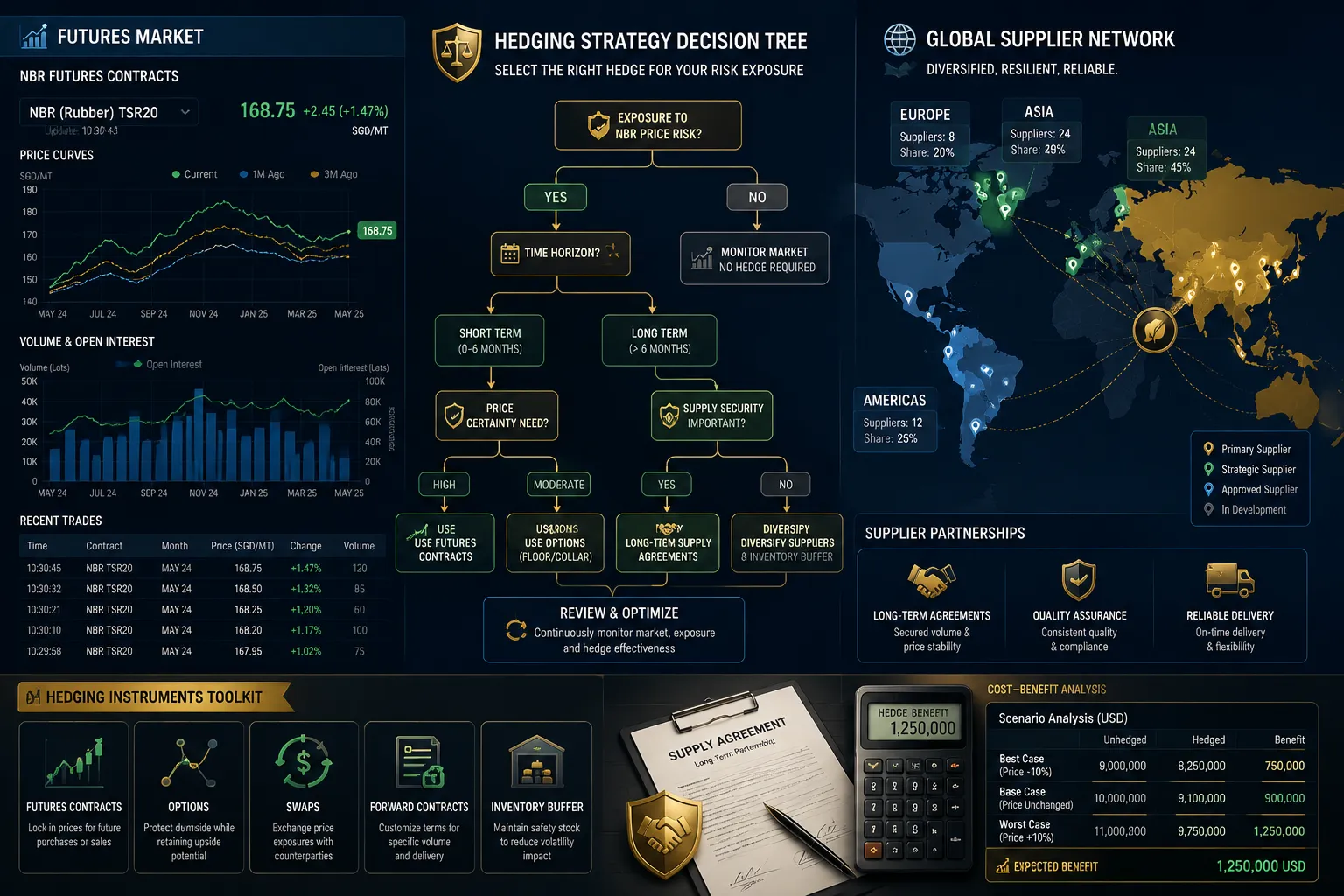
Manufacturers and bulk buyers can deploy multiple strategies to manage Nitrile Glove Raw Material Volatility: Navigating NBR Price Fluctuations and Hedging Strategies for Manufacturers. The most effective approaches combine financial instruments with operational adjustments to create comprehensive risk management frameworks.
Financial Hedging Instruments
Forward contracts allow manufacturers to lock in NBR prices for future delivery, eliminating uncertainty for 6-12 month periods. While these contracts require upfront commitment and may result in missed opportunities if prices fall, they provide budget certainty and protect margins during volatile periods. Major NBR suppliers now offer structured forward agreements with volume flexibility clauses.
Futures and options on crude oil or butadiene provide indirect hedging for manufacturers comfortable with financial derivatives. By taking positions that profit when oil prices rise, companies can offset increased NBR costs. This approach requires specialized expertise but offers greater flexibility than physical forward contracts.
Price adjustment clauses in customer contracts shift some volatility risk downstream. Many manufacturers now include quarterly price review mechanisms tied to published NBR indices, ensuring margin protection while maintaining customer relationships. These clauses work best with long-term partners who understand market dynamics.
Operational Risk Management
Strategic inventory buffers of 60-90 days provide cushioning against short-term price spikes. While carrying costs increase working capital requirements, the insurance value often justifies the expense during periods of expected volatility. Manufacturers must balance storage capacity, shelf life considerations, and capital costs when determining optimal inventory levels.
Supplier diversification reduces dependence on single sources and geographic regions. Establishing relationships with NBR producers in different countries creates flexibility to shift purchases based on regional price differentials. This strategy proved invaluable during the 2020-2021 pandemic when Asian supply chains faced unprecedented disruptions affecting nitrile glove production.
Long-term supply agreements with volume commitments and price formulas create stability for both parties. These contracts typically include base prices with adjustment mechanisms tied to published indices for butadiene or crude oil. The predictability benefits both manufacturers and suppliers by enabling better capacity planning and investment decisions.
Process and Product Innovation
Alternative NBR grades with different butadiene-to-acrylonitrile ratios may offer cost advantages depending on market conditions. While maintaining performance standards for chemical resistance and durability remains essential, some flexibility exists in formulation optimization.
Blending strategies that incorporate recycled NBR or alternative synthetic rubbers can reduce virgin material consumption. Technological advances in 2026 have improved the quality of recycled materials, making them viable for certain glove applications without compromising safety or performance standards.
Process efficiency improvements reduce overall NBR consumption per glove produced. Optimizing dipping parameters, reducing rejection rates, and minimizing material waste directly lower raw material exposure. Even modest 5-10% efficiency gains significantly impact profitability during high-price periods.
Implementing a Comprehensive Volatility Management Program
Successful navigation of Nitrile Glove Raw Material Volatility: Navigating NBR Price Fluctuations and Hedging Strategies for Manufacturers requires integrated approaches rather than isolated tactics. Leading manufacturers in 2026 employ dedicated procurement teams that monitor commodity markets, maintain supplier relationships, and execute hedging strategies aligned with business objectives.
Market intelligence systems track crude oil prices, butadiene spot rates, NBR contract prices, and macroeconomic indicators. Real-time data enables proactive decision-making rather than reactive responses to price changes. Many companies now subscribe to specialized commodity intelligence services that provide forecasts and analysis specific to synthetic rubber markets.
Cross-functional collaboration between procurement, finance, and operations ensures hedging strategies align with production schedules and customer commitments. Regular scenario planning exercises help teams prepare responses to various price environments, from sustained high prices to sudden crashes.
Performance metrics should track hedging effectiveness, not just absolute costs. Measuring actual costs against unhedged scenarios reveals the value created by risk management programs. Successful manufacturers target 30-50% volatility reduction while accepting that perfect hedging remains impossible and potentially counterproductive.
Risk-Adjusted Decision Making for Bulk Buyers
Large-scale purchasers of nitrile gloves for food service, healthcare, or industrial applications face similar volatility challenges. While buyers cannot directly hedge NBR prices, understanding manufacturer cost pressures enables more strategic procurement decisions.
Volume commitments with price protection clauses create win-win scenarios. Manufacturers gain demand visibility that justifies forward NBR purchases, while buyers secure stable pricing. These arrangements work best with 12-24 month horizons and quarterly price review mechanisms.
Flexible specifications that allow manufacturers to optimize formulations within performance parameters can reduce costs. When buyers specify exact NBR grades or glove thickness requirements, they limit manufacturers’ ability to adapt to market conditions.
Multi-sourcing strategies with 2-3 qualified suppliers create competitive tension while maintaining supply security. Buyers should avoid excessive fragmentation that prevents any single manufacturer from achieving scale economies, but concentration with one supplier eliminates negotiating leverage.
Conclusion
Navigating Nitrile Glove Raw Material Volatility: Navigating NBR Price Fluctuations and Hedging Strategies for Manufacturers demands sophisticated approaches that blend financial instruments, operational flexibility, and strategic partnerships. As crude oil markets remain unpredictable in 2026, manufacturers and buyers who implement comprehensive risk management programs will maintain competitive advantages over those relying on spot market purchases.
The most successful strategies combine forward contracts for baseline volumes, strategic inventory buffers for flexibility, supplier diversification for security, and continuous process improvement for efficiency. No single tactic eliminates volatility, but integrated programs can reduce exposure by 30-50% while maintaining the quality and performance that make nitrile gloves essential across industries.
Manufacturers should begin by establishing market intelligence capabilities, then progressively implement hedging instruments matched to their risk tolerance and financial capacity. Bulk buyers benefit from understanding these dynamics and structuring procurement agreements that acknowledge legitimate cost pressures while securing reasonable price stability. The volatility will continue, but preparedness transforms it from an existential threat into a manageable business challenge.
SEO Meta Title: NBR Price Hedging Strategies for Nitrile Glove Makers