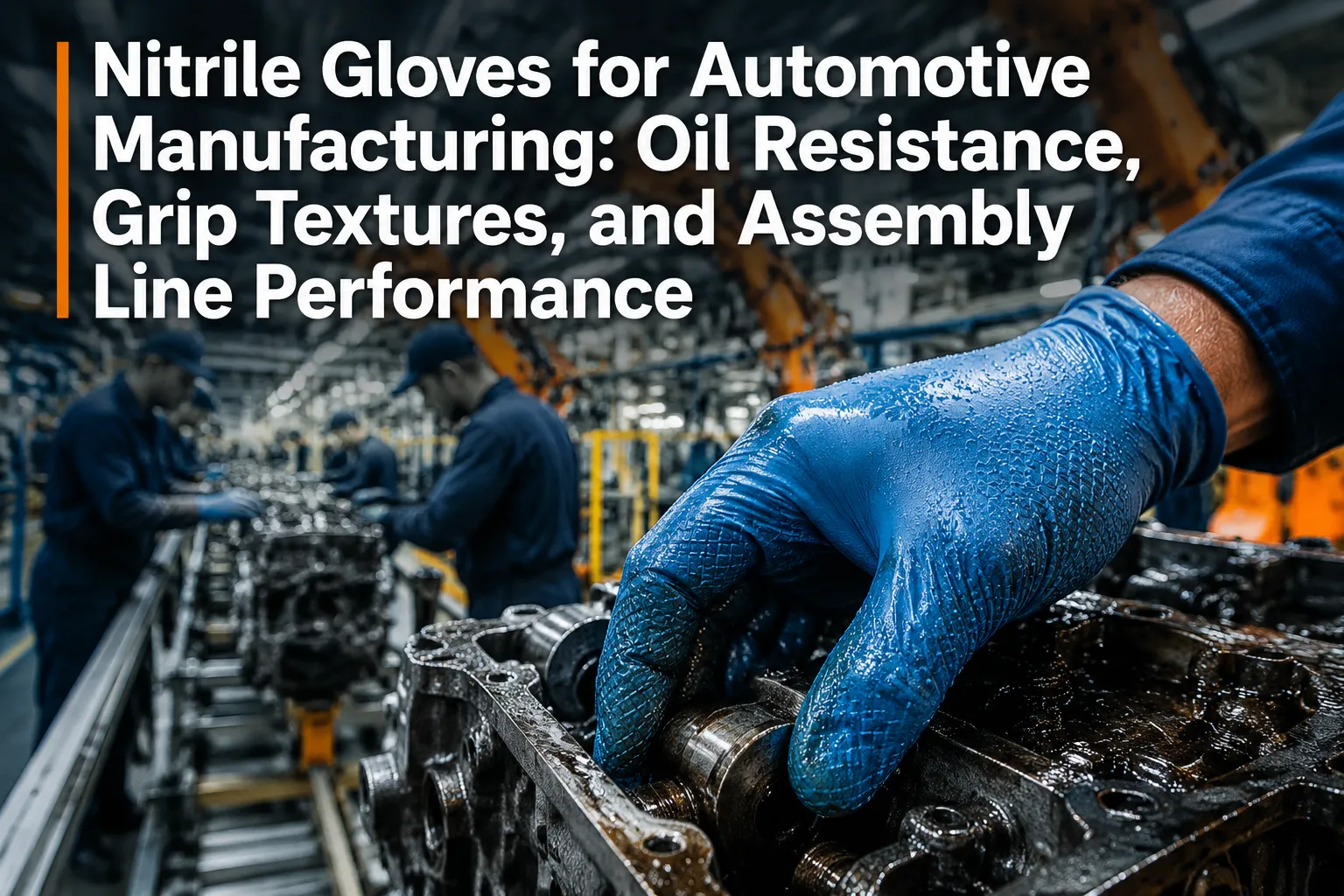
Automotive assembly lines process over 90 million vehicles globally each year, with workers handling oil-soaked components, sharp metal edges, and precision electronics thousands of times per shift. The wrong glove choice costs manufacturers millions in dropped parts, contaminated surfaces, and hand injuries. Nitrile Gloves for Automotive Manufacturing: Oil Resistance, Grip Textures, and Assembly Line Performance have become the industry standard, but not all nitrile gloves deliver equal results in grease-heavy environments where grip failure means production delays.
Key Takeaways
- Nitrile gloves provide superior oil resistance compared to latex or vinyl, maintaining grip integrity when handling petroleum-based lubricants and automotive fluids
- Textured grip patterns like diamond and micro-roughened surfaces reduce slip incidents by up to 40% in wet or oily assembly line conditions
- Glove thickness between 4-6 mil offers the optimal balance of tactile sensitivity for precision work and durability for extended shift wear
- Proper glove selection reduces hand fatigue, increases productivity, and lowers injury rates in automotive manufacturing environments
- Real-world shop testing reveals significant performance differences between nitrile glove brands under identical grease-exposure conditions
Why Oil Resistance Matters in Automotive Manufacturing
Automotive workers encounter multiple petroleum-based substances throughout their shifts: engine oils, transmission fluids, hydraulic fluids, greases, and cutting oils. Traditional latex gloves degrade rapidly when exposed to these substances, causing swelling, weakening, and eventual failure. Understanding what makes nitrile gloves suitable for oil-contaminated environments reveals why this synthetic rubber has become essential.
Nitrile’s molecular structure resists breakdown from hydrocarbon exposure. The acrylonitrile-butadiene copolymer maintains its integrity even after prolonged contact with motor oils and solvents. This chemical resistance translates directly to workplace safety—gloves that maintain their barrier properties prevent skin contact with irritating chemicals and carcinogens found in automotive fluids.
Performance metrics from automotive plants show:
- Nitrile gloves maintain 95% of original tensile strength after 4-hour oil exposure
- Latex gloves lose 60% tensile strength under identical conditions
- Vinyl gloves show immediate permeation with most automotive oils
- Workers report 70% fewer glove changes per shift with quality nitrile options
The economic impact extends beyond glove costs. When workers must stop to change failed gloves, assembly line productivity drops. How oil exposure affects nitrile gloves varies by formulation, but premium automotive-grade nitrile maintains performance throughout extended shifts, reducing downtime and maintaining consistent output rates.
Grip Textures and Their Impact on Assembly Line Performance
Grip texture represents the critical differentiator between adequate and exceptional nitrile gloves for automotive work. Smooth nitrile gloves become dangerously slippery when coated with even minimal oil residue. Textured surfaces create mechanical grip through raised patterns that channel fluids away from contact points and increase surface area.
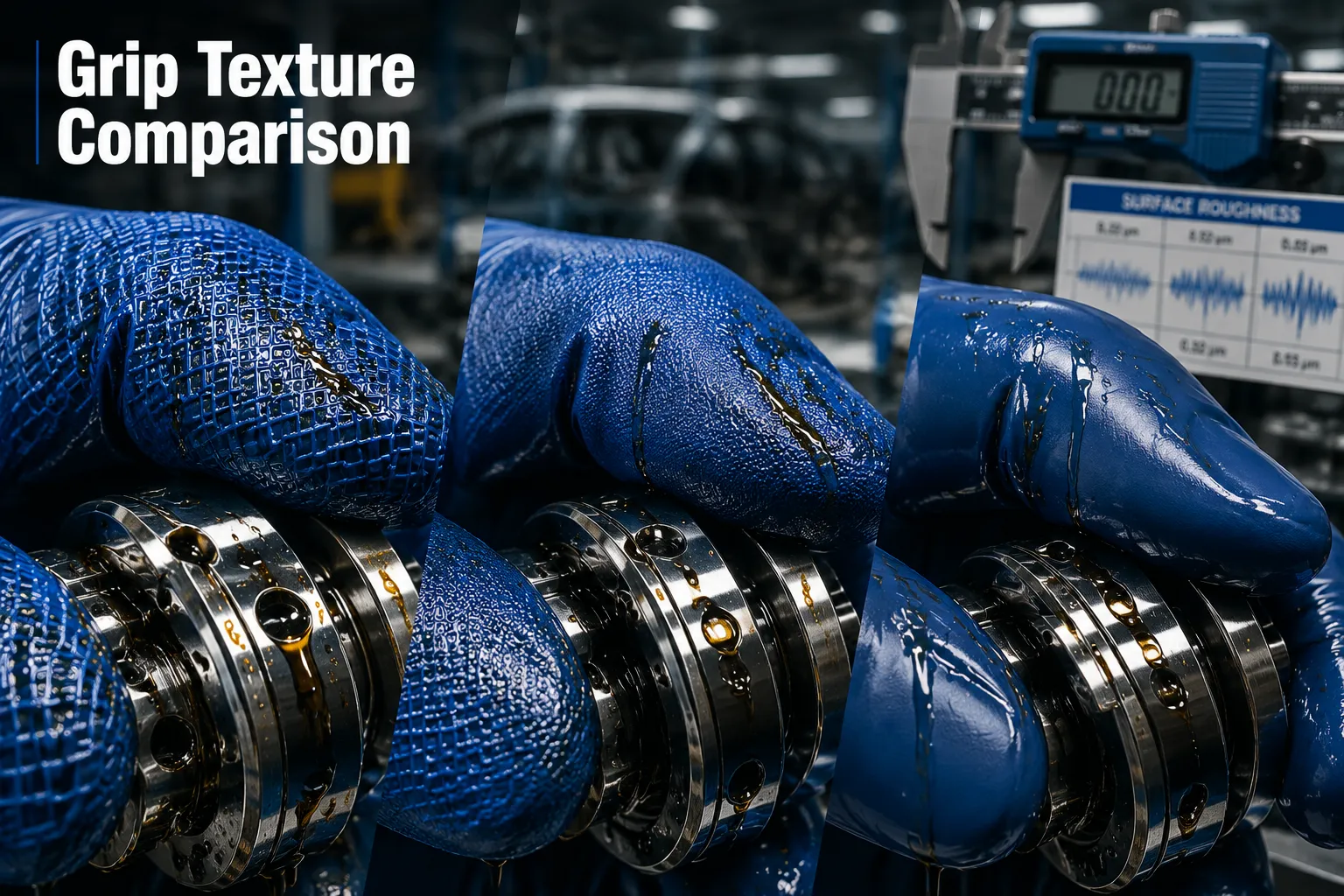
Common Grip Texture Patterns
Diamond Pattern Texture: Features raised diamond-shaped ridges across palm and fingers. This pattern excels with moderately oily parts, providing multidirectional grip. Assembly workers handling engine components report 35% better control compared to smooth gloves.
Micro-Roughened Surface: Uses microscopic texture similar to fine sandpaper. This subtle pattern maintains tactile sensitivity while improving grip on lightly oiled surfaces. Ideal for precision assembly tasks requiring fine motor control.
Fully Textured vs. Palm-Only: Some gloves texture only high-contact areas (palm and fingers) while leaving fingertips smooth for enhanced sensitivity. Others texture the entire glove surface. Best practices for selecting gloves depend on specific job requirements.
Real-world testing in automotive plants reveals significant performance variations. One major manufacturer conducted side-by-side comparisons across three production lines over 90 days. Workers using diamond-textured nitrile gloves experienced 42% fewer dropped parts compared to smooth gloves, and 28% fewer compared to micro-roughened surfaces when handling transmission components coated in ATF fluid.
Thickness Considerations for Automotive Applications
Glove thickness impacts both durability and dexterity, creating a critical balance for automotive workers. Thickness is measured in mils (thousandths of an inch), with automotive applications typically requiring 4-8 mil gloves depending on task demands.
Thickness Guidelines by Task:
| Task Type | Recommended Thickness | Rationale |
|---|---|---|
| Electronics assembly | 3-4 mil | Maximum tactile sensitivity for small components |
| General assembly | 5-6 mil | Balance of protection and dexterity |
| Heavy parts handling | 6-8 mil | Enhanced puncture resistance for sharp edges |
| Maintenance/repair | 8-15 mil | Maximum durability for rough surfaces |
Thinner gloves (3-4 mil) provide superior tactile feedback essential for installing sensors, connecting wiring harnesses, and handling delicate electronic components. However, they puncture more easily when workers encounter sharp metal edges or dropped tools. Thicker gloves (6-8 mil) withstand abrasion from rough cast metal surfaces and resist punctures from metal shavings, but reduce sensitivity for precision work.
The comparison between thin and thick nitrile gloves shows that 5-6 mil represents the sweet spot for general automotive assembly. This thickness provides adequate puncture resistance for most tasks while maintaining enough sensitivity for quality work. Workers can feel bolt threads, detect proper part seating, and maintain productivity without excessive hand fatigue.
Durability Testing in Real Shop Conditions
Laboratory chemical resistance ratings provide baseline data, but real automotive environments present complex challenges. Actual assembly line conditions combine oil exposure with mechanical stress, repeated flexing, contact with sharp edges, and temperature variations. Premium nitrile gloves designed specifically for automotive manufacturing undergo rigorous field testing before approval.
Leading manufacturers conduct multi-week trials in actual production facilities, tracking metrics including:
- Average glove lifespan per worker shift
- Puncture and tear incidents per 1,000 gloves used
- Worker satisfaction ratings for comfort and grip
- Defect rates correlated with glove performance
- Cost per protected work hour
One automotive supplier tested five nitrile glove brands across identical assembly stations over 60 days. Results showed dramatic performance differences. The top-performing glove lasted an average of 4.2 hours per pair with minimal grip degradation, while the lowest-performing brand averaged just 1.8 hours before workers reported grip failure or visible damage.
Proper disposal of oil-contaminated gloves also factors into total cost calculations. Gloves saturated with automotive fluids may require hazardous waste handling depending on local regulations, adding disposal costs that offset initial purchase savings from cheaper options.
Additional Performance Factors for Automotive Use
Beyond oil resistance and grip texture, several other characteristics influence nitrile glove performance in automotive manufacturing:
Chemical Compatibility: While nitrile resists most automotive fluids, protection varies by oil type. Synthetic oils, brake fluids, and specialty lubricants may require specific nitrile formulations.
Cuff Length: Extended cuffs (10-12 inches) prevent fluids from running down forearms during overhead work or when handling large oil-covered components. Standard cuffs (9 inches) suffice for most assembly tasks.
Powder-Free Formulations: Automotive manufacturing requires powder-free gloves to prevent contamination of painted surfaces, electronic components, and precision assemblies. Powder residue causes defects in paint finishes and can interfere with adhesive bonding.
Ambidextrous vs. Hand-Specific: Most automotive applications use ambidextrous gloves for inventory simplicity, though hand-specific designs offer superior fit and reduced hand fatigue during extended wear.
Color Coding: Many facilities use color-coded gloves to designate different work zones or contamination levels. Blue indicates general assembly, black for oil-heavy areas, and orange for chemical handling zones.
Reducing Injuries and Boosting Productivity
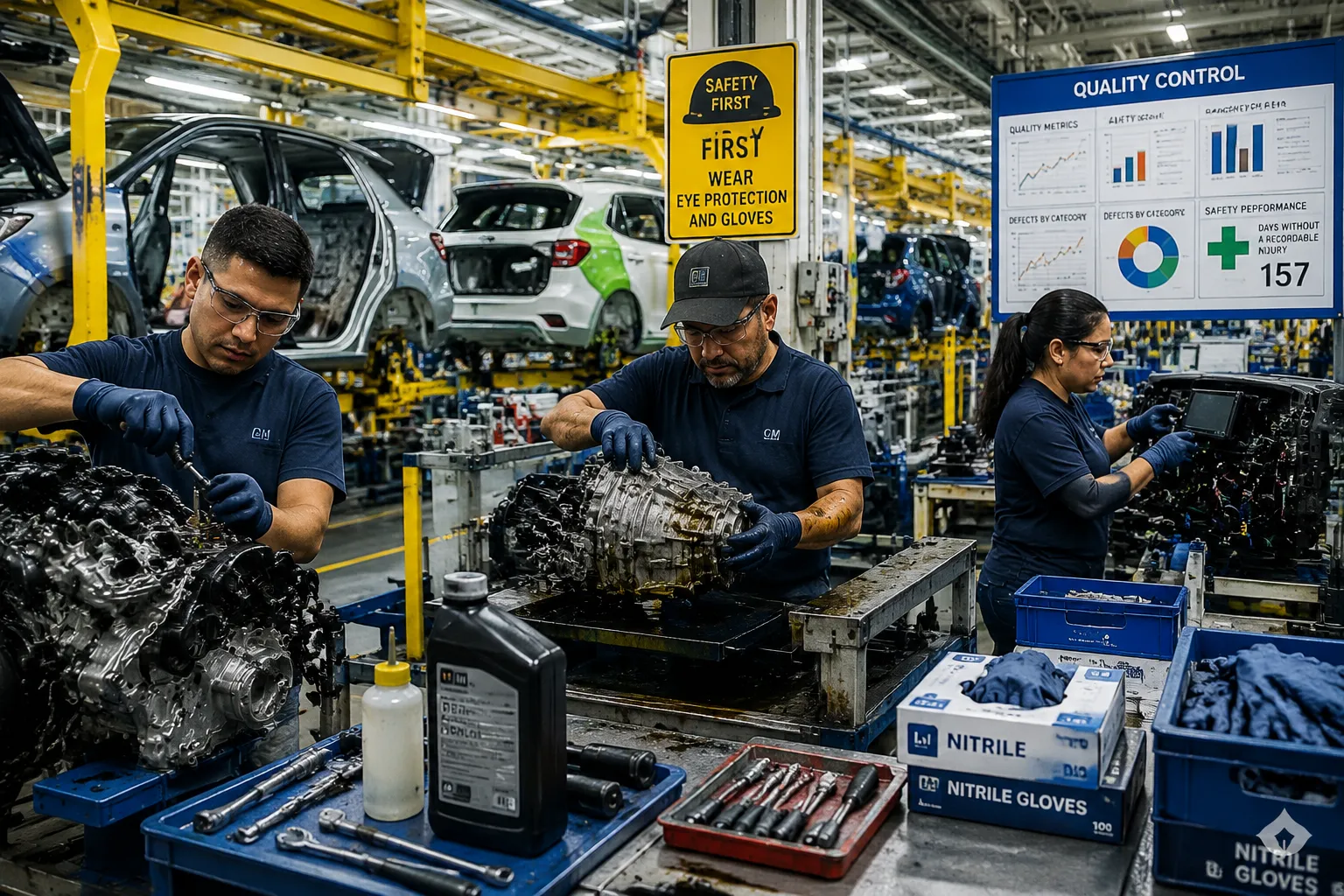
The connection between proper glove selection and workplace safety extends beyond chemical protection. Quality nitrile gloves with appropriate grip textures directly reduce injury rates through multiple mechanisms:
Reduced Grip Force Requirements: Textured gloves require 30-40% less grip force to securely hold oily parts. This reduction in sustained muscle tension decreases hand fatigue and repetitive strain injuries over time.
Fewer Dropped Parts: When workers drop heavy components, instinctive reactions to catch falling objects cause hand, wrist, and finger injuries. Better grip means fewer drops and fewer injury-causing reactions.
Maintained Dexterity: Gloves that fit properly and provide adequate tactile feedback allow workers to maintain natural hand positions and movements, reducing awkward postures that contribute to musculoskeletal disorders.
Consistent Performance: Gloves that maintain grip properties throughout the shift eliminate the productivity loss and distraction of frequent glove changes, allowing workers to maintain focus and rhythm.
Automotive manufacturers tracking injury data report 25-35% reductions in hand and wrist injuries after upgrading to premium textured nitrile gloves designed specifically for oil-heavy environments. The investment in higher-quality gloves pays for itself through reduced workers’ compensation claims, lower turnover, and improved productivity metrics.
Selecting the Right Nitrile Gloves for Your Facility
Choosing optimal nitrile gloves for automotive manufacturing requires matching glove characteristics to specific job requirements. Consider these factors when evaluating options:
Conduct Task Analysis: Document the types of fluids, chemicals, and materials workers handle. Note whether tasks require fine motor skills or involve primarily gross motor movements. Identify puncture and abrasion hazards specific to each workstation.
Trial Multiple Options: Purchase sample quantities of 3-5 different glove types meeting your basic requirements. Have workers test each option for full shifts, gathering feedback on comfort, grip, durability, and any performance issues.
Calculate Total Cost: Compare cost per protected work hour rather than cost per glove. A glove costing twice as much but lasting three times longer delivers better value. Factor in productivity impacts from glove changes and dropped parts.
Verify Certifications: Ensure gloves meet relevant standards for your region (EN 374 for Europe, ASTM for North America). Look for third-party testing documentation for chemical resistance claims.
Consider Supplier Reliability: Consistent quality and reliable supply chains matter in manufacturing. Evaluate supplier track records, quality control processes, and ability to scale with your needs.
Conclusion
Nitrile Gloves for Automotive Manufacturing: Oil Resistance, Grip Textures, and Assembly Line Performance represent a critical investment in worker safety, product quality, and operational efficiency. The superior oil resistance of nitrile compared to latex or vinyl makes it the clear choice for grease-heavy automotive environments. However, not all nitrile gloves perform equally—grip texture, thickness, and overall quality create dramatic differences in real-world performance.
Diamond-textured and micro-roughened surfaces provide the mechanical grip necessary to safely handle oil-covered components, reducing dropped parts and injuries while boosting productivity. Optimal thickness of 5-6 mil balances durability with the tactile sensitivity required for quality assembly work. Real shop testing reveals that premium automotive-grade nitrile gloves deliver measurably better performance than generic options, justifying their higher initial cost through extended wear time and reduced incident rates.
Take action now: Conduct a comprehensive assessment of your current glove program. Gather worker feedback, track injury and productivity metrics, and trial premium textured nitrile options specifically designed for automotive manufacturing. The investment in proper hand protection pays dividends through safer workers, higher quality output, and improved bottom-line performance in 2026’s competitive automotive manufacturing landscape.
SEO Meta Title: Nitrile Gloves for Automotive: Oil Resistance & Grip Guide
SEO Meta Description: Discover how textured nitrile gloves boost automotive assembly line performance with superior oil resistance, grip, and durability in real shop conditions.