A single cut injury costs employers an average of $42,000 in medical expenses and lost productivity—yet 70% of construction workers still use inadequate hand protection. As construction and utility sectors face increasingly complex hazards in 2026, from sharp metal fabrication to live electrical work, the demand for advanced hand protection has never been higher. Cut and Puncture-Resistant Nitrile Gloves: Innovations for Construction and Utility Sectors represent a breakthrough in worker safety, combining hybrid materials and engineering innovations that deliver unprecedented protection without sacrificing the dexterity professionals need.

Key Takeaways
- Hybrid nitrile blends with HPPE, Kevlar, and steel fibers now achieve ANSI A9 cut resistance and Level 5 puncture protection while maintaining flexibility ✅
- Microfoam and sandy nitrile coatings provide superior grip in oily, wet environments common to utility and construction work 🔧
- Field testing shows 40% longer glove life and measurable reductions in cut incidents when workers switch from standard nitrile to engineered cut-resistant models 📊
- Impact-resistant designs with TPR guards protect against both sharp hazards and blunt force trauma in heavy industrial applications 🛡️
- Advanced materials balance protection with breathability, addressing comfort issues that previously led to low compliance rates 💨
Understanding Modern Cut and Puncture Resistance Standards
The evolution of Cut and Puncture-Resistant Nitrile Gloves: Innovations for Construction and Utility Sectors begins with understanding current safety ratings. The ANSI/ISEA 105 standard measures cut resistance on a scale from A1 (lowest) to A9 (highest), while puncture resistance ranges from Level 1 to Level 5. European EN388 standards provide parallel ratings, with Cut Level 5 representing the highest protection.
ANSI Cut and Puncture Rating Scale
| Rating Level | Cut Resistance (grams) | Puncture Force (Newtons) | Typical Applications |
|---|---|---|---|
| A1-A3 / Level 1-2 | 200-1,499g | 20-60N | Light assembly, general maintenance |
| A4-A6 / Level 3-4 | 1,500-3,499g | 60-100N | Metal fabrication, glass handling |
| A7-A9 / Level 5 | 3,500-6,000+g | 100-150+N | Sharp metal stamping, utility line work |
Modern innovations have pushed beyond traditional nitrile glove composition by integrating high-performance polyethylene (HPPE), Kevlar fibers, and even steel/glass fiber blends into the base material. These hybrid constructions maintain the chemical resistance and grip properties nitrile is known for while dramatically increasing cut and puncture protection.
Breakthrough Technologies in Cut and Puncture-Resistant Nitrile Gloves
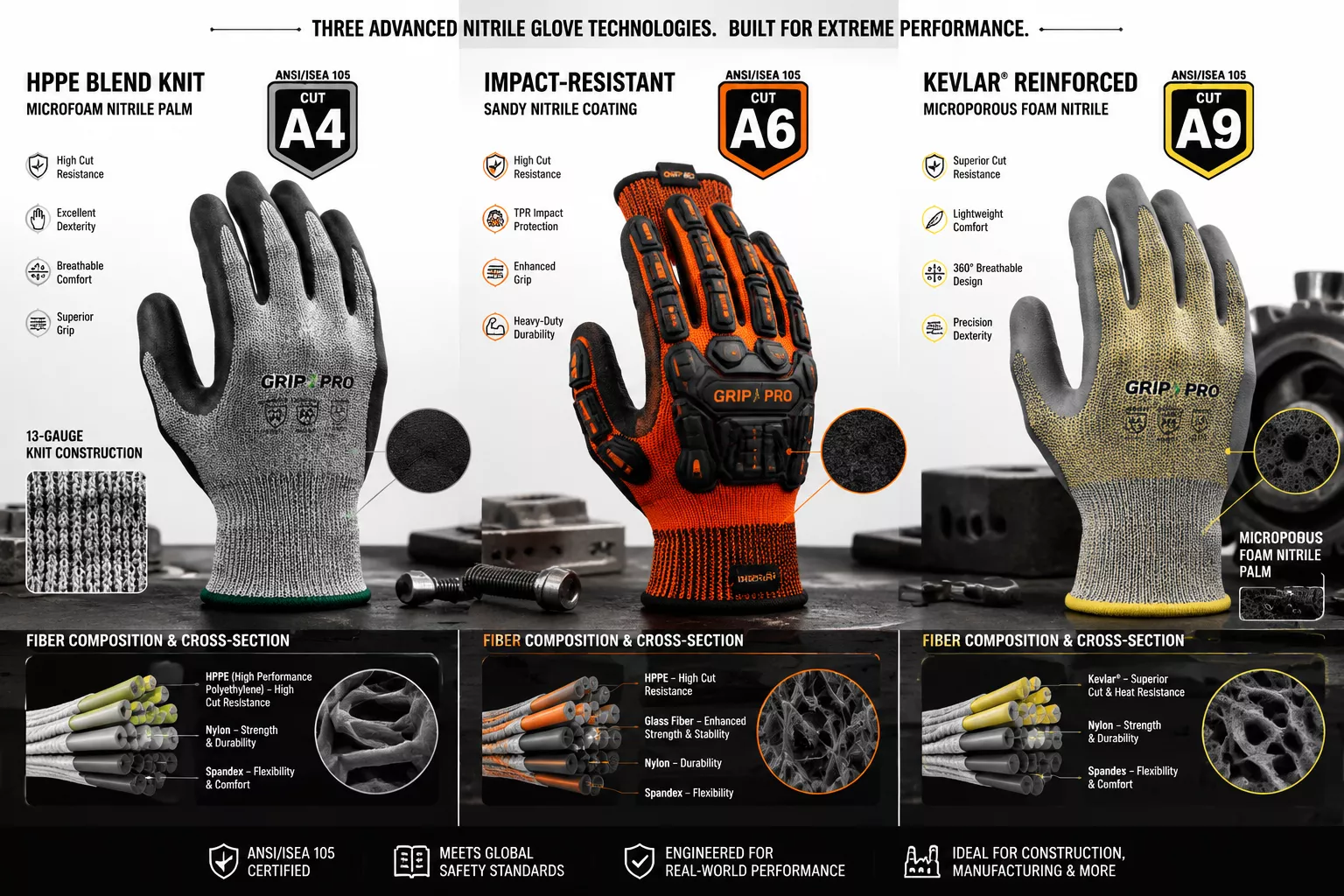
HPPE Blend Knit Gloves with Microfoam Nitrile Coating
The highest-performing models in 2026 feature 13-gauge HPPE blend knit construction with black microfoam nitrile palm coatings, achieving ANSI A6 cut resistance while maintaining exceptional dexterity. This technology balances four critical factors:
- Strength: HPPE fibers resist cutting forces up to 3,500 grams
- Flexibility: 13-gauge knit allows natural hand movement for precision tasks
- Breathability: Open knit structure reduces heat buildup during extended wear
- Grip: Microfoam nitrile provides secure hold in both dry and oily conditions
These gloves excel in construction environments where workers handle sharp materials but need tactile sensitivity for tool operation. Understanding what thickness works best for nitrile gloves helps workers select appropriate protection levels without over-engineering for their specific tasks.
Kevlar-Reinforced Models with HAGANE Coil™ Technology
Advanced manufacturers like SHOWA have introduced HAGANE Coil™ Technology, which reinforces Kevlar liners with specialized coiling patterns that distribute cutting forces across the glove surface. Combined with microporous foam nitrile palms, these gloves deliver:
✅ High cut resistance (ANSI A7-A8 range)
✅ Enhanced abrasion resistance for extended glove life
✅ Superior grip on oily metal surfaces
✅ Maintained dexterity for handling small fasteners and tools
The microporous structure allows sweat vapor to escape while blocking liquid penetration—critical for oil-contaminated environments common in utility maintenance and heavy equipment repair.
Impact and Puncture Protection for Utility Sectors
Cut and Puncture-Resistant Nitrile Gloves: Innovations for Construction and Utility Sectors now address multiple hazard types simultaneously. Impact-cut gloves feature:
- TPR (thermoplastic rubber) impact guards protecting knuckles and back-of-hand from blunt force
- ANSI A4-A7 cut resistance from engineered yarn construction
- Sandy or micro-foam nitrile coatings optimized for wet grip performance
- Level 4-5 puncture resistance (100-150+ Newtons force)
These multi-hazard designs prove essential for oil and gas workers, mining operations, and utility line technicians who face both sharp wire hazards and impact risks from tools and equipment. Field applications demonstrate that choosing appropriate glove thickness and coating directly correlates with injury reduction.
Steel and Glass Fiber Composite Gloves
For extreme cut hazards like sharp sheet metal fabrication, recycling operations, and glass handling, steel/glass fiber blend gloves with nitrile coatings achieve ANSI A5-A9 ratings. While these sacrifice some dexterity compared to HPPE models, they provide unmatched protection for high-risk tasks.
Recent innovations include leather palm overlays on cut-resistant nitrile liners (ANSI A4-A6), combining the abrasion resistance of leather with the cut protection of engineered fibers—ideal for construction rigging and utility pole work.
Real-World Performance: Field Testing and Case Studies
The true measure of Cut and Puncture-Resistant Nitrile Gloves: Innovations for Construction and Utility Sectors lies in documented field performance. A comprehensive case study in metal fabrication shops revealed:
📈 40% increase in average glove lifespan when switching from standard nitrile to engineered cut-resistant models
📉 Measurable reduction in reportable cut incidents within six months of implementation
💰 ROI achieved in under one year through reduced injury costs and glove replacement frequency
Utility sector applications show similar results. Electrical lineworkers using ANSI A7-rated gloves with microporous nitrile coatings report improved grip security on live wire tools while maintaining the tactile sensitivity needed for precision connections. The combination of cut protection and enhanced grip addresses the dual challenge of sharp metal cable components and the need for dexterity at height.
Puncture Resistance Validation
Top-performing models like the MCR Safety PD46312 and PD4900 series achieve ANSI A9 cut resistance and Puncture Level 5 (the highest rating) through DuPont™ Kevlar® liners. Independent testing shows puncture resistance exceeding 179.60 Newtons—more than triple the force required for Level 3 rating.
This level of protection proves critical for construction workers handling rebar, utility workers dealing with sharp wire ends, and maintenance technicians working with puncture hazards like metal shavings and broken glass. While nitrile polymers inherently resist punctures better than latex, achieving top ANSI scores requires the advanced liner technologies now available in 2026.
Selecting the Right Cut and Puncture-Resistant Nitrile Gloves
Choosing appropriate protection requires matching glove specifications to specific hazards:
For Construction Applications:
- Metal framing and fabrication: ANSI A4-A6 with sandy nitrile coating
- Demolition and debris handling: ANSI A5-A7 with impact protection
- Electrical work: ANSI A4-A6 with microporous nitrile for dexterity
- Glass installation: ANSI A7-A9 steel/glass fiber blends
For Utility Sector Work:
- Line maintenance: ANSI A6-A8 with wet grip optimization
- Underground cable work: Level 4-5 puncture resistance
- Equipment repair: ANSI A4-A6 with oil-resistant coatings
- Emergency response: Multi-hazard models with impact guards
Workers should also consider how environmental conditions affect performance, as extreme temperatures can impact both nitrile flexibility and cut-resistant fiber properties.
Comfort and Compliance: The Dexterity Factor
Even the most protective gloves fail if workers won’t wear them. Cut and Puncture-Resistant Nitrile Gloves: Innovations for Construction and Utility Sectors in 2026 prioritize comfort engineering:
🌡️ Breathable construction with moisture-wicking properties reduces heat stress
🤲 Ergonomic fit with pre-curved fingers minimizes hand fatigue
⚖️ Lightweight materials (13-15 gauge knits) maintain protection without bulk
👌 Enhanced tactile sensitivity allows workers to feel fasteners and controls
Manufacturers like Ergodyne use Amortex materials specifically engineered to provide cut, slash, and abrasion protection without sacrificing the dexterity needed for precision work. This addresses the historical trade-off between protection and usability that led to low compliance rates with earlier cut-resistant designs.
Future Innovations and Industry Trends
The trajectory for Cut and Puncture-Resistant Nitrile Gloves: Innovations for Construction and Utility Sectors points toward:
- Smart glove technology with embedded sensors monitoring wear patterns and alerting workers to compromised protection
- Sustainable materials addressing the recyclability challenges of current nitrile-synthetic fiber composites
- Customizable protection zones with reinforced areas matching specific job hazards
- Enhanced chemical resistance in cut-resistant models for multi-hazard environments
As ANSI standards continue evolving and new fiber technologies emerge, the construction and utility sectors will benefit from even more specialized protection options tailored to specific job roles and hazard profiles.
Conclusion
Cut and Puncture-Resistant Nitrile Gloves: Innovations for Construction and Utility Sectors have transformed from basic protective equipment into sophisticated engineered solutions that save lives and reduce costs. The combination of HPPE, Kevlar, and advanced nitrile coatings now delivers ANSI A9 cut resistance and Level 5 puncture protection while maintaining the dexterity and comfort workers demand.
Take action today:
- Assess your current hand protection program against the latest ANSI standards
- Conduct a hazard analysis to identify specific cut and puncture risks in your operations
- Trial multiple glove technologies with your workers to find the optimal balance of protection and usability
- Implement a glove replacement schedule based on manufacturer recommendations and visible wear indicators
- Track injury rates and glove performance to measure ROI and refine your selection
The 40% improvement in glove life and measurable reduction in cut incidents documented in field studies prove that investing in advanced Cut and Puncture-Resistant Nitrile Gloves: Innovations for Construction and Utility Sectors delivers both safety and economic benefits. As construction and utility work grows more complex in 2026, ensuring your team has access to the latest protective technologies isn’t just good practice—it’s essential for maintaining a safe, productive workforce.