Last updated: May 2, 2026
Quick Answer
Nitrile gloves do not conduct electricity in their pure form and act as insulators under normal conditions. However, standard disposable nitrile gloves are not rated or designed for electrical work, especially in high-voltage environments. While they provide basic protection against low-voltage static discharge, they should never replace ASTM-certified rubber insulating gloves for electrical tasks. Thickness, moisture, contaminants, and defects all affect their insulating properties.
Key Takeaways
- Nitrile rubber is a non-conductive material with strong electrical resistance, making it a poor conductor of electricity
- Standard nitrile gloves are NOT rated for electrical work and should never substitute for certified electrical safety gloves
- Thickness matters: Thicker nitrile gloves offer better electrical resistance than thin disposable versions
- Moisture and contaminants reduce insulation: Wet or dirty gloves lose their protective properties
- Low-voltage applications only: Nitrile gloves may provide minimal protection in static-sensitive or very low-voltage environments
- ASTM D120 compliance is required for any glove used as primary electrical protection
- Cuts, tears, or defects eliminate protection: Damaged gloves cannot insulate against electrical current
- Use nitrile gloves as a secondary barrier in electrical environments, not as primary protection

What Are Nitrile Gloves Made Of?
Nitrile gloves are manufactured from synthetic rubber composed of acrylonitrile and butadiene polymers. This chemical composition gives nitrile its characteristic durability, chemical resistance, and puncture protection that workers rely on across industries.
The molecular structure of nitrile rubber contributes directly to its electrical properties:
- Acrylonitrile provides chemical resistance and strength
- Butadiene adds flexibility and elasticity
- Polymer chains create a dense material that resists electron flow
- No metallic additives in standard formulations that would conduct electricity
Unlike latex gloves made from natural rubber or vinyl gloves made from PVC, nitrile’s synthetic composition creates a material with inherently high electrical resistance. This makes nitrile suitable for handling electronics and working in ESD-sensitive environments, though not for high-voltage electrical work.[1]
The manufacturing process involves dipping ceramic formers into liquid nitrile compound, then curing and stripping the gloves. This creates a seamless barrier without conductive pathways. For more details on nitrile composition, check our guide on what nitrile gloves are made of.

Electrical Conductivity: What Does It Mean?
Electrical conductivity measures how easily electric current flows through a material. Materials fall into three categories: conductors (metals like copper), semiconductors (silicon), and insulators (rubber, plastic, glass).
Here’s what workers need to understand:
Conductors allow electrons to move freely:
- Metals (copper, aluminum, steel)
- Water with dissolved minerals
- Human body (contains electrolytes)
Insulators resist electron flow:
- Rubber materials
- Dry plastic and polymer materials
- Glass and ceramic
- Dry wood
Key factors affecting conductivity:
- Material composition: Presence of free electrons or ions
- Moisture content: Water dramatically increases conductivity
- Temperature: Heat can change electrical properties
- Thickness: Thicker materials provide more resistance
- Surface contamination: Oils, salts, or dirt can create conductive pathways
For workers, understanding conductivity matters because your body is a conductor. If you touch a live electrical source while grounded, current flows through you. Insulating gloves create a barrier that stops this flow, but only if they’re rated for the voltage level you’re working with.
Do Nitrile Gloves Conduct Electricity?
No, nitrile gloves do not conduct electricity under normal conditions and function as insulators. The synthetic rubber material has high electrical resistance that prevents electron flow through the glove material.[1][2]
However, this answer requires important context:
Why Nitrile Resists Electricity
The molecular structure of nitrile rubber creates a material where electrons cannot move freely. Unlike metals with loosely bound electrons, nitrile’s polymer chains hold electrons tightly, creating electrical resistance measured in the millions of ohms.
A 2024 experiment measuring voltage transmission through nitrile gloves found they allowed approximately 1.01-1.1 volts through from a 121.5V source, demonstrating significant (though not perfect) insulation.[5]
Critical Limitations
Standard nitrile gloves are NOT rated for electrical work for several reasons:
- Varying thickness: Disposable gloves range from 3-8 mil thickness; thinner gloves offer less protection
- No voltage rating: Manufacturers don’t test or certify disposable nitrile gloves for electrical insulation
- Quality inconsistencies: Manufacturing defects, pinholes, or weak spots can create failure points
- Not designed for electrical hazards: These gloves are made for chemical and biological protection, not electrical safety
Factors that compromise nitrile’s insulating properties:
| Factor | Impact on Insulation |
|---|---|
| Moisture/sweat | Dramatically reduces resistance; water conducts electricity |
| Contaminants | Oils, salts, or chemicals can create conductive pathways |
| Cuts or tears | Any breach eliminates protection completely |
| Thin spots | Worn areas or manufacturing defects reduce barrier effectiveness |
| High humidity | Moisture absorption decreases insulation |
| Temperature extremes | Can affect material properties and integrity |
For more information on how nitrile gloves perform in electrical contexts, see our article on whether nitrile gloves protect against electric shock.
When Should Nitrile Gloves Be Used for Electrical Work?
Nitrile gloves can serve as a secondary protective layer in low-voltage or static-sensitive environments, but never as primary electrical protection. They’re appropriate for specific limited applications where electrical hazards are minimal.
Acceptable Uses
Static-sensitive electronics work:
- Assembling circuit boards
- Handling computer components
- Working with sensitive electronic devices
- ESD-protected manufacturing environments
Low-voltage applications (under 50V):
- Battery replacement in devices
- Low-power circuit testing
- Consumer electronics repair
- Automotive electrical work on 12V systems
As a secondary barrier:
- Worn under certified electrical gloves for added protection
- Providing contamination protection while wearing rated gloves
- Protecting hands from chemicals while working near electrical equipment
When NOT to Use Nitrile Gloves
Never rely on standard nitrile gloves for:
- Household electrical work (120V/240V)
- Industrial electrical systems
- High-voltage equipment
- Power line work
- Electrical panel maintenance
- Any work requiring lockout/tagout procedures
Common mistake: Assuming any rubber glove provides electrical protection. Workers have been injured believing disposable nitrile gloves would protect them from standard household voltage.[3]
Choose nitrile gloves for electrical environments if:
- You need chemical resistance while working near (not on) electrical equipment
- You’re handling static-sensitive components
- You need a contamination barrier under rated electrical gloves
- You’re working with verified de-energized equipment and need general hand protection
For guidance on selecting appropriate glove thickness, see our comparison of thin vs. thick nitrile gloves.
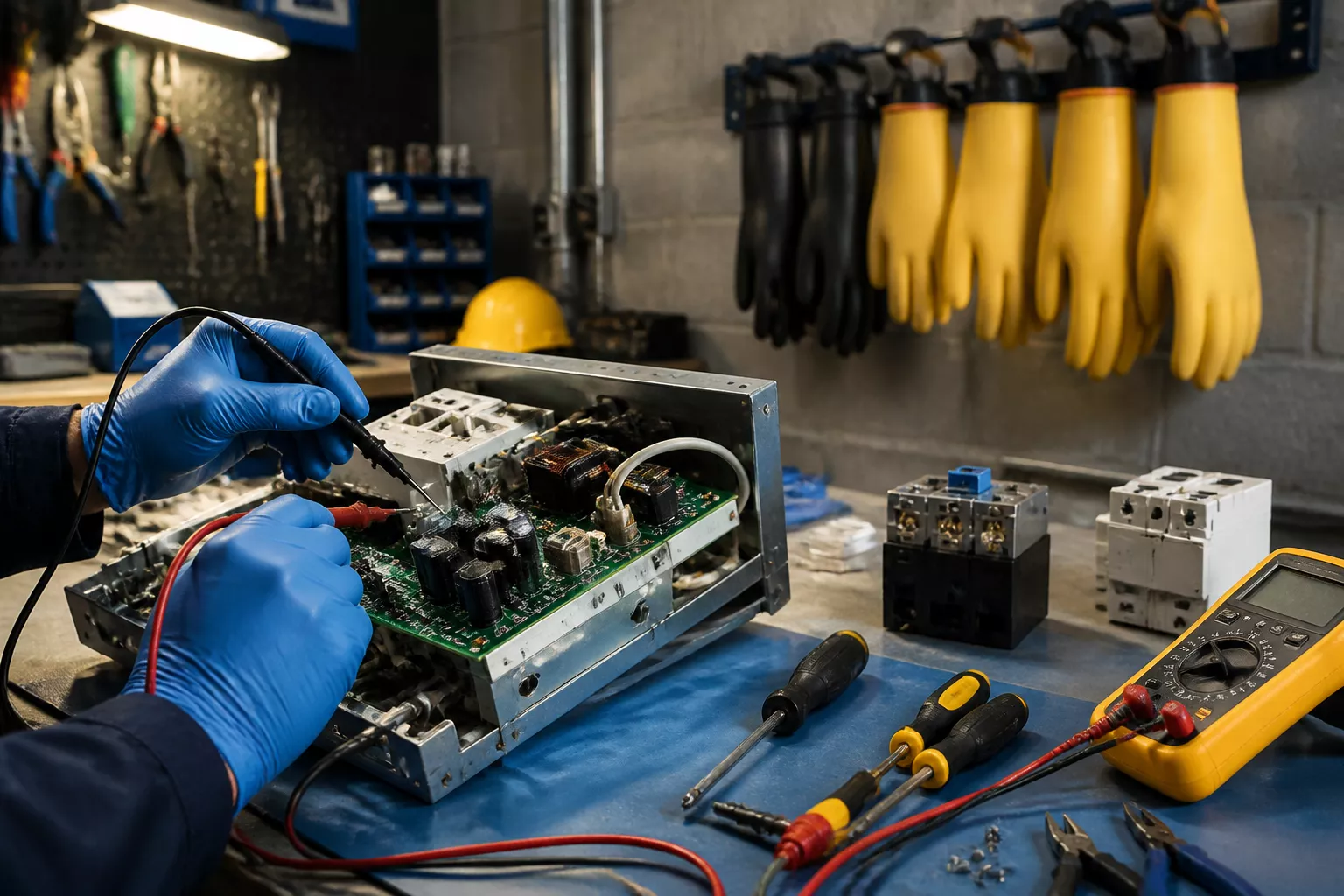
What Type of Gloves Are Safe for Electrical Work?
Only ASTM D120-compliant rubber insulating gloves are rated and safe for electrical work. These specialized gloves undergo rigorous testing and certification for specific voltage levels.
ASTM D120 Electrical Glove Classes
Electrical safety gloves are classified by maximum voltage rating:
| Class | Max Use Voltage (AC) | Max Test Voltage | Color Code |
|---|---|---|---|
| 00 | 500V | 2,500V | Beige |
| 0 | 1,000V | 5,000V | Red |
| 1 | 7,500V | 10,000V | White |
| 2 | 17,000V | 20,000V | Yellow |
| 3 | 26,500V | 30,000V | Green |
| 4 | 36,000V | 40,000V | Orange |
Key Differences from Nitrile Gloves
Certified electrical gloves feature:
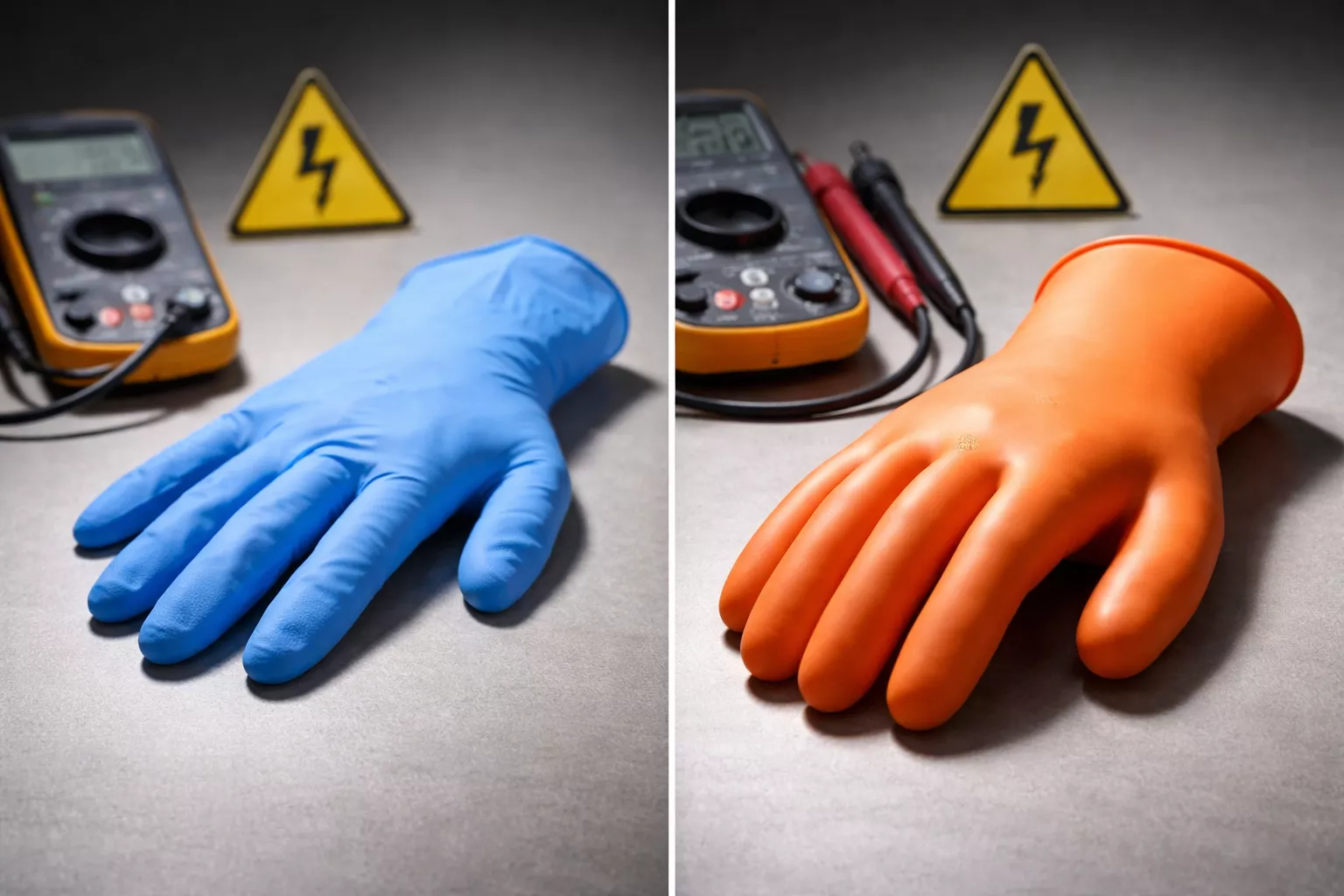
- Thick rubber construction (typically 0.5-4mm thick depending on class)
- Voltage testing and certification by accredited laboratories
- Regular inspection requirements (before each use and periodic retesting)
- Leather protector gloves worn over them to prevent punctures
- Specific storage requirements to prevent degradation
- Expiration dates and retest schedules
Standard nitrile gloves have:
- Thin construction (0.076-0.203mm or 3-8 mil)
- No electrical testing or certification
- No voltage rating
- Designed for single-use disposal
- No inspection or maintenance protocols for electrical safety
Proper Electrical Safety Protocol
For any electrical work, follow these steps:
- De-energize the circuit using lockout/tagout procedures whenever possible
- Verify the circuit is dead using a properly rated voltage tester
- Wear appropriate PPE including ASTM-rated electrical gloves for the voltage level
- Inspect gloves before each use for cuts, tears, or damage
- Use leather protectors over electrical gloves to prevent punctures
- Follow your employer’s electrical safety program and OSHA regulations
For workers in industries requiring electrical safety, learn more about disposable nitrile gloves for electrical work and their limitations.
How Do Thickness and Quality Affect Electrical Protection?
Thicker nitrile gloves provide better electrical resistance than thin disposable versions, but thickness alone doesn’t make them safe for electrical work. The relationship between glove thickness and electrical protection is important but often misunderstood.
Thickness and Resistance
Standard nitrile glove thicknesses:
- Thin (3-4 mil): Exam gloves, food service – minimal electrical resistance
- Medium (5-6 mil): General purpose – moderate resistance
- Thick (7-8+ mil): Industrial, chemical handling – better resistance but still not rated
A thicker glove creates a longer path for electrical current to travel, increasing resistance. However, even thick nitrile gloves lack the testing, certification, and consistent quality control required for electrical safety ratings.[2]
Quality Factors That Matter
Manufacturing quality affects electrical protection:
- Pinholes or defects: Even microscopic holes create conductive pathways
- Inconsistent thickness: Thin spots reduce protection
- Material purity: Additives or contaminants may affect electrical properties
- Storage conditions: Degraded gloves lose protective properties
Common quality issues:
- Gloves stored in hot environments become brittle
- Exposure to ozone or UV light degrades rubber
- Chemical contamination changes material properties
- Expired gloves may have compromised integrity
For detailed guidance on selecting appropriate thickness, see our article on what is a good thickness for nitrile gloves.
What Are the Risks of Using Nitrile Gloves for Electrical Work?
Using standard nitrile gloves as electrical protection creates a false sense of security that can lead to serious injury or death. Understanding these risks helps workers make informed safety decisions.
Real Hazards
Electrical shock risks:
- Cardiac arrest: Current through the chest can stop the heart
- Burns: Electrical current generates heat, causing internal and external burns
- Muscle contractions: Can prevent letting go of energized equipment
- Falls: Shock can cause workers to fall from ladders or elevated positions
- Arc flash: High-voltage faults create explosive energy release
Why nitrile gloves fail:
- Thin material provides insufficient insulation for household voltage (120V/240V)
- Moisture from sweat creates conductive pathways
- Small defects or tears eliminate all protection
- No safety margin or redundancy in protection level
Industry Incidents
While specific statistics on nitrile glove electrical failures aren’t widely published, electrical injuries remain common. Workers who assume any rubber glove provides electrical protection put themselves at risk.[6]
Common scenarios leading to injury:
- Maintenance workers using nitrile gloves to replace light fixtures
- Technicians testing circuits with inadequate hand protection
- DIY workers believing disposable gloves provide safety
- Rushed work where proper electrical gloves aren’t readily available
Legal and Compliance Issues
OSHA requirements:
- Employers must provide appropriate PPE for electrical hazards (29 CFR 1910.137)
- Workers must use electrical protective equipment rated for the voltage
- Training is required on electrical safety and proper PPE use
Using non-rated gloves for electrical work may violate safety regulations and expose employers to liability.
Can Nitrile Gloves Protect Against Static Electricity?
Yes, nitrile gloves provide limited protection against static discharge in ESD-sensitive environments, though they’re not specifically designed as anti-static gloves. This makes them useful for electronics work but requires understanding their limitations.
Static vs. Shock Protection
Static electricity characteristics:
- High voltage (thousands of volts) but extremely low current
- Brief discharge duration (nanoseconds)
- Can damage sensitive electronic components
- Generally not dangerous to humans (though uncomfortable)
Electrical shock characteristics:
- Lower voltage (120V-480V in most workplaces) but sustained current
- Continuous flow as long as contact is maintained
- Dangerous or lethal to humans
- Requires rated insulating equipment
Nitrile gloves can help prevent static discharge from your body to sensitive components, but this is fundamentally different from protecting you from electrical shock.[4]
ESD Applications
When nitrile gloves work for static control:
- Assembling circuit boards and electronic components
- Handling computer memory and processors
- Clean room manufacturing environments
- Situations where grounding straps are also used
Better options for ESD control:
- Purpose-made ESD gloves with conductive fibers
- Grounding wrist straps connected to proper ground
- ESD-safe work surfaces and flooring
- Ionizing air blowers to neutralize static charges
Key point: If your work involves ESD-sensitive components, use nitrile gloves as part of a complete ESD control program, not as the sole protection method.
Frequently Asked Questions
Can I use nitrile gloves to change a light bulb? No, you should not rely on nitrile gloves for electrical protection when changing light bulbs. Always turn off the circuit breaker first, verify the power is off, and let the bulb cool if it was recently on. Nitrile gloves aren’t rated for electrical protection.
Are thicker nitrile gloves safe for electrical work? No, even thick nitrile gloves are not rated or tested for electrical work. Thickness improves resistance but doesn’t provide the certified protection required for electrical safety. Use ASTM D120-compliant electrical gloves instead.
What happens if nitrile gloves get wet during electrical work? Wet nitrile gloves lose their insulating properties because water conducts electricity. Never use wet gloves near electrical hazards, and always ensure gloves are completely dry before any work involving electricity.
Can I wear nitrile gloves under electrical safety gloves? Yes, wearing thin nitrile gloves under certified electrical gloves is acceptable and can provide additional protection against contamination and improve comfort. Ensure the nitrile gloves are dry and don’t compromise the fit of the electrical gloves.
Do nitrile gloves protect against 12V car batteries? While 12V is considered low voltage and less dangerous, nitrile gloves aren’t necessary for electrical protection at this voltage level. However, they do protect your hands from battery acid, corrosion, and chemicals, which is their primary benefit in automotive work. Learn more about nitrile gloves for automotive work.
How can I tell if nitrile gloves are damaged and unsafe? Inspect gloves before each use for visible tears, punctures, thin spots, or discoloration. Perform a simple air test by inflating the glove and checking for air leaks. Any damage means the glove should be discarded.
Are there conductive nitrile gloves? Yes, some specialty nitrile gloves are manufactured with conductive fibers for ESD applications where you want to safely dissipate static charges. These are different from standard nitrile gloves and serve a specific purpose in electronics manufacturing.
What voltage can nitrile gloves protect against? Standard nitrile gloves have no official voltage rating because they’re not tested or certified for electrical protection. They may provide minimal insulation against very low voltages (under 50V) but should never be relied upon for protection.
Can nitrile gloves prevent electric shock from household outlets? No, standard nitrile gloves cannot reliably protect against household electrical outlets (120V/240V). These voltages can easily overcome the thin insulation provided by disposable gloves, especially if there are any defects or moisture present.
Do I need special gloves for working with electronics? For general electronics assembly and repair involving low-voltage circuits and static-sensitive components, standard nitrile gloves provide adequate protection. For any work on powered equipment or higher voltages, use properly rated electrical safety gloves.
How do nitrile gloves compare to latex for electrical insulation? Both nitrile and latex are non-conductive materials with similar electrical resistance properties. However, neither disposable nitrile nor latex gloves are rated for electrical work. The choice between them should be based on chemical resistance, allergy concerns, and durability rather than electrical properties. See our comparison of nitrile vs. latex gloves.
What should I do if I get shocked while wearing nitrile gloves? Seek immediate medical attention, even if you feel fine. Electrical injuries can have delayed effects. Report the incident to your supervisor and safety officer. The incident indicates that either the voltage was too high for the gloves, the gloves were damaged, or proper electrical safety procedures weren’t followed.
Conclusion
Nitrile gloves are excellent non-conductive materials that resist electrical current, but they are not rated or safe for electrical work. While the synthetic rubber composition provides natural insulation, standard disposable nitrile gloves lack the thickness, testing, certification, and quality control required for electrical safety.
Key points to remember:
- Nitrile material itself doesn’t conduct electricity and acts as an insulator
- Standard nitrile gloves are NOT certified for electrical protection
- Only ASTM D120-compliant rubber insulating gloves are safe for electrical work
- Nitrile gloves work well for static-sensitive electronics and as secondary protection
- Moisture, contamination, and damage eliminate any protective properties
- Thickness improves resistance but doesn’t make gloves electrically safe
Action steps for workers:
- Never substitute nitrile gloves for rated electrical gloves when working on energized equipment
- Use nitrile gloves appropriately for chemical protection, contamination control, and handling electronics
- Invest in proper electrical PPE if your job involves electrical hazards
- Follow lockout/tagout procedures and verify circuits are de-energized before work
- Inspect all gloves before use and discard any with damage
- Get proper training on electrical safety and PPE requirements for your workplace
For workers who need hand protection in various environments, understanding the specific capabilities and limitations of nitrile gloves helps you stay safe. When electrical hazards are present, there’s no substitute for properly rated equipment and following established safety protocols.
If you’re selecting gloves for your workplace, consider reading our guide on what to consider when choosing nitrile gloves to ensure you get the right protection for your specific needs.
References
[1] Do Nitrile Gloves Conduct Electricity – https://primodentalproducts.com/blogs/news/do-nitrile-gloves-conduct-electricity
[2] Do Nitrile Gloves Conduct Electricity – https://www.titansmedicare.com/blogs/news/do-nitrile-gloves-conduct-electricity
[3] Do Nitrile Gloves Conduct Electricity – https://www.gloves.com/blogs/resources/do-nitrile-gloves-conduct-electricity
[4] Do Nitrile Gloves Conduct Electricity – https://www.armbrustusa.com/blogs/news/do-nitrile-gloves-conduct-electricity
[5] 7 Enr30 Virtual Presentation 2024 02 26t023258.000z – https://virtualfair.sarsef.org/wp-content/uploads/2024/02/7-ENR30-virtual_presentation-2024-02-26T023258.000Z.pdf
[6] Do Nitrile Gloves Protect Against Electricity – https://www.armbrustusa.com/blogs/news/do-nitrile-gloves-protect-against-electricity